
What Is a Norwegian Forest Cat, and Does Your Home Suit a Large Climber?
A Norwegian Forest Cat can be a steady, playful companion for a home with strong vertical space and time for seasonal coat care. Its slow growth, substantial adult body and important GSD IV, pyruvate kinase deficiency and heart-screening questions make equipment and breeder records central to the decision.
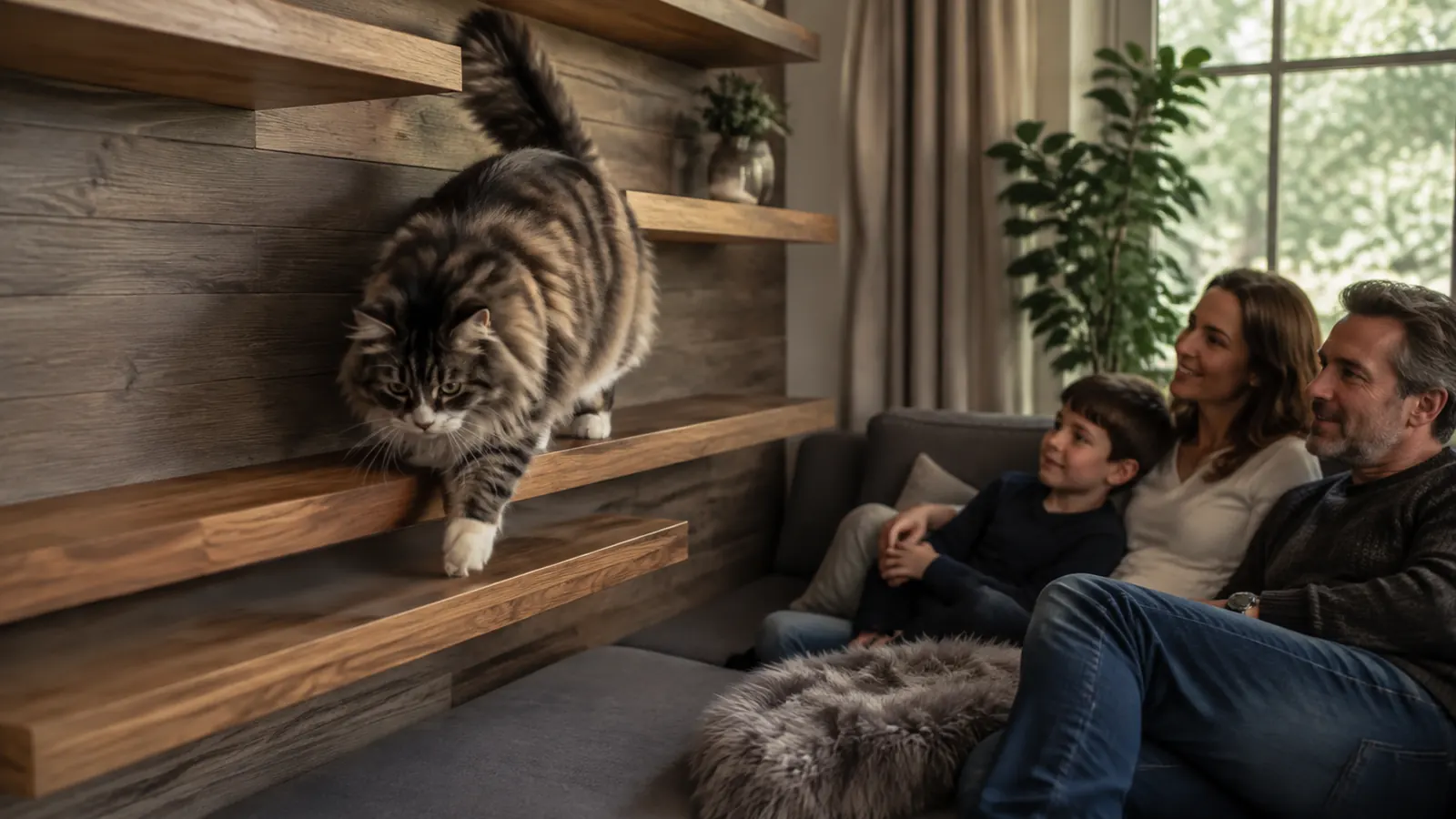
- Origin
- Norway, where a naturally adapted landrace became a standardized pedigreed breed
- Coat
- Water-resistant semi-long double coat with a woolly undercoat, ruff, breeches and full tail
- Size
- Large, strongly built, with a long body, substantial bone and slow maturation that may continue for five years
- Typical weight
- Registries describe a large breed but do not publish one universal healthy adult range
- Life expectancy
- TICA estimates approximately 14 to 16 years
- Activity level
- Moderate. Playful and capable, with a strong need for climbing and secure high resting places
- Grooming
- Moderate most of the year and high during the major seasonal undercoat shed
- Suits
- Homes with robust climbing furniture, large equipment, regular coat checks and documented health screening
The Norwegian Forest Cat is built for height, weather protection and slow physical development. In a modern home, those traits translate into a large cat that needs secure climbing routes, oversized everyday equipment and coat care that changes sharply with the season.
Its calm reputation can make the breed sound effortless.
The real workload is uneven rather than absent, with quieter weeks between periods of heavy undercoat release and lifelong attention to inherited disease screening.
Is a Norwegian Forest Cat a good household fit?
TICA describes the breed as mild mannered, interactive and adaptable, with playful interest in people without constant demand for a lap. Many live well with respectful children and compatible pets when resources and introductions prevent competition.
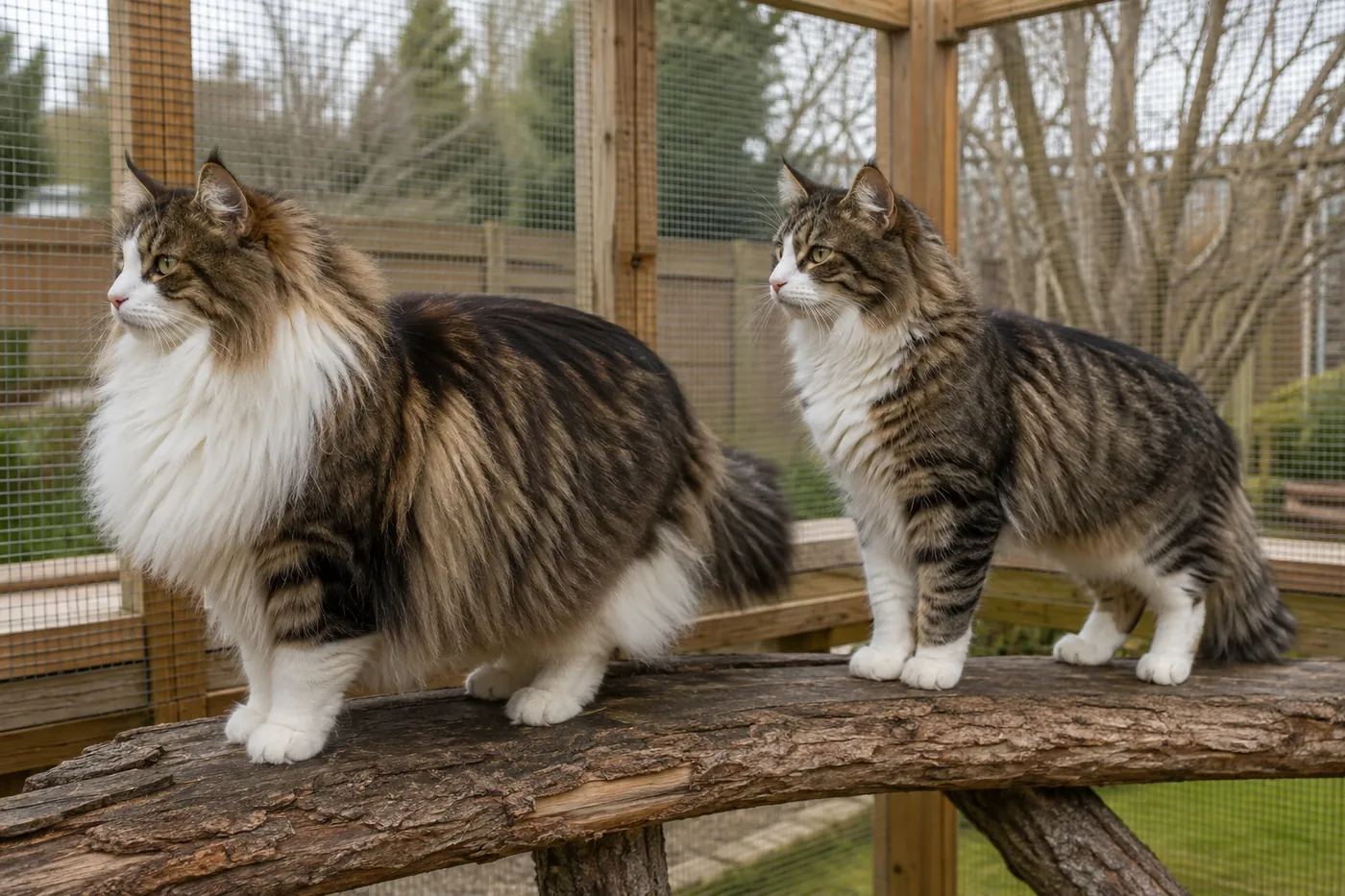
The strongest fit is a home that enjoys a cat nearby and can make room vertically. A stable tower, broad shelves and a high resting platform let this capable climber choose contact while remaining part of family life.
Abyssinian and Norwegian Forest Cat cats can both use height confidently, but the Abyssinian usually needs faster-changing activity while the much larger Norwegian adds sturdy equipment and seasonal double-coat care.
- Best fit
- A home with secure climbing routes and time for seasonal grooming
- Family life
- Often social and playful when children respect retreat
- Other pets
- Potentially compatible after gradual introductions
- Harder fit
- Fragile furniture, cramped equipment or neglected coat checks
- Growth
- Full physical maturity may take as long as five years
- Health evidence
- Ask about GSD IV, PK deficiency and heart screening
Size changes ordinary logistics. A narrow perch that holds a kitten may flex beneath the adult, and a standard litter tray may force a large cat to crouch or step in previous waste.
The breed can be vocal in chirps and softer calls, but individuals vary.
Meet the cat during activity and rest, because a registry description cannot establish noise level, handling tolerance or confidence in your household.
How can you identify a Norwegian Forest Cat?
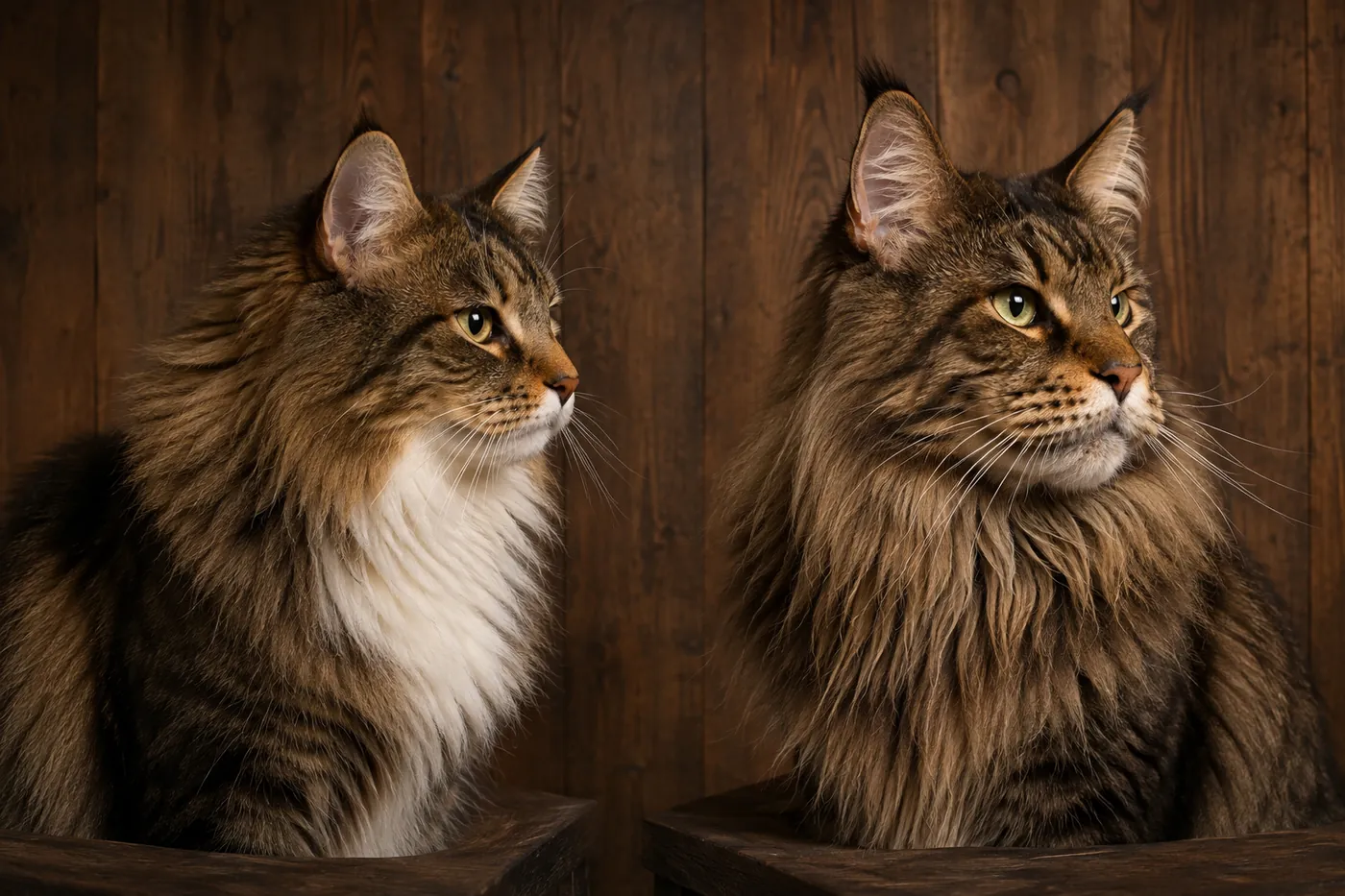
A pedigreed Norwegian Forest Cat combines several features rather than one dramatic trait. The head forms an equilateral triangle, the profile runs straight from brow to nose, the ears continue the triangular lines and the long body rises slightly toward powerful hindquarters.
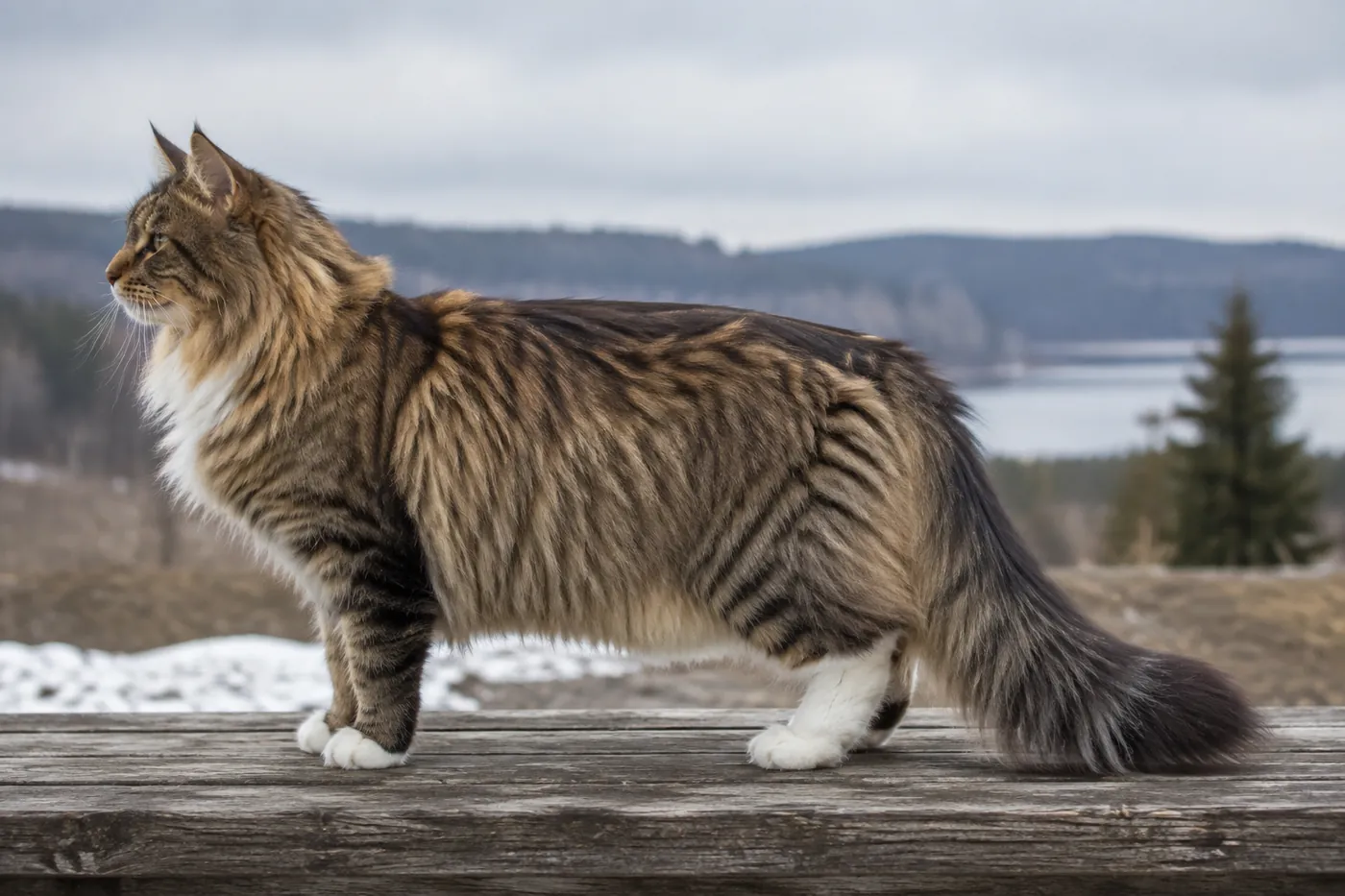
The outer coat is smooth and water resistant over a woolly undercoat. A full ruff, shirtfront, breeches and bushy tail become conspicuous in winter, while a correct summer coat can look much less abundant.
Seasonal fullness says nothing about breed identity: a large longhaired cat may resemble the breed, but coat length, ear furnishings or a neck ruff alone cannot establish ancestry.
The Maine Coon has a more rectangular outline and square muzzle, while the Norwegian standard calls for a triangular head and straight profile. Siberians are also substantial forest-type cats, but their rounded contours and head proportions differ from the Norwegian's cleaner triangle.
- Head
- Equilateral triangle with a long straight profile
- Body
- Long, substantial and strongly boned
- Hindquarters
- Powerful and slightly higher than the shoulders
- Coat
- Glossy water-resistant outer layer over woolly undercoat
- Tail
- Long and bushy enough to balance the body
- Identity
- Pedigree or registration, not resemblance alone
Photographs can help you compare visible structure, but they cannot verify lineage. A shelter label such as Norwegian Forest Cat mix should be treated as a description of appearance unless documented parentage supports it.
How large do Norwegian Forest Cats get?
Registries describe a large, sturdy cat with a long body, substantial bone and powerful hind legs. The triangular head, straight profile and almond-shaped eyes distinguish the type from the square muzzle and rectangular outline associated with the Maine Coon.
Growth is slow, and TICA says full maturity can take up to five years. A lanky adolescent may add muscle, chest depth and coat over several seasons, so feeding extra to hurry the process risks excess body fat rather than a better adult frame.
| Item | What to measure | Why it matters |
|---|---|---|
| Carrier | Body length, standing height and total weight | The cat must turn and the base must stay rigid |
| Litter tray | Usable interior length and entry height | Large cats need room without difficult access |
| Cat tree | Platform depth and rated load | A small shelf can tip or flex during landing |
| Food portion | Current weight, body condition and food energy | Breed size alone does not set calories |
| Bed | Curled and stretched sleeping length | The adult should not be forced over an edge |
Equipment is best sized from the measured adult body and rated load, whatever the packaging says about large breeds.
You can use the carrier selection guide to check door access and base strength. Monitor body condition with a veterinarian during growth, because the long coat can hide ribs, waist and gradual weight gain.
What is the temperament like?
Norwegian Forest Cats are commonly described as friendly, intelligent and steady. Many prefer being beside a person or above the room rather than held continuously, which can suit families that enjoy company without expecting a permanent lap cat.
Their confidence still depends on early experience and current health. A cat that hides from visitors may need distance and time, while one that suddenly avoids stairs or handling needs a pain assessment rather than stronger social pressure.
Affection may look like quiet proximity instead of being carried.
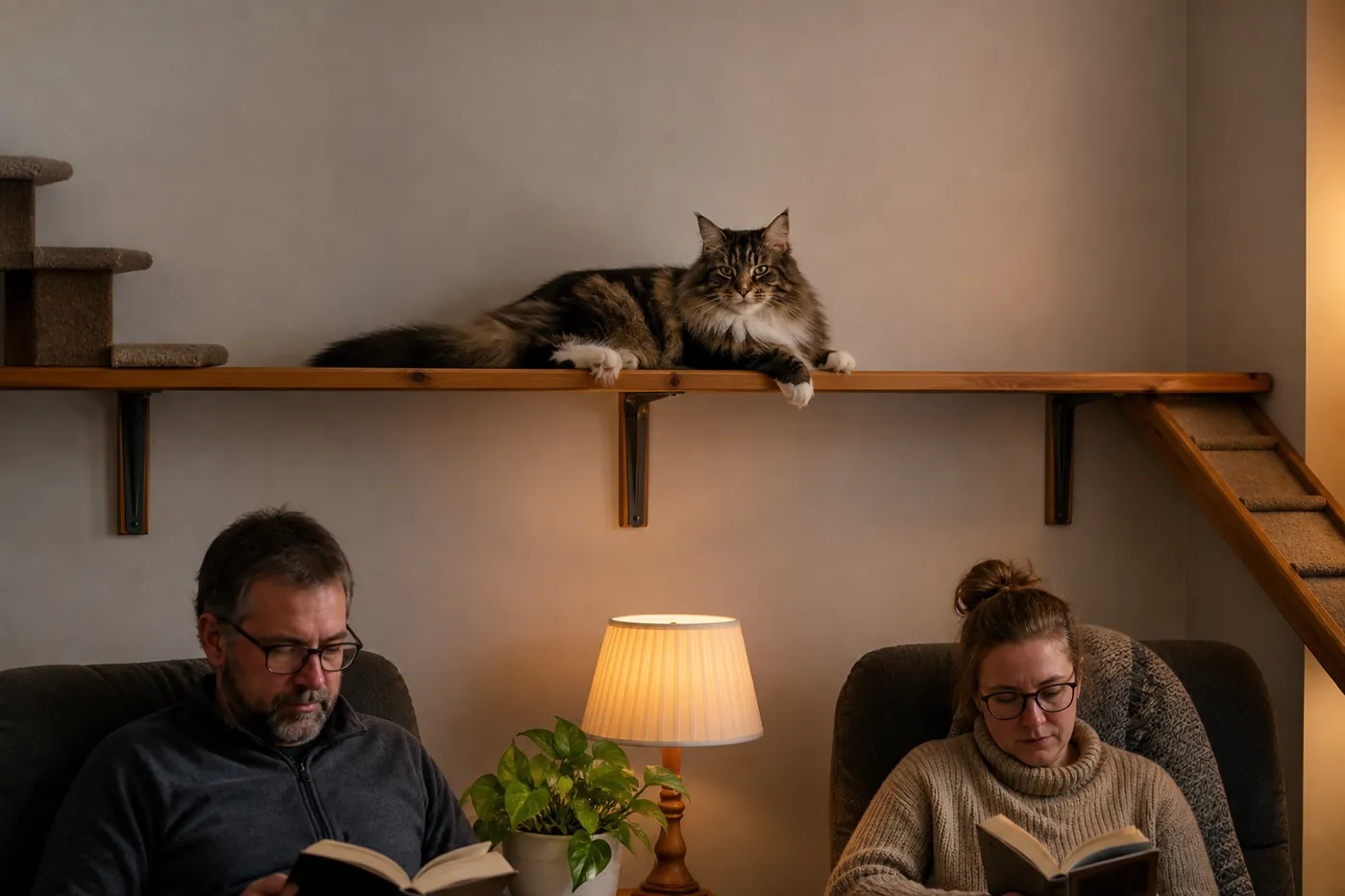
Children should let the cat leave and avoid lifting a large body without support. Another pet needs separate food, water, litter and resting sites so the first weeks do not force face-to-face competition.
Short reward-based sessions can teach recall, carrier entry and grooming position. Clicker training works well when the cat can step away, and it turns handling into a predictable exchange instead of a wrestling match.
How much climbing and exercise does the breed need?
This is a capable climber with strong hindquarters, but daily activity does not have to resemble continuous athletic performance. Several brief chase sessions, vertical exploration and food-search tasks can meet the need more safely than encouraging uncontrolled jumps from tall furniture.
- Anchor tall furniture to the wall and test it for sideways movement
- Use broad platforms that support the whole adult body
- Create more than one route down from the highest resting point
- Keep landing zones clear of hard edges and unstable objects
- Rotate chase and food-search activities across the week
- Adjust jump height when age, weight or pain changes movement
A safe climbing route includes the landing and the way back down.
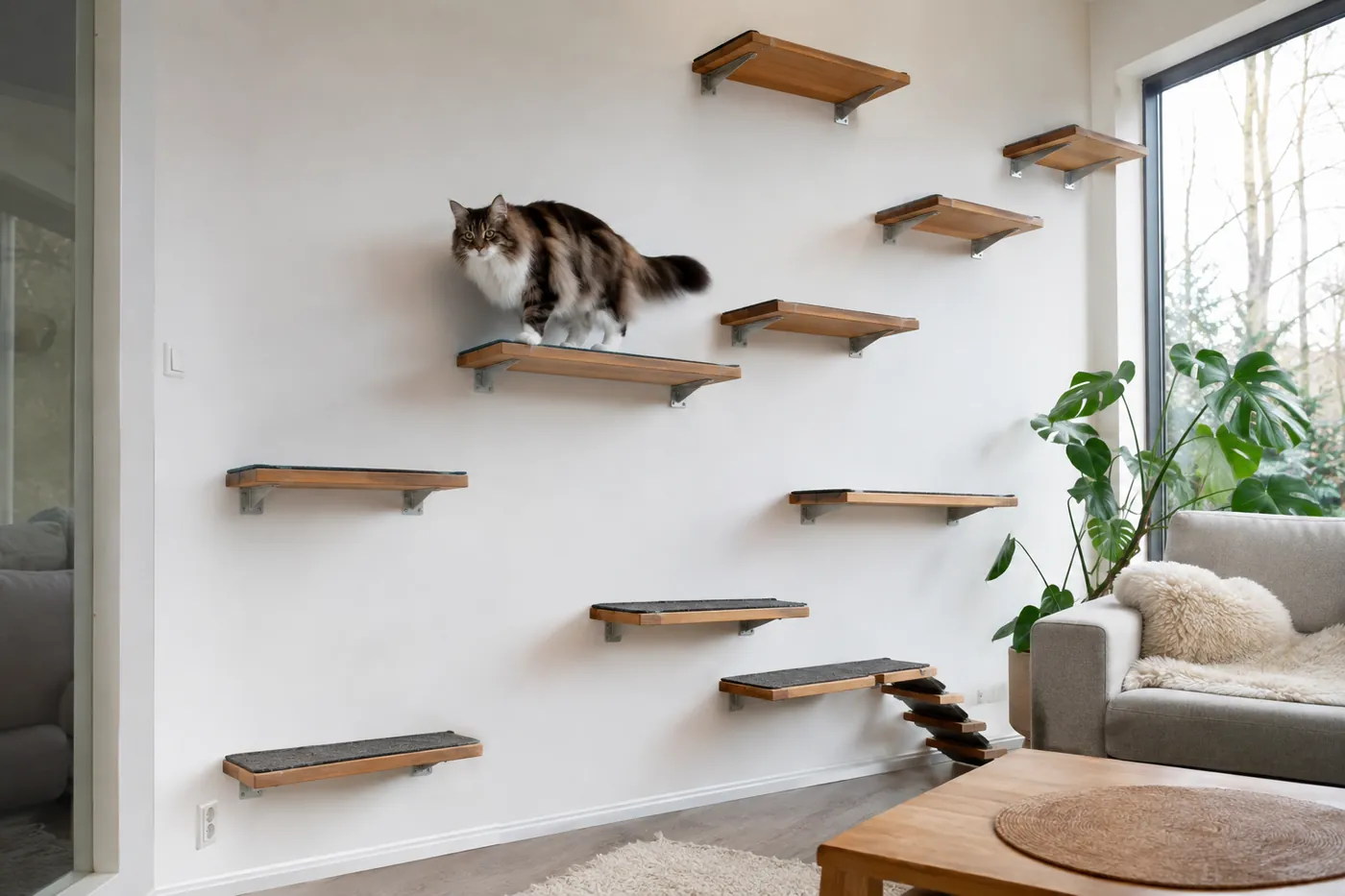
You should follow exercise needs by age rather than assuming a large cat should move slowly. A sudden refusal to climb, an awkward landing or reduced grooming can signal pain and deserves veterinary attention.
Outdoor access should be enclosed or otherwise secure. The weather-resistant coat does not protect against traffic, theft, parasites or conflict, and climbing ability can carry the cat over an ordinary low fence.
How do you manage the seasonal coat?
The semi-long coat has a glossy water-resistant outer layer over a woolly undercoat.
A neck ruff, breeches and full tail become especially prominent in the winter coat, then much of the undercoat releases as conditions change.
Weekly combing may be enough during stable periods. During the major shed, daily checks around the armpits, trousers, belly and ruff can catch loose undercoat before it packs into mats.
Indoor temperature, daylight exposure, climate and individual coat all influence the timing and intensity of the shed. Use the amount of loose undercoat and the ease with which a comb passes through it to decide when care needs to increase.
- Winter coatDense undercoat and fuller ruff provide insulation
- Early seasonal changeLoose undercoat begins collecting beneath the outer coat
- Peak shedMore frequent combing prevents compacted clumps
- Summer coatThe cat may look noticeably lighter and less full
- Unexpected changeBaldness, inflamed skin or persistent overgrooming needs examination
Season changes the workload, so one fixed grooming schedule will not fit the whole year.
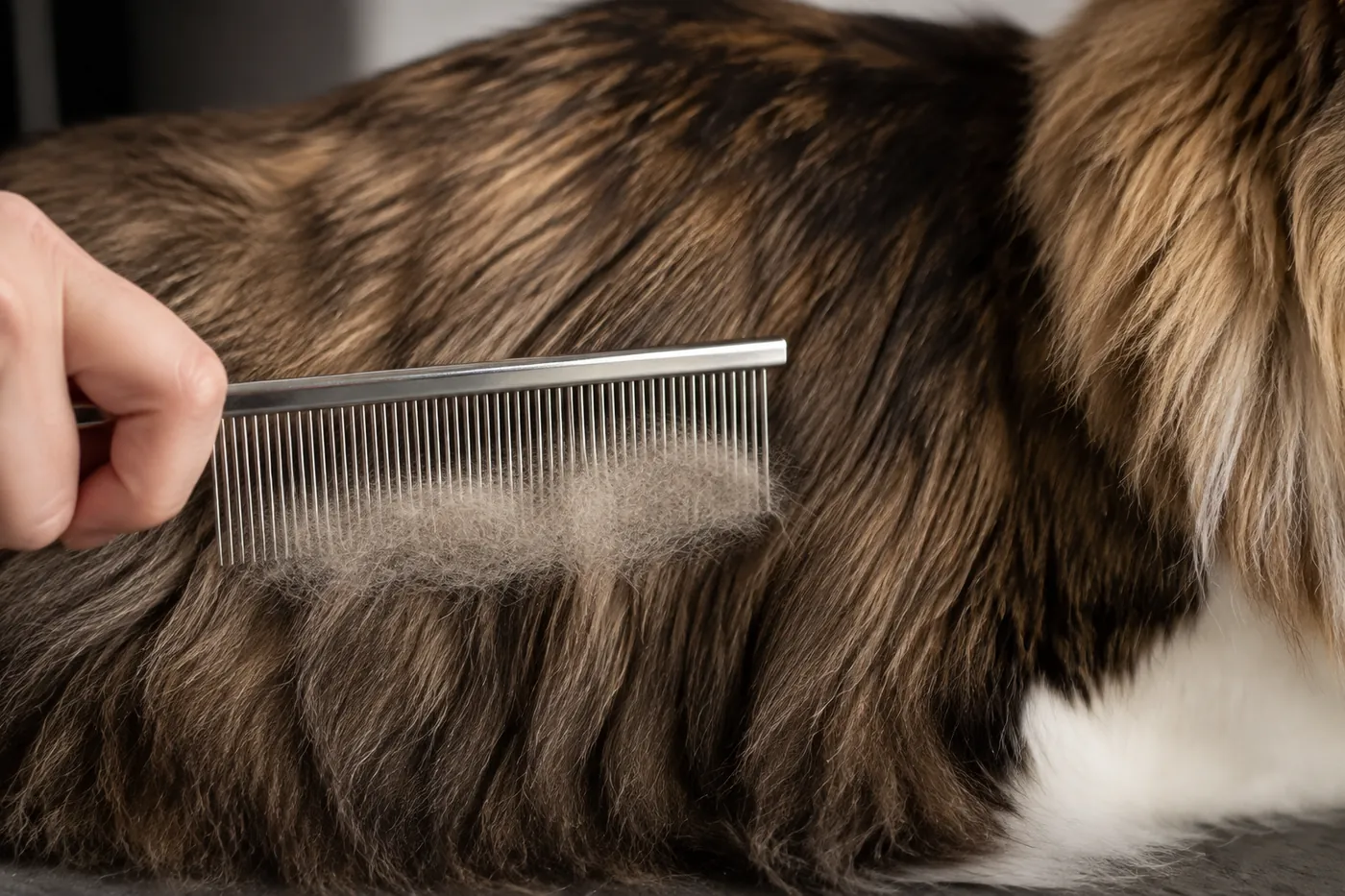
The guide to brushing a long coat explains how to separate tangles from the ends. Avoid cutting a close mat with scissors, since thin folded skin can be pulled up inside it.
Bathing is rarely a routine need for a healthy indoor cat. If grease, contamination or a medical shampoo makes washing necessary, rinse the dense coat thoroughly and dry the underlayer so dampness is not trapped against the skin.
Which health screening should you ask about?
Glycogen storage disease type IV, or GSD IV, is a breed-specific priority.
A complex GBE1 mutation causes an autosomal recessive disease that may lead to stillbirth or early death, while some affected kittens develop progressive weakness and neuromuscular decline several months later.
A DNA result can identify clear, carrier and genetically affected cats for the tested variant. Carriers are not expected to develop GSD IV from one copy, but they must be paired responsibly so affected kittens are not produced.
Both parents' reports tell a buyer more than a litter-level assurance can. Two carriers can produce affected kittens, while a carrier paired with a genetically clear cat can preserve genetic diversity without producing an affected kitten for that tested recessive variant.
A health record should name the disease, cat, result, laboratory and date.
TICA also lists pyruvate kinase deficiency and hypertrophic cardiomyopathy among health concerns. UC Davis offers PK deficiency DNA testing, while heart status is generally assessed through veterinary cardiac evaluation, often including echocardiography when indicated.
PK deficiency affects red blood cells and can produce intermittent anemia, weakness or pale gums. Its recessive inheritance means a healthy-looking carrier still matters to a breeding decision, so the report should state the cat's actual clear, carrier or affected result.
Hypertrophic cardiomyopathy is a different kind of question because one normal examination does not predict every later year. Ask whether a veterinary cardiologist performed an echocardiogram, when it was done, and whether close relatives developed heart disease after earlier normal checks.
No test panel guarantees lifelong health. Dental care, weight management, vaccination, parasite control and prompt attention to breathing change, fainting, weakness or appetite loss remain part of ordinary ownership.
TICA estimates a lifespan around 14 to 16 years.
Treat that range as planning context, because an individual cat's health, preventive care and environment determine the outcome more directly than a breed average.
How should you feed and monitor a slow-growing large cat?
A Norwegian Forest Cat needs complete food appropriate to its life stage, not a special large-breed formula by default. The goal is steady growth in a kitten and stable lean condition in an adult, without trying to manufacture the largest possible frame.
Because maturation can continue for years, an adolescent may add bone and muscle after its height begins to look adult. Extra calories cannot direct that development and may instead add fat around the ribs and abdomen.
- Read the food label for calories per gram, can or cup
- Start from the manufacturer's life-stage guidance
- Divide the daily amount into measured meals or puzzle portions
- Weigh the cat on the same scale at regular intervals
- Feel ribs, waist and spine beneath the coat
- Adjust with a veterinarian when the trend or body condition changes
Slow maturity calls for patient monitoring, not unrestricted feeding.
The portion-size guide explains how energy density changes the amount in a bowl. Wet or dry format can both fit when the complete diet, total calories, water intake and the cat's preferences are considered together.
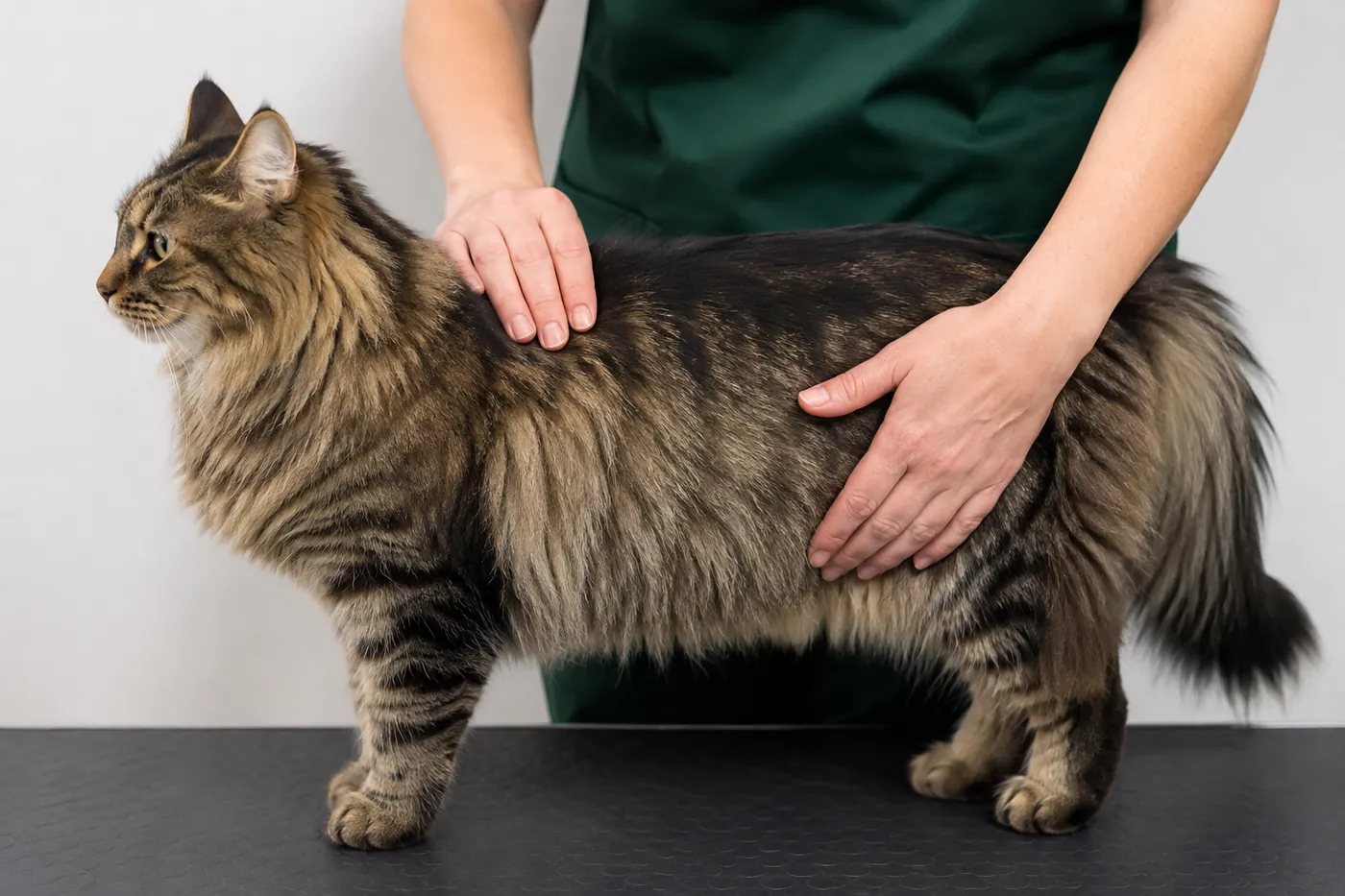
You can use food puzzles that make the cat move without forcing awkward jumps. Scatter a measured portion across low and high stations only when every location is safe and all household cats can eat without guarding.
Track the trend instead of one weigh-in. Growth, a meal, hydration and scale variation can change a single number, while a consistent rise with a fading waist suggests that calories need review.
Reduced appetite is important in any cat and should not be watched indefinitely.
A large body does not provide protection from rapid illness, and thick fur can delay recognition of weight loss until muscle has already declined.
Water should be available in several quiet locations. Increased thirst or larger urine clumps can accompany medical disease, so compare with the cat's usual pattern and seek veterinary advice when the change persists.
During heavy shedding, swallowed hair may increase, but repeated vomiting or appetite loss should not be dismissed as an ordinary hairball. Grooming reduces loose hair, while examination determines whether a gastrointestinal or other health problem is present.
What should you verify before committing?
The adult scale of the decision comes first. This is a cat that may take five years to mature, occupy large equipment and release a substantial undercoat each season.
You should ask for the parents' adult weights and body-condition history, but do not treat a large number as proof of quality.
Healthy breeding aims for the standard, sound movement and stable health rather than producing the heaviest possible kitten.
Look at the coat close to the skin and watch the cat walk, turn and climb. A spectacular ruff cannot compensate for matting, poor condition or awkward movement, and a summer coat may be much less dramatic without being deficient.
Match every laboratory certificate to a registered name, microchip or other permanent identifier. For heart screening, ask who performed it, which method was used and when it occurred, because a normal result is a dated observation rather than a lifetime guarantee.
If buying at a distance, verify the source independently and arrange safe transport before payment. A rushed offer built around unusual colour, enormous predicted size or immediate shipping creates risk without answering the household-fit questions.
- See pedigree or registration records supporting breed identity
- Match GSD IV and PK deficiency reports to both parents
- Ask when and how the parents' hearts were evaluated
- Review veterinary records and health history in close relatives
- Observe the cat climbing, landing, playing and accepting a comb
- Measure home equipment and read written return terms before payment
The strongest choice is a cat whose temperament, equipment needs and records all fit the home.
A rescue may not have parental testing or a pedigree. Assess the cat's actual size, coat, mobility and health without treating an unverified Norwegian Forest Cat label as evidence.
If the household can provide secure height, adaptable seasonal grooming and transparent preventive care, this breed's large body and natural coat become manageable strengths. If those jobs already feel inconvenient, a smaller shorthaired individual may fit daily life better.
Checked Against
- The International Cat Association: Norwegian Forest tica.org
- FIFe: breed standards and breeding rules fifeweb.org
- Fyfe et al.: A complex rearrangement in GBE1 causes perinatal hypoglycemic collapse and late-juvenile-onset neuromuscular degeneration (Molecular Genetics and Metabolism, 2007) pmc.ncbi.nlm.nih.gov
- UC Davis Veterinary Genetics Laboratory: PK deficiency vgl.ucdavis.edu
Published 7 September 2026. Last updated .





