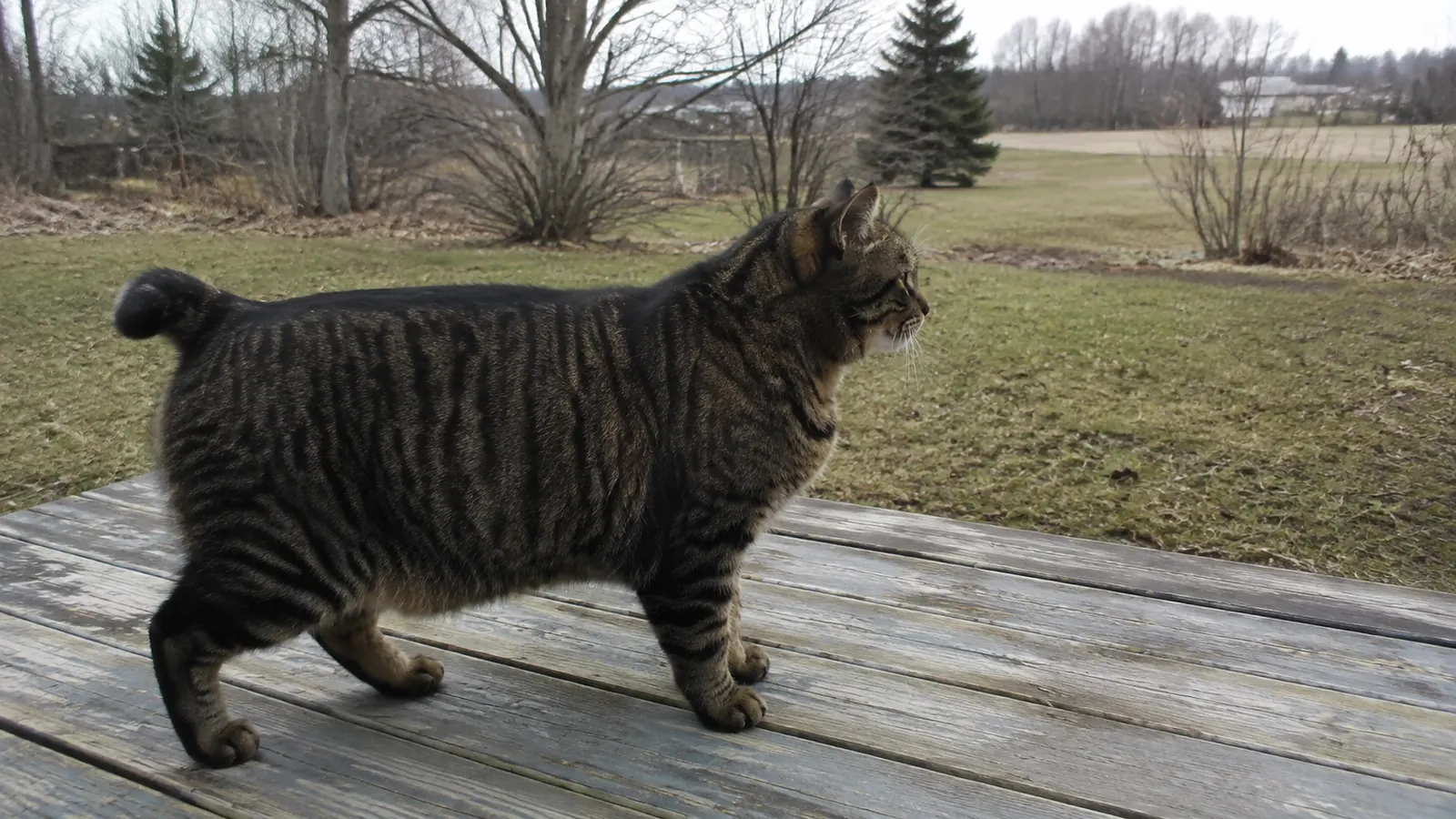
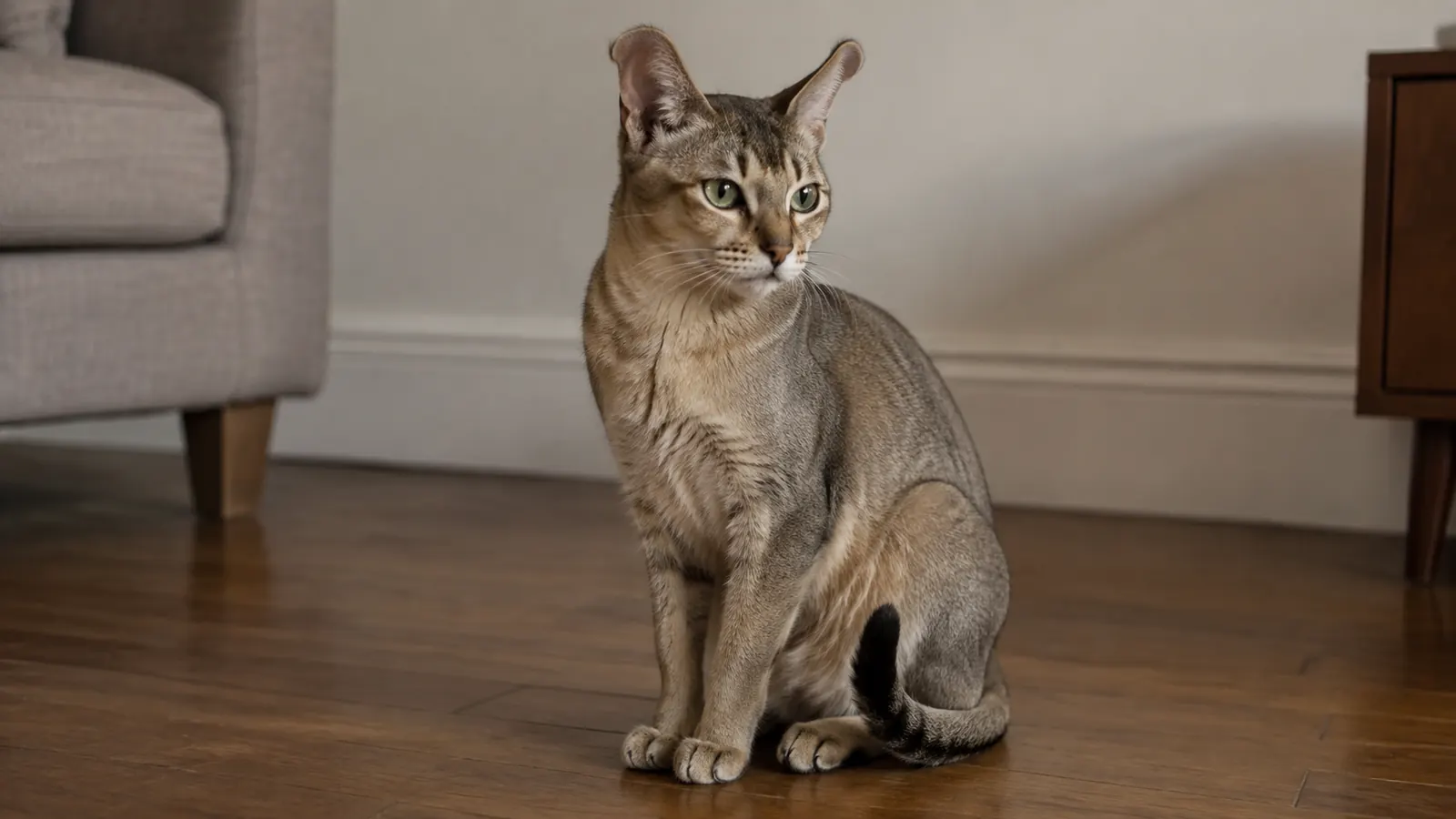
What Is a Siberian Cat, and What Kind of Home Suits One?
A Siberian can suit an active household that wants an affectionate, powerful cat and can provide secure climbing, large equipment and seasonal coat care. It is not a dependable allergy workaround, and the decision should include direct exposure to the individual cat plus documented heart screening.
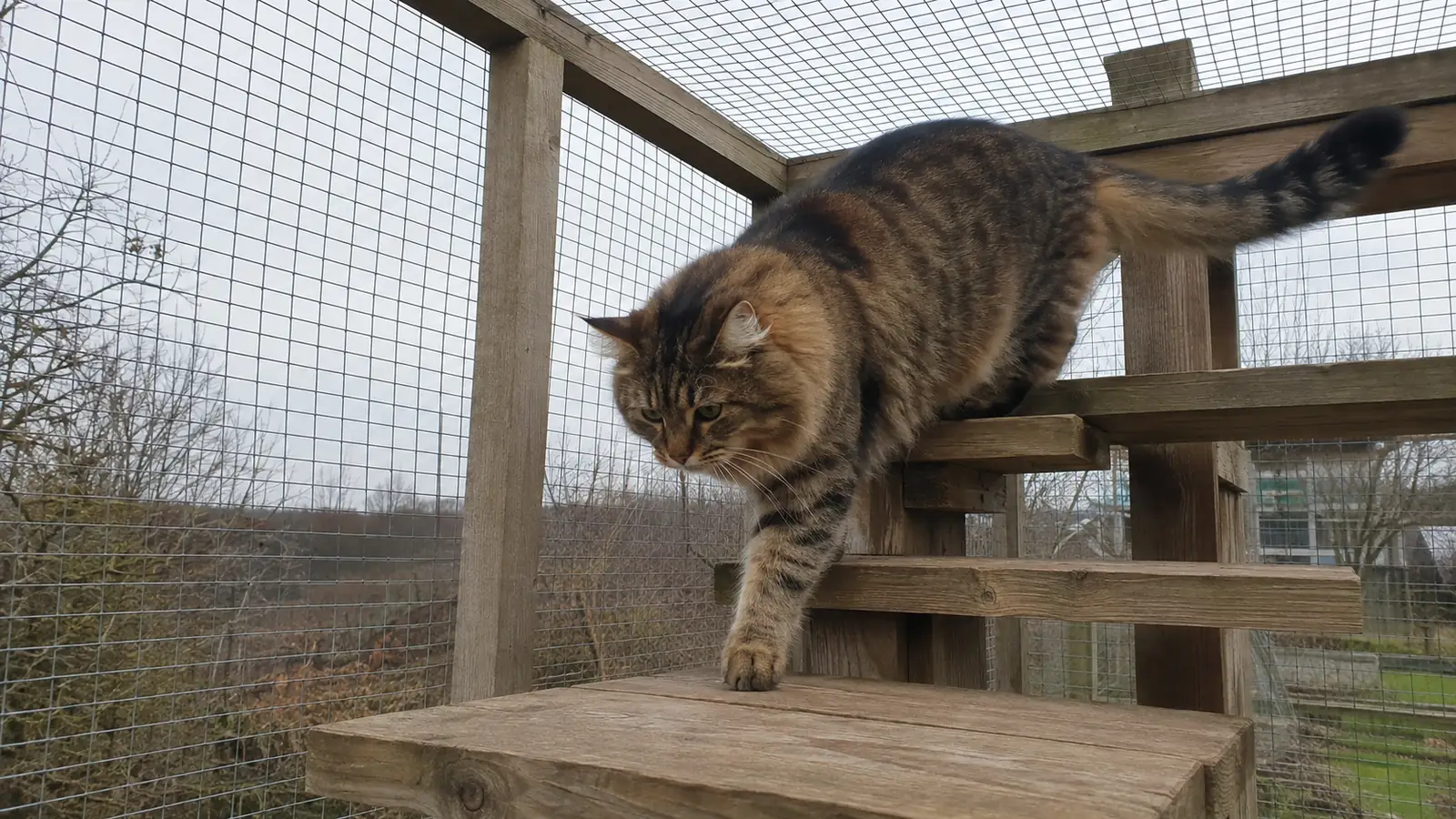
- Origin
- Russia, developed from naturally occurring longhaired cats adapted to a cold climate
- Coat
- Seasonal semi-long triple coat with a water-resistant outer layer, awn hair and dense undercoat
- Size
- Medium-large to large, muscular and rounded, with powerful hindquarters and slow maturation over several years
- Typical weight
- TICA gives approximately 8 to 10 pounds for females and 12 to 15 pounds for males
- Life expectancy
- TICA estimates approximately 11 to 15 years
- Activity level
- Moderate to high. Athletic, playful and capable of substantial jumps, with calmer periods between activity
- Grooming
- Moderate most weeks and intensive during spring and autumn coat release
- Suits
- Homes with secure vertical routes, room for large equipment, interactive play and realistic allergy and health planning
The Siberian is a powerful, slow-maturing cat wrapped in a coat that changes with the season.
Its reputation for affection and athleticism is broadly useful, but the decision becomes practical only when you account for climbing space, grooming surges, adult size and health screening.
Allergy claims deserve special caution. A Siberian still produces cat allergens, and neither pedigree nor a breeder's general experience predicts how one allergic person will respond to one cat.
Who is likely to enjoy living with a Siberian?
A Siberian often suits people who want a cat involved in household life without expecting constant lap time.
TICA and CFA describe the breed as affectionate, intelligent and playful, with enough confidence and physical ability to explore the upper parts of a room.
Many individuals adapt well to respectful children and compatible pets, but social success depends on early experience and careful introductions. A large friendly cat still needs the option to leave, sleep undisturbed and eat without competition.
- Best fit
- An interactive home with strong vertical space and seasonal grooming time
- Companionship
- Often affectionate and interested in household routines
- Activity
- Powerful jumping, climbing and problem solving
- Growth
- Physical maturity may continue until about five years
- Coat burden
- Uneven, with heavy seasonal undercoat release
- Main cautions
- Allergy uncertainty, adult equipment size and heart screening
The breed may be a harder fit for fragile shelving, very small carriers or a household that cannot tolerate hair during seasonal shed.
Long workdays also need a plan for play and social contact rather than an assumption that a second cat automatically solves boredom.
How the individual behaves around ordinary movement and handling shows more than a warm breed description can, because the temperament match is with one cat.
How can you distinguish a Siberian from other forest-type cats?
The Siberian standard favors rounded contours: a broad modified wedge, rounded muzzle, substantial barrel-shaped torso and strong hindquarters.
The body should look powerful without becoming square or coarse.
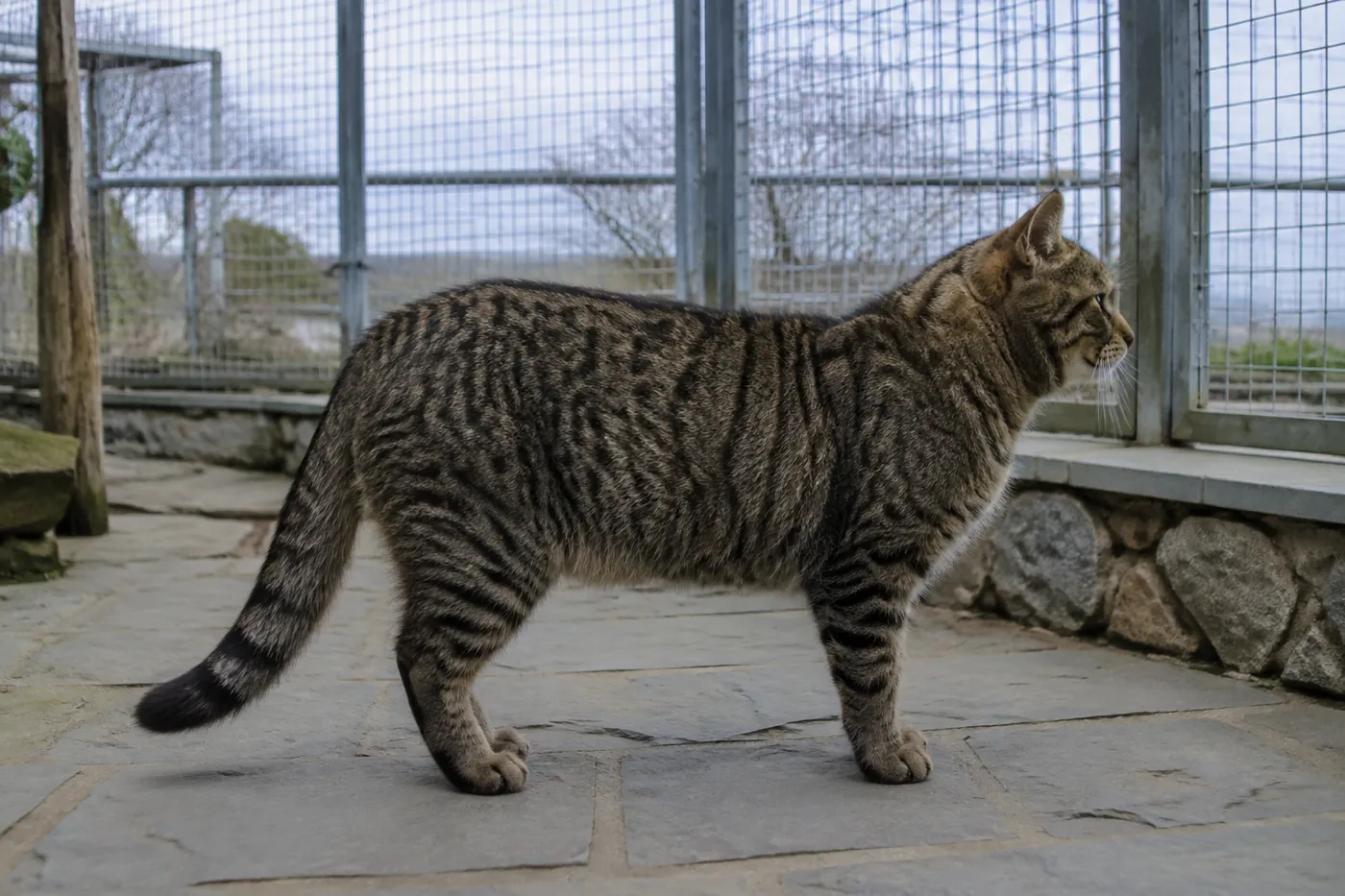
The coat has multiple functional layers and becomes fuller in colder seasons. A neck ruff, britches and bushy tail can be dramatic in winter, while the same cat may look much leaner after releasing undercoat.
The Norwegian Forest Cat carries a more clearly triangular head and straight profile.
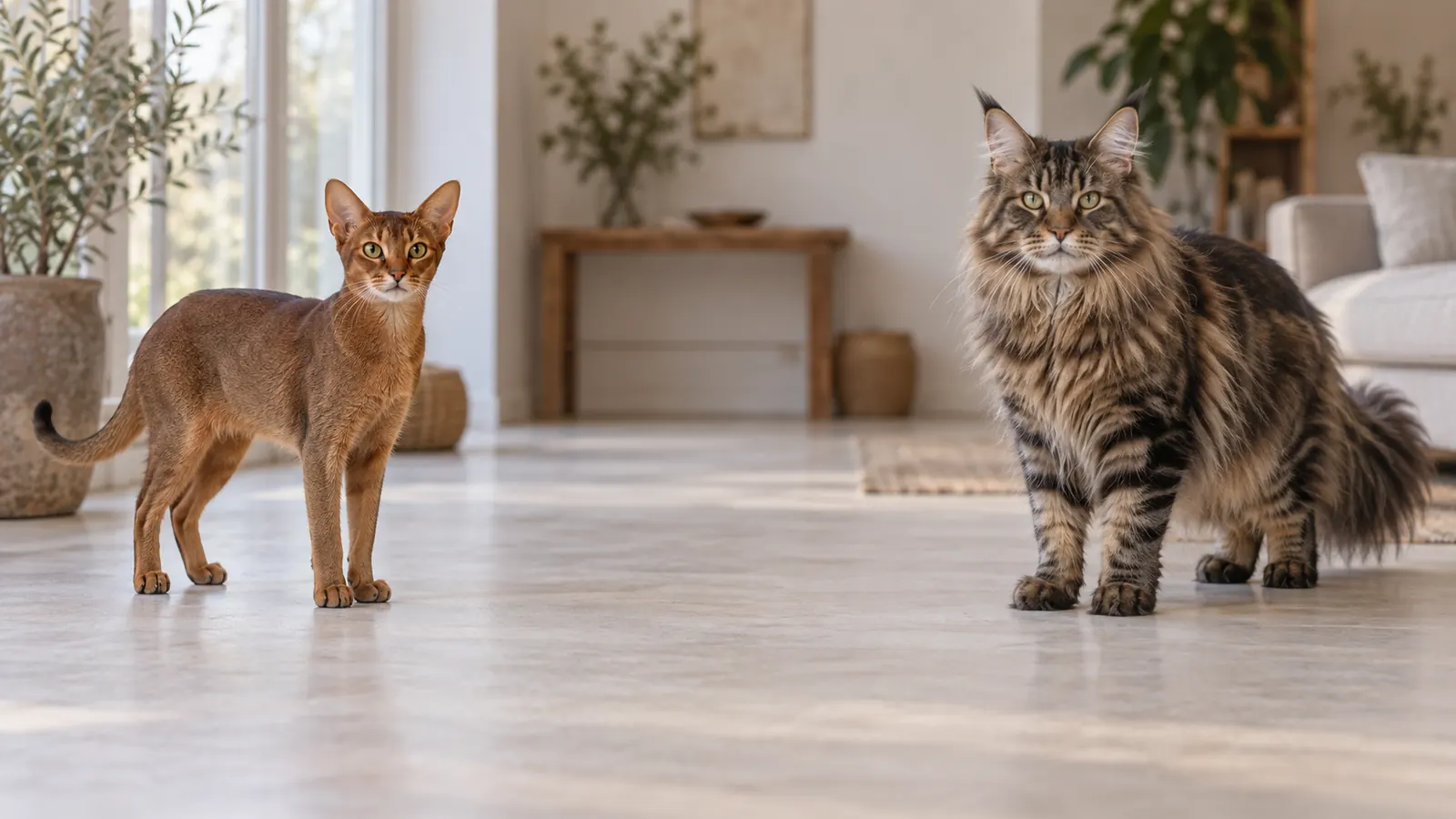
A Maine Coon is associated with a longer rectangular outline and square muzzle, whereas the Siberian's visual language is rounded and compactly powerful.
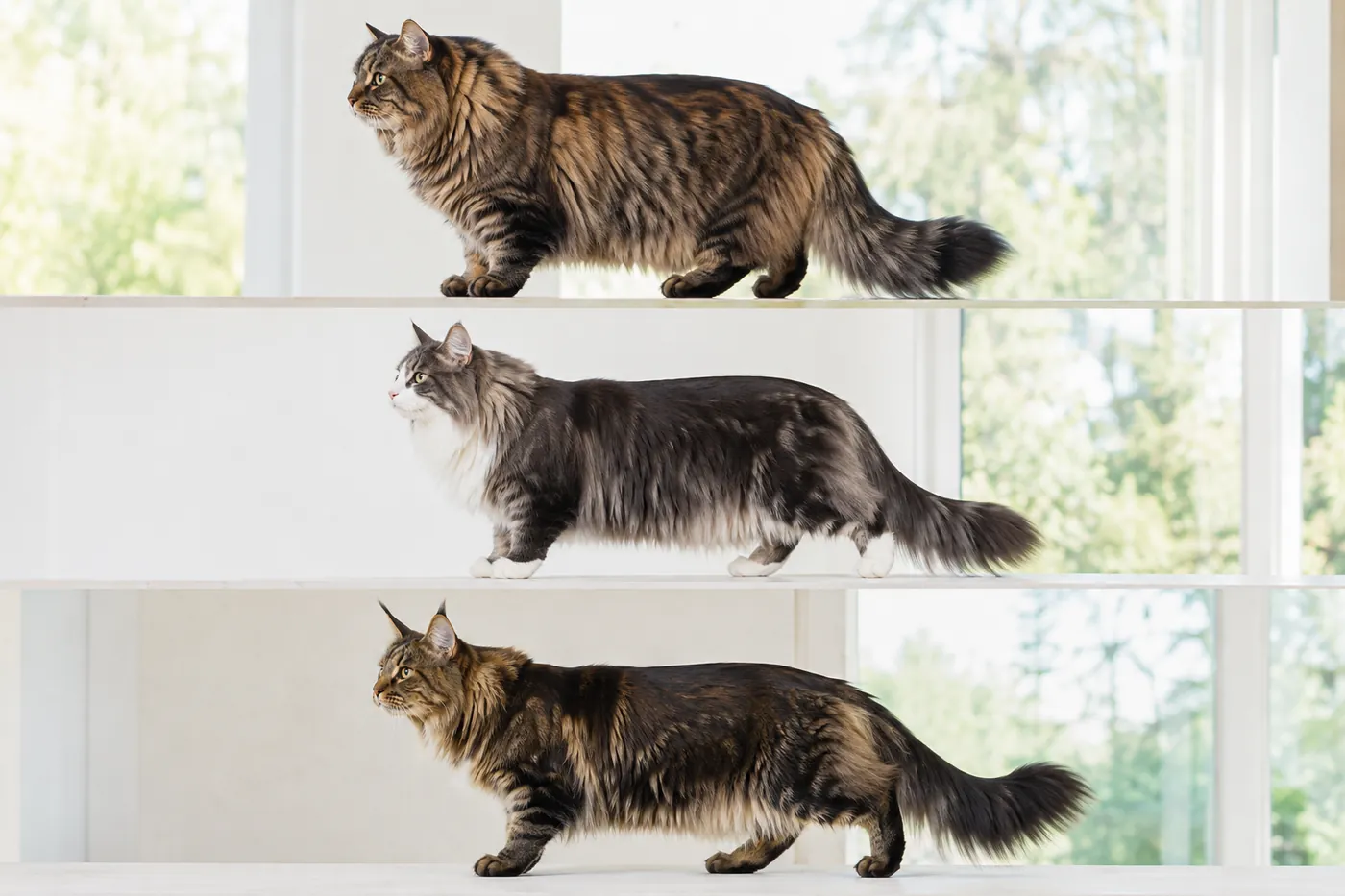
Long fur, ear furnishings and a thick tail do not prove breed identity. A shelter label such as Siberian mix describes appearance unless pedigree or registration supports it.
Colour does not settle identity either. Siberians occur in many colours and patterns, and some registries use the name Neva Masquerade for colourpoint cats while others treat that appearance within the Siberian standard, so the paperwork needs to identify the registry as well as the breed.
Photographs also exaggerate the features people use for comparison. A low camera can lengthen the legs, a winter ruff can square the head, and a crouching cat can hide the rounded barrel, which is why a full-body view and a pedigree answer different parts of the question.
How large do Siberian cats become?
TICA lists females around 8 to 10 pounds and males around 12 to 15 pounds, but healthy adults can fall outside those examples.
Sex, lineage, skeletal size and body condition matter more than trying to reach the largest advertised figure.
Siberians mature slowly and may continue adding chest depth and muscle until three to five years of age. Extra food cannot hurry sound development; it can only add tissue the cat does not need.
- First yearHeight and length change quickly while coordination develops
- One to three yearsFrame fills and muscle becomes more obvious
- Three to five yearsSome cats continue broadening toward mature proportions
- Every winterCoat volume can make the body look larger
- Every summerUndercoat loss can reveal a much leaner outline
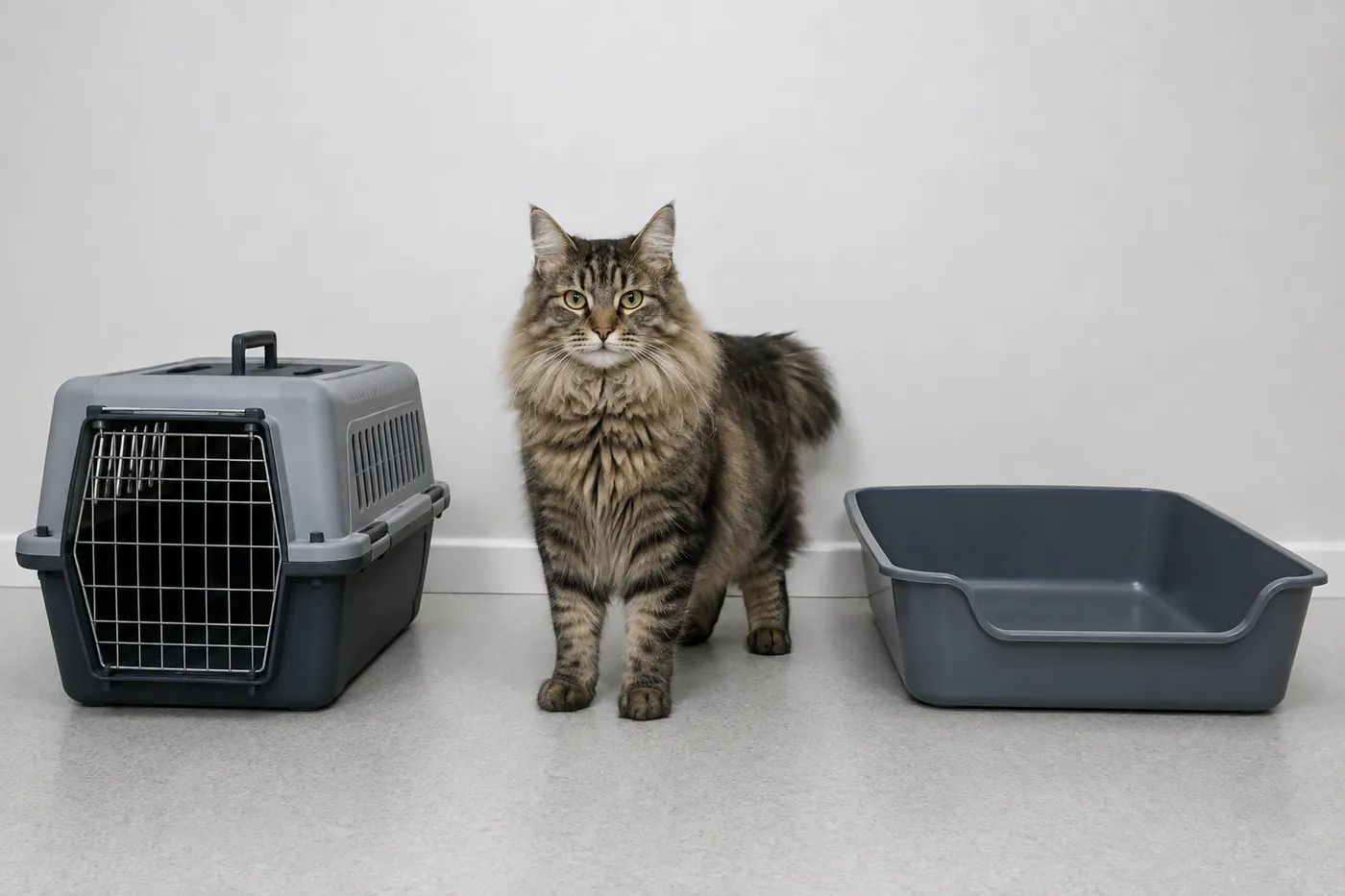
The carrier needs room for the adult to stand, turn and lie naturally, and a base that does not bow. The carrier guide explains how to measure usable space rather than trusting size labels.
Litter trays need similar realism. A long cat should be able to turn without stepping into previous waste, and a high-sided tray still needs an entrance appropriate to the cat's age and mobility.
Equipment bought for a kitten is worth rechecking at two or three years. A carrier or tower bought for a ten-month-old may still look large while its doorway, base or landing has become restrictive for a mature chest and heavier frame.
Growth should remain proportional rather than simply upward. Monthly weight records are useful only alongside rib feel, waist, muscle and veterinary assessment, because a winter coat and a maturing frame can both conceal gradual fat gain.
What kind of exercise and enrichment does a Siberian need?
Strong hindquarters give many Siberians impressive jumping ability.
Daily life should offer secure height, chase play, object exploration and food-search tasks, with enough open floor area for acceleration and safe landing.
Tall equipment must be anchored. Broad steps and more than one route down matter because a powerful cat can shift a light tower or become trapped when another animal blocks the only exit.
- Anchor towers and shelves into suitable wall structure
- Use platforms wide enough for the whole adult body
- Keep landing zones free of sharp or unstable objects
- Provide a second route away from favored high places
- Rotate wand, retrieve and food-search activities
- Lower jump demand when age, weight or pain changes movement
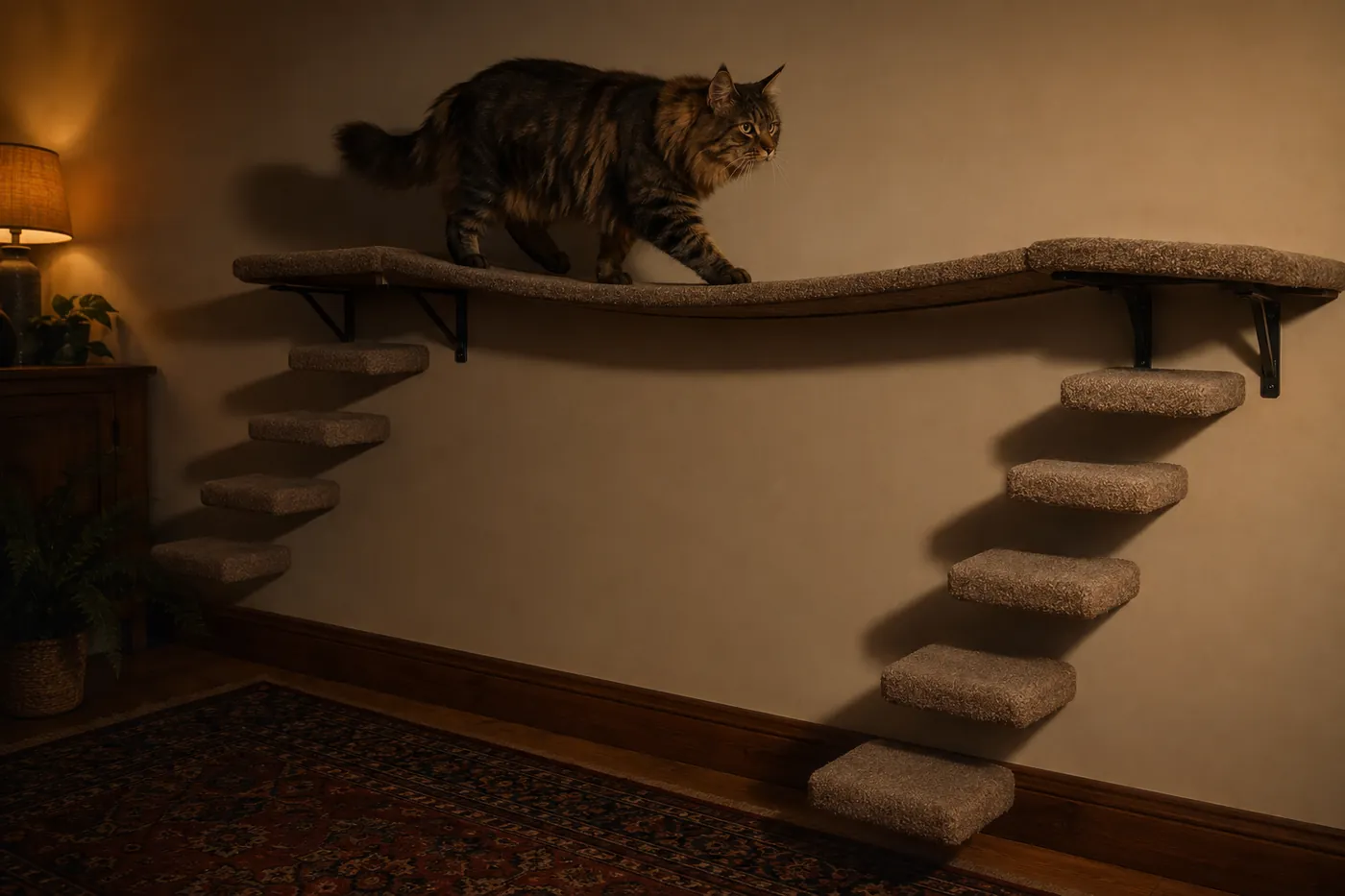
Several short sessions usually fit feline attention better than one prolonged workout.
Reward-based clicker training can turn that intelligence toward recall, carrier entry and cooperative grooming.
Outdoor access should be enclosed or otherwise securely controlled. A weather-resistant coat does not protect against traffic, theft, parasites, toxic plants or fights.
Indoor enrichment should include quiet observation as well as vigorous play. A window platform, scent-safe object to investigate or puzzle that can be solved at the cat's pace can occupy a Siberian without turning every interaction into jumping.
Water play is sometimes mentioned in breed descriptions, but it is an individual preference rather than a care requirement. A cat that paws at bowls or taps may enjoy a stable fountain on a protected floor, which says nothing about whether it wants to swim or be bathed.
What is the Siberian temperament like day to day?
Siberians are frequently described as calm, confident and devoted, yet many remain playful well into adulthood.
They may follow people from room to room, chirp or trill, and choose nearby furniture rather than insist on being held.
That mixture works best when family members notice consent. A cat that approaches for contact should still be allowed to end it, and children should stroke on the floor rather than carry a heavy body around the house.
| Situation | Helpful setup | What to watch |
|---|---|---|
| Busy family room | High retreat with two exits | Cat can observe without being handled |
| Young visitor | Adult-supervised floor play | No chasing, grabbing or cornering |
| Resident cat | Separate resources and gradual scent work | Blocking at food, litter or stairs |
| Dog household | Controlled distance and escape height | Staring, pursuit or trapped routes |
| Quiet workday | Timed play and food search | Restlessness or persistent attention seeking |
A confident kitten can become cautious after pain, conflict or a frightening event. Sudden hiding, irritability or refusal to jump calls for a health and environment review before any push to be social.
How does the triple coat change through the year?
The Siberian coat includes a dense underlayer beneath protective awn and outer hairs.
Seasonal change can release large amounts of undercoat over a short period, which is why one fixed weekly schedule does not describe the real workload.
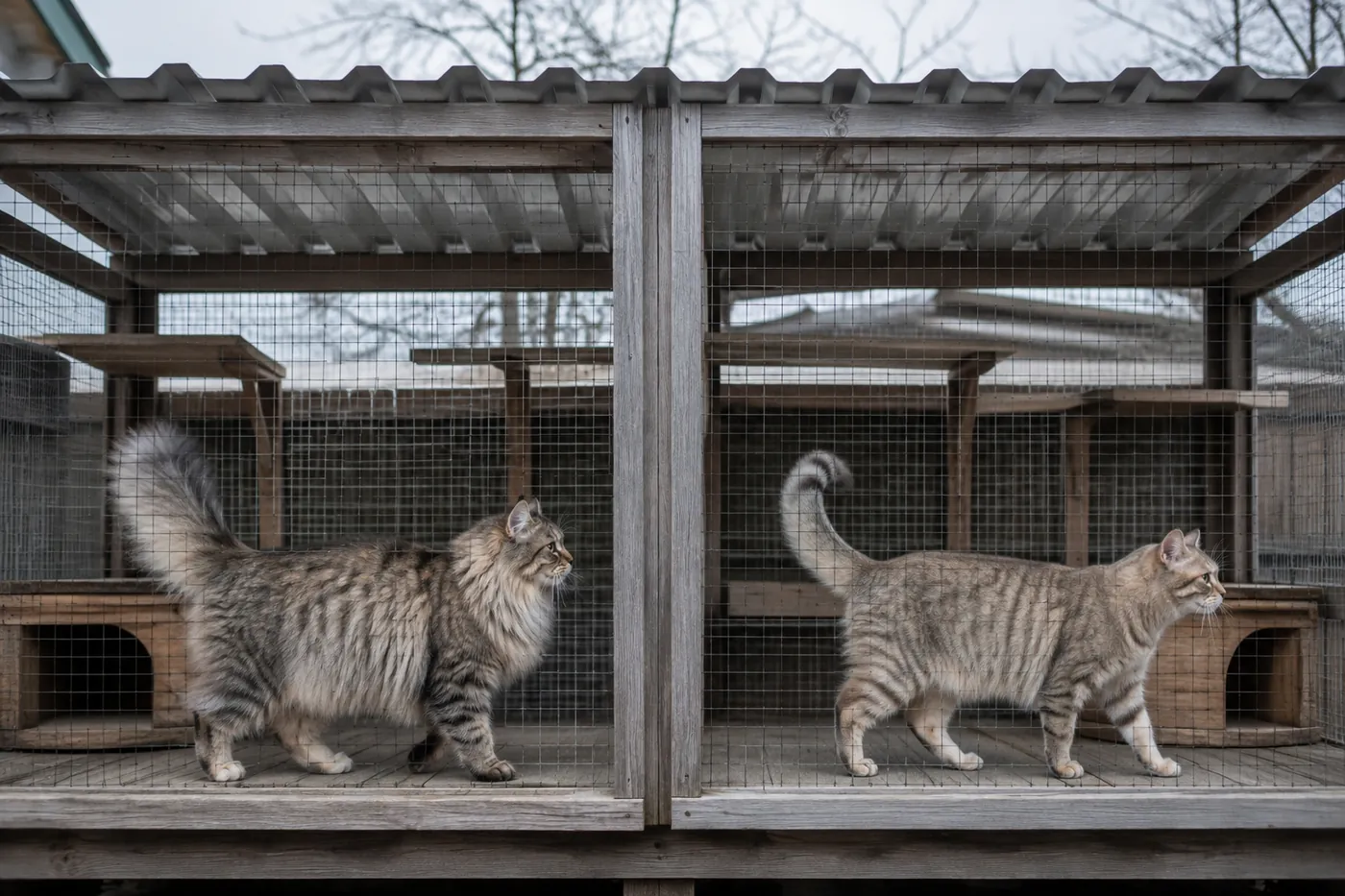
During stable periods, combing a couple of times a week may keep the coat open. During spring and autumn release, daily checks around the armpits, belly, ruff and trousers can remove loose undercoat before it compacts.
Work from the hair ends toward the roots and support the skin. The long-coat brushing guide explains how to separate a tangle without dragging it through the full length.
- Feel through friction areas before using a tool
- Divide the coat into small sections
- Comb loose ends before moving closer to the skin
- Pause when the skin pulls or the cat shifts away
- Increase frequency when undercoat releases freely
- Seek help for a tight mat rather than cutting near folded skin
Bathing is not routine for a healthy indoor Siberian. When contamination or a veterinary treatment requires washing, rinse the dense layers thoroughly and dry the undercoat so moisture does not remain trapped against skin.
Reduced self-grooming, a greasy patch, dandruff or sudden matting can accompany pain or illness. A coat problem may be the first visible clue, particularly when thick hair hides weight loss.
Are Siberian cats hypoallergenic?
No cat breed is reliably allergen-free. Fel d 1, the major cat allergen, is produced primarily in saliva and skin-associated glands, so a long coat does not create it and shaving the coat does not remove the source.
Some Siberians may produce different measured amounts, and an allergic person may tolerate one individual better than another. Current evidence does not support guaranteeing that a Siberian kitten will be safe for a particular household.
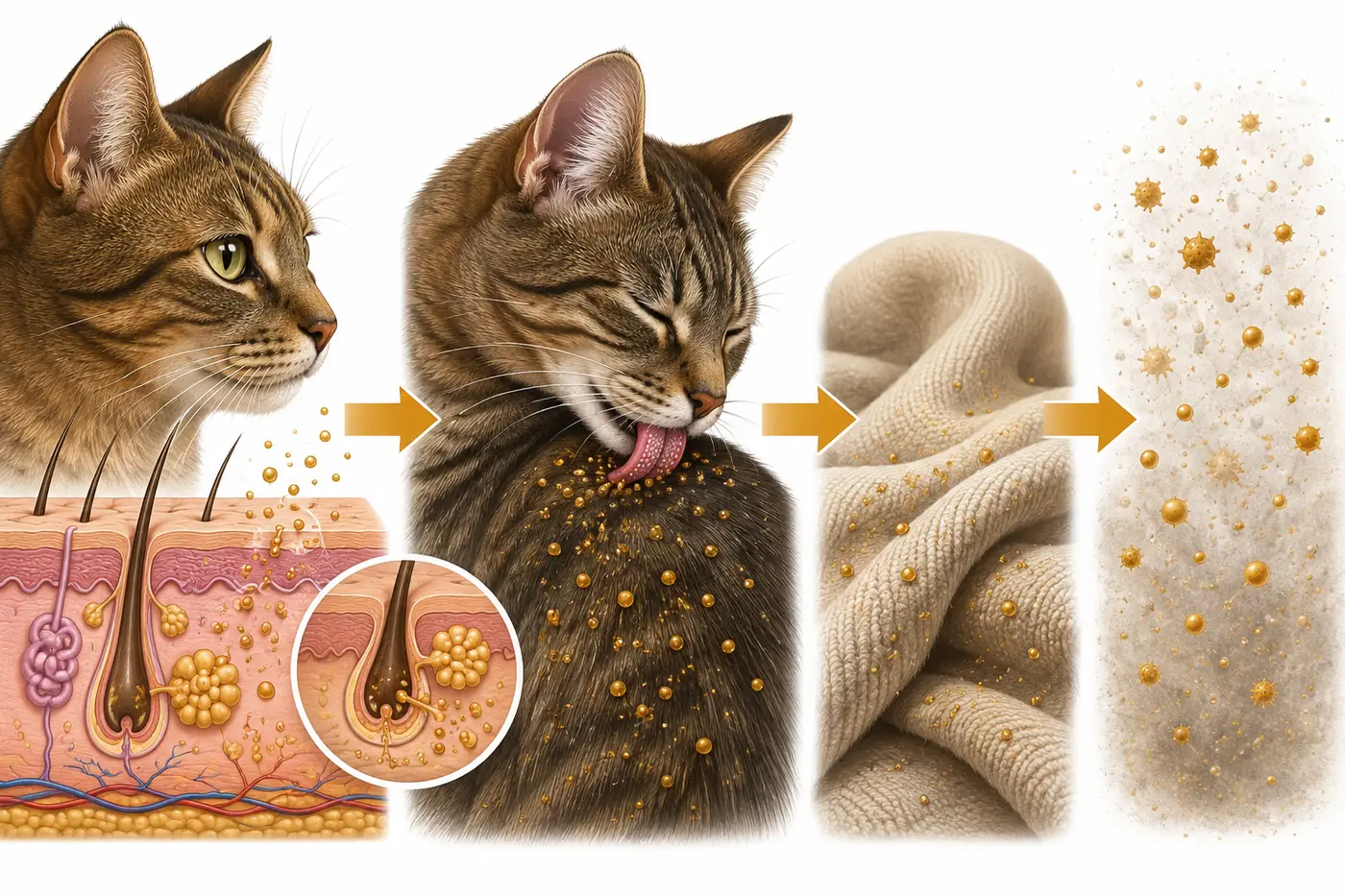
Testing only with a young kitten has limits because allergen production, grooming and the home reservoir can change over time. A visit also differs from continuous exposure to bedding, upholstery and airborne particles.
Environmental measures may reduce exposure but do not guarantee control. Keeping the bedroom cat-free when advised, washing textiles and suitable filtration can help, under medical guidance rather than coat marketing.
The most informative exposure resembles the future home as closely as is safe. Briefly touching one kitten in a clean room tests something different from spending time with an adult, handling bedding and remaining in the space after the cat has groomed.
Allergy symptoms can also vary with season, ventilation and other allergens already present. That variability is a reason to involve the treating clinician and prepare a contingency plan, not evidence that a later reaction proves the breeder chose the wrong Siberian.
Which health screening should a breeder document?
Hypertrophic cardiomyopathy is the central breed-specific screening discussion. HCM can be silent, and a normal-looking, active cat may still have structural heart changes detectable by echocardiography.
A useful record names the veterinary cardiologist who performed the examination, the method used and the date each breeding cat was last assessed. There is no universal Siberian DNA result that replaces a dated cardiac scan.
Some breeders also use broad genetic panels, but a large panel is useful only when you can identify which variants are relevant and interpret carrier results correctly. Only the actual reports show which variants were tested and how carrier results were read.
Routine preventive care remains important regardless of lineage. Dental disease, obesity, kidney disease and infections are not cancelled by pedigree testing, and every kitten or adult needs its own veterinary examination.
Urgent breathing difficulty, collapse or sudden hind-limb weakness needs immediate veterinary care. A new murmur, reduced stamina or unexplained weight loss should also prompt assessment.
The cardiac record needs to link to the actual parent through a microchip or registered identity. A scan without a name, date, examiner and measurement summary cannot be connected reliably to the litter being offered.
Family history becomes more useful as relatives age. The health of two young parents says little about disease that appears later, so ages and causes of death among grandparents, siblings and earlier offspring add context that a current normal scan cannot supply.
How a breeder handles an unclear or borderline scan says more than a list of results all described as normal. A careful breeding program can explain repeat timing, specialist interpretation and why a cat was removed from breeding without turning uncertainty into a reassuring marketing label.
The same records help after the kitten comes home. With copies on file at the cat's own practice, future murmurs, reduced stamina or scan findings can be interpreted against family information instead of leaving the documents in a purchase folder.
How should you feed a slow-growing, thick-coated cat?
The base is a complete diet suited to the cat's life stage, with the full daily energy intake measured. A Siberian kitten needs steady growth, while an adult needs enough calories to maintain lean muscle without using breed size as permission for unlimited food.
The coat makes body condition a hands-on job. Feel the ribs, trace the waist and compare the spine and hips over time rather than judging fullness in a winter photograph.
The portion-size guide compares calories per can, pouch or cup. Treats and puzzle food count toward the same daily total even when they are delivered as enrichment.
Weight tracked on the same scale shows the trend, and a veterinarian can interpret it. Growth, hydration and a full stomach can shift one reading, while a steady rise with a disappearing waist is more informative.
Water should be available in several quiet locations. Changes such as larger urine clumps, persistent thirst, reduced appetite or repeated vomiting deserve attention instead of being dismissed as ordinary traits of a big longhaired cat.
What should you verify before committing?
The household comes before the coat: the planned carrier, tray, tower platforms and highest landing all need to work for an adult Siberian.
Meeting the cat or close relatives across play, rest and gentle handling shows more than a listing, and so does hearing how kittens experience visitors, ordinary home sounds, nail care, combing and carrier travel before placement.
A well-raised kitten should have opportunities to recover from novelty rather than being kept in constant stimulation. Whether it returns to food, rest or play after a new sound tells you more about resilience than a kitten that freezes or performs for a few minutes.
An adult offers an advantage here. Adult coat burden, body size, social preferences and allergy exposure are visible now, which removes several uncertainties that even careful kitten records cannot answer.
The same cat will have less jumping power later. Broad intermediate steps, a lower carrier opening and resting places that remain reachable allow the household to adapt without removing every familiar high location when age or arthritis changes movement.
Insurance or a dedicated veterinary fund deserves attention before purchase because repeated cardiac imaging and care for a large cat can be costly. The useful question is whether those expenses remain manageable alongside routine dental work, nutrition and preventive appointments.
- See pedigree or registration evidence for breed identity
- Review dated cardiac reports and older-family heart history
- Ask what genetic tests were performed and read the results
- Observe confident movement, recovery after play and handling choice
- Test realistic allergy exposure with medical guidance
- Read veterinary, congenital-health and return terms before payment
Claims of giant size, guaranteed allergy safety or permanent kitten colour are warning signs. They turn uncertain biological traits into sales promises and do not answer whether the source raises healthy, well-socialized cats.
TICA estimates roughly 11 to 15 years. That is a long relationship, in which grooming intensity, calorie needs, climbing height and veterinary costs all change.
The right Siberian home can provide space, contact, seasonal work and evidence-based care. When any one of those is missing, the impressive coat and friendly reputation do not repair the mismatch.
Checked Against
- The International Cat Association: Siberian tica.org
- The Cat Fanciers' Association: Siberian cfa.org
- Sartore et al.: Polymorphism analysis of Ch1 and Ch2 genes in the Siberian cat (Veterinary Sciences, 2017) pubmed.ncbi.nlm.nih.gov
- Cornell Feline Health Center: hypertrophic cardiomyopathy vet.cornell.edu
Published 7 September 2026. Last updated .