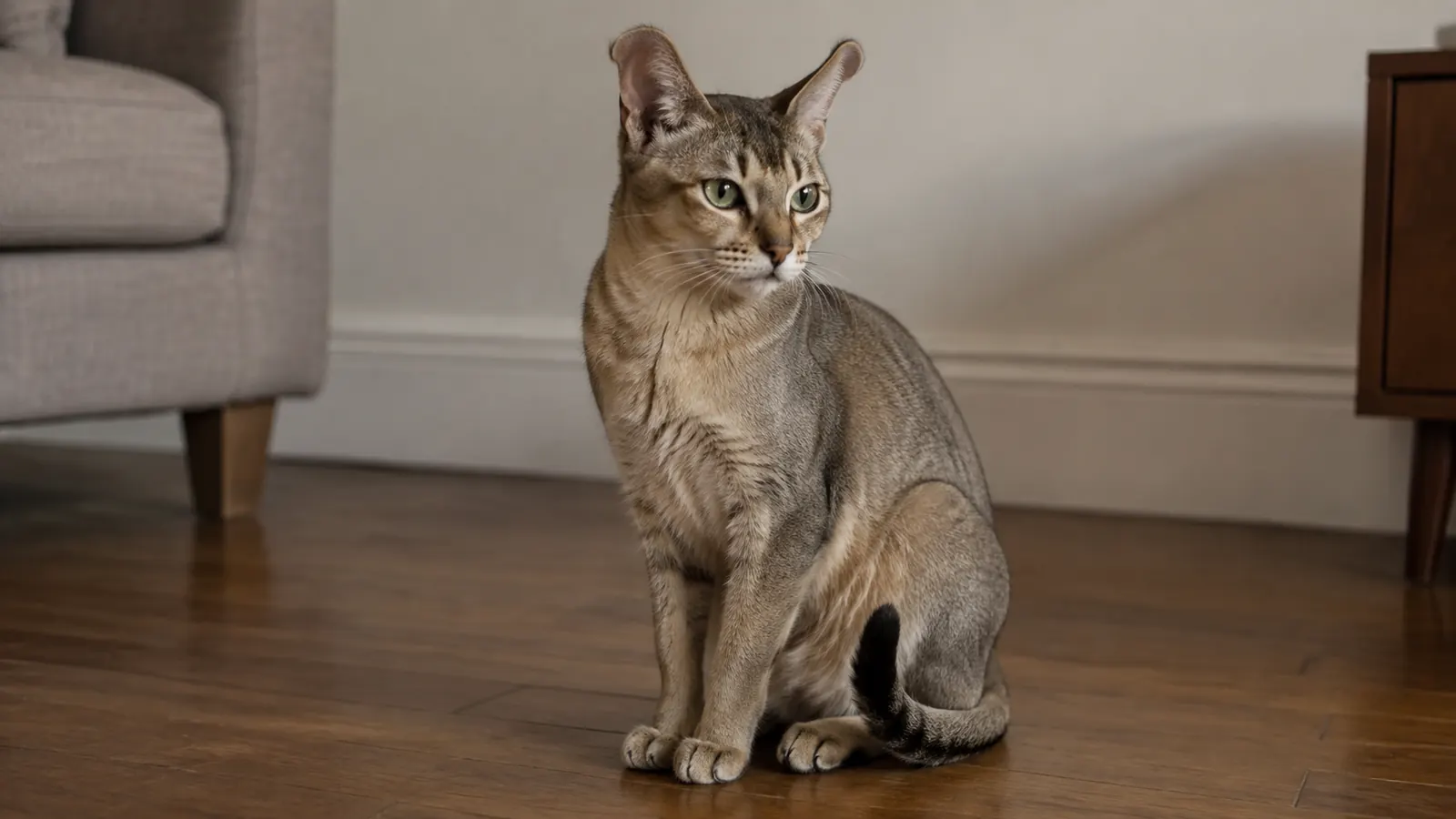
What Is a German Rex Cat and How Do You Care for One?
The German Rex is a medium European breed defined by a short, soft coat that forms loose waves without normal guard hairs. Its curl can share an LPAR6 basis with the Cornish Rex, but the German Rex keeps a rounder head and more ordinary muscular body; care centres on protecting the fine coat, monitoring skin and choosing from a small population with transparent records.
- Origin
- Germany, developed from the curly-coated cat Lämmchen found in Berlin in the early 1950s
- Coat
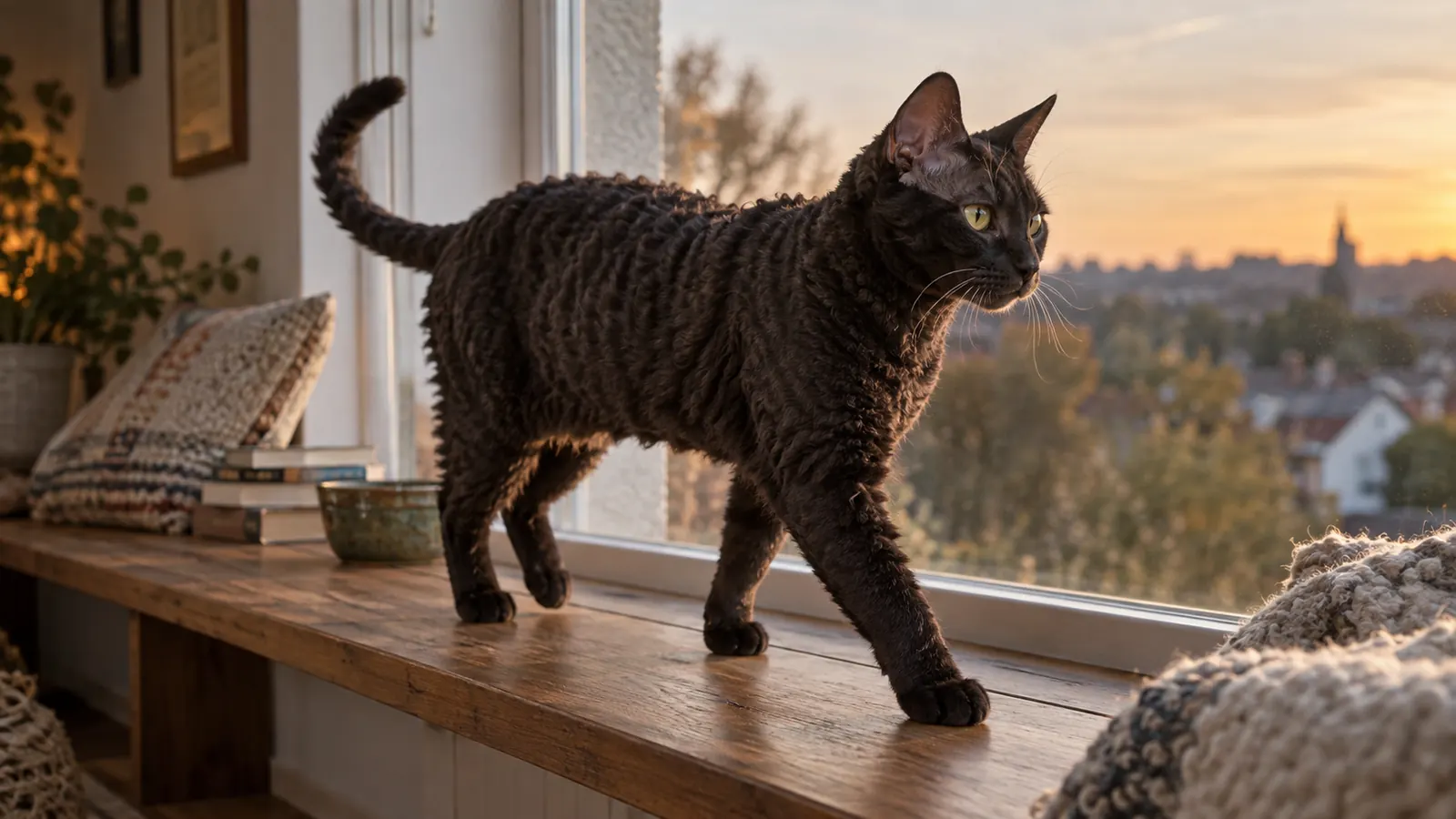
- Short, fine, silky and evenly waved, with no guard hairs and curled whiskers
- Size
- Medium, muscular and athletic with a rounded head and medium-length legs
- Typical weight
- No dependable German Rex population range was found in current primary registry sources
- Life expectancy
- Not established by German Rex-specific population evidence
- Activity level
- Moderate to high. Alert, interactive and suited to short play and training sessions
- Grooming
- Low-force but observant. Handle the fine coat gently and respond to oil, skin or ear changes rather than bathing by calendar
- Suits
- Indoor homes wanting an interactive curly-coated cat and prepared to verify scarce breed records without assuming rarity means fragility or health
German Rex is a distinct breed, not a geographic nickname for any curly-coated cat.
FIFe recognises it under the code GRX and describes a medium muscular cat whose soft waves cover the body evenly.
The coat creates the first question, but rarity creates the harder one. A buyer needs to verify ancestry and family health in a small population instead of accepting a curly coat as proof of identity.
Where did the German Rex come from?
FIFe traces the modern breed to Lämmchen, a black curly-coated female found near a Berlin hospital in the early 1950s.
She became the maternal ancestor of the recognised German Rex population.
Earlier curly cats were reported in Germany, but a striking historical story does not authenticate a kitten today. Current pedigree records must connect the individual to the registered breed rather than to a seller's account of its coat.
The breed remains uncommon outside parts of Europe. Limited availability is a reason to slow down and inspect documents, not a reason to accept shipping, health or socialisation practices that would be rejected for a common breed.
Ask which registry recorded the parents and how the kitten connects to those records. The names, dates, sex, colour and breeder details should form one traceable chain rather than a collection of screenshots with no matching identity.
A curly rescue or unregistered pet can be described honestly as a rex-coated cat without being assigned this breed. That distinction protects both the cat's real history and the meaning of the German Rex population.
Is a German Rex the same as a Cornish Rex?
No.
They are separate registered breeds with different body standards and histories, although research found the Cornish Rex LPAR6 curl variant segregating in German Rex cats.
That shared molecular route helps explain why crosses between the populations historically produced curly offspring. It does not erase the German Rex's rounder head, broader chest or distinct pedigree identity.
| Feature | German Rex | Cornish Rex | Devon Rex |
|---|---|---|---|
| Curl genetics | LPAR6-related curl documented in the population | LPAR6-related recessive curl is established | KRT71-related curl |
| Body | Medium, muscular and conventionally proportioned | Fine-boned with long legs and an arched outline | Smaller, broad-chested and less elongated |
| Head | Rounded with developed cheeks | Egg-shaped with a Roman profile | Short wedge with very large low-set ears |
| Coat | Short, soft and loosely waved without guard hairs | Very short tight marcel waves | Loose, uneven waves with variable coverage |
| Identity | FIFe breed code GRX | Separate recognised breed | Separate recognised breed |
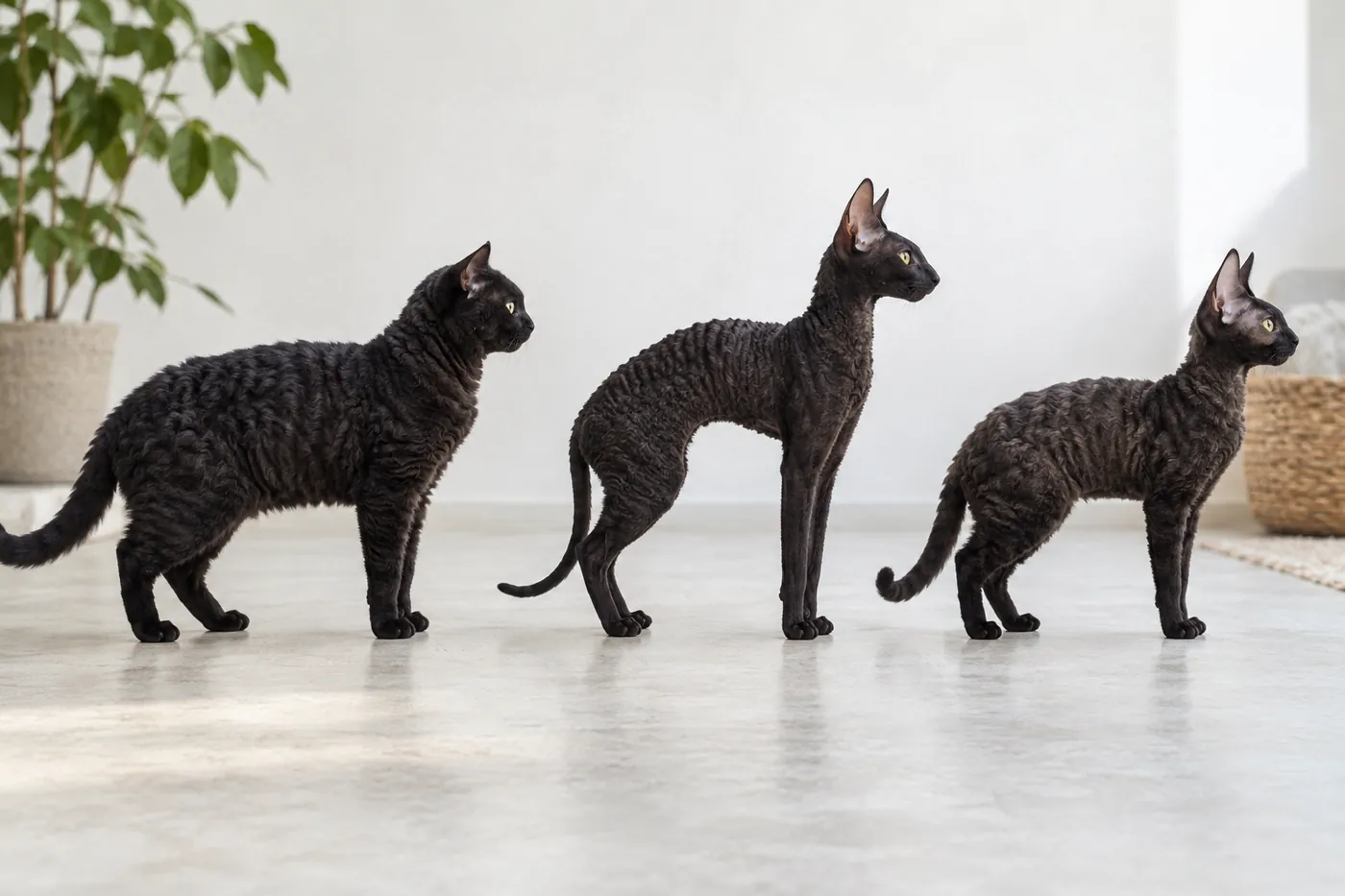
Genetic similarity describes the coat mechanism, not an interchangeable companion. Use the whole cat, its pedigree and the applicable standard when comparing breeds.
The LPAR6 finding explains why two populations can share a recessive curl mechanism while registries preserve them as separate breeds. A genetic result can support one coat variant, but it cannot supply the historical pedigree, body type or breeding records needed for breed identity.
The comparison also matters for care expectations. A German Rex should not be assumed to have the Cornish Rex's finer outline or the Devon Rex's highly variable coverage simply because all three names contain rex.
What should a German Rex coat look and feel like?
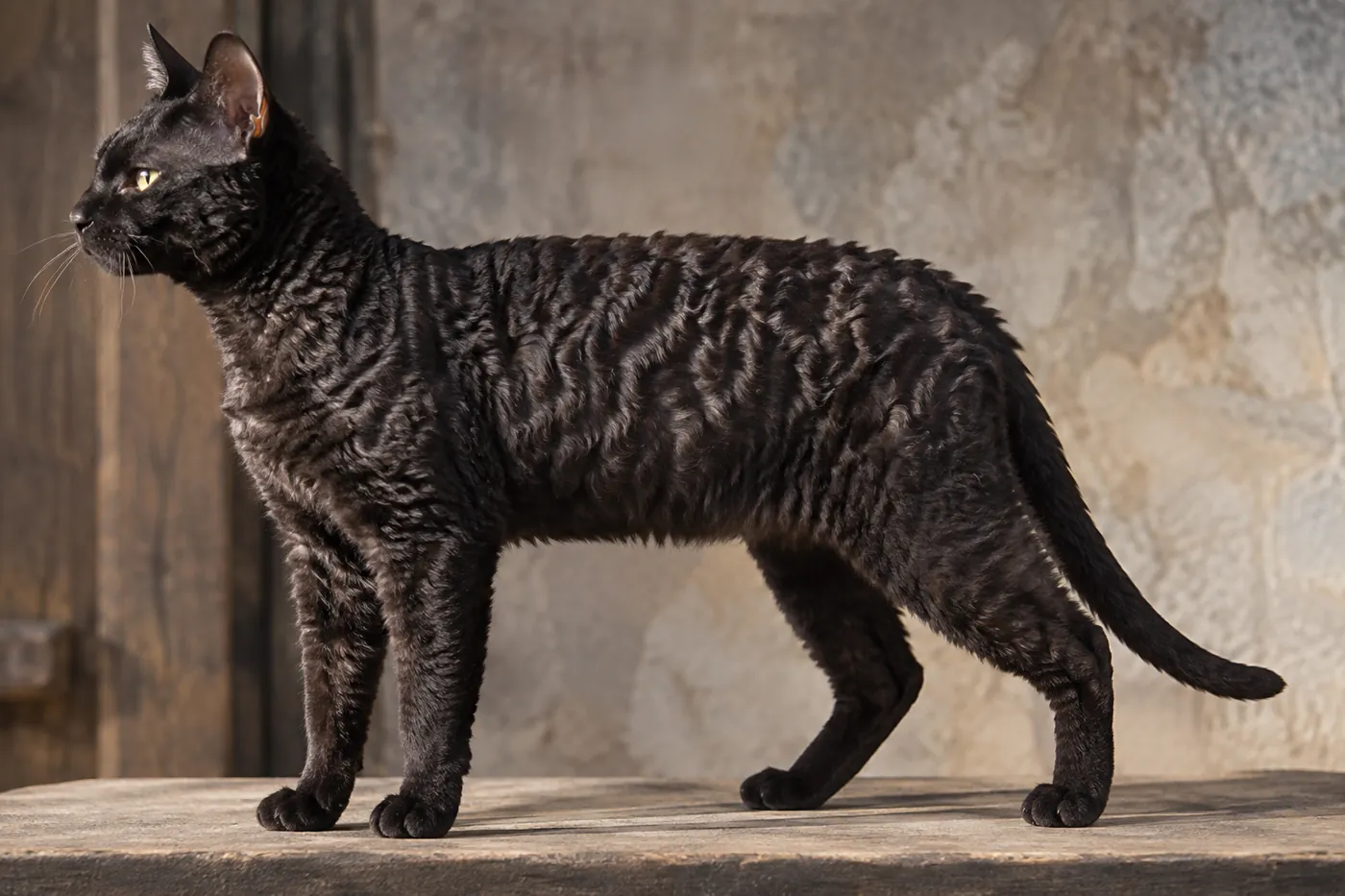
FIFe asks for short, fine, silky hair with regular waves across the whole body.
Guard hairs are absent, and the whiskers should curl rather than remain straight.
Wave depth can vary across body regions and with age. A kitten's coat may change as adult hair grows, so a perfectly uniform early curl should not be promised as a permanent texture.
- Texture
- Fine, silky and soft
- Wave
- Regular and visible across the body
- Guard hair
- Absent under the FIFe standard
- Whiskers
- Curled
- Body
- Medium, muscular and athletic
- Head
- Rounded with well-developed cheeks and chin
- Accepted colours
- All recognised colours and patterns
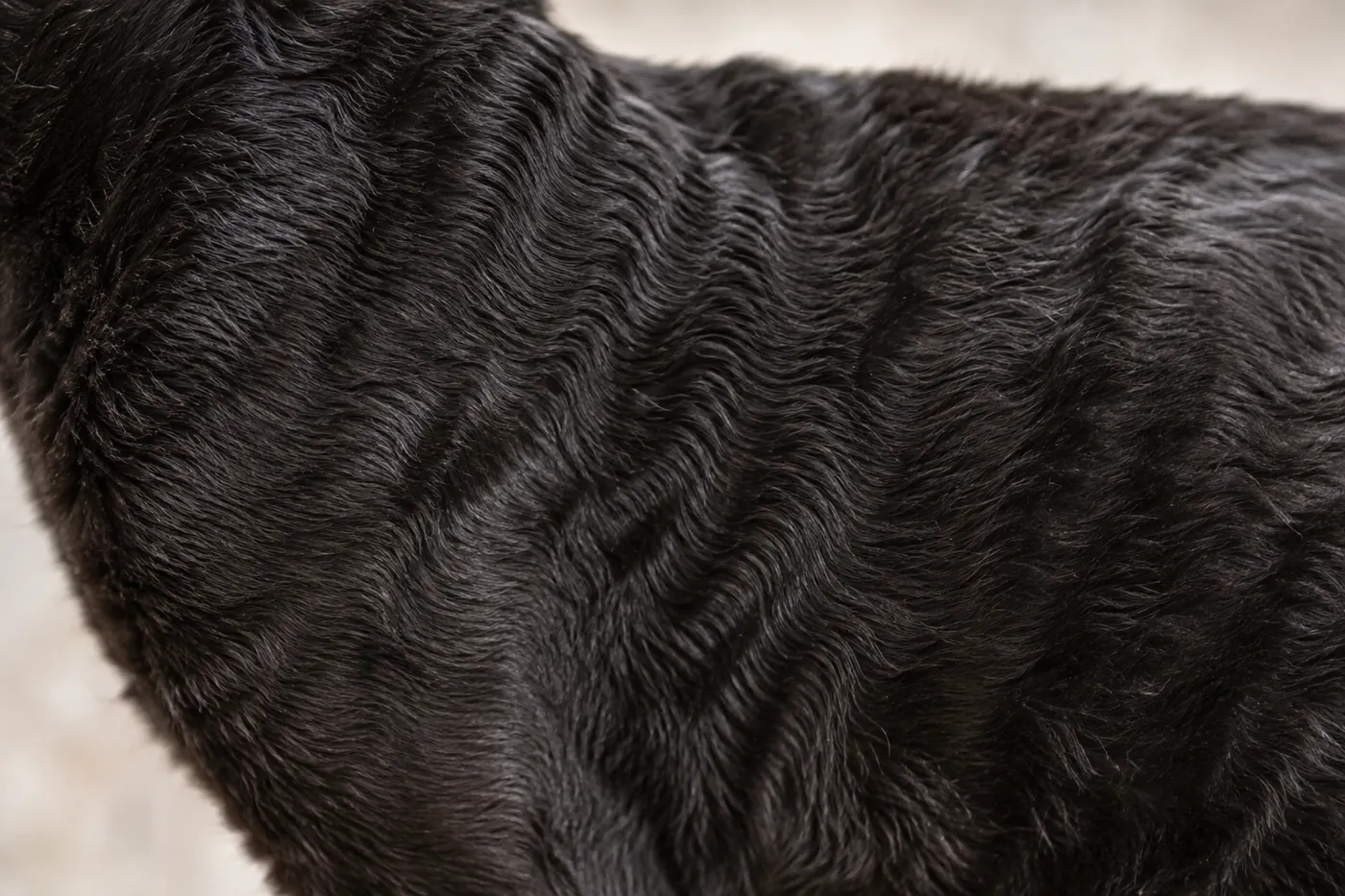
Patchy hair loss, redness, scaling or broken whisker pads are health findings, not stronger rex expression. Ask whether a sparse area is normal for that individual or a recent change requiring assessment.
Coat quality can continue changing as a kitten matures, and some lines may not show their most settled wave until later adulthood. Compare change over time with dated photographs instead of judging the cat against one carefully arranged sales image.
Curled whiskers may be shorter or more fragile, but the cat should still move and explore confidently. Repeated collision, eye irritation or sudden whisker loss deserves attention rather than being dismissed as part of the look.
The coat does not make the breed hypoallergenic. The proteins that commonly trigger human reactions are carried in saliva and skin secretions, so less visible loose hair cannot guarantee a symptom-free household.
How do you groom a German Rex without damaging the waves?
Use hands, a soft cloth or an exceptionally soft brush with minimal pressure.
Build comfort as you would when brushing a reluctant cat, because repeated hard brushing can break fine hairs and irritate skin.
Some individuals accumulate noticeable surface oil because the fine coat moves less sebum away from the skin. Others remain comfortable with little intervention, so there is no evidence-based universal bathing schedule for the breed.
- Inspect the coat and skin under good light before adding a product
- Smooth loose hair with clean hands or a soft cloth
- Use a gentle wide comb only where the coat actually needs separation
- Clean a small oily area locally when that is sufficient
- Use a cat-appropriate cleanser only when a full bath is needed
- Rinse and dry completely without vigorous rubbing
- Seek veterinary advice for persistent oil odour redness scaling or hair loss
The goal is comfortable skin and an intact coat, not a styled wave. Frequent washing can stimulate more irritation or leave residues when it is done only because an online schedule said rex cats are greasy.
Use touch before reaching for a tool. If clean fingers move easily through the coat and the skin looks comfortable, more brushing may add friction without removing anything useful.
When bathing is genuinely needed, protect the cat from chilling and dry by blotting rather than rubbing the waves. Never apply human shampoo, fragrance or essential oils to solve odour, because persistent odour may come from skin or ear disease that needs a diagnosis.
Wash bedding and clean grooming tools as part of the same investigation. Reapplying oil, yeast or debris from a dirty cloth can make a reasonable grooming routine look ineffective.
Does a German Rex need extra warmth or sun protection?
The coat is present but lacks the usual guard layer, so some cats may seek warm resting places more readily than a densely coated cat.
Individual temperature tolerance depends on coverage, body condition, age, health and activity.
Provide a covered bed, a blanket and a cooler open surface so the cat can choose. Adapt the home with safe options rather than unregulated heat pads, exposed heaters or clothing that rubs the fine coat.
The coat still provides more cover than bare skin, but pale or sparsely coated areas can be vulnerable during prolonged direct sun. Secure indoor living with shaded window choices is safer than assuming every curly coat provides full protection.
Warmth seeking is useful only when the cat remains free to move away. A radiator shelf, heating pad without temperature control or heavy clothing can trap heat or create friction before the owner notices discomfort.
Check room temperature alongside the cat's behaviour. Huddling, cool extremities or a sudden preference for heat can accompany illness, low body condition or pain and should not automatically be filed under rex behaviour.
What is a German Rex like to live with?
Because registry descriptions emphasise an alert, friendly and people-oriented cat, you should plan for regular interaction rather than long stretches without company.
The practical expectation is an interactive companion that benefits from short hunting games, climbing choices and predictable social contact.
Rarity does not create one guaranteed personality. Early rearing, handling, health and the individual family line may matter as much as the breed label in a small population.
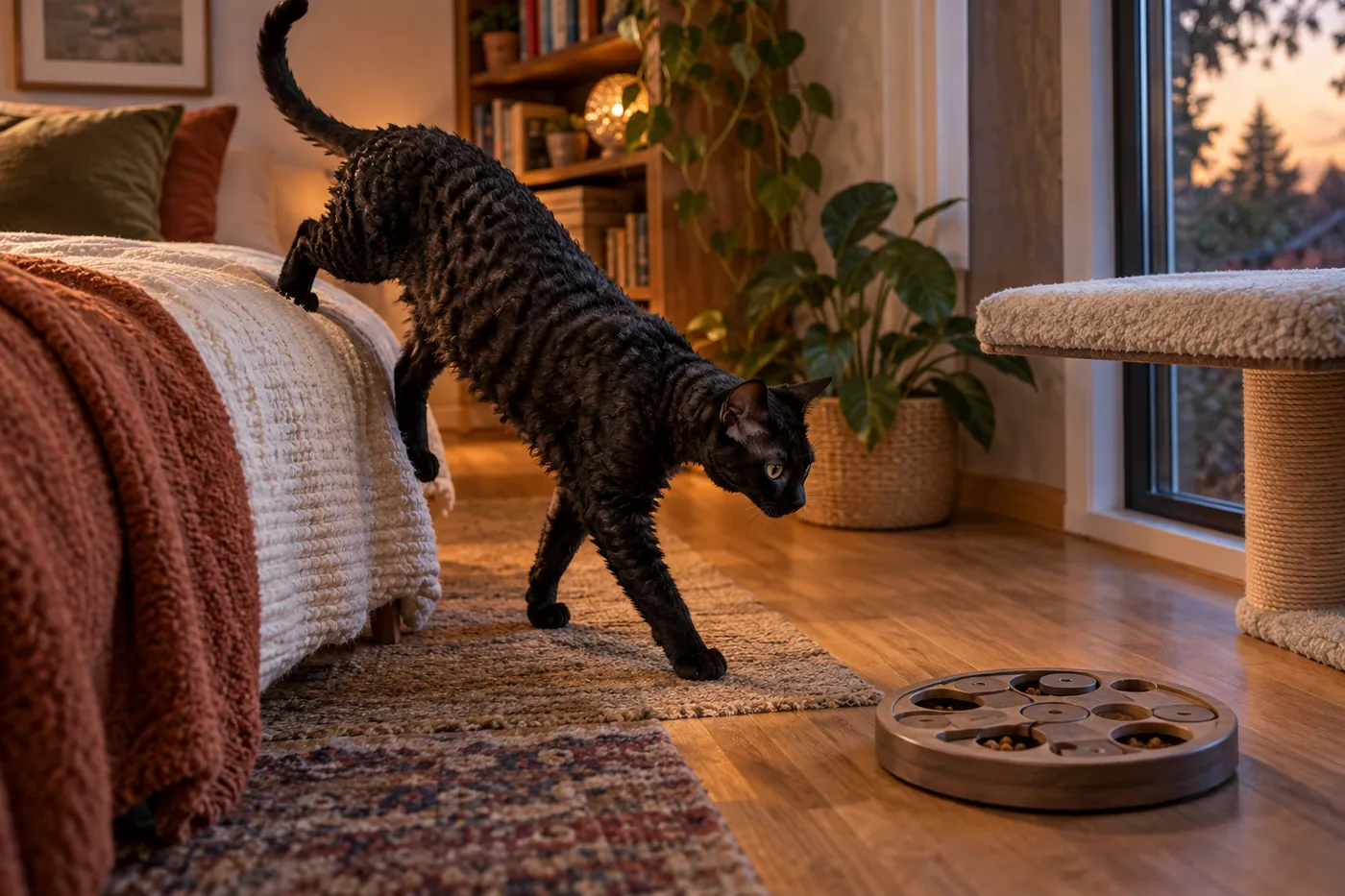
Teach carrier entry, target work and brief body handling through small rewards. The coat makes cooperative skin checks especially useful, while the cat's interest in people can make those lessons easier to integrate into ordinary play.
Spread activity across the day with short chase, search and climbing opportunities. A food puzzle can add investigation, but its contents still belong inside the measured daily ration rather than becoming extra calories for every interaction.
Ask how the individual copes when people leave. A sociable adult may settle through a predictable workday, while a kitten or recently moved cat may need shorter absences and more gradual independence.
Vocalising, overgrooming and frantic greeting can have several causes. Review pain, skin comfort, hunger, outside triggers and access to resources before deciding that the cat simply needs another German Rex for company.
Can German Rex cats live with children and other pets?
Many can when the individual has been socialised and the home protects its ability to leave.
Children must avoid pulling whiskers, rubbing the coat backwards or repeatedly carrying the cat for its unusual texture.
- Use wand toys rather than hands for fast play
- Give the cat a retreat that children and dogs cannot enter
- Keep rough-coated dogs from repeated body contact
- Provide separate food water litter scratching and resting resources
- Introduce animals through barriers before unrestricted access
- Watch whether both animals pause and return voluntarily
- Stop handling when the cat stiffens turns away or moves to leave
A calm adult with an observed history may suit young children better than a high-energy kitten. A shy cat can also thrive in a quiet home when contact is predictable and visitors do not pursue it.
The unusual coat and whiskers can attract repeated touching, so household rules matter before the cat arrives. Children should learn that looking closely is allowed while stroking continues only when the cat approaches and remains relaxed.
With another animal, compare play pressure as well as friendliness. A large dog or fast young cat can damage fine hair through repeated wrestling even when the interaction looks social rather than aggressive.
What health evidence should a German Rex breeder provide?
There is little breed-specific population evidence for disease prevalence or lifespan.
A short list of claimed clear DNA results cannot fill that evidence gap.
LPAR6 testing can support the coat genotype when identity or a mating decision requires it, but the coat variant is not a whole-health test. The valuable record set also includes veterinary examinations, pedigree diversity and outcomes in close relatives.
| Evidence | Ask to see | What it establishes | Limit |
|---|---|---|---|
| Pedigree | Original registry record for kitten and parents | Recorded German Rex ancestry | Health and temperament |
| LPAR6 result | Original report naming the exact variant | Curl genotype for that tested variant | Every cause of coat change or disease |
| Parent examinations | Dated cardiac general skin and dental findings | What was examined in the named cat | Future health |
| Family history | Ages diagnoses fertility and causes of death | Whether the small population is followed over time | Depends on complete reporting |
| Coefficient or mating plan | Breeder's explanation of relatedness and chosen pairing | Whether diversity was considered | Cannot predict one kitten's entire outcome |
Ask what happened to older kittens from the same families. A breeder who follows cats into adulthood can provide more meaningful evidence than one who only records show results and kitten photographs.
Small populations make family information especially valuable and also make simple promises especially weak. Ask how closely related the proposed parents are, what alternatives were considered and whether the breeder exchanges health information with other lines.
Genetic diversity does not mean every close pairing is harmful, and a coefficient alone cannot predict health. It does mean the breeder should be able to explain the trade-off instead of treating rarity as a reason the question cannot be asked.
Request the exact scope of every examination. The phrase heart checked might mean a routine listen on one date or a specialist echocardiogram, and those are different pieces of evidence with different limits.
Persistent skin or coat change, repeated ear disease, breathing difficulty, weakness or reduced movement needs veterinary assessment. Do not attribute a new problem automatically to fine hair or a sensitive rare breed.
Is a German Rex right for your home?
Choose a German Rex when you want a people-aware, playful cat and enjoy gentle hands-on observation of an unusual coat.
The everyday workload is not heavy, but it rewards attention and restraint.
- Verify the original pedigree rather than buying any curly-coated kitten
- Handle the coat gently and keep grooming tools clean
- Provide warm and cool resting choices
- Use secure climbing and daily interactive play
- Build cooperative skin ear claw and dental checks
- Read exact genetic results and their limits
- Ask how the breeder manages relatedness in a small population
- Meet the individual during play rest and handling
This breed is a poor match when the curl will be stroked and styled constantly or when rarity is being used to excuse weak records. A healthy relationship leaves the coat intact and the cat free to choose contact.
Meet the cat on a normal surface rather than only in a show pose. Comfortable movement, clear skin, ordinary recovery after play and willingness to disengage give you information that a dramatic wave cannot.
An adult needing a new home can be a strong option when temperament and coat care matter more than raising a kitten. Existing records may show how the skin changes through seasons, how the cat handles time alone and which grooming routine has already worked.
The best-practice decision is to prefer transparent ancestry, comfortable skin and stable behaviour over the strongest wave. Those qualities still matter after the novelty of a curly coat becomes ordinary.
Common Questions
Is a German Rex the same as a Cornish Rex?
No. They are separate breeds with different body standards and histories, although an LPAR6 curl variant established in Cornish Rex cats has also been documented in German Rex cats.
Do German Rex cats have guard hairs?
The FIFe standard describes the German Rex coat as short, fine, silky and without guard hairs, with regular waves and curled whiskers.
How often should a German Rex be bathed?
There is no single schedule for every cat. Bathe only when surface oil or contamination requires it, use a cat-appropriate cleanser, rinse and dry thoroughly, and investigate persistent skin change.
Is the German Rex hypoallergenic?
No cat breed is reliably hypoallergenic. Allergens come mainly from saliva and skin secretions, so a curly fine coat cannot guarantee a reaction-free home.
Checked Against
- FIFe: German Rex breed page fifeweb.org
- FIFe: German Rex standard fifeweb.org
- OMIA: LPAR6-related curly coat omia.org
- Bradshaw: Normal feline behaviour and why problem behaviours develop (Journal of Feline Medicine and Surgery, 2018) pmc.ncbi.nlm.nih.gov
- 2021 AAHA and AAFP feline life-stage guidelines pmc.ncbi.nlm.nih.gov
- FelineVMA: indoor and outdoor lifestyle catvets.com
Published 13 September 2026. Last updated .