
What Is a Donskoy Cat, and How Is It Different From a Sphynx?
The Donskoy is a Russian hair-loss breed that is genetically distinct from the Canadian Sphynx: its trait is incompletely dominant, and researchers have ruled out the Sphynx KRT71 mutation as the cause. Daily care should respond to the individual cat's coat, skin oil and temperature rather than assuming every Donskoy is completely bald or needs the same bathing schedule.
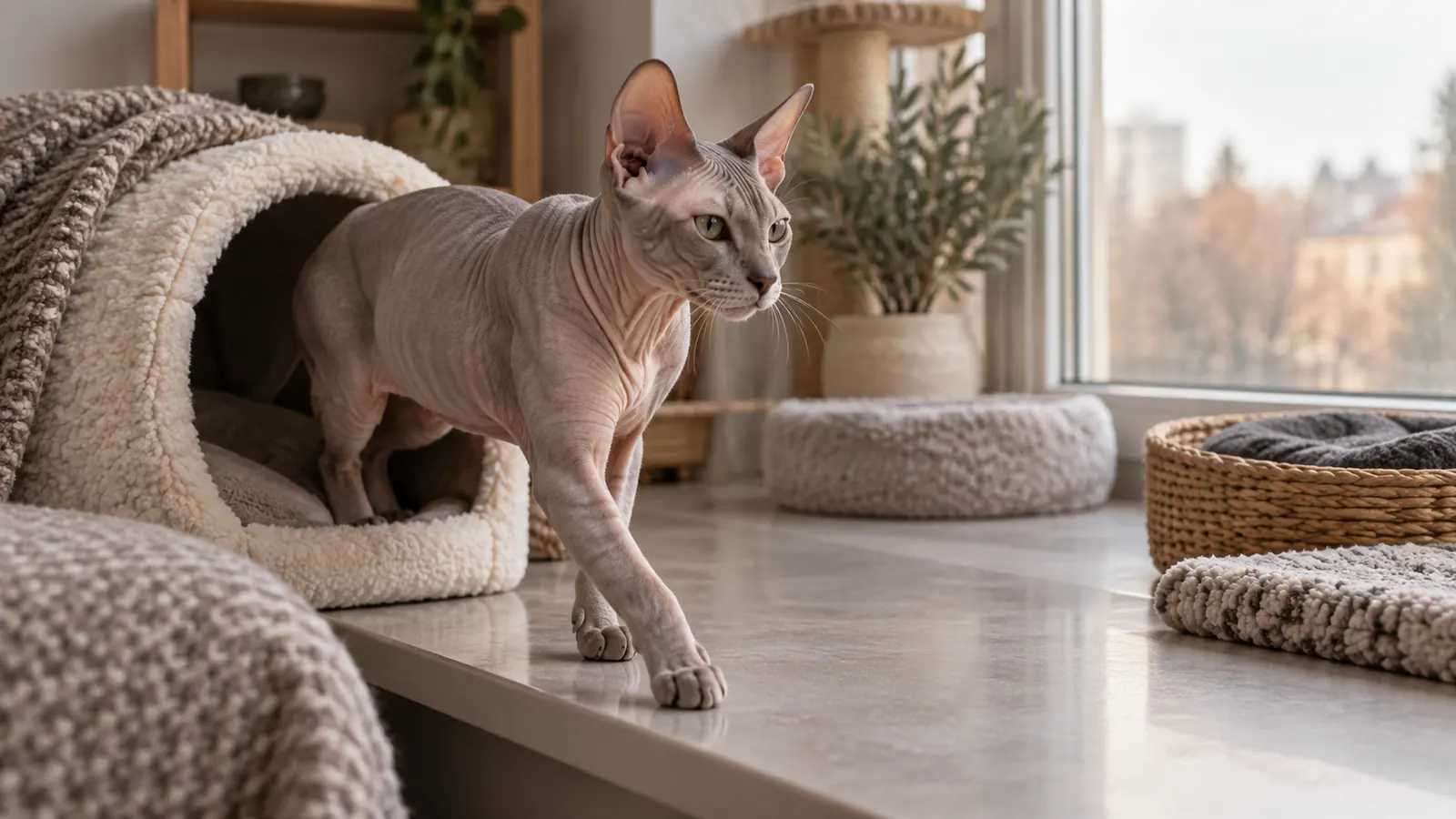
- Origin
- Rostov-on-Don, Russia, from a naturally occurring hair-loss trait first recorded in 1987
- Coat
- Rubber bald, flocked, velour or brush, with coat coverage capable of changing through life or season
- Size
- Medium, strong-boned and muscular, with large ears, almond eyes and visible skin folds
- Typical weight
- No dependable breed-population range was found in current primary sources
- Life expectancy
- Not established by Donskoy-specific population evidence
- Activity level
- Moderate to high. Social, active and strongly drawn to warm shared spaces
- Grooming
- Variable and hands-on. Skin, folds, ears and claws need observation, while bathing frequency must fit the individual
- Suits
- Warm indoor homes prepared for regular skin observation, careful sun management and a social cat whose coat can change
A Donskoy can be born with hair, lose it later, grow seasonal fuzz or keep a wiry brush coat. Bald is only one expression of the breed.
The second surprise is genetic. Donskoy hair loss and Sphynx hairlessness do not share the same known cause.
Is a Donskoy the same breed as a Sphynx?
No. The Sphynx was developed in North America and its hairless trait is associated with recessive variants in KRT71, while the Donskoy began from a separate Russian mutation. OMIA records the Donskoy trait as autosomal incompletely dominant. A 2013 study tested KRT71 and ruled it out as the cause, and the exact causal variant remains unknown.
| Feature | Donskoy | Canadian Sphynx |
|---|---|---|
| Origin | Rostov-on-Don, Russia | North America |
| Inheritance | Autosomal incomplete dominant | Recessive |
| Known gene | Causal variant not yet identified; KRT71 ruled out | KRT71 variants are established |
| Coat range | Rubber bald, flocked, velour and brush | Fine down with variable residual hair |
| Registry identity | Separate TICA breed | Separate TICA breed |
| Practical rule | Do not use a Sphynx DNA result to prove Donskoy hair-loss genetics | Interpret KRT71 within the Sphynx context |
The shared visual category does not make the breeds interchangeable. Pedigree, structure, permitted matings and health evidence should be evaluated under the correct registry record.
Where did the Donskoy come from?
TICA traces the breed to a cat found in Rostov-on-Don in 1987. This history matters because that cat, later named Varvara, lost hair as she matured, and offspring showed that the trait could pass through the family. Russian breeders developed the line and worked with the different coat expressions rather than selecting only cats born entirely bare. TICA later recognised the Donskoy as a championship breed.
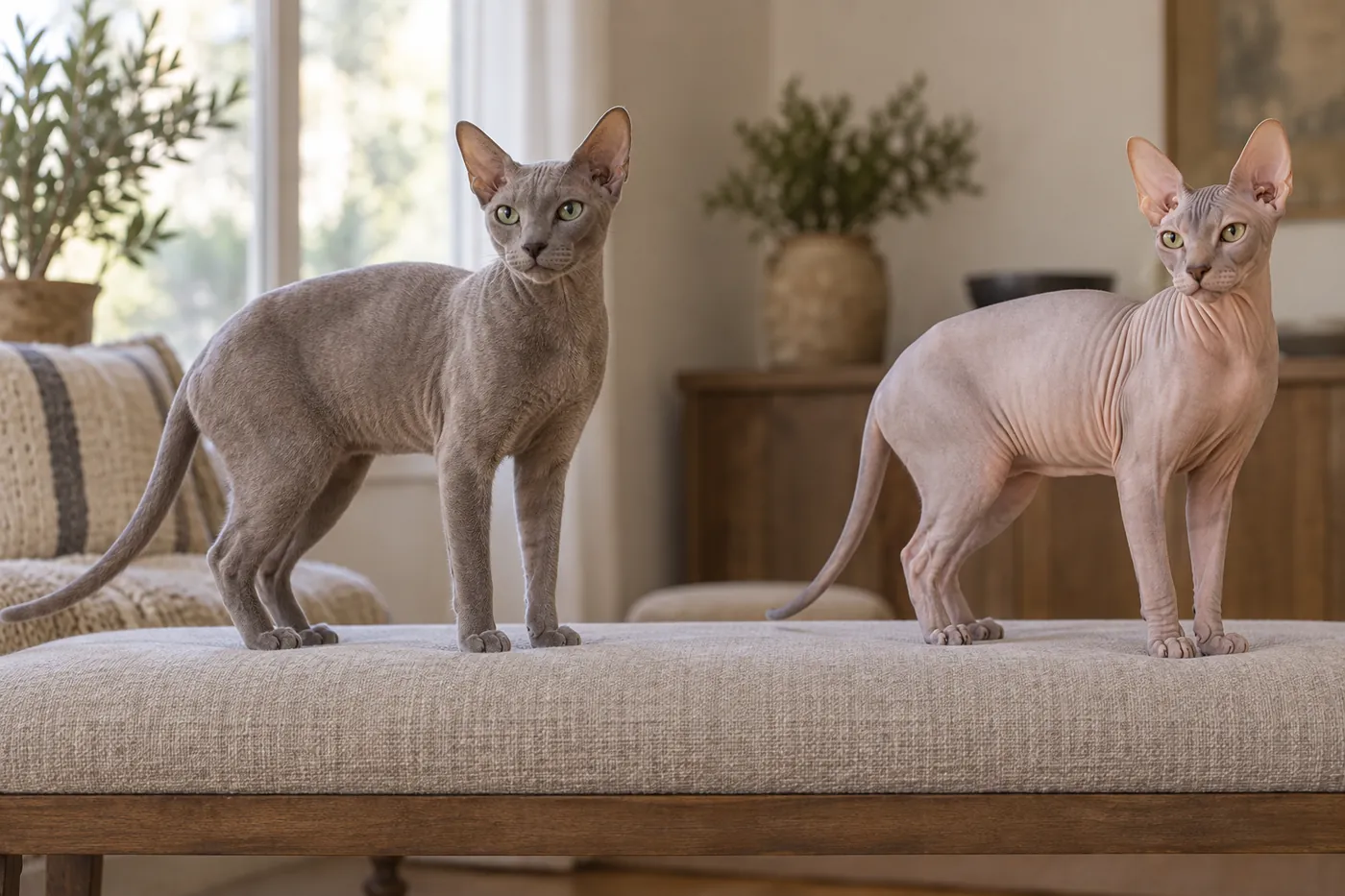
The breed is separate from the Peterbald, which was developed later using Donskoy ancestry and Oriental-type cats. A similar sparse coat is not enough to merge those identities.
What do rubber bald, flocked, velour and brush mean?
They describe how much hair is present and how it feels. Rubber bald skin has little or no visible hair and may feel warm and elastic. Flocked skin carries very fine short fuzz, velour has a more noticeable soft covering that may recede, and brush cats retain sparse wiry or wavy hair over parts of the body.
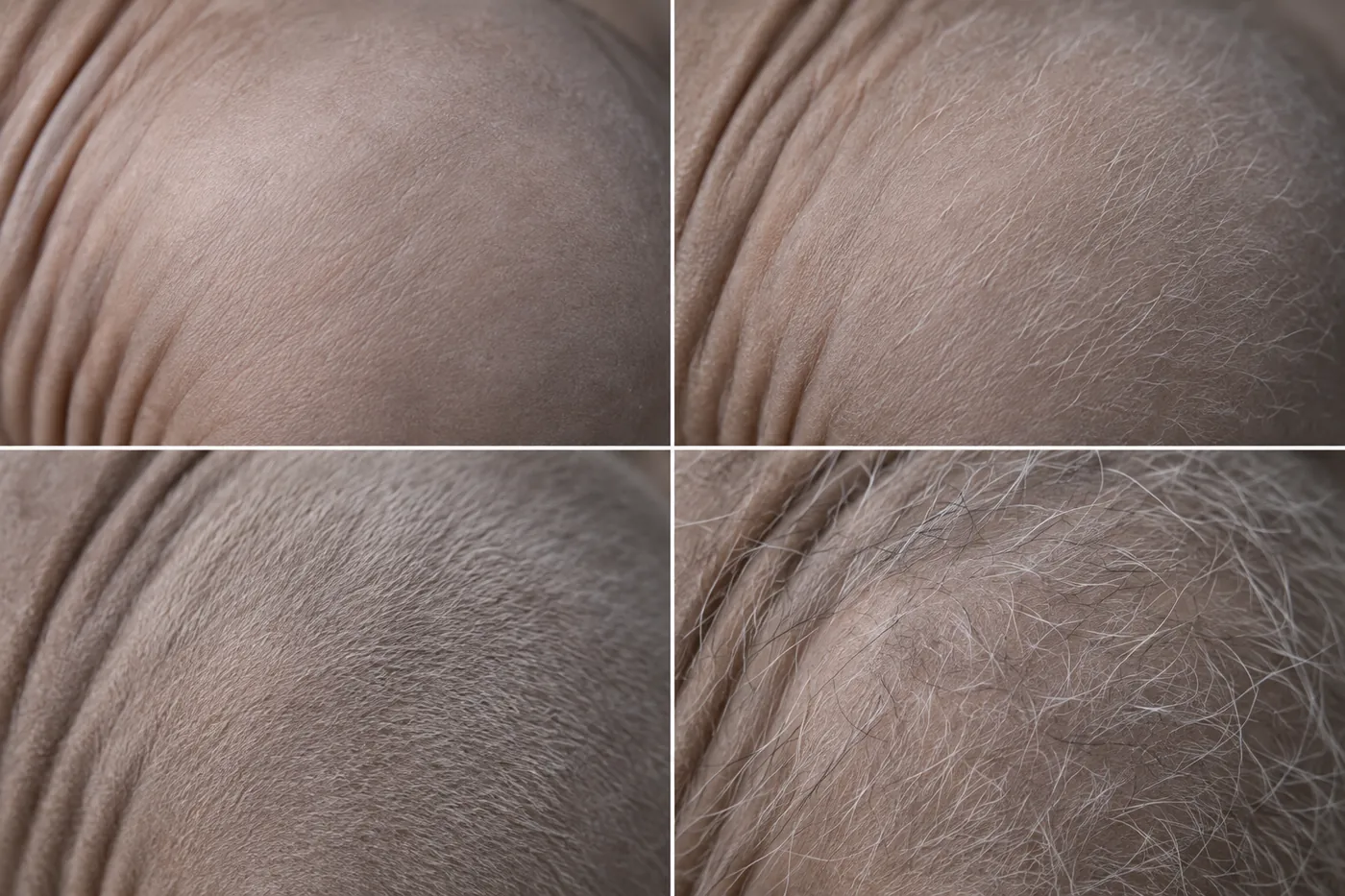
- Rubber bald
- Little or no visible hair
- Flocked
- Very fine short fuzz that may be easier to feel than see
- Velour
- Soft short covering that can remain in places or recede
- Brush
- Sparse wiry or wavy hair, often with bare areas
- Seasonal change
- Some cats grow a light winter covering and lose it again
- Care consequence
- Skin condition, oil and comfort decide the routine more reliably than the coat label
A seller should show the parents and explain how their coats changed over time. A completely bald kitten cannot be promised to remain visually identical through adulthood.
Why does skin care vary between Donskoys?
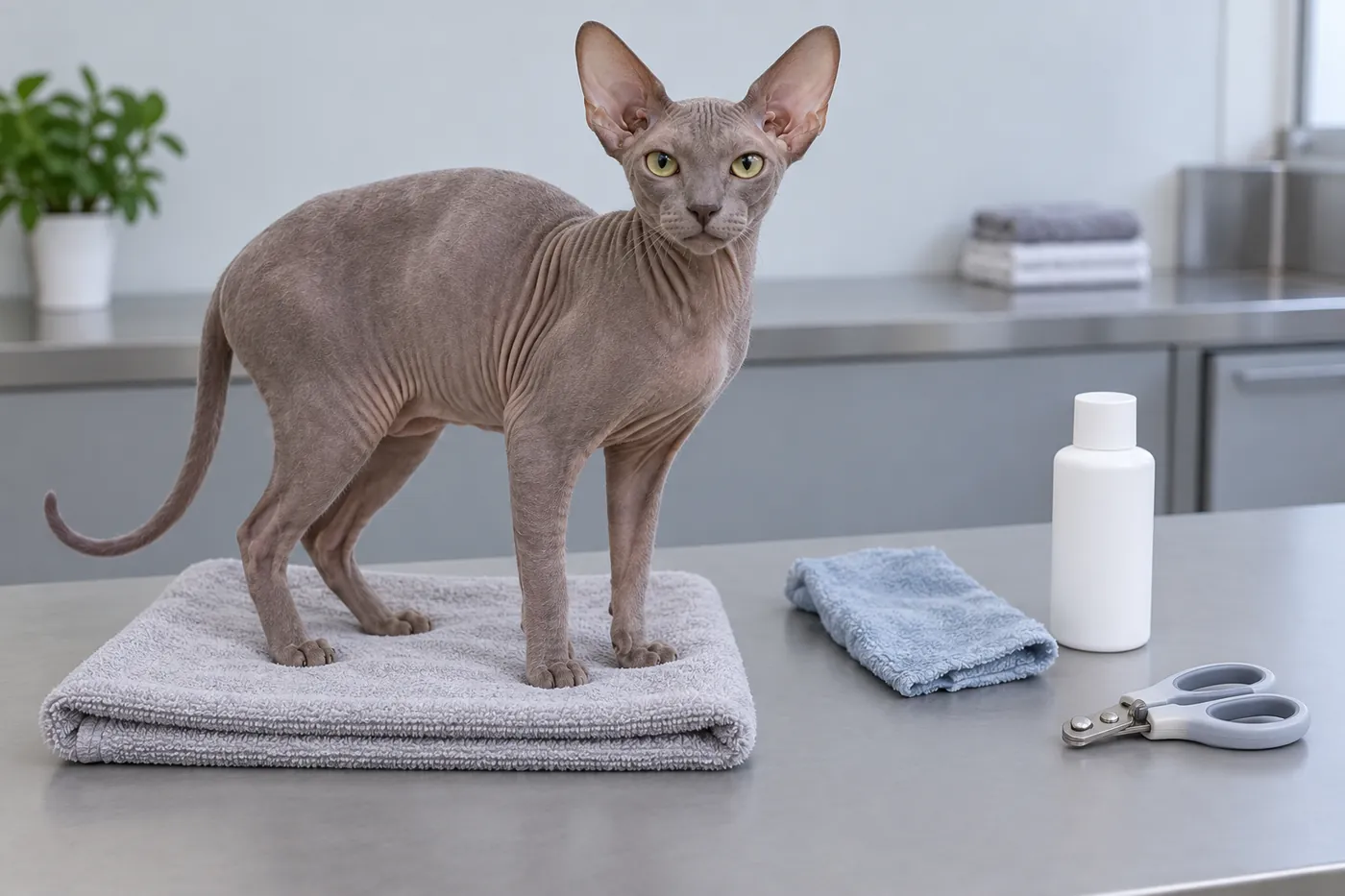
Hair normally moves skin oils away from the surface and provides physical protection. With little hair, oil can remain more noticeable on the skin, ears, nail folds and fabrics. The amount varies. TICA suggests regular wiping and bathing, but a fixed weekly bath for every Donskoy can overdry or irritate an individual whose skin is already clean.
- Inspect skin, folds, ears and nail beds under good light
- Wipe a small oily area with a soft damp cloth when that is sufficient
- Use only a cat-appropriate cleanser when a full bath is genuinely needed
- Rinse thoroughly so product does not remain in folds
- Dry the skin completely and restore access to a warm resting place
- Record redness, odour, scaling or a rapid change instead of increasing washing automatically
The breeder can say what the cat currently needs, and a veterinarian can adjust that after the move. The routine is judged by clean and comfortable skin rather than by a calendar.
How should folds, ears and claws be checked?
Skin folds can trap moisture and oil, while large ears may show wax more readily because there is less hair around the opening. Claw beds can also collect oily debris.
- Open only the visible fold and look for redness, moisture, odour or soreness
- Wipe the outer ear flap without inserting a swab into the canal
- Check each claw and the skin fold around its base
- Use separate clean material for different areas
- Stop if handling causes pain or the skin begins to bleed
- Book veterinary care for persistent discharge, swelling, odour, sores or head shaking
Dark wax is not automatically mites, and oil is not automatically infection. Diagnosis matters because aggressive cleaning can make an inflamed ear or skin barrier worse.
Does a Donskoy get cold easily?
Sparse hair reduces insulation, so a Donskoy can lose heat more readily than a coated cat in the same room. Individual comfort still depends on body size, activity, health, age and the exact coat.
Warm beds, blankets and draft-free choices help most when a cooler surface stays available too. Clothing may help some cats briefly, but it must not restrict movement, rub folds or replace safe room temperature.
Shivering, unusual stillness, weakness or cool extremities require prompt assessment. Do not assume a cat seeking constant heat is simply behaving like the breed.
How much sun protection does the skin need?
Hair also helps shield skin from ultraviolet exposure. Sparse-coated areas can burn, especially on pale skin and around ears.
The safest default is a warm indoor life with shaded window choices and controlled outdoor access. Window glass reduces some ultraviolet wavelengths but does not make prolonged direct sun irrelevant, and a cat can overheat behind glass.

Do not apply human sunscreen unless a veterinarian has selected a cat-safe product and shown where to use it. Cats lick skin products, and ingredients acceptable for people may be unsafe when swallowed.
What is a Donskoy like to live with?
TICA describes the breed as active, social and affectionate, with a strong interest in people and other animals. The lack of insulating coat also makes warm laps and shared beds practically attractive. That tendency can suit a household wanting close contact, but it should not be sold as a guaranteed lap personality. Meeting the individual when it is free to approach, leave and settle elsewhere shows more than the breed description can.
Daily life should include climbing, short hunting games, food search and predictable social contact. A warm cat still needs movement, and warmth should not mean spending every hour under a blanket.
- Offer warm and cool resting choices in the same general area
- Provide stable climbing with broad non-slip landings
- Use short play sessions that end in capture and keep food rewards measured
- Teach carrier entry and care positions with rewards
- Plan company and backup care for long workdays or travel
- Keep outdoor access secure and protected from prolonged sun
Can Donskoys live with children or other pets?
Many can, when introductions and handling protect the exposed skin. Children need clean hands, short nails and toys that keep claws and teeth away from skin. They should never stretch folds, dress the cat for amusement or wake a cat inside a warm retreat.
Another cat or dog can provide company, but rough wrestling may scratch sparse skin. A gradual introduction shows whether both animals pause, exchange roles and return voluntarily.
Birds, rodents and reptiles still need secure physical separation. Hairlessness changes the cat's skin and leaves its predatory sequence intact.
What health evidence should a breeder provide?
The known inheritance of hair loss does not amount to a complete Donskoy health map. There is little breed-specific population evidence for lifespan or disease frequency. The unanswered causal variant is especially important. A result showing no Sphynx KRT71 variant does not prove a Donskoy is genetically clear, because KRT71 has already been ruled out as the Donskoy cause.
| Evidence | Ask to see | What it establishes | Limit |
|---|---|---|---|
| Pedigree | Original registry record with named parents | Recorded Donskoy identity | Health and temperament |
| Parent coat history | Dated photographs and breeder records over time | How coat expression changed in that family | The exact adult coat of one kitten |
| Veterinary history | Dated skin, dental and general examinations | Findings in the named cat | Future disease |
| Cardiac evidence | Details of any claimed examination or echocardiogram | What was assessed on a date | Permanent freedom from HCM |
| Family history | Ages, diagnoses and causes of death | Whether the line tracks health | A population-level risk estimate |
| DNA panel | Exact genes and variants on the report | Status only for those named variants | The unidentified Donskoy hair-loss cause and untested disease |
A breeder who uses the results can explain how they changed a mating decision, and a responsible one also discusses skin comfort, dental care, socialisation and what happens if the cat's coat changes after purchase.
Is a Donskoy right for your home?
A Donskoy suits someone who wants a social, active indoor cat and is comfortable checking exposed skin rather than following one rigid grooming recipe.
- Verify Donskoy identity with original pedigree records
- Understand that the hair-loss cause is not the Sphynx KRT71 mutation
- Expect coat coverage to vary or change
- Prepare warm and cool choices without unsafe direct heat
- Plan shade and veterinarian-approved sun protection
- Handle bathing, folds, ears and claws according to observed need
- Read health and family records instead of accepting a healthy breed claim
- Meet the individual during contact, activity and independent rest
This breed is a poor match when frequent skin observation feels intrusive, the home cannot provide stable warmth, or completely permanent baldness is the main purchase requirement. The best fit is an owner who values the whole cat and can adapt care when the coat or skin changes.
Common Questions
Is a Donskoy the same as a Sphynx?
No. They developed from separate mutations and are separate breeds. Donskoy hair loss is incompletely dominant, while Canadian Sphynx hairlessness is recessive and associated with KRT71 variants.
What gene causes Donskoy hairlessness?
The exact causal variant remains unknown. Researchers ruled out KRT71 in 2013, which is important because KRT71 does cause the hairless trait in Canadian Sphynx cats.
Do all Donskoy cats stay completely bald?
No. TICA describes rubber bald, flocked, velour and brush coats, and coverage can change with age, hormones or season.
How often should a Donskoy be bathed?
There is no single correct schedule. Bathe when the individual has enough oil or dirt to need it, use a cat-appropriate cleanser, rinse and dry thoroughly, and seek veterinary advice for redness, odour, scaling or rapid change.
Checked Against
- TICA: Donskoy tica.org
- TICA: Donskoy breed standard tica.org
- OMIA: Donskoy hypotrichosis omia.org
- Animal Genetics: elimination of KRT71 as the Donskoy candidate pubmed.ncbi.nlm.nih.gov
- Merck Veterinary Manual: structure of feline skin merckvetmanual.com
- Review of thermoregulation in glabrous cats pmc.ncbi.nlm.nih.gov
- FelineVMA: indoor and outdoor lifestyle catvets.com
Published 13 September 2026. Last updated .





