How Should You Clean a Cat's Facial Folds Safely?
Gently clean and dry external facial folds when needed. Sore skin and uncomfortable eyes need assessment, not repeated scrubbing.
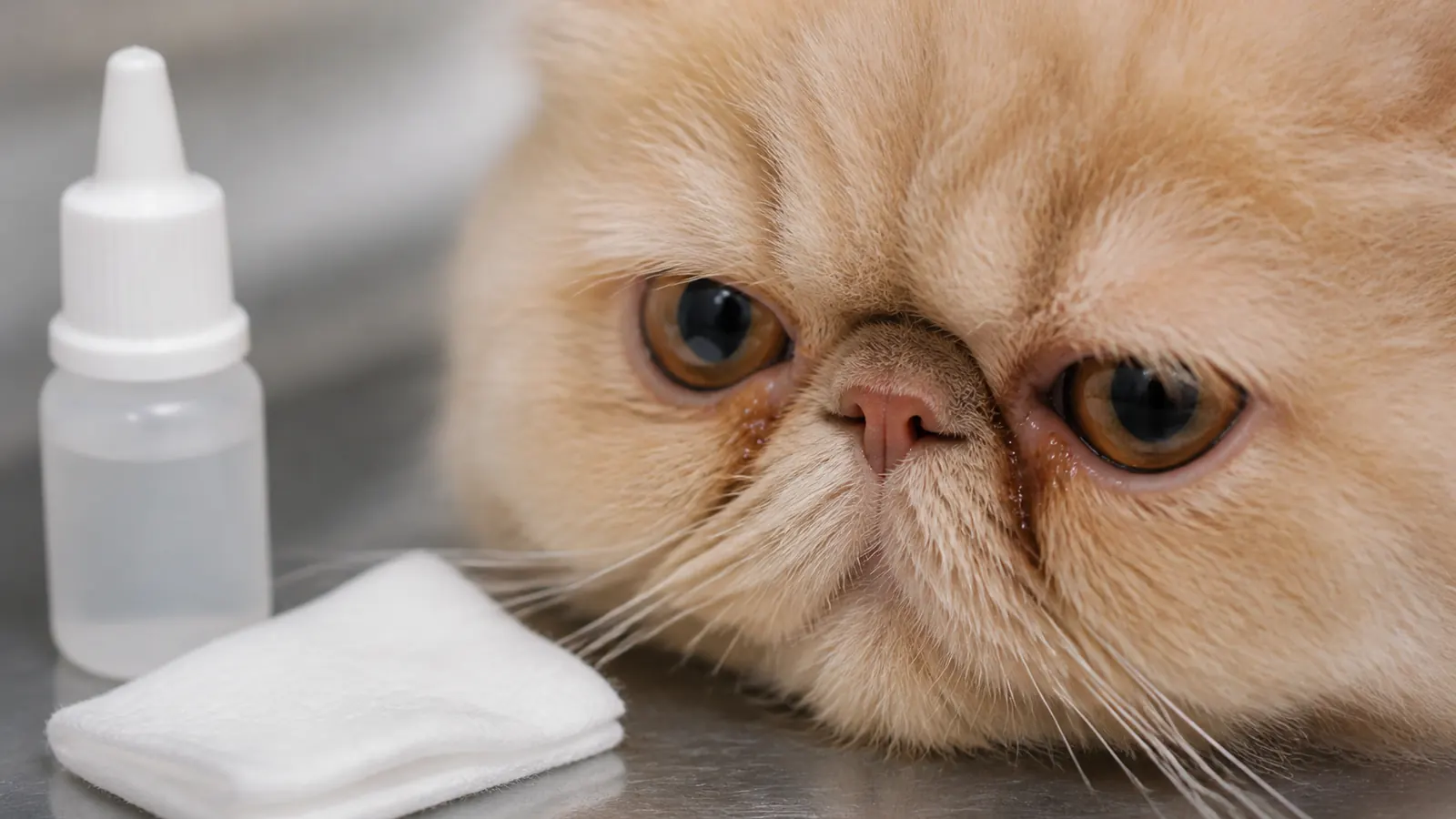
Clean only the external skin folds and fur around your cat's face, using a soft pad lightly dampened with warm water, then dry the area gently. Routine cleaning should not hurt.
Redness, soreness, a bad smell or an uncomfortable eye needs veterinary advice rather than harder or more frequent wiping.
Decide whether the fold needs cleaning
Cats with deep facial folds, including some flat-faced breeds, may collect moisture and debris where skin surfaces meet. Inspect the actual folds your cat has rather than following a cleaning frequency based on breed alone.
A clean, dry, comfortable fold may need little intervention; recurrent moisture needs an individual routine.
Look for changes from your cat's usual appearance, including damp fur, crust, odour, tenderness or rubbing. Normal skin pigmentation varies, so healthy skin is not always pale pink.
A change matters more than matching an illustration.
Brownish staining on pale fur can remain after the surface is clean. Staining alone does not prove infection, and clear tears do not rule out an eye problem.
The purpose of home care is comfort and cleanliness, not making the fur white at any cost.
Prepare before touching the face
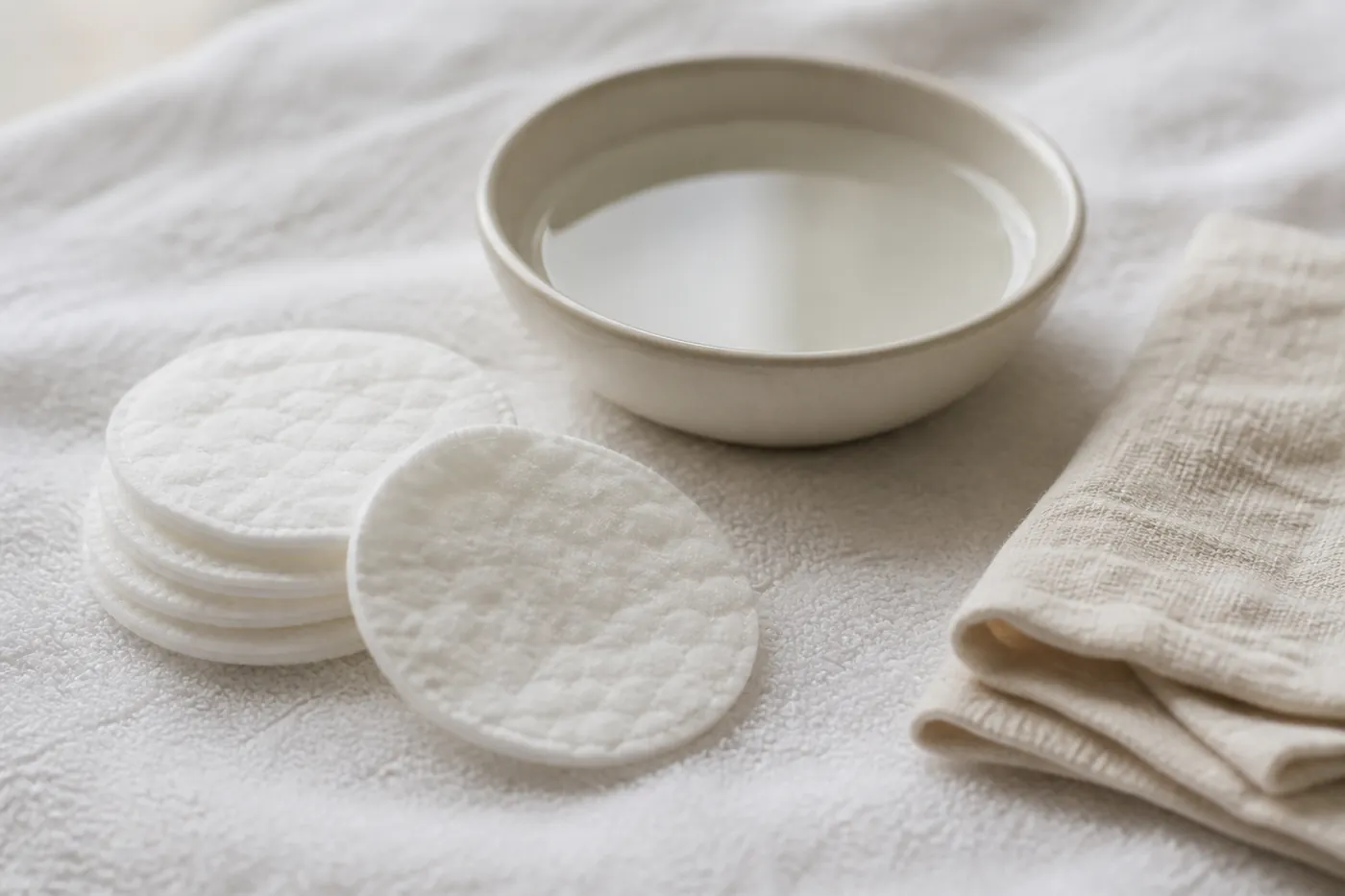
Have clean soft pads, a small amount of warm water and a dry cloth ready. Use a product other than water only if your veterinarian recommends it for the precise area.
Skin wipes that are suitable elsewhere may be unsuitable close to the eyes.
Choose a calm moment and stable position. Support the head lightly if the cat accepts it, without squeezing the neck or blocking breathing.
Keep the session brief and stop if the cat pulls away, struggles or appears painful. A cat that cannot tolerate necessary care may need assessment and a handling plan.
Clean and dry the external fold
- Dampen a pad so it is moist rather than dripping.
- Gently part the fold only as far as the cat comfortably allows.
- Wipe loose surface debris away from the eye without rubbing the eyeball or inner eyelid.
- Use a fresh pad for the other side and whenever a pad becomes soiled.
- Pat the external skin and fur dry with a clean soft cloth.
If a crust does not loosen with gentle dampening, do not pick or scrub it off. Leave it and ask the practice for advice, particularly if skin beneath it looks sore.
Do not push cotton buds or other objects into a deep fold or tear-duct opening.
Avoid peroxide, alcohol, essential oils, scented baby wipes and tear-stain bleaching products near the eyes. Do not use leftover eye medication or a human skin cream.
A treatment that is appropriate for one condition can be harmful when the cause is different.
Separate skin irritation from eye urgency
Contact the practice promptly for a red, painful or foul-smelling fold, persistent wetness, swelling or discharge. Repeatedly cleaning an inflamed area can add irritation and does not treat an underlying infection or anatomical problem.
Seek same-day veterinary attention for squinting, a closed or cloudy eye, obvious eye pain or an eye injury. A corneal ulcer may need urgent treatment, and the colour of discharge cannot safely diagnose or exclude one.
Sudden deterioration or severe pain warrants an emergency call.
Do not wait a week to see whether cleaning fixes an uncomfortable eye. Keep the cat from rubbing it as far as you safely can and ask the veterinary team how to protect it during transport.
Build a routine around the individual cat
If folds repeatedly become wet or sore, ask the veterinarian to assess tear flow, the skin and the structures around the eye. Some cats need a tailored cleaning product or treatment, and some need further investigation.
Frequent wiping is not always the answer.
Review technique and frequency after the area has settled. Maintain the surrounding coat without bringing scissors close to the eye; ask a professional if hair removal is necessary.
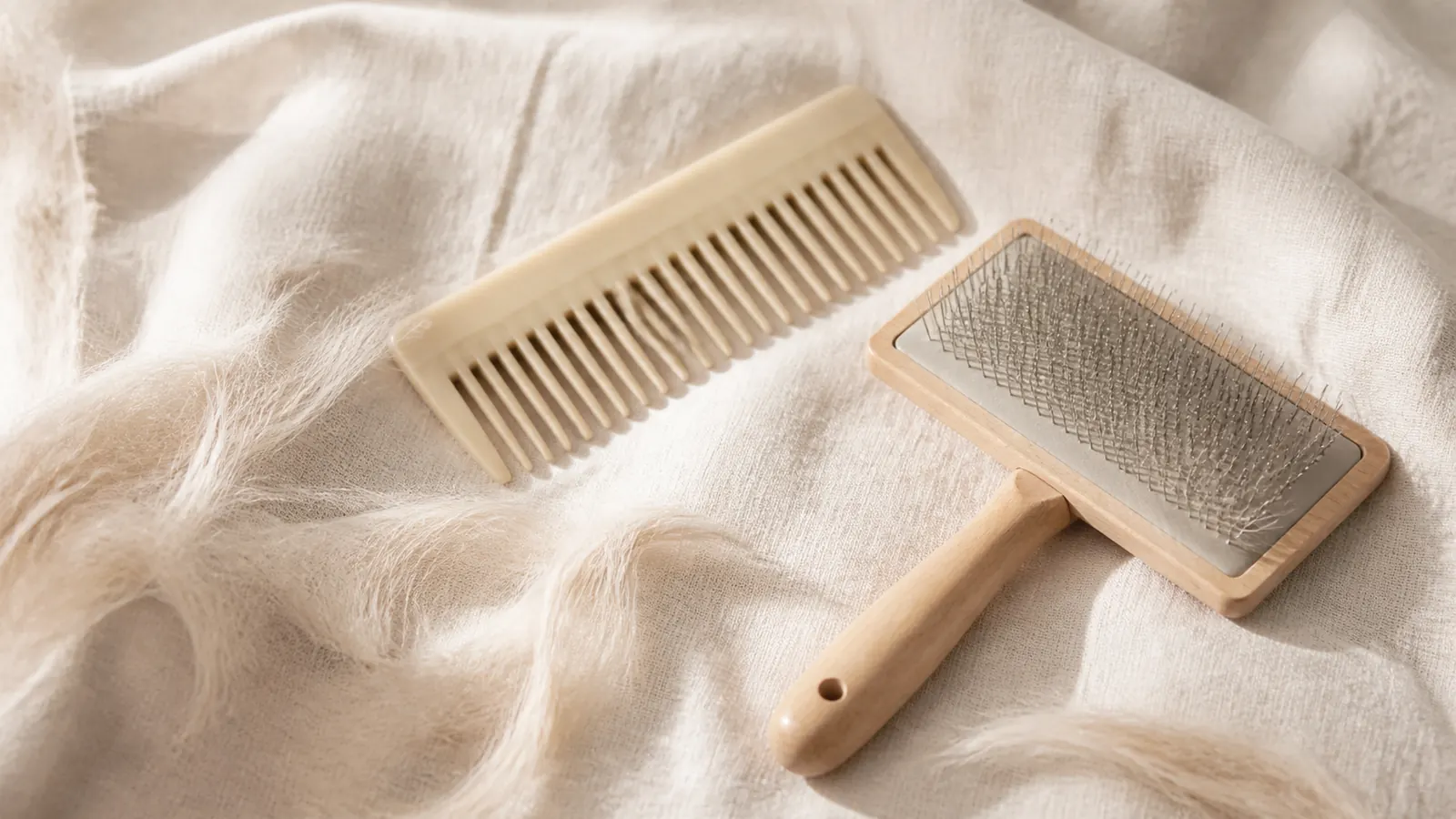
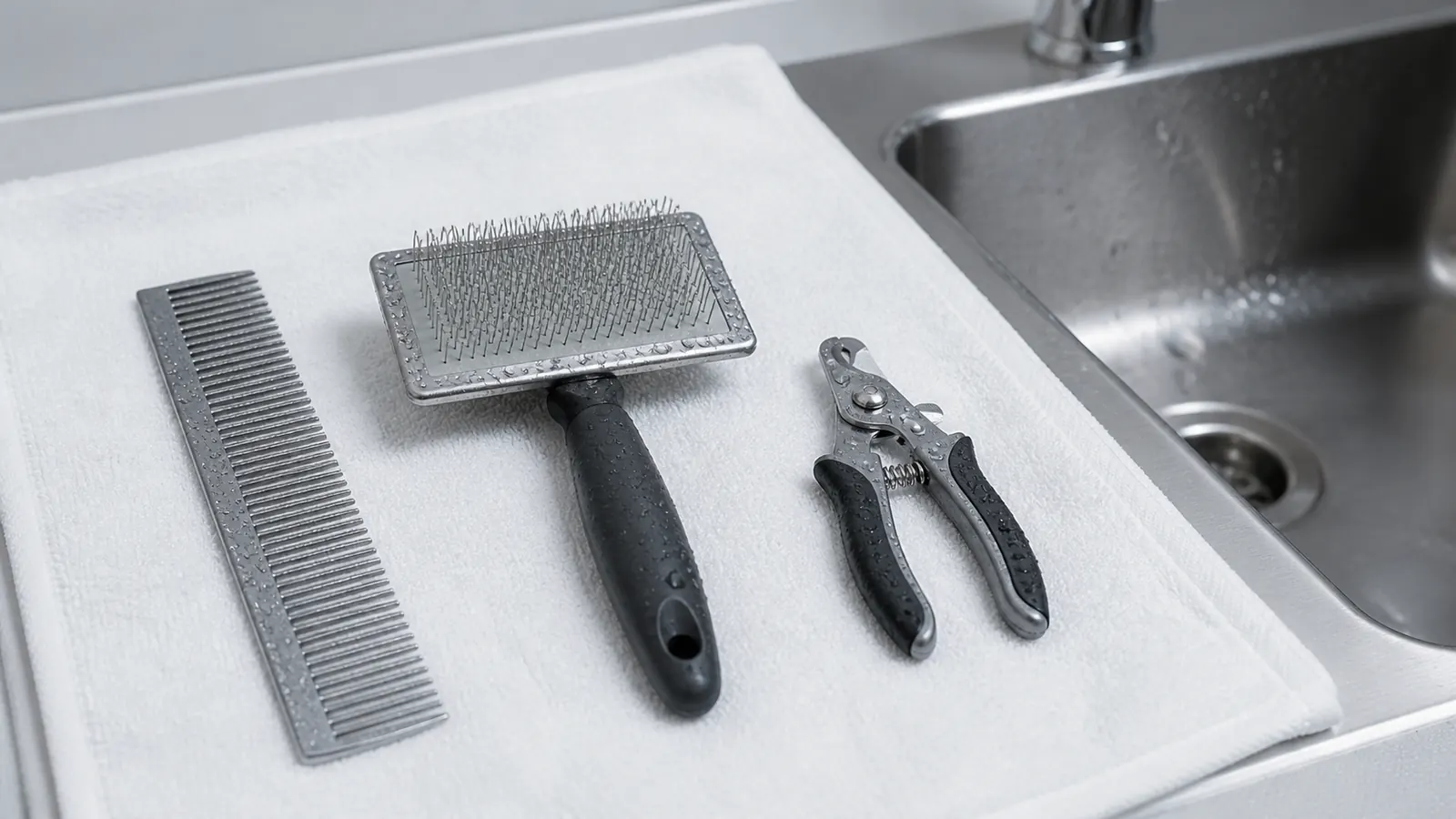
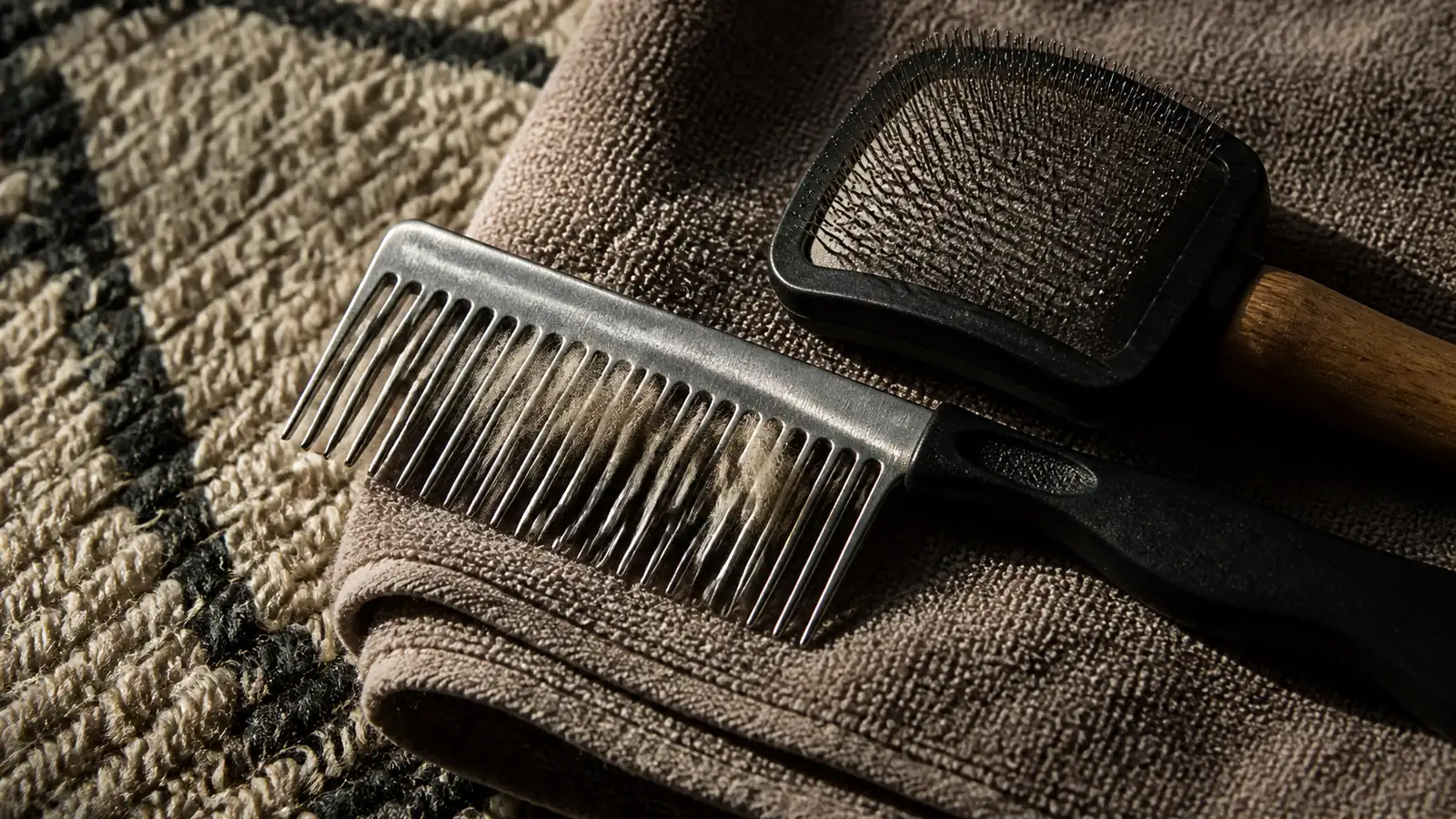
For broader coat care, use the long-coat brushing guide, and keep reusable equipment clean using the grooming-tool guide.
Common Questions
Should I remove every tear stain?
No. Clean loose debris gently and keep the area comfortable. Residual staining does not justify scrubbing or bleaching near the eye.
Can I use baby wipes?
Avoid scented baby wipes and use warm water or a product your veterinarian specifically recommends for the area near your cat’s eyes.
What if the eye is squinting or cloudy?
Seek same-day veterinary attention. Cleaning the surrounding fold does not diagnose or treat an eye injury or corneal ulcer.
Checked Against
Published 2 September 2026. Last updated .