
What Is a Birman, and What Does Its Published Health Data Show?
Birman buyers can ask concrete questions about parental blood types, FOXN1 testing and dated heart scans. Published figures help explain those checks, but they describe particular samples rather than every risk an individual cat may face.
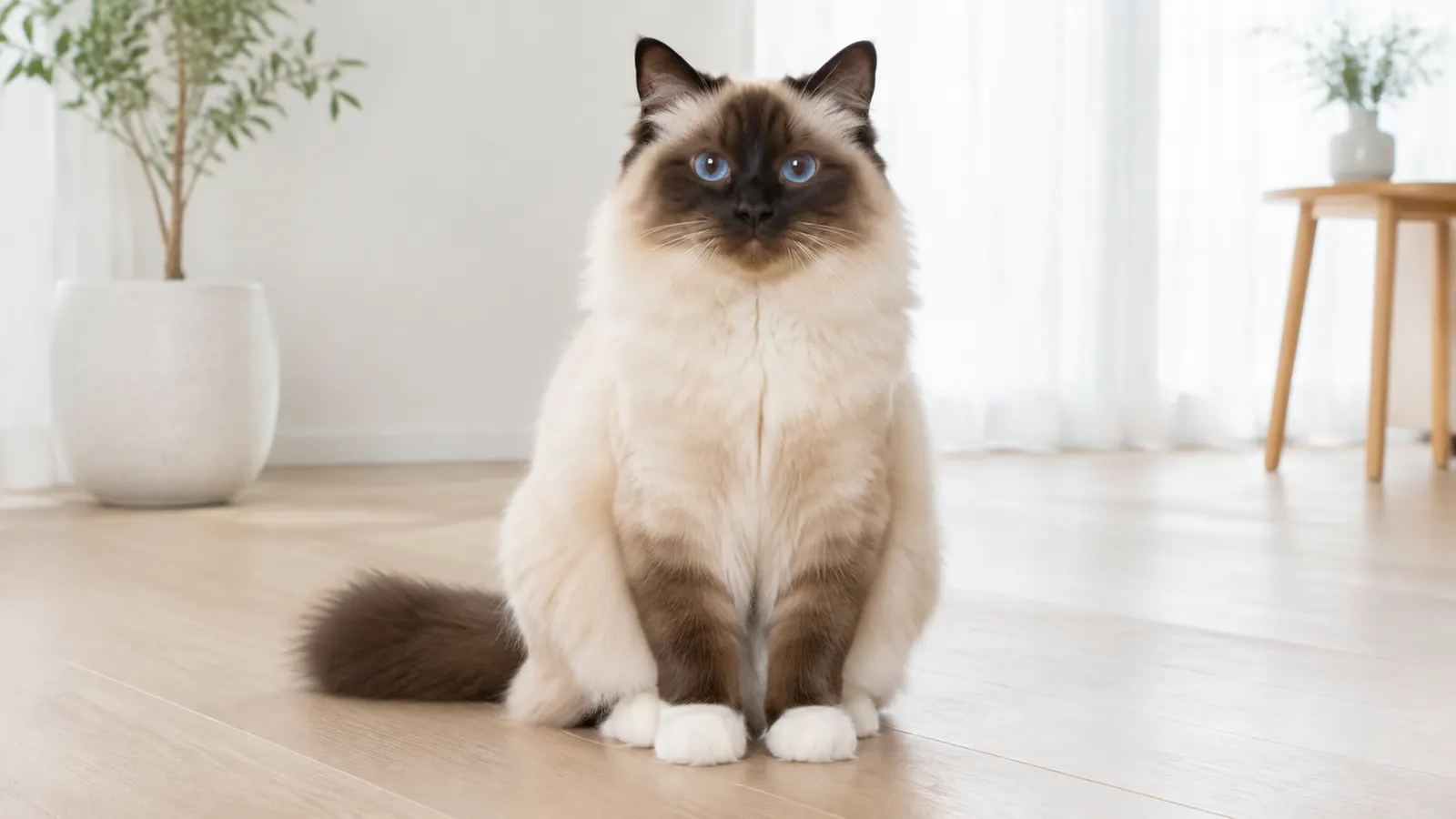
- Origin
- France in the 1920s, from imported pointed cats, with the temple legend unsupported by records
- Coat
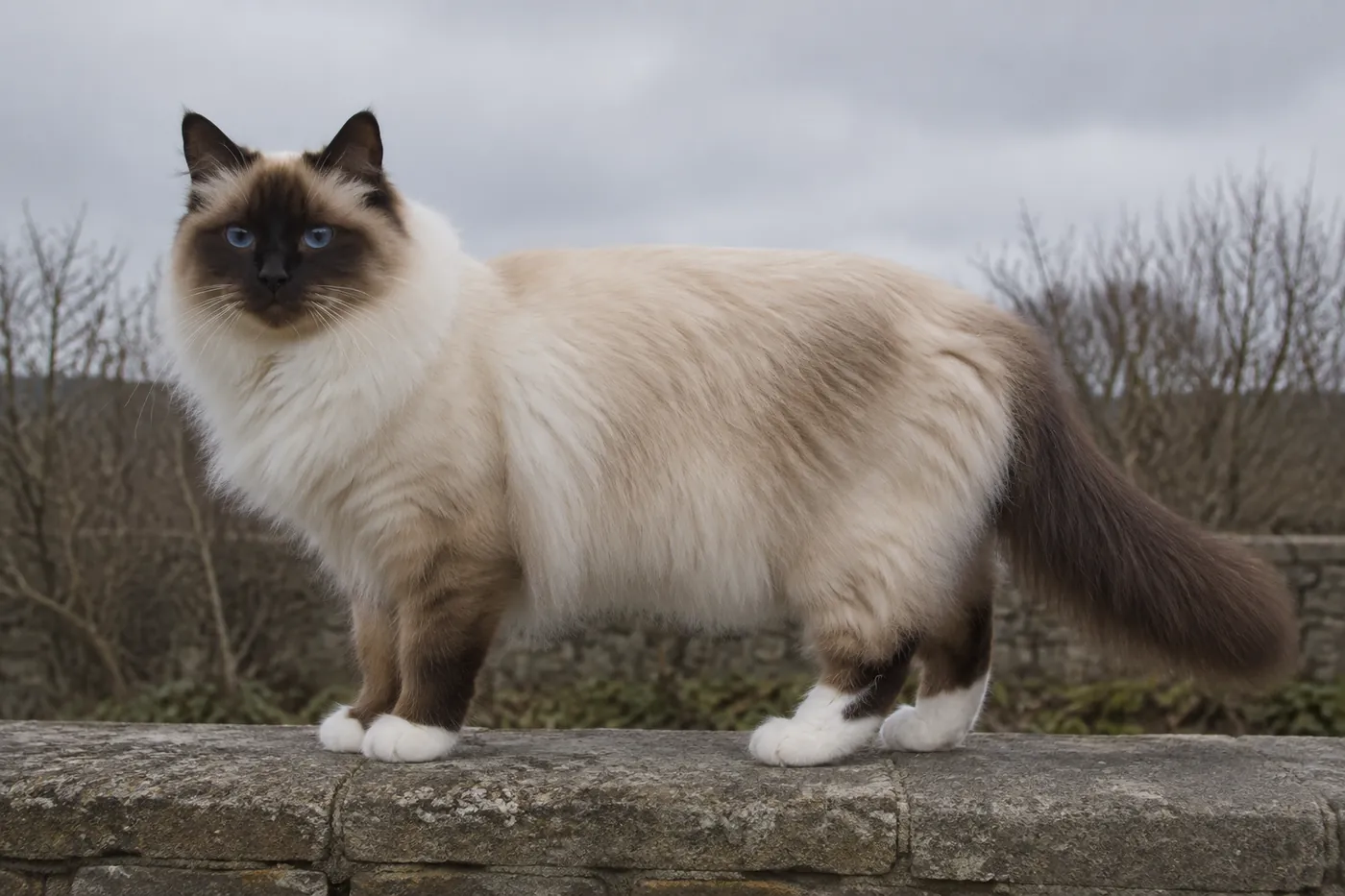
- Medium long to long and silken, with a heavy neck ruff and no undercoat
- Size
- A substantial cat on a medium frame, noticeably smaller than the Ragdoll it is compared with
- Typical weight
- Typically 2.7 to 4.5 kg for females, 4.1 to 5.4 kg for males
- Life expectancy
- UK life expectancy at age zero estimated at 14.39 years; 95% confidence interval 12.87 to 15.91, not an individual lifespan range.
- Activity level
- Low to moderate. Social and quietly present rather than athletic
- Grooming
- Low. A weekly comb, with the neck ruff the one area worth checking
- Suits
- Families and settled dogs, provided the cat has somewhere quiet to retreat to
Several Birman questions have published data, although those studies answer different questions.
Blood compatibility, named genetic testing and dated heart screening provide useful checks. None is a certificate of lifelong health.
Which health checks happen before breeding?
The checks that can prevent an affected litter come first, with later-onset disease kept in view.
| Check | What it informs |
|---|---|
| Parental blood types | A plan to prevent milk-antibody injury in incompatible kittens |
| FOXN1 results | Whether the mating can produce the named inherited syndrome |
| Heart scans | Heart structure on the date examined |
| Glove symmetry | Show appearance, not a medical risk score |
These checks belong at different stages. An at-risk newborn still needs immediate veterinary help; prevention is easier, but treatment should not be dismissed as futile.
The blood group question sits at the top for that reason alone. The mating establishes possible incompatibility, while exposure to the queen's antibodies through nursing creates the danger.
The heart risk is the reverse case. It arrives years into the cat's life, which means a scan on the parents is worth asking about and a scan on your own cat is worth repeating.
Ranking by urgency is not the same as ranking by likelihood. Most Birman litters meet none of these, and every figure below describes a studied group rather than the individual kitten in front of you.
The white gloves need no checking at all
The gene is the place to begin, because it closes the question rather than leaving it open.
The gloving pattern traces to a variant of KIT written c.1035-1036delGCinsTG, which knocks out the gene's normal function in the feet. It is autosomal recessive, so a cat needs two copies before white appears on the paws at all.
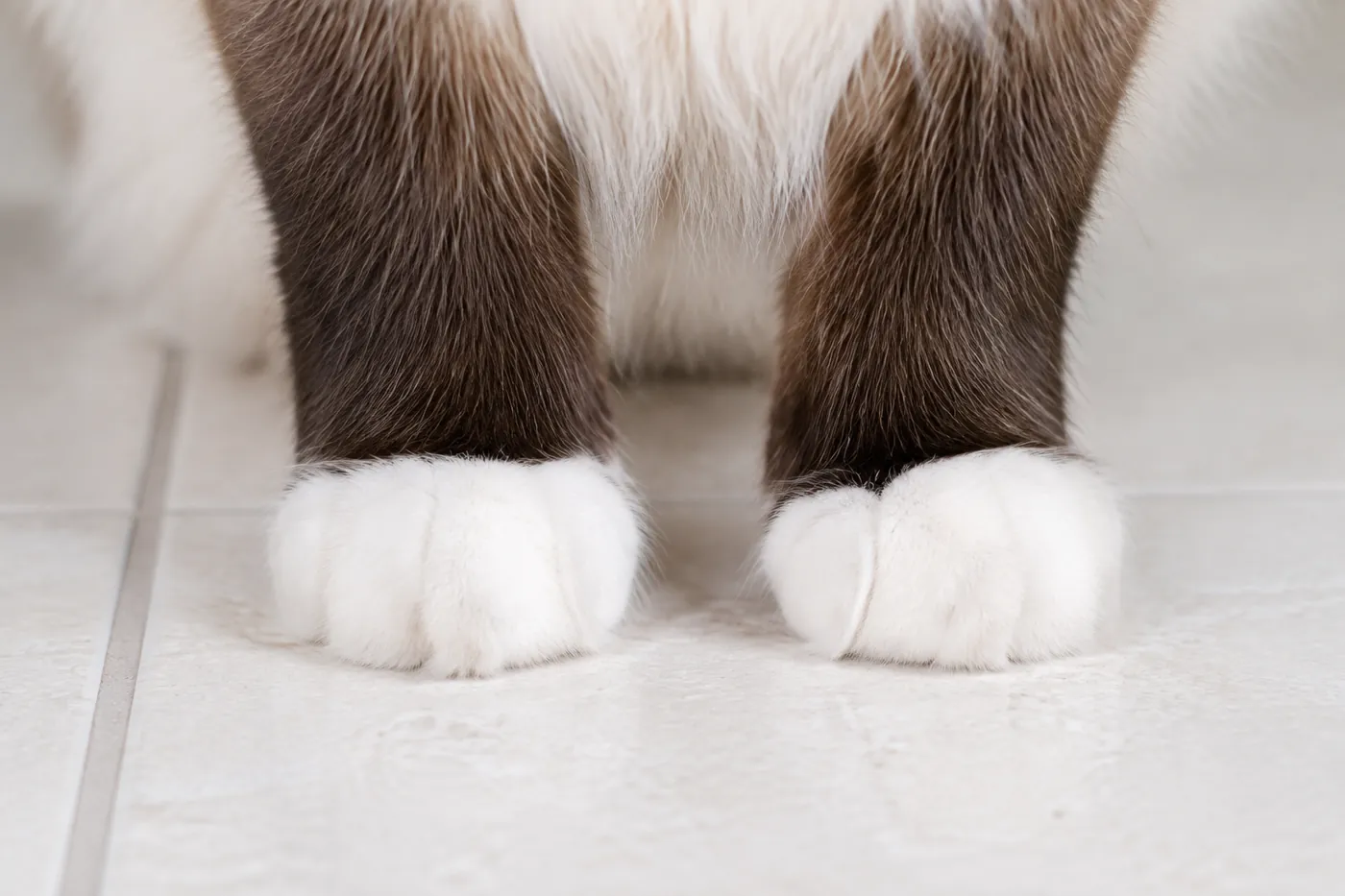
Then comes the finding that matters to a buyer. All 150 Birmans genotyped in that study were homozygous for the variant, which means it is effectively fixed in the breed.
Fixed is a strong word and it is the right one. The study found two copies in its 150 Birmans.
That supports the variant's close association with the breed, but it is not a replacement for pedigree and should not be used as a universal identity test.
The variant is not exclusive to the breed. It turns up at low frequency in the Ragdoll, the Maine Coon and the Siamese without producing gloves there, which is a reminder that one gene rarely acts alone.
What does vary between individuals is neatness. Glove symmetry and how far the white runs up the back of the hock are judged on a show bench, and neither has any bearing on whether the cat is healthy. The Snowshoe gets its white paws from the dominant white-spotting gene instead, which is why a litter from two correctly marked Snowshoes can include kittens with too much white, too little or none.
Which check matters in the first week?
A queen with one blood type can produce antibodies in her first milk that destroy the red cells of kittens carrying the other.
That is neonatal isoerythrolysis, and it happens when type A kittens are born to a type B queen mated to a type A male. The kittens feed normally, then fade over the following days.
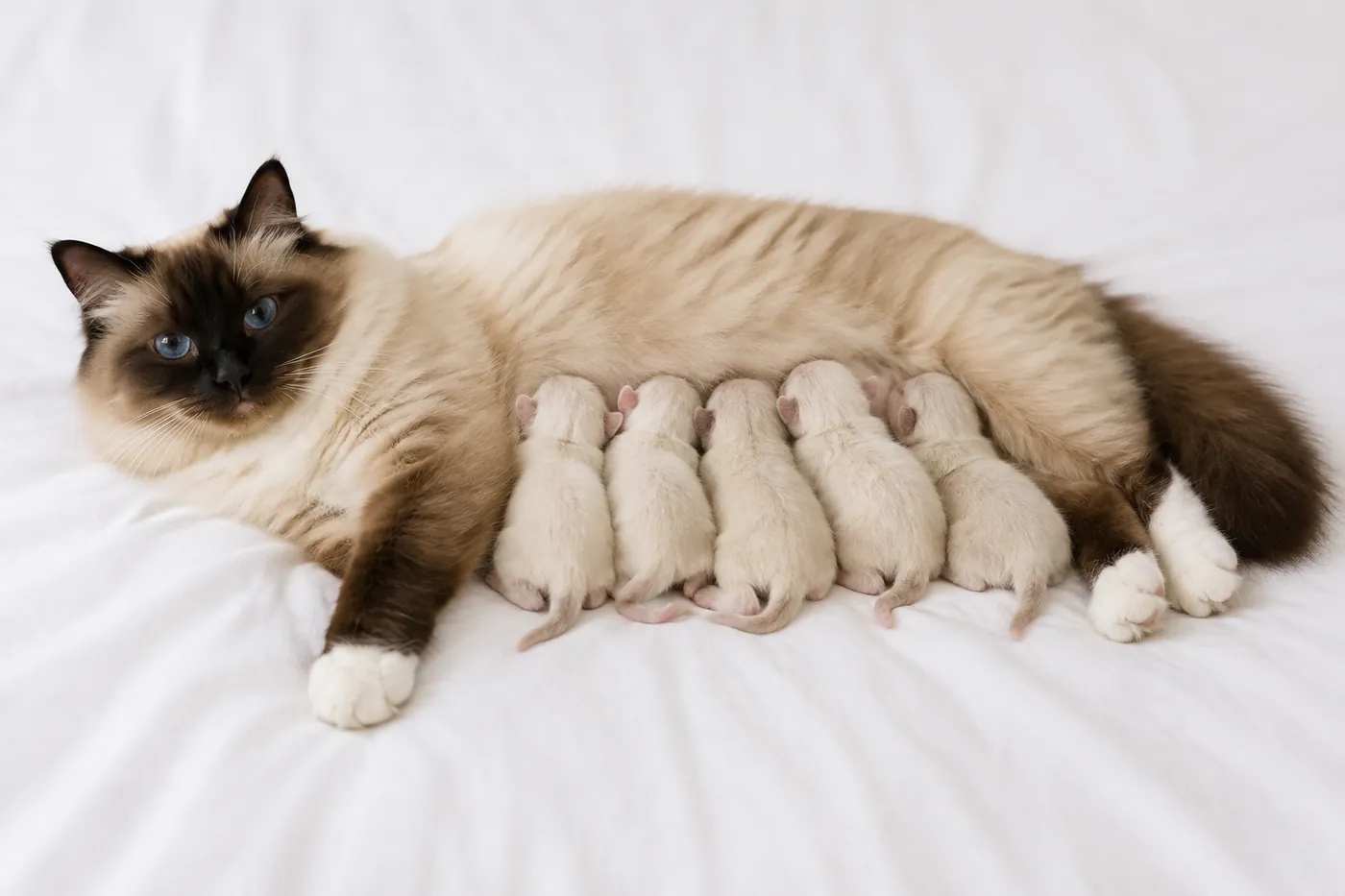
The reason this belongs on a Birman page rather than a general health page is frequency. A United States survey put the Birman among eight breeds in which type B ran from 0.15 to 0.59, which is high enough to make the pairing a real possibility rather than a curiosity.
The comparison is what gives that figure weight. Type B turned up in 0.0028 of domestic shorthairs in the same survey, and in none of the Siamese group or the American Shorthairs tested at all.
Blood typing identifies incompatible matings; the breeding and newborn-care decisions based on the result prevent harm.
A type B queen is not a problem in herself. Mated to a type B male she can raise litters without incident, and the only thing that has to be avoided is the mismatch.
So the buyer's question is about a decision somebody else already made. If the answer is that nobody typed either cat, the risk was never managed, whatever the kittens look like now.
Which DNA test should you ask for?
One test, and it is specific to this breed.
The Birman hypotrichosis syndrome comes from a deletion in FOXN1 written c.1030_1033del, inherited as an autosomal recessive. Affected kittens are born hairless and grow a sparse downy covering over wrinkled skin.
The coat is the visible half and the dangerous half is internal. The same deletion leaves the thymus underdeveloped, so the kittens cannot mount a normal response to ordinary infections.
The reported outcome is unambiguous. None of the thirteen hairless kittens described in the study survived beyond eight months.
A carrier looks completely normal, so the test matters more than observation does. Two healthy adults can each carry one copy, show nothing at all, and produce affected kittens whenever they are bred together.
- A FOXN1 result for each parent, not for the line in general
- Blood type results for both parents, which belong on the same request
- The date of each parent's last heart scan, and who performed it
- Registration papers naming both parents, so the results can be tied to this litter
A carrier is a healthy cat and can be bred safely to a clear one. Asking for the result is not an accusation, and a breeder who tests will usually offer the paperwork before being asked.
Heart screening means a scan, not a certificate
Two of the three checks are DNA results. The third is a dated clinical report.
A study screened 162 Birmans and found cardiomyopathy of some type in 10 percent of them. Hypertrophic cardiomyopathy specifically accounted for about 7 percent of the group.
- Birmans screened in the 2017 project report
- 162
- Cardiomyopathy of any type
- About 10 percent
- Hypertrophic cardiomyopathy
- About 7 percent
- Share of affected cats that were male
- 82 percent
- Median age at diagnosis
- 8.4 years
- Screening method
- Echocardiography; a genetic panel cannot replace assessment of heart structure
In the study population, 82 percent of cats with HCM were male. That is a finding from this screened group, not a comparison establishing greater male risk than in every other breed.
Female cats still need appropriate screening.
No HCM gene variant has been identified in the Birman, and that absence changes what a buyer can ask for. A DNA result does not replace an HCM scan even in breeds with a known risk variant, so the only screening that exists is an echocardiogram performed by somebody competent to read one.
The median age at diagnosis was 8.4 years, which is the practical reason a single scan settles less than it looks like it should. A clear scan describes that cat on that day.
The disease can develop well into adulthood, which is why breeders who screen do it repeatedly rather than once. A scan from four years ago answers considerably less than it appears to.
The useful question is therefore a date and a name: when each parent was last scanned, and by whom. A vague answer suggests the screening was never tracked.
How long does a Birman actually live?
The UK study estimated 14.39 years at age zero, with a 95% confidence interval of 12.87 to 15.91 years.
That figure comes from the UK life tables, calculated from veterinary records rather than from breeder impressions. Only the Burmese came out higher, at 14.42 years, and the two are close enough to be the same answer.
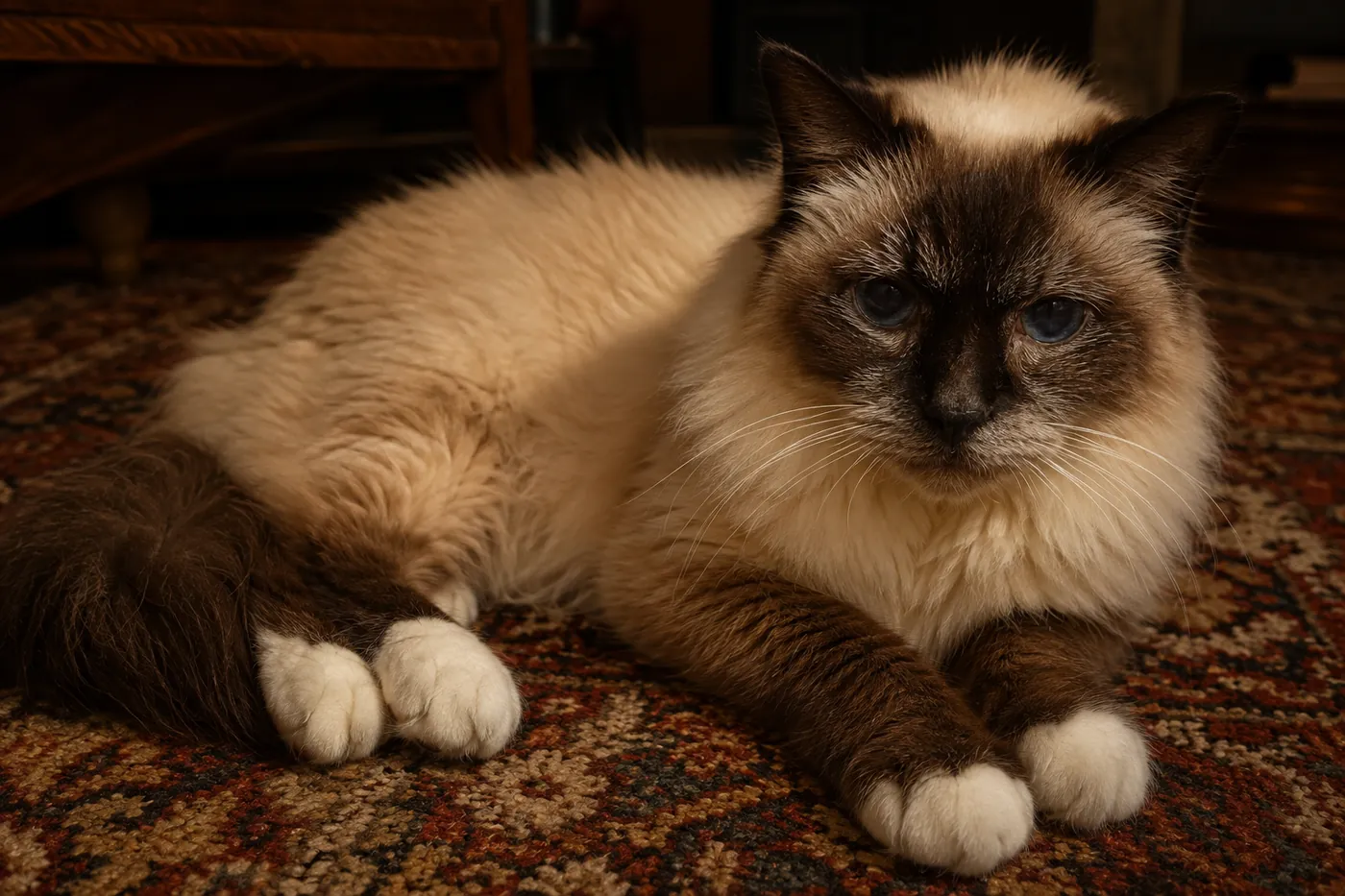
The context is what makes it worth quoting. The study analysed twelve groups in total, crossbred cats among them, so most breeds, including the American Shorthair, have no measured life expectancy at all.
The baseline is the other half of the context. Across all UK cats in the same data the figure was 11.7 years, which puts a Birman close to three years ahead of the average cat.
The interval is wide, which is honest rather than disappointing. It describes uncertainty around the population estimate, not the range of ages individual cats will reach.
The same study found three things that moved the number. Being entire, being purebred and sitting at a non-ideal body weight each shortened life expectancy, and two of those three are within an owner's control.
Watching for the ordinary signs of ageing does more for an individual cat than any breed average can. The figure is for planning, not for prediction.
The coat needs less than its length implies
The reason is structural.
A Birman carries no undercoat. Undercoat is the woolly layer that tangles and felts, so a single-coated cat has nothing underneath the surface hair to knot together.
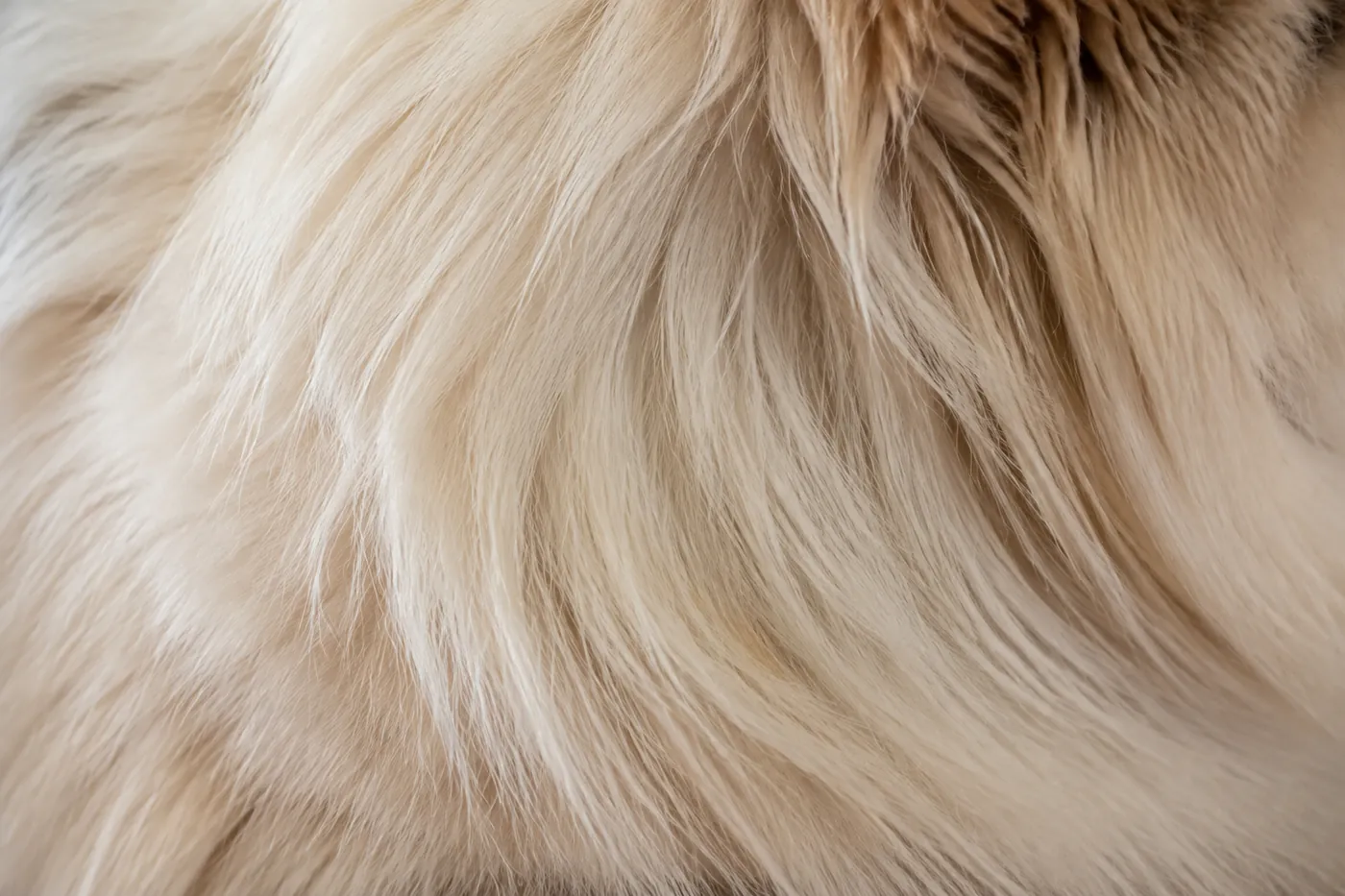
The standard describes the coat as medium long to long and silken in texture, with a heavy ruff at the neck and a slight curl on the stomach. It lies against the body rather than standing away from it.
A weekly comb covers it, which is well short of what a long-coat routine usually demands, and the ruff is the one area worth checking properly. It is the densest part of the coat and the first place a knot will form if one is going to.
None of this makes the breed low-shedding, and the ruff sheds most of all. An elderly or overweight Birman that stops reaching its own back will need the comb run over the coat for it, which is the point at which the weekly job stops being optional.
How big is a Birman?
A Birman is smaller than the comparison most buyers arrive with.
An adult female runs about 2.7 to 4.5 kg and a male about 4.1 to 5.4 kg. The standard allows females to be proportionately smaller, so the two figures describe genuinely different animals rather than one range split in half.
| Breed | Adult weight | Coat | Voice |
|---|---|---|---|
| Birman | 2.7 to 5.4 kg | Semi-long and silky, with no undercoat | Soft and chirp-like |
| Ragdoll | 4.5 to 9 kg | Semi-long and silky, with little undercoat | Soft, and seldom used |
| Siamese | 2.5 to 5.5 kg | Short, fine and close lying | Loud, and used constantly |
The Ragdoll row is the one that catches people out. A buyer who has been comparing the two on photographs is expecting an animal that can weigh nearly twice as much, and a Birman arriving at four kilos reads as undersized when it is nothing of the sort.
Ordinary cat equipment fits. A heavy Birman is almost always an overweight cat on a medium frame rather than a big one, which matters because the coat hides condition well enough that owners notice late.
Living with one is quieter than it looks
The voice is the trait that contradicts the appearance most sharply.
A Birman looks like a pointed cat and does not sound like one. The voice is soft and chirp-like rather than loud, and it is used sparingly rather than as a running commentary.
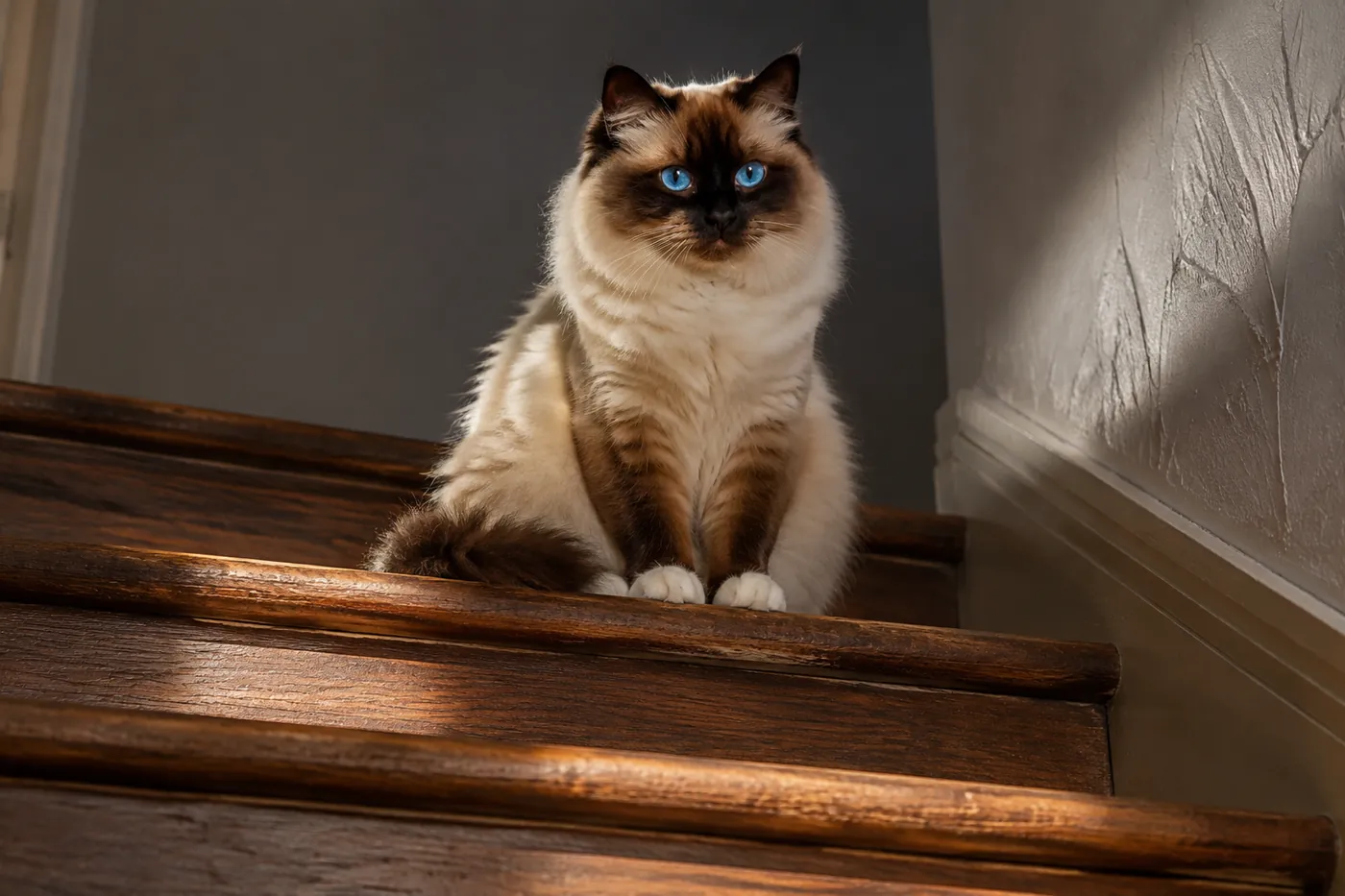
Breed descriptions settle on calm and laid back, with less predatory drive than most cats show. In practice that reads as a cat that follows people between rooms and then settles nearby rather than climbing on them.
The saving is real if you have lived with a vocal breed, and it is not free. A cat that wants to be near people is a cat that notices when there are none, and the sociability that makes it easy company is the same trait that makes an empty house hard on it.
Calm here is a tendency drawn from breed material rather than from a measured behaviour study. Individual cats vary, though the direction is consistent enough to plan a household around.
CFA describes Birmans as quite intelligent cats that enjoy learning and typically respond well to training, which makes reward-based clicker training a natural fit.
Is one good with children and other pets?
Yes, and the low predatory drive is most of the reason.
A calm cat with little interest in chasing handles a busy household and a settled dog better than a reactive one does. Early exposure rather than the breed decides how any individual manages a dog, and the socialisation window is where that gets set.
A Birman's tolerance depends on being able to leave. A cat that cannot get away from a small child stops being tolerant however calm it started, so a high shelf or a closed room does more for the arrangement than temperament alone.
Who should think twice about one?
Two litters are worth declining outright, and the reasons are on paper rather than in the cat.
The first is a litter where neither parent was blood typed. The one risk that kills inside a week was left unmanaged, and no amount of healthy-looking kittens changes what was or was not done before the mating.
The second is a breeder who cannot produce a FOXN1 result for both parents. It is the only lethal recessive in this breed with a test behind it, carriers are invisible without one, and declining to test is a choice rather than an oversight.
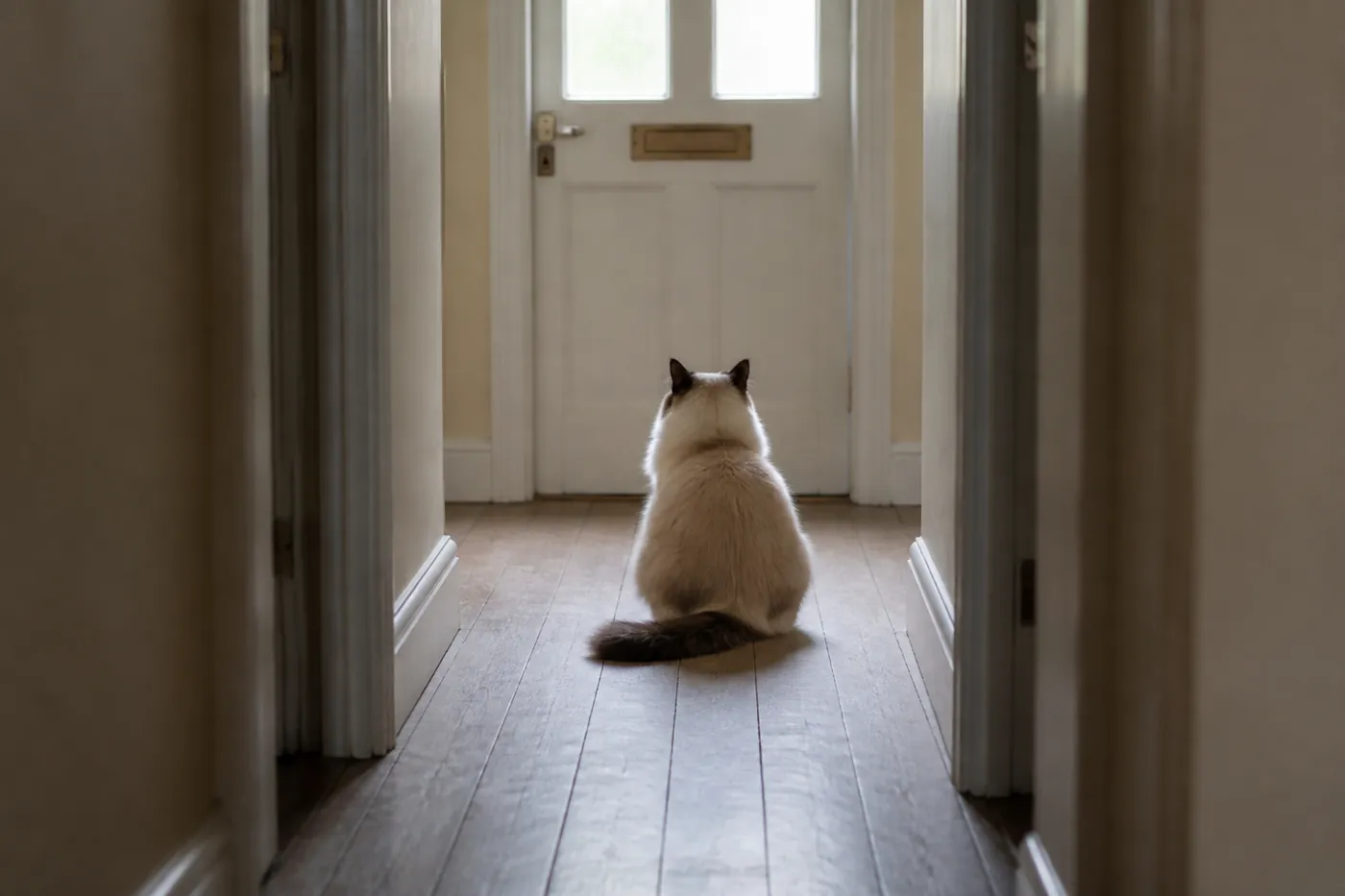
The household to reconsider is the empty one. A social cat left alone across a full working day does not adapt to it quietly, and the calm reputation makes people assume otherwise right up until the cat starts waiting by the door.
Where somebody is usually home and the breeder produces three answers without being pushed, this is an unusually easy cat to live with. It is also, for once, one you can plan around properly, because somebody went and counted.
Common Questions
Do Birman gloves need to be verified by a test?
No. The KIT variant behind the gloving is effectively fixed in the breed, and all 150 Birmans genotyped in the study that identified it carried two copies. Glove symmetry is judged on a show bench and has no bearing on health.
What is the most important question to ask a Birman breeder?
Ask whether the parents were blood typed and how any incompatibility was managed. A type B queen can pass antibodies in first milk that harm type A or AB kittens. If an at-risk litter has already been born, call a veterinarian immediately: preventing nursing during the vulnerable period and providing safe alternative nutrition require an advance or emergency veterinary plan.
Is there a DNA test for hypertrophic cardiomyopathy in Birmans?
A general DNA panel cannot clear a Birman of HCM. Ask for dated cardiac examinations, usually echocardiography, and family history; a scan describes the heart at that examination rather than throughout life.
Why does a Birman page quote a real lifespan when most breed pages cannot?
Because the UK life tables analysed only twelve groups, crossbred cats among them, and the Birman was one of them at 14.39 years. Only the Burmese came out higher.
Checked Against
- The Cat Fanciers' Association: Birman cfa.org
- Comparative analysis of the domestic cat genome reveals genetic signatures underlying feline biology and domestication pmc.ncbi.nlm.nih.gov
- UC Davis Veterinary Genetics Laboratory: Gloves (Birman white feet) vgl.ucdavis.edu
- A deletion in FOXN1 is associated with a syndrome characterized by congenital hypotrichosis and short life expectancy in Birman cats journals.plos.org
- Frequency and inheritance of A and B blood types in feline breeds of the United States pubmed.ncbi.nlm.nih.gov
- EveryCat Health Foundation: Cardiomyopathy in Birman cats, RVC study W15-044 everycat.org
- Life tables of annual life expectancy and risk factors for mortality in cats in the UK pmc.ncbi.nlm.nih.gov
Published 4 September 2026. Last updated .





