
What Is an American Ringtail, and Is the Tail Safe?
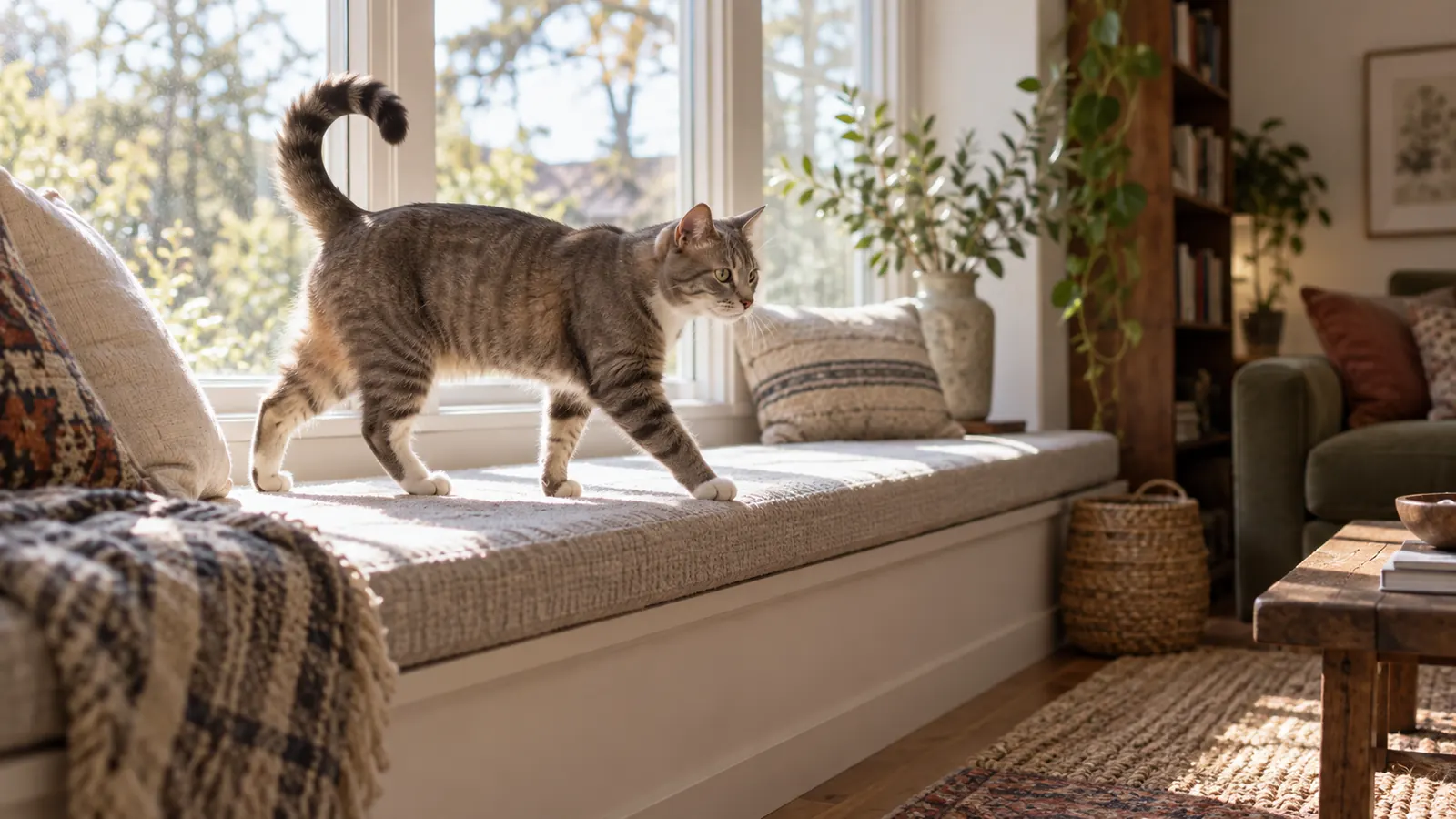
The American Ringtail carries a full-length, fully mobile tail that it chooses to hold curled over its back, which makes it fundamentally different from the shortened-tail breeds it gets grouped with. The harder question is evidence: the line has sat on the bottom rung of TICA's recognition ladder since 2005, and there is no published health data behind it.
- Origin
- Northern California, from a single rescued male found in 1998 and bred on from 1999
- Coat
- Short to semi-long, soft and silky, in any colour and pattern
- Size
- Medium to medium-large and muscular, with a long, flexible, full-length tail
- Typical weight
- Breed sources give roughly 7 to 12 pounds, about 3 to 5.5 kg; no championship standard fixes a range
- Life expectancy
- No breed-specific evidence exists. UK life-table work puts the average across all cats at about 11.7 years
- Activity level
- Moderate. Playful and interactive without the sustained demand of an oriental breed
- Grooming
- Low for short coats, weekly for semi-long ones, plus ordinary nails, teeth and ears
- Suits
- Owners who want an unusual cat and can accept that almost nothing about the line is documented
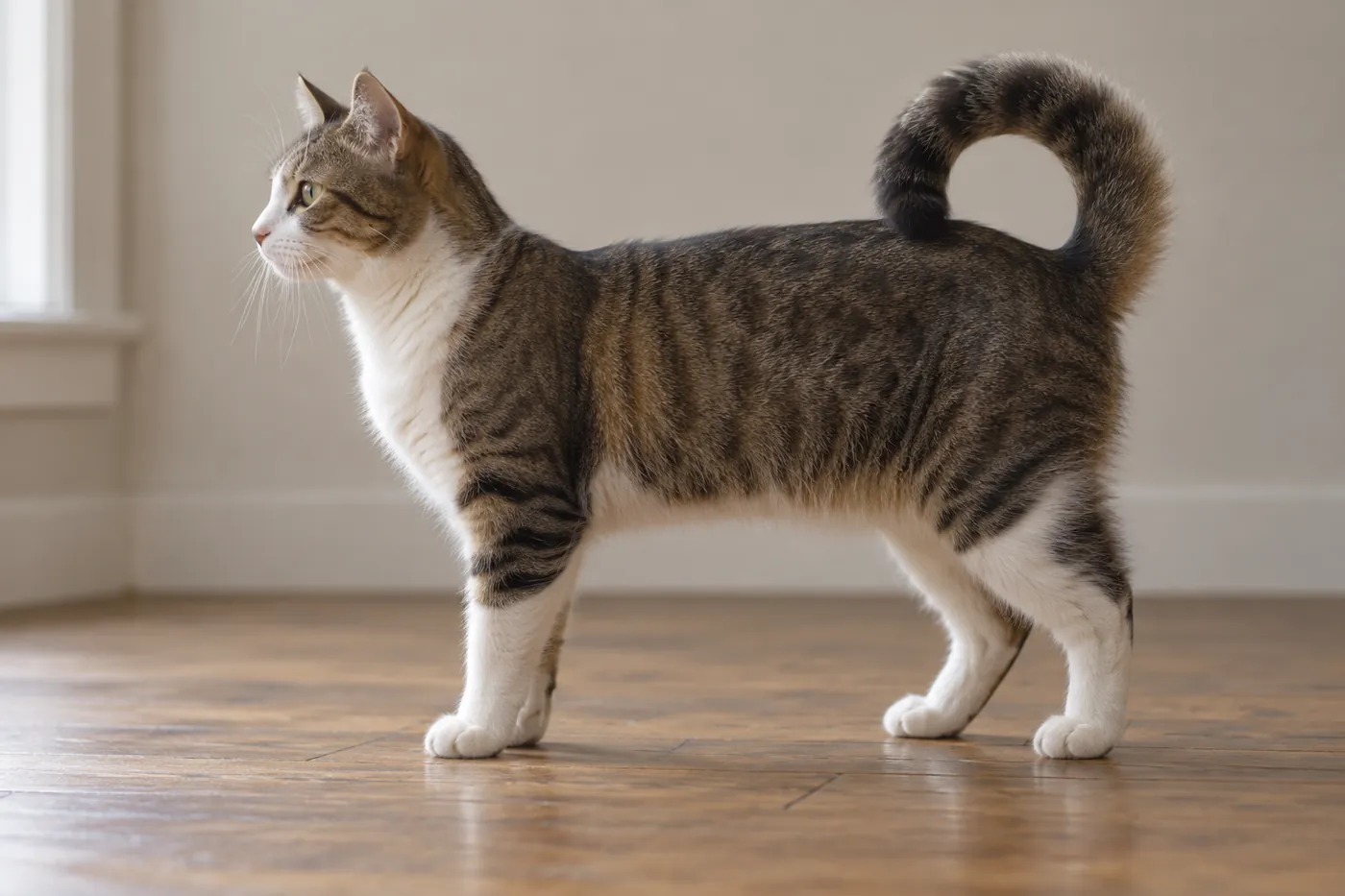
The American Ringtail is the cat that carries its tail in a loop over its own back, and the sensible first reaction to that photograph is suspicion.
Plenty of tail shapes in cats come from vertebral defects that cost the animal something. This one does not appear to.
The tail is full length, fully jointed and fully mobile, and the cat curls it the way another cat wraps its tail around its feet. That is the single most useful fact about the breed, and it is the reason the breed is not comparable to the shortened-tail breeds it gets filed beside.
The evidence behind the breed is the harder question.
Is the American Ringtail a recognised breed?
Partly, and in the weakest sense the word allows.
The line began with a rescued male called Solomon, found in Northern California in 1998, whose tail curled over his back. His owner Susan Manley started breeding from him in 1999, and TICA granted the resulting line Registration Only status in 2005.
Registration Only is the bottom rung of a four-rung ladder.
- Registration OnlyPedigrees are recorded. The cat cannot compete, and no breed standard is being enforced by anyone
- Preliminary New BreedMay be applied for no sooner than two years after Registration Only. Outcrosses to cats of unknown parentage are still permitted and breeding is unrestricted
- Advanced New BreedRequires a further year and at least 25 registered litters
- ChampionshipRequires a further year at Advanced New Breed, and is the point at which the breed is judged against its standard in competition
The line has been eligible to apply for the second rung since 2007 and has not moved. Two decades on the first rung says something about how many cats and how many active breeders exist, and it is the most honest single indicator available for a breed with no published health survey behind it.
No other registry recognises the American Ringtail at all.
What does Registration Only change for a buyer?
Four things, and they compound.
There is no enforced standard, because a cat that cannot be shown is never judged against one. A seller's description of correct type has therefore never been checked by a judge.
There is no breed council, so there is no body collecting health information, publishing an outcross policy, or maintaining a code of ethics you can hold a breeder to.
The gene pool is very small. A line built from one founder and worked for twenty-five years carries a real risk of accumulated relatedness unless the breeder has been outcrossing deliberately and can show you to whom.
And there is no price anchor. Rarity is easy to charge for and hard to verify.
- Ask for the TICA registration paperwork and read it, rather than accepting a verbal claim of registration
- Ask which cats have been used as outcrosses in the last three generations, and why
- Ask what the breeder screens for, and ask to see a result rather than a reassurance
- Ask how many litters they have produced and how many cats they keep back
- Expect a written contract, a health guarantee and kittens that stay until at least twelve weeks
None of that is unique to this breed, but the absence of a registry backstop makes the paperwork the only protection you have.
Does the curled tail come from a spine defect?
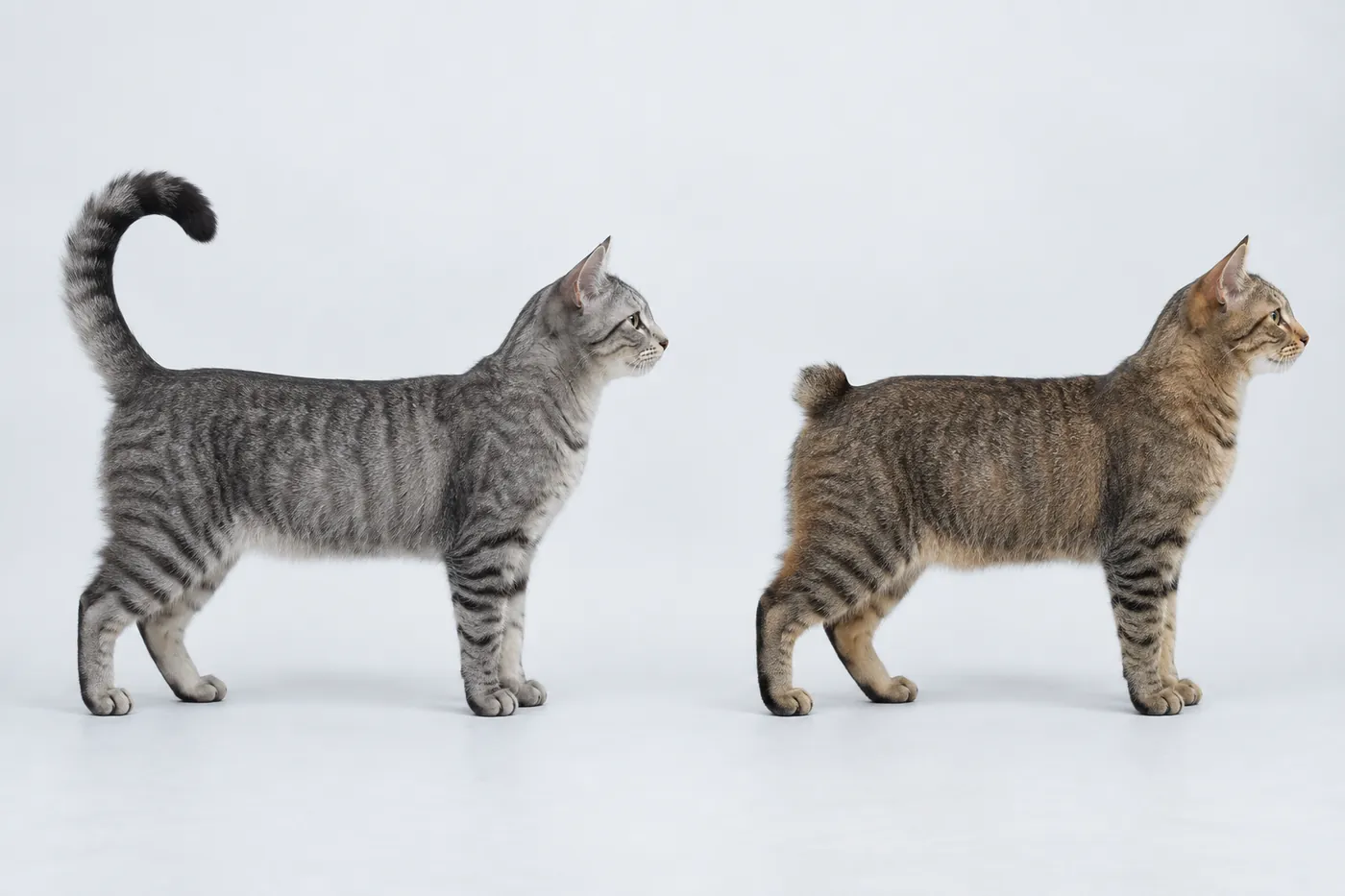
No. The curl is carried in a normal tail, and the shortened-tail breeds show what the alternative looks like.
A Manx carries a mutation in the T-box gene that shortens the spine itself, and in its severe form that affects the spinal cord, the pelvis, the bladder and the bowel. A Japanese Bobtail carries a different mutation that produces a short, kinked tail of fused and reduced vertebrae.
Both of those change what the bone is.
The Ringtail's tail is normal bone in a normal number of segments. The cat lifts it and holds it in a loop because it is inclined to, and it can put the tail down and carry it straight whenever it wants to.
| Breed | What the tail actually is | What it can cost the cat |
|---|---|---|
| American Ringtail | Full-length, fully jointed, held in a loop by choice | Nothing established |
| American Bobtail | Naturally short tail from a dominant variant, not the Manx gene | Little, though tail length varies widely within litters |
| Japanese Bobtail | Short tail of shortened and fused vertebrae, with a fixed kink | Nothing established beyond the tail itself |
| Manx | Shortened spine from a T-box variant | Manx syndrome: spinal, bladder and bowel problems in severe cases |
The practical consequence is that a Ringtail's tail should behave like any other cat's. It should balance the cat on a narrow surface, signal mood, wrap around the feet and lash when the cat has had enough.
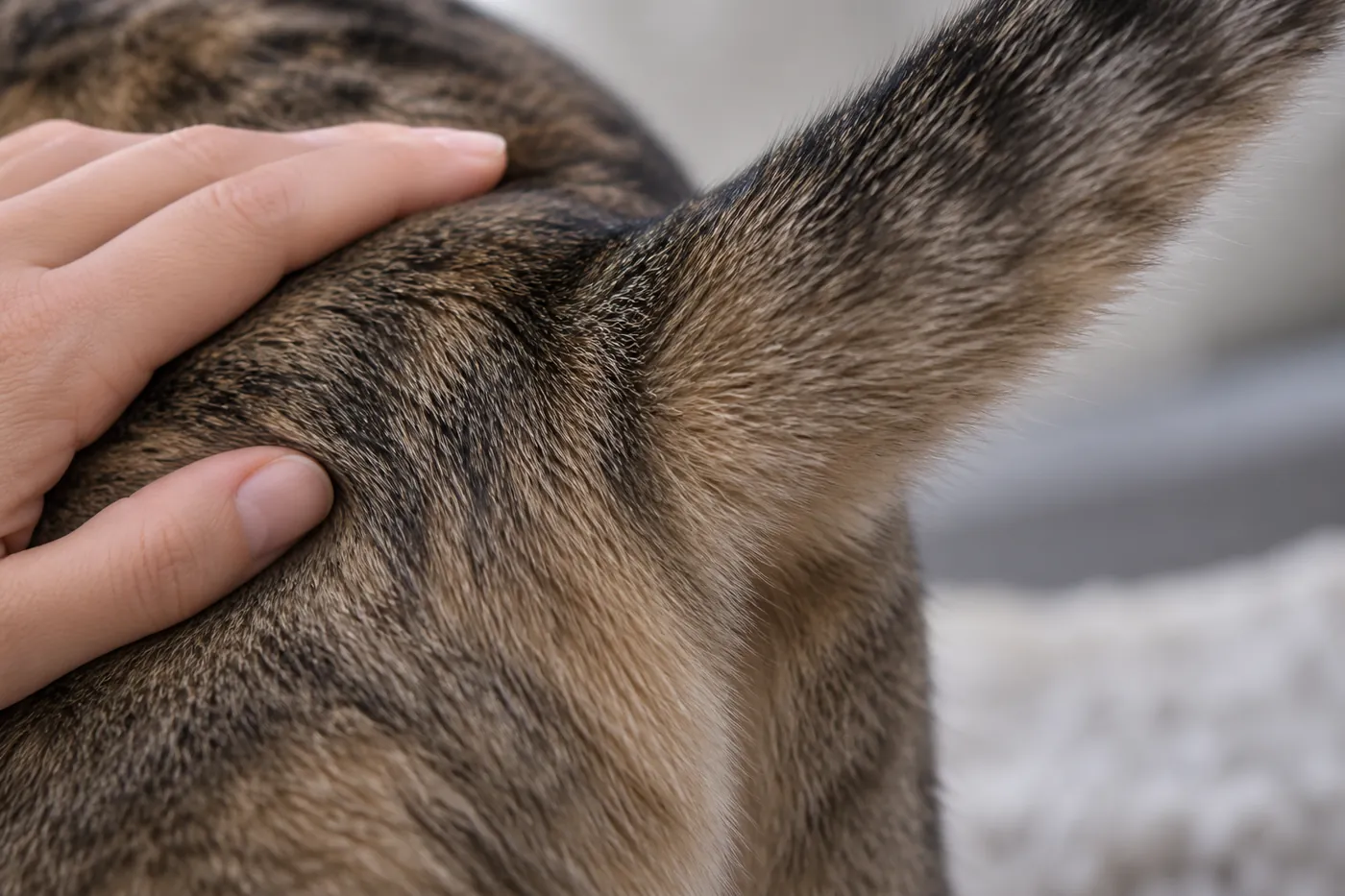
So the check before you commit is on the bone underneath the curl.
- Run a hand gently along the whole tail with the cat relaxed, feeling for a step, a knot or an abrupt angle
- Watch the cat walk a narrow surface, which requires the tail to counterbalance freely
- Watch it eat or sleep, and confirm the tail comes down and straightens when the cat stops paying attention to it
- Watch for normal tail signalling: a flick when irritated, a slow sweep when hunting, an upright greeting
- Stop immediately if the cat objects to the tail being handled, and mention it to a vet
When does the curl appear, and is it inherited?
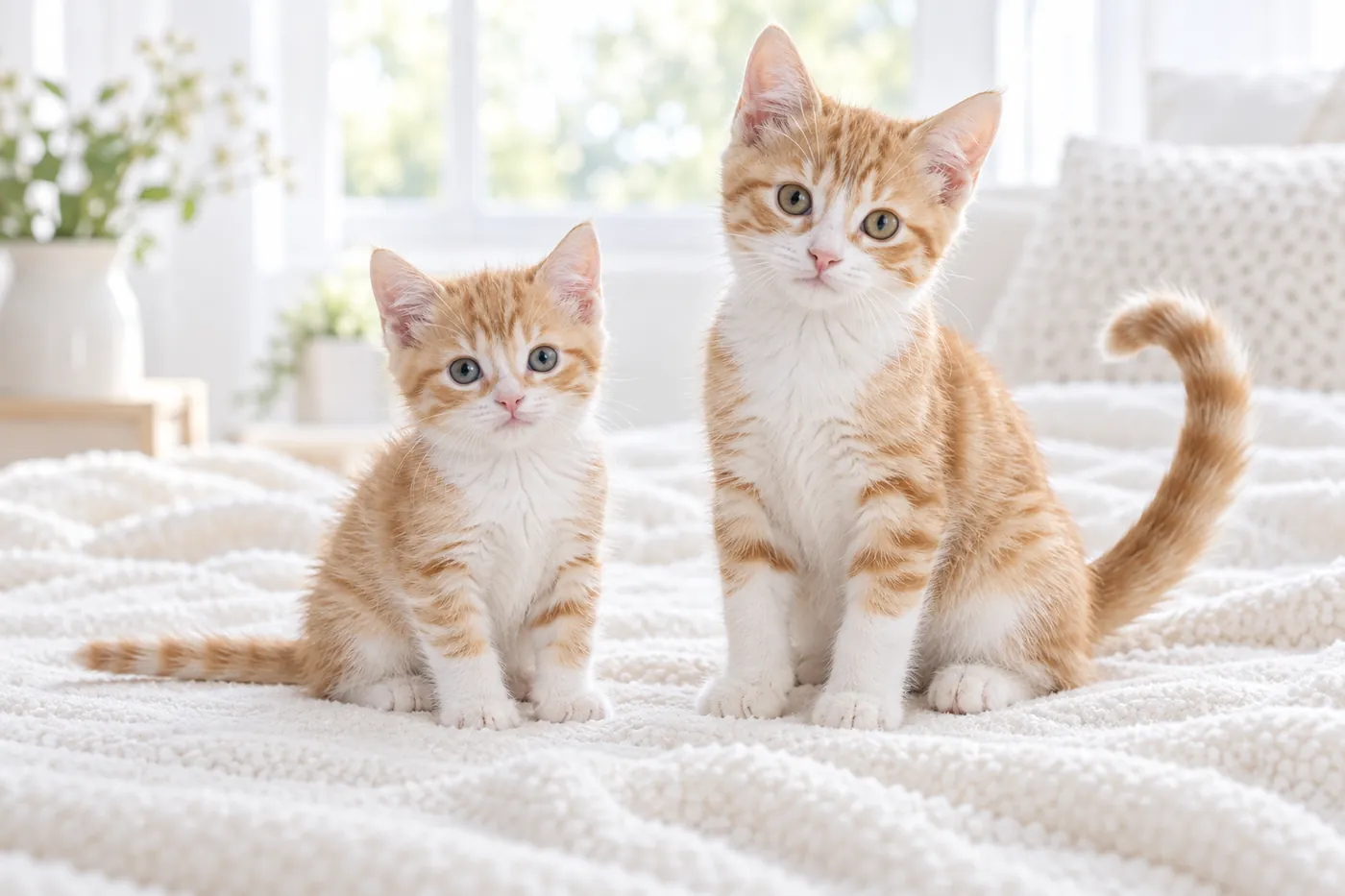
Kittens are born with straight tails. The curl is not present at birth and does not arrive all at once.
- BirthTail straight and unremarkable, like any other kitten's
- First weeksThe tail begins to lift and carry higher, and a shallow curve appears at rest
- Several monthsThe loop settles into the shape the adult cat will use most of the time
- AdulthoodThe cat curls the tail when calm and relaxed and lowers it when it is busy, wary or asleep
So a young kitten with a straight tail tells you nothing yet, and a seller pointing at a six-week-old kitten as a confirmed Ringtail is going beyond what is visible.
How the trait is inherited is a separate question, and it has no published answer.
The tail-curling trait has not been genetically characterised. There is no named gene, no test, and no peer-reviewed description of how it segregates, which puts it in a different position from the ear curl of the American Curl or the tail variants of the bobtail breeds.
What breeders describe is that outcrossing to ordinary domestic cats produces some curled kittens and some straight-tailed ones.
That pattern is consistent with a dominant trait of incomplete penetrance, and it is consistent with several other explanations too, so any confident statement about the inheritance, in either direction, is an opinion.
The practical consequence is that a breeder cannot promise you a curled tail before the kitten develops one. A deposit taken on a two-week-old kitten is a deposit on a guess.
Breeders and registration paperwork use both American Ringtail and the shorter Ringtail for the same line, so a seller who uses one name while the paperwork uses the other is not a warning sign. What matters is that the paperwork exists and that the registration number resolves.
What does one look like, apart from the tail?
Medium to medium-large, muscular, and otherwise unremarkable.
Breed sources put adults at roughly seven to twelve pounds, which is an ordinary domestic range rather than a large-breed one. The coat is short to semi-long, soft and silky, and no colour or pattern is excluded.
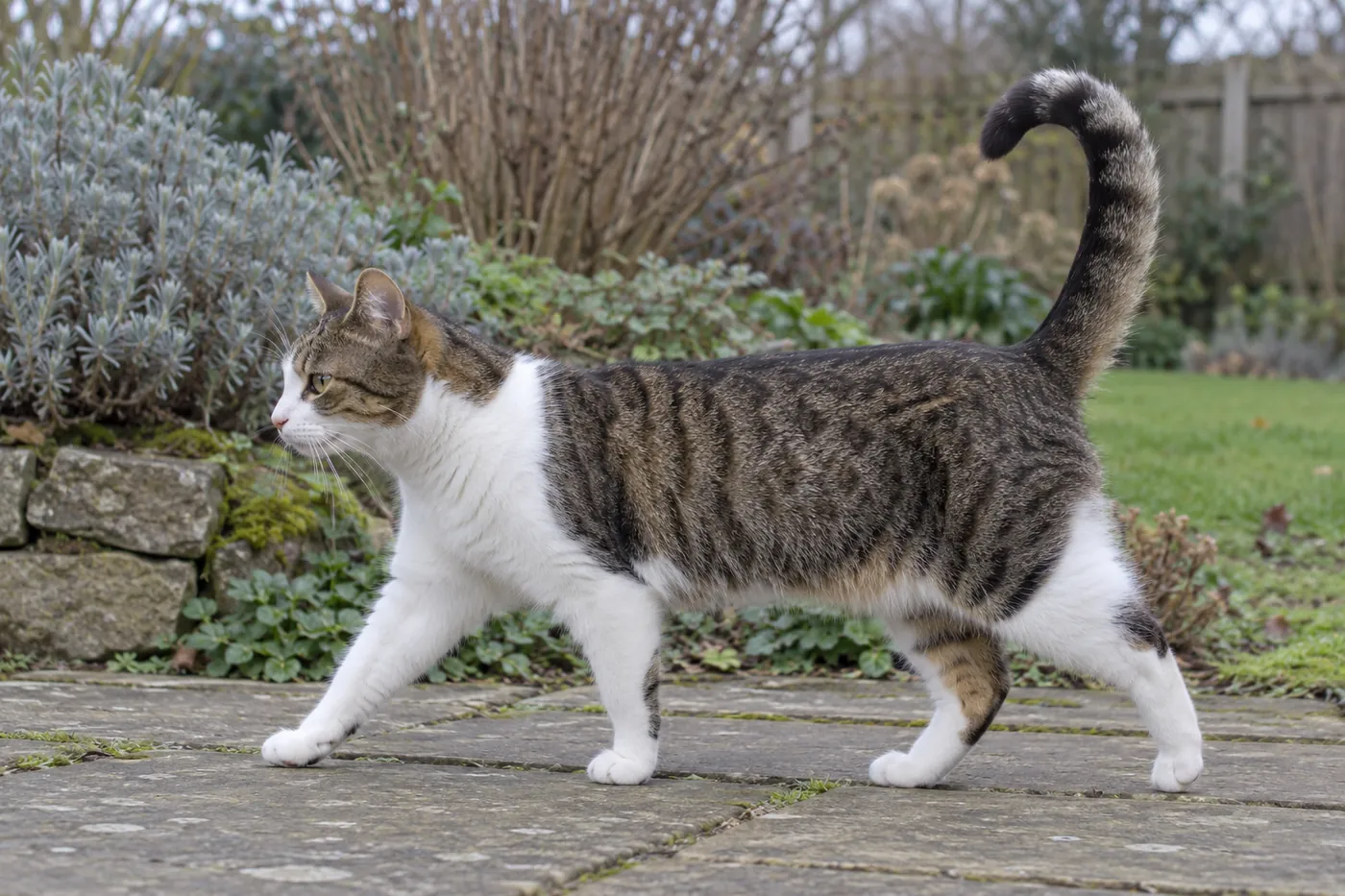
That last point matters more than it sounds. With no enforced standard and every colour permitted, the tail is the only thing distinguishing this cat visually, and a great many ordinary cats carry their tails high and loosely curled when they are pleased with themselves.
If the tail is the whole of the appeal, a shelter cat may well offer the same look.
What is the temperament like, and how far can you trust that?
Breed descriptions say affectionate, intelligent, playful and interested in people, and the cats sold as Ringtails are generally described that way by their owners.
That is a description of a small number of related cats rather than a breed characteristic.
Temperament claims gain their weight from population size. A breed with thousands of registered cats across hundreds of catteries can support a general statement; a line this small cannot separate breed from family from individual.
What you can do instead is assess the cat in front of you. Meet it in the home it was raised in, with its mother present, and watch how it behaves when something unexpected happens rather than when it is being handed to you.
What is actually known about the health?
Very little, and that is the honest answer rather than a cautious one.
There is no published health survey for the breed, no documented inherited condition attributed to it, and no screening panel that a registry requires.
In a population this small, the lack of reported problems only shows that nobody has collected the data.
Breed pages routinely give a lifespan of fifteen to twenty years for this cat. That figure has no study behind it, and it sits well above what large population studies find for cats generally.
UK life-table work covering hundreds of thousands of cats puts average life expectancy at around 11.7 years from birth. That is the number to plan around until somebody publishes something specific.
- Published health survey
- None
- Inherited condition attributed to the breed
- None documented, which is not the same as none present
- Registry-required screening
- None, because Registration Only status imposes none
- Founder population
- One male, in 1998
- Planning figure for lifespan
- About 11.7 years, from UK life tables covering the general cat population
The practical approach is to treat a Ringtail as a domestic cat of unknown pedigree depth. That means the routine screening any responsible breeder does, an honest answer about the founder relatedness in the line, and the same preventive care as any cat, including watching for the signs a cat is ageing.
What does one need day to day?
Nothing unusual, which is a genuine point in the breed's favour.
A short coat needs a weekly comb during a moult and little else; a semi-long one needs brushing more often. Claws, teeth and ears follow the ordinary schedule, and trimming claws is worth establishing while the cat is young.
Activity is moderate, and interactive play in short bursts suits this cat better than an endurance session, in line with its exercise needs by age. The daily food portion follows body condition rather than the figure on the bag.
Is one good with children and other pets?
There is no breed-level answer, because the population is too small to separate breed from family.
What is available is the general rule, which holds regardless of breed: a cat raised in a busy household by a breeder who handles kittens daily copes far better with a busy household than one raised in a quiet cattery. What the kittens have actually been exposed to is a more useful question than whether the breed is good with children.
A cat that carries its tail up and over its back carries it exactly where a small child will grab it, so tail rules are worth teaching early, along with the warning signs that come before a bite.
Introductions to a resident cat follow the ordinary process used to prevent fighting between cats.
What should a Ringtail's price cover?
Rare-breed pricing is set by scarcity rather than by anything you can verify.
A price is defensible when it covers work that has demonstrably been done. Vaccination, worming, microchipping, registration paperwork, twelve or more weeks of rearing and a written health guarantee all cost a breeder real money.
It is not defensible when the only thing behind it is the word rare.
- Should be included
- First vaccinations, worming, a microchip, registration papers and a written contract
- Should be included
- A kitten that stays with its mother until at least twelve weeks
- Reasonable to ask
- Whether the breeder takes the cat back if your circumstances change
- Reasonable to ask
- Which veterinary practice they use, and whether you may speak to it
- Walk away if
- The kitten is offered before eight weeks, shipped unseen, or sold without paperwork
Who should think twice about one?
Anyone who needs documentation.
If you want a screening result you can read, a breed council you can complain to, or a health record covering more than one cattery, this is the wrong breed and no amount of enthusiasm changes that. The Ringtail is a twenty-five-year-old line with an unusual posture and no paperwork behind it.
If you want to show a cat, it cannot be shown.
And if the appeal is specifically the curled tail, much of the price pays for a posture that a large number of cats adopt anyway.
Should you buy one, or find the look elsewhere?
One makes sense if you have met the individual cat, you like it, and you are comfortable paying a rare-breed price for an animal whose health background is essentially undocumented.
The tail itself is the reassuring part of this profile.
What deserves the scepticism is everything around it: one founder, one registry, the bottom rung for twenty years, and no published evidence of any kind. The American Shorthair is the opposite case: a breed that looks like an ordinary cat and has the records to show it is a breed.
If you want an unusual ear or tail with genuine documentation behind it, the American Curl is the better comparison. It began the same way, from one founder in the 1980s, and it climbed the ladder to championship.
Common Questions
Is the American Ringtail's curled tail painful?
There is no evidence that it is. The tail is full length with a normal number of jointed vertebrae, the cat curls it voluntarily and can carry it straight whenever it chooses, which is what separates it from the shortened-tail breeds.
Is the American Ringtail a recognised breed?
Only by TICA, and only at Registration Only status granted in 2005. That is the bottom of a four-rung ladder: the cat cannot be shown, no standard is enforced, and the line has not advanced in the two decades since.
Are American Ringtail kittens born with curled tails?
No. Kittens are born with straight tails, the tail begins to lift and curve over the first weeks, and the adult loop settles over several months. A very young kitten's tail predicts nothing.
How long does an American Ringtail live?
Nobody knows. The fifteen to twenty year figure that circulates has no study behind it. UK life-table work across the general cat population gives an average of about 11.7 years, which is the more defensible planning figure.
How is an American Ringtail different from an American Bobtail?
The Ringtail has a full-length tail it holds in a loop. The American Bobtail has a genuinely short tail produced by a dominant variant. One is a posture and the other is a difference in the skeleton.
Do other cats curl their tails over their backs?
Many do, especially when relaxed or greeting someone. The Ringtail is the only line deliberately bred to do it consistently, which is worth remembering before paying a rare-breed price for the trait.
Checked Against
Published 10 September 2026. Last updated .





