
What Is a Japanese Bobtail, and What Does Its Short Tail Change?
The Japanese Bobtail is an active, social cat with a distinctive short tail and usually modest coat care. Tail studies are reassuring within small samples, but comfort, movement and veterinary history still need checking.
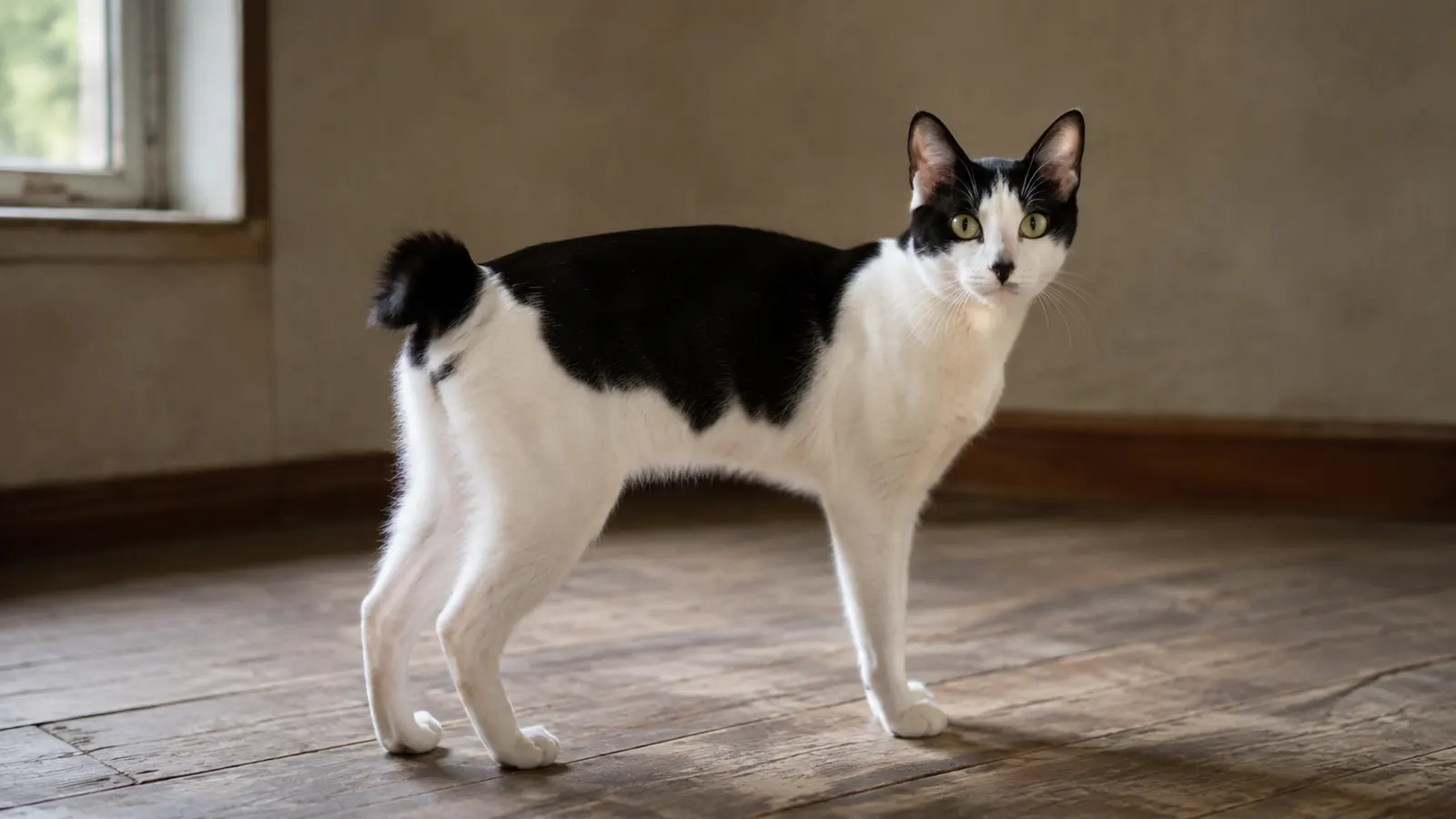
- Origin
- Japan, with the Western breed founded on eleven cats imported to the United States in 1968
- Coat
- Soft silky short or long coat, both with little noticeable undercoat
- Size
- Medium and long bodied, lean rather than cobby, with hind legs longer than the front
- Typical weight
- The standard sets none, asking for muscle without coarseness on a medium frame
- Life expectancy
- The cited studies do not provide a representative breed life-expectancy estimate
- Activity level
- High. Active and intelligent, with a short attention span
- Grooming
- Low. Several times a month for the short coat, more often for the long
- Suits
- Homes with height to climb, company through the day, and short frequent play
A Japanese Bobtail is a long-legged, active cat of an old Japanese type, established as a Western pedigree breed from eleven cats imported to the United States in 1968. Its short kinked tail differs genetically from the Manx tail, and the shape says nothing on its own about health: comfortable movement, toileting and handling in the individual cat are what show that. The breed suits an interactive home that offers climbing, play and gentle routine care.
What does the standard ask of the tail?
The Cat Fanciers' Association gives the tail twenty of its hundred points, the same weight it gives the head and the same weight it gives the body.
Then it declines to say what a good one looks like, calling the tail unique not only to the breed but to each individual cat and offering its own description as a guideline rather than a preferred type.
What it does set are limits.
- The tail bone has to be visible, and a cat with none at all is disqualified
- No more than three inches of tail bone extending from the body
- One or more curves, angles or kinks, in any combination
- The pom-pom must begin at the base of the spine, not after an inch of ordinary tail
- The direction the tail is carried does not matter
What the list leaves out is as telling. There is no correct shape, no preferred length inside the limit, and no rule about how the cat holds it.
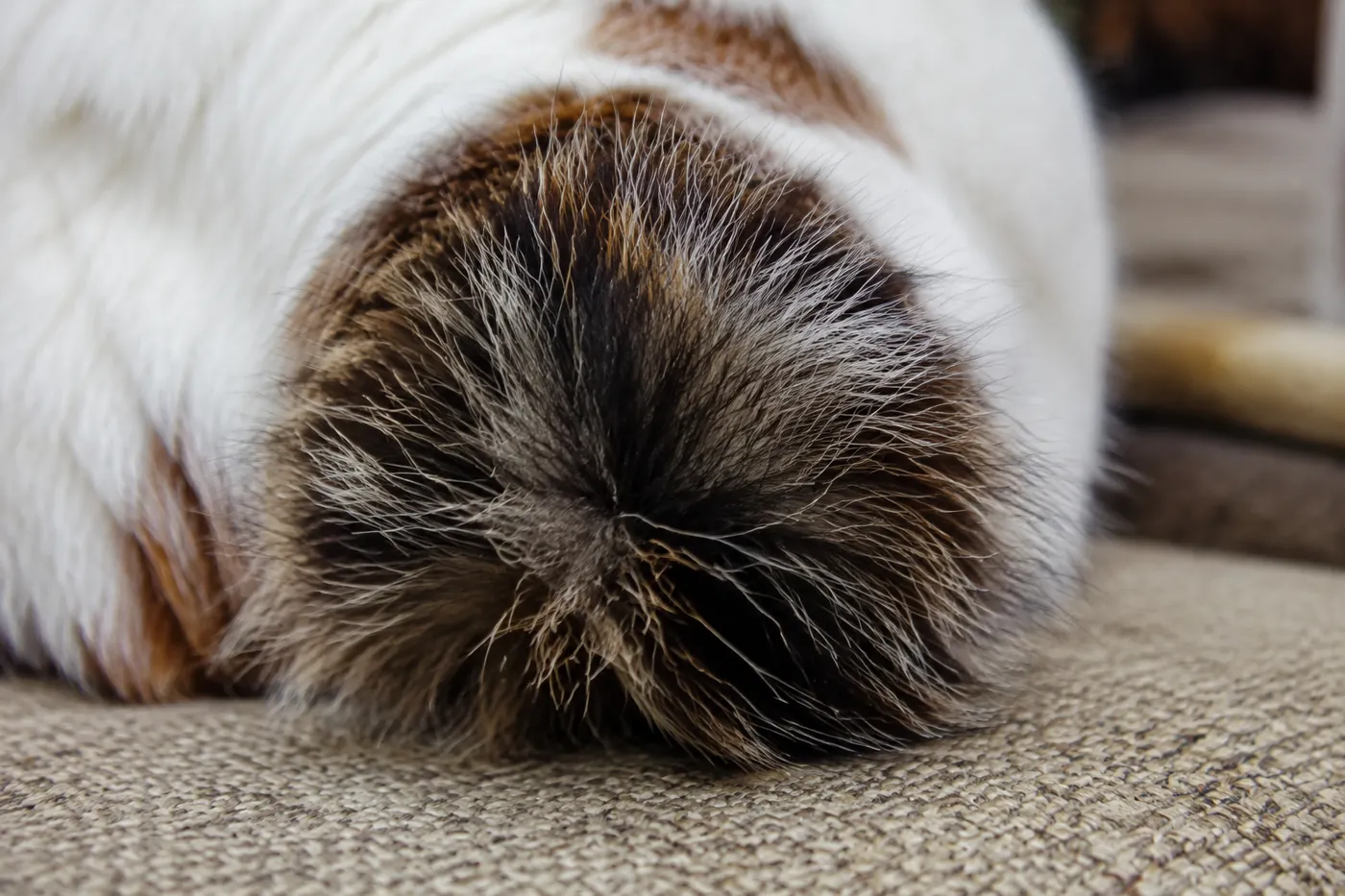
A tail that looks considerably longer than three inches can still be inside the limit, because the pom-pom is doing the work.
At the other end of the range, a cat with no tail bone at all is out of the ring here, which is precisely the cat a Manx breeder would keep and show.
So two kittens with different tails are equally correct, and the standard says so in as many words.
A cat carrying a full-length tail curled over its back, as the American Ringtail does, is a third thing again, and that one is a posture rather than a difference in the skeleton.
Why does it reach past the tail?
A shortened tail does not necessarily mean that all other vertebrae have the usual count. The Japanese Bobtail morphology study examined cats descended from a pedigreed founder, rather than a representative sample of the whole breed.
The researchers imaged the pelvis and tail of 24 cats; 21 also had the rest of the spine imaged. All 17 kink-tailed cats with a full-spine examination had an altered vertebral formula.
Changes commonly involved the thoracic and tail vertebrae, but some cats also had fewer cervical or lumbar vertebrae.
- Study population
- A pedigree derived from a Japanese Bobtail founder
- Observed changes
- Vertebral counts, shapes and transitional segments varied
- Health observation
- No associated health concerns reported during follow-up to five years or younger
- Limit
- These findings do not establish every cat's anatomy or lifelong prognosis
HES7 was identified in later genetic work. Together, the studies show why a tail photograph cannot establish the whole spine's anatomy, while an unusual vertebral count alone does not diagnose pain or disability.
Why can two bobtails be bred together?
The HES7 variant associated with this tail is different from the T-box variants found in Manx cats. The published genetic study found two copies in all twelve Japanese Bobtails sampled, which supports a high frequency in the breed; it does not prove every living Japanese Bobtail has the same genotype.
The eight-short-to-three-normal-tailed experimental litter belonged to a Chinese feral-cat cross, not a Japanese Bobtail litter. The variant also occurs in Chinese feral cats, so it cannot identify a pedigree.
Healthy homozygous cats were reported, but small observational samples cannot exclude every late or uncommon problem. A planned mating still needs veterinary and registry guidance, family history and attention to the welfare of both parents.
How much of the mi-ke story is genetics?
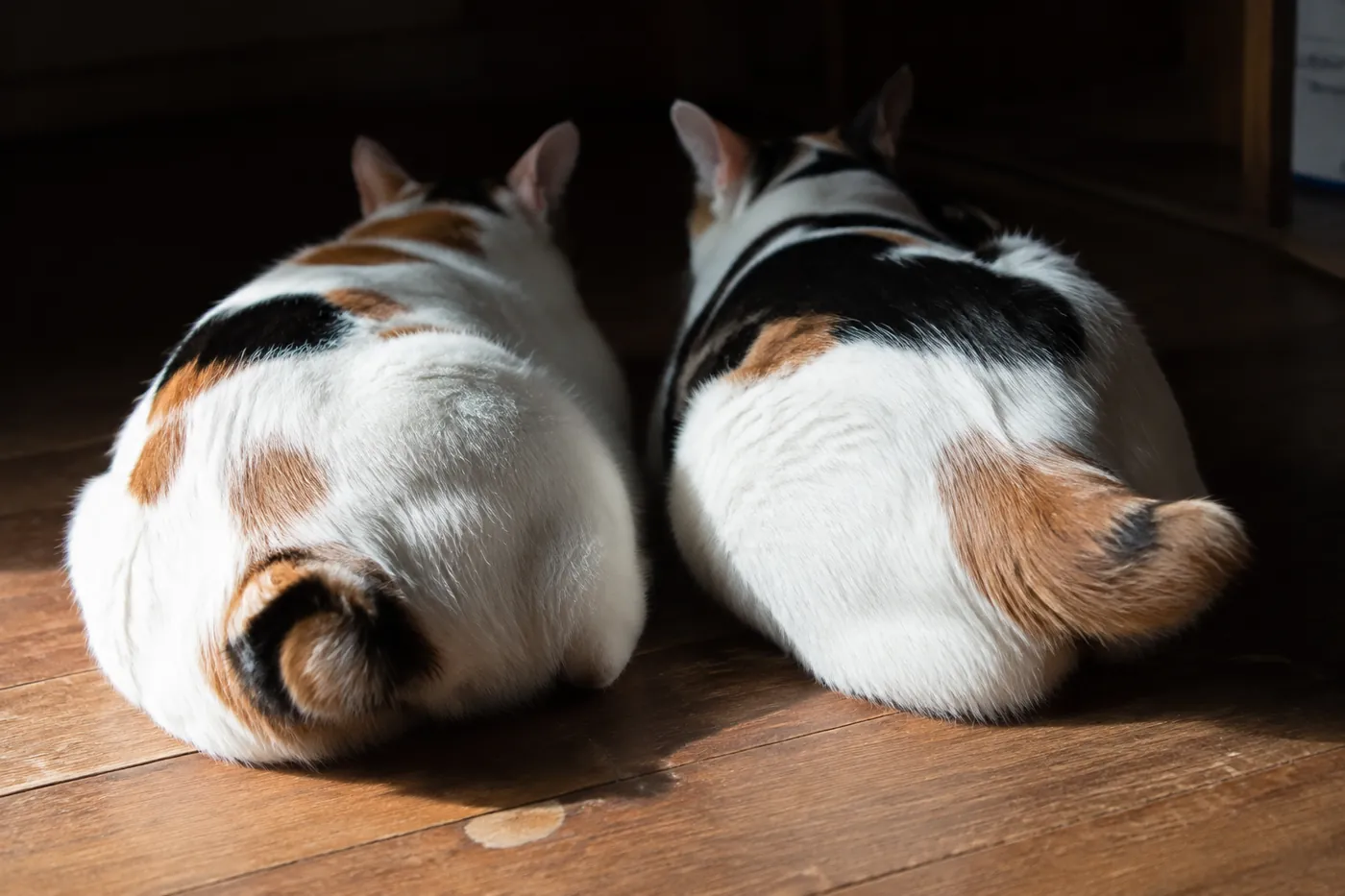
Ask a breeder for a mi-ke and you are almost certainly asking for a female cat.
Mi-ke is the tricolour, a white coat carrying separate patches of orange and black, and it is the colouring that put this cat on the beckoning figurine.
The orange sits on the X chromosome, so to show orange and black in one coat a cat needs two X chromosomes, one carrying the orange and one not, which in practice means a female.
Early in development each cell shuts one X down, and every cell descended from it keeps that choice. That is why the colour arrives in blocks rather than a blend.
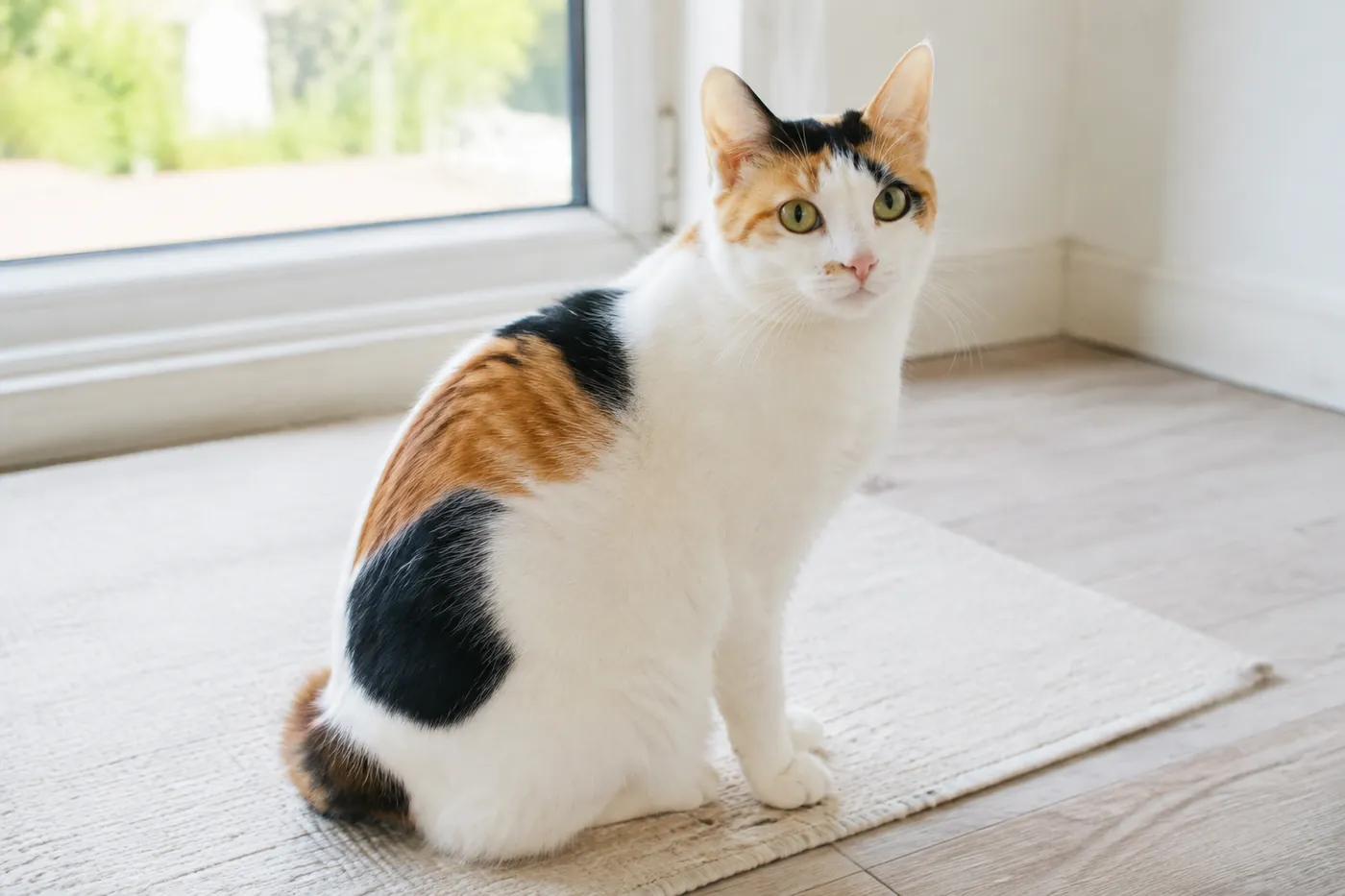
A male gets one X, so he gets one of the two colours. The exceptions run through an extra X chromosome, through chimerism, or through a mutation in one line of skin cells, and none of them is something a breeder can plan for.
The gene behind that orange was only pinned down recently. A deletion at the X-linked ARHGAP36 locus was reported as its cause in 2025, which is late for a colour people have been keeping cats for since the Middle Ages.
The standard states that no colour or pattern is preferred over any other in this breed, so the mi-ke is the famous one rather than the correct one.
How busy is one, hour to hour?
CFA describes an active cat, and the build shows where that activity goes. The standard asks for long, slender, high legs, with the hind legs noticeably longer than the forelegs and deeply angulated at the joint.
That angulation is why the back stays level when the cat is standing, instead of sloping up toward the rear the way a long-legged cat otherwise would. It is also the arrangement that loads a jump.
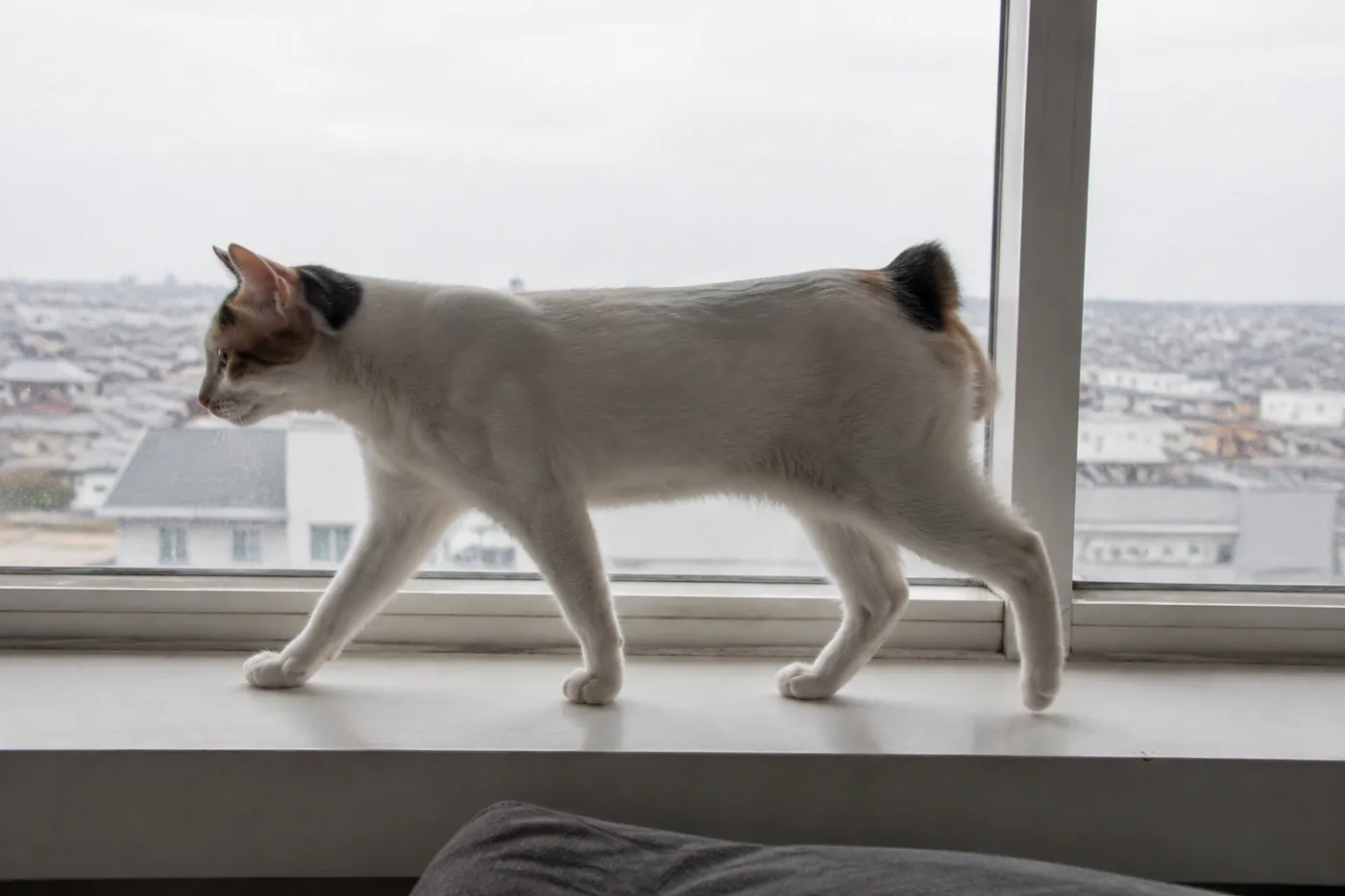
The rest of the build agrees with the legs: a medium cat with a long, lean, well muscled torso, and a standard that penalises a cobby build and heavy bone wherever it appears.
CFA describes the temperament as active and intelligent, with a high activity level and a short attention span. With that build, the household consequence is a cat on top of the wardrobe, so height matters more than floor area in a home for one.
The large behaviour and heritability survey covered nineteen breed groups and did not include the Japanese Bobtail, so the activity description rests on breed literature rather than on measurement.
Short attention span is also a claim about play rather than about learning. It means several brief bursts suit the cat better than one long session, and the total still follows the individual and its age rather than its leg length.
Does it talk like a Siamese?
People hear that the breed is talkative and picture a Siamese, but the descriptions say something narrower than that.
CFA describes a soft voice producing a range of different sounds, and then adds, without being noisy. The trait being described is range rather than volume.
A cat with ten different noises gets called conversational, a cat with one loud one gets called vocal, and only the second is a problem through a shared wall.
The limit is that none of this has been measured. Breed voice descriptions are editorial, so an individual cat sits where it sits, and a quiet one will still use its range persistently when it wants something.
Which coat is more work?
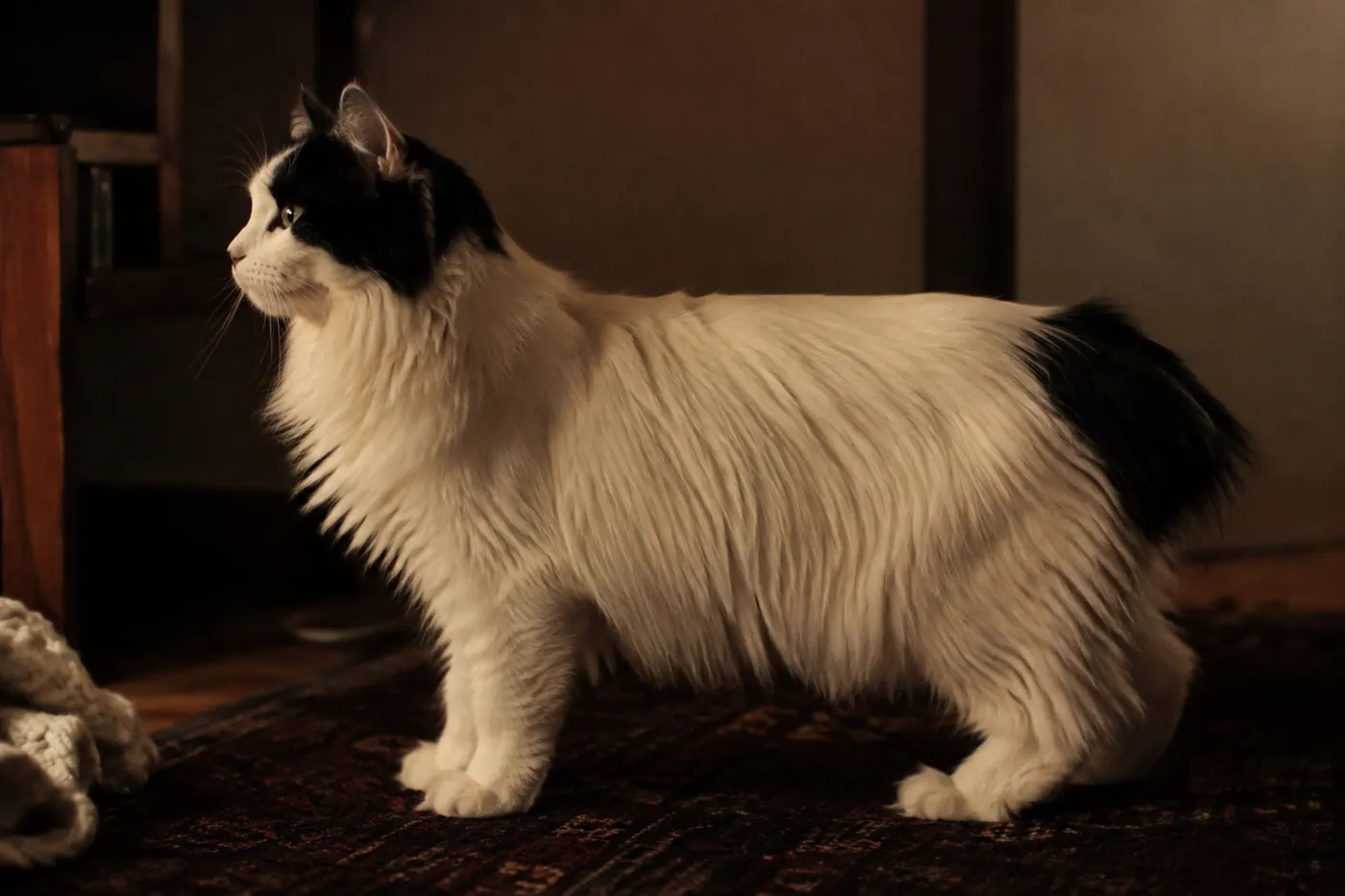
Both varieties have a soft, silky coat with little noticeable undercoat in the CFA standard. The shorthaired standard does not describe a dense undercoat; reading it that way reverses the grooming comparison.
Gentle regular combing is the starting point, adjusted to what comes out and where tangles develop, and longhair furnishings at the ruff, rear legs and tail need additional hands-on checks.
Either coat can tangle when dirty, matted or poorly groomed, especially if pain limits the cat's own care.
| Coat | Where to check | How to adjust |
|---|---|---|
| Shorthair | Whole coat and skin during a light comb | Increase loose-hair removal during shedding |
| Longhair | Ruff, armpits, rear furnishings and tail base | Separate small tangles before they tighten |
Coat length changes the areas that need attention and the technique for a long coat, while skin, claws and teeth need the same checks on either variety.
How much is known about its health?
Every source calls this breed healthy, and it is worth asking what that rests on.
CFA describes a sturdy natural breed with no specific health concerns, and states that no known abnormalities are associated with the tail. The tail half of that is supported by the radiographic work already described.
The rest is thinner than it sounds, because the studies cited here do not provide a representative veterinary population estimate for this breed, so nothing reports disorder rates or a median age at death the way the numerous breeds have.
The HES7 studies describe apparently healthy cats with the variant, including cats outside this breed. A genetic panel checks named variants; it cannot establish a breed-wide absence of disease.
The breed may well be as sound as its reputation, but that confidence rests on little data, and no screening test exists here because nobody has established a disease to screen for.
Where does the breed come from?
Cats of this type appear in Japanese artwork from the Middle Ages, long before anyone was breeding to a standard.
The date that changed things is 1602, when ownership was released and the cats were turned loose to deal with rodents threatening the silk industry.
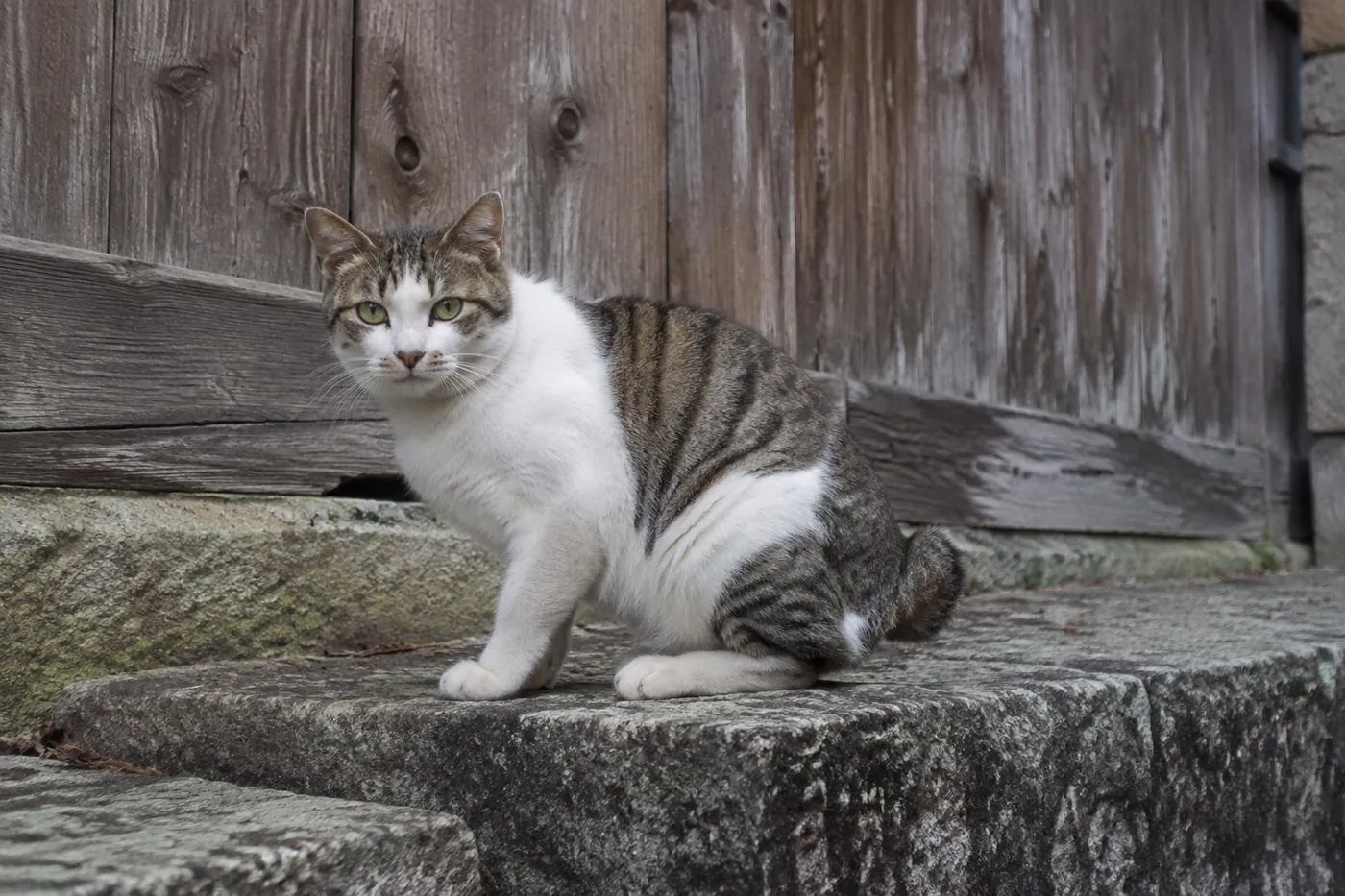
A protected animal became an ordinary street cat, which is how the type stayed widespread and unmanaged for centuries.
- The Middle AgesCats of this type appear in Japanese artwork
- 1602Ownership is released and the cats are set to work on rodents in the silk trade
- 1968Eleven cats are imported to the United States and found the Western breed
- 1976The shorthaired variety takes championship status with CFA
- 1993The long coat is accepted
Eleven cats is a narrow door to come through. Elizabeth Freret brought three over and Lynn Beck brought eight, and the Western breed descends from that group. An old type with a young registered history also explains why so little of it has been studied.
What does one need from a home?
Coat care is usually modest, though it still needs a place in the routine. What the breed asks for is movement.
- Height rather than floor area
- The cat will use every shelf in the house
- Short frequent play
- Several brief sessions suit it better than one long one
- Company through the day
- An active cat left alone for ten hours is the clearest mismatch
- Coat care
- Regular checks, with extra attention to longhair furnishings
Children and other pets are a question about the individual cat and about how the introduction is handled, because nothing has been measured at breed level in either direction.
Nothing in the record suggests the tail limits what the cat can climb, jump or balance on, and the cats in that radiographic study were doing all three.
A household that can give a busy cat height, attention and repeated short bursts of play gets an easy animal out of it. One that wanted something ornamental to match the figurine will have noticed the difference by about the second week.
Common Questions
Can a Japanese Bobtail be born with a normal-length tail?
A normal-tailed kitten can occur in a cross when neither inherited allele produces a shortened tail. The cited eight-to-three litter was a Chinese feral-cat cross, not evidence that two homozygous Japanese Bobtails produce normal-tailed kittens. Ask for the actual pedigree and genotype context.
Is the short tail painful for the cat?
Nothing in the record suggests so. The bones in the tail are fewer and some are fused or wedge-shaped, but both one-copy and two-copy cats were reported as normal with no apparent health problems. Any cat that reacts to its tail being touched is a veterinary question rather than a breed one.
Is every short-tailed cat in Asia a Japanese Bobtail?
No. The same HES7 variant turns up in feral short-tailed cats across the region, and some kinked tails were explained by neither that gene nor the European one. A short tail is a trait several populations share rather than proof of a pedigree.
Checked Against
- CFA Japanese Bobtail breed standard cfa.org
- The Cat Fanciers' Association: the Japanese Bobtail cfa.org
- Whole genome sequencing identifies a missense mutation in HES7 associated with short tails in Asian domestic cats nature.com
- Japanese Bobtail: vertebral morphology and genetic characterization of an established cat breed pmc.ncbi.nlm.nih.gov
- Molecular and genetic characterization of sex-linked orange coat color in the domestic cat pmc.ncbi.nlm.nih.gov
- PLOS Genetics: genetic epidemiology of over 11,000 domestic cats journals.plos.org
Published 6 September 2026. Last updated .





