
What Is a Turkish Van, and How Big Does It Get?
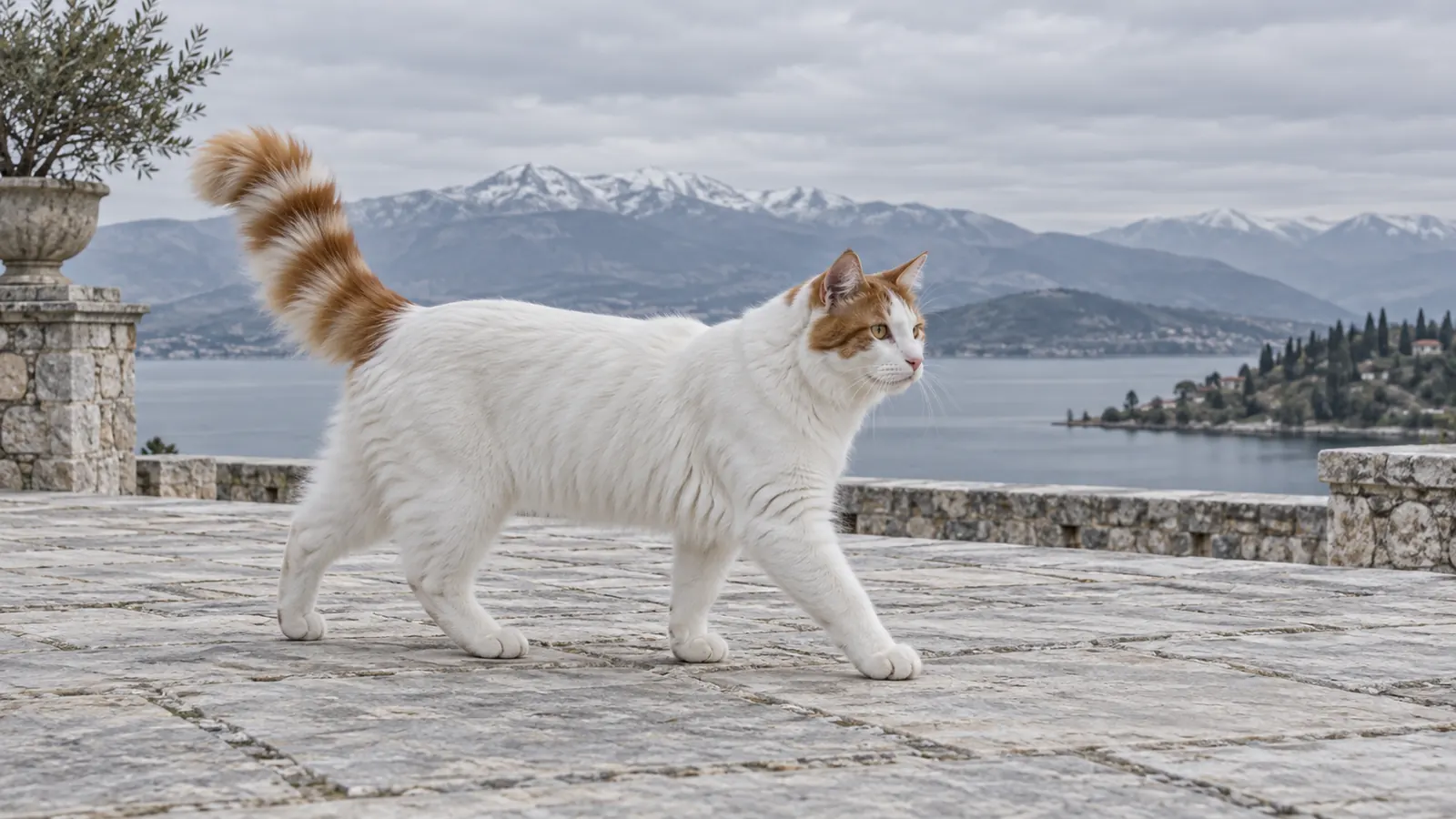
A Turkish Van is a large, powerful, slow-maturing cat with an appetite for activity that outlasts most people's expectations. Two things trip buyers up: the Van pattern is a marking that many cats carry and the Turkish Van is a specific registered breed, and the swimming reputation describes a tolerance for water rather than a cat that needs a pond.
- Origin
- The Lake Van region of eastern Turkey, brought to Britain in 1955 and developed as a registered breed from there
- Coat
- Semi-long, cashmere-textured and water-repellent, with no undercoat, growing fuller with age
- Size
- Large and long through the body with a broad chest and substantial rear, taking three to five years to finish
- Typical weight
- CFA gives roughly 9 to 20 pounds for males and 7 to 12 pounds for females
- Life expectancy
- Commonly quoted at about 12 to 17 years, with no breed-specific population data behind it
- Activity level
- Very high. Athletic, driven and inclined to carry, fetch and climb well into adulthood
- Grooming
- Low to moderate. No undercoat means little matting, but the coat changes noticeably between seasons
- Suits
- Active households with vertical space and tolerance for a large, busy, water-curious cat that dislikes being held
A Turkish Van is a large, semi-longhaired registered breed from the Lake Van region of Turkey, defined by colour on the head and tail over a white body. Most of what circulates about it concerns swimming, and almost none of it covers the two things that decide whether the cat suits a household: how big it gets, and how long it stays busy.
Is the cat you are looking at actually a Turkish Van?
The Van pattern is a marking produced by the piebald white spotting gene, and it restricts colour to the head and the tail while leaving the body white. Any cat can carry it, including ordinary domestic shorthairs and longhairs.
The Turkish Van is a registered breed that happens to be defined by that pattern. CFA puts it plainly: these are coloured cats with very large patches of white, not white cats with colour added.
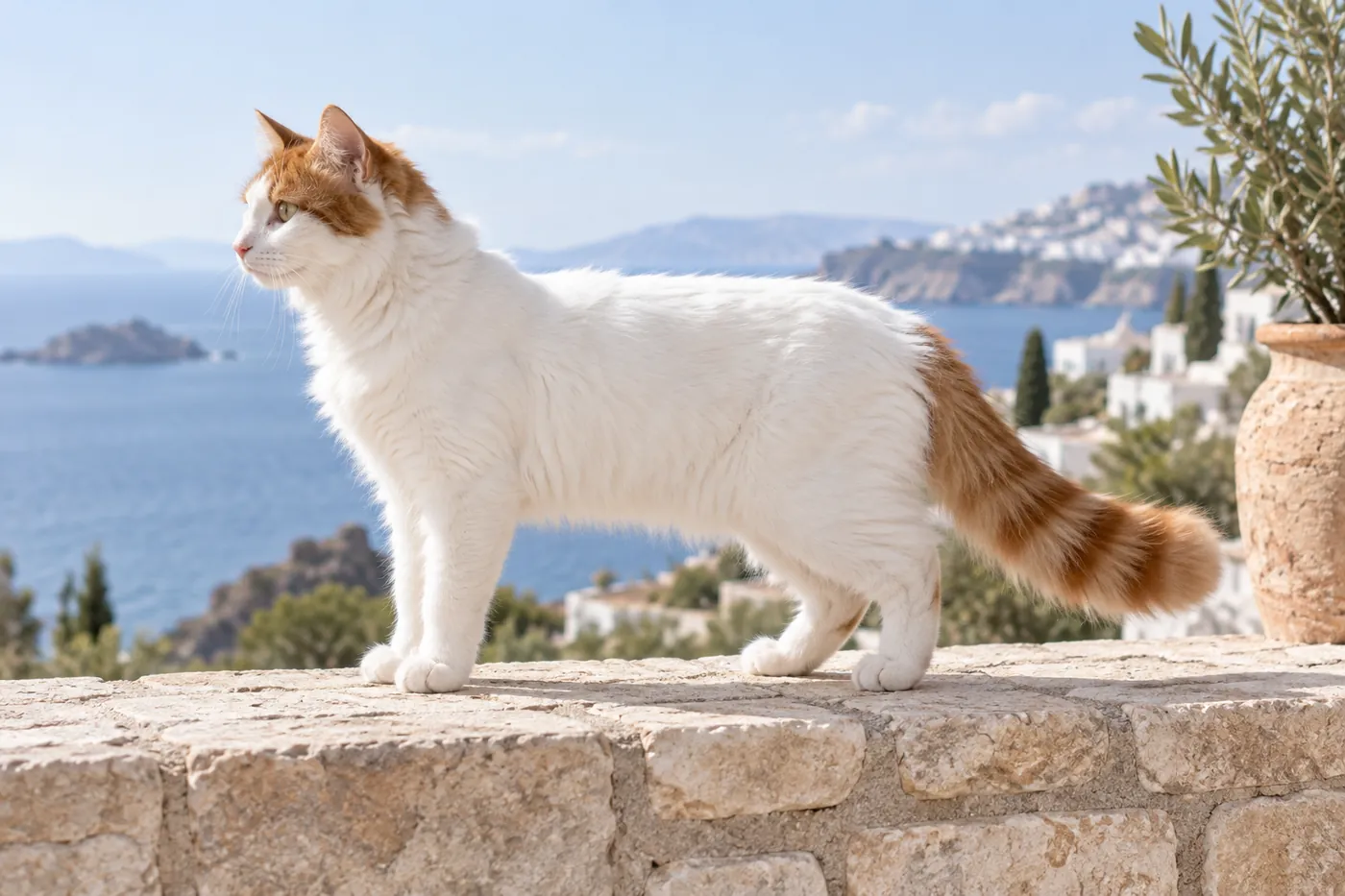
The standard is specific about how far the colour may spread. One or more random body markings are allowed up to twenty percent of the body, and a cat with no colour on the head or tail, or with more than that twenty percent, is disqualified.
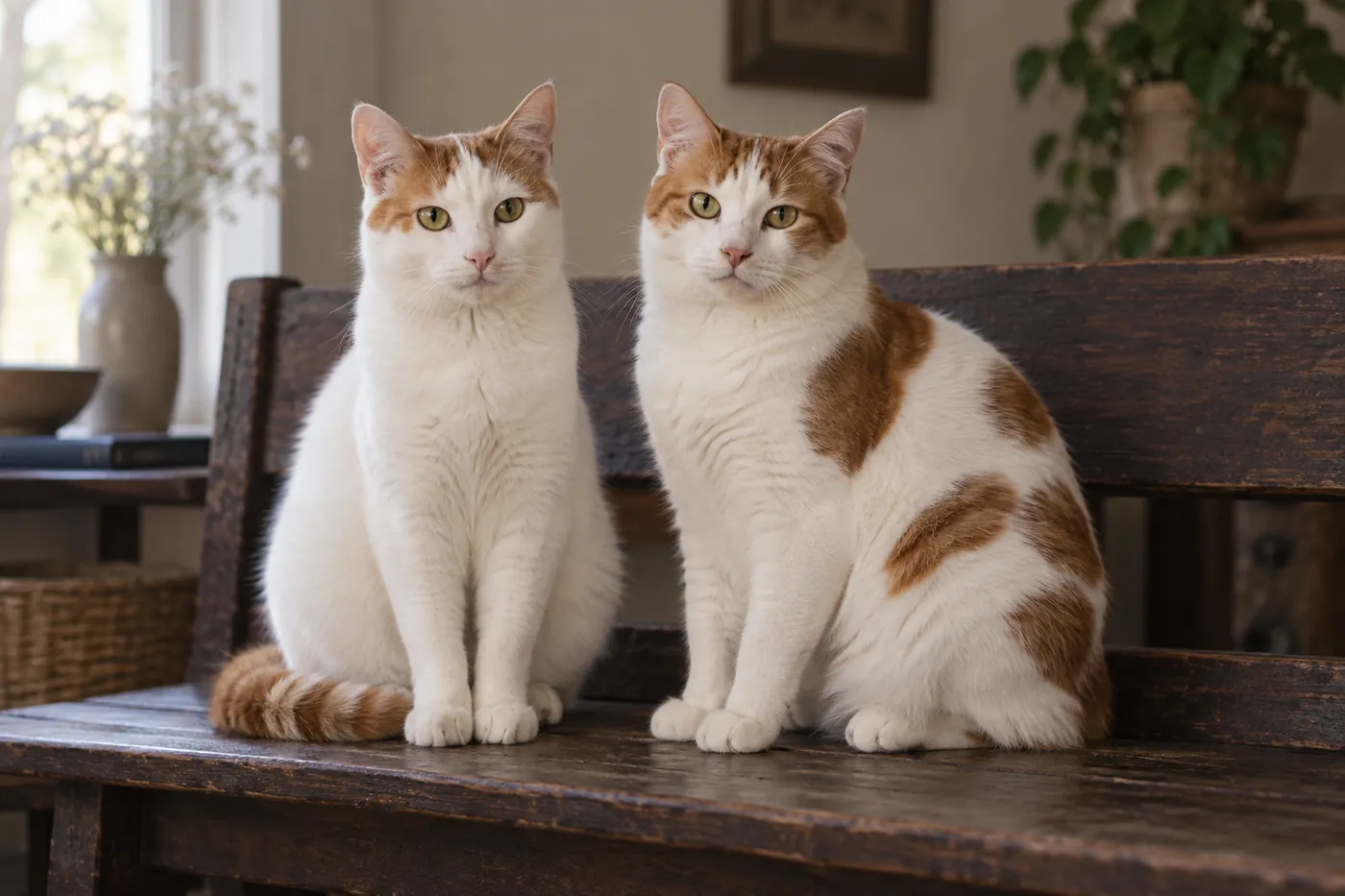
So a van-patterned rescue cat is a van-patterned cat and a perfectly good one to adopt, but the pattern is not evidence of the breed: only a registered pedigree settles that question.
The recognition record is worth knowing for the same reason. The GCCF registered the breed in 1969 under the name Turkish cat, TICA granted championship status in 1985, and CFA moved it from miscellaneous in 1988 to provisional in 1993 and championship in February 1994. WCF and FIFe recognise only van-patterned cats under the name, which matters if you are looking at a European pedigree.
Why are Turkish Vans so hard to find?
Turkey treats the breed as national property and regulates it accordingly. The Turkish Van is protected in its home country, exports are tightly restricted, and the trade in cats leaving Turkey is not the open market a buyer elsewhere is used to.
The Turkish government also runs its own breeding effort. The Van Cat Research Centre, usually called the Van Cat House, was established in 1995 on the campus of Yüzüncü Yıl University, and by 2018 it held around 350 young adults and kittens.
| Figure | What it is | What it tells a buyer |
|---|---|---|
| 92 pure Van cats | Counted in a 1992 survey of the breed's native area | Even at home the population was small enough to count |
| About 350 cats | Held at the Van Cat House as of 2018 | A protected programme, not a supply of exportable kittens |
| Tightly regulated export | Turkey's current position on the breed | Cats abroad descend from a narrow, historic set of imports |
Two things follow for anyone shopping outside Turkey.
The first is practical. Registration numbers are low, waits are long and prices carry a premium, and a breeder who can produce a kitten immediately is worth more scrutiny rather than less.
The second is genetic. A population founded on a small number of historic imports has less variation behind it than the breed's robust reputation suggests, which is why the dated screening records still matter in a breed with no long disorder list. It is also why the cat you find locally is far more likely to be van-patterned than to be a registered Turkish Van.
How big does one get, and how long does it take?
CFA gives males roughly 9 to 20 pounds and females 7 to 12, which is a wide band even by breed standards, and the breed takes three to five years to finish.
That slow finish is the part that catches people out. A Turkish Van at eighteen months looks like an adult and is still filling out, so equipment bought for the cat in front of you will be wrong within two years.
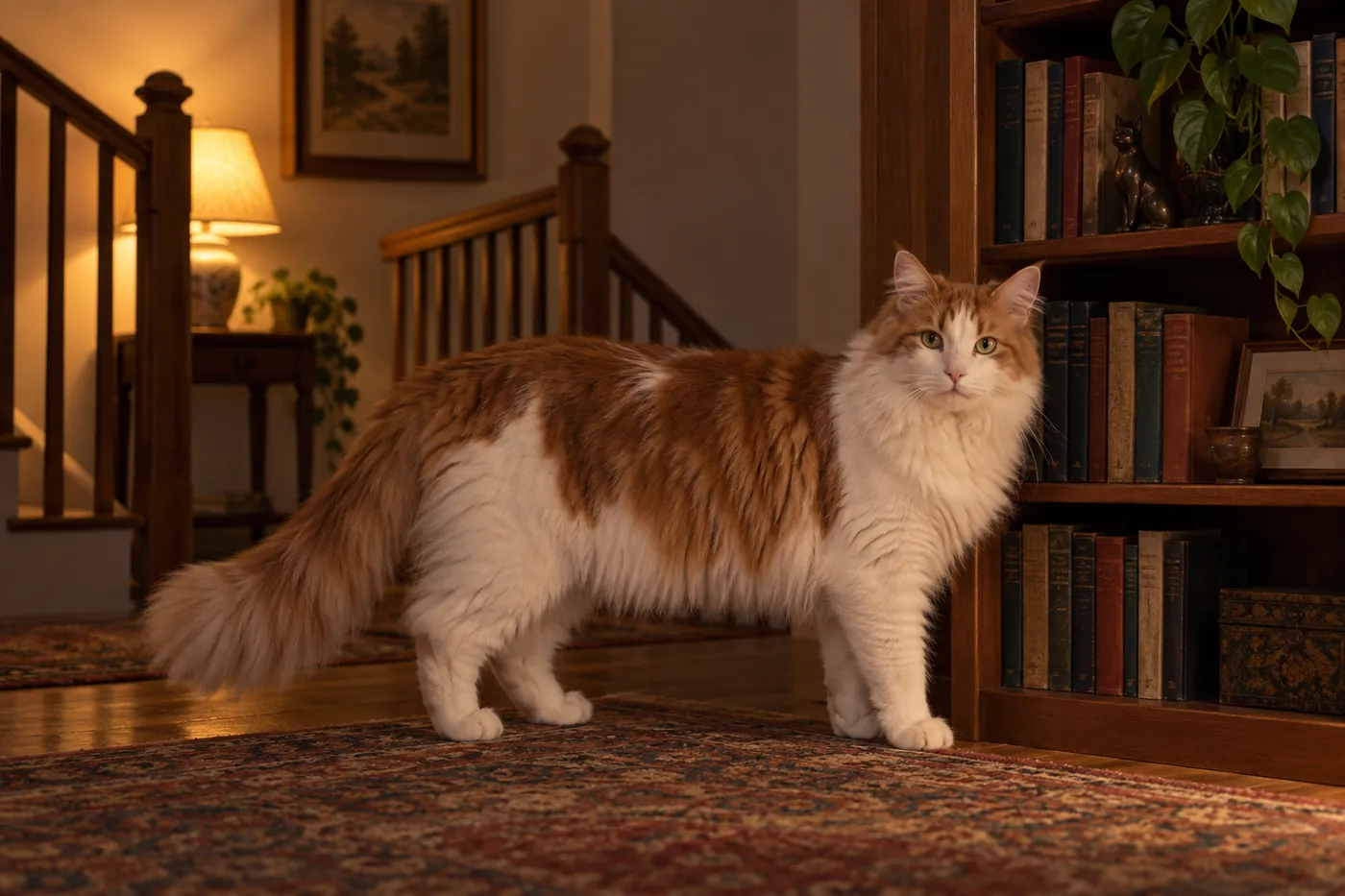
Carriers, trays and platforms therefore need sizing for a cat at the top of the band, and in a carrier a long cat needs usable floor length more than headroom. Weight gain hides inside a semi-long coat as well, so condition is tracked by feel and a monthly weight rather than by appearance.
What does a Turkish Van kitten turn into?
It turns into a much larger cat, over a much longer period than a first-time buyer plans for. The three to five year finish is a genuinely extended build rather than a slow first year followed by an adult, and the cat changes shape more than once along the way.
- First yearFrame and length arrive quickly, and the cat looks adult while still light
- One to three yearsChest and shoulder fill in, and weight catches up with the frame
- Three to five yearsFinal substance arrives, most obviously in males
- Every winterCoat volume increases and the outline changes again
- With ageCFA notes the coat becomes fuller year on year rather than thinning
The coat follows its own schedule. A yearling Van can look almost plain against a photograph of a mature cat, and the difference is age rather than quality, so a Van bought on how it looks at nine months is being bought on incomplete information, and the same is true of a Van rejected at that age.
What equipment does a long cat actually need?
A long cat needs floor area more than headroom, which is where owners of other large breeds get it wrong. A Turkish Van is long before it is heavy. The measurement that runs out first is the distance from nose to tail base, and most cat equipment is sized on weight rather than on length.
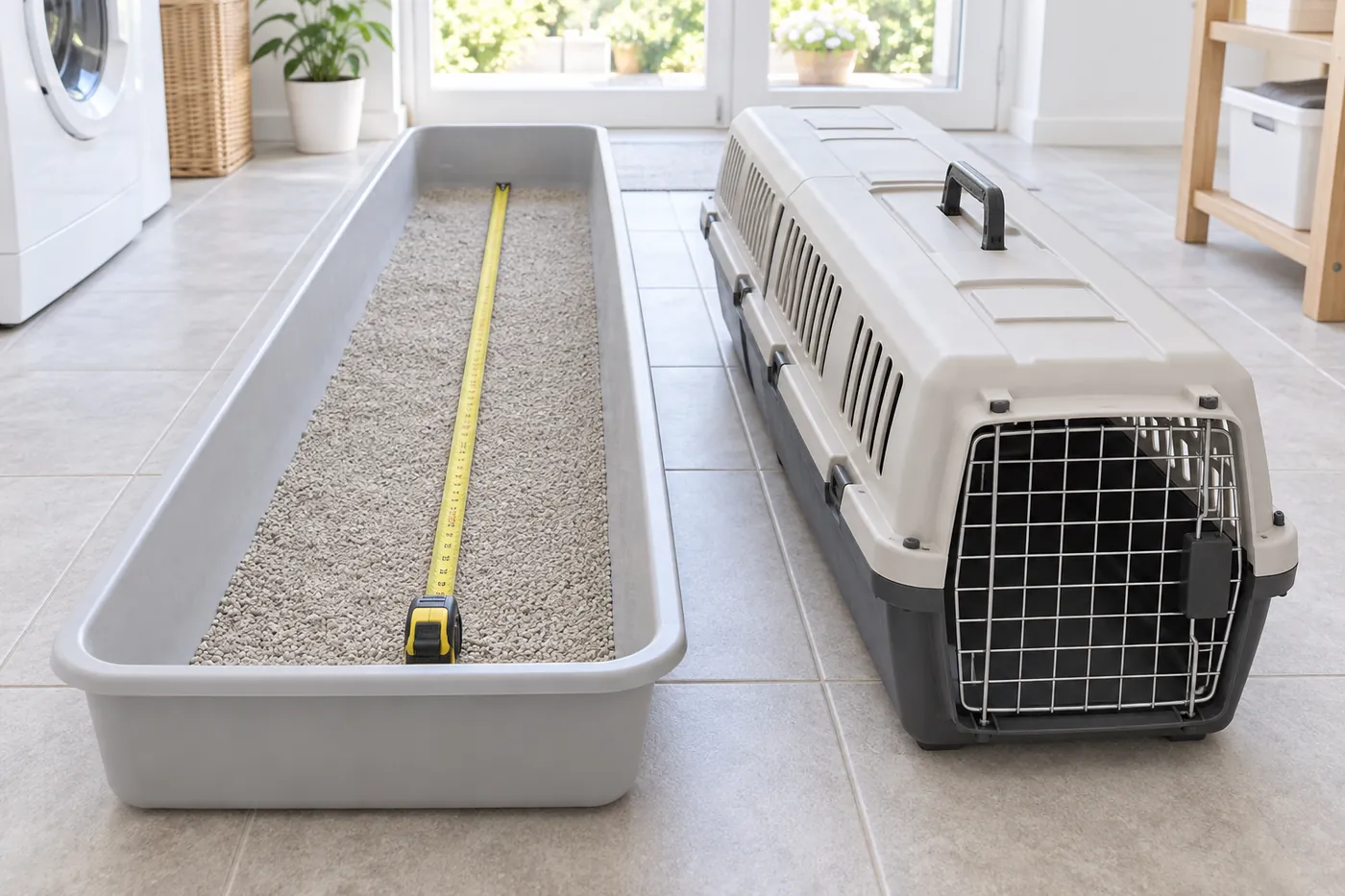
- Measure the cat from nose to tail base and buy trays longer than that measurement
- Choose a carrier the adult can stand, turn and lie flat in, checked again at three years
- Pick shelves deep enough for the whole body, not just the front half
- Anchor climbing furniture, because a long cat generates real leverage on a light tower
- Keep landing zones clear, since a heavy cat descending needs room to absorb the drop
- Allow a second route down from every high place, so one cat cannot block the only exit
Trays are the item most often too small. A cat that has to step in its own waste to turn around will find somewhere else to go, and the problem reads as a behaviour issue rather than a measurement one.
The whole set is worth checking again at about three years, because the cat that outgrew the first carrier is usually still growing when the second one is bought.
What does the swimming reputation actually mean at home?
At home the reputation describes a cat that interferes with water far more often than one that swims.
The reputation came from Lake Van and from the two British photographers who brought the first kittens to England in 1955, and it stuck because it is unusual and memorable. CFA's own account is more measured: most Turkish Vans in the United States live indoors, the swimming reports involve cats pursuing prey or cooling off, and the everyday version is a cat intrigued by a dripping tap.
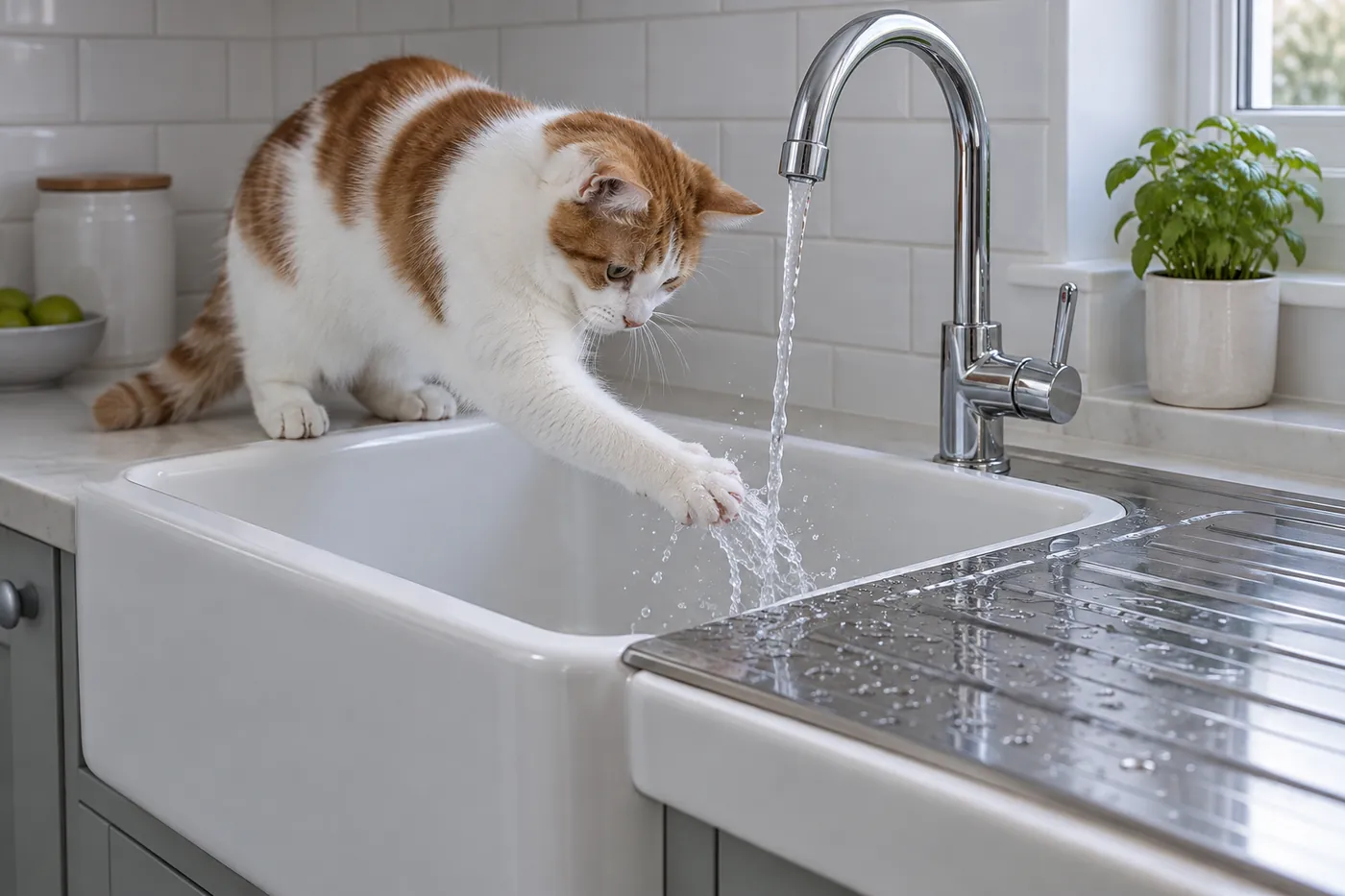
In practice that means toys dropped into water bowls, paws in the bath after you get out, and a cat that appears whenever a tap runs. A heavy, stable water bowl on a washable surface helps, and an unattended full bath or a water butt carries the same risk it would with any cat that investigates water.
Water tolerance varies, and an individual Van may show very little of it, so the breed is a poor choice for someone who specifically wants a swimming cat.
What is the coat like without an undercoat?
The semi-long coat is easier than its length suggests. It lies flat with no undercoat beneath it, which CFA compares to cashmere or rabbit fur, and that structure is why it repels water and dries quickly.
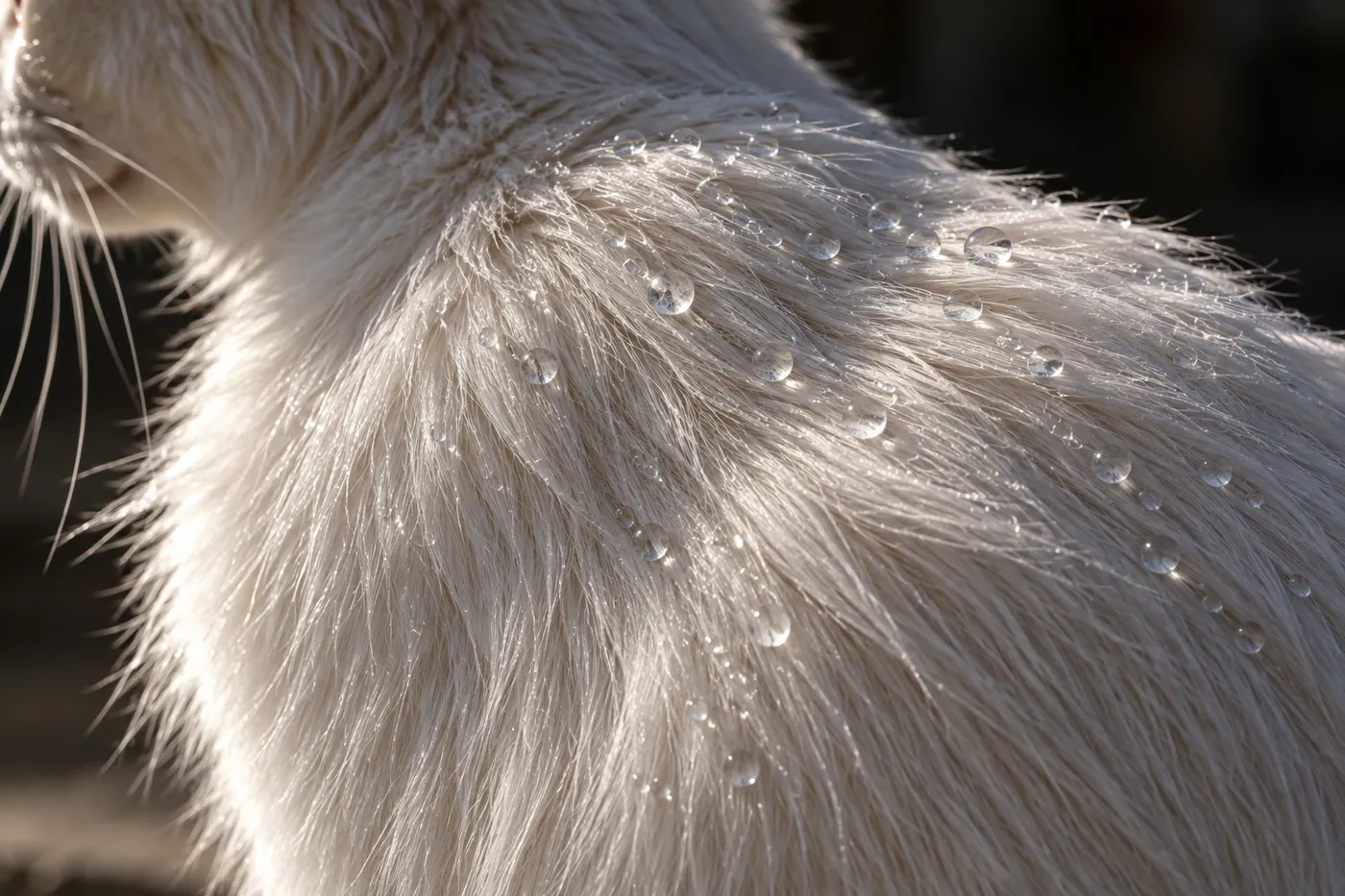
No undercoat also means little of the compacted matting that drives grooming schedules in other semi-longhairs, so a comb through the ruff and britches once or twice a week generally holds it. The coat is seasonal and noticeably different between summer and winter, and CFA notes it becomes fuller as the cat ages, so the same animal can look like two different cats across a year.
The same structure that repels water also resists dirt, and CFA notes the coat cleans up more easily than its length suggests. A Van that suddenly needs more help than usual is telling you about its mobility or its teeth rather than about its coat.
What is the temperament really like?
A Turkish Van is busy, physical, and not especially interested in your lap.
CFA describes the breed as extremely active, intelligent and strong, and notes that Vans fetch instinctively, learn tricks and a leash, and like to carry things about. The same account describes a cat alert to changes in its environment that can be protective and will sometimes growl at something it does not like, which is not a common note in a breed standard.
Most Vans dislike being picked up and held. They are affectionate on their own terms and near you rather than on you, which disappoints people expecting a large lap cat.
Reward-based clicker training suits the breed well, because a cat that already retrieves and problem-solves takes to structured work quickly.
A Van's size and drive shape how it fits alongside other animals and children:
- Other cats
- Usually manageable, with a slow introduction and a resident cat that is never cornered
- Cat-experienced dogs
- Usually manageable on the same terms, since size and drive make a rushed meeting risky
- Children
- Easier once they are old enough to leave a cat on the floor, because a Van that dislikes being lifted will simply leave
Without an outlet, a Van's energy finds its own. Height, retrieve games and a scratching post tall enough for a long cat to stretch fully are the basic provision for this breed.
How do you feed a large athletic cat?
The total has to be measured, because activity does not protect this breed from gaining.
A Turkish Van burns a lot in short bursts and then sleeps, and the burst is what owners remember. The daily total is what actually decides the weight.
The coat and the frame then conspire against you. A semi-long coat covers the outline, and a cat that is long anyway carries a surplus along its length rather than around its middle.
So condition is assessed by hand and by scale, with three checks that do not depend on how the cat looks:
- The ribs, felt by hand through the coat
- The waist, traced behind the ribs rather than judged by eye
- A weight taken on the same scale at the same point each month
The daily allowance, divided into measured portions, has to include whatever comes out of the treat jar.
Weight matters more in this breed than in a small one for a mechanical reason. A heavy cat that jumps from height lands with that weight, and the joints doing the absorbing are the ones that decide how much of its teens the cat spends climbing.
What health evidence should you ask for?
The breed has a reputation for robustness and no long list of breed-specific disorders, which is genuinely good news and not a reason to skip records.
Two conditions common across cats are the ones worth asking about by name: hypertrophic cardiomyopathy and polycystic kidney disease.
- Heart
- A dated cardiologist echocardiogram on each breeding cat, since HCM can be silent
- Kidneys
- Whether the line has been screened for polycystic kidney disease
- Hearing
- A BAER result for any all-white cat, where deafness risk is real
- Identification
- Reports carrying a microchip or registered name, or they prove nothing
- What no record covers
- Dental disease, weight and kidney function in later life
The hearing point applies to the all-white cats sometimes offered as Turkish Vankedisi rather than to the van-patterned cats. An all-white cat carries the same W-linked deafness risk described in the Turkish Angora profile, and that risk rises sharply with blue eyes.
The naming is worth untangling, because it is used loosely. Vankedisi describes an all-white cat from the same region, and in Turkey it is often treated as the more prized animal.
Outside Turkey the two names are frequently applied to the same litter, so a seller using them interchangeably is not necessarily misleading you and is definitely not telling you which cat you are looking at.
The hearing result tells you more than the name does. An all-white cat with an untested pair of ears is the same purchase whichever word is on the advertisement.
A cardiac result belongs to the date it was taken, so ask when each parent was last scanned and by whom rather than whether the line is clear.
Who should think carefully before buying one?
Households that want a calm, portable, low-input cat will find the breed a poor match. None of its traits is a defect, but each of these conditions works against one of them:
- A quiet flat, for a cat large enough to knock things over
- A full working week, for a cat that needs daily outlets for years
- A wish to carry the cat around, which most Vans dislike
- A first cat, since the activity level does not taper on the schedule people expect
If the appeal is the pattern rather than the breed, a van-patterned rescue cat gives you the look, a known adult temperament and a fraction of the cost. If the appeal is a big affectionate longhair that likes being held, the breed is the wrong shape for that entirely.
Where the fit is right, plan for twelve to seventeen years of a cat that stays interested in everything, and budget the second half of that for the teeth, weight and kidney monitoring that dominate later feline life.
The later years change this breed more than they change a sedentary one, because so much of its character is physical. A Van that stops using the top of the route is usually reporting a joint rather than losing interest.
That is worth catching early. Lowering one shelf, adding an intermediate step and moving a favourite resting place within reach keeps the cat using the space it already knows, and adapting the home in stages avoids removing everything at once.
Checked Against
- The Cat Fanciers' Association: the Turkish Van cfa.org
- The International Cat Association: Turkish Van tica.org
- International Cat Care: inherited deafness in white cats icatcare.org
- Cornell Feline Health Center: hypertrophic cardiomyopathy vet.cornell.edu
- Life tables of annual life expectancy and risk factors for mortality in cats in the UK pmc.ncbi.nlm.nih.gov
Published 10 September 2026. Last updated .





