
What Is a RagaMuffin, and Is It Right for Your Family?
A RagaMuffin can suit a family that wants a calm, affectionate large cat and can support its body properly, maintain a semi-long coat and verify health records. Slow maturity and a trusting reputation call for careful handling, because not every cat enjoys being carried.
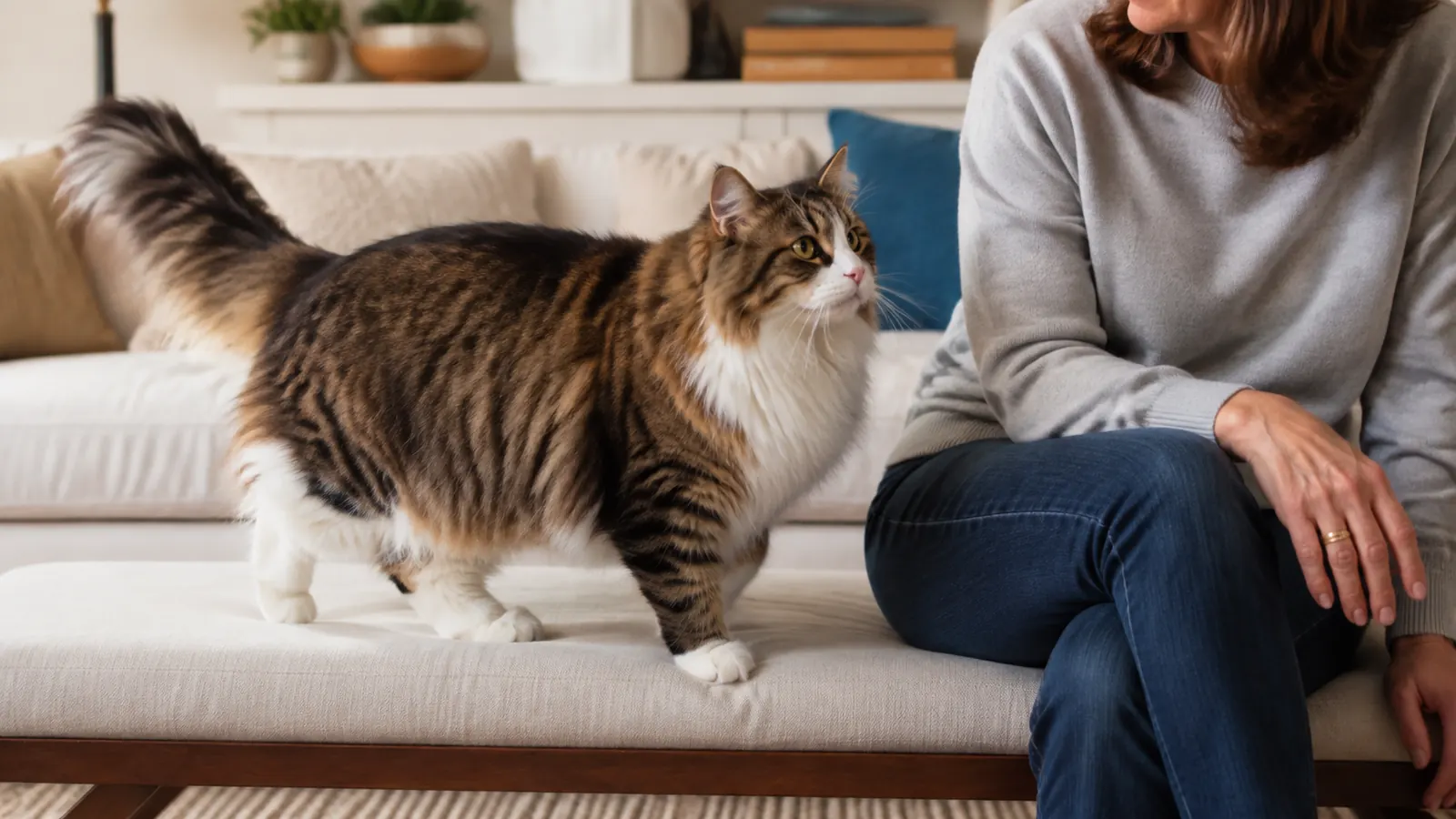
- Origin
- United States, developed as a breed distinct from the Ragdoll
- Coat
- Medium to medium-long, dense and silky, with many accepted colours and patterns
- Size
- Medium-large to large, substantially boned and slow to reach full maturity
- Typical weight
- Registries emphasize sex difference and substantial size rather than one universal healthy range
- Life expectancy
- Plan for a long adult life; no robust breed median makes a promotional maximum dependable
- Activity level
- Moderate, with daily interactive play and sturdy climbing choices
- Grooming
- Moderate. Comb through the coat regularly and increase checks during seasonal shedding
- Suits
- Homes seeking an involved companion and prepared for large equipment, coat care and documented health screening
The RagaMuffin is a substantial semi-longhaired cat whose relaxed expression and affectionate reputation can make ownership sound almost effortless. In practice, the breed asks for careful social choice, equipment built for an adult body, regular combing and evidence behind health claims.
Full physical development can take years. That slow finish matters because a lanky adolescent does not need extra food to become large, and kitten-sized furniture may be unsuitable well before the cat looks mature.
Is a RagaMuffin a good fit for family life?
Many RagaMuffins enjoy close contact and follow familiar people through the home, although a cat that seeks company has not agreed to constant handling. A strong match wants a companion nearby and still respects the cat's choice about laps, lifting and retreat.
Abyssinian and RagaMuffin cats sit far apart in pace, body size and how they seek company. American Shorthair and RagaMuffin cats are closer in everyday adaptability, but the RagaMuffin adds a larger slow-maturing body, a semi-long coat and a stronger expectation of close contact.
- Strong fit
- A steady household wanting a social, moderate-activity companion
- Children
- Potentially suitable when adults teach support and release
- Other pets
- Often manageable through gradual introduction and separate resources
- Harder fit
- Rough handling, fragile perches or neglected coat maintenance
- Growth
- Full body and head development may take about four years
- Health evidence
- Named HCM and PKD records plus family cardiac history
Children should sit down before lifting and support the chest and hindquarters together. A large cat can be injured or frightened when its rear body hangs, even when it does not struggle immediately.
Another animal needs separate litter, food, water and rest during introduction. A docile-looking cat can still defend access to essential resources, so calm appearance never replaces controlled introductions.
How large does a RagaMuffin become?
Size changes the practical plan. The standard describes a rectangular, broad-chested body with substantial bone and a fatty pad on the lower abdomen. Females are usually smaller than males, while both should feel muscular rather than soft from excess body fat.
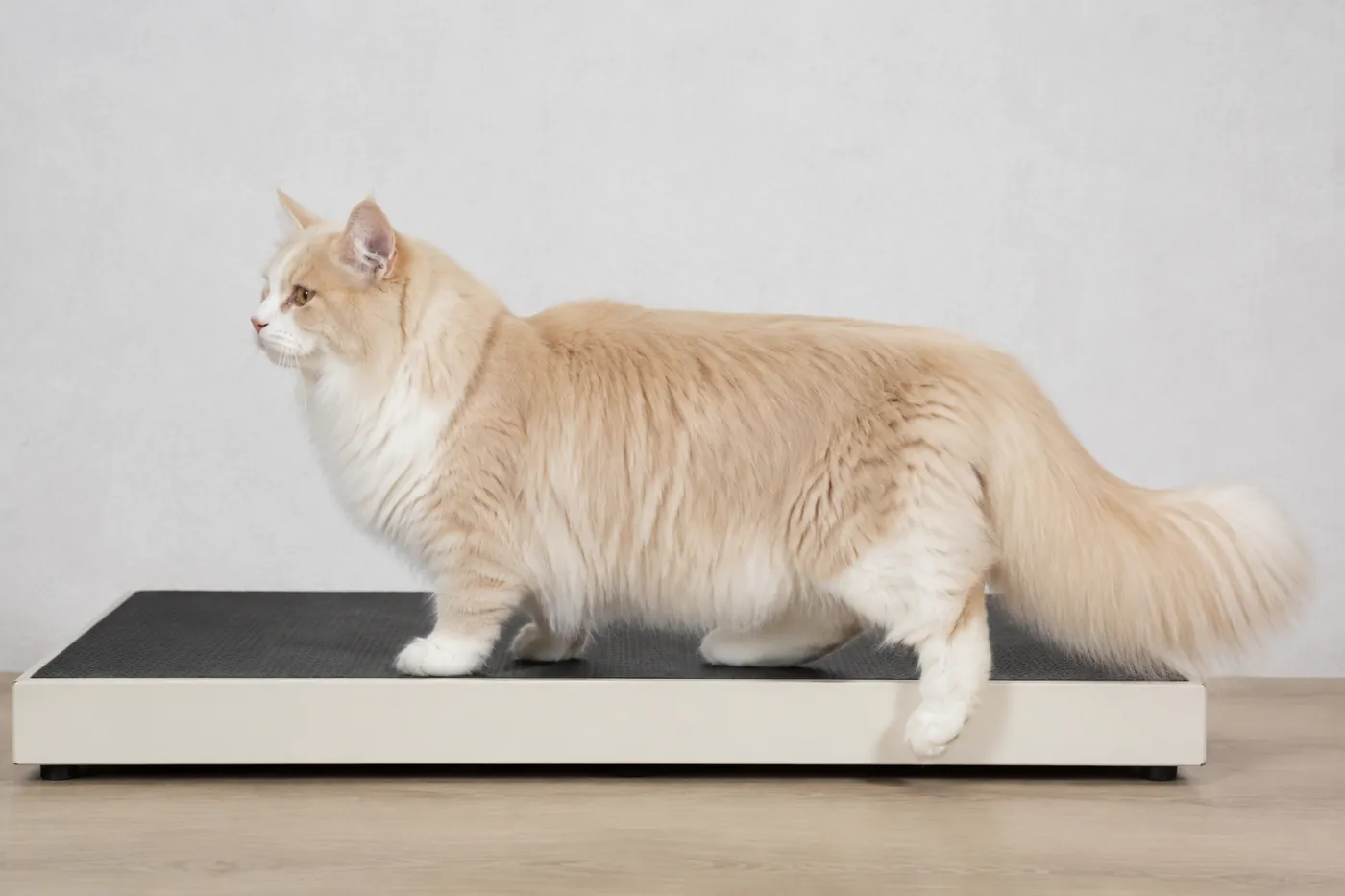
CFA says maturity may take about four years. Growth slows across that period, so the correct food amount follows current body condition, neuter status and activity instead of an adult target weight chosen in advance.
| Item | What to verify | Why it matters |
|---|---|---|
| Carrier | Interior length, standing height and base strength | A large cat must turn without the floor bending |
| Litter tray | Usable floor area and entry height | Coat and tail need clearance from waste |
| Cat tree | Platform depth, post diameter and load rating | Narrow shelves become unstable during landing |
| Food | Energy per serving and current body condition | Slow maturity does not justify continuous excess calories |
| Handling | Support beneath chest and hindquarters | Weight should not hang from the front body |
A large-cat label on a carrier says little on its own. The numbers that matter when choosing a carrier are the adult dimensions and rated load, measured against the individual cat.
How can you distinguish a RagaMuffin from a Ragdoll?
The breeds share part of their history and a broad household reputation, but they are separate registry populations. Ragdolls are pointed cats with blue eyes under their standard, while RagaMuffins occur in a much wider range of colours and patterns and may have several accepted eye colours.
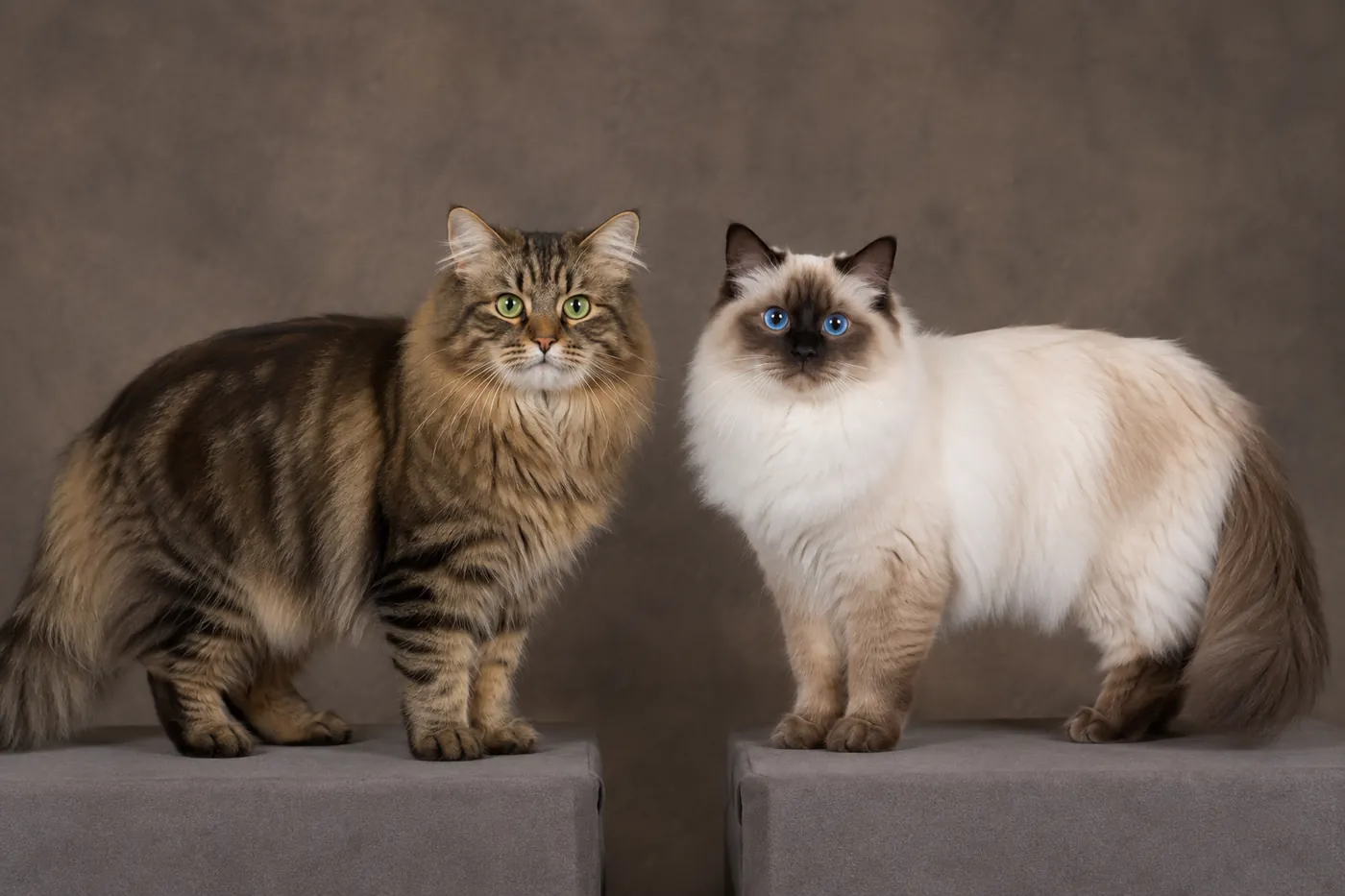
A non-pointed longhaired kitten is not automatically a RagaMuffin, and a pointed cat may still fall within some RagaMuffin registry rules. Registration documents are more reliable than a photograph, particularly because ordinary domestic longhairs can share the same broad face and plush coat. The Ragdoll has its own pointed standard and its own health record, so a seller who switches between the two names still owes the pedigree and test results for the breed actually being sold.
What is the temperament like day to day?
A RagaMuffin may greet visitors, settle beside a working person and enjoy predictable household activity. Individuals still vary in confidence, vocal behaviour, lap preference and tolerance of being alone.
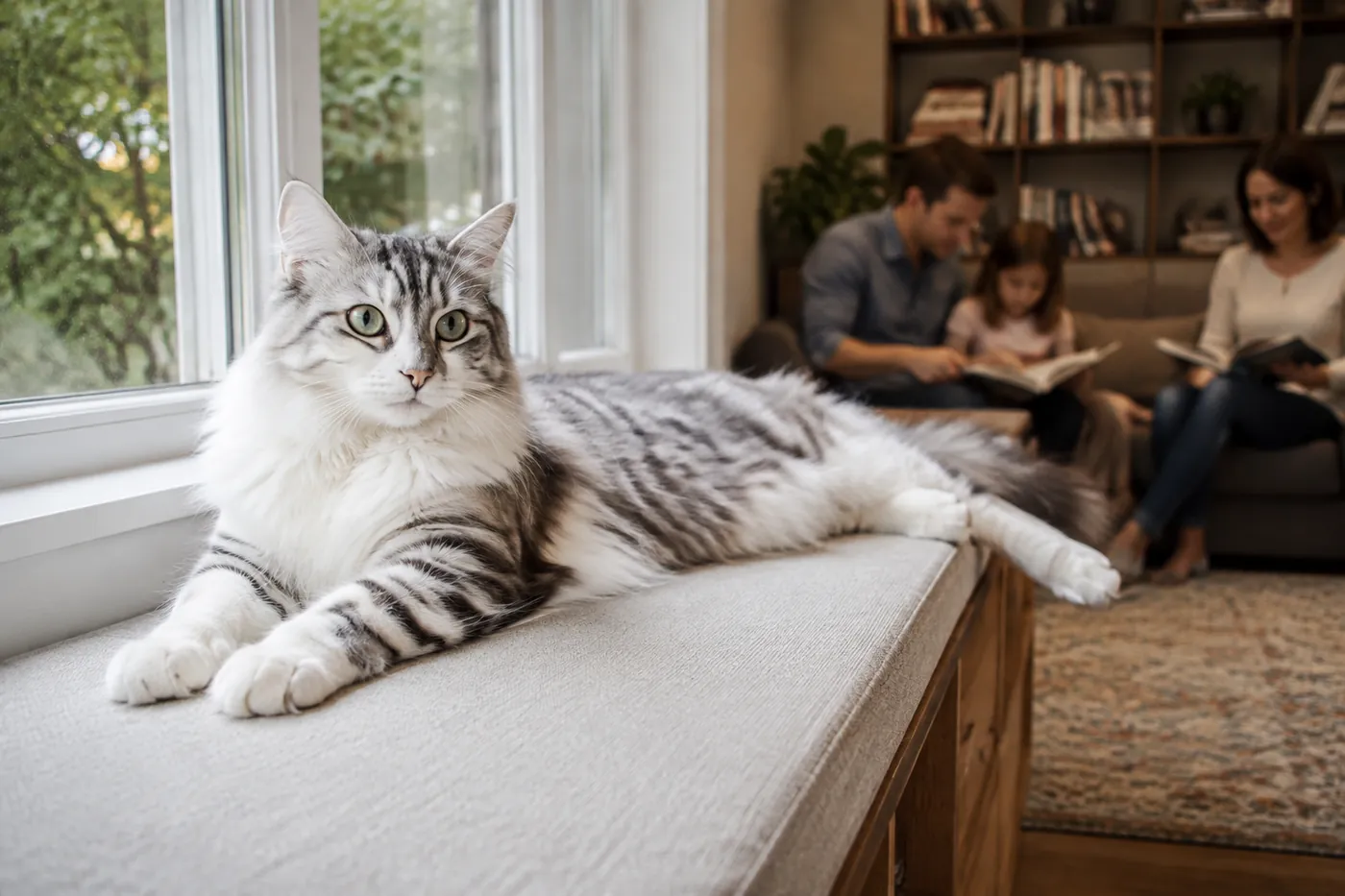
Several brief play sessions maintain muscle and give the cat a job without demanding relentless motion. Wand play, food-search tasks and reward-based carrier practice serve different needs and can be adjusted as the cat matures.
Recovery after an ordinary surprise is worth watching. A cat that resumes exploring after a pause may cope differently from one that remains hidden, and that observation is more useful than expecting every member of a breed to behave alike. It also gives you a baseline, so that sudden withdrawal registers as new information rather than a change of personality: reduced jumping, grooming or social contact can accompany pain and deserves veterinary attention.
How should you groom the semi-long coat?
The coat is described as dense, silky and resistant to matting, but friction areas still need regular attention. Behind the ears, under the front legs, around the trousers and beneath a collar are more likely to pack than the smooth back.
- Separate the coat with your fingers and look down to the skin
- Comb from the ends of a tangle before moving toward its base
- Support the skin so the comb does not pull
- Check the armpits, belly, trousers and collar area
- Stop if the cat becomes tense and finish another short session later
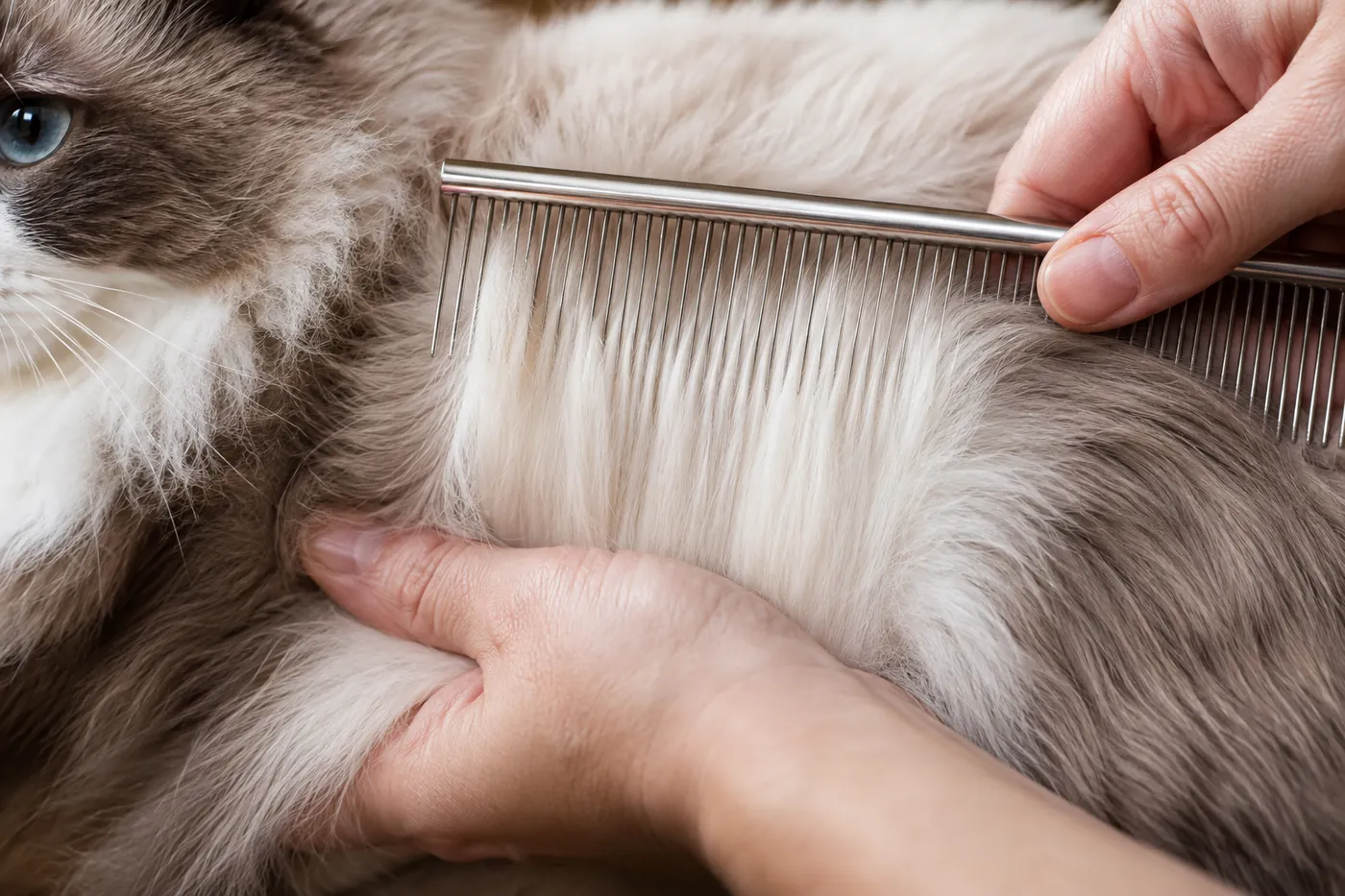
Do not cut a tight mat with scissors, because thin skin can be pulled into the clump where you cannot see it. A mat that is already tight belongs with a veterinary practice or an experienced cat groomer, while regular brushing a long coat is what keeps small tangles from reaching that stage.
Season, indoor climate, age and self-grooming ability change the workload, and the time to comb more often is when loose undercoat begins collecting.
Which health records matter?
RagaMuffin history overlaps breeds in which the R820W MYBPC3 variant associated with Ragdoll hypertrophic cardiomyopathy and the PKD1 variant for polycystic kidney disease are relevant. UK registration policy requires documented clearance in specified breeding lines, which makes those reports concrete questions rather than a generic request for a health panel.
| Record | What it answers | What remains |
|---|---|---|
| R820W HCM result | Whether the tested cat carries that named variant | Other causes of heart disease and later onset |
| PKD1 result | Whether the tested cat carries the common named PKD variant | Other kidney disease |
| Cardiac examination | Heart findings on that date | Disease that develops later |
| Pedigree and microchip match | Whether records belong to the breeding cats | Future health of an individual kitten |
The evidence is the report itself, with the tested cat's identifying details and its relationship to the litter, and a verbal clear-all statement is no substitute for named results.
No large veterinary study supplies a dependable breed-specific median lifespan. A long-lived cat is the sensible planning assumption for finances and care, and regular examination, weight monitoring, dental care and prompt investigation of change then respond to the individual.
How much play and alone time can a RagaMuffin handle?
Moderate activity does not mean no activity. A large adult still needs daily opportunities to chase, climb, stretch, carry and solve small food problems, while a growing kitten may divide the same work into shorter, more frequent bursts.
Broad, stable surfaces suit this cat better than repeated drops from narrow furniture. Strong construction matters more than extreme height because a substantial cat creates considerable sideways force when it lands or turns quickly.
A RagaMuffin may sleep through part of a workday, but no breed has a universal safe alone-time number. Absence works best when it is built gradually, with attention to the individual's eating, grooming, elimination and greeting behaviour rather than an assumption that a calm cat is comfortable. A furnished room supports independence but does not replace company, and a reliable visitor covers long days and travel, since an automatic feeder cannot notice vomit, a urinary problem or a cat tangled in a toy.
Training can be quiet and practical: rewarded carrier entry, stepping onto a grooming mat, releasing an object and waiting at a doorway, in sessions that finish while the cat still wants another turn.
What changes as this slow-maturing cat ages?
The four-year maturation period describes physical finish, and it does not mean four years of kitten feeding. Energy needs usually fall before the head, chest and coat have reached their adult appearance, especially after neutering.
A monthly weight and body-condition record helps separate healthy growth from fat gain. Run flat hands over ribs and waist beneath the coat, because visual width comes from both hair and body.
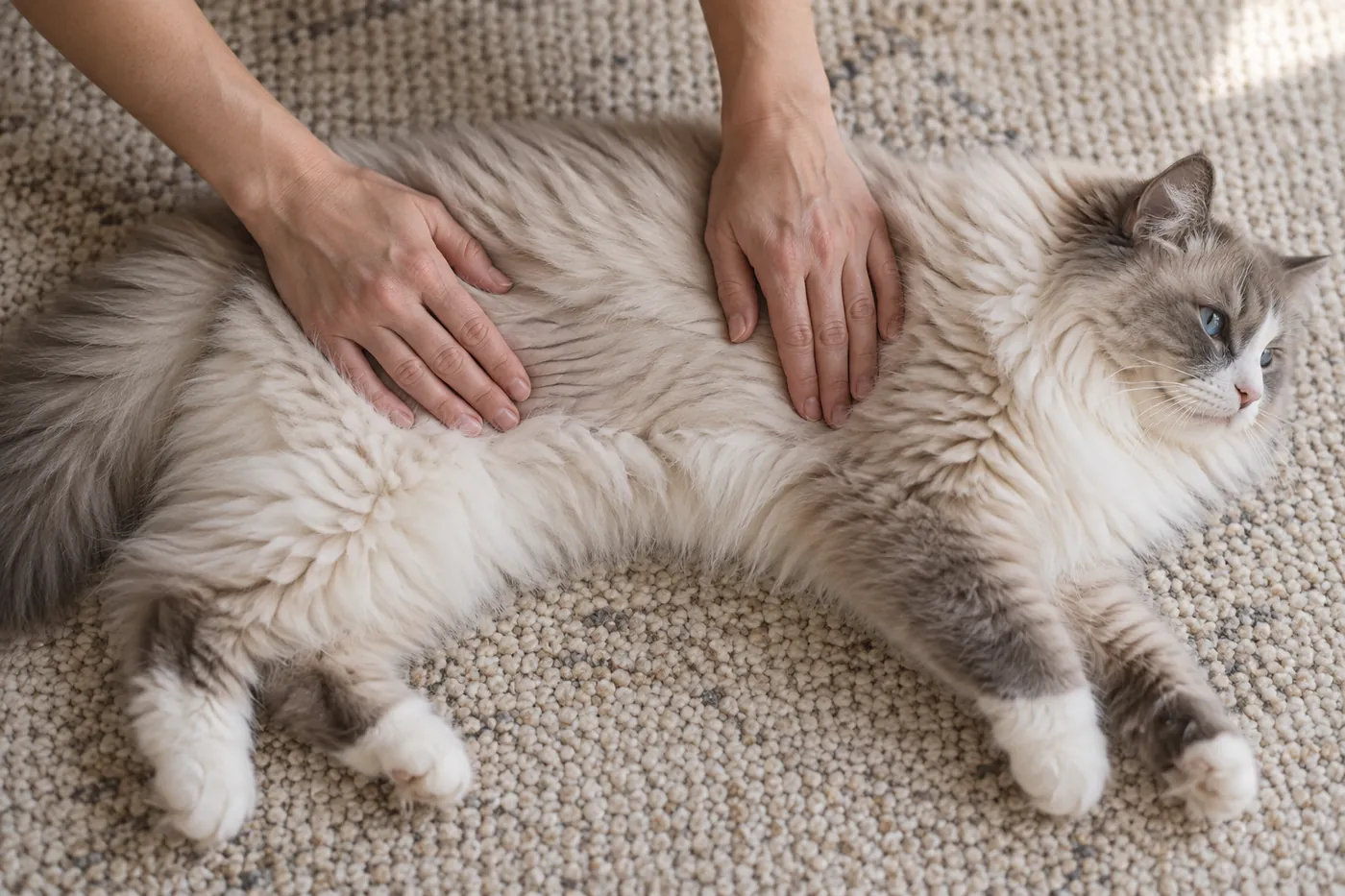
Young adults often carry their greatest muscle when play and climbing remain routine. Later, gradual reluctance to jump can be hidden by the breed's quiet manner, so compare movement with the cat's own earlier pattern.
- KittenhoodPractise supported handling, grooming and carrier entry
- AdolescenceRecheck furniture strength and food as growth slows
- Full maturityMaintain muscle and record a stable healthy baseline
- Mature adulthoodWatch teeth, weight, coat quality and jump choices
- Senior yearsAdd lower routes, easy litter access and warmer rest
Long hair can also hide reduced self-grooming. Grease, small mats over the hips or a coat that separates into clumps may be early evidence that bending has become uncomfortable.
Where did the RagaMuffin become a separate breed?
The RagaMuffin developed in the United States from cats connected to the early Ragdoll breeding group, then continued under a separate name, standard and registry history. Later outcross policies differed by organization and period, which is why a current pedigree matters more than a simplified origin story.
Separation from the Ragdoll was not achieved by coat colour alone. Breeders selected a broader set of colours and eye colours while maintaining a substantial body, sweet expression and semi-long coat under the new standard. Shared ancestry does not make the names interchangeable, and a genuine pedigree should show which registry recognized the parents and how any permitted historical outcross fits its rules.
What should you verify before choosing one?
Movement is the part of a visit worth watching: walking, turning, climbing a low level and recovering after play. A plush coat can hide body condition, while a staged cuddle says little about movement or the ability to settle independently.
- Verify pedigree or registration if the cat is sold as a RagaMuffin
- Meet the mother with the litter when possible
- Match HCM-variant and PKD reports to the relevant parents
- Ask about cardiac diagnoses and ages at death among close relatives
- Review vaccination, parasite and veterinary examination records
- Read return and congenital-health terms before payment
- Prepare adult-sized litter, carrier and climbing equipment
Rescue adults may have no parental paperwork, but they can offer direct evidence about coat workload, handling, activity and household fit. A foster history and current veterinary examination can be more informative than predictions made from a young kitten.
The best decision joins the affectionate reputation to physical reality: an individual whose behaviour and records fit your home, and a home equipped for its adult body before it arrives.
Checked Against
Published 7 September 2026. Last updated .





