
Is There a Black Ragdoll, and What Does the Breed Standard Actually Allow?
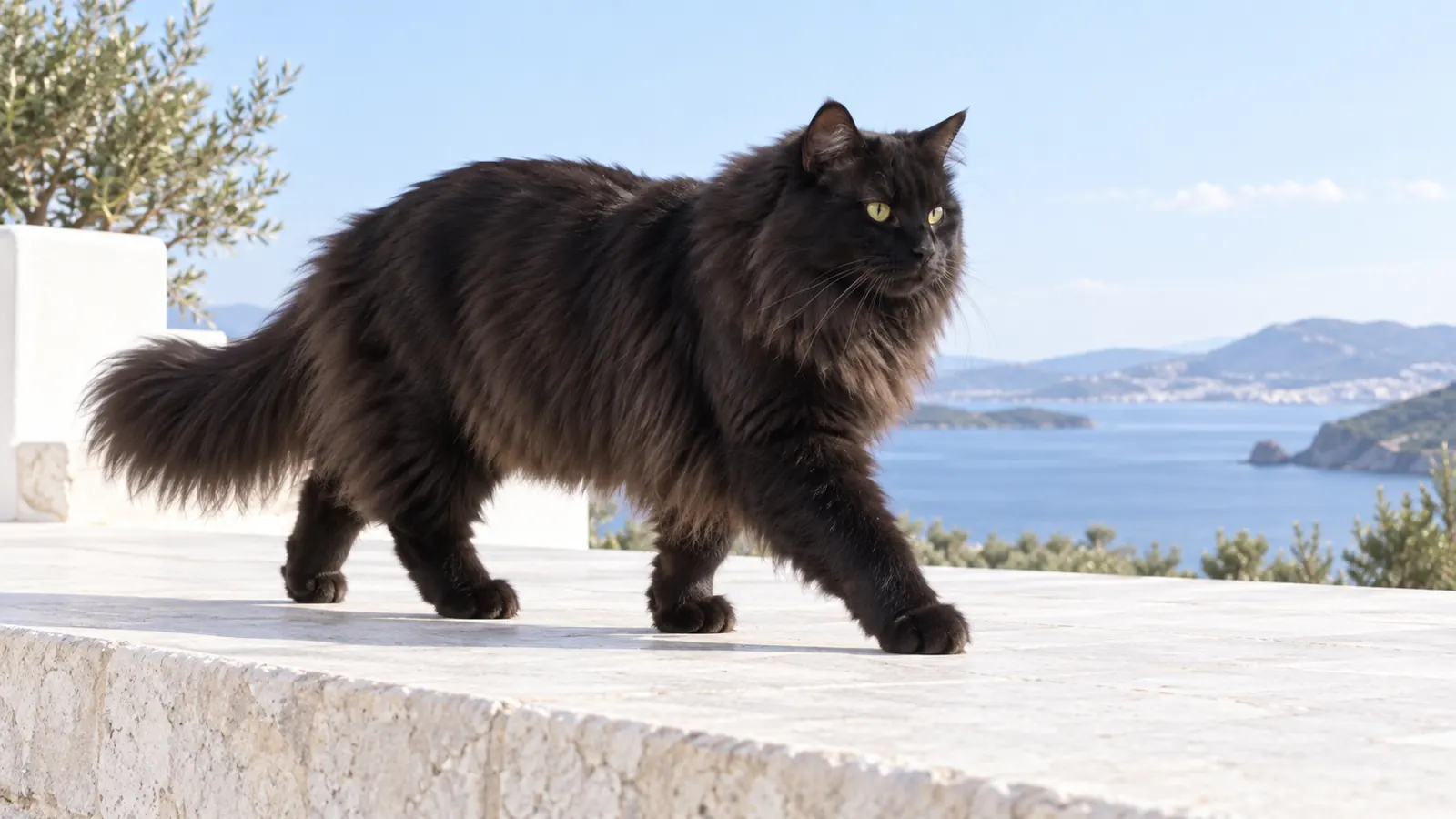
A solid black Ragdoll is not a recognised colour within the Ragdoll breed standard. The Ragdoll is defined by its pointed pattern, which requires the cs/cs genotype. A solid black cat carries at least one full-colour allele, meaning it is genetically not pointed and cannot meet the breed standard. A cat sold as a black Ragdoll may have Ragdoll ancestry, but it cannot be shown or registered as a standard Ragdoll.
- Origin
- Not applicable; solid black is outside the Ragdoll breed standard
- Coat
- Not covered by the Ragdoll standard; a non-pointed cat from Ragdoll lines has a semi-long coat in full-body colour
- Size
- Same body type as a Ragdoll if the ancestry is genuine: large, muscular, slow to mature
- Typical weight
- Same as the Ragdoll if genuine: secondary sources cite 10 to 20 pounds
- Life expectancy
- Same as the Ragdoll if genuine: secondary sources cite 12 to 15 years
- Activity level
- Same as the Ragdoll if genuine: moderate, calm, famously docile
- Grooming
- Same semi-long coat care as a Ragdoll if the ancestry is genuine
- Suits
- Households suited to a Ragdoll, if the Ragdoll ancestry is genuine; a non-standard colour does not change temperament
A solid black Ragdoll is not a recognised colour.
The CFA Ragdoll standard states that all Ragdolls are pointed, with colour confined to the face, ears, legs and tail, and it disqualifies eyes other than blue, so a cat that is black all over falls outside it however Ragdoll-like its size and coat. A cat sold as a black Ragdoll is a cat with some Ragdoll ancestry, and its colour alone shows that at least one parent was not a pointed Ragdoll.
Why Is There No Solid Black Ragdoll?
The Ragdoll breed is defined by the colourpoint pattern. Every standard Ragdoll carries two copies of the cs allele (cs/cs), which restricts full pigment to the cooler extremities and produces the pointed coat with blue eyes. A solid black cat carries at least one copy of the full-colour allele (C), which allows pigment across the entire body. A cat that is C/cs or C/C is genetically not pointed and cannot have the blue eyes or the pointed pattern that the Ragdoll standard requires.
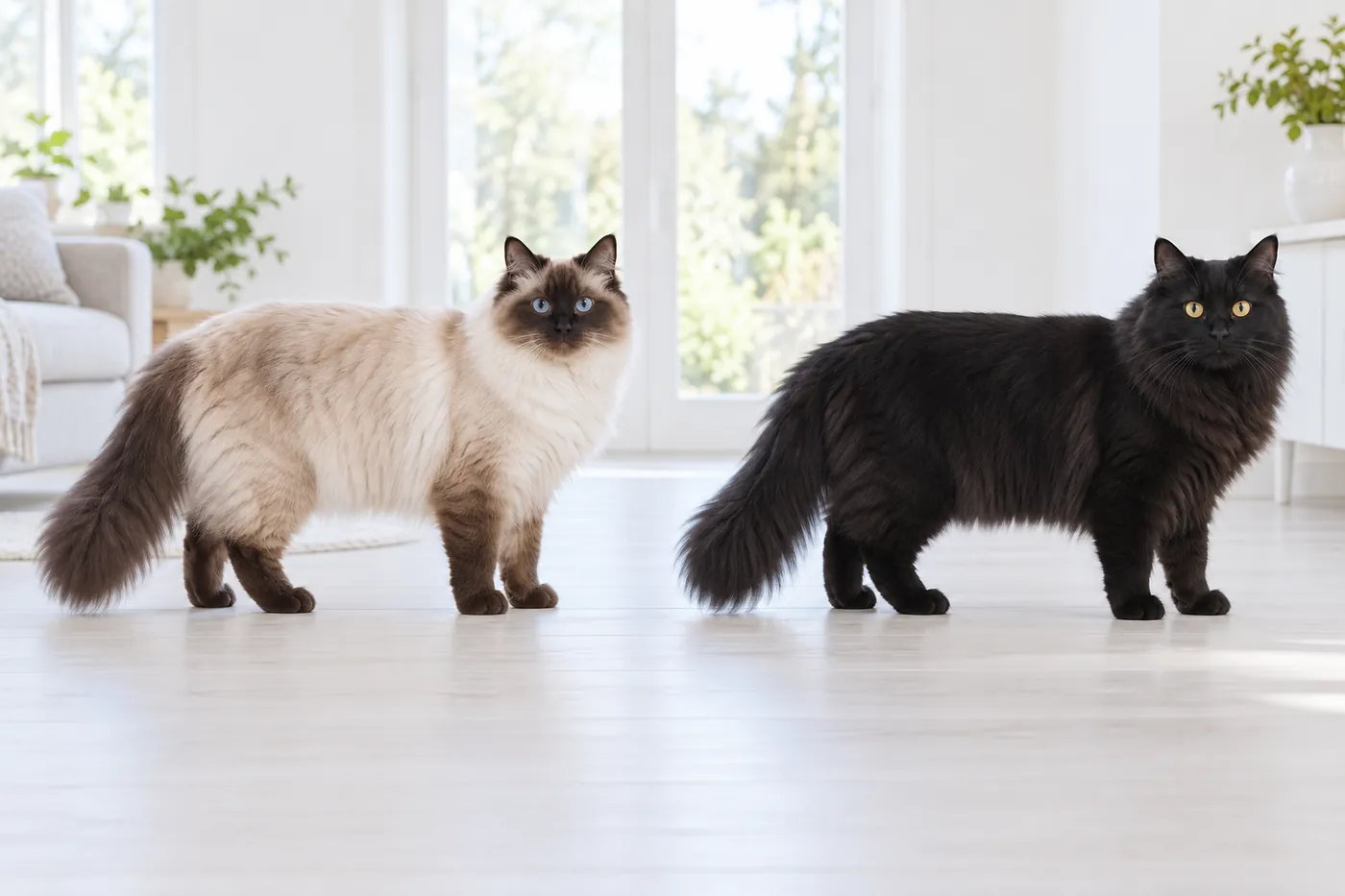
The same genetics settle where a black kitten comes from. Because the pointed allele is recessive, two pointed Ragdolls can pass on only pointed alleles, and every kitten they produce is pointed. A black kitten has at least one parent that is not a pointed Ragdoll, whatever name the litter is sold under.
The pointed pattern belongs to the Ragdoll name in the way the curled ear belongs to the American Curl. A cat from Ragdoll lines without it is a Ragdoll-type cat, and CFA will not record it as a Ragdoll.
What Is a Solid or Non-Pointed Ragdoll?
Some breeders produce and sell cats from Ragdoll parentage that carry one copy of cs and one copy of C. These cats have full-body colour and non-blue eyes. They may have the Ragdoll body type, the docile temperament and the semi-long coat, because those traits are inherited independently of the colour gene. But they do not meet the breed standard and cannot be registered or shown as Ragdolls under CFA.
The terminology varies. Some sellers call them solid Ragdolls, some call them non-standard, and some present them without acknowledging that the breed standard excludes them.
- Solid black in Ragdoll standard
- Not accepted by CFA
- Why
- The Ragdoll requires cs/cs (pointed pattern with blue eyes)
- A solid black cat's genotype
- C/cs or C/C (not pointed)
- What a solid Ragdoll actually is
- A Ragdoll-ancestry cat that does not meet the breed standard
- Breed that accepts solid black
- RagaMuffin, whose CFA standard lists black but not pointed colours
- Body and temperament
- May still follow the Ragdoll type if the ancestry is genuine
- Show eligibility
- None under the Ragdoll standard
A solid black cat of this general type does have a recognised breed, under a different name. The RagaMuffin was developed in the early 1990s by breeders who broke away from the Ragdoll's founder, and CFA accepts it in every colour and pattern except pointed, with solid black listed in its standard. It is a separate breed with its own pedigrees, so a black kitten from Ragdoll lines does not become a RagaMuffin by resemblance; the name applies when the papers say RagaMuffin.
Is a Non-Standard Ragdoll Worth Acquiring?
A cat from genuine Ragdoll lines that carries the large body, semi-long coat and docile temperament can be a perfectly good companion. The missing pointed pattern does not change the cat's behaviour, health or care needs. What changes is the paperwork, and with it the price. A kitten that cannot be registered as a Ragdoll has no Ragdoll pedigree behind the name, so a Ragdoll price for a black kitten pays for a Ragdoll name that CFA will not attach to it.
- The kitten described as a Ragdoll cross or non-standard Ragdoll rather than as a Ragdoll
- The registration the kitten can actually receive, named before any money changes hands
- Both parents identified, since a black kitten means at least one was not a pointed Ragdoll
- The individual cat's temperament and body type, which matter more than the colour dispute
Common Questions
Can a Ragdoll be solid black?
Not within the breed standard. The Ragdoll requires the pointed pattern (cs/cs genotype with blue eyes). A solid black cat carries a different genotype and cannot meet this requirement.
What is a solid Ragdoll?
A cat from Ragdoll parentage that carries full-body colour instead of the pointed pattern. It may share the Ragdoll body type and temperament but cannot be registered or shown as a Ragdoll.
Is a non-pointed Ragdoll a good pet?
If the ancestry is genuine, it may carry the large body, semi-long coat and docile temperament. The missing colour pattern does not change behaviour or care. The breed-standard claim is what changes.
Checked Against
Published 17 September 2026. Last updated .





