
What Is a Korat, and Is This Close Companion Right for You?
A Korat can be a rewarding companion for somebody who wants a clever, closely attached cat rather than a quiet ornament. Its light grooming needs are easy, but its appetite for company, preference for familiar routines and breed-specific genetic screening deserve more weight than the blue coat alone.
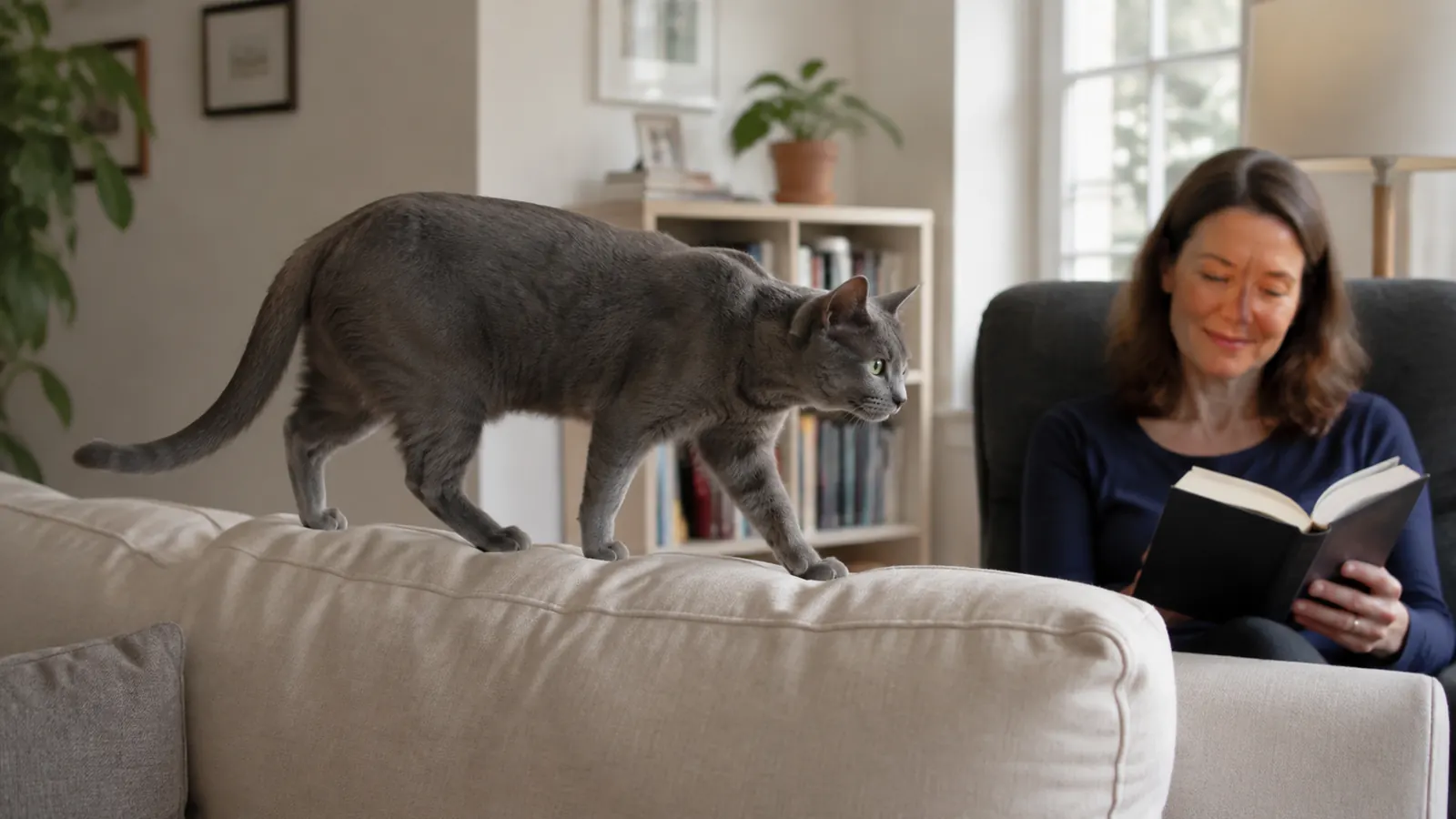
- Origin
- Thailand, where the breed is known as Si-Sawat and has a documented cultural history
- Coat
- One short, close coat in silver-tipped blue, with no tabby markings or white patches in the standard
- Size
- Medium sized, compact and muscular, often feeling heavier than its outline suggests
- Typical weight
- Females are commonly 6 to 8 pounds; TICA says males can reach 10 pounds or more
- Life expectancy
- TICA gives 15 years or more and notes that some Korats reach 20
- Activity level
- Moderate to high. Intelligent, playful and strongly interested in shared activity
- Grooming
- Low. Weekly brushing usually manages the single short coat
- Suits
- People wanting an involved companion who can verify GM1 and GM2 screening
The Korat combines a restrained appearance with a very involved way of living. Its silver-blue coat needs little work, while its social confidence and habit of monitoring the household can make absence, noise and competition for attention important parts of the ownership decision.
Breed profiles describe tendencies rather than guarantees, so the useful question is whether the individual cat's behaviour, health records and daily needs fit the home you can actually provide.
Is a Korat a good fit for your household?
A Korat is most likely to suit somebody who enjoys frequent feline company. CFA describes an attention-seeking breed that wants to take part in household activity, and TICA emphasizes loyalty, intelligence and strong bonds with people.
That closeness can feel affectionate in a calm home and demanding in one that is empty for long stretches. A compatible cat companion and a well-equipped room can help, but neither replaces the interaction this breed commonly seeks, which is why its relationship with people matters more to the decision than the silver-blue colour.
- Strong fit
- Someone is home for meaningful parts of the day and enjoys interactive play
- Possible fit
- A family with respectful children, calm introductions and high resting places
- Harder fit
- Long unpredictable absences or a household that expects an independent cat
- Daily work
- Short play sessions, social contact and simple weekly grooming
- Evidence to request
- Pedigree, veterinary history and GM1 and GM2 genetic results
The breed can live with considerate children and other pets, but early experience and introductions still decide the outcome. Confident does not mean conflict-proof, especially when another animal blocks food, resting sites or access to a favourite person.
Seeing the cat awake and engaged tells a prospective owner more than a list of flattering adjectives: whether it approaches, plays, tolerates a brief pause in attention and recovers after an ordinary household sound.
What does a Korat look like, and how big does it get?
Only silver-tipped blue is accepted. The bright sheen becomes visible as the cat moves, while the short single coat lies close around a distinctive heart-shaped head and large green eyes.
Korat kittens and adolescents do not instantly look like mature show photographs. CFA says full development may take two to four years, so eye colour, silver tipping and muscular finish can continue changing well after the first birthday.
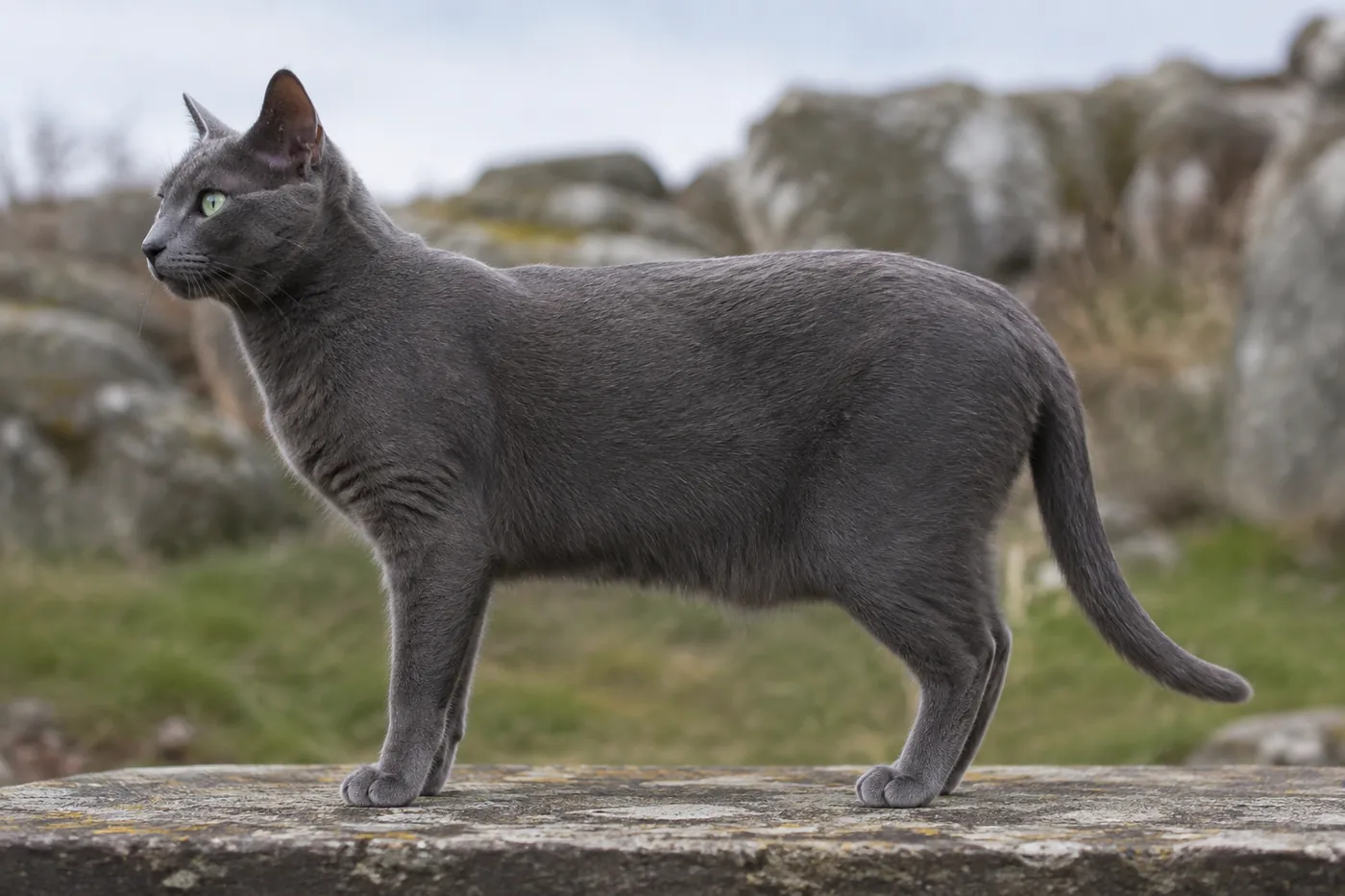
TICA lists females at roughly 6 to 8 pounds and says males can reach 10 pounds or more. Those figures help with planning, but the cat's measured length and body condition should determine carrier size, food portions and weight discussions.
| Feature | Typical breed description | What it does not prove |
|---|---|---|
| Coat | Short blue hair with silver tipping | Pedigree or health |
| Head | Heart shaped from the front | Adult temperament |
| Eyes | Large and green at maturity | Age in a young cat |
| Body | Medium, compact and muscular | A healthy weight without examination |
| Maturity | Physical finish may take two to four years | That every cat develops at one pace |
A carrier is best sized from the individual cat, measured from chest to rump and from floor to ear tips, and a sturdy model lets it stand, turn and settle without the door or roof pressing against it.
How can you tell a Korat from another blue cat?
A blue-grey coat by itself does not identify a Korat. Russian Blues, Chartreux cats and blue domestic shorthairs can share the broad colour impression, while a pedigreed Korat is defined by a much narrower combination of ancestry and physical traits.
The Korat standard calls for one silver-tipped blue colour, a close single coat, a heart-shaped head, unusually large luminous eyes and a muscular semi-cobby body that feels heavier than it looks. The silver belongs at the end of each hair and should create a halo as the cat moves rather than a pale undercoat or random white hairs.
Identity comes from the whole cat rather than from one feature. A wedge-shaped head, plush double coat, white locket or clear adult tabby pattern falls outside the Korat description even when the cat is an attractive shade of blue.
Pedigree records establish breed identity more reliably than appearance. A rescue cat without traceable parentage may resemble a Korat closely, but calling it a blue domestic shorthair or Korat-type cat is more honest than presenting visual similarity as proof.
Age complicates visual identification. CFA allows ghost tabby markings in kittens, and the preferred green eyes may develop gradually from yellow or amber-green as the cat matures.
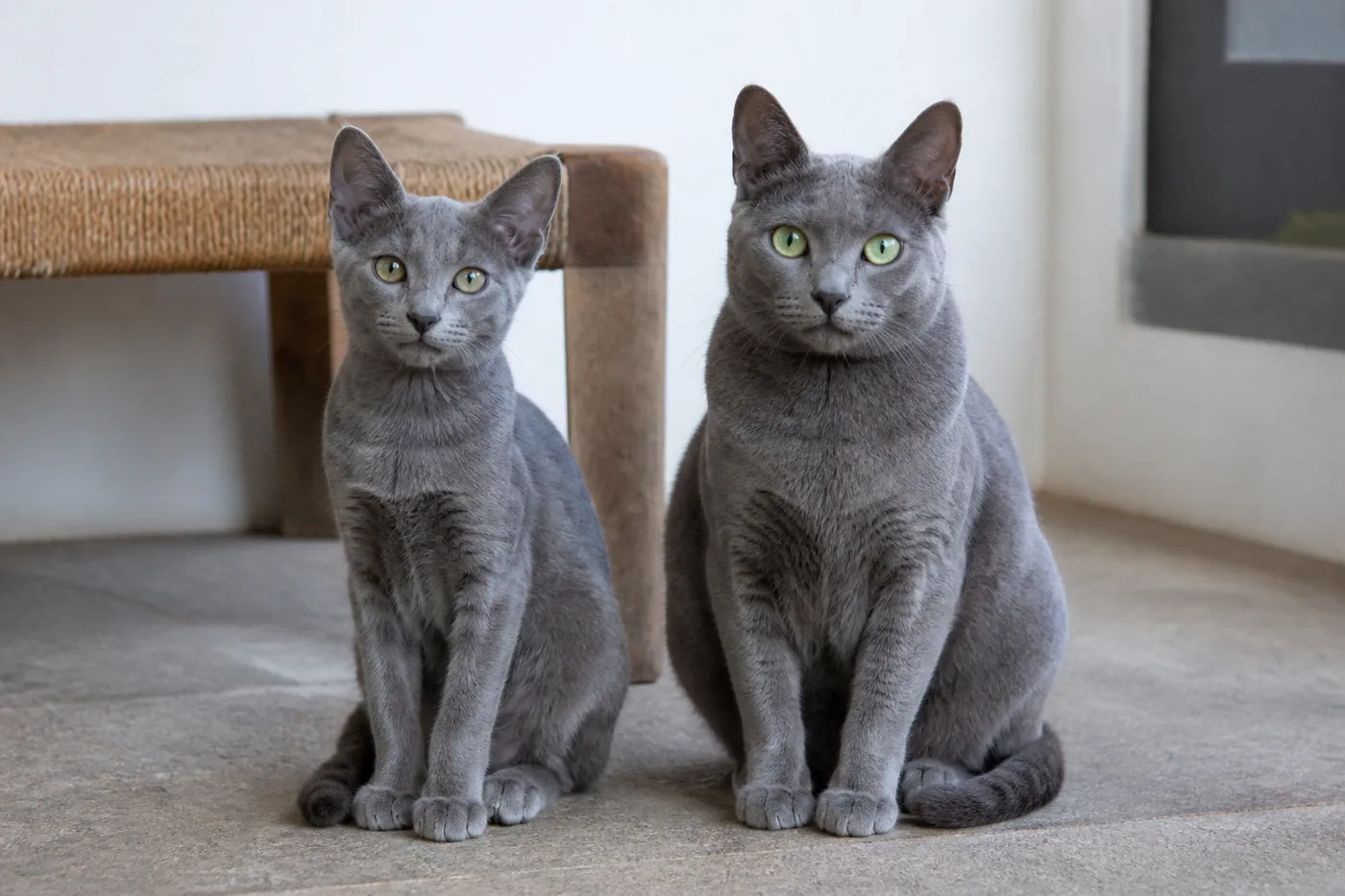
The change is gradual rather than a switch on a birthday, so a young cat should be judged against documented parentage, health and development rather than against an adult show photograph.
Korat history also matters to the identity claim. Registry accounts trace the breed to Thailand and the traditional Si-Sawat cat, while modern pedigrees preserve that defined population without allowable outcrosses in the CFA standard.
That history should not become sales theatre. Claims about luck, ancient manuscripts or rarity do not replace registration, permanent identification or the two named genetic results that matter to a buyer.
What is a Korat's temperament like day to day?
Registry descriptions repeatedly use intelligent, playful, loyal and people oriented. In a home, those traits may appear as following a familiar person, learning routines quickly, investigating new objects and asking to join whatever is happening.
Korats are not generally described as frantic, but they are observant and capable. Several short hunting-style play sessions, climbing choices and small training problems usually serve them better than a room full of static toys. Mental work matters because this cat often notices both opportunity and exclusion.
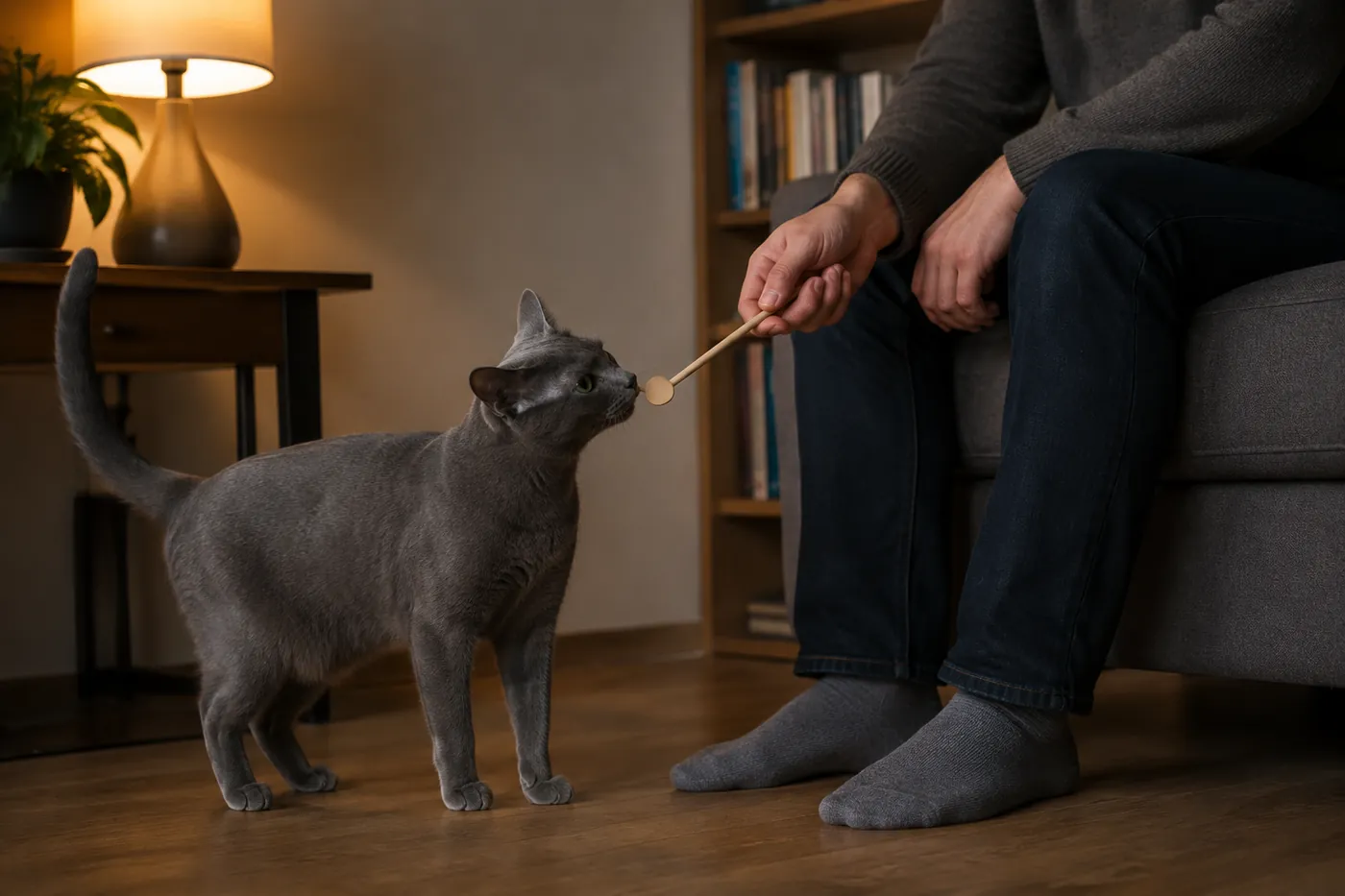
Clicker training can build recall, carrier entry and stationing on a mat. Keep sessions brief, reward the response the cat offers and stop before interest turns into frustration.
Some Korats prefer familiar people and may take time to accept visitors. A high retreat, the chance to approach without being cornered and guests who do not reach over its head make the first contact easier.
The same control matters around children. A child should invite contact and release the cat when it turns away, while an adult protects food, sleep and litter areas from pursuit.
Other pets need gradual scent exchange and supervised access. A bold Korat may try to control favourite resources, so duplicated beds, water points and elevated resting places come before any expectation of peaceful sharing.
Sensitivity to household change is easy to misread as stubbornness. A cat that stops joining play after a move, visitor or schedule change may need a smaller predictable routine and protected access to familiar resources before it needs more stimulation. How quickly the individual recovers once the disturbance ends tells you more about daily resilience than whether the cat approached a stranger during a single carefully arranged visit.
How much exercise and alone time can a Korat handle?
No universal alone-time clock exists. The better evidence is the individual Korat's history and behaviour when the household leaves, especially changes in appetite, vocalising, grooming, elimination or destructive activity.
An adult with a stable routine may rest through part of the working day. A young, newly placed or strongly attached cat may struggle sooner, which is why increasing absence gradually gives better information than testing a full day at once.
- Provide a stable climbing route and a high resting platform
- Rotate a small selection of chase, carry and food-puzzle activities
- Schedule interactive play before and after the longest absence
- Keep litter, water and resting resources in separate accessible places
- Use a camera only to observe patterns, not to speak at or startle the cat
- Ask for help if eating, toileting or normal social behaviour changes
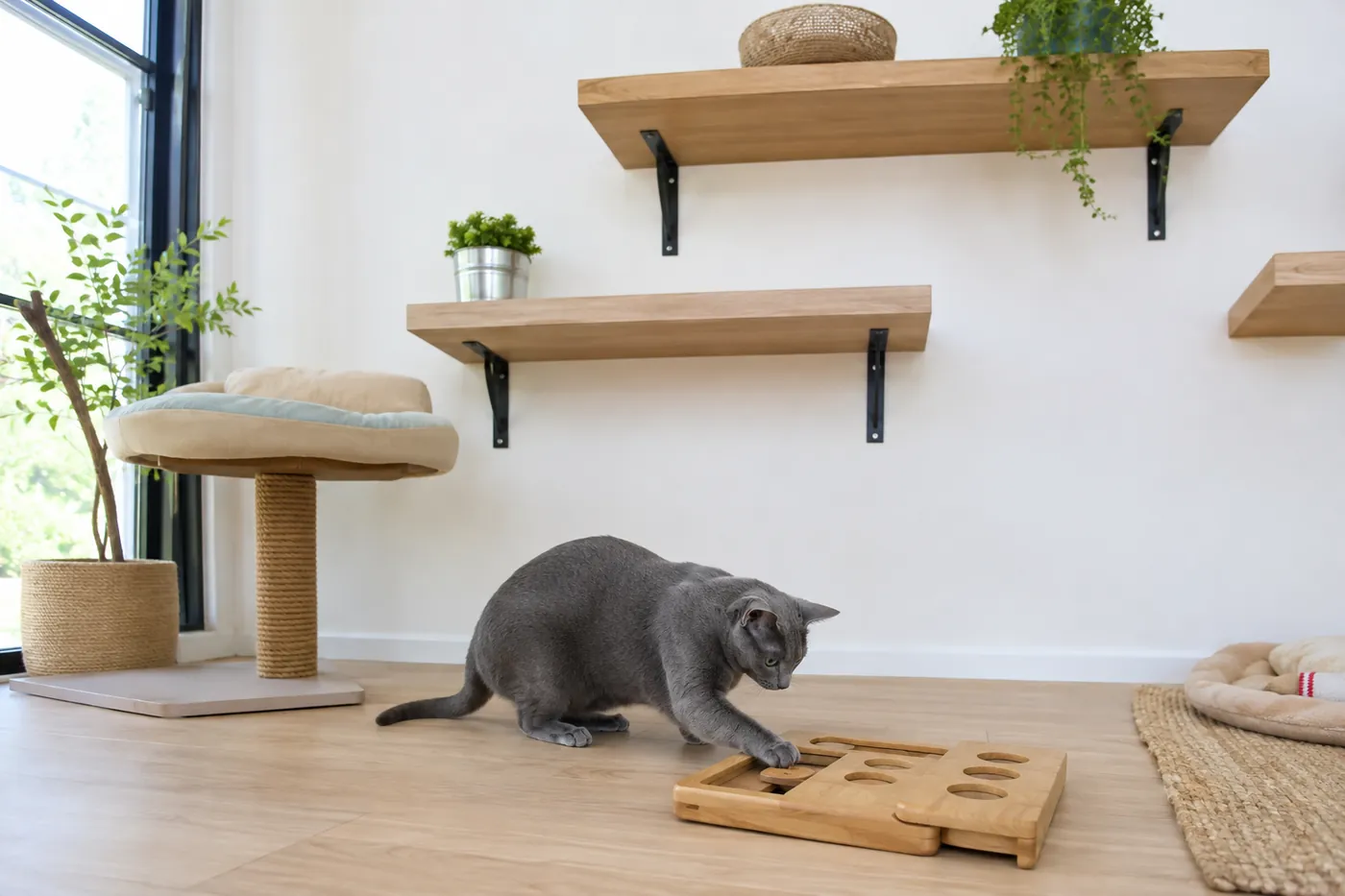
Activity needs change across life stages, and a sudden reluctance to jump or chase deserves a health check rather than a more intense game.
How much does a Korat shed, and what grooming is needed?
The single short coat is one of the easier parts of Korat ownership. CFA recommends weekly combing or brushing, with extra attention during seasonal shedding when loose hair becomes more noticeable.
A soft rubber brush or a fine comb with rounded teeth is enough. Pressing hard adds no benefit and can make a cat avoid handling that would otherwise help you notice skin changes, tenderness or a new lump.
- Let the cat inspect the tool and reward calm contact
- Brush in the direction the coat lies with light pressure
- Check behind the ears, under the collar area and along the back
- Stop if the skin ripples repeatedly or the cat tries to leave
- Clean the tool and note any unusual dandruff, baldness or soreness
Weekly coat care doubles as a calm body check, which is why short sessions with light pressure work better than long ones. Routine claw care and dental care usually demand more time over a year than brushing does, and cleaning the brush or comb after each session belongs to the same small routine.
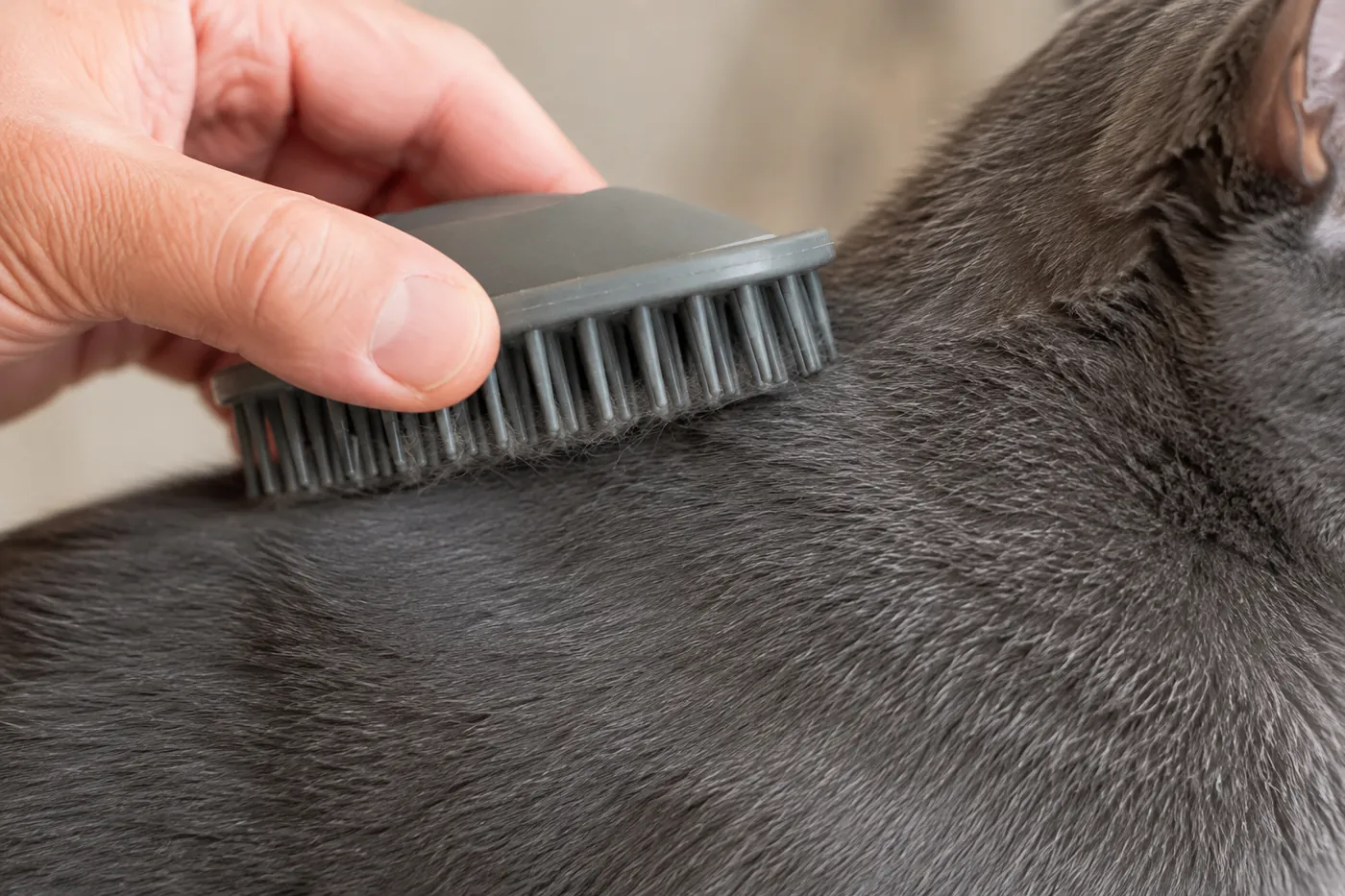
No cat is guaranteed to be hypoallergenic. Allergens come from proteins carried in skin flakes and saliva, so a short coat may reduce grooming work without making an allergic household safe.
Which Korat health tests matter, and how long do they live?
The most specific inherited risks to ask about are the serious lysosomal storage diseases GM1 and GM2 gangliosidosis, for which UC Davis Veterinary Genetics Laboratory offers separate DNA tests for the two variants identified in Korats.
Both conditions are inherited in an autosomal recessive pattern. A carrier is not expected to develop the disease from that variant, but mating two carriers can produce affected kittens, which makes documented results for both parents more useful than a verbal claim that a line is clear.
The two tests are not interchangeable. GM1 involves a known variant in the GLB1 gene, while Korat GM2 involves a different inherited defect; a certificate that says only "gangliosidosis clear" leaves the exact test uncertain.
UC Davis describes GM1 signs beginning around three months in affected kittens, with progressive tremor, poor coordination and abnormal movement. GM2 can progress faster, so the practical value of testing lies in preventing affected matings rather than waiting for neurological signs to establish risk.
DNA screening does not replace veterinary examination. Dental disease, injury, weight change and common feline illnesses still matter, while a new weakness, tremor, poor coordination or developmental concern needs prompt veterinary assessment rather than online interpretation.
The results need to belong to the parents of the specific litter, and a carrier should have been paired only with a clear cat. A carrier result is breeding information, not a diagnosis of illness, and removing every healthy carrier without considering genetic diversity is not the same as preventing carrier-to-carrier matings.
TICA gives an estimated lifespan of 15 years or more and notes that some Korats reach 20. That is a breed-organisation estimate rather than a guarantee for an individual, because diet, preventive care, indoor safety and disease have more practical value than the upper edge of a range.
How do a Korat's needs change with age?
Kittens need a careful start. A young Korat needs frequent supervision, several small meals and many short opportunities to play and sleep, while social confidence grows through calm handling and ordinary household experience.
Adolescence can extend beyond the first birthday because physical maturity is slow. A young cat may look nearly adult while still showing impulsive play and a stronger need for help settling after excitement.
- KittenhoodBuild gentle handling, carrier comfort and predictable meals
- AdolescenceProtect sleep and channel energetic play into safe climbing and chase
- Early adulthoodMonitor final muscle development and stable body condition
- Mature adulthoodKeep play and social routines while watching for gradual weight change
- Senior yearsAdd easy routes, warm rest and more frequent veterinary review as needed
The slow-maturing body does not justify overfeeding a young Korat, and portion guidance based on the food's energy density and the individual cat's body condition is the better basis for how much it eats. The silver-blue coat can make changes in outline easy to miss from above, so regular weighing and hands-on checks over ribs, waist and spine catch what the eye misses.
An adult still needs novelty, but novelty can be small. Moving a perch, changing the path to a food puzzle or teaching one new target behaviour often provides more useful stimulation than buying another toy that never moves.
Senior cats may remain socially engaged while jumping less, and bringing valued activities within comfortable reach with intermediate steps, low-sided beds and warm resting places keeps them involved, because reduced movement does not mean reduced interest.
A change from the cat's own pattern matters more than comparison with a younger Korat. Appetite loss, unexplained weight change, repeated vomiting, increased thirst, poor coat care or new withdrawal deserves veterinary assessment.
Planning for a potentially long life also means planning for disruption: someone who can maintain medication, feeding and familiar contact if the owner travels, becomes ill or can no longer provide the usual routine.
What should you verify before bringing a Korat home?
Identity and health records come first, and direct observation then tests the fit. A responsible source should be able to explain what has been documented, how kittens were raised and what remains uncertain without using rarity as a substitute for evidence.
Seeing the mother with the litter, when that is safe and relevant, and knowing why the father is or is not present both help. Names and microchip details should match across pedigrees, laboratory reports and veterinary records, because a folder of documents may refer to different cats.
Early rearing should include clean living areas, appropriate litter habits and gradual exposure to ordinary voices and handling. Socialisation is a process rather than one busy afternoon, so what the kitten experiences on a normal day, and how it responds afterwards, says more than a single visit.
A video call can help when travel is difficult, but it should not replace identity checks, records or a meaningful chance to assess the premises and cat. Avoid pressure to send money immediately because another buyer is supposedly waiting.
For an adult placement, the reason the cat needs a new home and the circumstances already tried are worth knowing. Detailed information about visitors, other cats, dogs, children, feeding and time alone makes transition planning much more reliable than the word friendly.
- See registration or pedigree records that support Korat identity
- Match GM1 and GM2 certificates to the parents' identifying details
- Review vaccination, parasite-control and veterinary records
- Observe the cat awake, playing, resting and accepting ordinary handling
- Ask how the cat behaves during separation and around visitors or animals
- Read return terms and health commitments before sending money
A rescue may have no pedigree or parental test results. That does not reduce the cat's worth, but it does mean the animal should be described and assessed as an individual rather than sold through an unsupported breed claim.
The final decision rests on an ordinary week rather than the first photograph: who provides company, how the cat can climb and play, what records are available and whether its temperament remains comfortable when attention is shared.
Checked Against
Published 7 September 2026. Last updated .





