
What Is a Russian Blue, and Does It Suit a Quiet Home?
A Russian Blue often fits a calm household that can let trust develop gradually and still provide intelligent play every day. The coat is easy to maintain, while accurate identification, controlled feeding and evidence-based breeder questions matter more than claims that any blue-grey cat belongs to the breed.
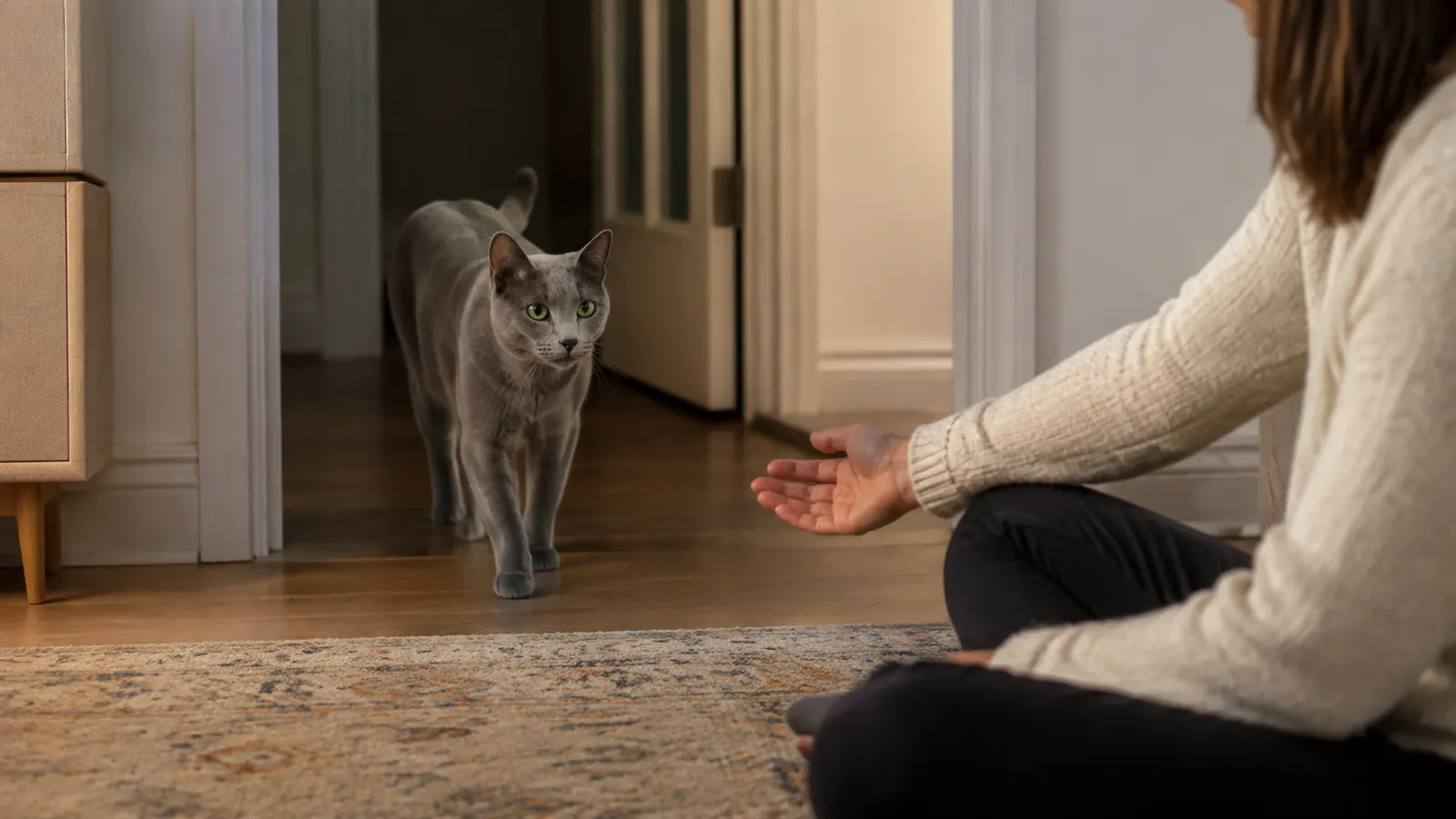
- Origin
- Developed from blue cats associated with northern Russia, then standardized through English and Scandinavian breeding lines
- Coat
- Short, dense plush double coat in even blue with distinct silver tipping
- Size
- Medium sized, fine boned, long and muscular with a graceful outline
- Typical weight
- No single registry range defines healthy weight; measure the individual and assess body condition
- Life expectancy
- No robust breed-specific veterinary median is available
- Activity level
- Moderate, with strong benefit from interactive puzzles, climbing and predictable play
- Grooming
- Low. Light weekly grooming usually manages the dense short coat
- Suits
- Patient households that value a quieter companion, controlled introductions and a predictable routine
A Russian Blue is often reserved at first and deeply engaged once it trusts the people and rhythm of a home. That makes it a thoughtful match for somebody who can offer calm introductions without mistaking quiet behaviour for low social need.
The familiar blue-grey appearance is not proof of breed. Pedigree, coat structure, eye colour and the complete body type belong together, while many domestic cats share only the colour.
Who is a Russian Blue likely to suit?
The strongest home is predictable without being empty. A Russian Blue may enjoy watching before joining, then seek play, proximity and familiar routines once secure.
- Strong fit
- A quieter home with patient people and daily shared activity
- Possible fit
- Respectful children and compatible pets after gradual introduction
- Harder fit
- Forced greetings, chaotic handling or unrestricted feeding
- Daily work
- Interactive play, food management and light weekly grooming
- Identity
- Pedigree plus the complete standard, never colour alone
A Russian Blue settles with visitors fastest when they ignore it at first and it has a route to a high or enclosed retreat, because confidence grows when the cat controls distance. Children can invite contact from the floor and stop when the cat turns away. Other pets need scent exchange, barriers and separate resources before sharing space, regardless of the breed's gentle reputation.
What does a Russian Blue look like?
Body, coat and head must agree. The CFA standard describes a long, fine-boned, muscular body and a smooth medium wedge with a blunt muzzle. Large ears sit wide apart, vivid green eyes are widely set, and the dense double coat stands away from the body.
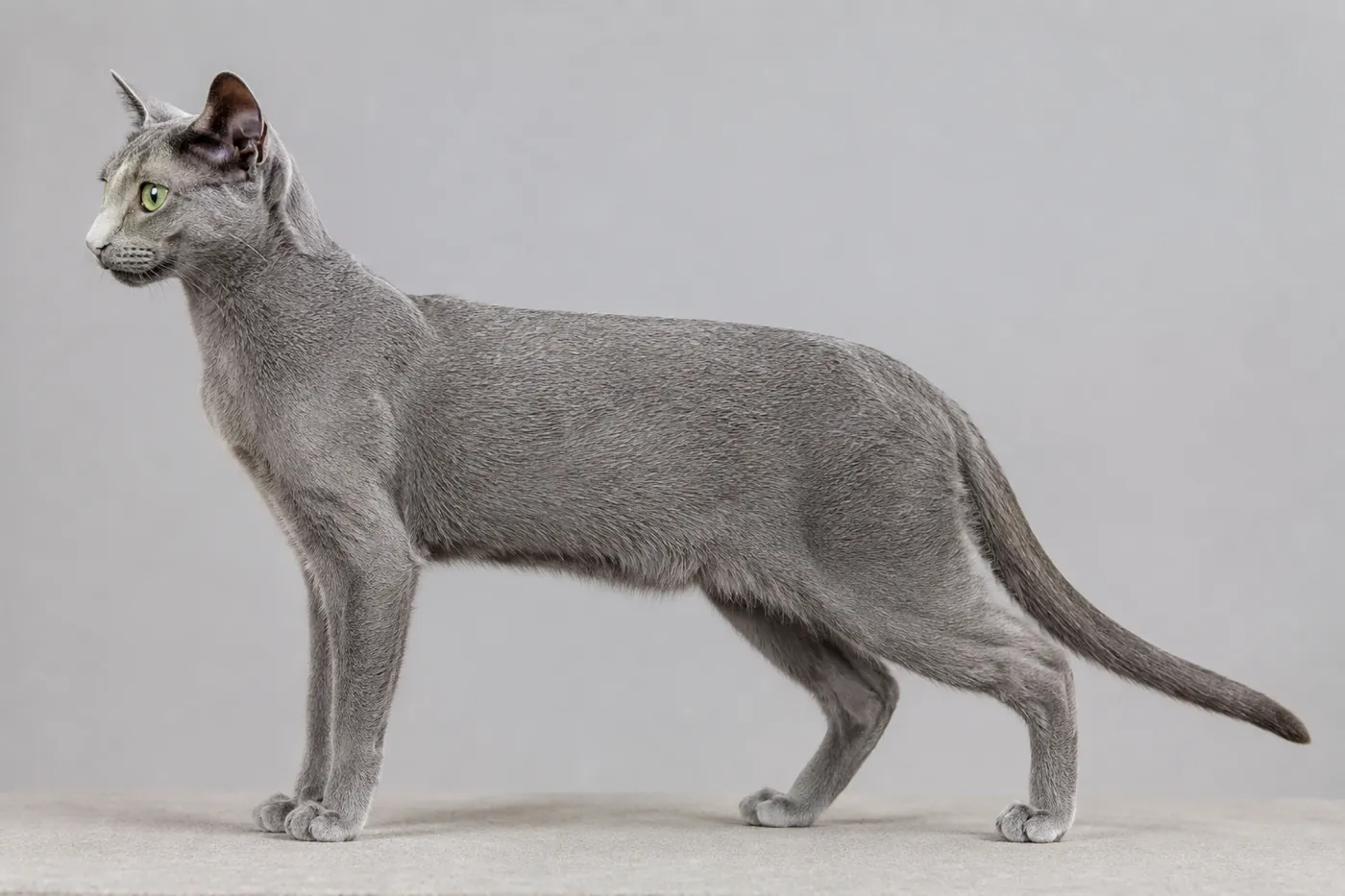
Each guard hair has silver tipping that creates a sheen over an even blue ground colour. White patches, long coat or adult tabby markings fall outside that CFA description.
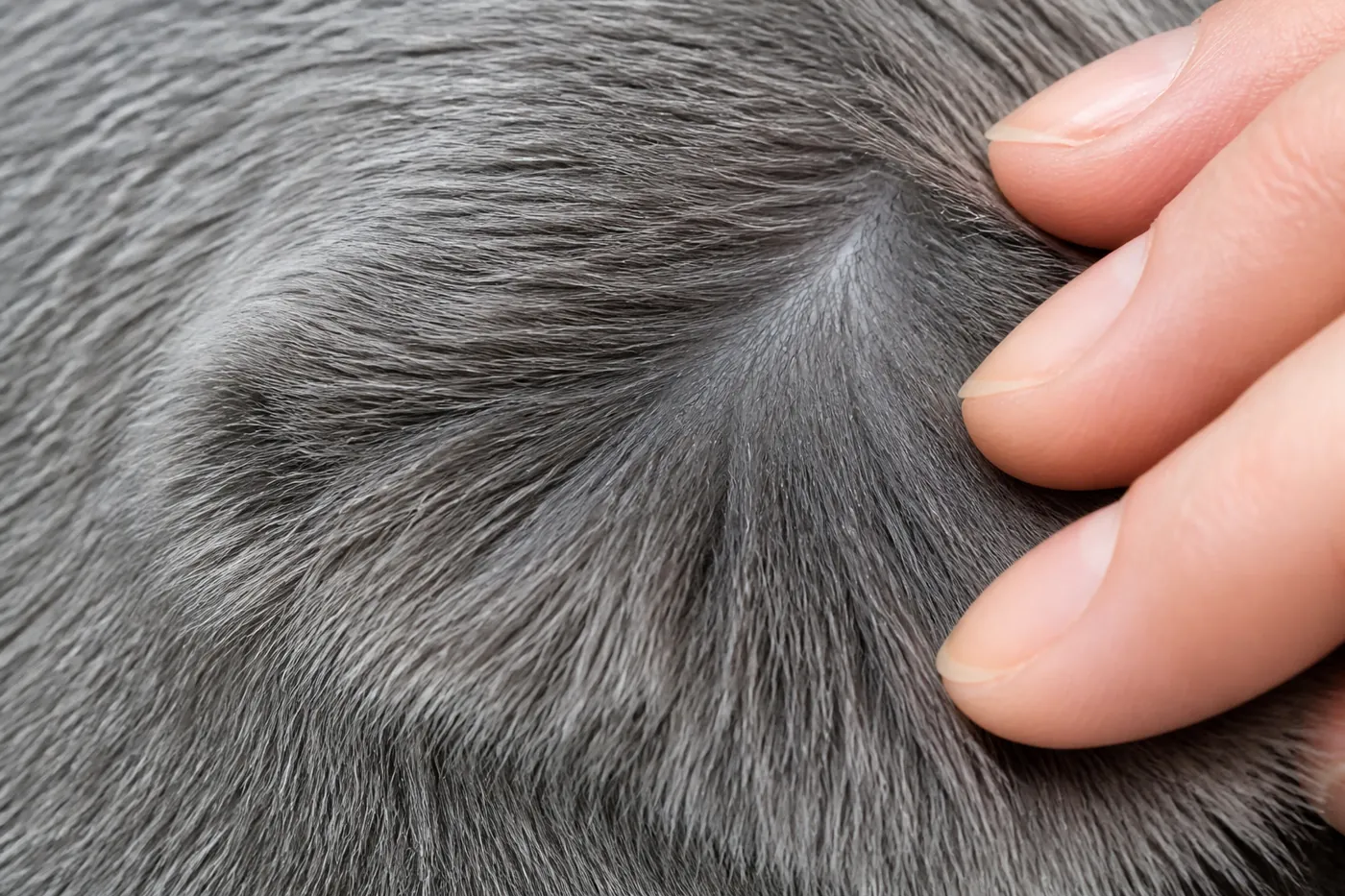
Kittens may show less developed green eye colour and faint ghost markings. Age therefore matters when comparing a young cat with a mature standard photograph.
How can you tell a Russian Blue from other blue cats?
A Korat has a compact muscular body, close single coat and heart-shaped head. A Chartreux is broader and woollier with gold to copper eyes, while the Russian Blue is long, fine and green-eyed with distinct silver tipping.
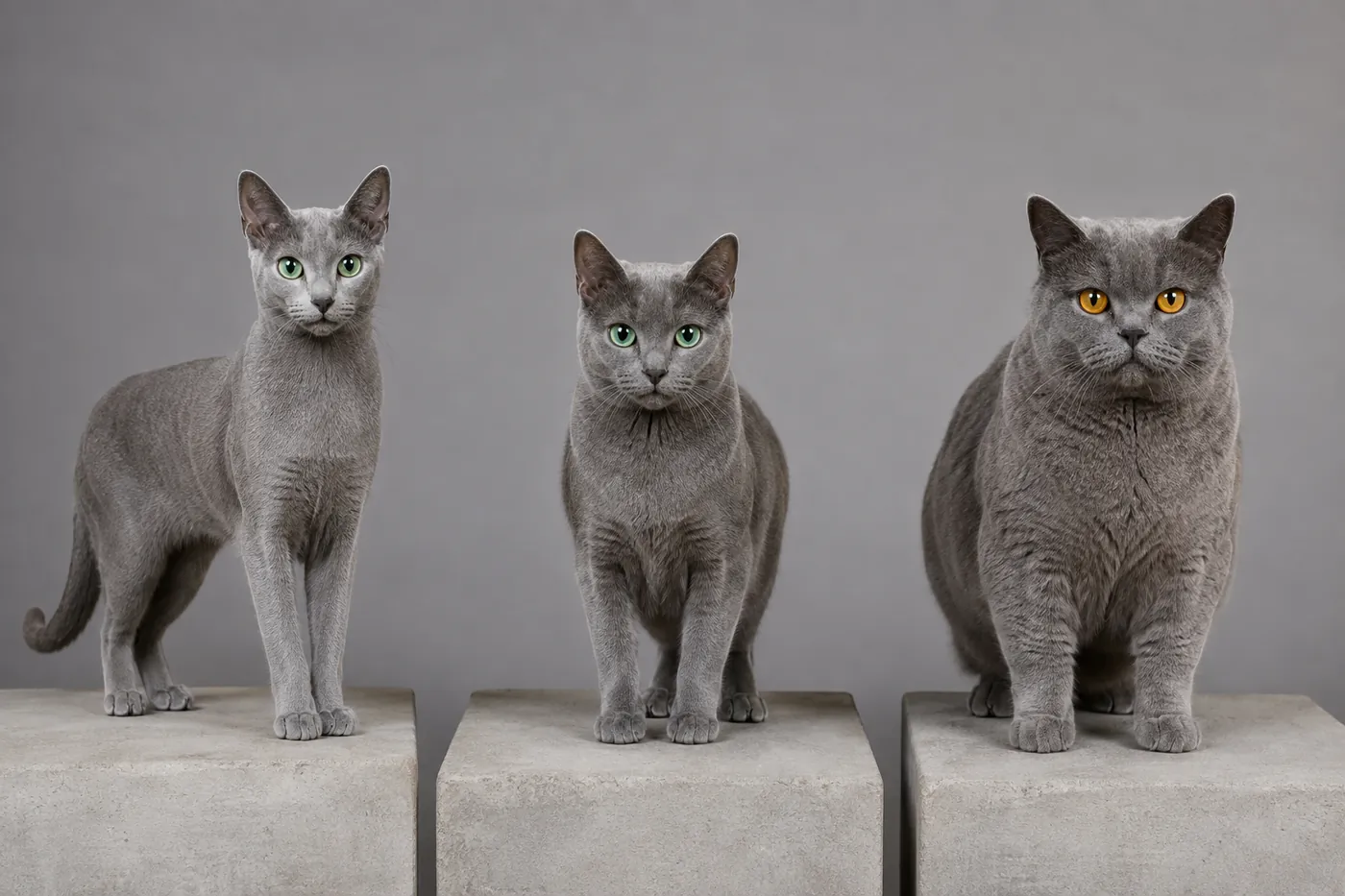
| Feature | Russian Blue | Korat | Chartreux |
|---|---|---|---|
| Body | Long, fine boned and muscular | Compact and powerful | Broad and robust |
| Coat | Plush double coat with silver tipping | Close single coat with silver tipping | Woolly double coat |
| Adult eyes | Vivid green | Luminous green | Gold to copper |
| Head | Smooth medium wedge | Heart shaped from the front | Rounded trapezoid |
| Proof of identity | Pedigree | Pedigree | Pedigree |
Rescue labels based on appearance should remain tentative. Calling an unregistered cat a blue domestic shorthair does not diminish it; it simply separates visible resemblance from documented ancestry.
What is the temperament like after settling in?
Many Russian Blues are playful, intelligent and affectionate with familiar people while cautious with strangers. The transition from watching to participating may take days or weeks, and pressure usually slows it.
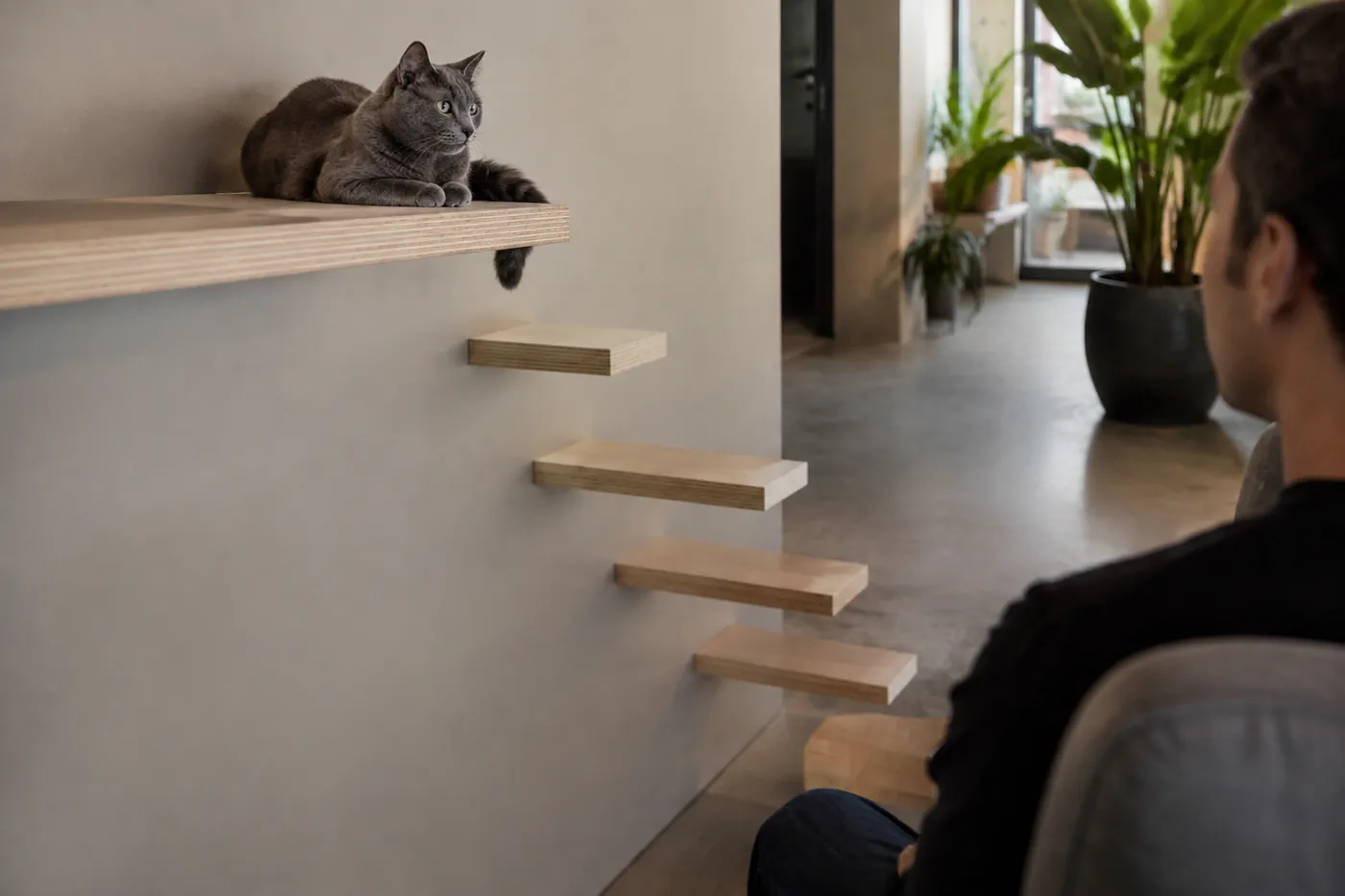
A stable routine for meals and play, with the cat left to initiate closer contact, lets that shift happen at its own pace.
A sudden loss of sociability after the normal pattern is established deserves attention to pain, illness or a household change.
Reward-based clicker training can teach carrier entry, recall and stationing. Quiet cats still need active problems to solve, and chase, climbing and food-search work give a reserved Russian Blue the activity its calm manner can hide.
How should food and exercise be managed?
CFA specifically warns that Russian Blues may have strong appetites and can gain excess weight without interactive exercise. Weight control therefore begins with measured food and visible activity, because the plush coat can conceal gradual gain and an always-full bowl makes intake hard to reconstruct.
- Measure the food rather than estimating by bowl depth
- Use the food's energy value and the cat's body condition to set portions
- Weigh the cat regularly on the same scale
- Run fingers over ribs, spine and waist beneath the plush coat
- Offer several short play sessions and simple food puzzles
- Reassess portions after neutering, illness or activity changes
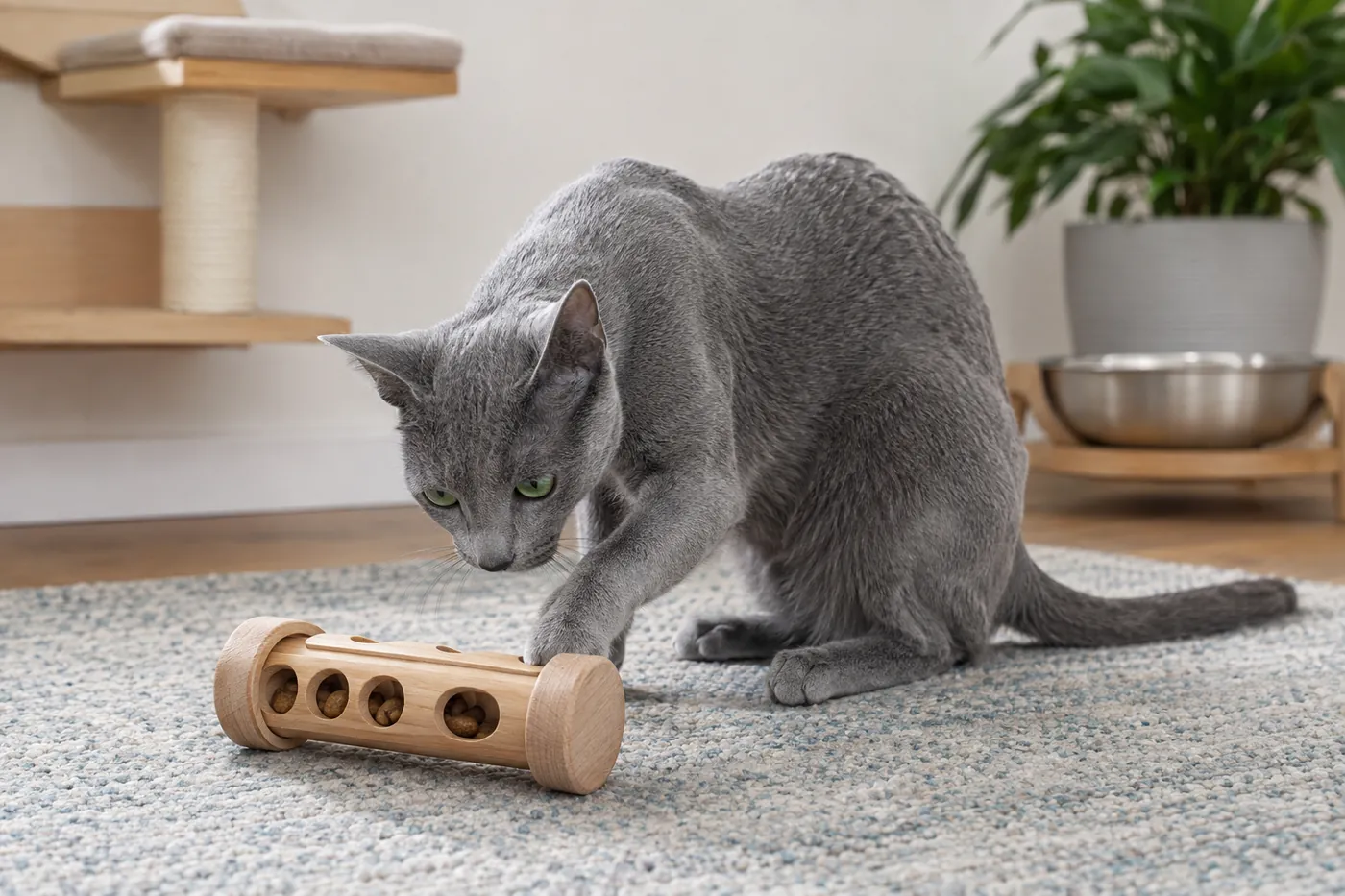
Scoop volume alone gives an incomplete portion size, because foods differ in energy per cup, so energy eaten and body condition are the measures that keep a Russian Blue lean.
What coat care does the breed need?
The dense short coat usually needs a light weekly pass with a soft brush or comb. Heavy de-shedding pressure can scratch skin and damage a coat that does not require aggressive thinning.
- Let the cat approach the tool and reward calm contact
- Brush lightly in the direction the coat lies
- Check beneath the collar area and along the flanks
- Feel for a change in body condition while the coat is parted
- Stop for tenderness, baldness, scale or repeated skin rippling
No cat breed is guaranteed hypoallergenic. Allergen exposure depends on proteins carried in saliva and skin material, and a short coat does not remove them.
Routine tooth care, nail handling and appropriate grooming tools deserve more attention than bathing. A healthy indoor Russian Blue rarely needs a scheduled bath.
What should you ask about health and lifespan?
Health evidence is quieter here than in breeds with a named high-frequency mutation, which makes family records and ordinary veterinary care carry more of the decision. CFA describes the Russian Blue as a generally healthy natural breed and does not name one established breed-specific genetic disorder. That statement is useful background, but it is not evidence that an individual or family line is free of ordinary feline disease.
Records are only useful when they are tied to the parents by registered name or microchip. A responsible breeder should also explain how kittens are socialized, when they leave, what support follows placement and what the contract provides if a congenital problem is found.
There is no large veterinary population study establishing a dependable Russian Blue median lifespan, so an advertised upper age cannot be treated as a promise, and long-term care over many years is the realistic assumption.
Where did the Russian Blue come from?
Registry histories associate early blue cats with the Archangel Isles in northern Russia and record them in British shows during the late nineteenth century. The modern standardized breed was shaped later through English and Scandinavian lines, especially as breeders rebuilt populations after the Second World War.
This history supports the traditional name without proving folklore about royal ownership or healing ability. Those stories can be part of breed culture, but they do not establish ancestry, temperament or health.
CFA allows no outcross in its current Russian Blue standard and accepts only the silver-tipped blue short coat. Other registries have made different historical choices, so documentation should name the registering organization rather than relying on the colour and the word Russian. GCCF and the Australian Cat Federation, for example, show the Russian White as a colour of the Russian breed, a line begun in Australia in the 1970s by crossing a Russian Blue with a white domestic cat.
How do routine and care change across life stages?
A kitten needs a small secure starting room, several meals, generous sleep and short periods of play and handling. Confidence grows best room by room, and carrying a hesitant kitten into every new space works against it.
Adolescents often become faster and more mechanically curious. Latches, cupboard doors and unstable shelves deserve attention, while daily training can give problem-solving ability a safer outlet.
Adult routine works best when it is predictable around food and shared activity without becoming barren: a different puzzle or a toy in a new place adds novelty, while essential resources stay in reliable locations.
Mature and senior cats need comparison with their own baseline. A quieter week, smaller jump, unkempt patch over the back, thirst change or weight shift can signal disease even when the cat still approaches familiar people.
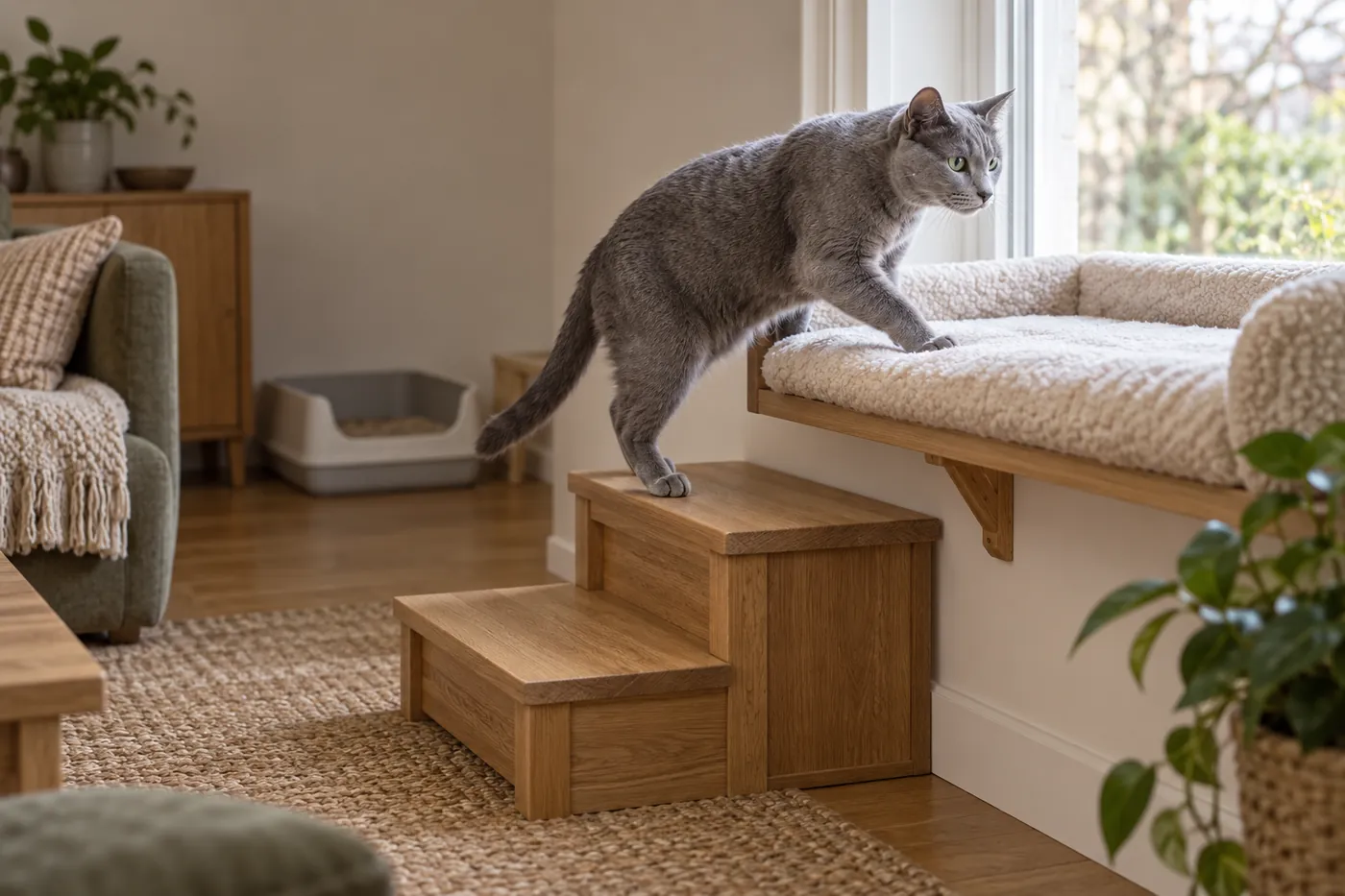
Older cats often still want the same social locations. Intermediate steps and warm broad beds preserve access without forcing a high jump, while low-entry litter options reduce the physical cost of toileting.
What should you verify before committing?
A visit shows most when the kitten or adult can move and withdraw normally, because a cat held for the entire visit cannot show approach, recovery, play or comfortable use of space.
- Verify registration and pedigree if the cat is sold as a Russian Blue
- Compare the complete structure and coat, not blue colour alone
- Meet the mother with the litter when possible
- Review current veterinary and vaccination records
- Ask about weight, heart, kidney and longevity patterns in close relatives
- Read return and congenital-health terms before payment
- Prepare quiet retreat space before the cat arrives
An adult from rescue or a retired breeding home may provide a clearer temperament match because its voice, confidence and activity are already visible. Missing pedigree changes the identity claim and nothing about the care the cat deserves.
Checked Against
Published 7 September 2026. Last updated .





