American Shorthair vs Devon Rex: Which Suits Your Day?
The American Shorthair suits a home that wants a steadier companion, one that often accepts being nearby rather than in continuous contact. The Devon Rex suits a home that wants a highly involved cat and can support frequent company, warm resting places, active play and gentle coat and ear care.
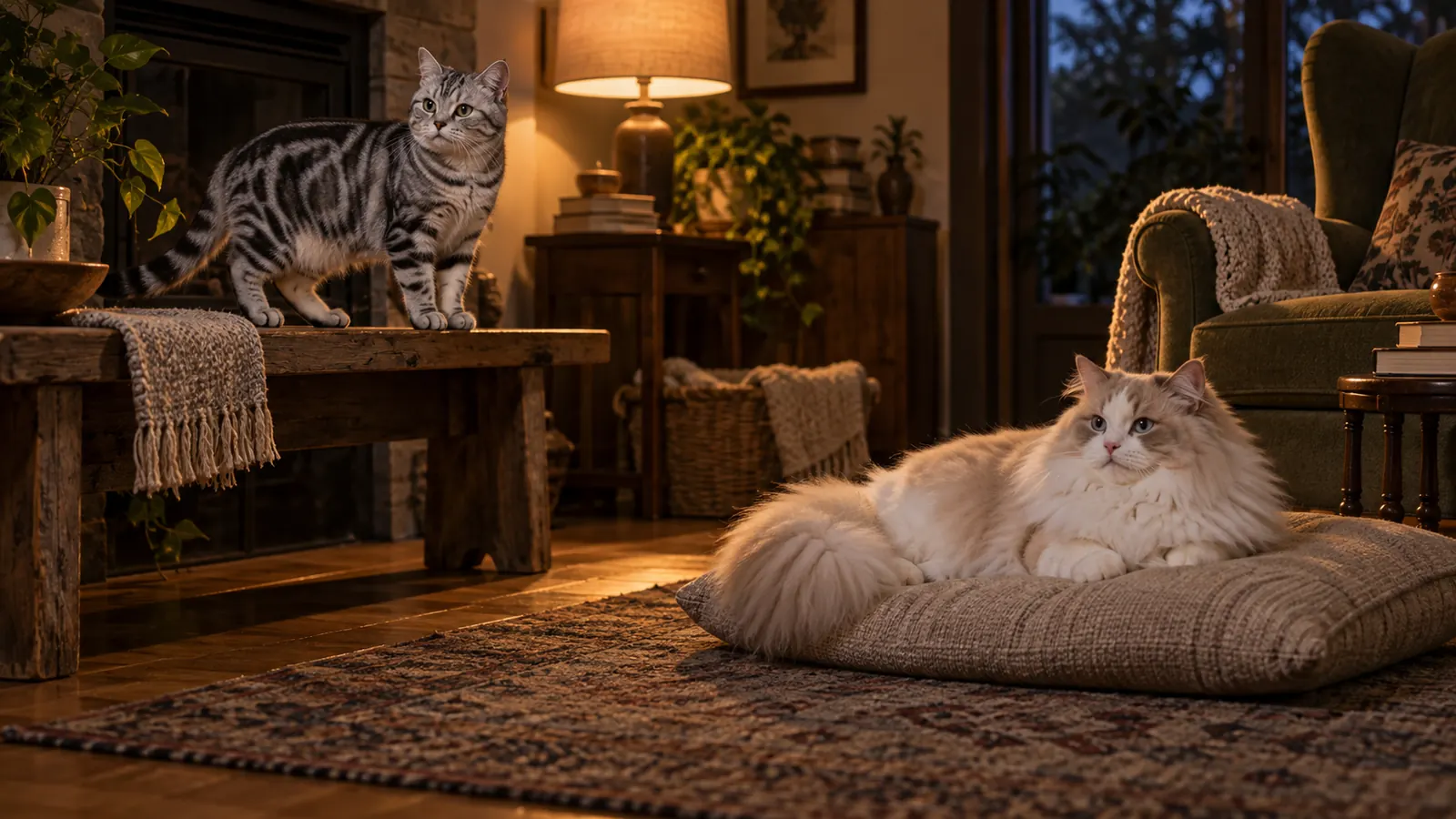
The Devon Rex is easy to underestimate because it sheds little and has a short coat. Its larger ownership demand commonly comes from participation, curiosity, warmth and careful handling rather than time spent brushing. The American Shorthair is also affectionate and intelligent, yet it more often combines company with periods of self-directed rest. The Devon Rex tends to remain closer to the person and to the centre of household activity.
Individual cats still differ, so the breed pattern is best used to decide what to ask, while observed behaviour and original records settle the decision about the actual cat.
Which breed is easier to live with day to day?
The American Shorthair is the more forgiving fit for many homes. It needs play, attention and a useful indoor environment, but it usually does not require the same level of access to a person's lap, shoulder, desk and bedtime.
The Devon Rex is a strong match for people who enjoy a cat that follows closely and invents activity. CFA describes deep attachment and dislike of long periods alone, while TICA places the breed in busy households where intelligence and activity receive an outlet.
| Profile | Contact | Activity | Care focus | Best fit |
|---|---|---|---|---|
| American Shorthair | Often content nearby, with contact on both sides' terms | Moderate hunting play and trainable household routines | Seasonal loose undercoat and ordinary short-coat care | A home wanting warmth without continuous physical participation |
| Devon Rex | Frequent following, warm contact and participation in household activity | Active, curious and likely to create its own amusement | Fragile wavy coat, skin observation and large-ear care | A home that welcomes close company and can provide gentle regular observation |
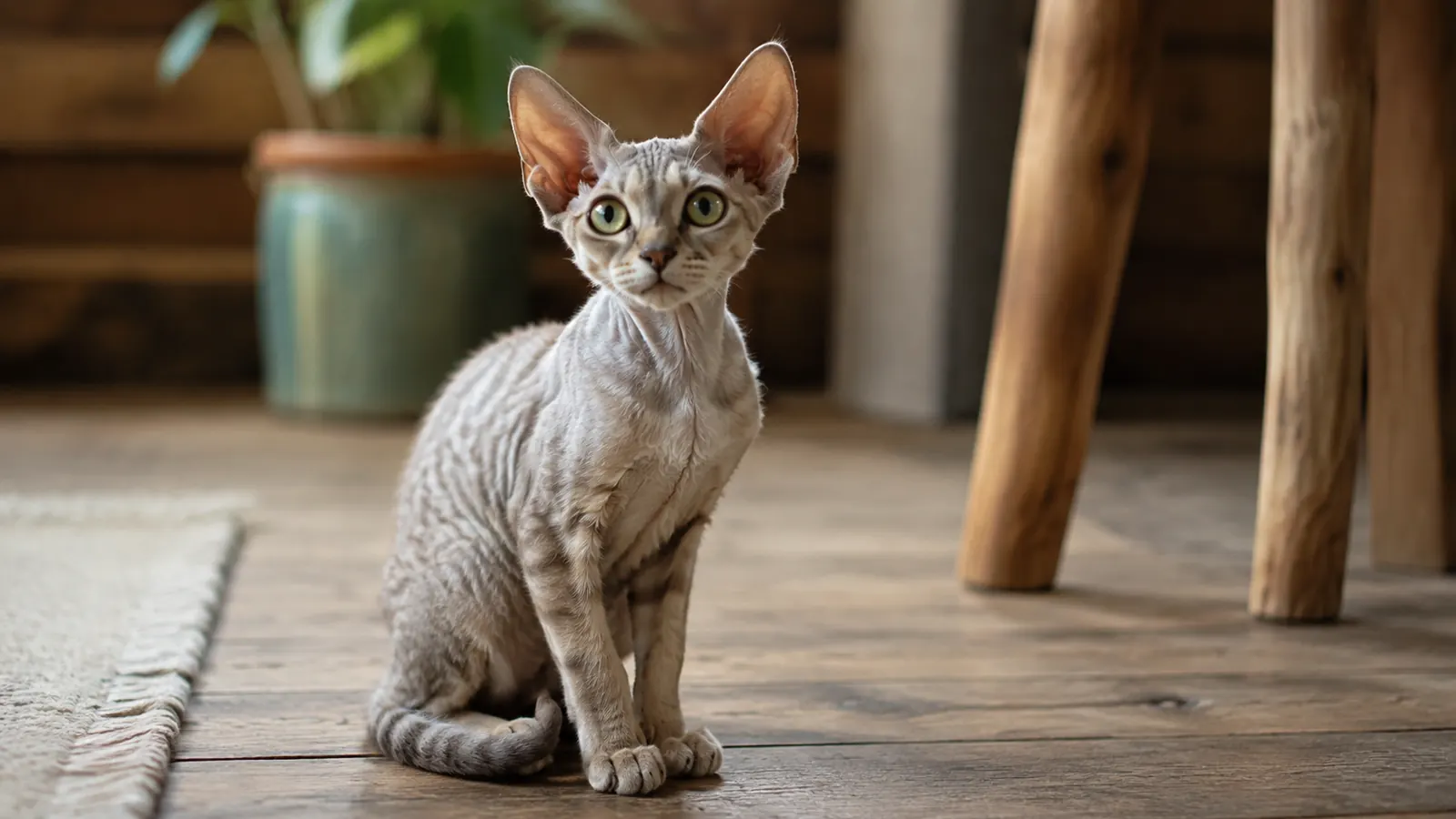
Low shedding does not cancel the Devon's need for care. It changes what you do, moving attention from hair removal to coat fragility, oily debris, skin condition and safe warmth.
The easiest way to test the choice is to imagine a busy Tuesday, when work runs late, doors need to stay closed and play has to be planned rather than improvised, and to ask which cat's likely requests you would still welcome that evening.
How do American Shorthairs and Devon Rexes differ in appearance?
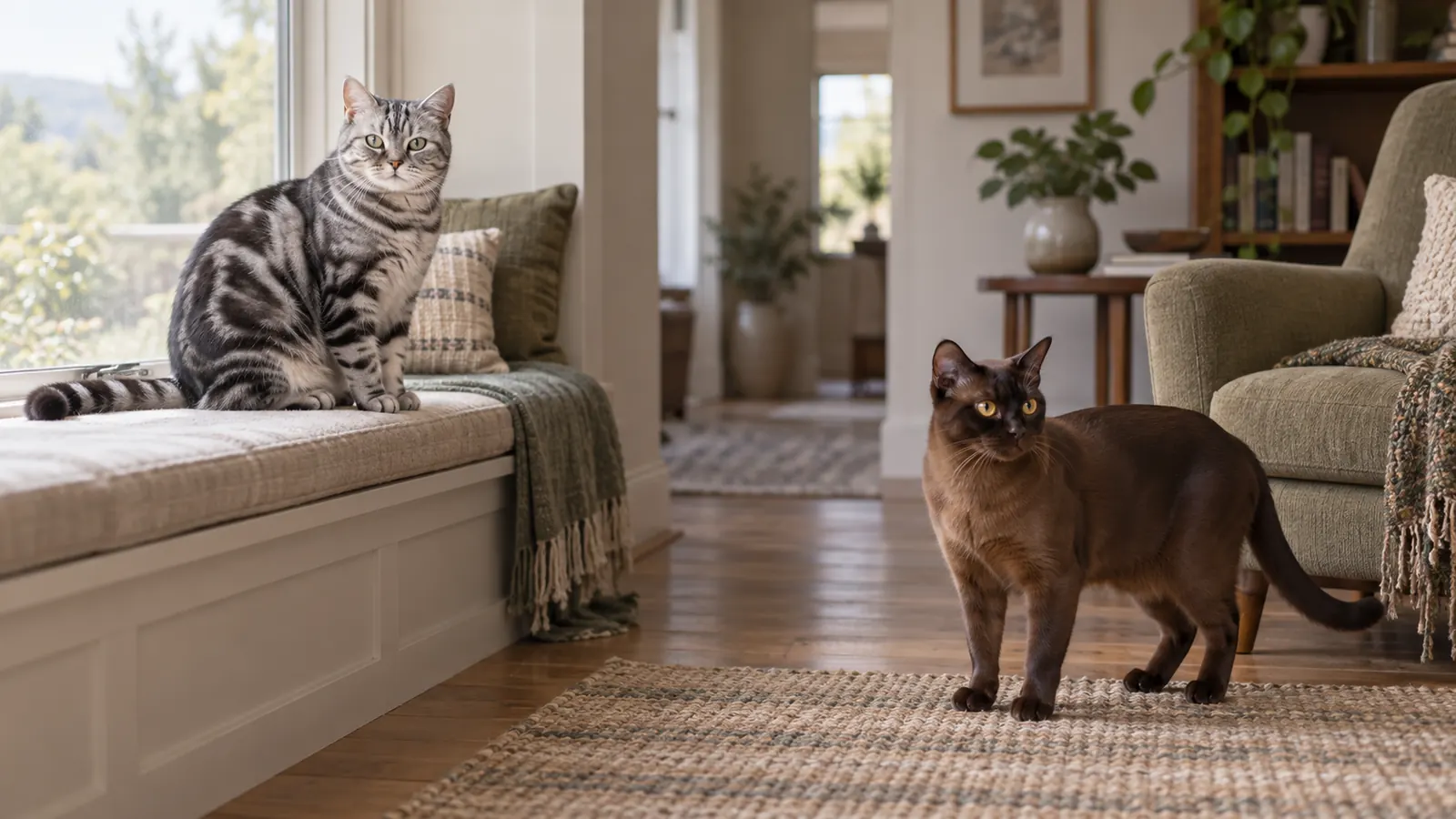
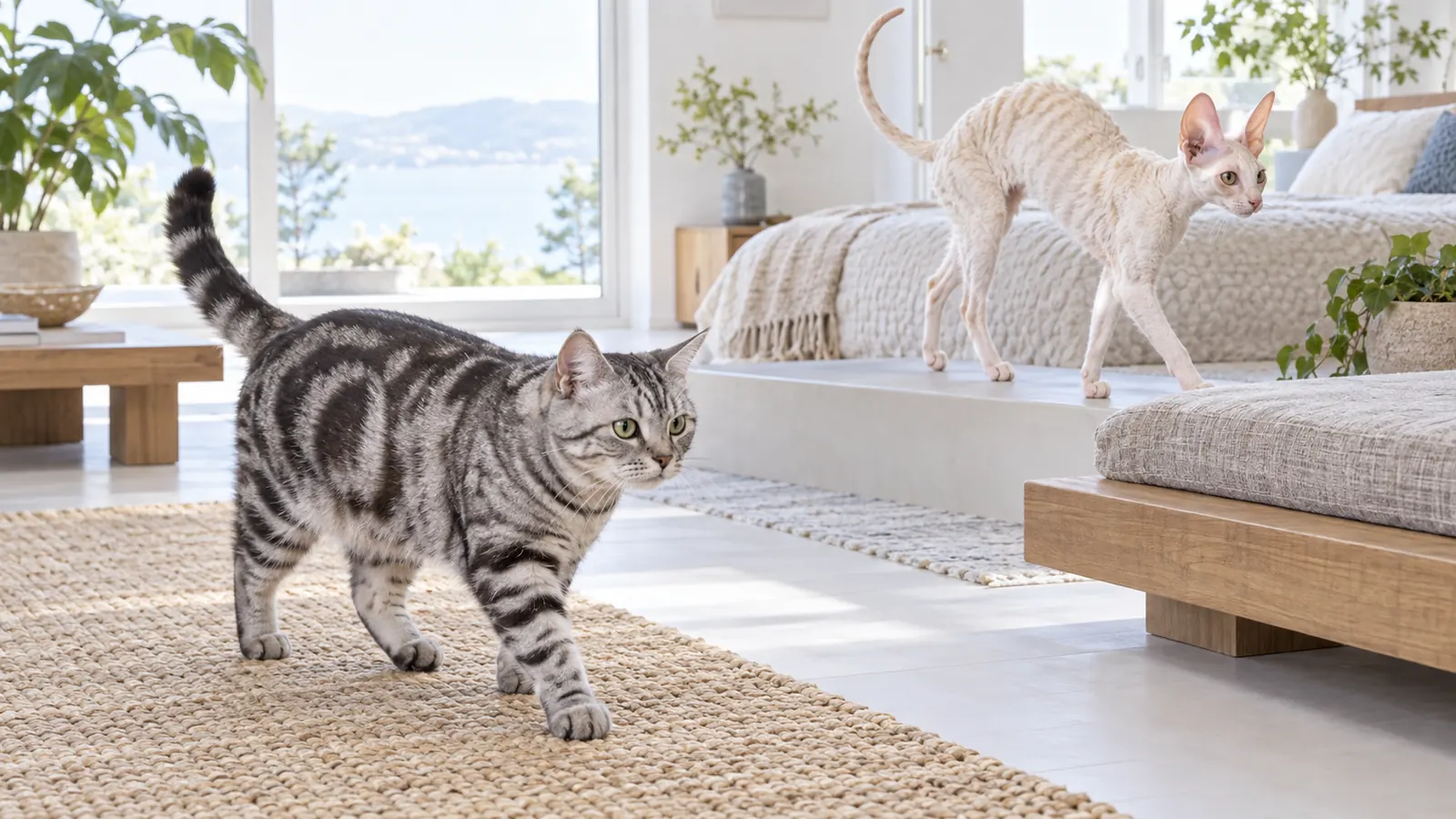
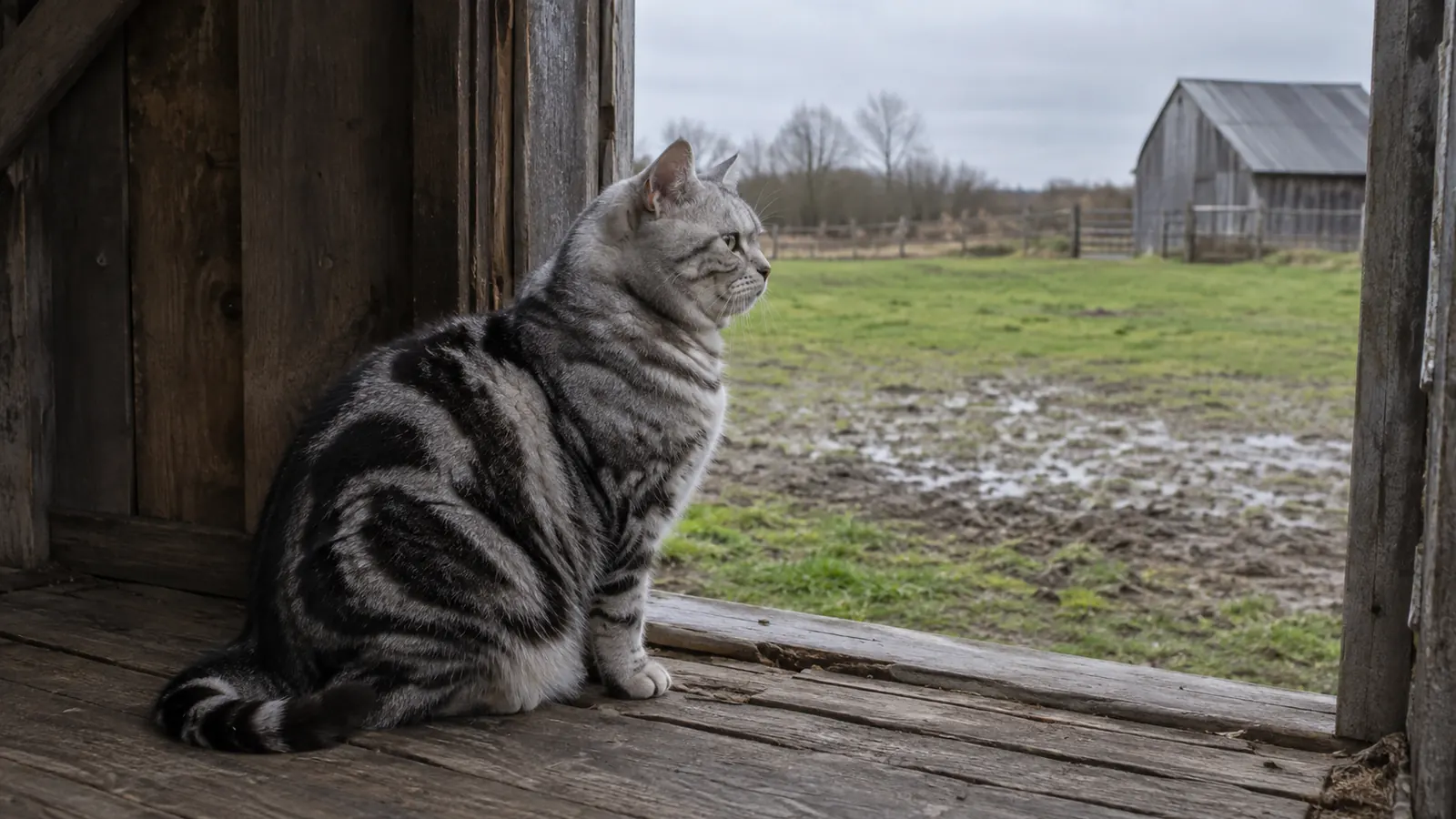
The American Shorthair has a broad, muscular body, developed chest and hindquarters, an oval head and a dense protective coat. Its proportions communicate strength without the short, extreme face of a flat-faced breed.
The Devon Rex is small to medium with a hard muscular body on comparatively fine legs. Large low-set ears, wide cheekbones, a short muzzle and large eyes form the characteristic head, while a soft open wave covers much of the body.
| Feature | American Shorthair | Devon Rex |
|---|---|---|
| Body | Medium to large, broad and powerful | Small to medium, fine-framed but muscular |
| Head | Broad oval with a strong jaw | Short modified wedge with prominent cheekbones |
| Ears | Medium and widely set | Very large, very low set and broad at the base |
| Coat | Dense, straight and protective | Short, soft, wavy and variable in density, with sparse guard hairs |
| Whiskers | Normal straight protective hairs | Curled and often fragile or broken |
| Identity | Pedigree and registration | Pedigree and registration; ears and waves alone are insufficient |
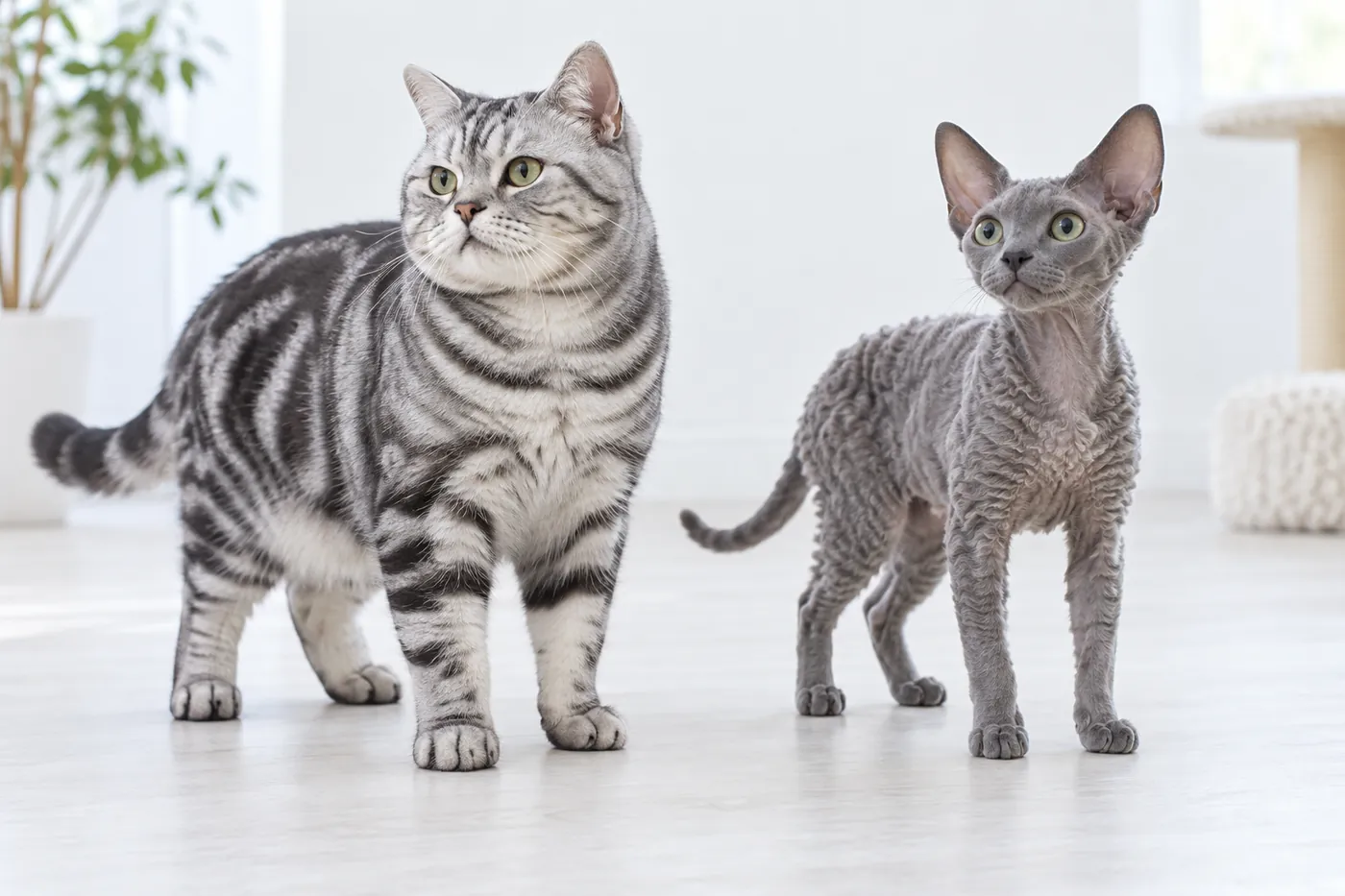
Devon coat density can vary by individual, body area and age. Sparse areas described in a standard do not make sudden hair loss, inflamed skin or a new bald patch normal without assessment.
Appearance cannot verify breed or health. A seller should be able to connect the individual to registration, parents, test reports and a consistent history rather than relying on an unusual face.
How much company can each cat need?
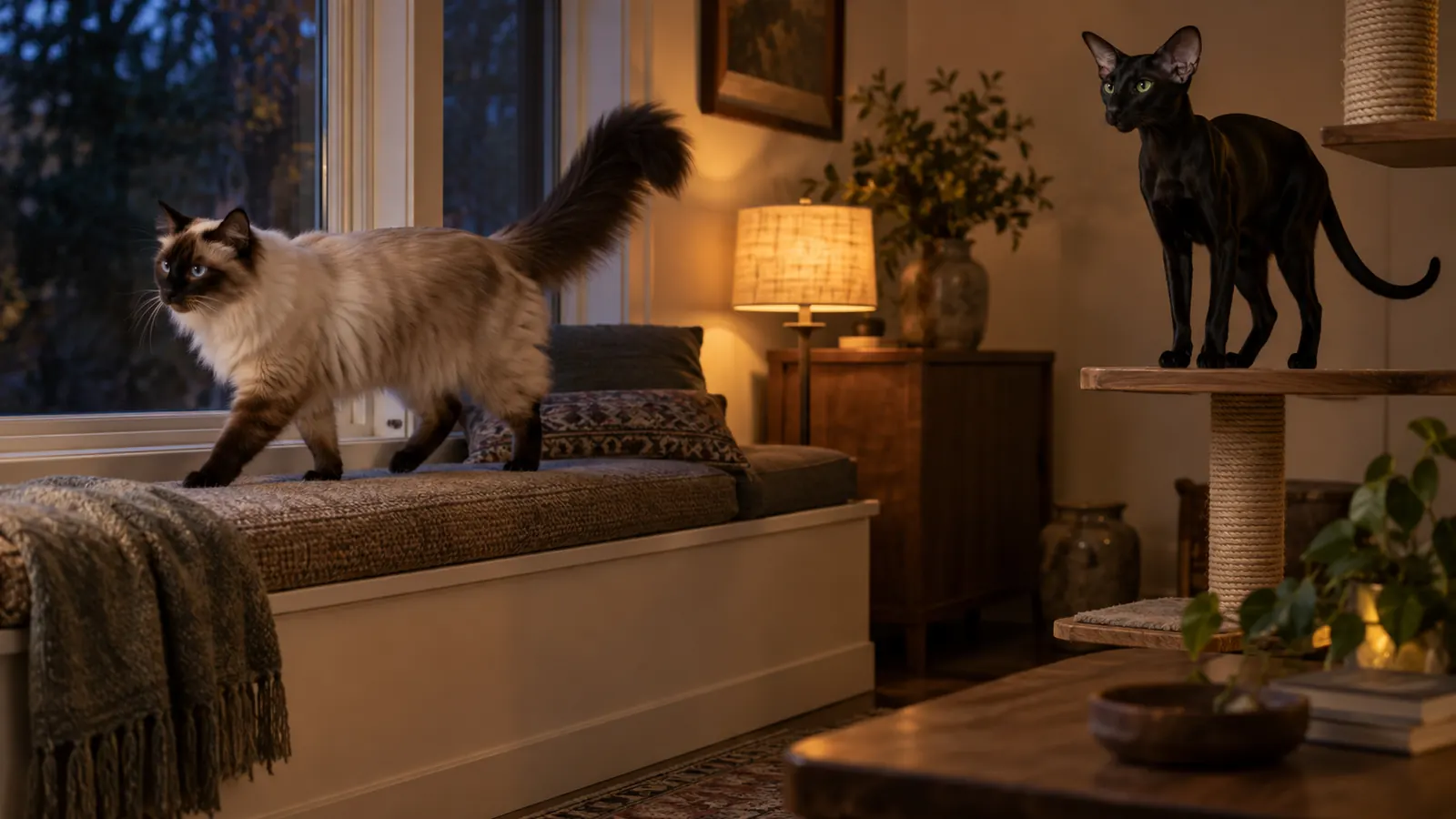
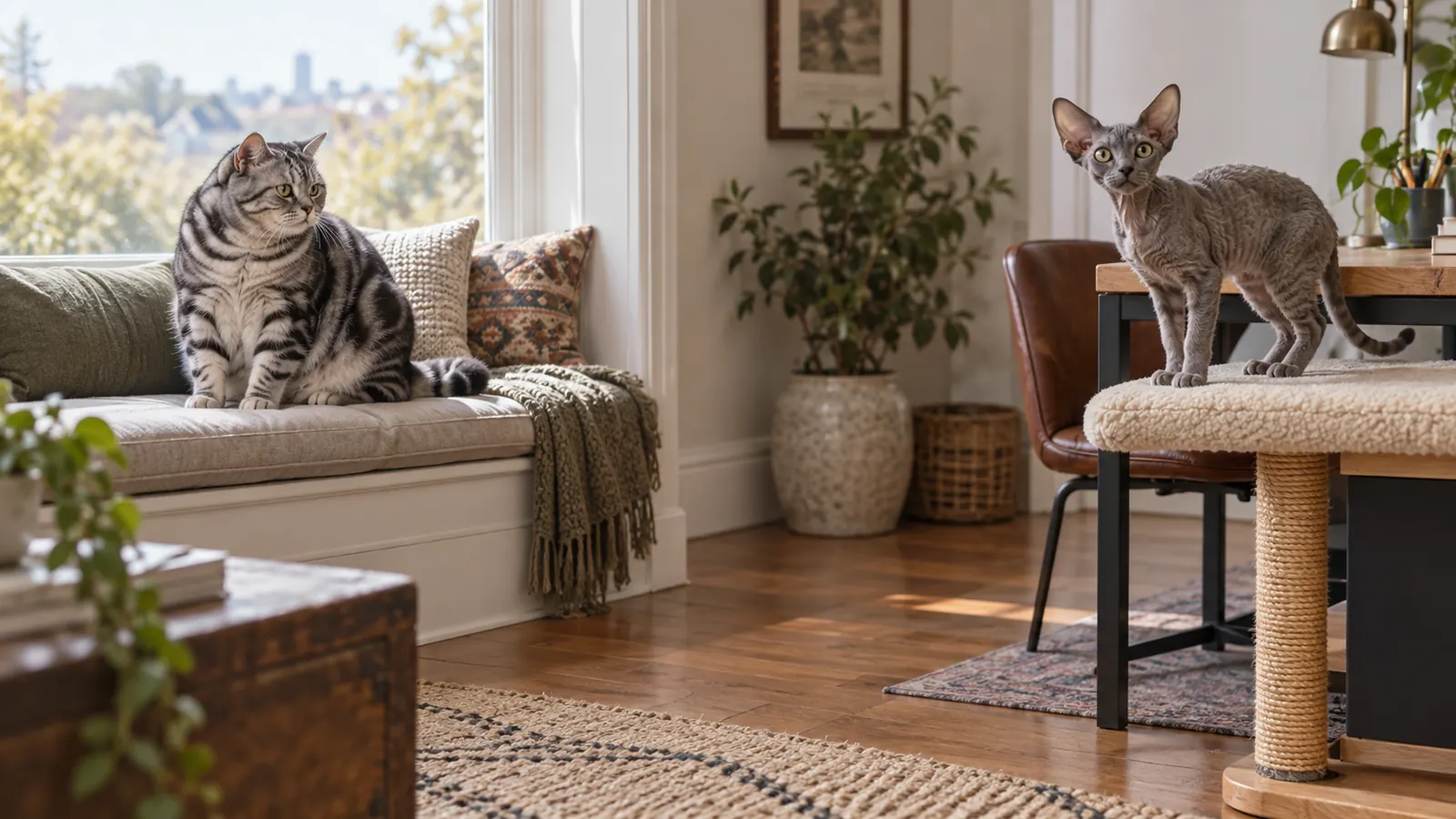
An American Shorthair often shares space without insisting on the same surface. A broad perch near the desk, a window view and planned interaction may be enough for it to alternate between observing, sleeping and joining in. A Devon Rex commonly closes that distance. It may settle against a forearm, ride a shoulder, follow into another room or seek the warmest occupied bed.
| Part of the day | American Shorthair | Devon Rex | Decision clue |
|---|---|---|---|
| Morning | Enjoys a short hunt and breakfast routine | Often treats the whole routine as shared activity | Whether repeated participation feels welcome |
| Work or study | May observe nearby and return occasionally | More likely to occupy the chair, lap or task area | Whether a trained station will be used consistently |
| Hours away | Can use safe independent activity, depending on the individual | Long routine absence is a greater mismatch risk | What the cat actually does during and after absence |
| Visitors | May watch before choosing contact | Often approaches readily, though confidence varies | Whether retreat remains protected |
| Bedtime | May accept a nearby bed or separate boundary | Warmth and attachment can make access more important | Whether bedroom rules will stay consistent |
No responsible source can give one safe hours-alone number for either breed. Age, health, prior routine, another compatible animal and the quality of the environment all affect how a cat copes.
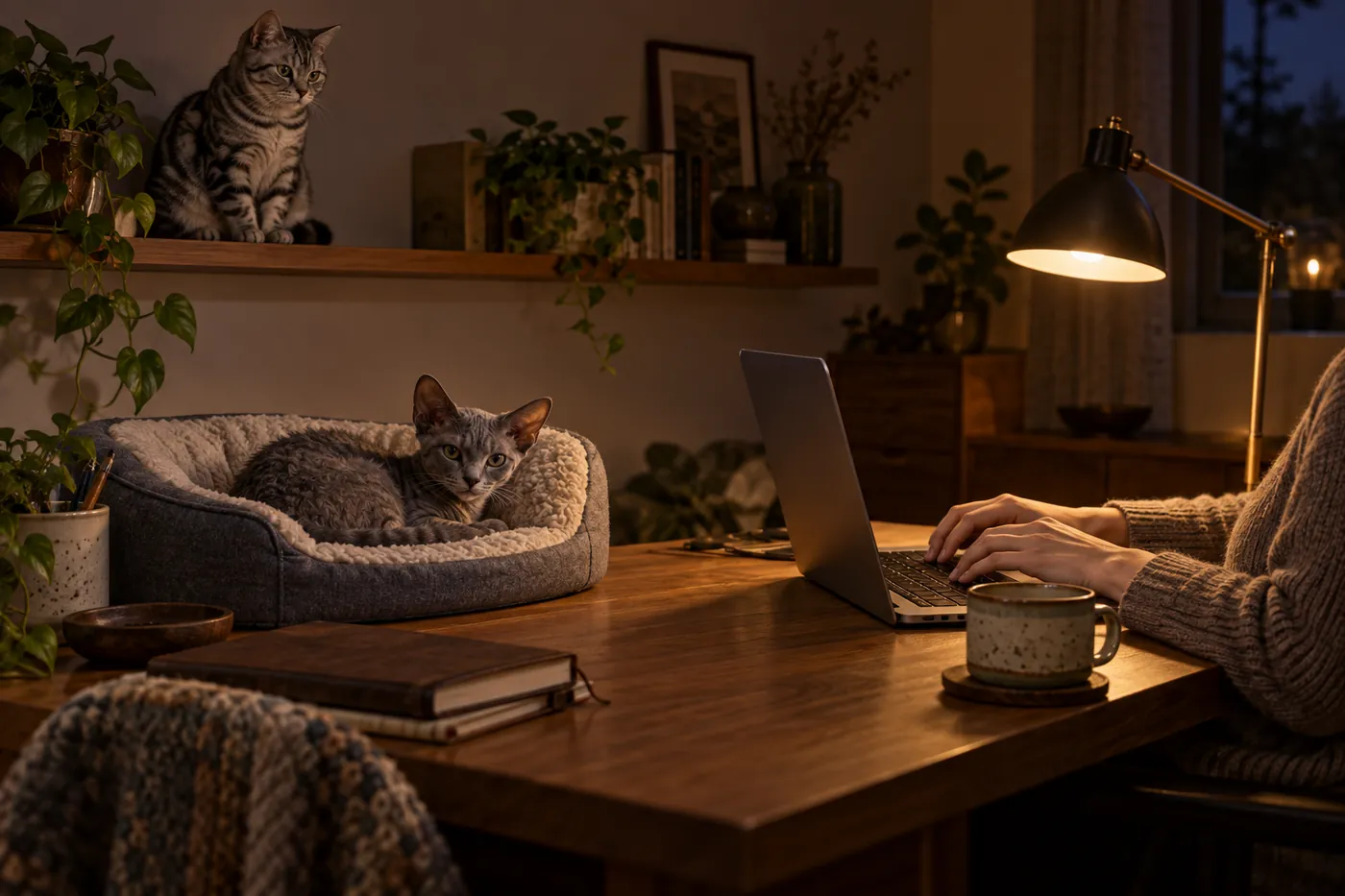
Another cat can provide activity, but it cannot guarantee that a people-oriented Devon feels socially satisfied. The relationship must also work for the other animal rather than turning it into a full-time entertainer.
When routine changes, eating, litter use, sleep, vocalising, hiding and recovery after people return show how the cat is coping, and a sustained change deserves investigation instead of being excused as a quirky breed trait.
Which cat needs more activity and training?
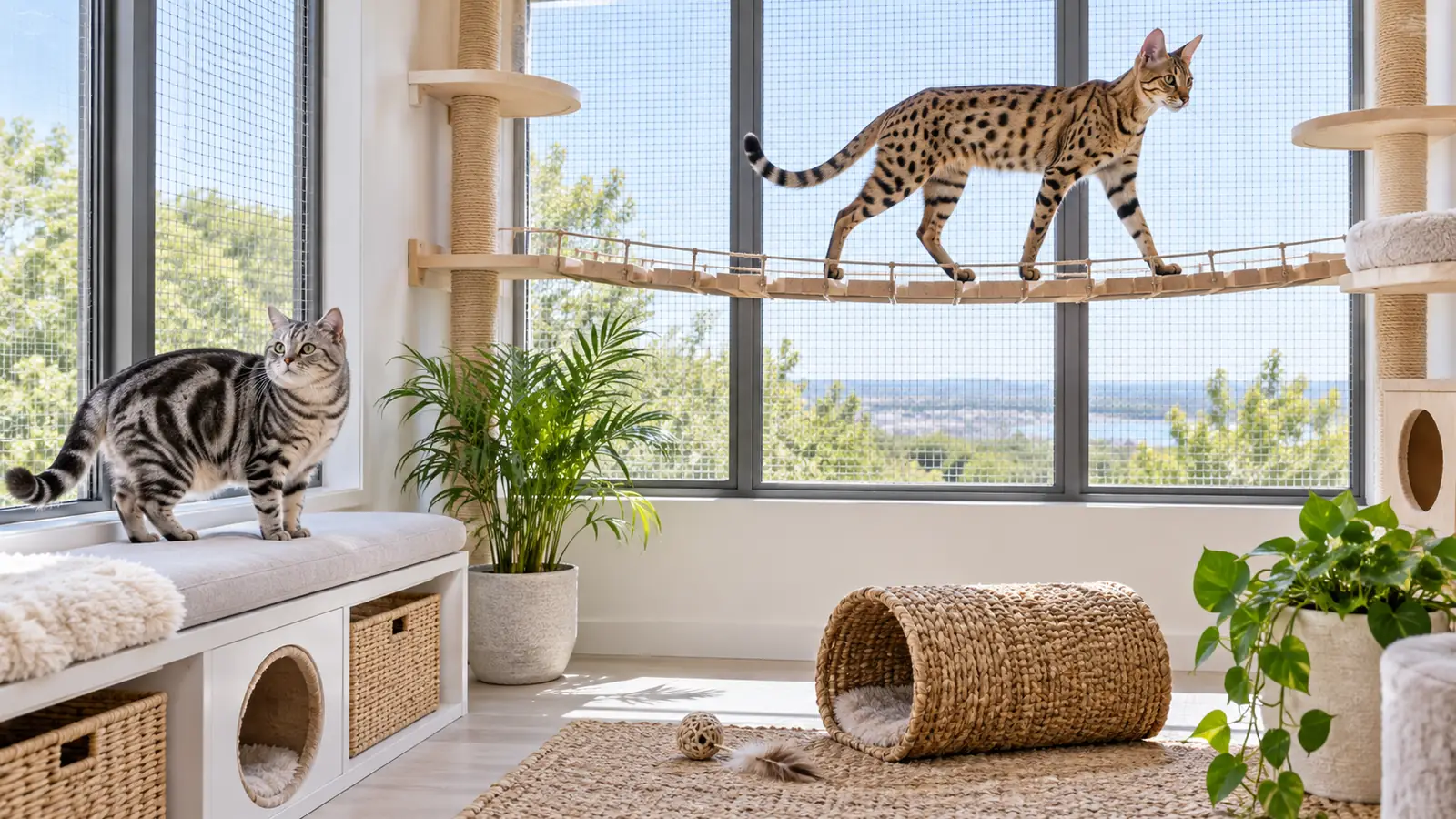
The Devon Rex usually creates the higher activity and management demand. It is curious, agile and capable of turning cupboards, shoulders, warm appliances and high furniture into part of its route.
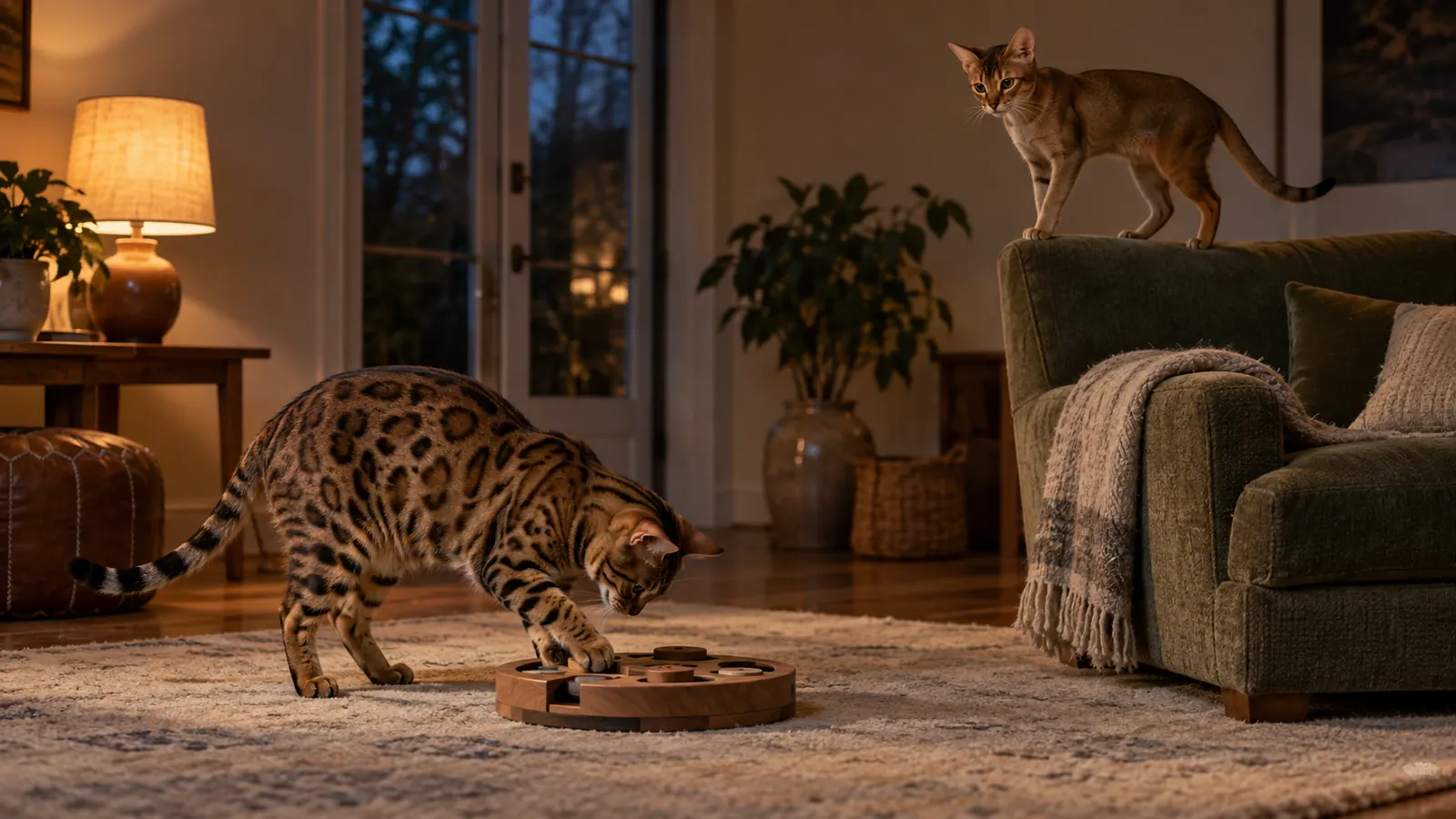
The American Shorthair is not inactive. Its working history and hunting interest suit wand play, search games, food puzzles and a broad stable climbing station, followed by a calmer recovery period.
- Devon Rex route
- Connect stable observation points and remove breakable objects from likely take-off and landing lines
- American Shorthair hunt
- Use short stalking and pouncing sessions with a final capture
- Warm station
- Teach the Devon Rex to settle on a safe mat or covered bed near household activity
- Carrier entry
- Build voluntary entry before a journey is necessary
- Reward control
- Count every training treat inside the daily ration
- Stop point
- End while the cat can disengage rather than chasing exhaustion
A Devon Rex may learn rapidly, but fast learning includes unwanted lessons. Access to food, open cupboards and a person's reaction can reward a behaviour as effectively as a treat, so management has to run alongside training: hot surfaces closed off, food secured and permitted climbing height provided while the desired alternative is still being learned.
Clicker training marks a small action and then builds duration from it. Mat work, target following, carrier entry and a handling pause reduce daily friction for either breed.
How should you care for their coats, skin and ears?
The American Shorthair's dense coat tolerates a gentle comb or grooming mitt, especially when seasonal undercoat releases. The Devon Rex coat needs less hair removal and much less friction. CFA notes that Devon guard hairs are sparse and the coat may be fragile. Whiskers can also curl and break, so hard brushing, repeated rubbing and attempts to flatten or perfect the wave are counterproductive.
- Use clean hands first to feel the Devon Rex coat without pulling the waves
- Inspect large ears for visible wax or oily buildup without inserting anything into the canal
- Check skin folds, paws and favourite warm resting areas for redness or odour
- Clean only when needed with a product and method approved for cats
- Dry the coat fully and return the cat to a warm draught-free room after any necessary wash
- Stop for pain, sores, marked grease, sudden hair loss or a change in behaviour
Ear size does not justify routine deep cleaning. Clean only the visible area you have been shown how to handle, and seek veterinary advice for odour, discharge, repeated head shaking or pain.
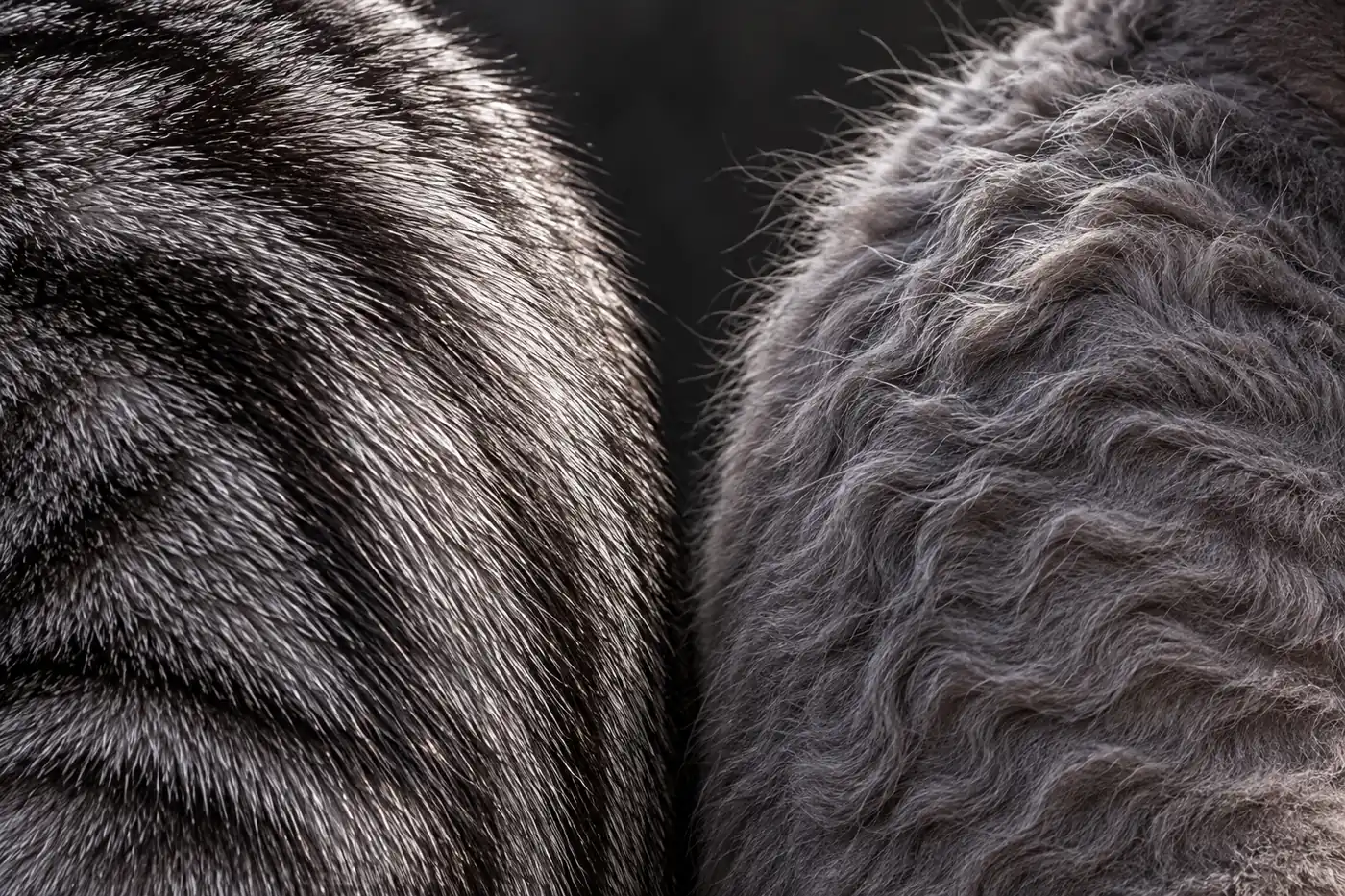
A tool designed to pull dense undercoat can damage a sparse wavy coat. The condition of the tool matters too, because a bent or rough pin snags fragile hair and scratches thin skin.
Devon Rex cats are not hypoallergenic. Reduced loose hair does not remove allergens carried in saliva and skin material, so a sensitive household should spend meaningful time around the actual cat and seek medical advice before commitment.
Which is better with children, dogs or another cat?
Both breeds can live well with respectful children and compatible animals. The American Shorthair may offer a steadier pace, while a Devon Rex may actively seek games and contact from older children who can follow a stop signal.
Devon coat and whisker fragility makes rough stroking, dress-up and repeated lifting especially inappropriate. Children should let the cat climb onto a lap under its own power and keep warm sleeping places visible before sitting or folding bedding.
Fast vertical movement can trigger dog pursuit, so the dog stays controlled until the cat can cross the room without being chased, and high retreats with two routes down give the cat a way out.
With another cat, turn-taking, pauses and access to separate resources are the signs worth looking for. Shared sleep in one photograph says less than whether either animal can leave without being followed.
A family-friendly reputation never removes supervision. It also does not obligate the cat to accept contact whenever a child wants it.
Which health evidence should a breeder provide?
Every breeder should connect reports to registered parent identities and explain the date, test and result. Devon Rex health material identifies several questions that a vague fully tested claim cannot answer. TICA recommends genetic testing that includes Devon myopathy and recommends that parents be scanned for hypertrophic cardiomyopathy. Langford lists congenital myasthenic syndrome, also described in breed contexts as Devon Rex myopathy, along with Burmese hypokalaemia and low-prevalence PKD tests relevant to Devon Rex.
CFA also notes a high incidence of blood type B in the Devon gene pool. Blood typing is relevant to breeding because an incompatible pairing can place newborn kittens at risk, but it is not a disease score for a pet cat.
| Evidence | Ask to see | What it answers | Important limit |
|---|---|---|---|
| Registered identity | Parent names and numbers matching every document | Which cats the evidence belongs to | Registration does not guarantee health |
| Devon myopathy or CMS | Original variant report for each parent | Status for the named inherited weakness | Does not explain every cause of weakness |
| Blood type | Original blood-type results and the breeder's mating plan | Reproductive compatibility information | Type B does not mean a pet is ill |
| Cardiac screening | Dated assessment, examiner and findings | Cardiac status at that time | Cannot guarantee the cat never develops HCM |
| Other variant tests | Exact gene, variant, laboratory and parent result | Status for that named test | Panel length does not equal relevance |
| Family history | Ages, diagnoses and causes of death in close relatives | Whether outcomes are tracked beyond one litter | Missing diagnoses are not proof of absence |
For the American Shorthair, CFA and TICA do not present the same concentrated breed-specific list. The useful questions cover cardiac findings, weight, dental health, longevity and cause of death in close relatives, since hardy is a reputation rather than a lifetime guarantee.
A carrier is not the same as an affected cat, and a normal result is not a certificate for every condition, so the useful question for a breeder is what decision each result changed. Identities that do not match, reports only described over the phone, undated scans or a guarantee of temperament, allergy safety or lifetime health are each a reason to walk away.
Which breed matches your household?
The American Shorthair suits a household that wants a sturdy, adaptable companion that often balances contact with independent rest. It still requires directed hunting play, weight control and seasonal coat care.
The Devon Rex suits a household where close participation, warmth and active curiosity are exactly what is wanted. It is a poor fit when long routine absences, closed-room boundaries or rough handling will make those traits a source of conflict.
- The busiest weekday still contains reliable play and social contact
- Warm beds are safe, optional and separated from direct heat
- A trained station can sit near work and cooking without blocking the person
- Children understand the Devon Rex coat and whiskers require gentle handling
- Every resident animal has unblocked resources and an exit
- Original parent records show exact tests, dates and identities
- The individual cat can pause, recover and accept ordinary boundaries
The American Shorthair is the more adaptable default for most households. The Devon Rex becomes the better choice when its close company and unusual care needs are welcome parts of everyday life.
Checked Against
Published 12 September 2026. Last updated .