What Is a Chantilly-Tiffany Cat, and Is It Extinct?
The last known Chantilly-Tiffany male was put to sleep in 2015, and his daughter, the last known female, was spayed because there were no cats left to breed her to. By late 2017 no intact Chantilly-Tiffany cats and no breeders were known anywhere, so anyone offering kittens today is not offering what they claim to be.
- Origin
- United States, 1967, from two chocolate semi-longhaired cats bought in a New York pet shop; no intact cats or breeders known since the last breeding cats were lost around 2015
- Coat
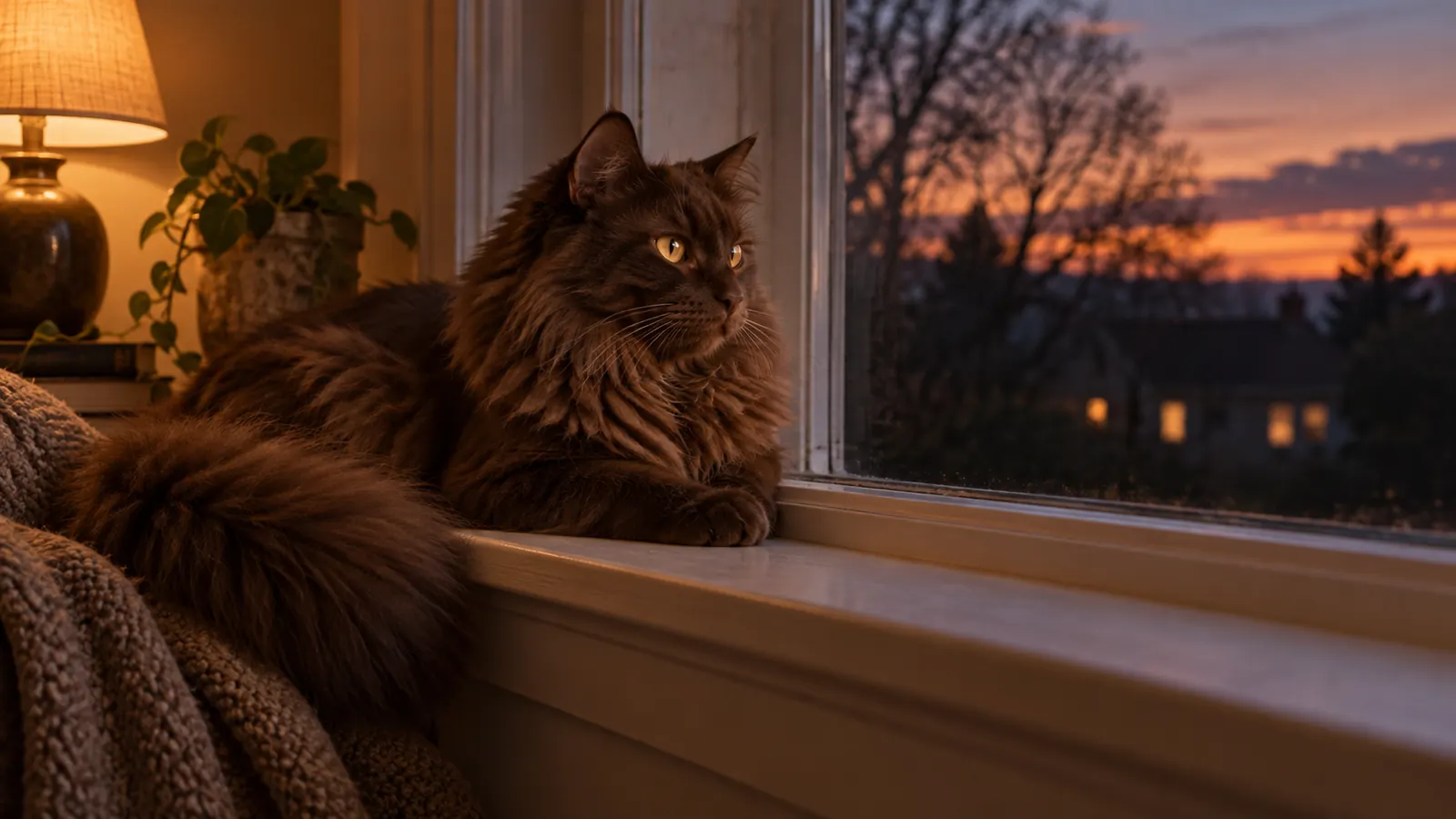
- Semi-long, silky and little-shedding, not prone to matting; originated in solid chocolate and later expanded to cinnamon, blue, lilac and fawn
- Size
- Semi-foreign build, medium-sized, neither cobby nor svelte
- Typical weight
- The historical breed description gives 6 to 8 pounds for females and 8 to 10 pounds for males, about 2.7 to 4.5 kg
- Life expectancy
- No population exists to measure; historical sources gave no reliable figure even while the breed was active
- Activity level
- Described historically as moderate, loving and soft-voiced, communicating in chirps and trills
- Grooming
- Would be low; the coat was historically described as little-shedding and slow to mat, needing only occasional combing
- Suits
- Nobody, as a purchasing decision. The breed has no surviving breeding population
If you are reading this because a listing offered you a Chantilly-Tiffany kitten, stop and read this first.
The breed has no surviving breeding population. The last known male was put to sleep in 2015, his daughter was spayed because there were no cats to breed her to, and by late 2017 no intact Chantilly-Tiffany cats and no breeders were known anywhere.
What was the Chantilly-Tiffany?
A quiet, slow-building breed that never had many cats even at its healthiest.
It began in 1967 when a New York breeder named Jennie Robinson bought two chocolate semi-longhaired cats from a pet shop, named Thomas and Shirley. From their first litter in 1969 they produced around sixty kittens over seven years.
The breed name itself came later and changed more than once. The American Cat Association first registered the cats as Sable Foreign-Longhairs, judges considered "Foreign-Longhair" too generic, and a later breeder, Sigyn Lund, renamed the line Tiffany. A second renaming in 1992 eventually settled the American name as Chantilly-Tiffany.
Was it ever actually thriving?
No, and that fragility is most of the reason it is gone now.
The breed came close to disappearing in the mid-1980s, long before its final loss, and that near-extinction has a name attached to its rescue. When the breed's second developer stopped breeding, a Canadian fancier named Tracy Oraas answered a classified advertisement for "chocolate kittens" in 1988 and set about re-establishing the breed.
- 1967Founding pair purchased in New York; breeding begins
- 1969 to 1976Around sixty chocolate semi-longhaired kittens produced from the founding pair
- Mid-1980sNear-extinction after the second developer stops breeding
- 1988Tracy Oraas answers an advertisement for chocolate kittens and begins to re-establish the breed
- 1994TICA reinstates recognition as a distinct breed, after a period of rescinded status
- 2012A fire destroys Amorino Cattery in Illinois, the last known breeder in the United States, along with its records
- 2015The last known male is put to sleep; his daughter is later spayed, leaving no intact cats
Oraas contacted breeder Jan DeRegt, and together they confirmed with the original developers that the line was genuinely unrelated to the Burmese before building a new breeding programme on European Angoras, Havana Browns, Somalis and Nebelungs, the outcrosses the breed's standard permitted.
That programme is also where the current name comes from. In 1992 the Canadian breeders had to rename their cats to avoid confusion with the British Tiffanie, and Chantilly kept the sense of elegance the Tiffany name had carried.
The revived line never grew large. By the 2000s the last known breeder in the United States was Amorino Cattery in Illinois, alongside a few cats at catteries in Norway and Nova Scotia whose programmes ended for lack of suitable outcrosses.
Never reaching championship status in the largest registries left the breed without the institutional support a larger population might have had, and the 2012 fire removed both the cattery and the records that could have helped anyone attempt to continue it.
Why do sellers still advertise kittens?
Because the name is recognisable and rare, which is exactly the combination that attracts misrepresentation. In 2013 the breed's last American breeder issued a buyer-beware alert after another seller used the name for unrelated cats bred from Balinese, and today no legitimate breeding programme is left to produce one.
The most likely honest explanations for a "Chantilly-Tiffany" listing are an ordinary chocolate-coloured semi-longhaired cat of unrelated ancestry, or a cross carrying a similar look by coincidence rather than lineage. The York Chocolate, a separate chocolate or lavender semi-longhair bred from New York farm cats from 1983, has no known active breeding programme either, so a long-haired chocolate cat sold today cannot be confirmed as either breed.
Why do two different cats share almost the same name?
This is worth untangling directly, because it causes genuine confusion and the two animals are not related.
| Name | What it actually is | Current status |
|---|---|---|
| Chantilly-Tiffany | The American chocolate semi-longhair described above | No breeding cats known since around 2015 |
| Tiffanie (GCCF) | The semi-longhaired variety of the GCCF Asian group, a British line that grew out of Burmilla breeding | Actively bred and recognised |
Our profile on the Burmilla covers the GCCF Tiffanie in full, including why its coat-length split happened and how it differs genetically from the extinct breed described here. If a listing anywhere uses "Tiffany" or "Tiffanie," check carefully which of these it is actually describing before assuming anything about the cat's history or its documentation.
What was the temperament actually like?
Loving and people-focused, by the accounts left behind, with a soft-voiced way of communicating in chirps and trills. Because the evidence comes from historical owner and breeder accounts, it describes the old line but cannot predict a lookalike cat sold today.
The 1995 breed description by Tracy Oraas and Jennie Robinson calls it loyal and close without being overly demanding, usually bonded to one person, somewhat reserved with strangers and moderate in activity. The long confusion with the Burmese came from colour: the early cats were solid chocolate, and one of their breeders also bred Burmese, so people assumed they were longhaired Burmese.
What did the breed actually look like?
A semi-foreign body, a full, silky semi-long coat, and a colour range that started narrow and widened slowly. This means a seller can imitate the description with an ordinary chocolate semi-longhair, so appearance still cannot prove identity.
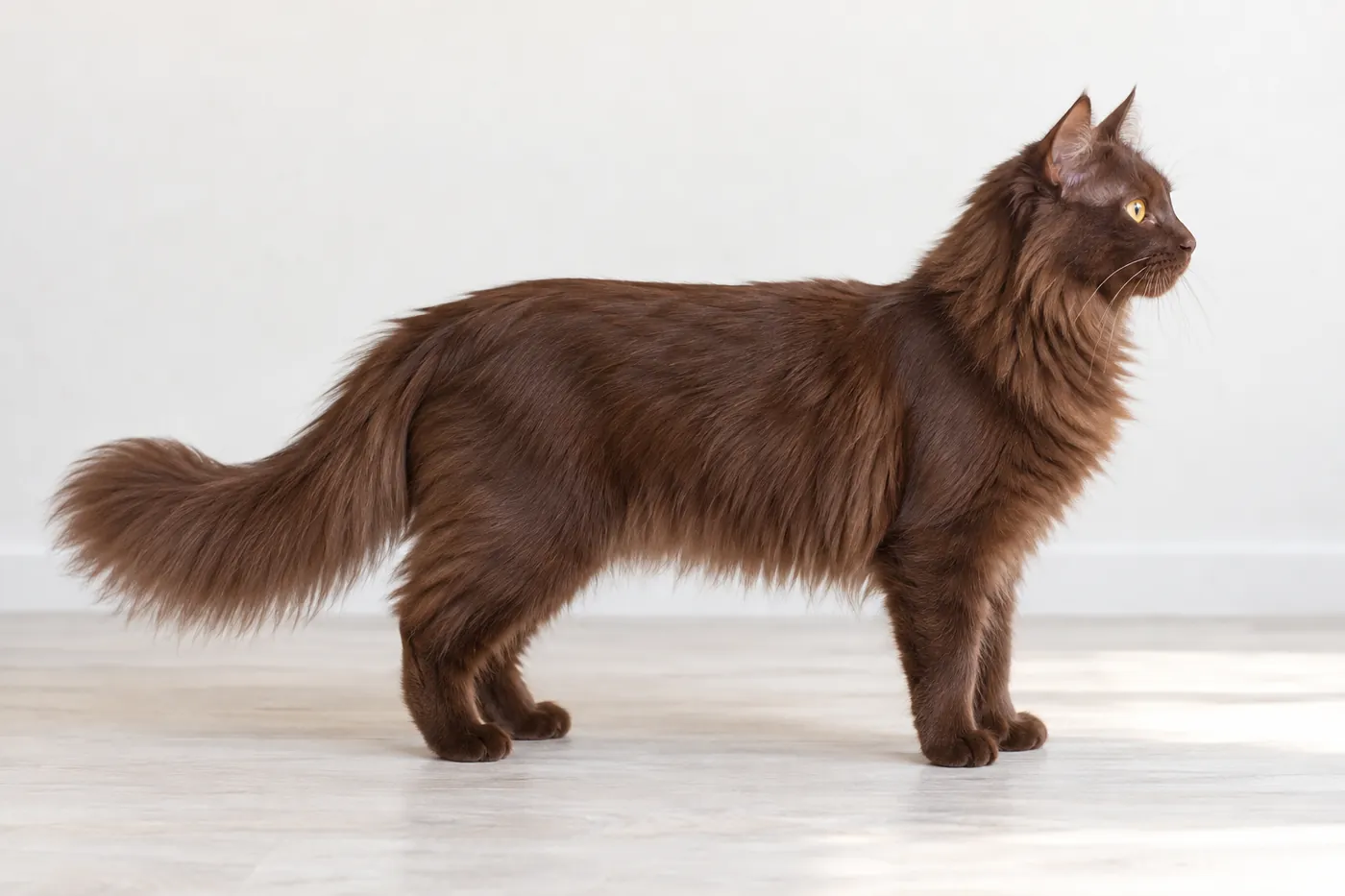
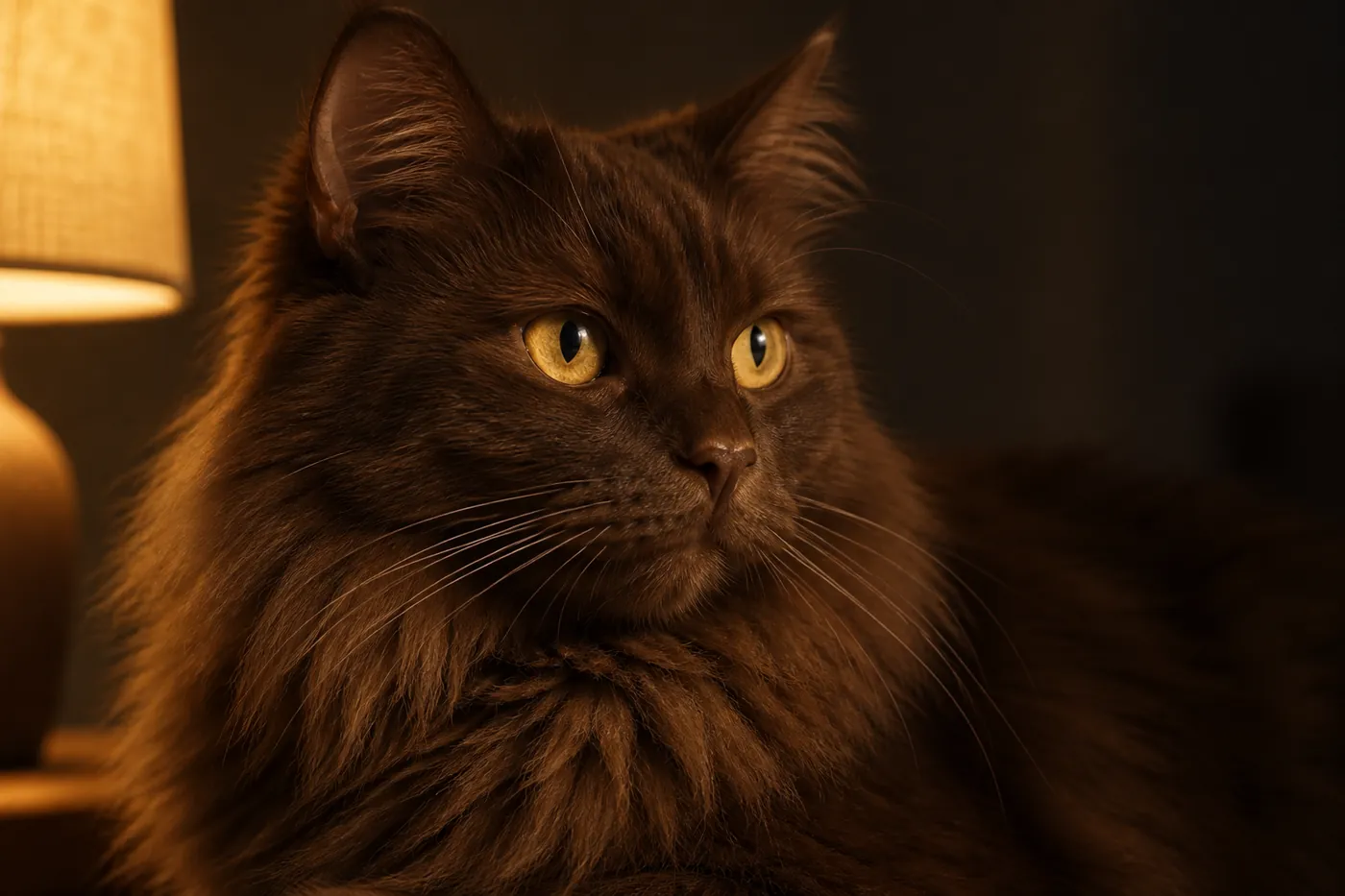
The founding cats were solid chocolate with golden eyes, and the later standard allowed yellow to gold or amber eyes with a green halo around the pupil. Outcrossing expanded the colours to cinnamon, blue, lilac and fawn, in solid, mackerel or spotted tabby patterns, never colourpoint and never with white markings.
TICA registered it as a New Breed or Colour and ACFA accepted it, but championship status came only in the small UFO registry, even at its healthiest. That ceiling limited how many breeders ever took it on, which is part of why the population stayed small enough for a single fire and a handful of deaths to end it.
- Founding colour
- Solid chocolate with golden eyes
- Later colours
- Cinnamon, blue, lilac, fawn
- Permitted patterns
- Solid, mackerel or spotted tabby
- Never permitted
- Colourpoint, white markings, silver
- Permitted outcrosses
- Havana Brown, Somali, Nebelung; never Burmese
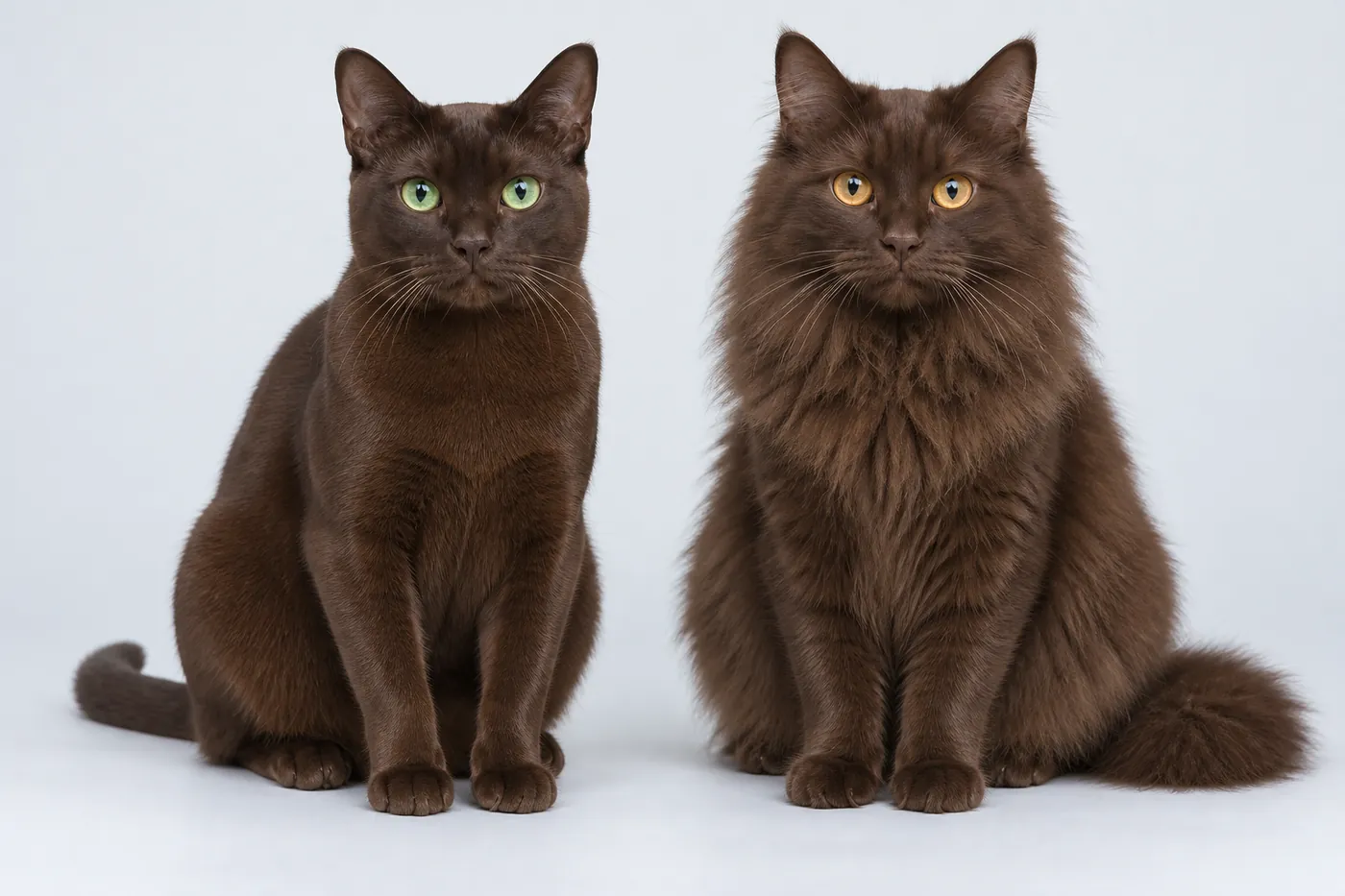
None of the permitted outcrosses were Burmese, despite the frequent confusion between the two breeds over the decades. The Havana Brown connection is the one worth following, since it is a breed that shares the historical chocolate colour and is, unlike this one, still very much alive.
What could you know about health and daily care?
No surviving population means there is no responsible way to give this breed a disease rate or a lifespan range. Historical breeder accounts describe the cats, but they do not provide the population records needed to turn an anecdote into a health forecast.
The coat was described as silky, little-shedding and slow to mat, needing only occasional combing of the ruff and hindquarters, so it would have needed less detangling than a dense double coat. An occasional pass with a wide-toothed comb, using the technique in brushing a long-haired cat, would have been a reasonable routine for the silky semi-long hair.
Claws, teeth and ears would still have needed ordinary preventive attention, including claw trimming when scratching surfaces did not keep the tips manageable. None of those routine needs can verify lineage; they only describe how to care for a living lookalike without pretending it belongs to the extinct breed.
Temperament claims deserve the same boundary. A chocolate semi-longhaired cat may be affectionate and soft-voiced, but colour and coat length cannot prove the people-focused temperament remembered by former Chantilly-Tiffany breeders.
If you want this look today, what actually exists?
A cat matching this description in appearance, without the fabricated lineage claim, is the honest option.
A solid chocolate or cinnamon semi-longhaired cat with golden eyes can turn up in general shelter populations or from breeders of related colours, without anyone claiming an extinct pedigree behind it. The coat and colour are real and attainable; the specific bloodline from Thomas and Shirley is not.
As with the California Spangled, no DNA test could confirm descent from that specific line even if a seller wanted to prove it honestly. There is no maintained reference database for a breed whose last known American cattery burned down along with its records in 2012.
If the appeal is specifically the chocolate coat and the history, the Havana Brown is the closest living relative in spirit, sharing the colour focus with full current recognition and an active breeding population behind it.
Can you buy a Chantilly-Tiffany cat today?
The Chantilly-Tiffany is a genuinely interesting piece of cat-breeding history: a quiet, slow-built line that never grew large enough to survive a near-extinction, a cattery fire and the loss of its last breeding cats around 2015. It is not, today, a breed you can buy.
Treat any current listing with the scepticism the breed's last American breeder urged in her buyer-beware alert, and if the appeal is the coat rather than the specific extinct lineage, look at what is genuinely available instead.
Common Questions
Is the Chantilly-Tiffany cat extinct?
Yes, as a breeding population. The last known male was put to sleep in 2015, his daughter was spayed because there were no cats to breed her to, and by late 2017 no intact Chantilly-Tiffany cats or breeders were known anywhere.
Can I still buy a Chantilly-Tiffany kitten?
No legitimate breeder currently exists. The breed's last American breeder issued a buyer-beware alert in 2013 against sellers misusing the name, and there is no active studbook or breeding cattery left to produce one.
Is the Chantilly-Tiffany the same as the Burmilla's Tiffanie?
No. The Tiffanie is the semi-longhaired variety of the GCCF Asian group, a British line that grew out of Burmilla breeding, with entirely different ancestry. The two names sound similar but describe unrelated cats.
Why did the Chantilly-Tiffany become extinct?
It never reached a large population, came close to disappearing in the mid-1980s, and a 2012 fire destroyed the last known American breeder and its records. The last known male died in 2015 and his daughter was spayed, with no programme left to continue them.
What did the Chantilly-Tiffany look like?
A semi-foreign body with a silky, semi-long coat, a neck ruff and a plumed tail, originally solid chocolate with golden eyes, later expanded to cinnamon, blue, lilac and fawn in solid or tabby patterns.
Checked Against
Published 10 September 2026. Last updated .