
What Is a Somali Cat, and What Daily Routine Does It Need?
A Somali suits people who want an athletic, observant cat involved in daily activity and who can provide climbing, problem solving and regular coat and dental care. Its foxlike tail and ticked coat are striking, but the decision should turn on social intensity, PRA and PK deficiency testing, and whether the home can keep a clever cat constructively occupied.
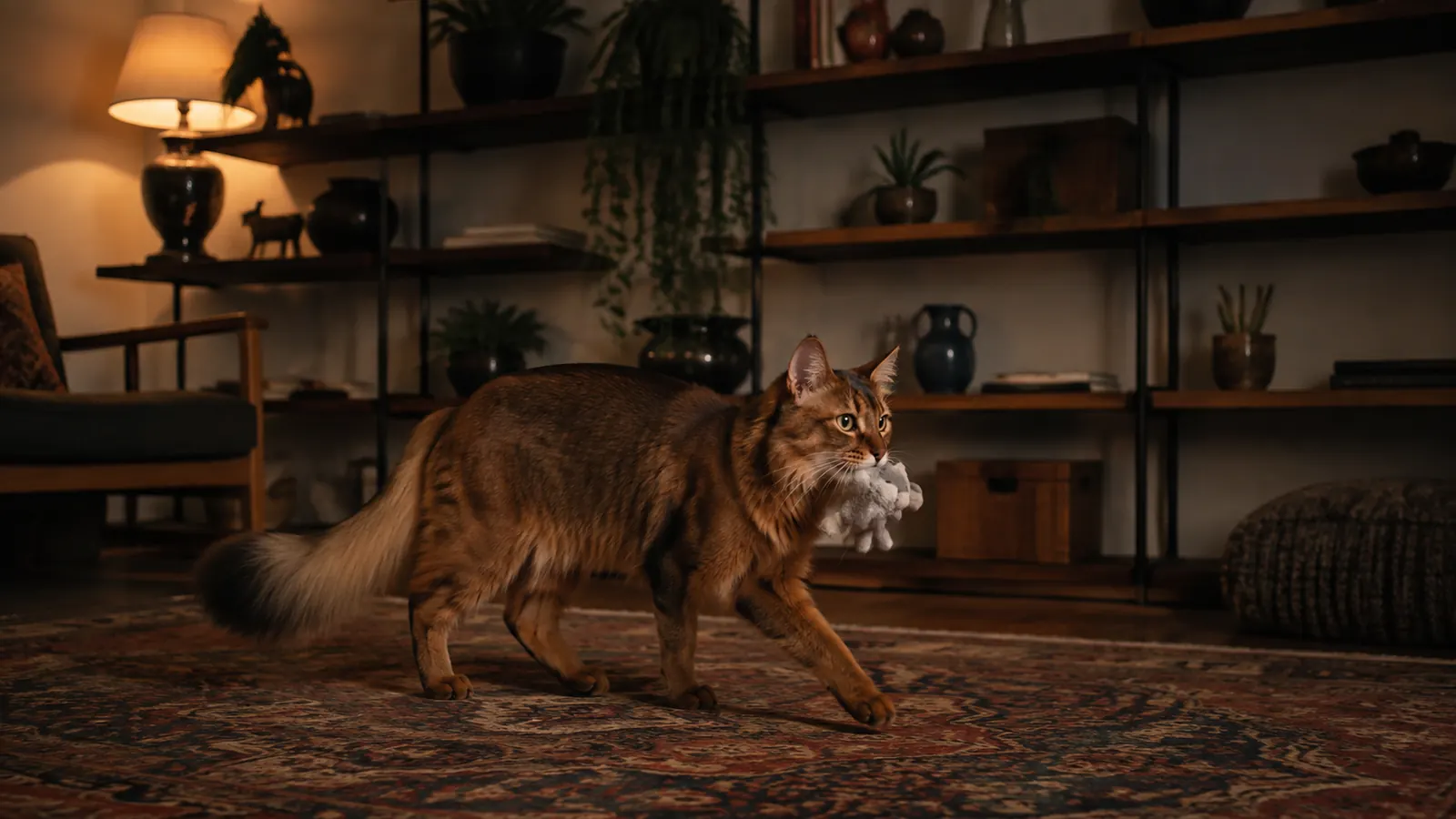
- Origin
- Developed from longhaired kittens appearing in Abyssinian breeding programs, principally in North America and Britain
- Coat
- Soft semi-long agouti coat with banded hairs, fuller at the ruff, breeches and foxlike tail
- Size
- Medium, lithe and muscular, with long legs, an arched back and a light-footed athletic outline
- Typical weight
- TICA gives approximately 6 to 7 pounds for females and 8 to 10 pounds for males
- Life expectancy
- No registry figure predicts an individual; plan for a normal long-term feline commitment
- Activity level
- High. Agile, curious and strongly motivated to climb, investigate and interact
- Grooming
- Moderate. The soft semi-long coat often resists matting but needs regular checks and more attention during shedding
- Suits
- Active households that enjoy training and play, provide vertical space, and can meet social and preventive-care needs
The Somali is the semi-longhaired relative of the Abyssinian, carrying the same alert expression and ticked colour beneath a fuller ruff, breeches and foxlike tail.
It is an agile, socially engaged cat rather than a decorative longhair that spends most of the day on a cushion.
That distinction drives the owner-fit decision. A Somali needs useful things to do, and its coat and teeth still require attention after exercise has been provided.
Is the Somali simply a longhaired Abyssinian?
Genetically and historically, the breeds are closely connected. Longhaired kittens appeared in Abyssinian lines, and breeders developed them into a recognized population named Somali.
The body type remains similar: medium, finely athletic and muscular, with a modified wedge head, large forward-set ears and almond eyes. The most visible difference is coat length and furnishings rather than a heavier, rounder body.
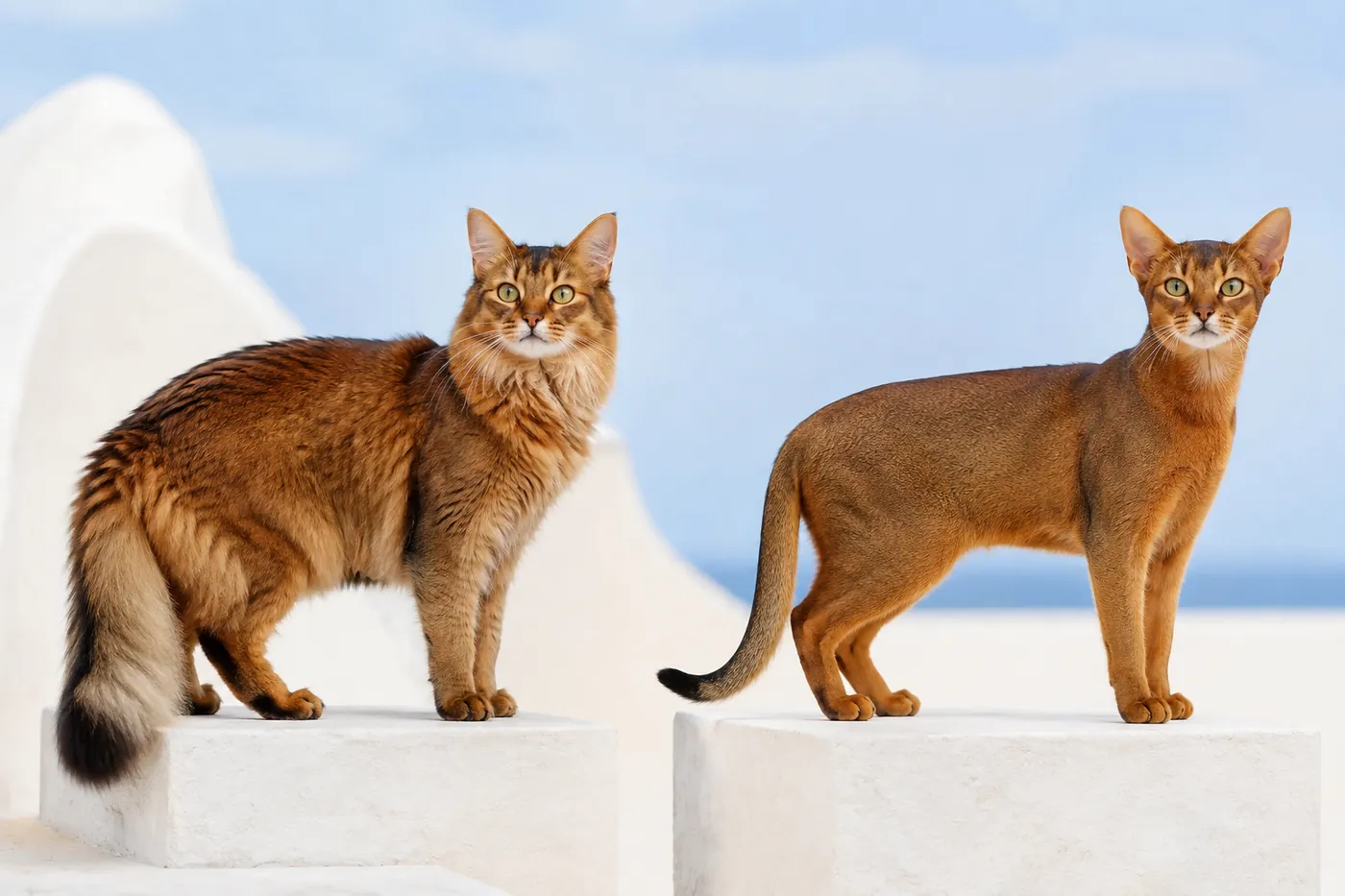
Pedigree still matters, because a fluffy ticked cat or an alleged Abyssinian mix is not automatically a Somali.
Coat length is inherited, but the visible result is more than an Abyssinian with every hair extended equally. The Somali's ruff, breeches and tail furnishings develop in different areas, while the same fine athletic frame should remain apparent beneath them.
Registry language can vary by region, so the document owner matters. A seller should be able to name the registering organization, connect the cat to its pedigree and explain how the longhaired population is recorded without relying on the fox-cat nickname.
- Relationship
- Semi-longhaired breed developed from Abyssinian lines
- Body
- Medium, lithe, muscular and long legged
- Head
- Rounded modified wedge with large alert ears
- Eyes
- Almond shaped, usually gold, amber or green
- Coat
- Soft agouti ticking with fuller ruff, breeches and tail
- Nickname
- Fox cat, from the bushy tail and warm colouring
What makes the ticked coat look luminous?
Agouti ticking places alternating light and dark colour bands along individual hairs. Across the body those bands create a warm, shimmering field rather than the distinct side stripes or spots seen in many tabbies.
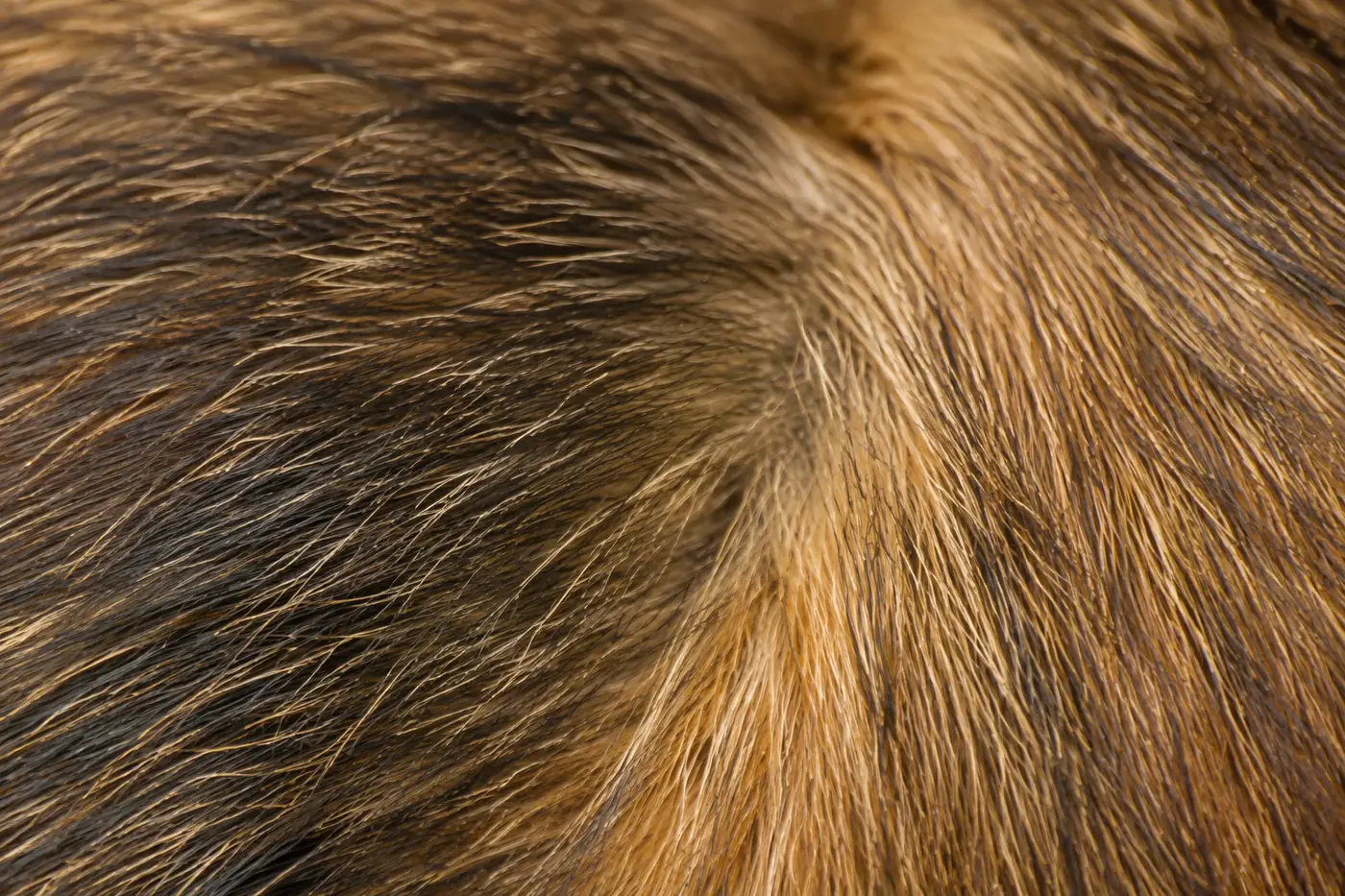
Ruddy and red or cinnamon tones are widely recognized, with blue and fawn among other registry colours. Silver versions replace the warmer base near the skin with a pale ground, but standards vary, so colour claims should be checked against the registering organization.
The coat becomes longer around the neck, rear legs and tail, and it should remain soft rather than cottony. A dramatic tail can hide tangles close to the skin, particularly where the breeches rub or loose undercoat collects.
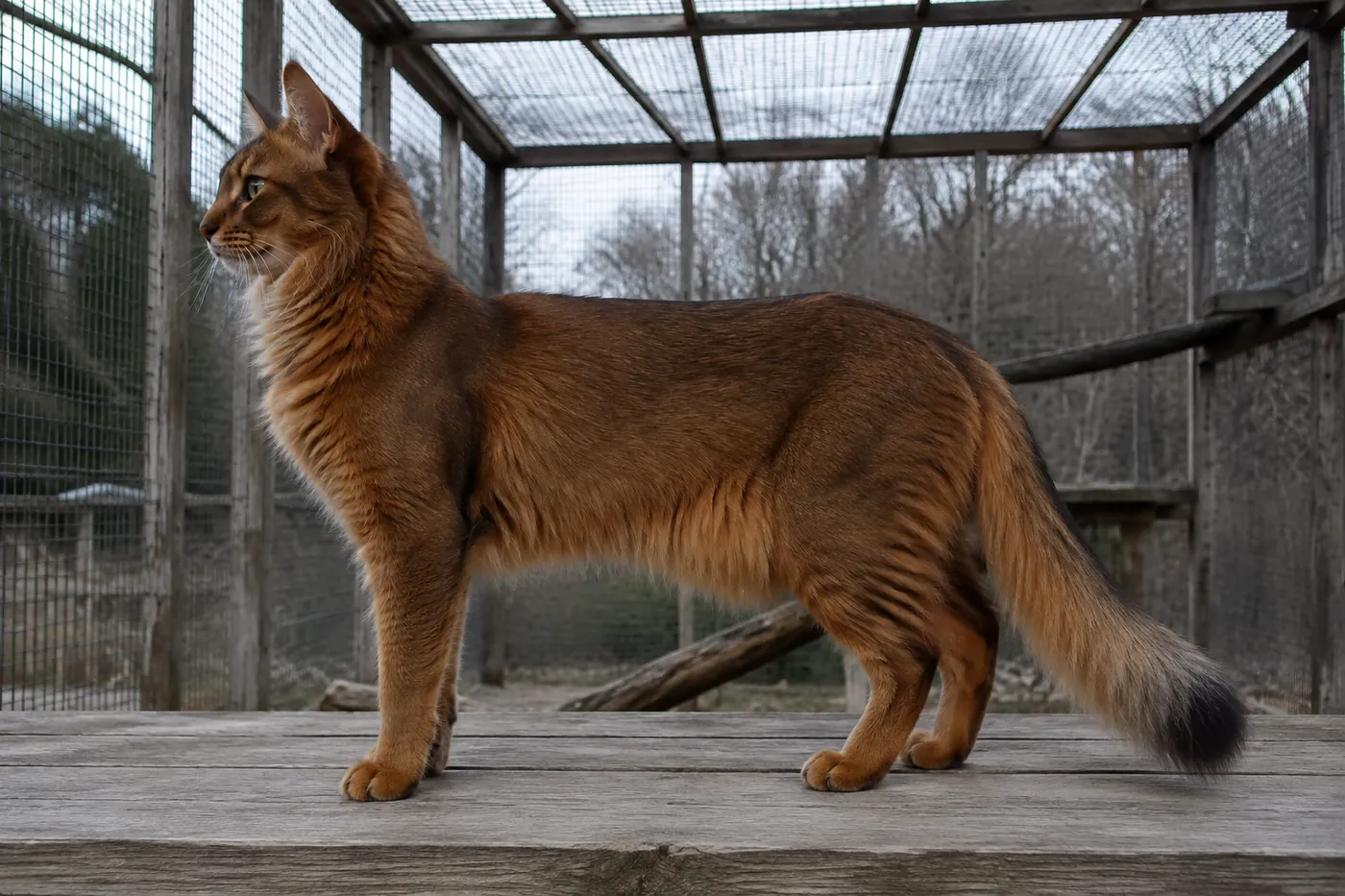
Colour develops with age and can change visually under different light, so saturated sales photographs are poor evidence of a kitten's eventual shade.
When colour affects the decision, the roots and hair bands seen in neutral light give the reliable view. A dark photograph can hide the warmer ground colour, while strong sharpening can make ordinary guard hairs look like unusually crisp ticking.
Coat texture matters more to daily care than colour intensity. A silky coat often separates easily with the fingers, whereas a cottony patch creates friction and needs closer monitoring even if both cats look equally full in a photograph.
What is it like to share a home with a Somali?
Somalis are typically interactive, observant and quick to investigate movement. Many want to be in the same room as their people, though they may prefer moving between perches and activities to remaining held.
They can be affectionate without being passive. A person seeking a quiet lap cat may find the continual supervision and object exploration tiring, while somebody who enjoys games and training may find the same behavior engaging.
| Household pattern | Likely experience | Helpful response |
|---|---|---|
| People work from home | Cat may monitor desks and shelves | Provide an approved nearby perch and timed play |
| Busy family | Plenty of interaction but more handling risk | Teach children to invite contact on the floor |
| Long empty weekdays | Boredom and attention pressure may build | Add predictable sessions and suitable company |
| Multi-cat home | Social opportunity with possible resource conflict | Duplicate food, litter and high resting sites |
| Orderly display shelves | Frequent route conflict | Create legal climbing paths and secure breakables |
Many Somalis coexist with respectful children or compatible pets after gradual introductions. A second energetic cat can be a good partner, but similar energy does not ensure compatible boundaries.
Resource placement decides whether shared activity remains friendly. Food, water, litter and rest sites work best far enough apart that one cat cannot supervise all of them from a doorway or narrow route.
Somalis often notice small changes in household routine. Predictable meals and play provide anchors, while rotating the object, scent or route inside those routines adds novelty without making the whole day uncertain.
How the individual recovers from novelty is the thing to watch, because curiosity with an available retreat is healthier than forced boldness.
How much exercise prevents boredom?
This breed benefits from vertical movement, chase sequences, retrieval games and problems that change. Floor toys left in the same positions soon become furniture, especially for a cat that learns how objects work.
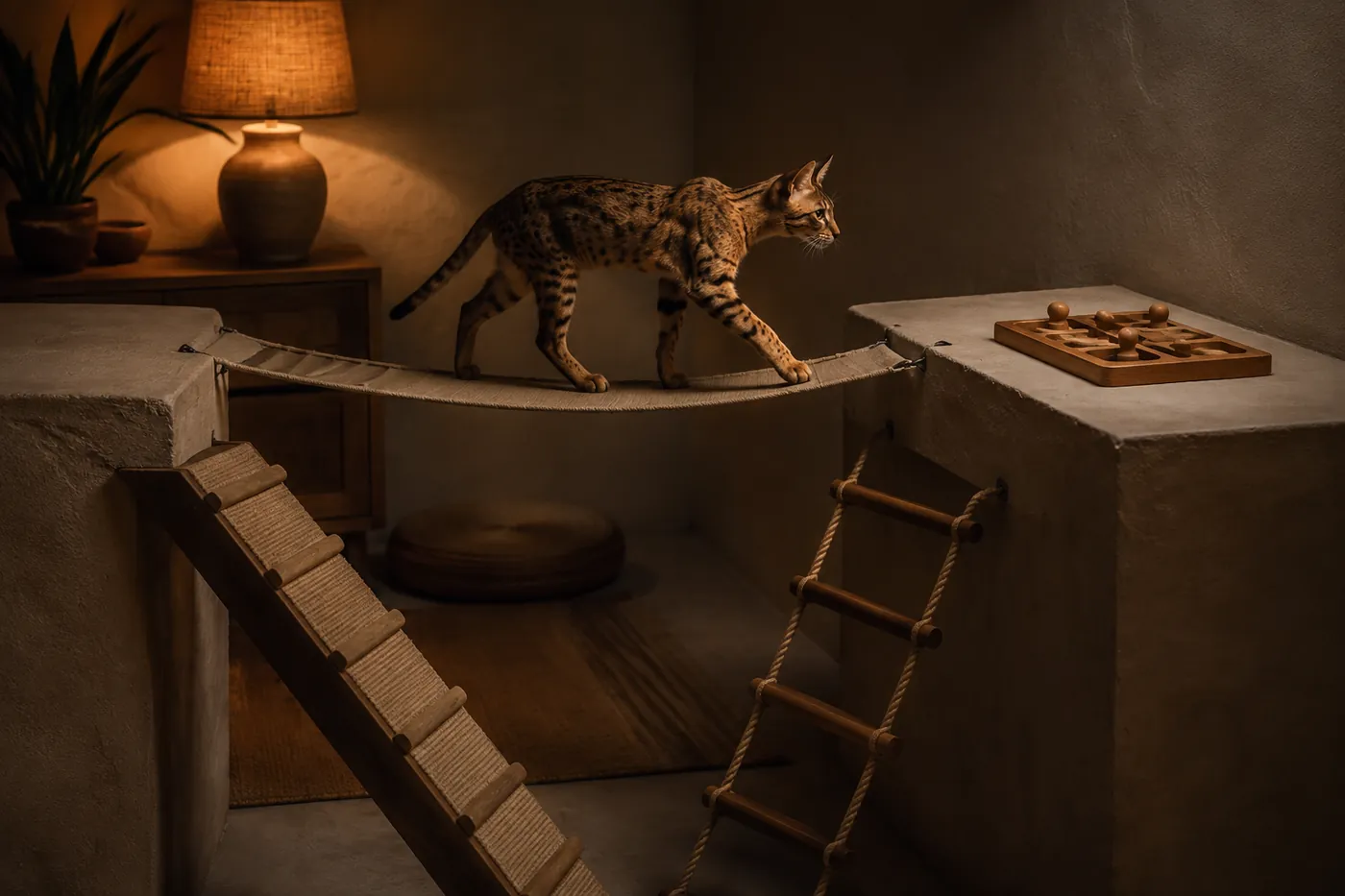
Several short activity windows suit the day better than one long bout. A morning chase, a midday food puzzle and an evening training session can create more useful variety than trying to exhaust the cat in one long bout.
- Anchor tall furniture and test it for sideways movement
- Provide broad landings and more than one route down
- Rotate toys by movement type rather than buying endless duplicates
- Use part of the measured meal in search tasks
- Teach recall, carrier entry and a grooming station
- End chase play with something the cat can catch
Clicker training can channel quick learning into household skills. Keep criteria small and rewards tiny, since a clever cat may work enthusiastically enough for training calories to accumulate.
Changes in jumping, play or grooming can signal pain. A quieter Somali has not necessarily just matured when the change is sudden or paired with hiding, appetite loss or altered litter use.
Exercise needs also change with age and body condition. A kitten may repeat brief bursts all day, an adult may prefer longer problem-solving sessions, and a senior can stay engaged through lower routes and slower ground-level searches.
Varied use of body and mind matters more than visible exhaustion. Panting, repeated hard landings or reluctance to continue means the session has passed useful intensity or needs veterinary context.
Can a Somali be trained without turning life into commands?
Training is most valuable when it gives the cat choices and reduces force, and the most useful skills are a station on a mat, a target touch, voluntary entry into a carrier and a brief chin rest for handling.
Begin in a low-distraction room and reward one clear action. Add duration or environmental difficulty only after the cat repeats the easy version comfortably.
- Choose one behavior and one consistent cue
- Mark the smallest successful movement
- Deliver a tiny reward away from your hands
- Repeat only while the cat remains engaged
- End with an easy success
- Use the skill later in grooming or travel
Stable low obstacles develop coordination, and secure wall furniture can supply height without encouraging leaps across gaps, so agility at unsafe heights adds risk without adding skill.
Carrier training works best with a rigid, accessible carrier, where a removable top or wide opening can reduce handling pressure during veterinary visits.
How much grooming does the semi-long coat need?
TICA describes the Somali coat as relatively easy to maintain because its silky texture often resists tangling. That does not remove the need to feel through the ruff, armpits, belly, breeches and tail base.
Comb gently once or twice a week when the coat is stable, then adjust during seasonal shedding. Work from the ends inward and support the skin rather than pulling a knot through the full hair length.
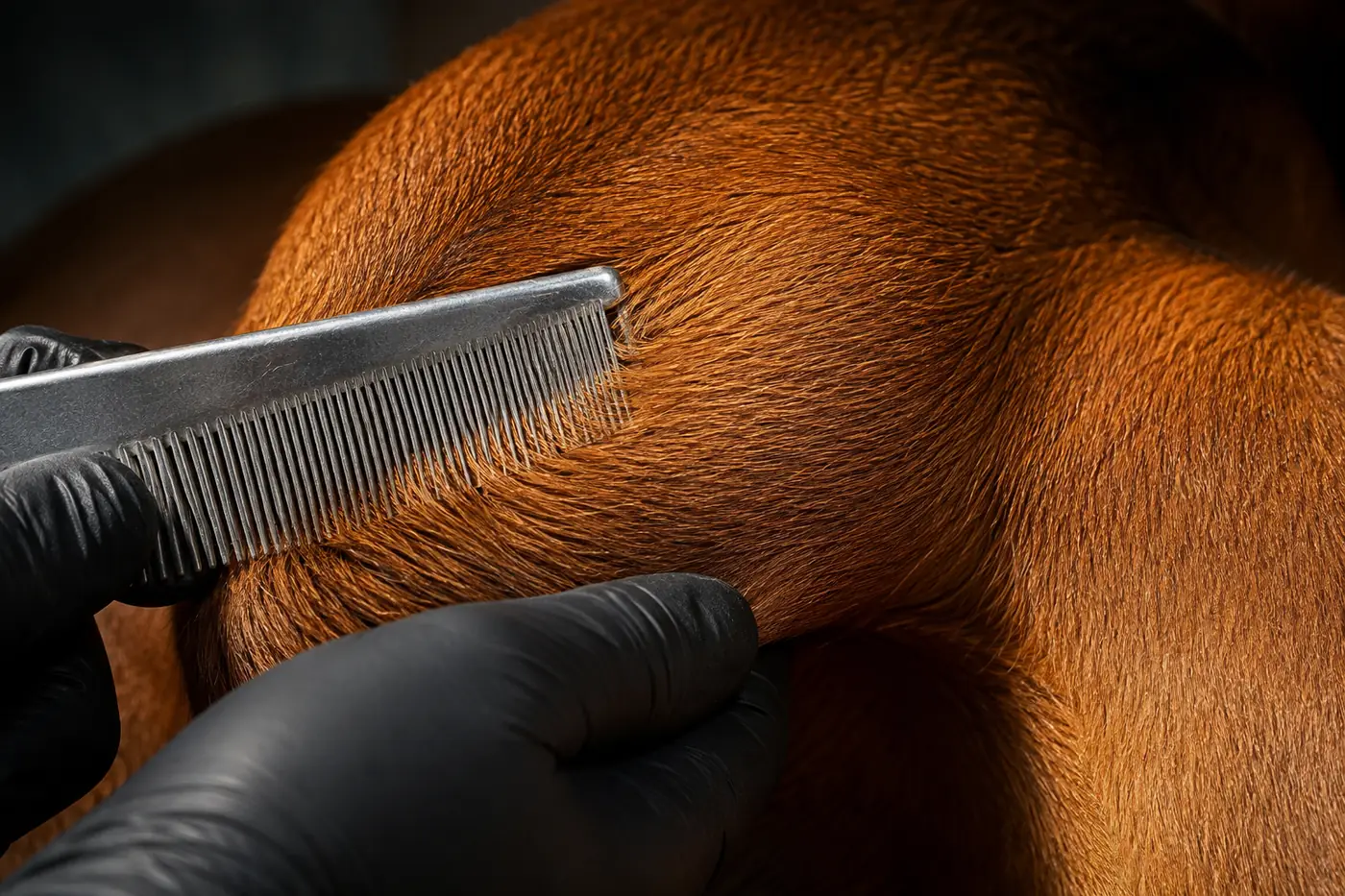
Working in sections, as in brushing a long coat, keeps the comb at skin level. Tight mats close to thin skin need a veterinarian or experienced cat groomer, because scissors used blind can cut the skin.
Bathing is an occasional response to contamination, not a routine route to more shine. Nutrition claims and frequent washing cannot manufacture correct ticking, and overhandling can turn a manageable coat into a source of conflict.
Hairballs are possible when more loose hair is swallowed, but repeated vomiting, reduced appetite or constipation should not be normalized. Grooming can reduce loose hair; it cannot diagnose gastrointestinal disease.
A shiny surface can still hide small knots, which develop where the front legs meet the chest and where the rear furnishings move against each other, locations the tail can conceal from a quick visual check.
Static, dry indoor air can change handling without changing the cat's genetics. A suitable home environment and gentle tool reduce breakage, while sprays, oils or human conditioners add residue that a self-grooming cat will swallow.
Why should dental care start early?
TICA notes that some Somali lines are prone to early periodontal problems. Plaque and gingivitis can develop before an owner notices chewing difficulty, because cats often keep eating despite oral pain.
Ask your veterinarian to examine the mouth and show you what healthy gums look like. Introduce a pet-safe toothpaste in tiny stages, beginning with touching the cheek or lifting the lip before expecting a toothbrush session.
Bad breath, red gums, drooling, dropping food or chewing on one side needs veterinary attention. Dental treats or dry food do not replace examination and treatment when disease is present.
Routine nail checks are also useful for an active climber. Trim only the clear tip, keep sessions short and ask for a demonstration if coat furnishings obscure the paw.
Which genetic tests and health records matter?
Progressive retinal atrophy and pyruvate kinase deficiency are established genetic screening questions in Abyssinian and Somali lines. UC Davis offers variant-specific tests for both conditions.
The rdAc form of PRA is associated with a CEP290 variant and causes progressive retinal degeneration. Another early-onset PRA form is linked to a CRX variant, which is why a report should state the exact test instead of saying only that eyes are clear.
PK deficiency affects red blood cells and can cause intermittent anemia, weakness and pale gums. It is recessive, so a healthy carrier can be used responsibly only with genetic information that prevents an affected mating.
| Question | Evidence to request | What it cannot prove |
|---|---|---|
| PRA status | Named CEP290 and relevant CRX results | Freedom from every eye disease |
| PK deficiency | Named PKLR result for both parents | Lifelong freedom from all anemia |
| Patellar health | Veterinary examination and family history | That every future joint stays normal |
| Kidney concerns | Family history and appropriate veterinary records | A generic panel as a kidney guarantee |
| Overall health | Individual examination and ongoing care | A pedigree alone |
TICA also lists patellar luxation and amyloidosis-associated kidney disease among concerns reported in some lines. Those questions need family history and veterinary evaluation, since a narrow coat or colour panel does not answer them.
Routine veterinary care still matters for vaccination, parasite control, weight, teeth and age-related disease. Genetic screening reduces defined breeding risks; it never creates a health guarantee.
The name of the variant is important because different tests answer different questions. A report that says only PRA clear may not state whether CEP290, CRX or another laboratory panel was examined, and it cannot rule out every cause of vision loss.
Family information fills a different gap. Ask about unexplained anemia, early vision change, kneecap problems, kidney disease and ages at death across older relatives, then keep those answers separate from what a DNA certificate proves.
How should you feed an athletic Somali?
A complete diet appropriate to life stage, measured as a full daily amount, is the baseline. Some Somalis burn substantial energy, while others overeat when food remains continuously available, so appetite alone does not set the portion.
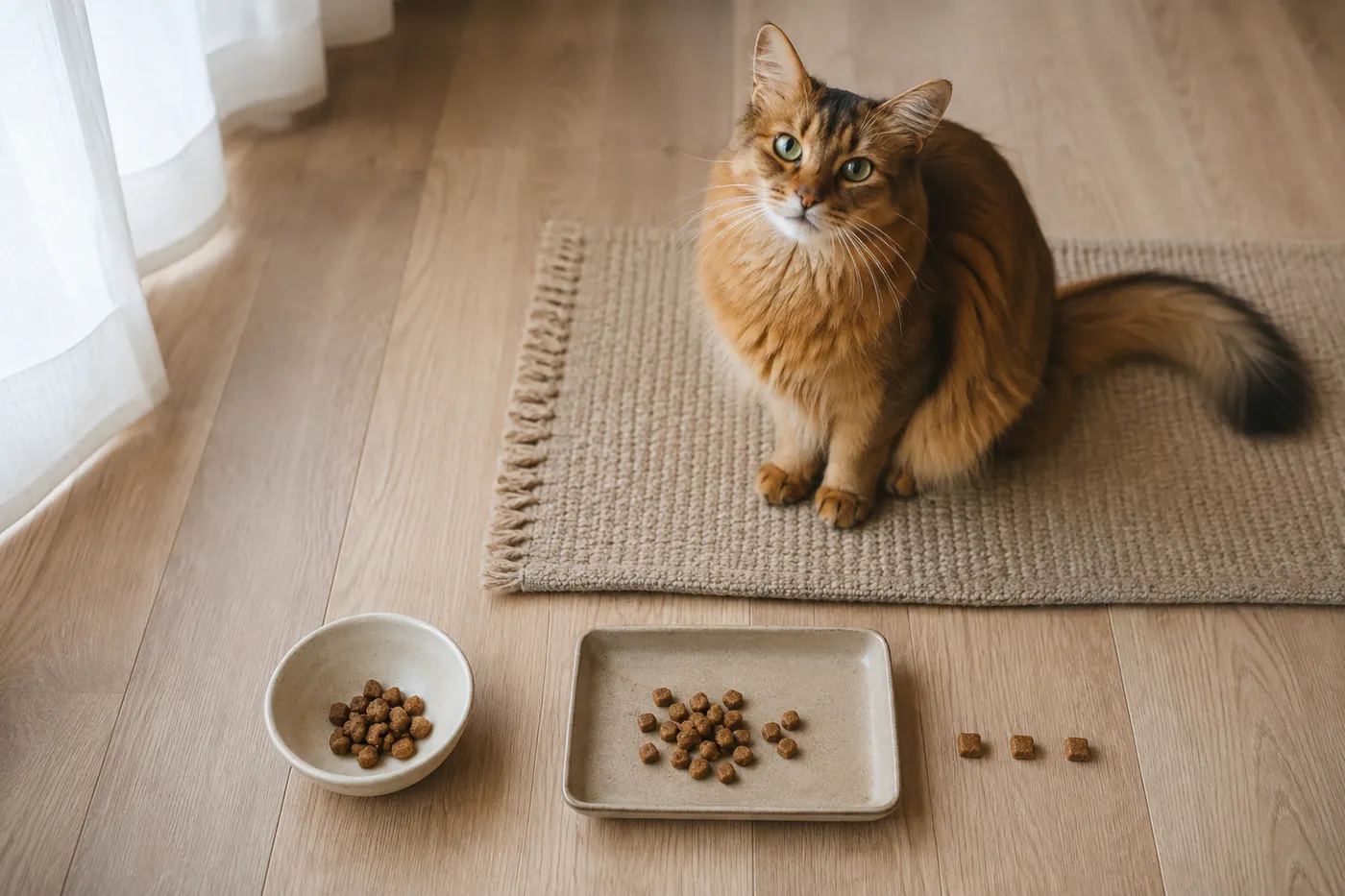
Calorie density changes how large a measured portion looks, so the visible amount is a poor guide. A regular weight trend combined with rib feel, waist and muscle assessment is a better one.
A full tail and flank coat can hide gradual weight change. Hands-on condition matters more than silhouette, particularly when activity declines with age.
Water placed away from busy feeding competition, with more than one station in multi-cat homes, keeps drinking easy. Persistent thirst, larger urine clumps, appetite change or weight loss should be evaluated rather than attributed to a naturally active metabolism.
Food puzzles should remain part of the measured ration and should not be difficult enough to prevent access. Begin with exposed pieces, then increase the search or movement only after the cat solves the easier version without frustration.
Portions need rechecking when activity changes, because no permanent breed amount fits every stage. The same Somali may need a different intake after neutering, during illness or when senior movement slows, even though the full coat makes its outline look unchanged.
What should you verify before choosing a Somali?
Watching the cat climb, land, play and settle shows the useful temperament evidence, which is confident engagement with the ability to recover and rest rather than nonstop motion.
Ask how kittens are raised, what handling they know and how the breeder manages the needs of adults after their show or breeding careers. Review registration, veterinary history and the actual health reports for both parents.
- Confirm traceable pedigree and registered identities
- Read named PRA and PK deficiency results
- Ask about dental disease, patellas and kidney disease in relatives
- Observe movement, social recovery and coat handling
- Measure safe climbing and carrier space at home
- Review congenital-health and return terms before payment
A source that sells colour intensity or a giant tail as proof of quality is selling the wrong thing, because the durable decision rests on temperament, sound movement, transparent health management and a routine you can sustain.
Ask what happens when a kitten does not suit the home and how retired adults are placed. A responsible answer protects the cat across its life instead of treating the sale as the end of the breeder's involvement.
An adult Somali may be easier to match than a kitten when your tolerance for activity or coat care is specific. You can observe the mature tail, handling response, dental status and ability to settle, while still asking for the same identity and health records.
Budget for prevention as part of breed fit. Regular dental assessment, grooming tools, secure climbing furniture and possible genetic or specialist records are predictable responsibilities even when the individual never develops a breed-associated condition.
Cooperative care can reduce the friction around those responsibilities. Pair a mat, chin rest or brief paw presentation with small rewards before the cat needs a long examination, and keep the session short enough that leaving remains an available choice.
A Somali is likely to thrive when activity, company and preventive care are part of ordinary life. If the home wants a visually striking cat but cannot provide daily interaction, the coat will not compensate for the cat's unmet needs.
Checked Against
- The International Cat Association: Somali tica.org
- The Cat Fanciers' Association: Somali cfa.org
- UC Davis Veterinary Genetics Laboratory: PRA rdAc vgl.ucdavis.edu
- UC Davis Veterinary Genetics Laboratory: PRA Rdy vgl.ucdavis.edu
- UC Davis Veterinary Genetics Laboratory: pyruvate kinase deficiency vgl.ucdavis.edu
Published 7 September 2026. Last updated .





