
What Is the York Chocolate, and Can You Still Find One?
The York Chocolate is a semi-long-haired chocolate or lavender cat developed in New York State from a farm kitten born in 1983. The World Cat Federation still lists it, while CFA and FIFe do not, and a 2016 breed history could find no trace of the last known breeder, so a kitten offered today is hard to verify.
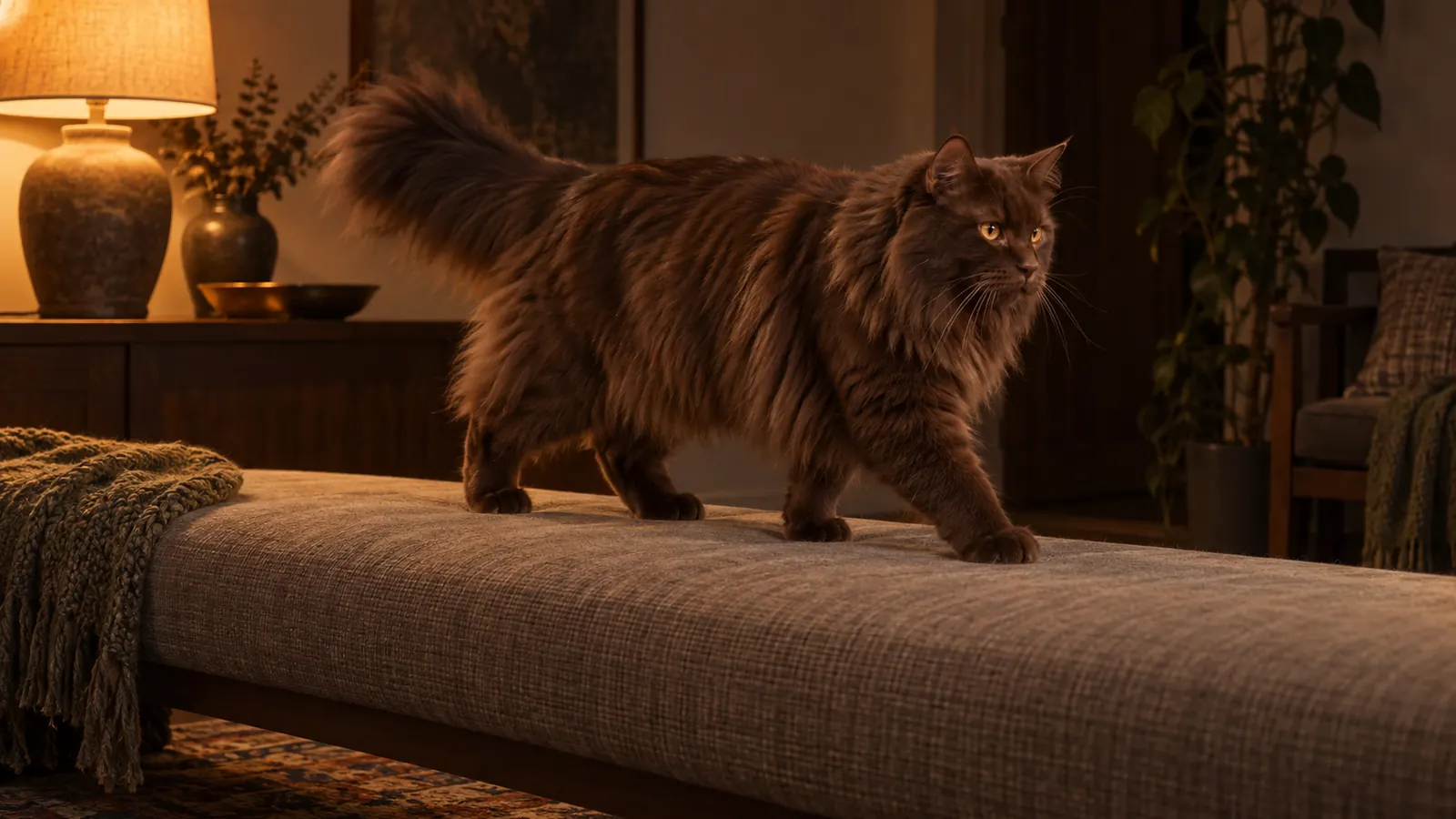
- Origin
- United States, New York State; developed by Janet Chiefari from a kitten named Brownie, born on her Grafton farm in 1983
- Coat
- Semi-long, silky and glossy, in solid chocolate, solid lavender, or either colour with white; standards disagree on the undercoat
- Size
- Medium to large, long-bodied, with substantial bone and firm muscle
- Typical weight
- The breed federation gave 6 to 10 pounds for females and 10 to 15 pounds for males, about 2.7 to 4.5 kg and 4.5 to 6.8 kg
- Life expectancy
- Unknown; no population study reports a York Chocolate figure
- Activity level
- Described by its breed federation as energetic and playful but mellow and easy-going
- Grooming
- Described by its breed federation as low, with minimal shedding; standards disagree on the undercoat, so an individual cat may need more combing
- Suits
- Owners prepared to verify registration papers, since no active breeder could be confirmed; no source addresses children or other pets
The York Chocolate is a semi-long-haired chocolate or lavender cat that began on a New York farm in 1983. It is rare enough that a kitten offered today needs checking before anything else. Saying the breed has vanished outright goes further than the records allow, though, because the World Cat Federation (WCF) still lists it.
What is the York Chocolate?
The breed started with farm cats belonging to Janet Chiefari in Grafton, New York. Her black and white longhair, Blacky, mated with a neighbour's black cat and produced a brown and white kitten, Upon the Rock Brownie, on 3 July 1983. Chiefari bred on from Brownie and her chocolate offspring, and in 1989 a Cat Fanciers' Federation judge encouraged her to show them.
The York Chocolate is a medium to large cat with a long body, substantial bone and firm muscle. Its breed federation gave adult weights of 6 to 10 pounds for females and 10 to 15 pounds for males. The coat is semi-long, fine and glossy, in four colours: solid chocolate, solid lavender, and each of those with white. The archived standards disagree about the undercoat, some calling for a well-developed one that is not woolly and others describing none at all.
Which registries list it?
- WCF
- Listed today among its semi-longhair breeds, code YOR, after recognition in August 2002
- CFF
- Accepted for championship in March 1991
- ACFA
- Registered as a New Breed or Colour, short of full recognition
- CFA
- Not on its list of recognised breeds
- FIFe
- Not on its list of recognised breeds
WCF is the one major registry that lists the breed today. It recognised the cat as the York in 2002, with a standard the York Chocolate breed federation rejected in favour of its own, so a WCF registration may describe a slightly different cat from the original American standard. A 2016 breed history records that TICA, CFA and FIFe had not recognised it.
The listing gives a York Chocolate somewhere to be registered. On its own it says nothing about how many cats or breeders remain.
Why is the breed so hard to find?
The gene pool was always small. One of the breed's websites appealed for suitable outcross cats, describing new blood as necessary to avoid inbreeding, and the American breed federation's own websites went inactive in 2004.
A breed history written by Sarah Hartwell in 2016 records that only one breeder remained in 2015, and that by 2016 the author could find no trace of that cattery. That is the latest dated account this profile found. It shows how close the breed came to having no breeders, but it does not prove that none exist anywhere, and no current source named an active breeder.
A seller offering a York Chocolate should therefore be able to show registration papers for both parents, from WCF or another registry that records the breed. Without them, the name cannot be checked.
What is a York Chocolate like to live with?
The only temperament descriptions come from the breed's own federation and its archived standards, so they describe what breeders aimed for rather than a measured average. They call the York Chocolate intelligent, energetic and playful, yet mellow and easy-going, friendly and even-tempered, content to be a lap cat and inclined to follow its owner around. The same accounts describe good hunters with a fascination for water, and some shyness, presumably with strangers.
No source measures how readily the breed takes to training, how it does with children or with other pets, or how long it lives. Those questions are unknown for this breed rather than known to be good or bad, so the individual cat and its history count for more than the label.
The breed federation described a coat needing little or no grooming, with minimal shedding. Because the standards disagree about the undercoat, a cat with more undercoat than that description will need more combing, and the routine in brushing a long-haired cat suits a semi-long coat of either kind.
No health study names the York Chocolate. The small gene pool described above is the one documented concern, so health records for the parents carry more weight here than they would for a common breed.
The York Chocolate suits someone who wants a calm, playful semi-longhair and is prepared to verify papers and live with those unknowns. It is a poor fit for anyone who needs a confirmed breeder or measured health data before committing.
What if you have a long-haired chocolate cat?
A long-haired cat with a chocolate coat found at a shelter, rescue or through casual breeding is almost certainly not a York Chocolate in any meaningful pedigree sense.
The chocolate colour is recessive to black and appears in many breed backgrounds and in the general domestic cat population. A long coat is also recessive and widespread.
Without pedigree documentation tracing back to Chiefari's programme or to a registered line, a chocolate longhair is best described by its observable characteristics rather than attributed to a rare breed name.
If the cat is healthy, well-tempered and suits your household, those facts matter more than a breed label that cannot be verified.
Common Questions
Can you still buy a York Chocolate cat?
Possibly, but it is hard to verify. WCF still lists the breed, yet no active breeder could be confirmed for this profile, and a 2016 breed history found no trace of the last known American breeder. Ask for both parents' registration papers before anything else.
Is my chocolate cat a York Chocolate?
Very unlikely without papers. The chocolate colour and long coat both appear in the general domestic cat population. Without pedigree documentation from the original programme or a registered line, a chocolate longhair is best described by its appearance rather than attributed to a rare breed.
Why is the York Chocolate so rare?
Its gene pool was always small, the American breed federation's websites went inactive in 2004, and a 2016 breed history recorded that only one breeder remained in 2015. CFA and FIFe do not list it.
Is the York Chocolate recognised by any registry?
Yes. WCF lists it today, after recognising it in 2002, and the Cat Fanciers' Federation accepted it for championship in 1991. CFA and FIFe do not list it.
Checked Against
- CFA: Recognised breeds, final page (York Chocolate not listed) cfa.org
- WCF: Semi-longhair breeds wcf.de
- FIFe: Current breeds fifeweb.org
- International York Chocolate Federation: York Chocolate breed FAQs (2002), hosted by the Traditional Cat Association breeds.tcainc.org
- Messybeast: The York Chocolate (Sarah Hartwell, 2016) messybeast.com
Published 17 September 2026. Last updated .





