What Is a Havana Brown, and What Does Its Pedigree Tell You?
The Havana Brown is a small registered breed with an outcrossing programme intended to broaden its ancestry. Its pedigree and registration record where a kitten sits in that programme, and they belong beside health records and temperament, since brown colour alone cannot identify the breed.
- Origin
- Post-war English crosses of Siamese with black domestic shorthairs, developed as a breed in America
- Coat
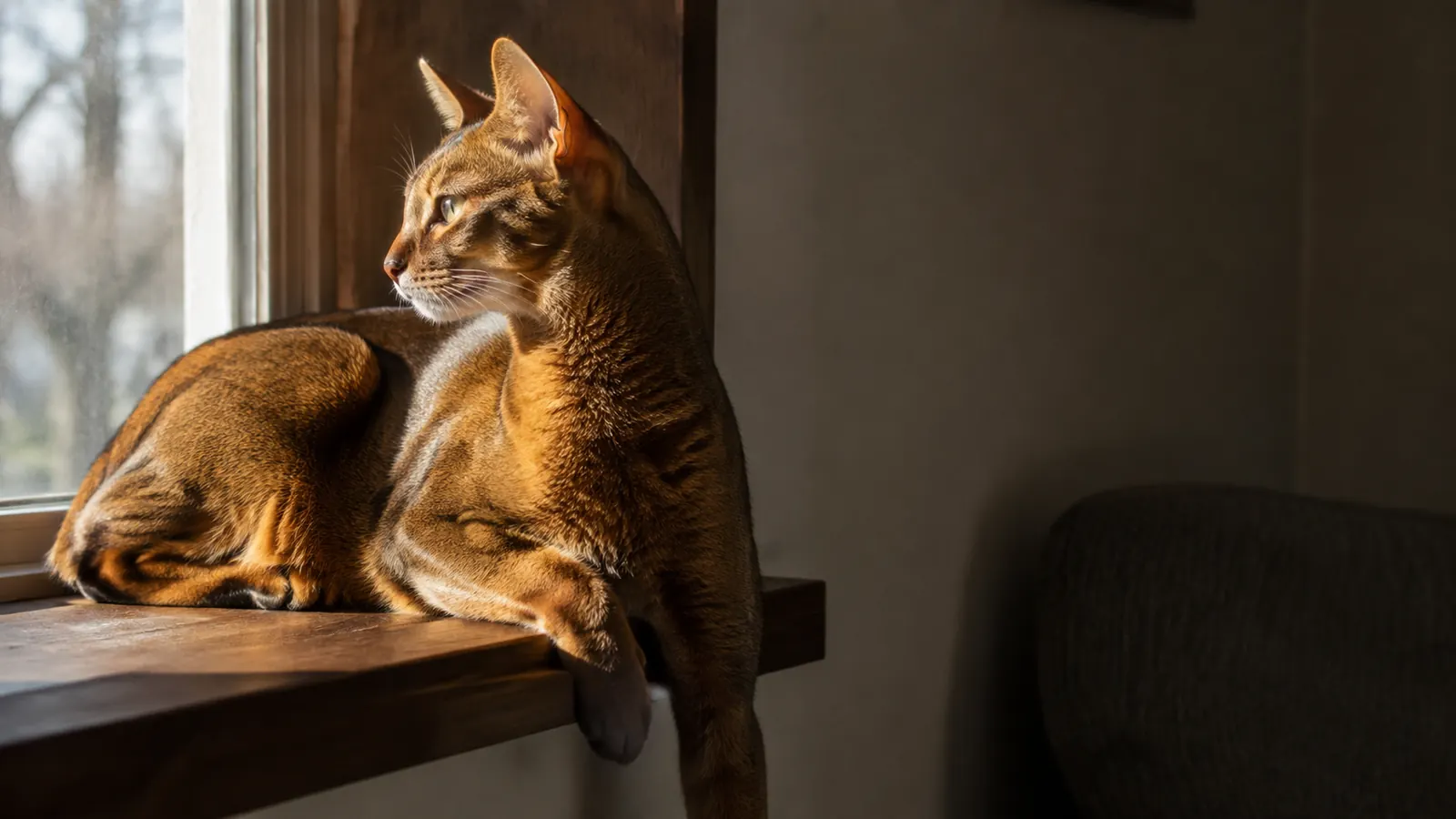
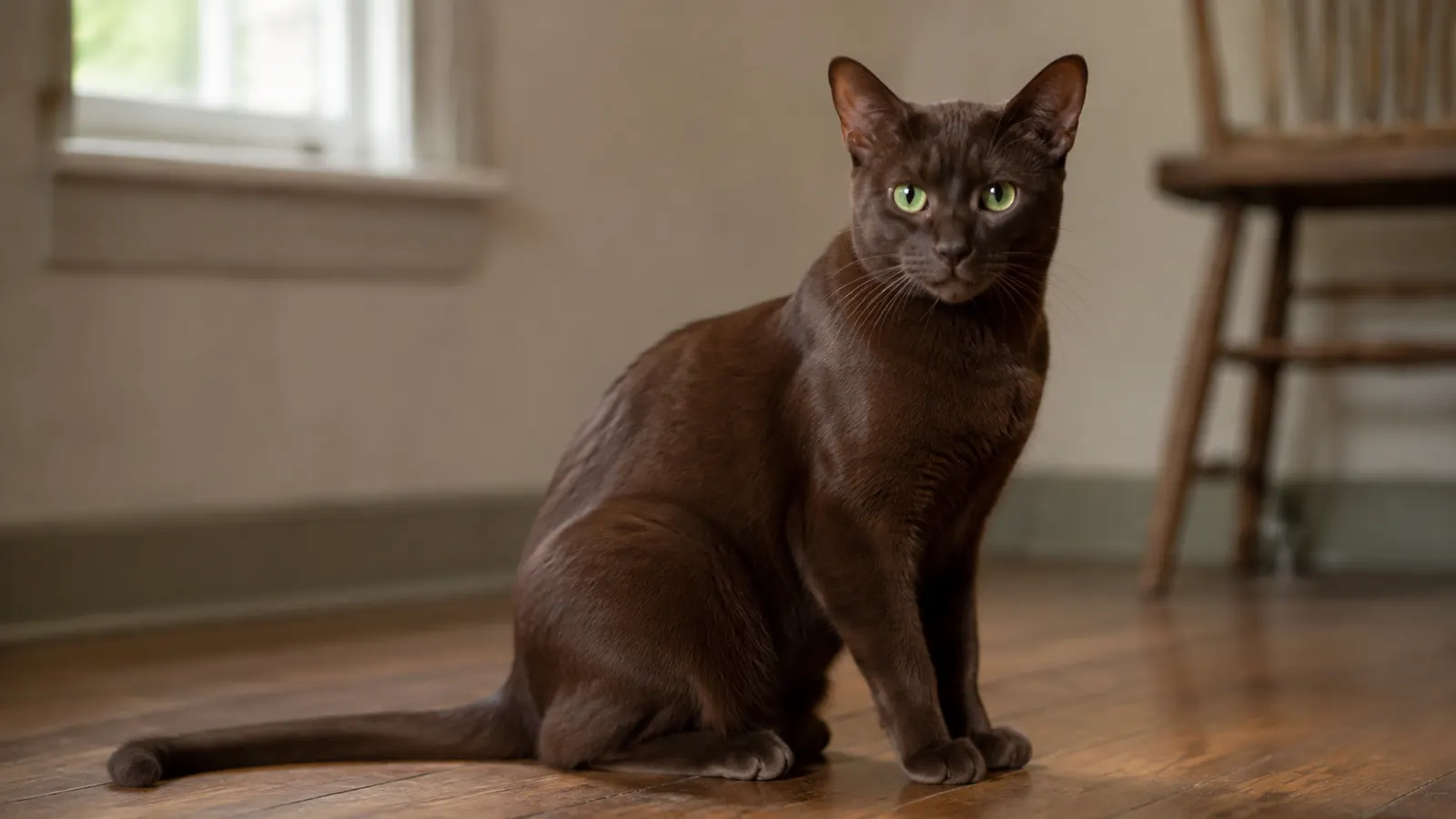
- Short to medium, smooth and lustrous, with no undercoat, in one even shade of brown
- Size
- Medium, standing relatively high on the legs, with hind legs slightly longer than the front
- Typical weight
- The standard gives none, and asks for balance and proportion rather than size
- Life expectancy
- Never measured. Too rare to appear in the veterinary populations that produce life tables
- Activity level
- Moderately active by the registry's own wording, and a climber rather than a sprinter
- Grooming
- A comb once a week. No undercoat means very little to mat
- Suits
- Households wanting company in the room, and buyers willing to read a five generation pedigree
There are few enough Havana Browns that a buyer is often offered the only kitten available. That is what makes the paperwork worth slowing down over, because the cat in front of you comes with nothing to compare it against.
Is a Havana Brown the right cat for you?
Yes, if you want a sociable cat and are willing to read a pedigree properly.
This is a very small breed, and its registry has spent the last few years deliberately making it bigger, which the registry's own dates trace.
- 1959CFA accepts the Havana Brown for registration
- 1 July 1964Championship status, and the breed is established
- 1 January 1974The previous allowable outcrosses are dropped, closing the gene pool
- 2008A published study measures what a closed population has cost in diversity
- February 2019CFA puts a regulated outcrossing programme in place to widen it again
An outcross pedigree records ancestry. It sits beside the cat's health and temperament evidence, and a generation label is no proof that a population or an individual has been repaired.
CFA calls the breed comparable to no other, on the strength of the muzzle, the coat colour, the eyes and the forward tilted ears. That part is not marketing: the standard is unusual and specific.
Havana means two different cats
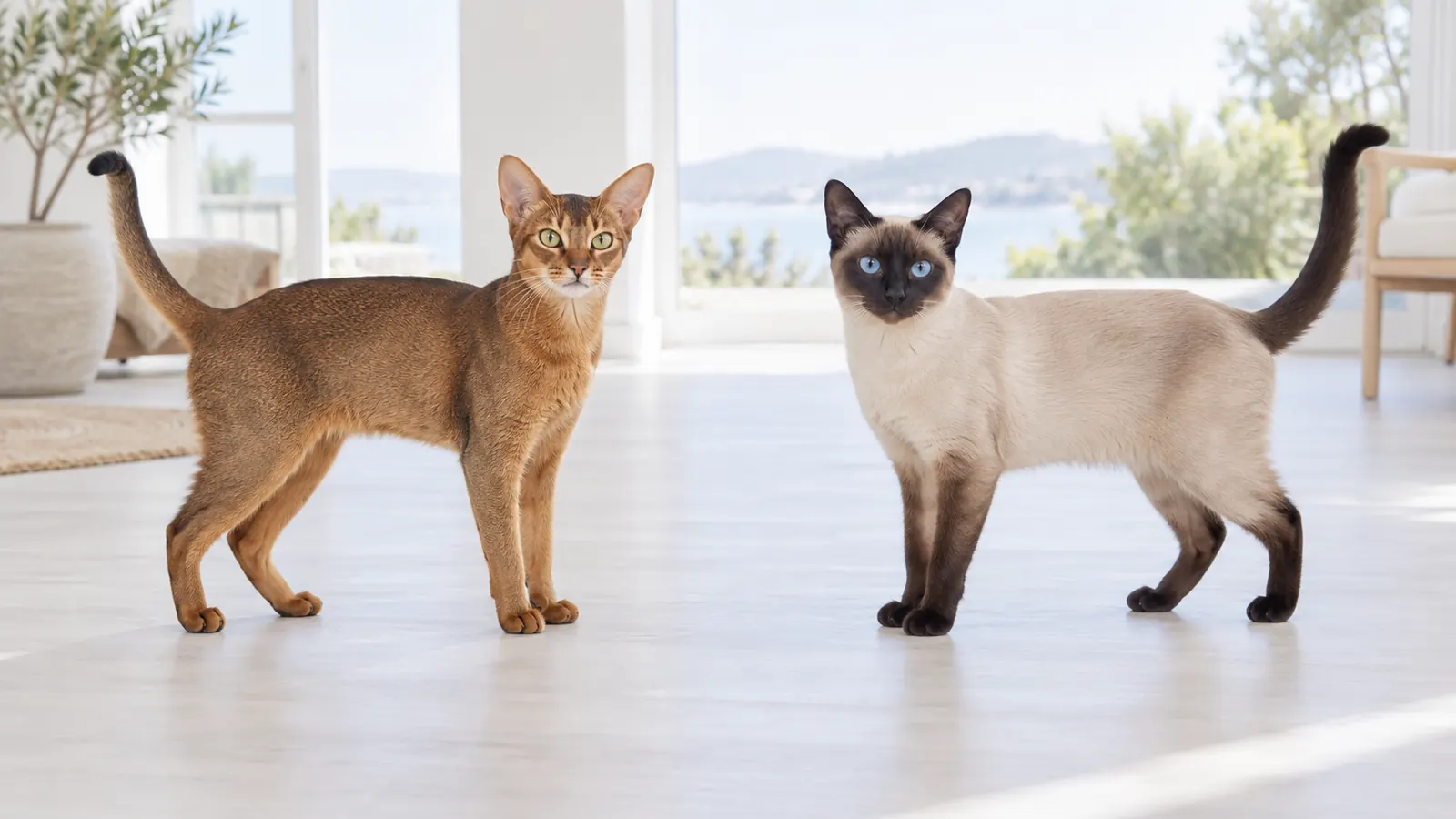
If you have read about a Havana in Britain and a Havana Brown in America and assumed they were the same cat, they were, once.
After the war, English breeders crossed Siamese with black domestic shorthairs to make a self-brown cat. One line of that work went to America and became the Havana Brown. The other stayed in Britain and went somewhere else entirely.
| The Havana Brown | The British Havana | |
|---|---|---|
| What the name covers | A separate breed with its own standard | Part of the Oriental group |
| The build asked for | Mid-range between the thick set and svelte breeds | The svelte Oriental type |
| Where the points go | 33 of 100 on the head | Judged to the Oriental standard |
The British side is documented in the GCCF Oriental breeding policy, which records Havanas showing in their own classes before the late 1960s. They were then outcrossed to Tabby Point Siamese and backcrossed, and today they sit inside the Oriental group.
The American side went the other way and fixed a head that the Oriental standard does not ask for. The Havana Brown standard wants conformation mid-range between the short-coupled thick set breeds and the svelte ones, which is a deliberate refusal of the Oriental wedge. Thirty-three of the hundred points go to the head. Nothing else in the standard comes close, and that allocation is what has kept the two cats apart.
Both lines began with the same 1950s cross and now follow two standards, so colour alone cannot tell them apart.
What the genetics actually measured
Rarity gets asserted about this breed constantly. It has also been measured, once, and the numbers are more useful than the adjective.
A microsatellite study of 22 breeds sampled 11 Havana Browns. It found observed heterozygosity of 0.41 against expected heterozygosity of 0.46, and an inbreeding coefficient of 0.13 within the sample. Average allelic richness came out at 2.28, which is a plain way of saying there were few versions of each gene left to find.
Near the bottom, then, but not the bottom. That matters because of the claim that follows this breed everywhere: that its diversity is as low as the Florida panther's. That comparison is repeated secondhand and no published paper about the Havana Brown makes it. The measured position, low in a range whose floor belongs to another breed, is the defensible version.
The study's own conclusion is worth more than any single figure. Pure breeding was associated with a loss of genetic diversity, and that loss did not correlate with how popular or how old a breed was.
The study covered eleven cats at one moment, eleven years before the outcross programme began.
How should you read an outcross pedigree?
CFA publishes a regulated outcrossing programme for the Havana Brown. Its registration document identifies the programme as effective February 2019 and records the earlier outcross closure in 1974.
For a buyer, the useful questions are which ancestry appears in this kitten's pedigree and how the registry records the kitten. An outcross designation is a registration category; it says nothing about pet quality and guarantees nothing about health. The breeder should be able to show the actual registration document and explain any outcross entries, and the registry's current rules settle any proposed breeding or registration outcome; a simplified two-generation recipe cannot cover every eligibility detail.
How to tell a Havana Brown from a chocolate Oriental
Colour cannot separate them, since both cats are chocolate, and with Oriental ancestry possible in a recorded outcross pedigree, the question has become a practical one rather than an academic one.
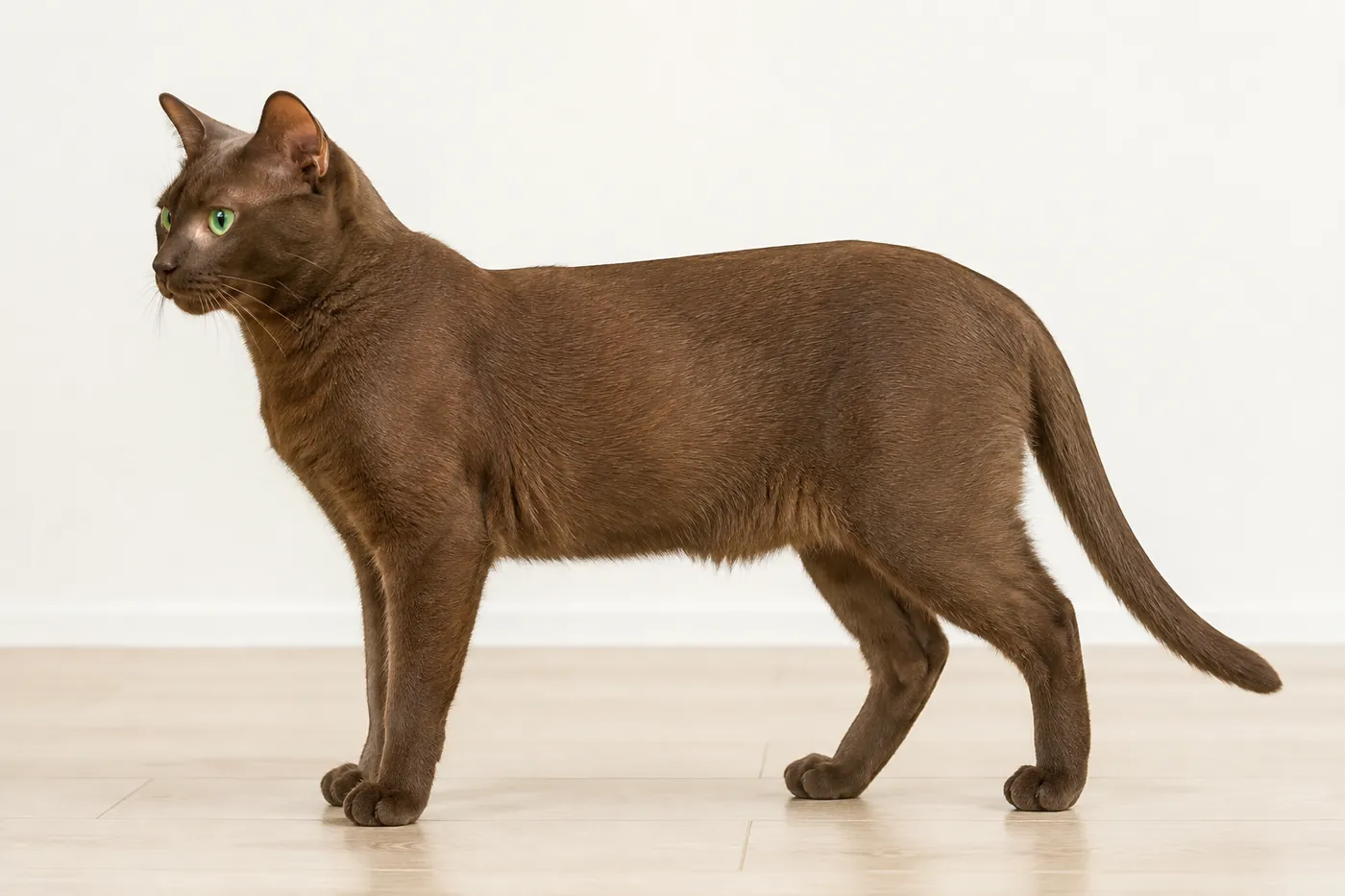
The head settles it. The Havana Brown skull is longer than it is wide, narrowing to a rounded muzzle with a pronounced break on both sides behind the whisker pads. The standard is emphatic that this is not optional: the narrow muzzle and the whisker break must be evident in a typical specimen.
- A pronounced break behind the whisker pads, which the standard says must be evident
- A distinct stop at the eyes in profile, where the Oriental has a straight wedge
- Large round-tipped ears, cupped at the base and tilted forward
- Brown whiskers, because an incorrect whisker colour is a disqualification
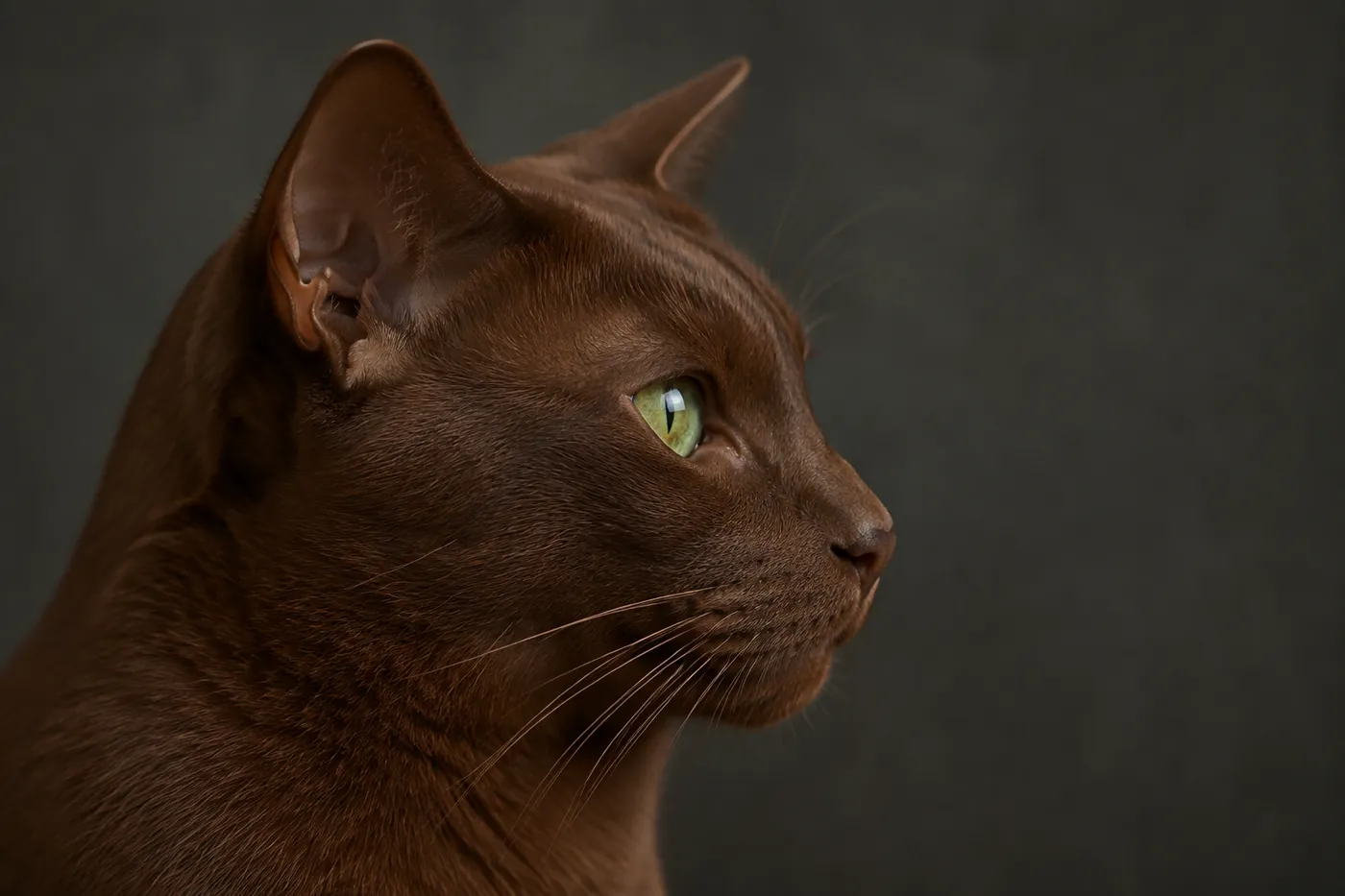
That last item is the one a buyer can use. Whiskers, nose leather and paw pads all disqualify a Havana Brown if the colour is wrong, and whiskers are the easiest of the three to see across a room.
Allowances exist. Adult males are permitted somewhat broader heads and stud jowls, so a heavy male is not a cat that has failed the standard.
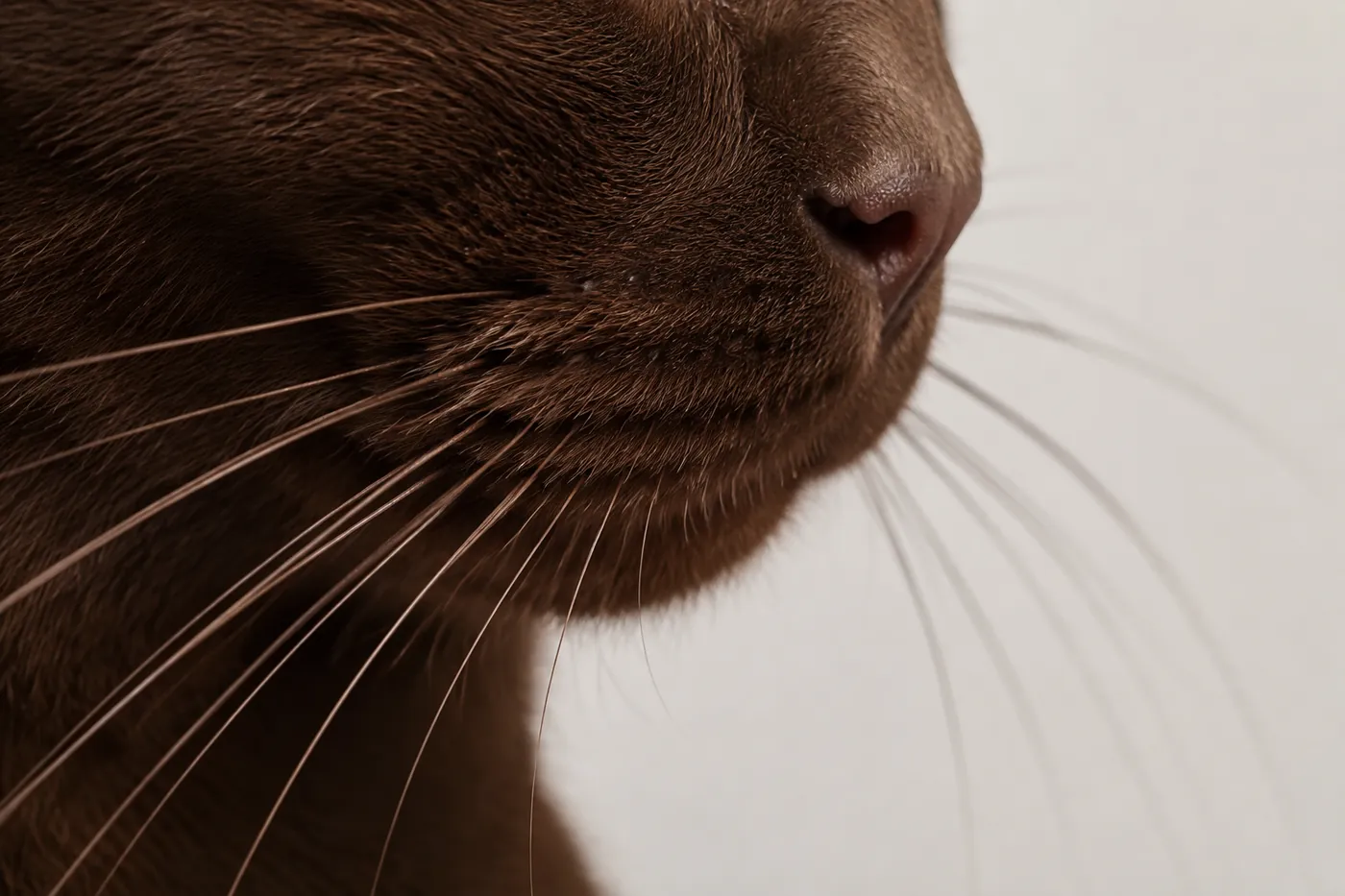
The break behind the whisker pads and the whisker colour identify a Havana Brown, because both breeds share the coat colour.
What a Havana Brown is like to live with
CFA gives three words: intelligent, affectionate and gregarious. The third one is doing the most work. Gregarious means the cat wants company rather than merely tolerating it, and this is a breed that will be in the room with you by default.
The Siamese ancestry does not carry through to activity or voice. CFA calls the Havana Brown moderately active, a narrower claim than the breed behind it would suggest, and its voice is far quieter.
- Sociability
- Intelligent, affectionate and gregarious, in CFA's own wording
- Activity
- Moderately active, not highly active
- Other pets
- Playful and compatible with other pets in the family
- Build
- Relatively high on the legs for a cat of medium proportions, with hind legs slightly longer than the front
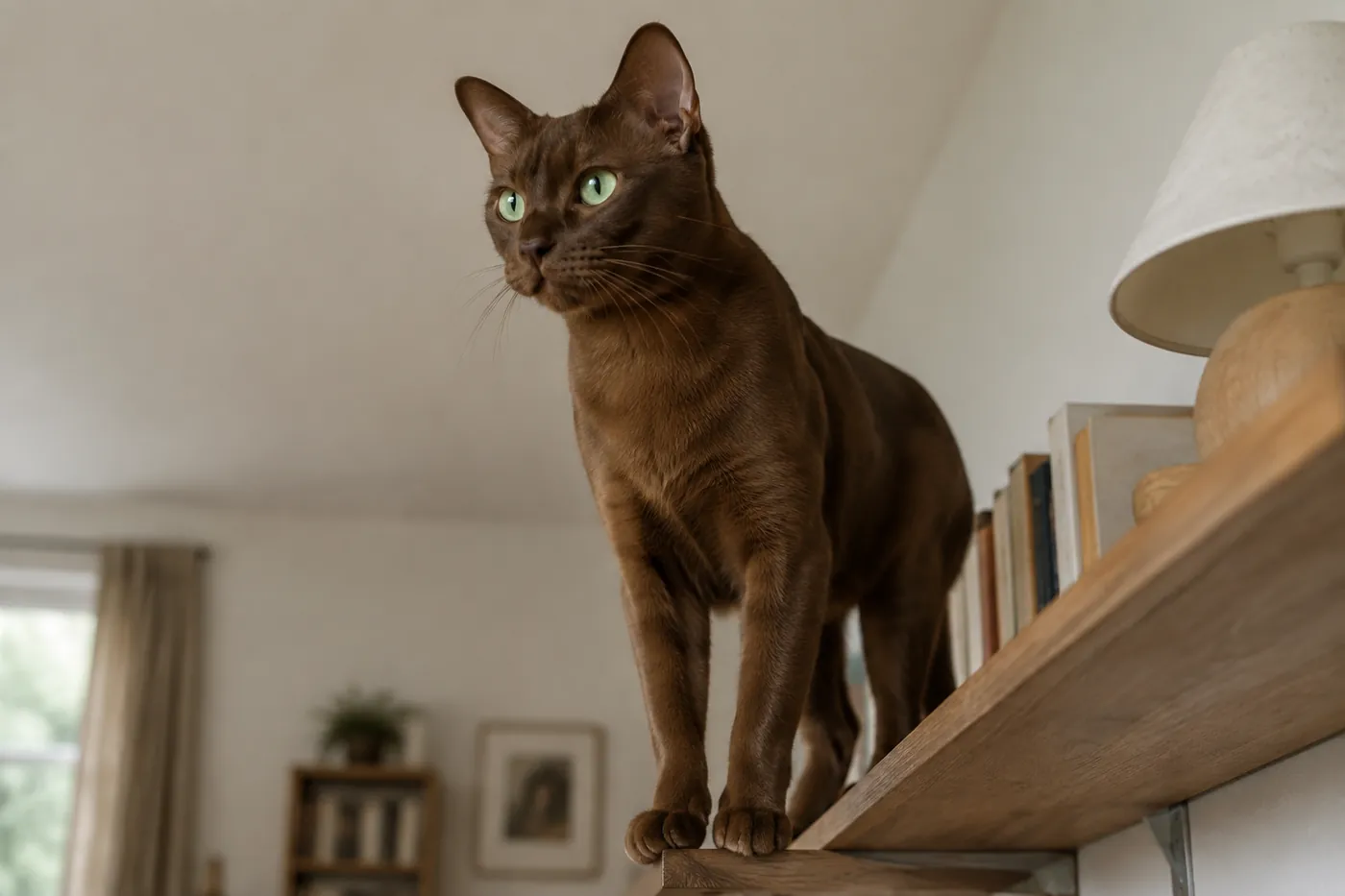
The legs are worth taking seriously when you plan a room. This is a cat built to be off the floor, and a household with nothing to climb will hear about it.
CFA's profile does not say how Havana Browns get on with children. It does say that some Brownies are shy and devote themselves mainly to one family member, while others are outgoing and want to be everybody's best friend, so how a particular cat copes with a busy house of children is something to judge by meeting it.
Grooming a Havana Brown
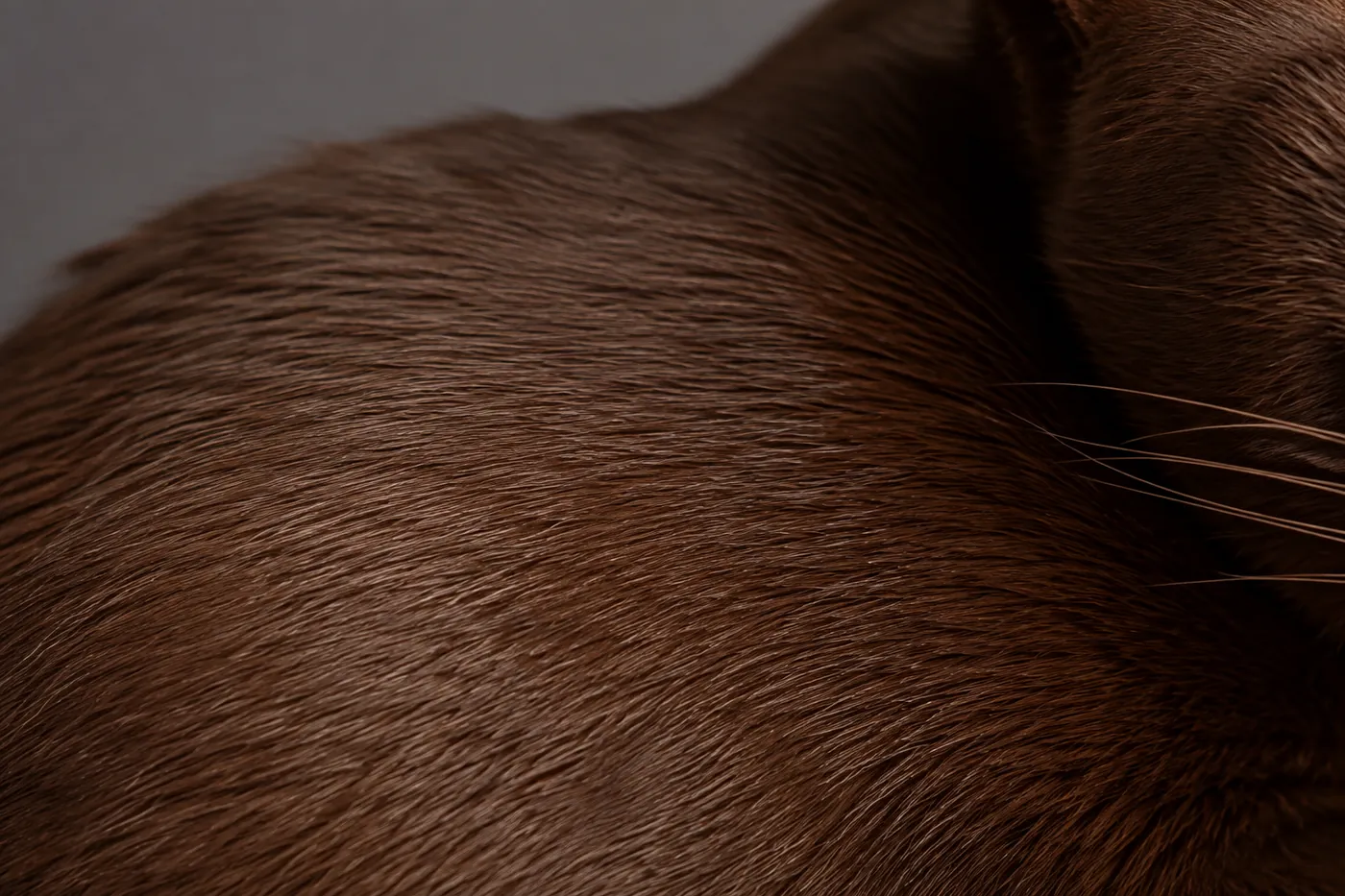
A quick comb once a week is the whole job. The coat is short to medium, smooth and lustrous, and the standard says it should not appear open or carry an undercoat. No undercoat means very little to mat and not much to collect on a comb. It does not mean no shedding, and it certainly does not mean hypoallergenic.
Coat colour carries 20 of the 100 points, which is why breeders care about sun-bleaching and pet owners do not need to.
What is actually known about Havana Brown health
Less than you would like, and the honest version is short. CFA names no health condition on its Havana Brown breed page and requires no screening test for registration. There is no breed health survey either. A breed this rare will not turn up in a veterinary practice population large enough to study, which is the same reason its lifespan has never been measured.
| What a buyer might expect | What exists for this breed |
|---|---|
| A named breed condition | None on the CFA breed page |
| A required DNA test | None as a condition of registration |
| A pedigree | Five generations, which is what you can actually read |
| A population figure | An inbreeding coefficient of 0.13 in the sampled cats |
The marker study described genetic variation in eleven sampled cats. Its inbreeding coefficient is not a health score for today's breed or the kitten in front of you, and it cannot replace a veterinary history.
It is also exactly what the outcross programme was written to reduce. CFA describes the programme as helping breeders increase the diversity of the gene pool, which is a health measure written as a registration rule.
The pedigree is worth reading alongside vaccination, examination and family disease records. Whether a named DNA test is useful depends on the ancestry and condition; an absence of mandatory registry tests does not mean no testing is available.
How long do Havana Browns live?
Nobody knows, and this time the reason is arithmetic rather than neglect.
The UK life tables report life expectancy for 12 breed groups. The Havana Brown is not among them, and a breed this rare cannot appear in a practice population large enough to produce a figure.
The study estimated 11.74 years at age zero across its cat population and 11.69 for Siamese, the nearest measured relative. Neither number is a minimum lifespan or a Havana Brown estimate, and anyone quoting a Havana Brown figure should be asked where it came from.
Long-term care plans have to allow for an unmeasured lifespan rather than treat another population's average as a deadline.
What to ask before buying a Havana Brown
For most breeds the kitten answers the important questions. For this one the pedigree does, because the pedigree is where the last five years of breed repair are recorded.
- Whether there is an outcross anywhere in the five generation pedigree
- Whether this kitten is registered as a Havana Brown or as an F1
- Which outcross ancestor appears, and how the registry records its descendants
- The colour of the whiskers, the nose leather and the paw pads
- How closely related the two parents are
None of those is a trick question. An F1 kitten is a legitimate registered cat that simply is not a standard Havana Brown yet, and a breeder using the programme is doing what the registry asked for.
The relatedness question is the one people find awkward and it is the most useful. A published inbreeding coefficient of 0.13 for the breed is precisely why it is worth asking about these two cats.
What none of it settles is what the cat will be like. That part you have to meet, and in a breed this small you may have to travel to do it.
In a breed this size, the pedigree says more about a kitten's background than the kitten can.
Common Questions
Is the Havana Brown the same as the British Havana?
No, not any more. Both came from the same post-war English idea of crossing Siamese with black domestic shorthairs to make a self-brown cat. The British line was outcrossed to Tabby Point Siamese and sits inside the Oriental group today, judged to the Oriental standard. The American line became a separate breed whose standard asks for conformation mid-range between the thick set and svelte breeds, and puts 33 of its 100 points on the head.
Why does a Havana Brown have brown whiskers?
Because the standard requires them. The whiskers should be brown, complementing the coat colour, and an incorrect colour of whiskers, nose leather or paw pads is a disqualification in the show ring. It is also the easiest identification check a buyer can make: on almost any other brown cat the whiskers are white.
How rare is the Havana Brown?
It is a small registered population whose diversity prompted an outcross programme. A 2008 marker study included eleven Havana Browns and found relatively low diversity, but that sample size is not a census and cannot establish the current number of cats.
What is an F1 Havana Brown?
F1 is an outcross-generation designation used in the breed's registration programme. Ask for the kitten's actual registration and pedigree, and confirm eligibility with the registry. The label alone does not establish show eligibility, future offspring registration or health.
Checked Against
- The Cat Fanciers' Association: Havana Brown breed profile cfa.org
- CFA: Havana Brown breed standard cfa.org
- CFA: Havana Brown rules of registration, including the outcrossing programme effective February 2019 cfa.org
- Lipinski et al., The ascent of cat breeds: genetic evaluations of breeds and worldwide random-bred populations, Genomics 2008 pmc.ncbi.nlm.nih.gov
- GCCF: Oriental breed history and characteristics gccfcats.org
- Teng et al., Life tables of annual life expectancy and risk factors for mortality in cats in the UK, Journal of Feline Medicine and Surgery 2024 pmc.ncbi.nlm.nih.gov
Published 5 September 2026. Last updated .