
What Makes a Black American Shorthair Different From the Breed in Other Colours?
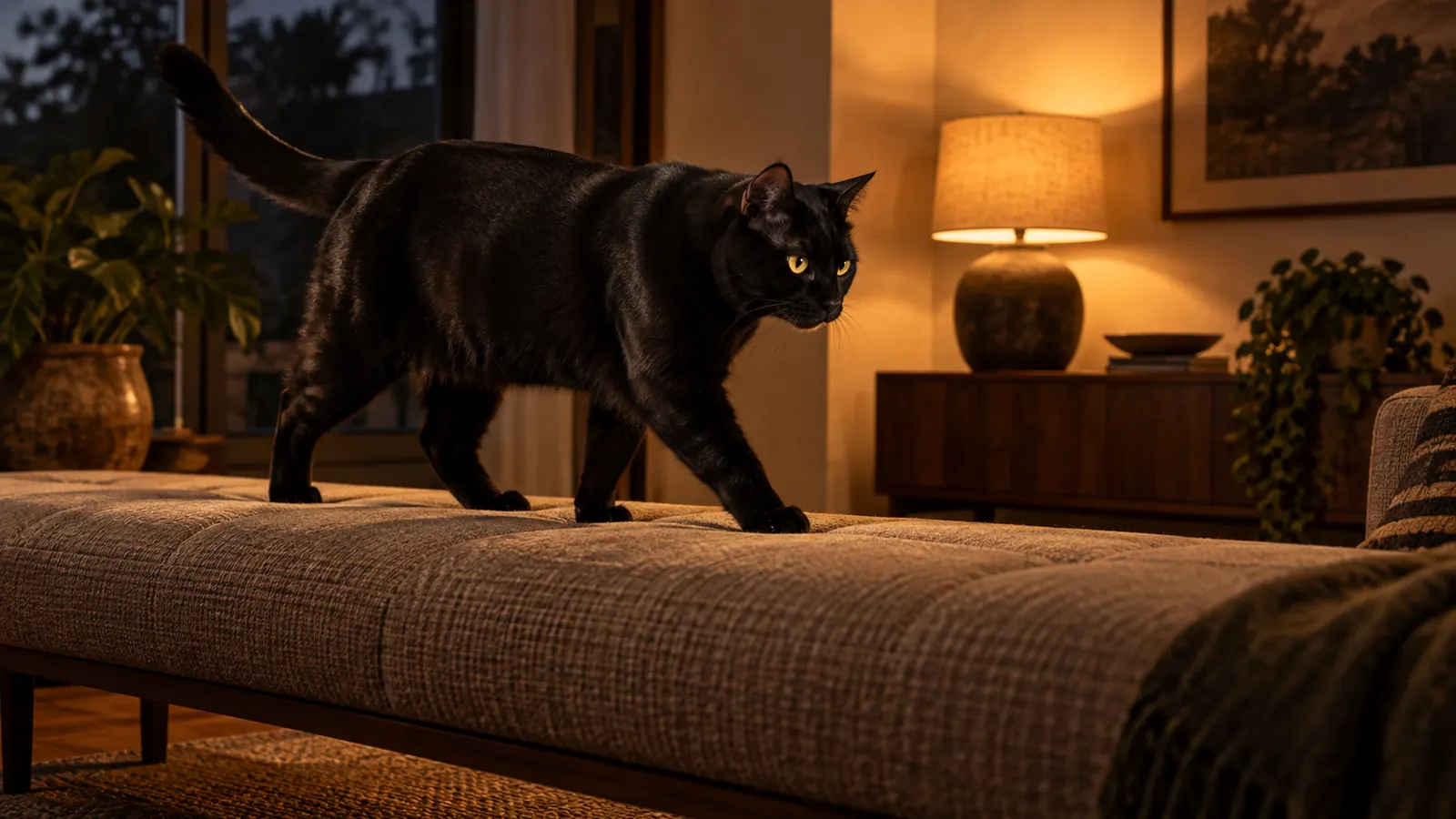
A black American Shorthair is not a separate breed. It is a solid-black colour variety of the American Shorthair, fully recognised within CFA and TICA breed standards. The temperament, body type, health profile and care requirements are the same as any other American Shorthair. The colour adds a few practical notes about coat genetics and sun exposure, but nothing about the cat's behaviour or health changes because it is black.
- Origin
- Same as the American Shorthair; solid black is one of the breed's accepted colour classes
- Coat
- Short, dense, hard-textured, in solid black with no markings, white hairs or colour breaks
- Size
- Same as the American Shorthair: medium to large, muscular, broad-chested
- Typical weight
- Same as the American Shorthair, whose standard sets no weight and warns against breeding for size
- Life expectancy
- Same as the American Shorthair, for which no published breed figure exists
- Activity level
- Same as the American Shorthair: moderate, adaptable, calm but playful
- Grooming
- Same as the American Shorthair: low; weekly combing
- Suits
- Same as the American Shorthair; colour does not change household fit
A black American Shorthair is the same breed in a different colour.
Its temperament, body type, size, health and grooming are those of any American Shorthair, because the standard describes one cat and then lists the colours it may wear. What the black coat adds is genetic and cosmetic: it needs a particular combination at three genes, and it can fade to a reddish brown in strong sun.
Is Solid Black a Recognised Colour?
Solid black is an accepted colour within the American Shorthair standard at both CFA and TICA. CFA describes it as dense coal black, sound from the roots to the tip of the fur, which is why a brown cast or grey roots count against a black cat in the show ring.
It sits among more than a hundred colour combinations the CFA standard allows, alongside silver tabby, brown tabby, blue, red, cream and white. At a CFA show a black American Shorthair has its own colour class, but it is judged against the same breed standard for head, body and coat as every other colour.
- Breed
- American Shorthair (same breed, not a separate one)
- Colour class
- Solid black, fully recognised by CFA and TICA
- Genetics
- Full black at the brown locus (B), two copies of non-agouti (a/a) and at least one non-dilute copy (D)
- What changes
- The coat colour
- What does not change
- Temperament, body type, size, health, grooming or care
What Genetics Produce the Solid Black Coat?
Three genes have to line up. At the brown (TYRP1) locus the cat needs at least one B allele, the full black form, which is dominant over chocolate (b) and cinnamon (bl).
At the agouti locus it needs two copies of the recessive non-agouti variant (a/a). Agouti switches each hair between dark and light bands, which is what makes a tabby pattern visible, and two non-agouti copies switch that off. A cat with B and at least one agouti copy (A) is a black tabby rather than a solid black.
At the dilute locus it needs at least one non-dilute copy (D). Dilute is recessive too, and a cat with two dilute copies (d/d) carries the same black pigment clumped unevenly in the hair, which turns a black coat blue. Two black American Shorthairs that both carry dilute can therefore produce a blue kitten.
Ghost tabby markings are common in young black cats. Faint tabby stripes may be visible in certain light, particularly on the legs and tail.
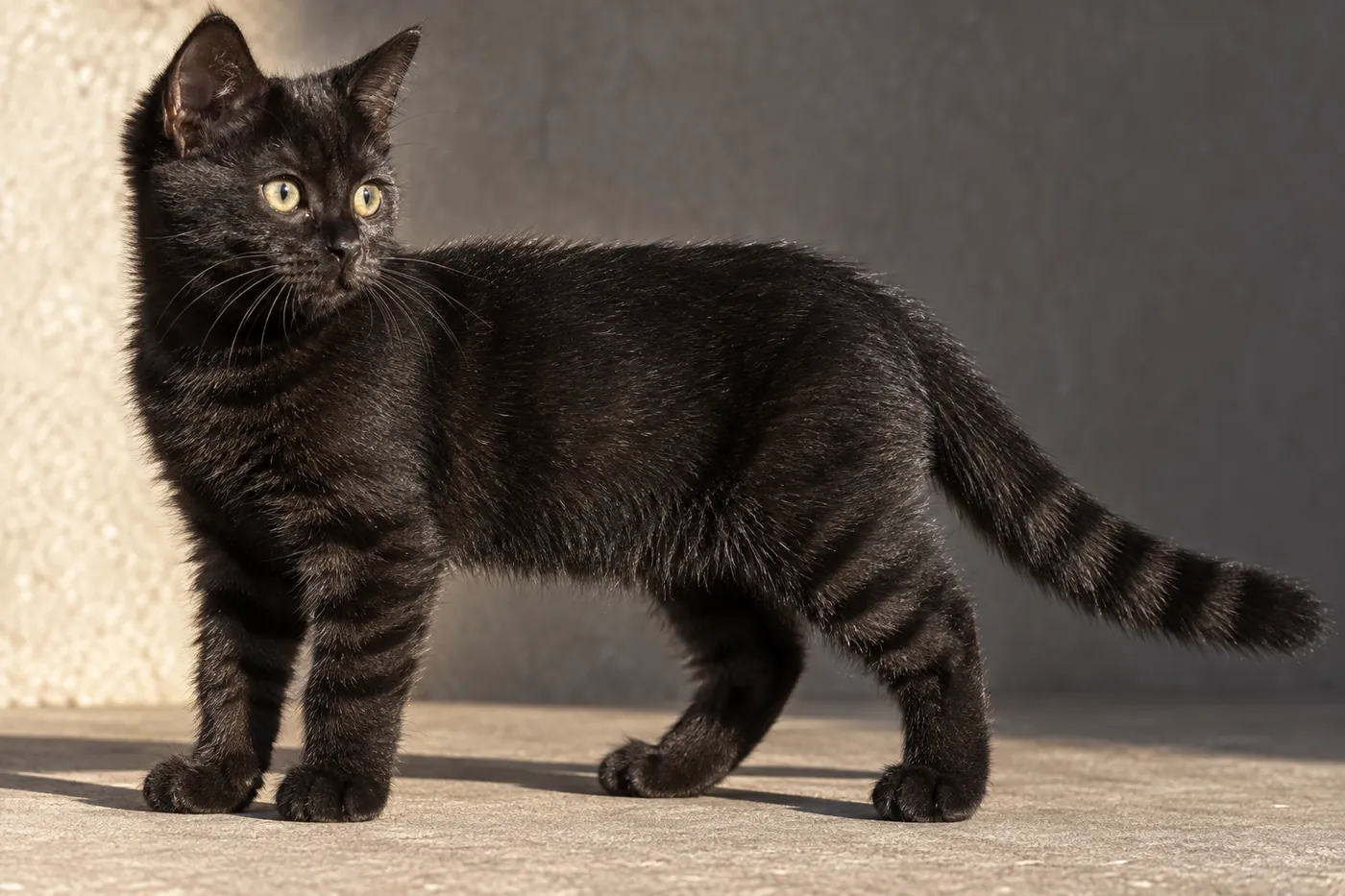
These usually fade as the adult coat comes in, so faint barring on a kitten is not a reason to doubt the colour.
Does a Black Coat Need Different Care?
The coat itself needs the same weekly combing as any American Shorthair.
Sun-fading is the one practical difference. Long sun exposure can give a solid black coat a brownish or reddish cast, often called rusting, as the black pigment in the hair breaks down.
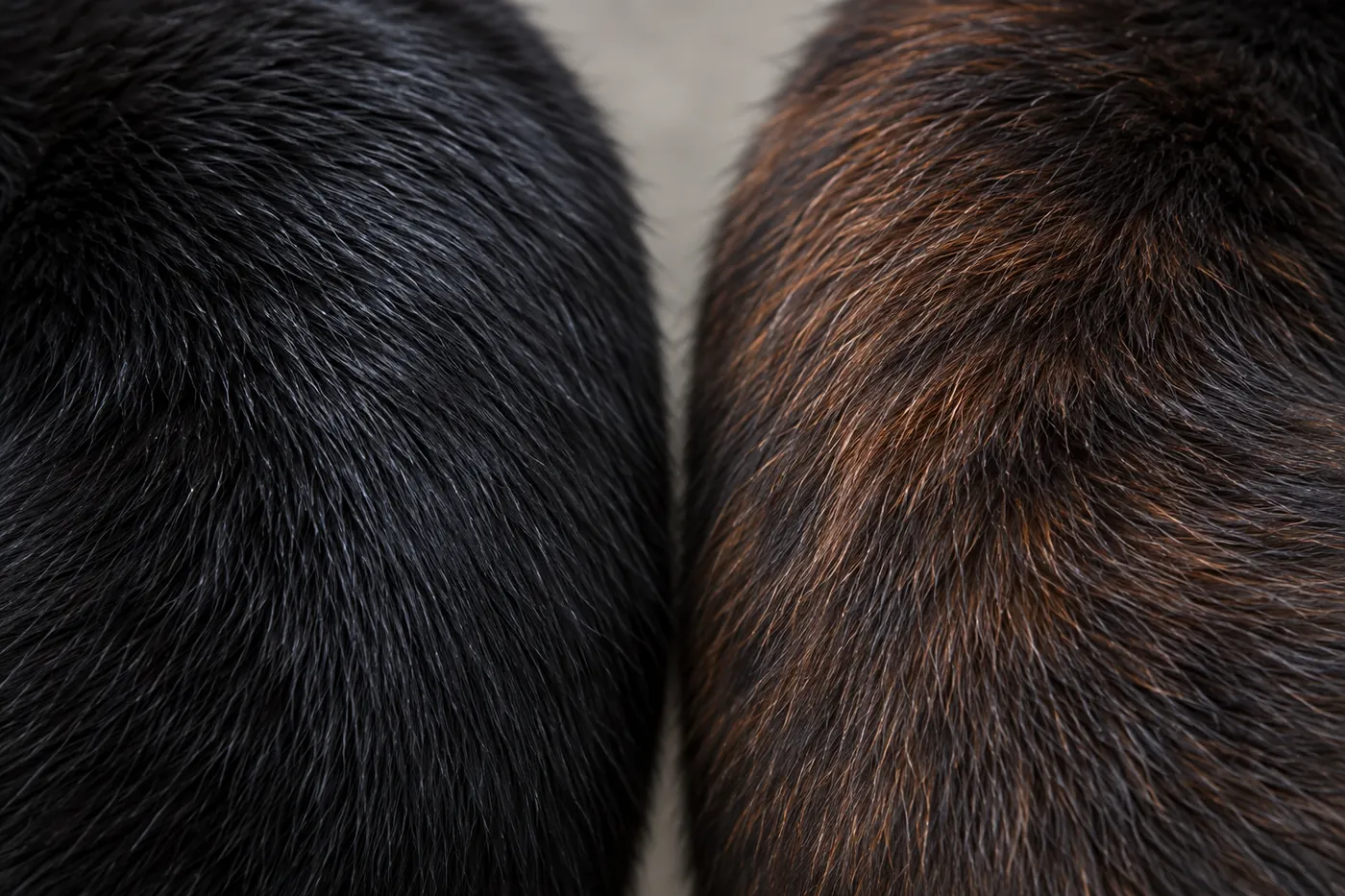
A black American Shorthair that spends its afternoons in a sunny window can develop noticeable rusting. Sun rusting is cosmetic, although it counts against a show cat judged on dense coal black.
Diet can produce the same colour change. Research published in the Journal of Nutrition in 2002 reported that red hair in black cats was reversed by adding the amino acid tyrosine to their diet. A black cat that reddens without much sun, particularly on a home-prepared diet, is worth discussing with a veterinarian before the change is put down to the window seat.
Does Colour Affect Health or Temperament?
Nothing documented links coat colour to disease or behaviour in the American Shorthair. A black kitten inherits the breed's health picture, including the need for heart scanning because no DNA test exists for its form of cardiomyopathy, and the same moderate, adaptable temperament described for the American Shorthair as a whole.
Black has also been used to make another breed. The Bombay began in the 1960s when a black American Shorthair was bred to a sable Burmese, so a glossy black cat of uncertain background may be a Bombay or a Bombay cross rather than an American Shorthair. Registration papers settle which.
No rarity premium is justified. Solid black is a long-accepted colour in the breed, so a higher price asked for the colour alone buys nothing a black kitten of the same line would not already have.
- CFA or TICA registration as American Shorthair in the solid black colour class
- The coat is deep solid black with no white hairs or colour breaks
- A coat with no reddish cast, or a clear explanation of one if the cat has had long sun exposure
Common Questions
Is a black American Shorthair a separate breed?
No. It is a colour variety of the American Shorthair, fully recognised by CFA and TICA within the same breed standard.
What makes a black coat different from other colours?
The practical difference is rusting, a brownish or reddish cast that long sun exposure can produce and that a diet short of tyrosine can also cause. Genetically a solid black cat needs the full black allele, two non-agouti copies to hide the tabby pattern and at least one non-dilute copy to stay black rather than blue.
Does coat colour affect temperament?
No. There is no documented connection between coat colour and behaviour or health in the American Shorthair.
Are black American Shorthairs rare?
No. Solid black is a long-accepted colour in the breed, so a rarity premium for the colour alone is not justified.
Checked Against
Published 17 September 2026. Last updated .





