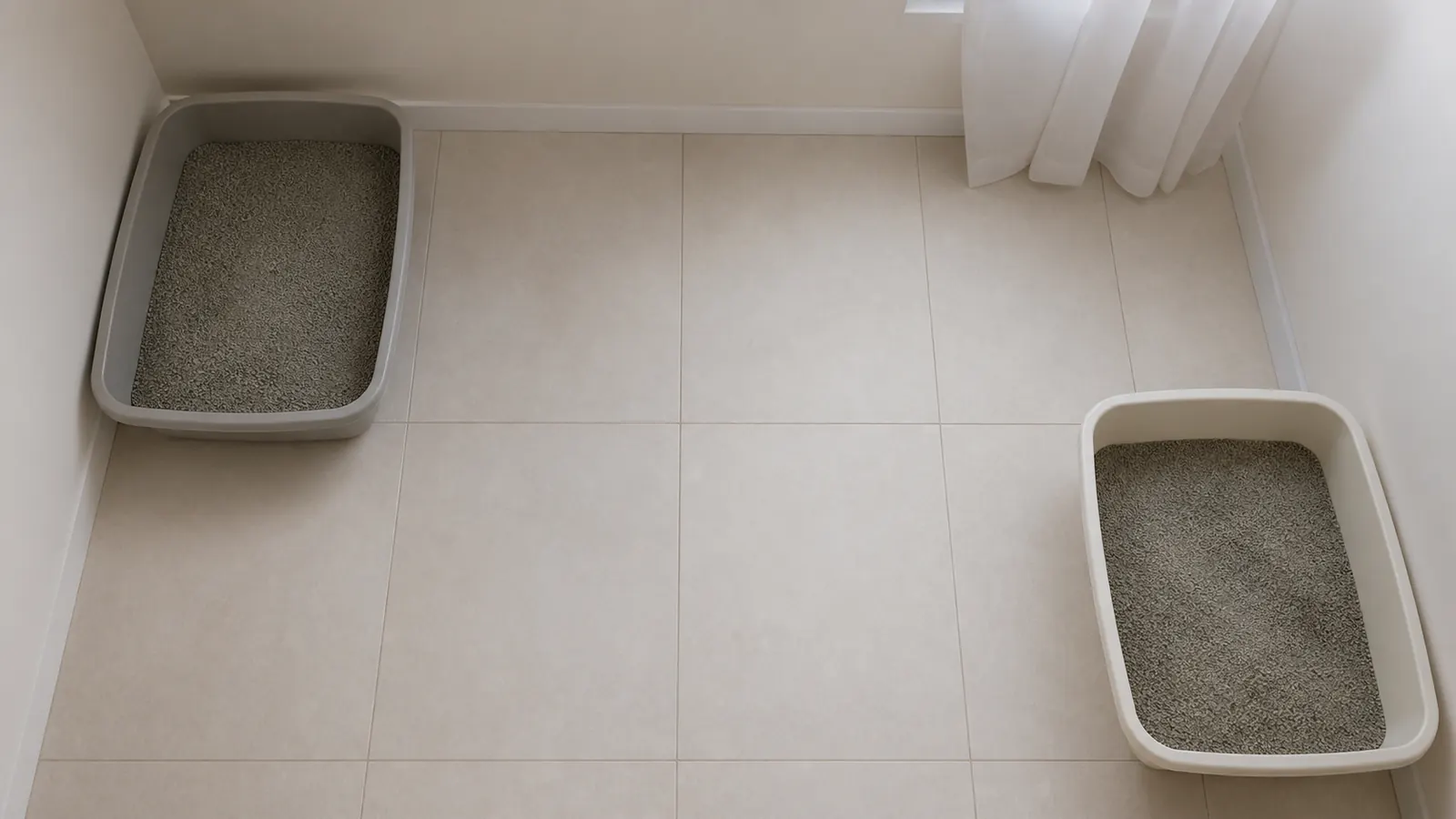
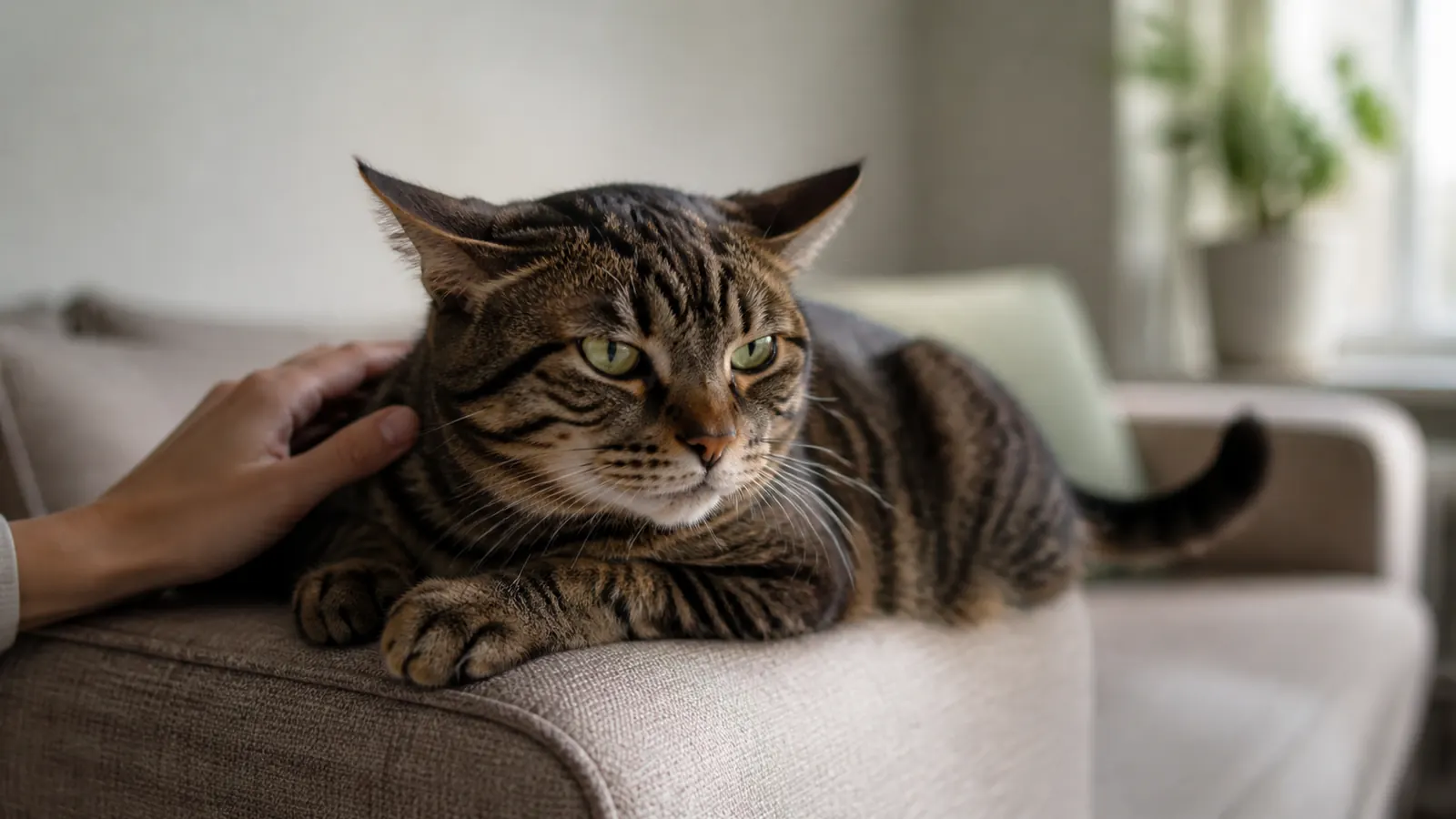
Litter Boxes for Senior Cats With Stiff Joints
A senior cat may need a lower entry, more turning room and a shorter route. New toileting changes still need a veterinary assessment.
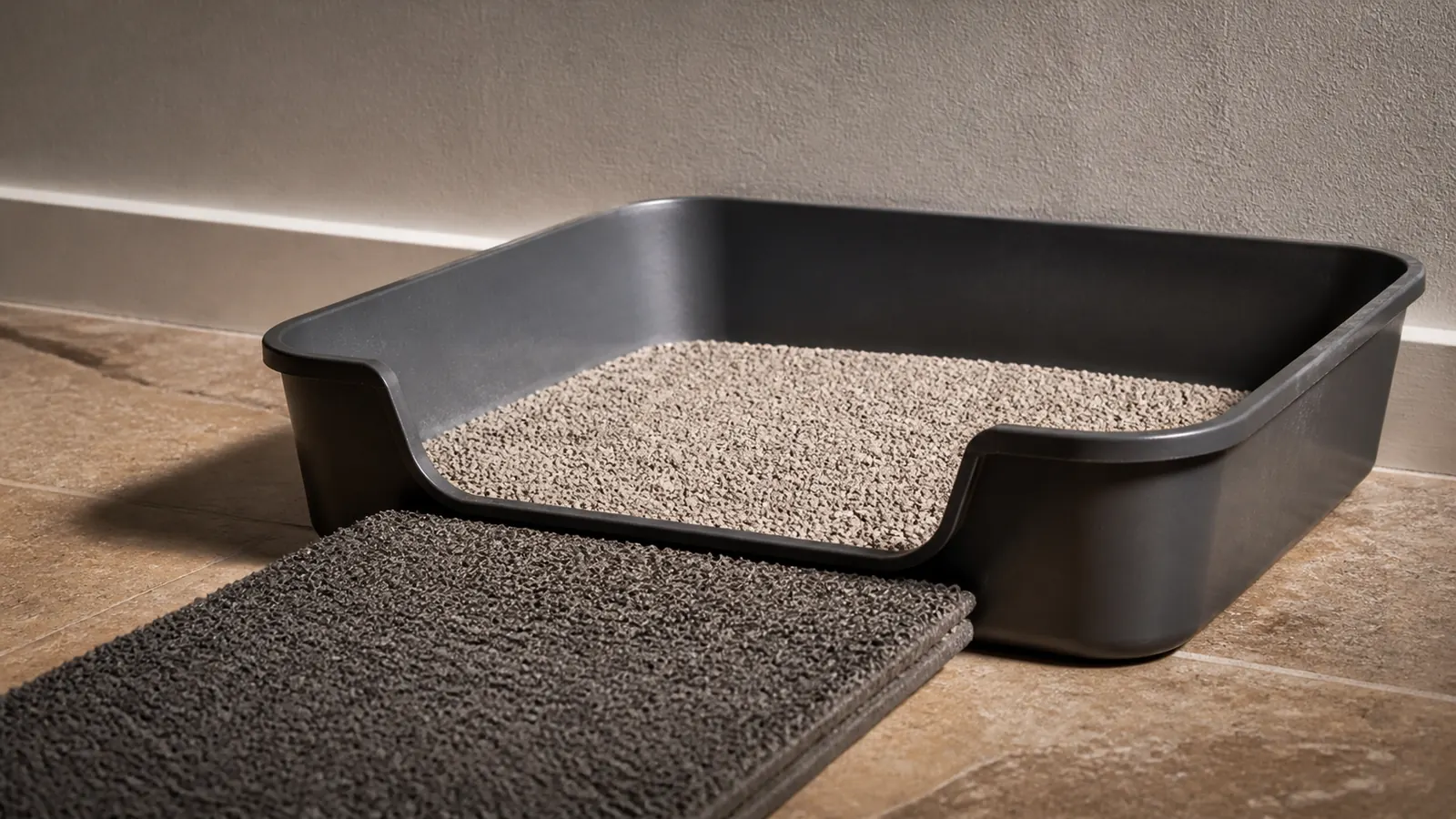
For a senior cat that struggles with a litter tray, provide a spacious box with an easy entry and a short, secure route. Arrange a veterinary assessment for new accidents or hesitation.
Arthritis can make stepping and turning painful, but kidney, urinary, bowel and other health problems can also change toileting.
Watch the whole visit
Observe the route, entry, turning, squatting and exit. A cat may hesitate at a high side, slip on the floor or leave its hindquarters over the edge.
Those details help identify what needs adapting, but none diagnoses arthritis by itself.
Record changes in jumping, stairs, grooming, appetite and drinking as well. Age-related changes can be subtle.
A cat without an obvious limp may still have pain, while another with accidents may need a different investigation.
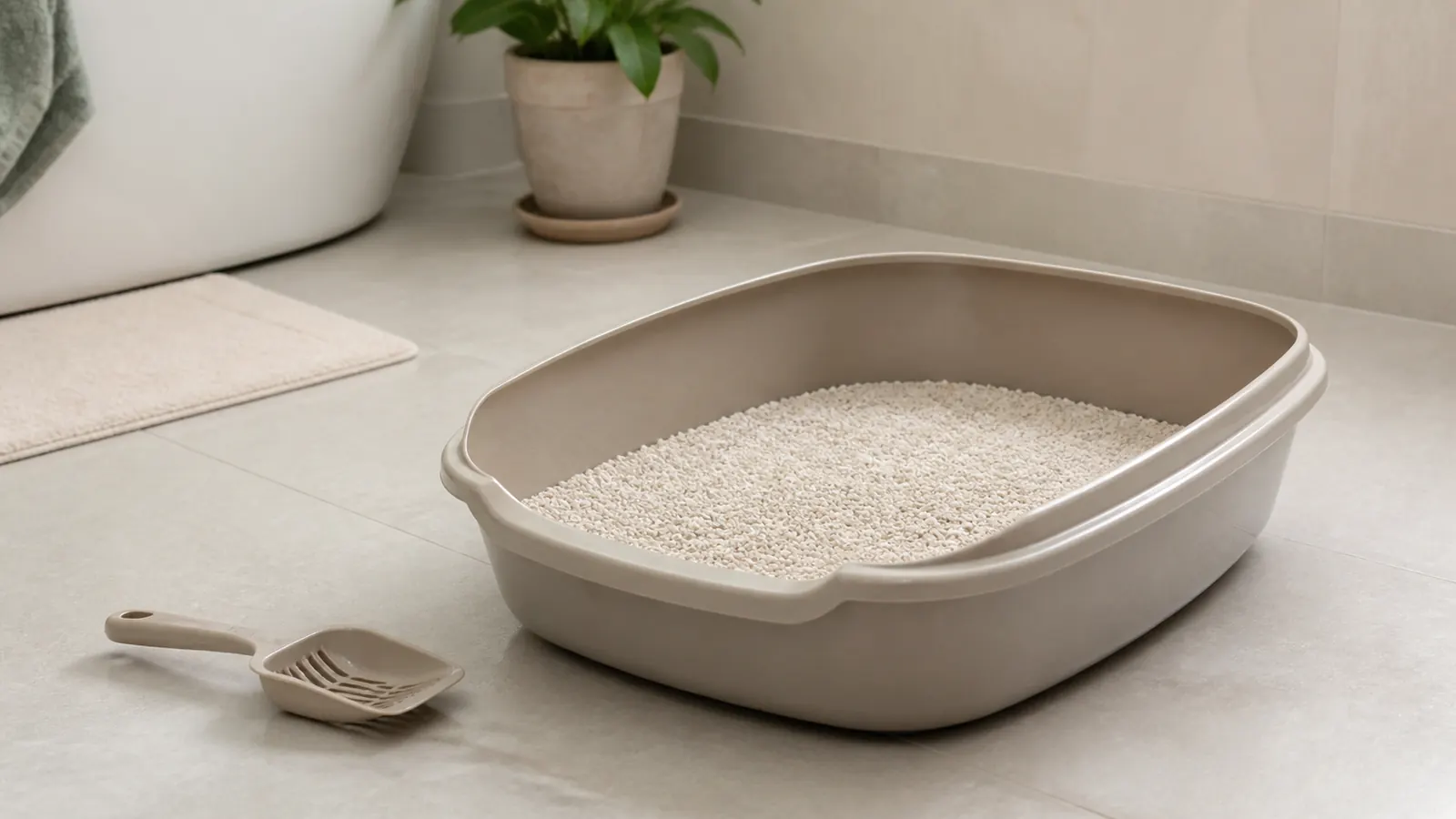
Choose low access without losing usable space
Aim for room to turn and dig, commonly around one and a half times the cat's length from nose to tail base. The entry should be low enough for this cat, rather than meeting a single five-centimetre rule.
A low-front, high-back design can retain litter while easing access, but a shallow tray may suit a cat that needs the easiest possible entry.
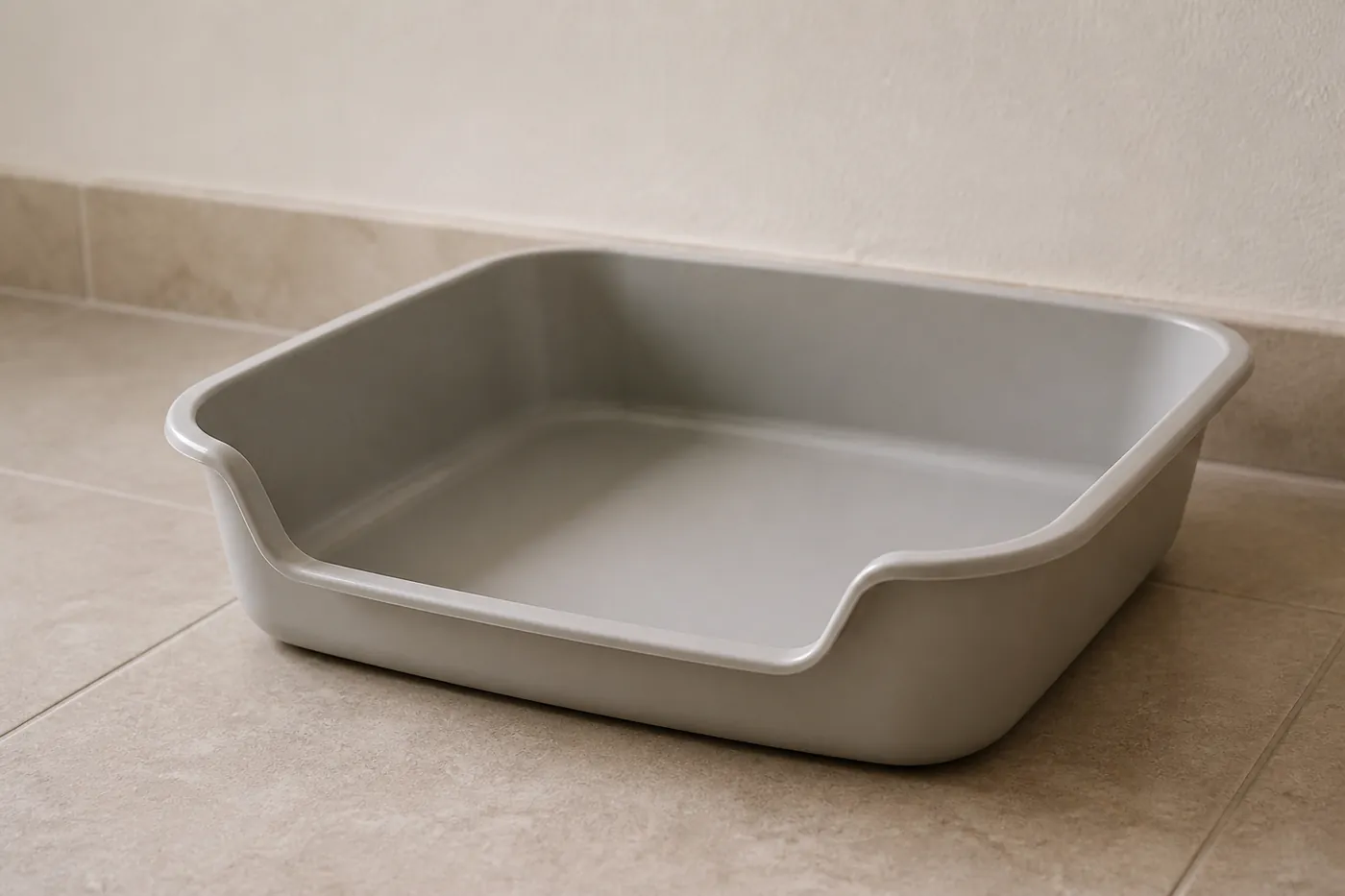
Do not reject a comfortable low-sided box solely because it scatters litter. A washable mat can protect the surrounding floor.
If adapting a storage box, make the opening stable with smooth protected edges and no sharp cut surface; a purpose-made tray may be simpler if a safe modification is difficult.
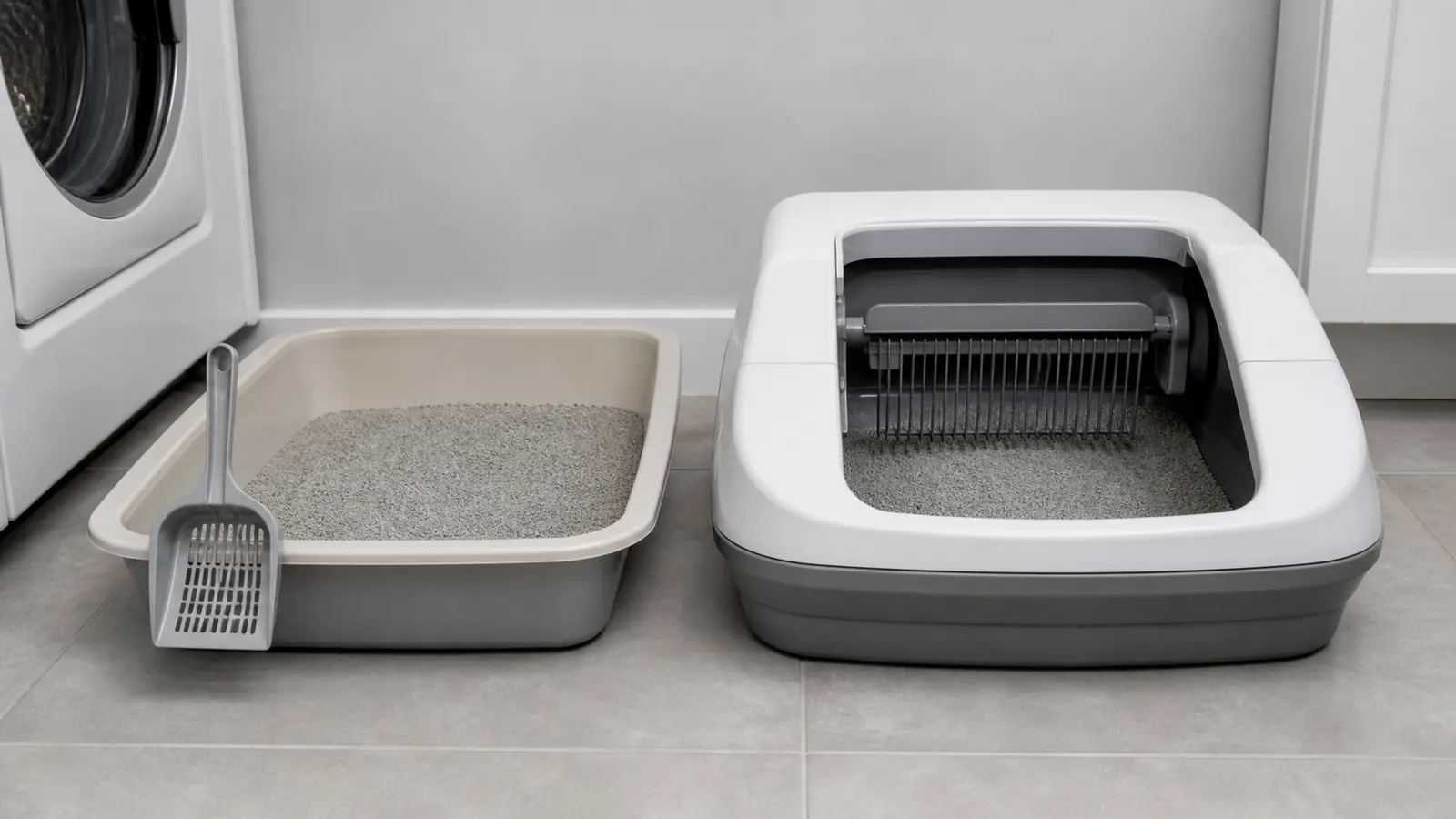
Hoods and flaps add turns or obstacles for some cats. Offer an open alternative and observe the result rather than forcing an immediate switch.
The best design is one the cat can enter and use without pain or fear.
Make the route easier
Put an accessible tray on each floor the cat uses, including near its usual sleeping area. A long journey across slippery flooring or stairs can defeat an otherwise suitable box.
Check doors that close at night and any thresholds or cat flaps on the route.
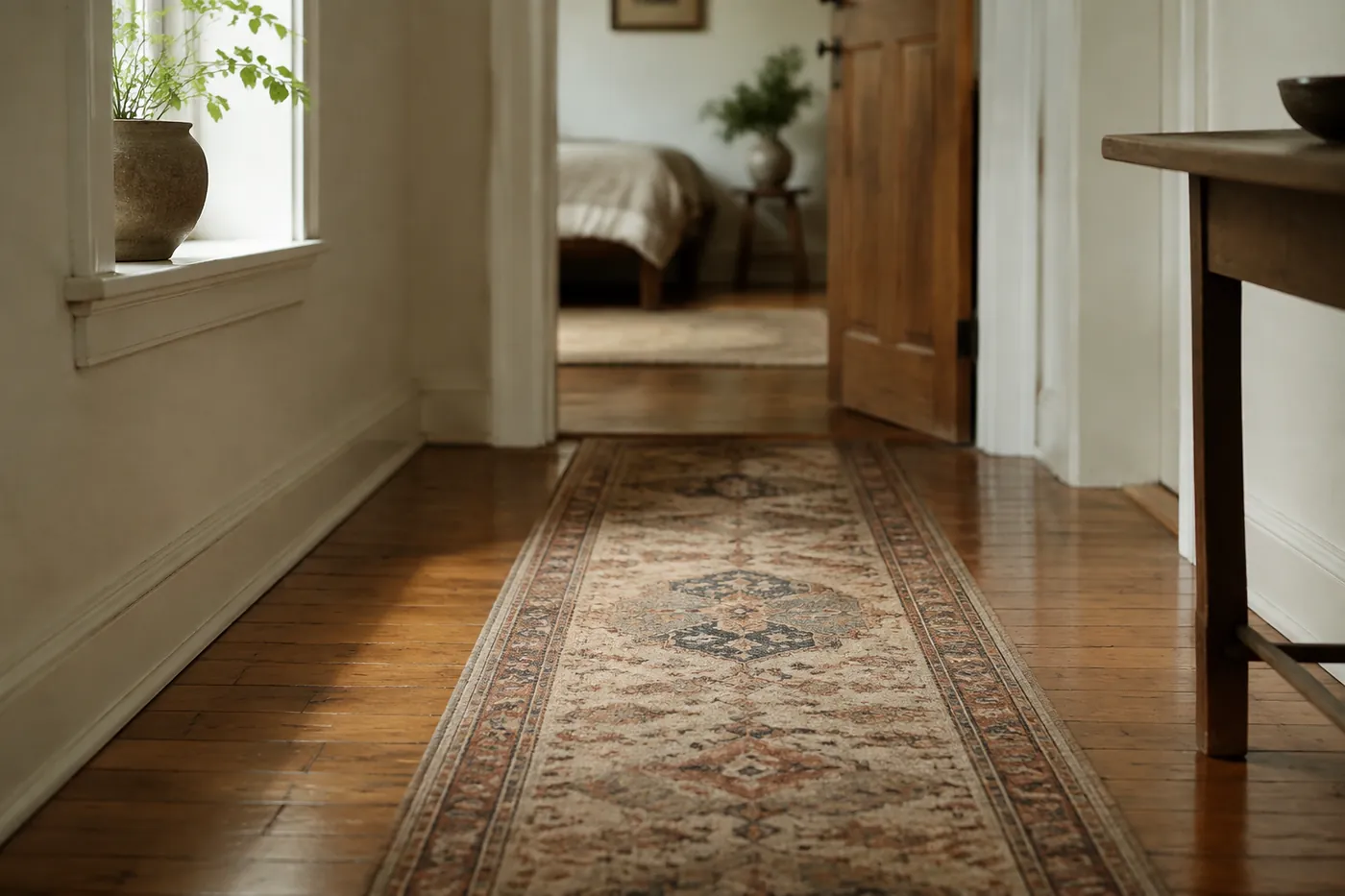
Non-slip flooring and adequate light may help. If a stable shallow step or ramp is useful, ensure it does not slide or create a narrower approach.
Adapting the home extends the same thinking to beds, food and water.
Litter texture and cleaning
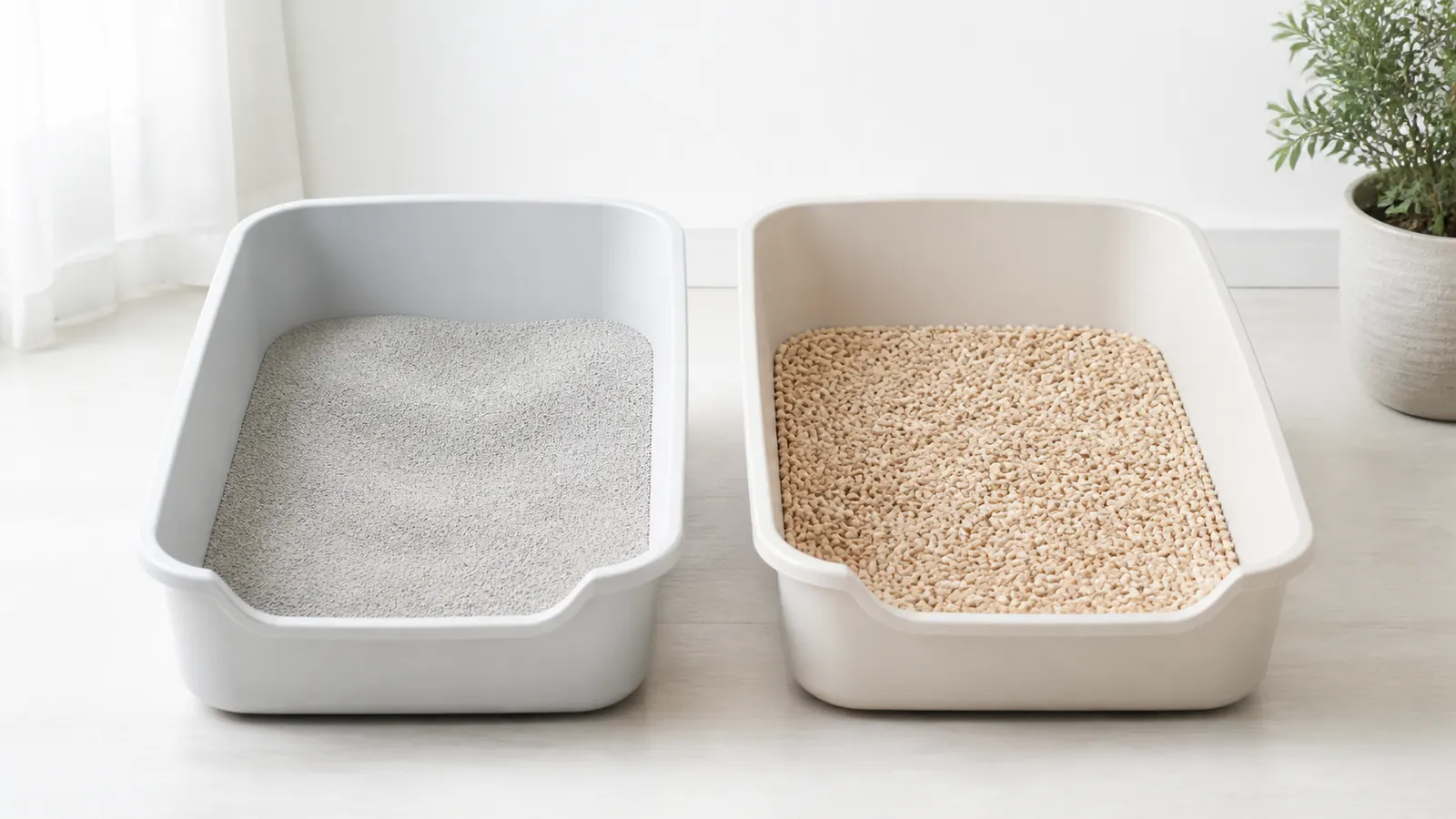
Fine, unscented litter is a reasonable option to offer, particularly if the cat seems uncomfortable on coarse material. Depth should allow digging while providing footing the cat can manage.
Do not impose one shallow depth on every product or cat.
Offer a second tray for a new substrate and retain the familiar option. Scoop frequently and wash using a suitable cleaner with thorough rinsing.
An older cat may find standing on waste or reaching across a soiled area difficult, making maintenance as important as the purchase.
Introduce changes without removing all familiar choices
Add the easier tray near the established location when practical. Watch for comfortable repeated use before considering removal of the old one.
If a tray must move, preserve an accessible familiar option and make the change at a pace the cat manages.
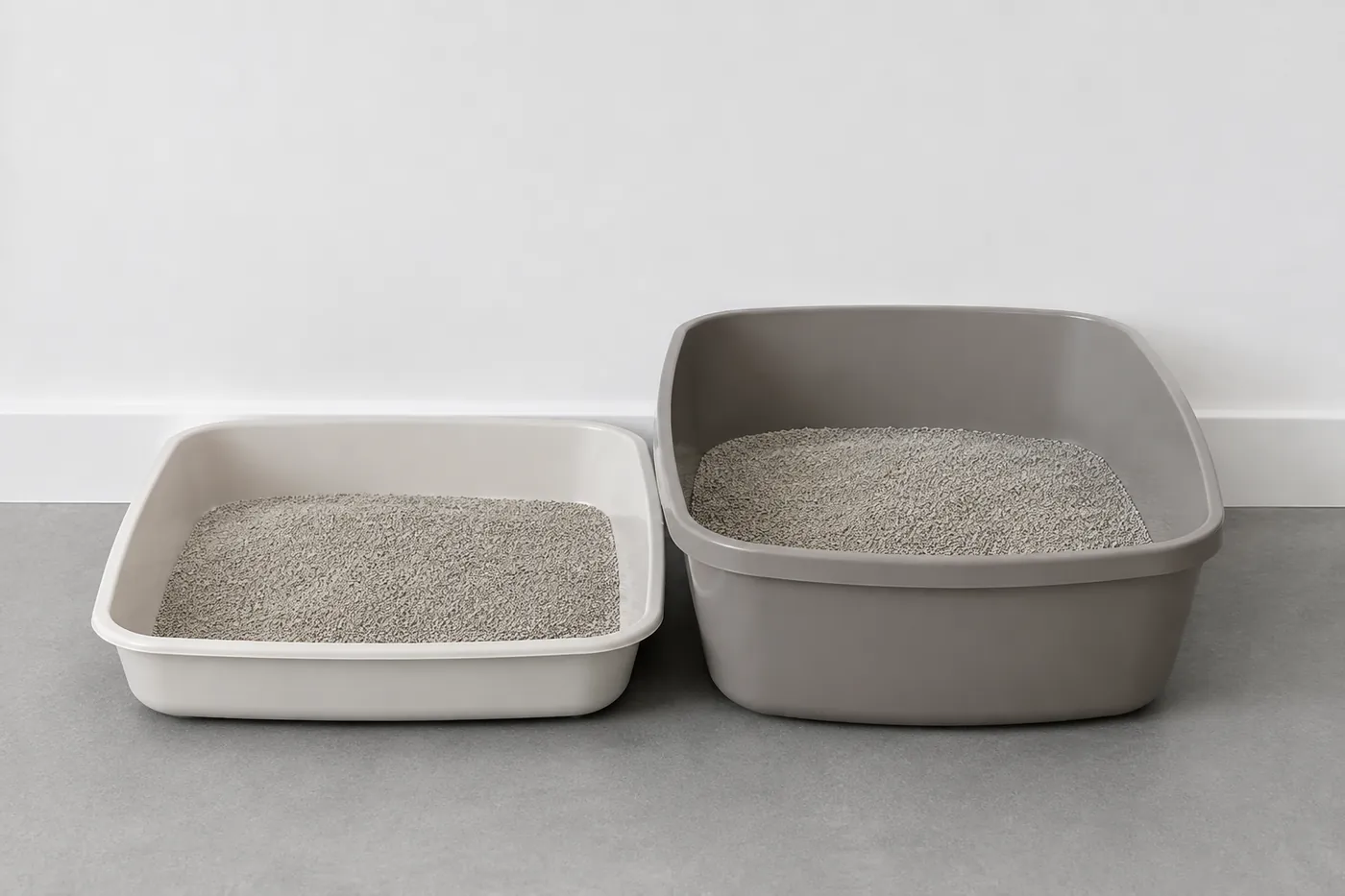
A new tray, litter and location all at once can make the result hard to interpret. Change the suspected obstacle first, but do not enforce a two-week pause when pain, worsening accidents or inadequate access calls for action sooner.
Other cats and ongoing care
Tray count and location still matter in a mixed-age household. Watch whether the older cat waits for another to leave, takes a detour or avoids a room.
Add resources where one cat cannot control every route.
If soiled or matted fur catches waste, ask about safe cleaning and a professional hygiene trim where appropriate. Do not use scissors around tight mats.
Long-coat care describes when grooming should be handed over.
Urine leakage, disorientation and accidents during sleep deserve an assessment; they are not simply a training failure or an inevitable part of age. Waterproof washable bedding can help keep the cat comfortable while the cause is addressed.
Pain treatment and environmental changes often complement one another. The vet can explain treatment choices, possible adverse effects and monitoring for your cat.
A better tray removes an obstacle, but it does not establish a diagnosis or replace follow-up if tray refusal continues.
Common Questions
What height should the entry be?
Low enough for your cat to step through comfortably. Test access and turning rather than relying on one measurement for every cat.
Are low-sided trays a bad choice?
No. They can be appropriate when easy access matters most. Protect the floor with a suitable mat if litter scatters.
Do accidents mean arthritis?
No. Arthritis is one possibility, but urinary, bowel and other conditions can look similar. New accidents need veterinary assessment.
Checked Against
Published 2 September 2026. Last updated .