What Is a Kurilian Bobtail, and What Makes Its Tail Different?
A Kurilian Bobtail is a medium-to-large, muscular cat with a short pom-pom tail. Genetic screening has found the Japanese Bobtail's HES7 short-tail variant to be common in the breed, and Kurilian cats tested for the Manx tail mutation did not carry it. TICA, FIFe and WCF all grant it championship status, and the breed has not been linked to the spinal defects that affect Manx lines.
- Origin
- Kuril Islands, a volcanic chain between Russia and Japan, from a naturally occurring population
- Coat
- Short or semi-long, both with a dense undercoat; all colours and patterns accepted
- Size
- Medium to large, muscular and semi-cobby with powerful hindquarters
- Typical weight
- Secondary sources commonly cite 8 to 15 pounds; no single official standard weight range was found
- Life expectancy
- Secondary sources cite 15 to 20 years; no published population study was found
- Activity level
- Active, athletic, reported to be strong hunters and climbers
- Grooming
- Moderate for both coat types; the semi-long coat needs more attention during seasonal shedding
- Suits
- Households with interactive play, climbing access and room for a moderately large cat
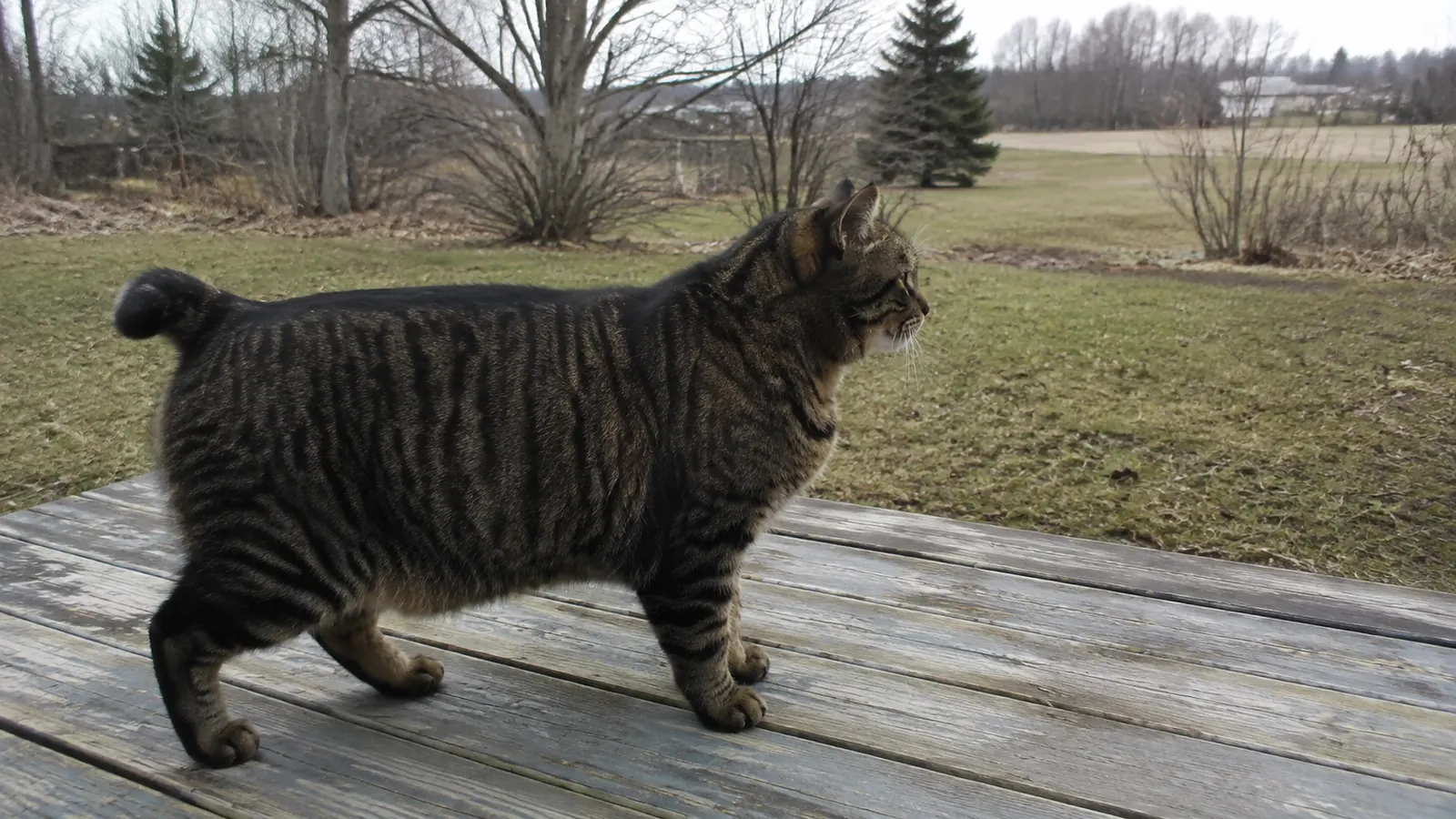
A Kurilian Bobtail is a muscular, natural-origin cat whose short kinked tail looks like a pom-pom.
The breed developed on the Kuril Islands, a volcanic chain between Russia and Japan, and carries championship recognition from TICA, FIFe and WCF. The bobtail mutation is genetically distinct from the Manx gene, and it has not been associated with the spinal defects that make the Manx tail a welfare concern.
That distinction matters because not every short-tailed cat carries the same risk. The short-tail variant found in many Kurilians is the one the Japanese Bobtail carries, and in a study of a Japanese Bobtail breeding colony the kinked tails were not linked to illness.
Where Does the Kurilian Bobtail Stand With Registries?
The Kurilian Bobtail originated as a natural population on the Kuril Islands, where short-tailed cats are said to have lived for at least two centuries. Russian breeders began formalising the breed in the late 1980s after cats from the islands were brought to the mainland.
FIFe has recognised the breed since 2004, and TICA also grants it championship status. WCF also grants full championship status, while CFA does not list the Kurilian Bobtail.
- Registry status
- TICA Championship, FIFe Championship, WCF Championship
- CFA
- Not listed
- Origin
- Kuril Islands, naturally occurring population
- Breed type
- Natural breed, not a designed cross
- Coat varieties
- Short and semi-long, both accepted
- Tail
- Short, kinked or curved, 2 to 10 vertebrae
- Tail genetics
- HES7 variant shared with the Japanese Bobtail is common in the breed; no Manx T-box mutation in cats tested
Where the tail is concerned, the Japanese Bobtail is the Kurilian's closest relative. A 2022 survey of more than 11,000 cats found the Japanese Bobtail's HES7 short-tail variant in every Japanese Bobtail tested and found it common in Kurilian Bobtails too, so the two breeds most likely share one route to a short tail. The Manx tail comes from a different gene, TBXT, and carries documented spinal consequences.
What Body and Tail Shape Define the Kurilian Bobtail?
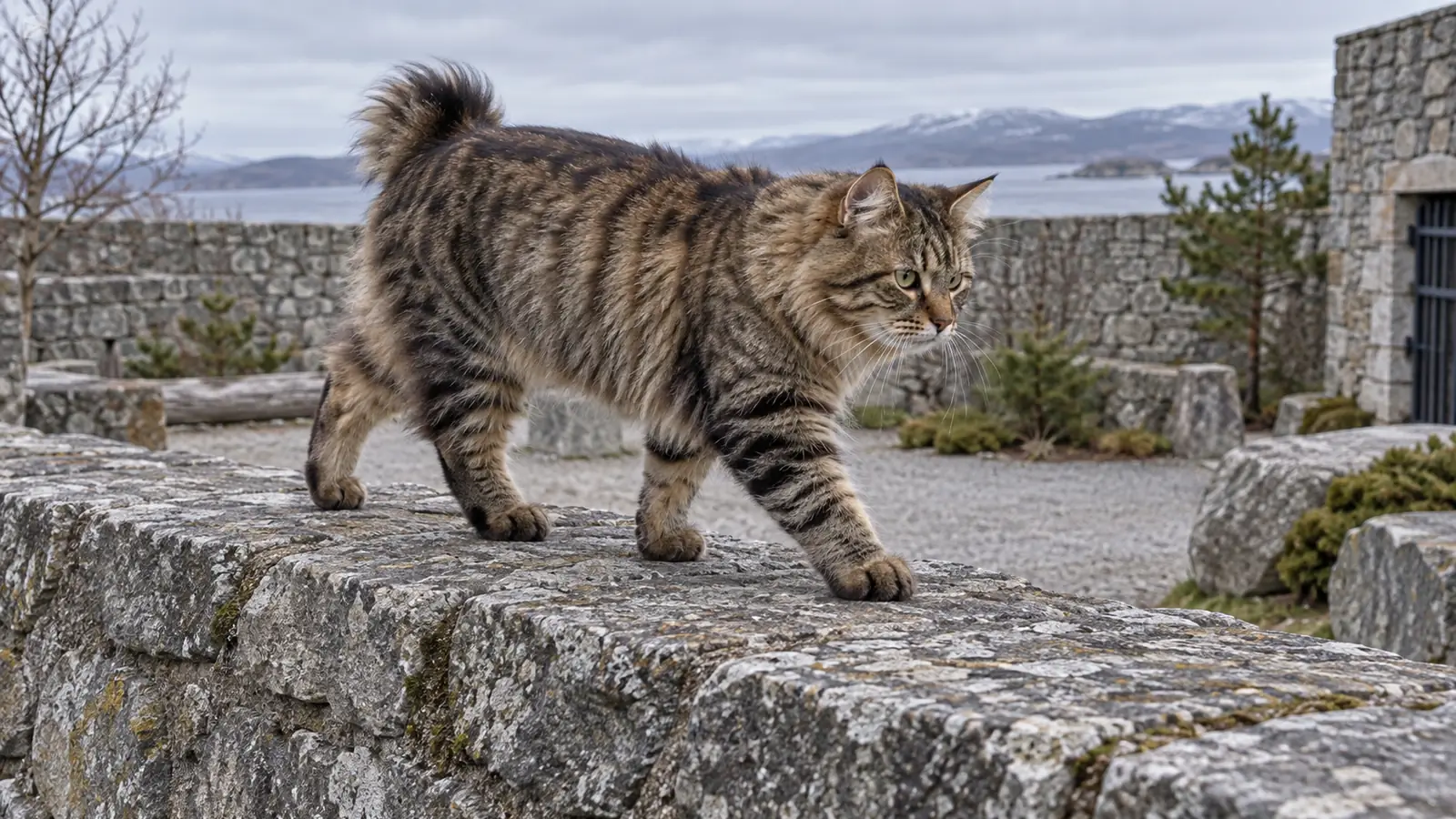
The body is medium to large, muscular and semi-cobby with a broad chest and powerful hindquarters that sit slightly higher than the shoulders.
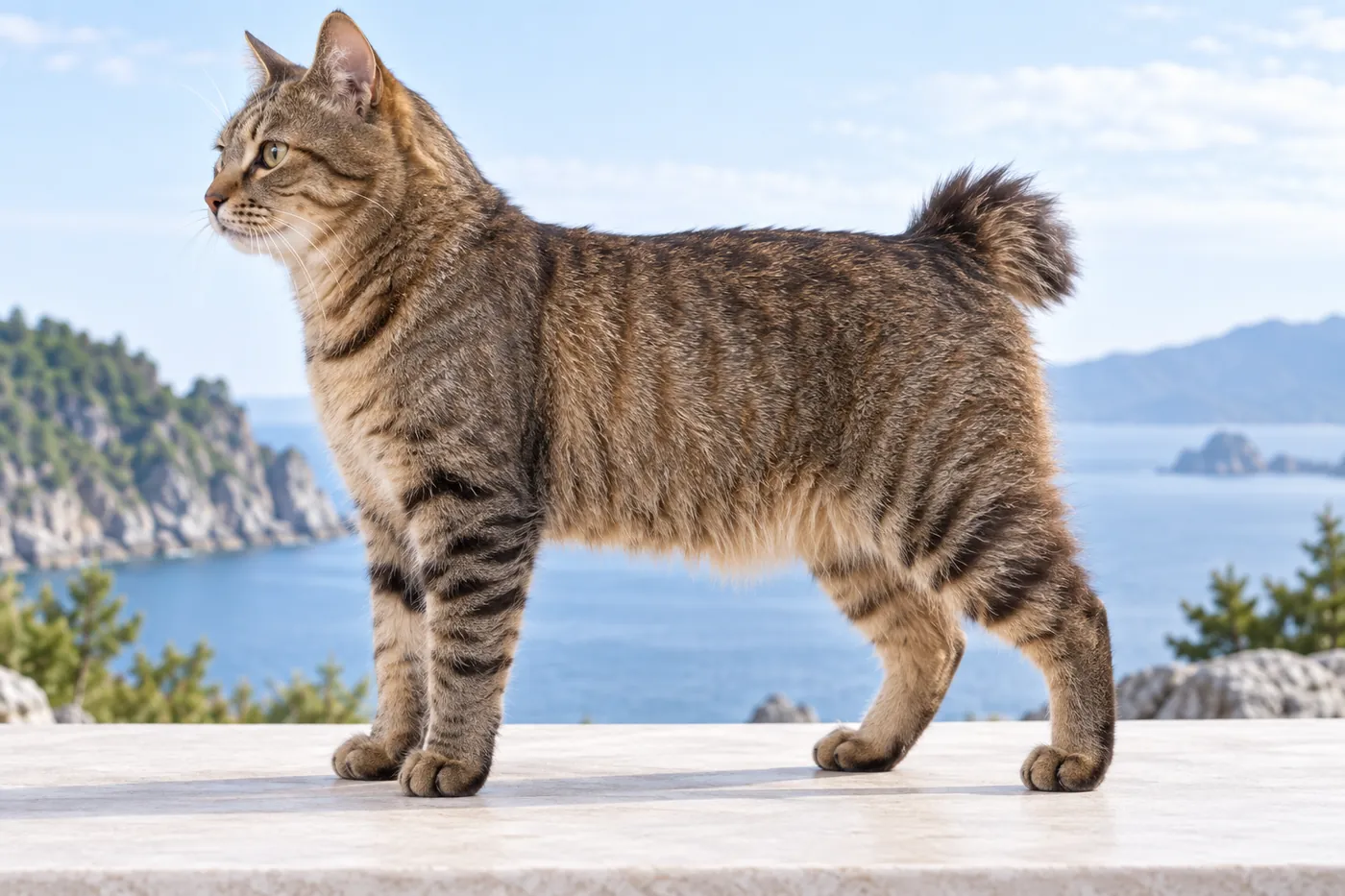
The tail is the breed's defining feature. Each tail contains between two and ten vertebrae arranged in various combinations of kinks, curves and angles that produce a compact shape often described as a pom-pom, a snag or a spiral.
No two Kurilian tails are identical, because the kinks and curves fall in different places along each short tail, and the variation is normal and expected within the breed.
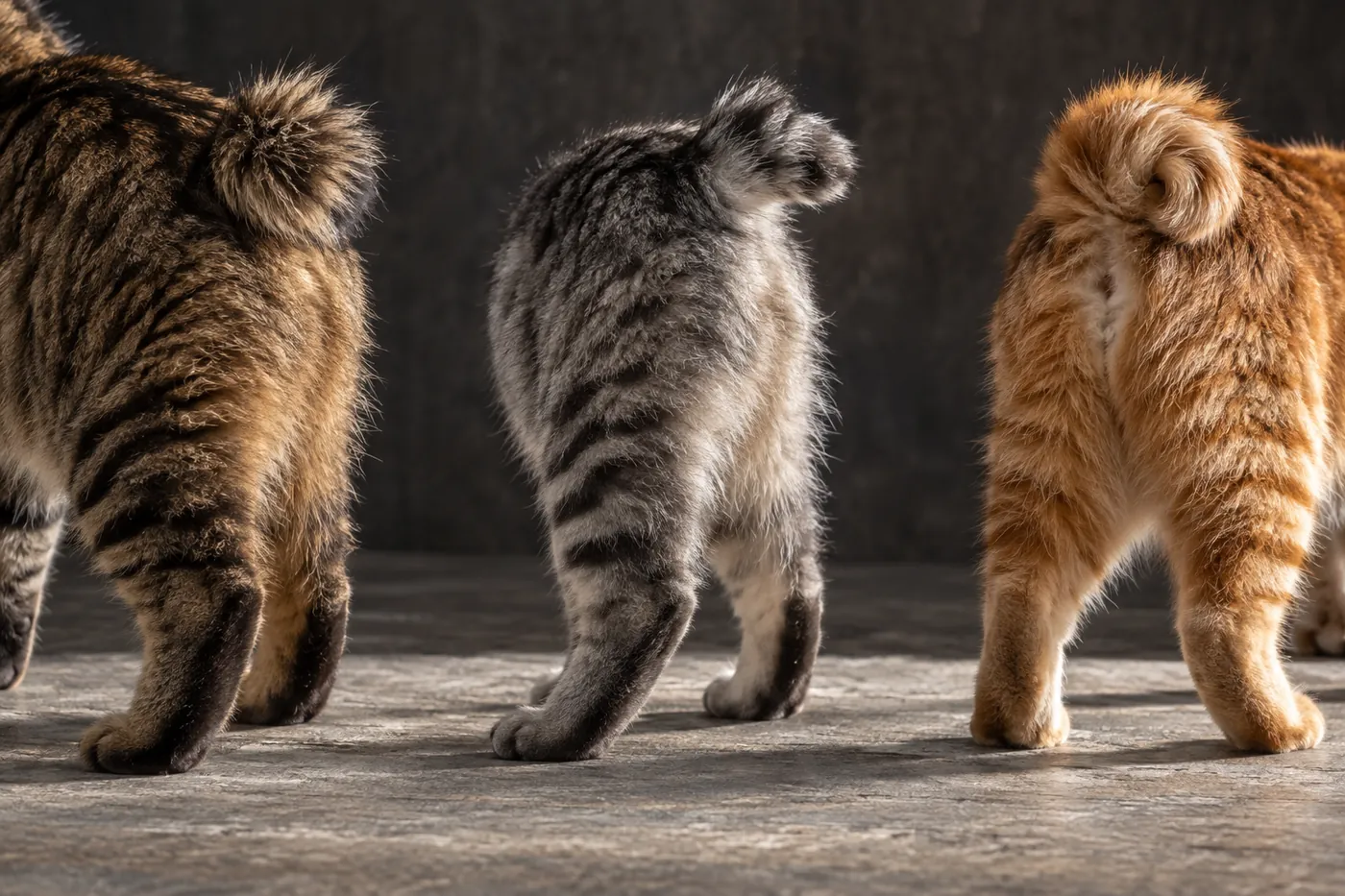
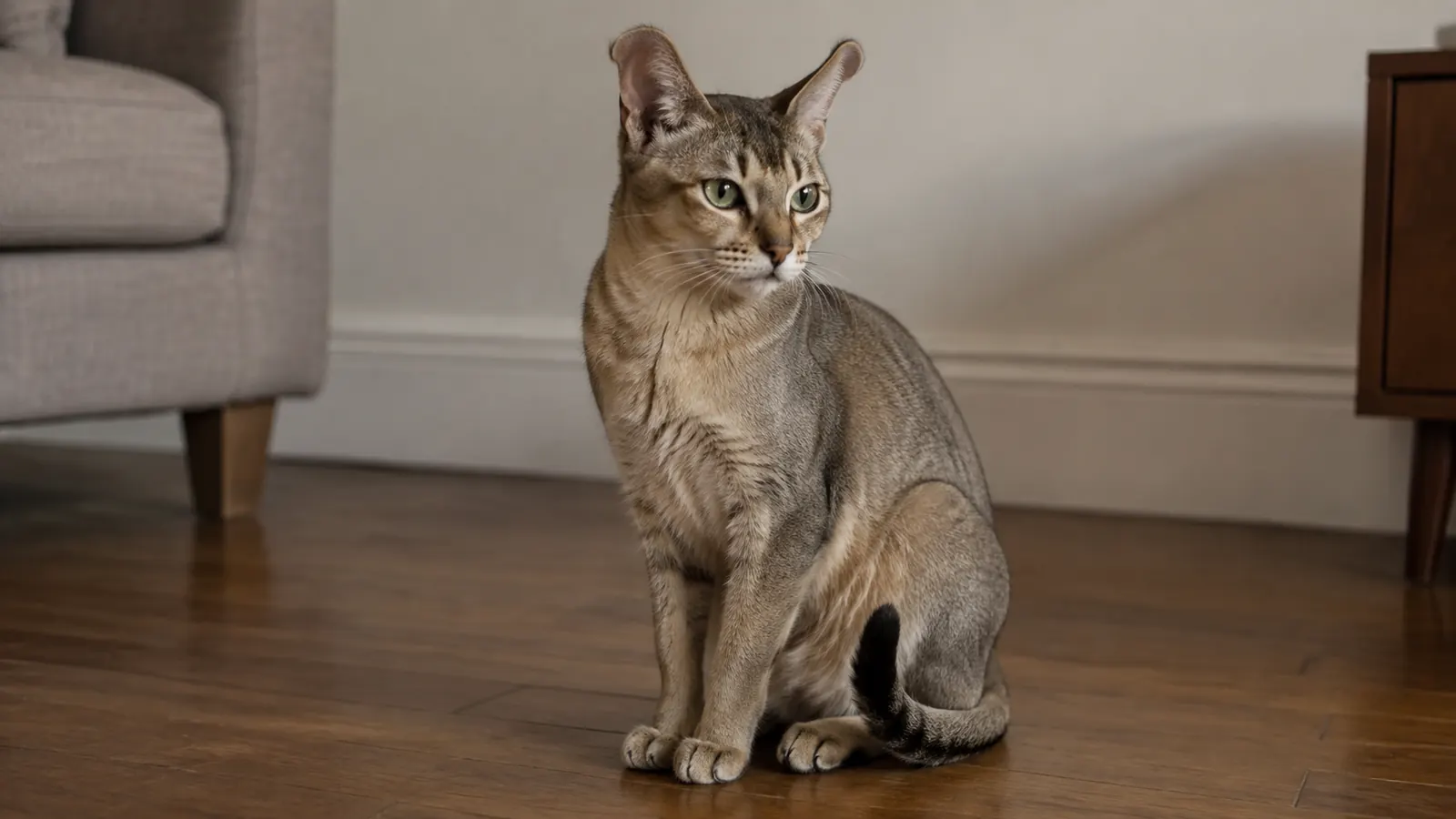
The head is a modified wedge with rounded contours, medium-to-large ears with slightly rounded tips, and walnut-shaped eyes.
| Feature | Kurilian Bobtail | Japanese Bobtail | Manx |
|---|---|---|---|
| Body | Medium-large, muscular, semi-cobby | Medium, elegant, long and lean | Medium, compact, rounded |
| Tail | 2 to 10 vertebrae, kinked pom-pom | Kinked or curved, often carried upright | Absent to full-length |
| Tail genetics | HES7 variant common in the breed, no Manx mutation in cats tested | HES7 variant, dominant, found in every cat tested | TBXT (T-box) mutation |
| Coat | Short or semi-long with undercoat | Short or long, silky | Short or long, dense double coat |
The coat comes in two accepted varieties: short and semi-long. Both carry a noticeable undercoat, and all colours and patterns are permitted.
How Does the Kurilian Bobtail Gene Differ From the Manx?
The HES7 variant behaves as a dominant trait with a dose effect. In the study that identified it, cats with one copy had a mild or moderate kink, while cats with two copies always had the most extreme kinked tail. That dose effect may account for part of the variation between Kurilian tails, although no study has measured it in the breed.
The Manx tail mutation is associated with Manx syndrome, a range of spinal and neurological defects including spina bifida, sacral agenesis and bowel or bladder dysfunction. Those problems arise because the Manx gene affects vertebral development beyond the tail.
Kurilian Bobtails examined in the study that identified the Manx mutation did not carry it. In the Japanese Bobtail, whose tail variant the Kurilian shares, a study of a breeding colony found irregular vertebrae in every kinked-tailed cat radiographed, yet those differences did not coincide with illness or early death in cats followed up to five years old. No equivalent study has been published for the Kurilian.
Breeders commonly pair two bobtailed cats, since most of the breed carries the short tail. With the Manx, tailless-to-tailless pairings carry an elevated risk of severe spinal defects. No comparable pattern of harm has been reported from Kurilian-to-Kurilian breeding, and the Japanese Bobtail colony, which included a cat carrying two copies of HES7, showed none in the cats followed.
The Mekong Bobtail, a colourpoint breed from Southeast Asia, is the third breed in which the 2022 survey found the HES7 variant common. When you compare bobtail breeds, the gene behind the tail says more about health risk than the tail's length does.
What Behaviour Has the Island Population Produced?
TICA describes the Kurilian Bobtail as intelligent, gentle and inquisitive. Breed club descriptions consistently emphasise the cat's hunting ability, comfort around water and willingness to retrieve. These descriptions are plausible given the breed's island origin, where fishing and hunting would have been daily behaviours for the founding population.
Individual variation remains a stronger predictor than any breed description, because a kitten's early socialisation, handling history and home environment shape its adult behaviour more reliably than a standard's personality section.
Three observations of the individual cat tell more than a label:
- Quick recovery from a startle, with normal activity resuming without prolonged hiding
- Voluntary approach to people after play or rest, not only at mealtimes
- Calm tolerance of handling along the back, tail area and paws
How Much Activity and Space Does a Kurilian Bobtail Need?
The Kurilian Bobtail is an athletic cat with reported climbing and jumping ability that exceeds many breeds of similar size.
The powerful hindquarters support strong vertical leaps, so height access matters more than floor space alone.
- Stable tall climbing furniture with broad platforms and secure landings
- Interactive play that engages hunting behaviour at floor and height
- Separate food, water, litter and resting spots to allow movement between them
- A scratching post tall enough for a full vertical stretch
- Secure barriers around birds, rodents, reptiles and fish
An apartment can work well when the vertical space is well designed. The breed's size and strength mean that platforms need to be securely anchored.
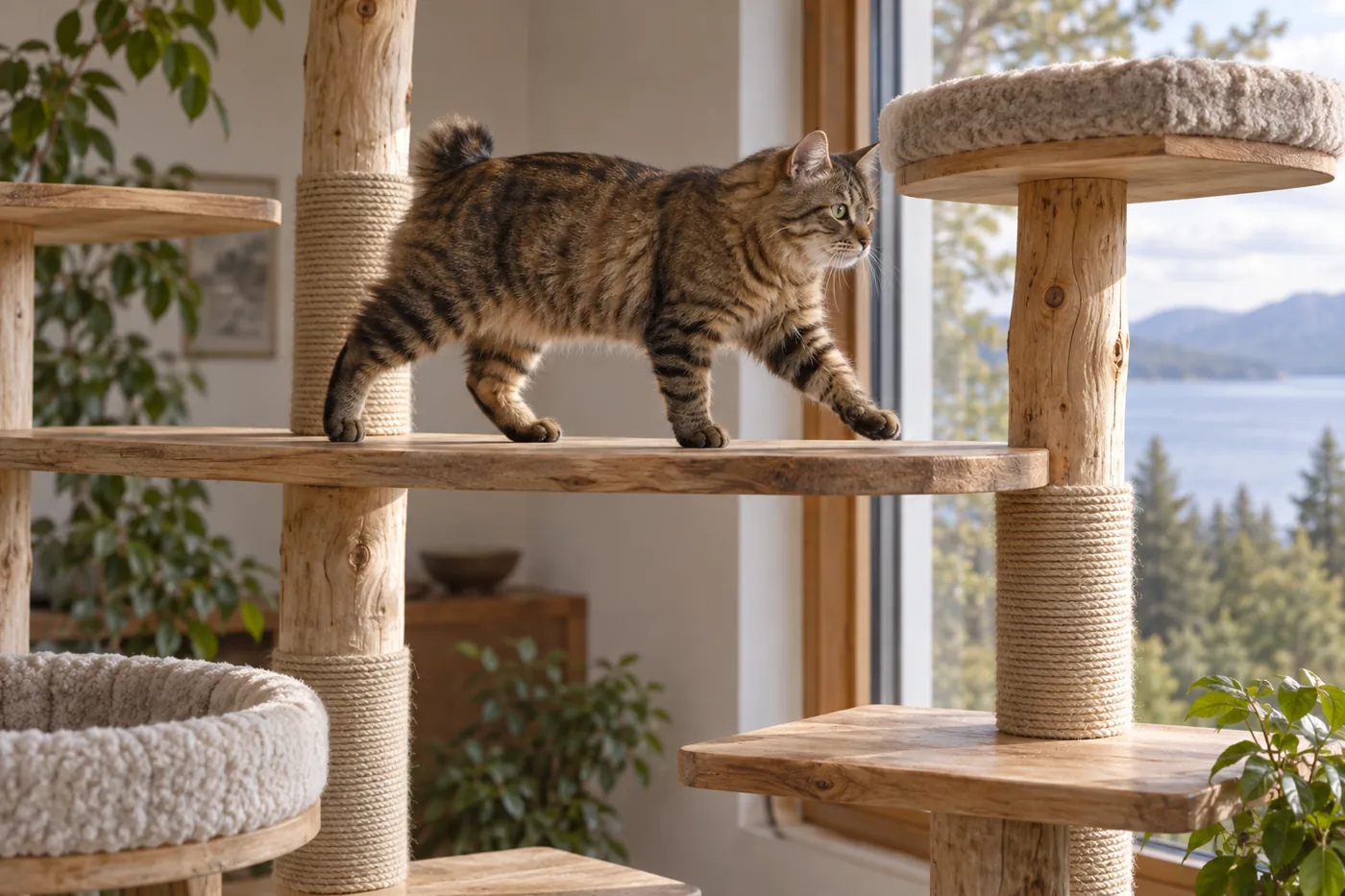
Water play is commonly reported. Some Kurilian Bobtails will bat at running taps or investigate water bowls, so a dripping source may provide enrichment that a still bowl does not.
What Grooming Does Each Coat Type Need?
The short coat needs minimal grooming: a weekly pass to remove loose hair and check the skin.
The semi-long coat requires more frequent attention. The undercoat is denser than many semi-long breeds, and seasonal shedding can produce significant loose hair during spring and autumn, on top of the slower coat changes that come with age.
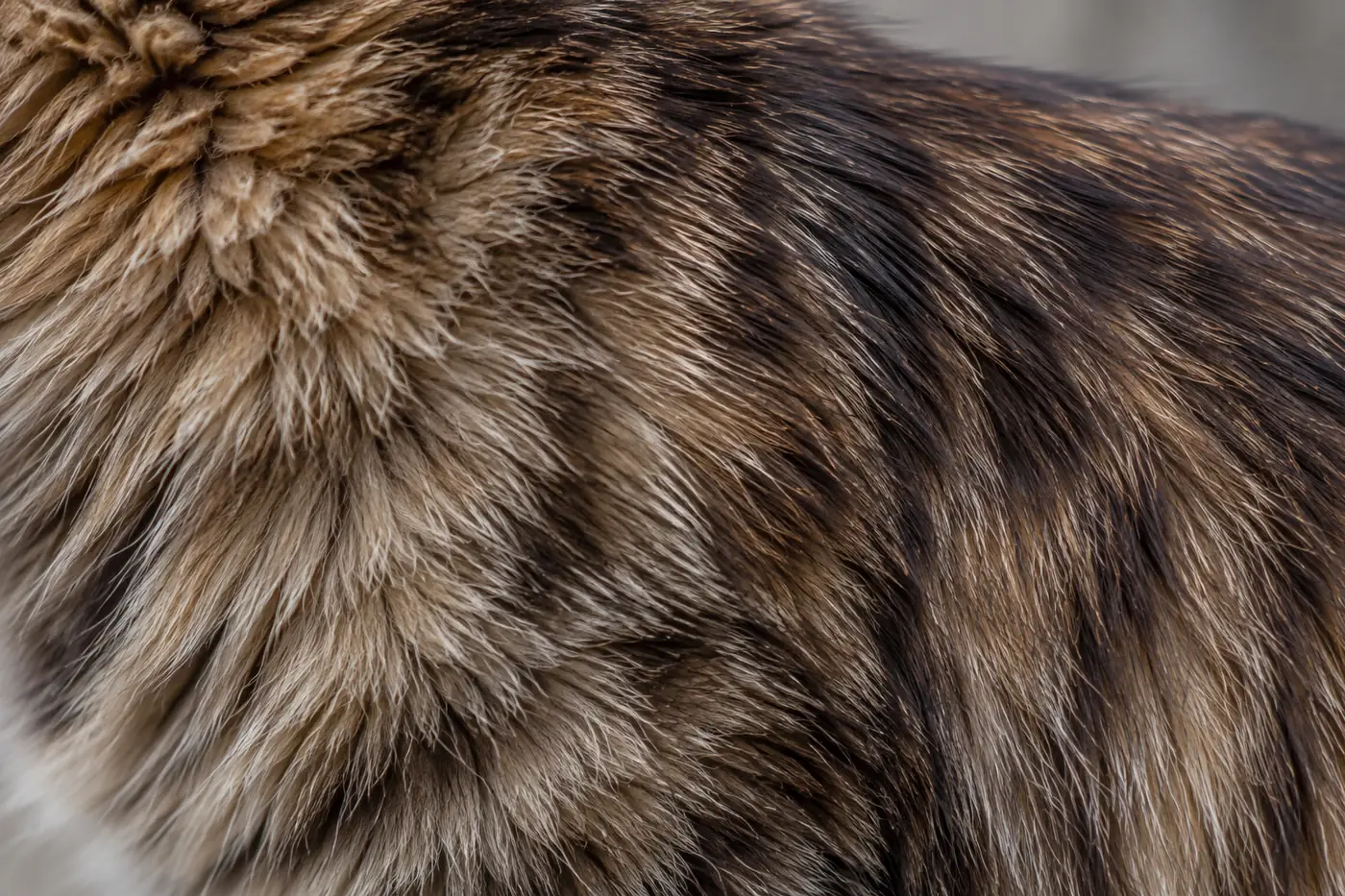
The semi-long coat takes the sectioned technique used for brushing a long coat, and a cat that resists grooming does better when tolerance is built in short sessions.
What Is Known About Kurilian Bobtail Health?
The Kurilian Bobtail has no published population health study. The most important health finding is a negative one: the Kurilian Bobtail has not been linked to the spinal defects that affect Manx cats.
Secondary sources commonly cite a lifespan of 15 to 20 years. That range is plausible for a natural breed without documented predispositions, but no population study confirms it.
| Area | What to monitor | When |
|---|---|---|
| Weight and body condition | Rib feel, waist view, weight trend | Every routine visit and at home between visits |
| Mobility | Willingness to jump, gait changes, stair use | Ongoing observation |
| Dental | Gum colour, tartar, reluctance to eat hard food | Annual veterinary dental check |
| Tail area | Comfort when the tail is gently handled | Ongoing; report any pain or stiffness |
Does the Kurilian Bobtail's Hunting Instinct Affect Household Fit?
Breed descriptions consistently describe the Kurilian Bobtail as tolerant and sociable, and the breed's size and confidence may help in a multi-pet household. Individual temperament and proper introductions remain the stronger predictors of success.
A child should learn to approach calmly and respect the cat's retreat signals. The Kurilian's muscular build makes it more robust than a small delicate breed, but rough handling still risks injury to both parties.
Introducing another cat or dog follows the same staged process as any breed, with separate starting resources and gradual increases in shared space.
What Should You Verify in a Kurilian Bobtail?
Championship recognition from three major registries means published breed standards, judging history and a documented population. That is materially more evidence than an experimental listing provides.
- The pedigree names the issuing registry and both parents' registered identities
- The tail is a natural pom-pom shape with visible kinks or curves
- Health records name the laboratory, test, identifier and outcome
- The cat's behaviour is observed during contact, play, interruption and recovery
- Equipment and climbing access suit a medium-to-large athletic cat
- The source explains the breed's registry status and can discuss the tail genetics
A breeder who can explain the difference between the Kurilian tail gene and the Manx gene is providing more useful information than one who relies on rarity alone.
An adult without pedigree records should be described by its observable characteristics. A short kinked tail on a muscular cat is not proof of breed identity without documentation.
Common Questions
Is the Kurilian Bobtail a recognised cat breed?
Yes. TICA, FIFe and WCF all grant championship status to the Kurilian Bobtail. CFA does not list it. Championship recognition means published breed standards and judging history, which is a stronger position than an experimental or preliminary listing.
Is the Kurilian Bobtail tail gene the same as the Manx?
No. Kurilian Bobtails tested for the Manx tail mutation did not carry it, and the short-tail variant common in the breed is the HES7 variant shared with the Japanese Bobtail. The Manx gene is associated with spinal defects including spina bifida and Manx syndrome, and the Kurilian's tail has not been linked to those problems.
How big does a Kurilian Bobtail get?
The Kurilian Bobtail is a medium-to-large, muscular cat. Secondary sources commonly cite 8 to 15 pounds, but no single official weight range was found across the three recognising registries. Males are typically larger than females.
What is a Kurilian Bobtail's lifespan?
Secondary sources cite 15 to 20 years without identifying a population study. That range is plausible for a natural breed without documented predispositions, but it is not confirmed by published research.
Are Kurilian Bobtails good with children?
Breed descriptions consistently describe them as tolerant and sociable. Their muscular build makes them more robust than smaller breeds. Individual temperament and proper introductions matter more than any breed generalisation.
Checked Against
- TICA: Kurilian Bobtail breed tica.org
- FIFe: Kurilean Bobtail Longhair and Shorthair fifeweb.org
- WCF: Shorthair breed standards (Kurilian Bobtail) wcf.de
- CFA: Current breeds (Kurilian Bobtail not listed) cfa.org
- Scientific Reports: HES7 and short tails in Asian domestic cats pmc.ncbi.nlm.nih.gov
- Pollard et al.: Japanese Bobtail, vertebral morphology and genetic characterization of an established cat breed (Journal of Feline Medicine and Surgery, 2015) pmc.ncbi.nlm.nih.gov
- PLOS Genetics: genetic epidemiology in more than 11,000 cats (2022) pmc.ncbi.nlm.nih.gov
Published 17 September 2026. Last updated .