Why Does My Cat Bite My Ankles When I Walk Past?
Moving ankles can attract play, so suitable play before the usual attack time is the first change to make. Biting that is new or severe can also come from pain or fear, which is why it needs a veterinary check.
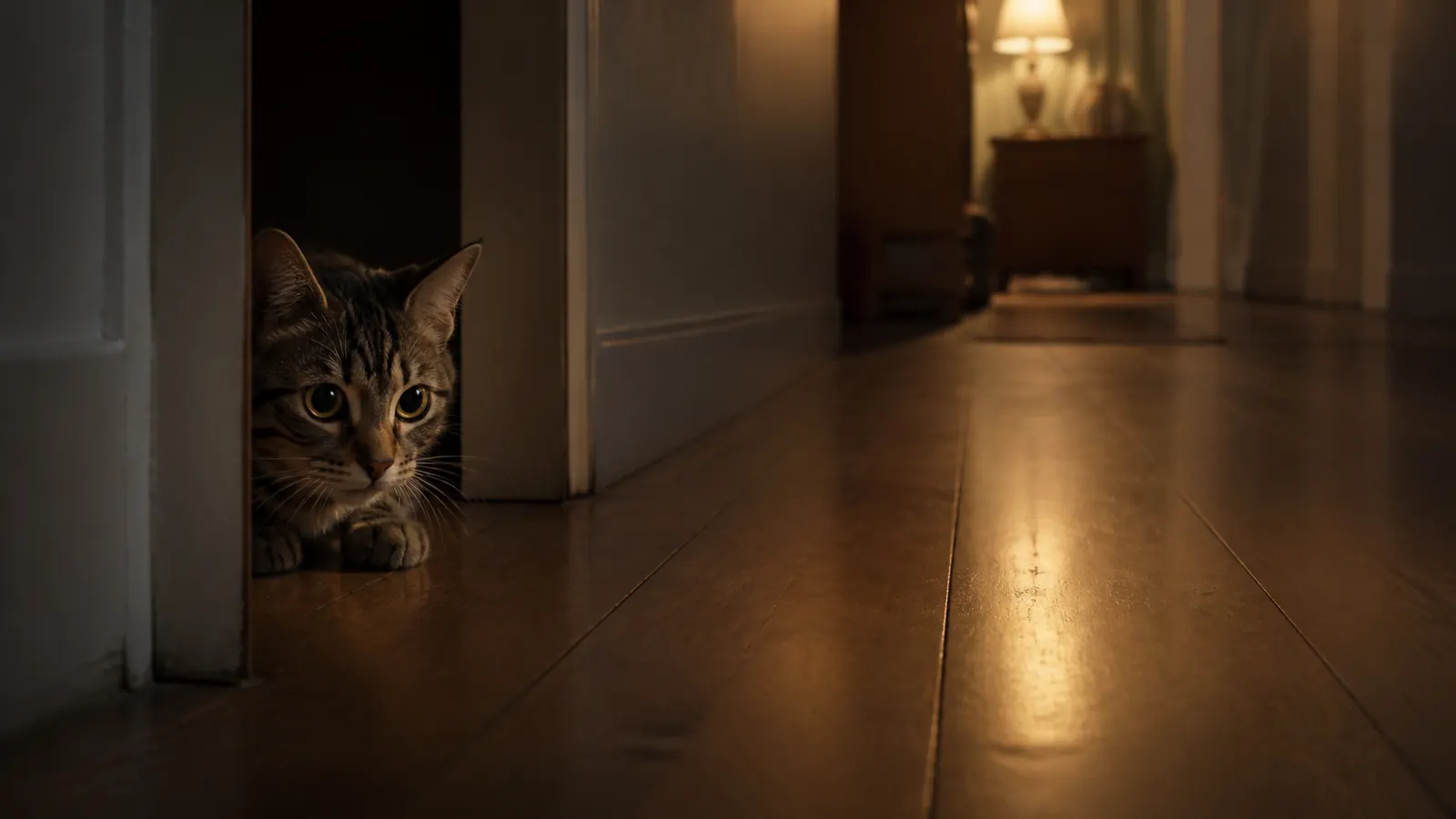
Ankle attacks often start as play directed at a moving target: a cat waits behind a doorway, pounces and grabs as you pass. Because the target is movement, the useful changes work on both sides: fewer chances to ambush, and another outlet for the same play.
A sudden, intense or unexplained change in biting needs a veterinary assessment, because pain and fear can also make a cat bite.
Work out what happens before the bite
Where and when attacks happen, what your cat does just beforehand and what happens next are what separate one kind of biting from another. A predictable evening ambush when feet move past a hiding place suggests a different problem from biting when a sore cat is moved or cornered.
A video taken safely from a distance can help your veterinarian understand the sequence.
Play may include stalking, chasing and grabbing, but the force of a bite does not reliably identify its cause. A playful cat can break skin, and a frightened cat may give a restrained warning. Escape routes, body tension and recent health changes say more about the cause than the bite itself does.
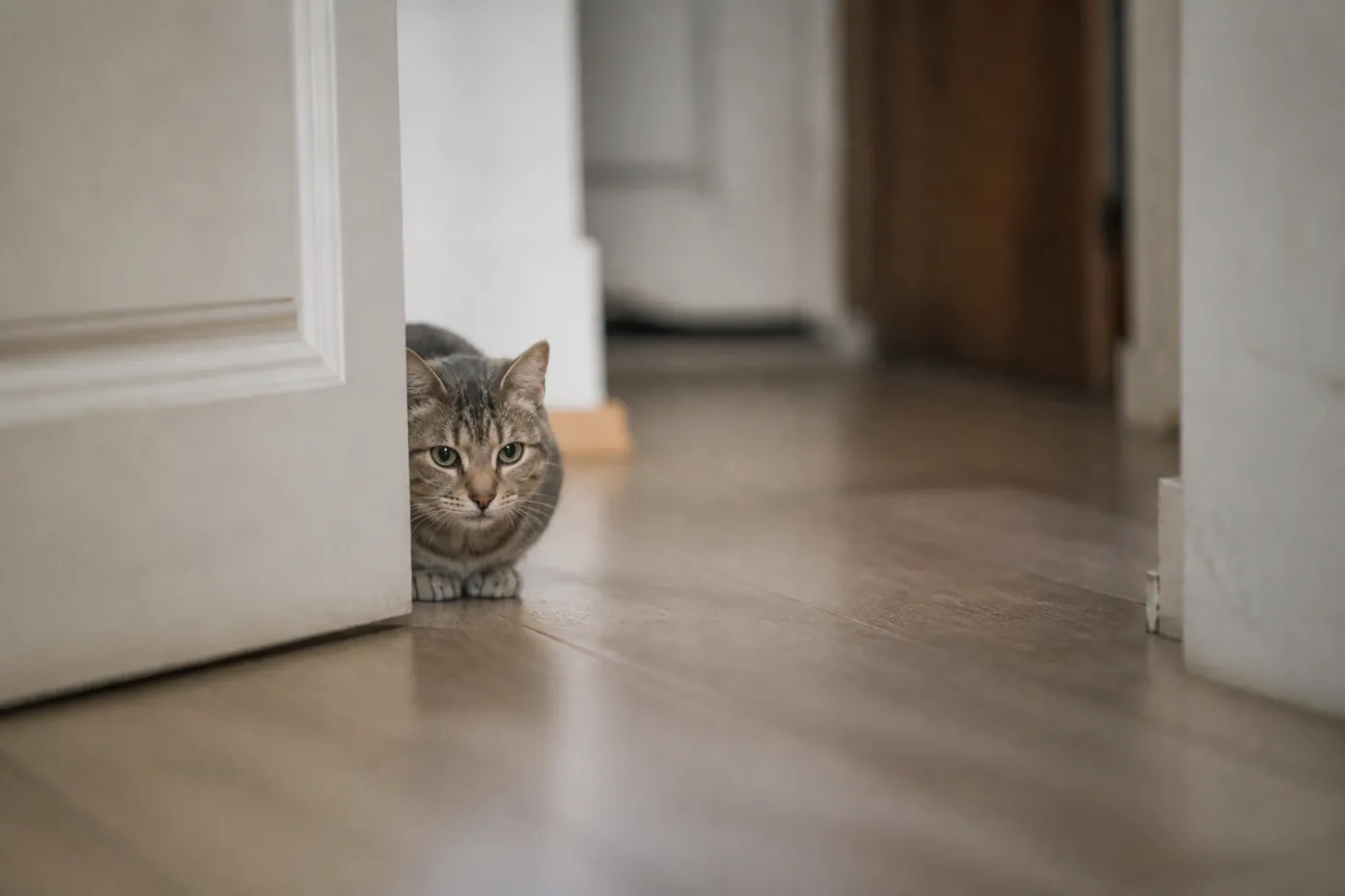
If the attacks follow staring at an outdoor cat or a frightening noise, the cat may be redirecting arousal toward someone nearby. A quiet separate area and time to settle, without handling, let that arousal fade.
Repeated incidents deserve a behaviour plan rather than more vigorous play alone.
Make the immediate encounter safer
Avoid running, kicking or pulling a toy-like foot rapidly away if you can safely pause. Do not reach down to wrestle with the cat, shout or spray it, because punishment can add fear to an already difficult interaction.
Use a door or a large object as a barrier if you need space, keeping your hands out of biting range. Move calmly away once you can.
Do not stay still in an attack that is causing injury merely to follow a training rule.
Children and people unable to disengage safely need separation from the attack area and adult management. Protective clothing can reduce exposure while you change the routine, but it does not solve the cause.
If a bite breaks skin, wash it with soap and warm water and seek medical advice, especially for punctures, bites to the hands or feet, or signs of infection. A clinician can assess wound care and whether tetanus or rabies precautions apply locally.
Offer play before the usual ambush
The most useful time for an interactive session is just before a predictable trouble spot, such as your evening walk to the kitchen. Move a wand toy along the floor and away from the cat in short bursts, with pauses that allow stalking and a catch, and keep the target well away from feet and hands.
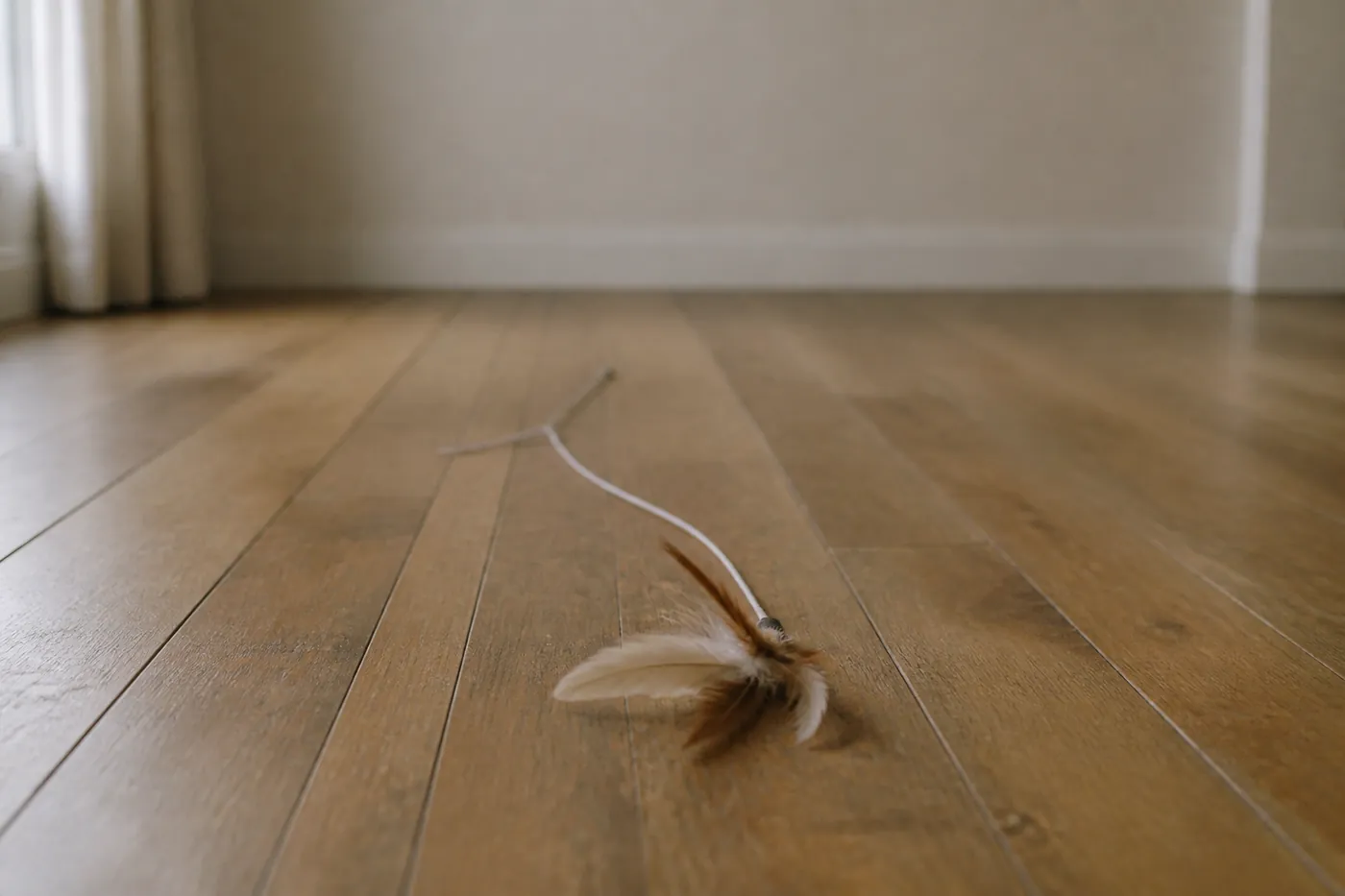
A session is best ended while the cat is still comfortable; panting, exhaustion or escalating frantic behaviour means it has already gone on too long. Several brief sessions may fit a cat better than one long session, and older cats need movements suited to their mobility.
Food used after play or in a puzzle feeder counts toward the day's food portion.
Never use your hand under a blanket as prey, even if the kitten's bites are gentle now.
A toy offered in advance can redirect interest. Repeatedly producing a favourite toy immediately after each bite may instead make biting part of the routine. Rewards belong after the cat chooses the toy or lets you pass calmly.
Change the environment between sessions
Hiding places, scratching surfaces, resting spots and toys that are safe without supervision give the cat something to do between sessions, and rotating a few objects keeps them interesting.
Store string and wand toys out of reach after use because swallowed string can cause serious harm.
Clearing the walking route through a recurrent ambush area removes the cover the cat waits behind. A food puzzle or independent toy placed away from that route before you pass can give the cat something else to do.
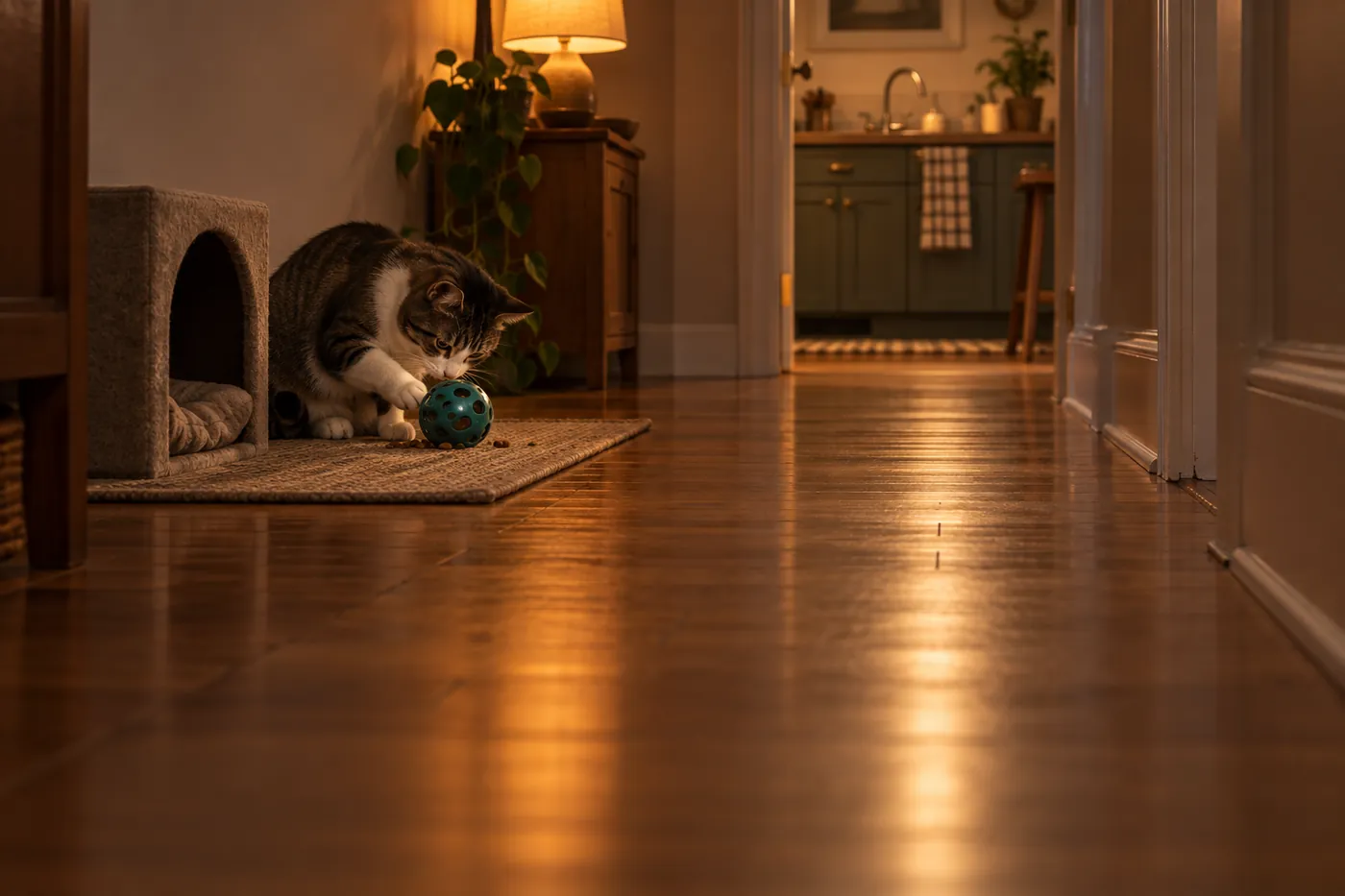
Do not shut a cat into a bare room for long periods as punishment.
A second cat is not a reliable treatment. Cats differ in their interest in feline company, and an unwanted companion can introduce conflict between cats, so the current cat's routine is the place to start.
Decide whether the plan is helping
The useful measures are whether attacks become less frequent or less intense and whether your cat chooses the alternative activity. Changing one part of the setup at a time shows which change helped. There is no dependable number of days by which biting must disappear.
New aggression, apparent pain, changes in appetite or activity, or attacks that continue despite a safer routine are reasons for a veterinary visit. A qualified behaviour professional is the next step when people are being injured or cannot move around the home safely.
Growing older may change play, but waiting for age alone leaves the present risk unresolved.
Common Questions
Is ankle biting always play?
No. Play is common in a stalking-and-pouncing pattern, but fear, pain or redirected arousal can also lead to biting. Context and recent changes matter.
Should I get another cat to stop it?
Do not get another cat as a treatment. A new companion may create conflict and does not replace appropriate play, resources and assessment.
How long does improvement take?
There is no fixed deadline. Track frequency and severity while changing the routine, and seek help promptly if attacks cause injury or worsen.
Checked Against
Published 2 September 2026. Last updated .