Cat Breakaway Collars: Why the Buckle Matters
Cats climb and squeeze through gaps, so a collar that holds under load is a hazard. The buckle is the product, and everything else on the strap is secondary.
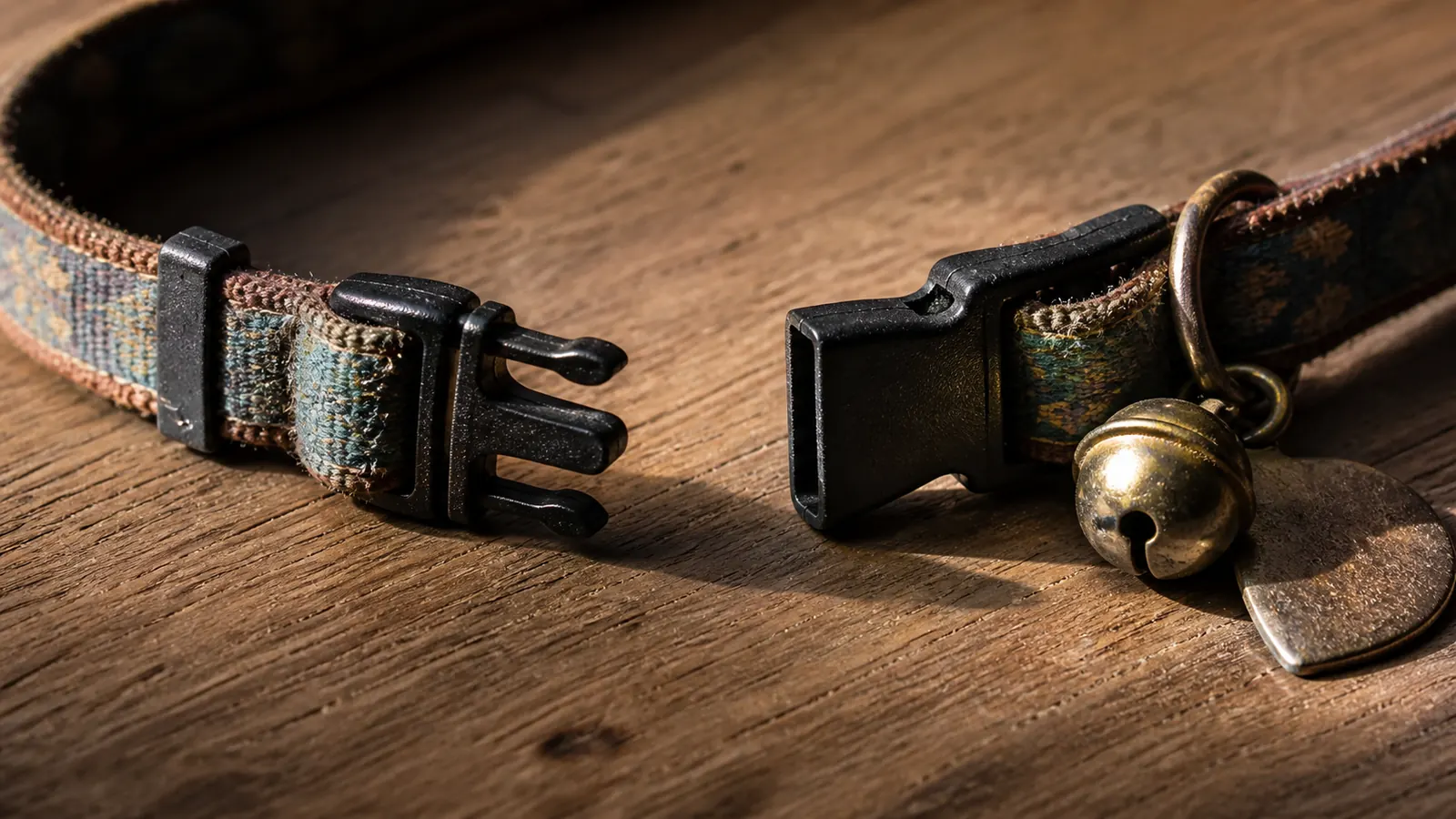
A cat collar has one job that matters more than all the others, and it is to come off.
Why a cat collar must fail
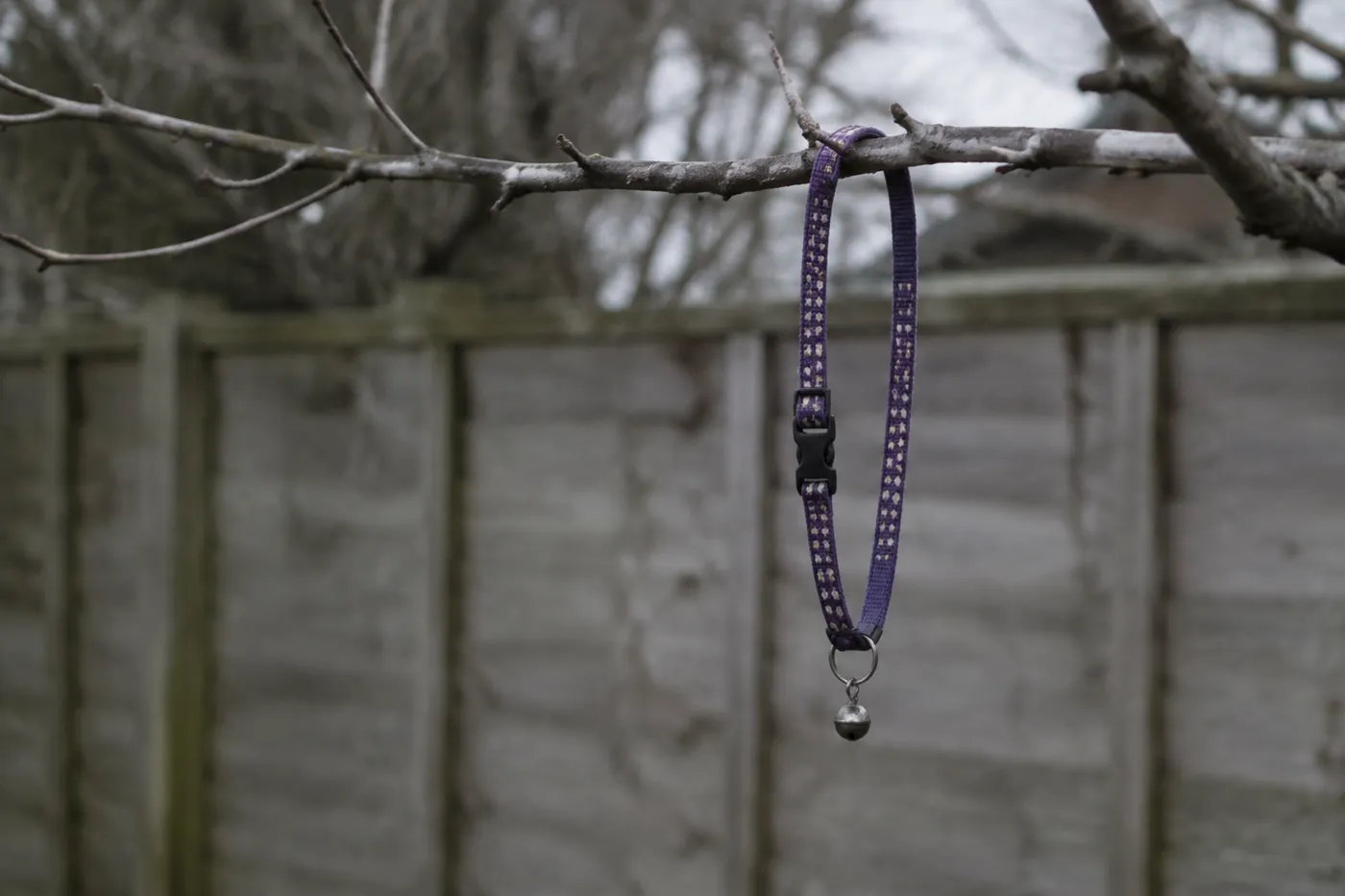
Cats climb, squeeze through gaps, and jump onto things with branches and fence posts nearby. A collar that holds under load becomes a noose.
The recorded injuries are specific and unpleasant: a cat hanging from a branch or a fence, and a foreleg pushed through a loosened collar so the strap saws into the armpit.
A breakaway collar has a buckle designed to open under sustained pull. Check the manufacturer's size and weight guidance; release behaviour varies by product.
Elasticated inserts are the older answer and are worse. A cat can stretch the elastic just enough to get a leg through and not enough to escape, which produces exactly the injury the elastic was meant to prevent.
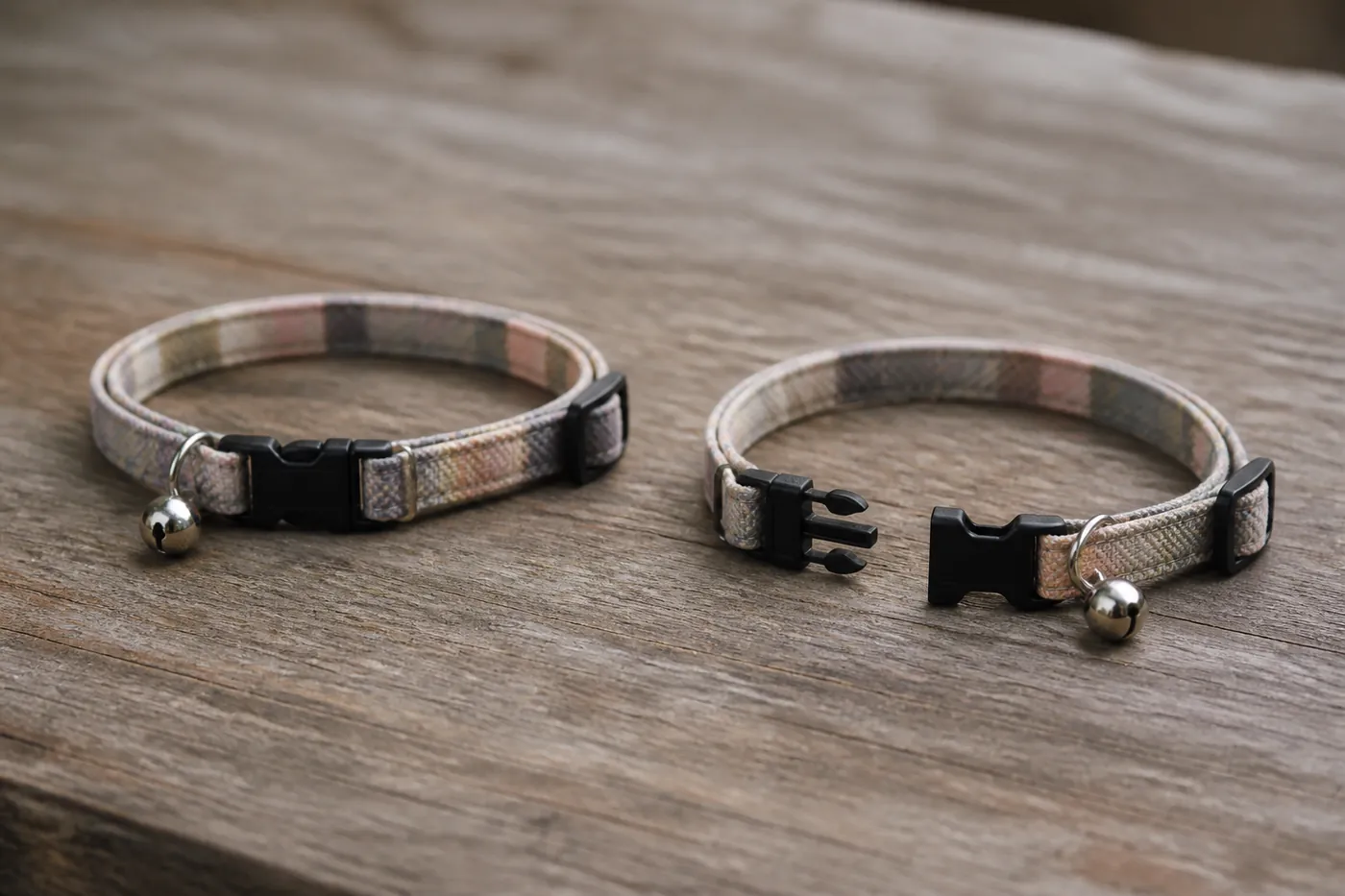
Testing the buckle before you use it
Follow the maker's instructions to check that the buckle opens under pull. Do this off the cat and confirm that the collar is intended for its size and weight.
A hand test can find an obviously stuck catch, but it cannot certify a release force or guarantee escape from every snag. Never test by pulling on a collar the cat is wearing.
Replace damaged or unreliable equipment and inspect it after a release.
What to look for
The release mechanism and the fit are both safety features. Weight, condition and attachments also affect whether the collar is suitable.
The breakaway buckle is the whole point of the product. It separates under sustained pull, so a cat caught by its collar on a branch, a fence, or a cupboard handle frees itself instead of hanging.
A side-release clip is not the same mechanism and it is the substitution to watch for. Those are designed not to open under load, which is correct for a dog lead and exactly wrong here.
Fit is what most collar injuries actually come down to. A collar loose enough to pass a foreleg through traps the leg at the shoulder, and the cat then tears at it with the leg still inside.
A two-finger fit is a common starting check, but the collar maker's instructions and the cat's build take precedence. Recheck after growth, weight or coat changes and whenever the collar has released.
Weight matters more than it seems for a small animal. A heavy tag swings with every step and rubs a patch behind the jaw, which is the commonest reason a cat starts working at its collar.
Elastic inserts are the item to refuse outright. They exist to let a cat escape, and what they actually do is stretch far enough for a leg to go through without ever releasing.
- Buckle
- A true breakaway that separates under pull, not a plastic side-release clip
- Fit
- Follow the maker's fit instructions; a two-finger check is a starting point, not a substitute
- Width
- Narrow and flat, so it sits without pressing
- Weight
- Light. A heavy tag turns the collar into a pendulum
- Bell
- Optional, removable, and worth having on a hunting cat
- Reflective
- Useful on any cat with outdoor access
- Elastic insert
- Avoid, because a stretched collar is how a leg gets through
Check the fit again after a moult, after weight change, and on any growing kitten. A collar fitted correctly in winter can be tight by spring, and a loose one is more dangerous than a snug one.
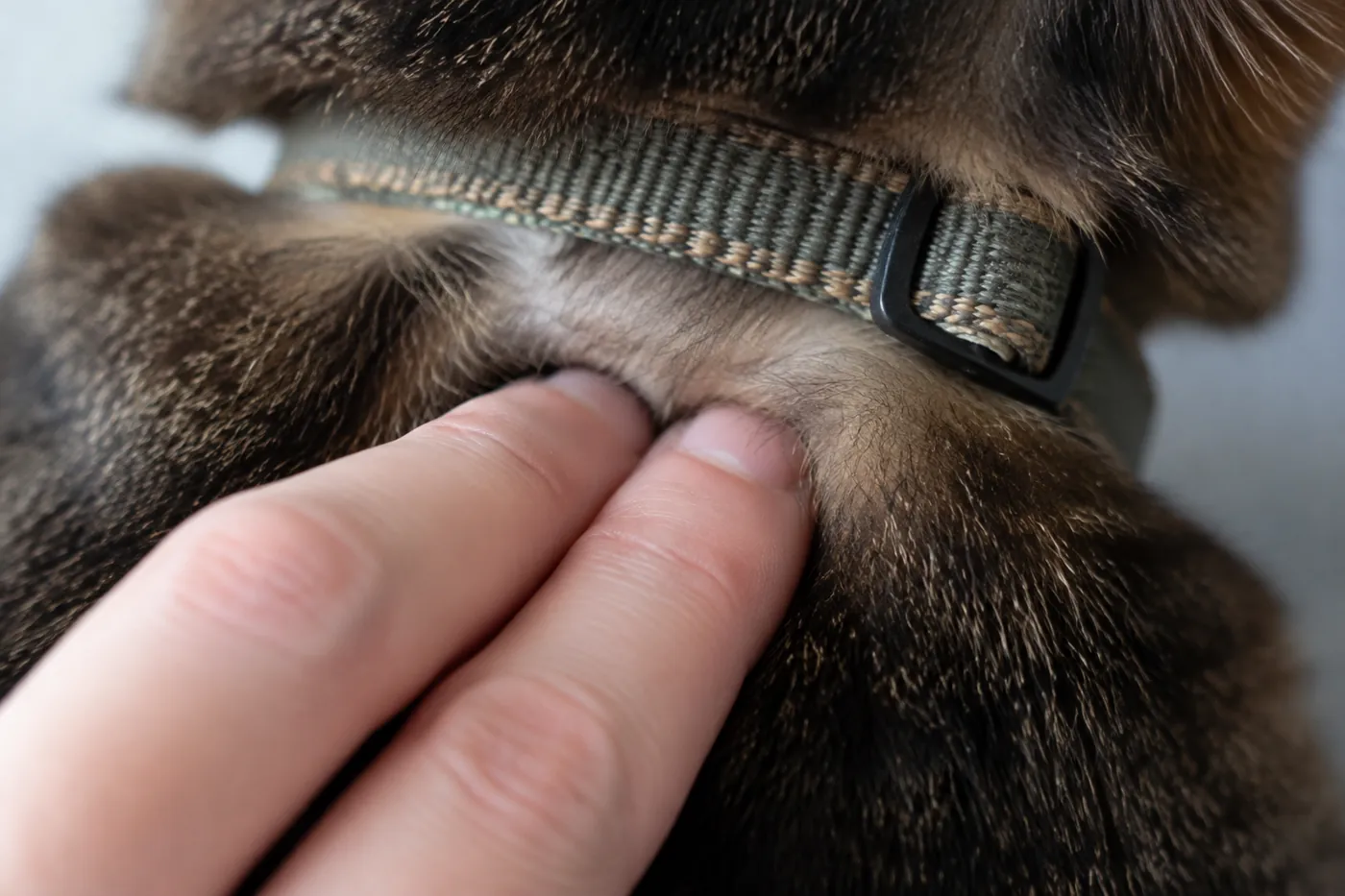
Fitting one on a kitten
A small kitten may be too light for a particular buckle to release. Follow the product's minimum size and weight guidance rather than assuming every collar becomes safe at a fixed age.
If you introduce a suitable collar, keep the first sessions short and supervised. Check the fit frequently during growth and remove it if the kitten becomes distressed or gets a jaw or leg underneath it.
Microchipping remains the more dependable identification method.
Introducing one
Some cats accept a collar after a gradual introduction, while others remain distressed or repeatedly interfere with it.
- Let the cat inspect the collar before fastening it.
- Start with a brief supervised wear and remove it before distress develops.
- Increase time only when the cat is moving and resting normally.
- Remove it if the cat becomes distressed, catches a jaw or leg, or damages the skin.
- Recheck fit after growth, weight change, coat change or any release.
Inspect and test a collar after it releases, following the manufacturer's instructions. Replace it if damaged or if the catch no longer works reliably.
Harnesses are a separate item with the opposite requirement, because a harness is meant to hold.
For travel equipment, see choosing a cat carrier, and teaching a cat to accept equipment is covered in clicker training.
Checking for collar injuries
Collar injuries develop slowly and under the strap, which is why they are usually found late.
The two patterns are a foreleg pushed through a loose collar, where the strap works into the armpit and cuts as the cat moves, and simple rubbing where a collar sits too tight or carries too much weight.
Neither is visible without looking. Fur can conceal damaged skin, so inspect beneath the strap rather than relying on visible discomfort.
Slide the collar around and part the fur underneath it often enough to find rubbing early. Look for redness, hair loss, damp fur or smell, and check sooner after fitting a new collar or attachment.
An armpit wound is a veterinary matter rather than something to treat at home, because these injuries are deep, become infected, and often need cleaning under sedation.
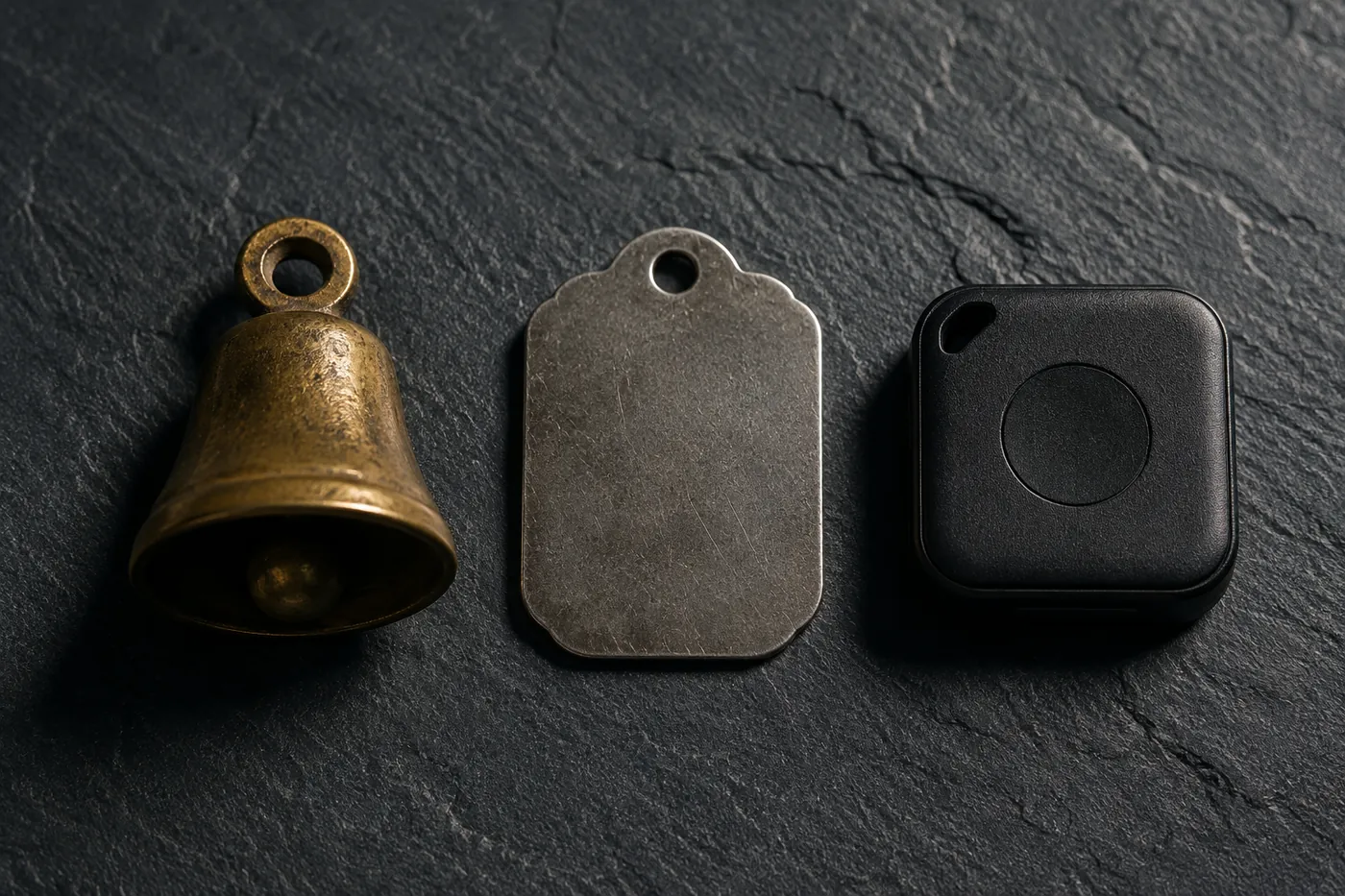
Bells, tags, and trackers
What hangs from the collar matters as much as the collar, because weight and bulk are what turn a strap into a hazard.
A bell reduces hunting success for some cats, and the evidence is mixed rather than conclusive. It does not appear to distress most cats, and a cat that is clearly bothered by one can have it removed since the buckle matters far more.
Choose tag details that meet local identification rules while limiting unnecessary personal information. A current phone number is useful, and the legal requirement for a name or address differs by place.
GPS trackers vary greatly in weight and attachment. Follow the tracker and collar limits, then watch for swinging, rubbing or changed movement rather than relying on an unsupported percentage of body weight.
A tracker also has to survive the collar breaking away, since the whole point of the buckle is that the collar will eventually be left in a hedge.
- Keep total attached weight light enough that the collar does not swing
- Use a phone number on the tag rather than a name and address
- Check a bell is securely attached, since a loose one is a swallowing risk
- Accept that a tracker will be lost with the collar at some point
- Re-check the fit after adding anything, because bulk changes how it sits
- Remove everything if the cat is scratching at the collar persistently
A collar is not identification on its own
A collar that is designed to fall off is, by design, unreliable identification. It answers a different question.
Microchipping is the permanent identification, it is a legal requirement for cats in some jurisdictions, and it is the thing that gets a cat home from a rescue or a veterinary practice.
The chip only works if the registered details are current. A chip registered to a previous address returns nothing useful, and updating it takes a few minutes online.
The collar's value is that it is visible from a distance. A neighbour who finds a cat sitting on a wall reads a tag; nobody scans a chip without taking the cat somewhere.
Whether an indoor cat needs one
An indoor-only cat gains little from a collar and carries the same snagging risk from furniture, banisters, and vents.
The argument for one is escape. An indoor cat that gets out is unfamiliar with the outside and is often found close to home by someone who would not otherwise know it was owned.
A reasonable middle position is a correctly fitted breakaway collar with a tag, plus a current microchip, and no collar at all if the cat consistently gets a leg through one.
Do not put a collar on a cat with a healing wound, a skin condition on the neck, or an indwelling feeding tube without asking the vet. An older cat that has become stiff may also object to handling it did not mind before, which the ageing guide covers.
Common Questions
Do cats need breakaway collars?
If a cat wears a collar, choose a correctly fitted quick-release design. It reduces the risk of becoming trapped, but no collar can prevent every injury.
Are elasticated collars safe?
No, they are worse. A cat can stretch the elastic enough to get a leg through and not enough to escape, which causes the injury the elastic was meant to prevent.
Does my indoor cat need a collar?
Not necessarily. A current microchip matters more. A collar helps if the cat escapes, but the same snagging risks apply indoors.
Checked Against
Published 2 September 2026. Last updated .