How Do You Litter Train a Kitten, and How Long Does It Take?
Litter training a kitten is mainly a setup task: provide an accessible tray, familiar litter and a short clear route. Progress varies with age, prior experience, health and the new home.
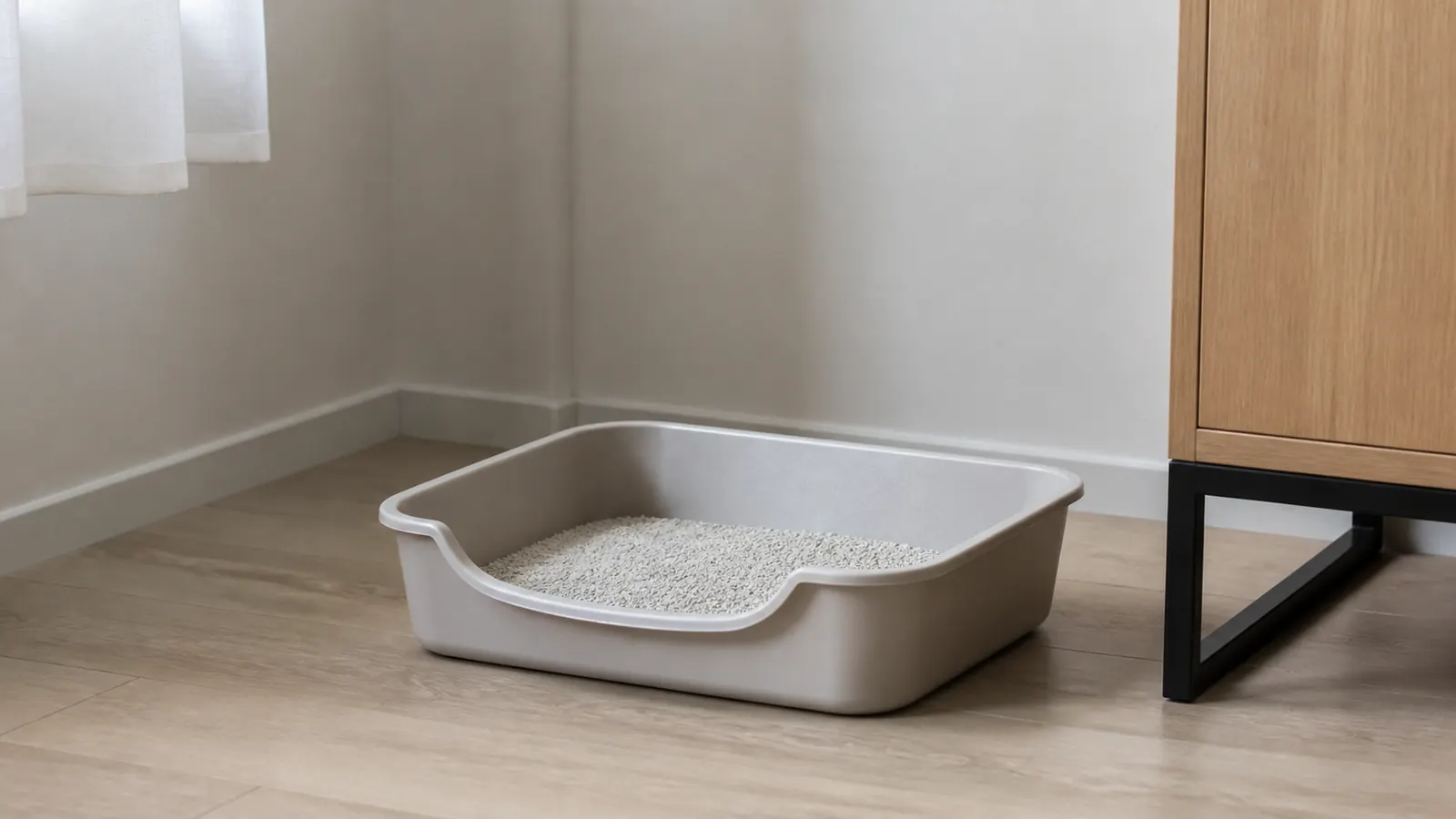
Cats bury waste instinctively, and kittens learn the specifics by copying their mother between about three and four weeks.
A kitten arriving in a new home at eight weeks usually already knows what a tray is for. What it does not know is where yours is.
Get the tray right first
The single most common mistake is a tray a kitten cannot get into.
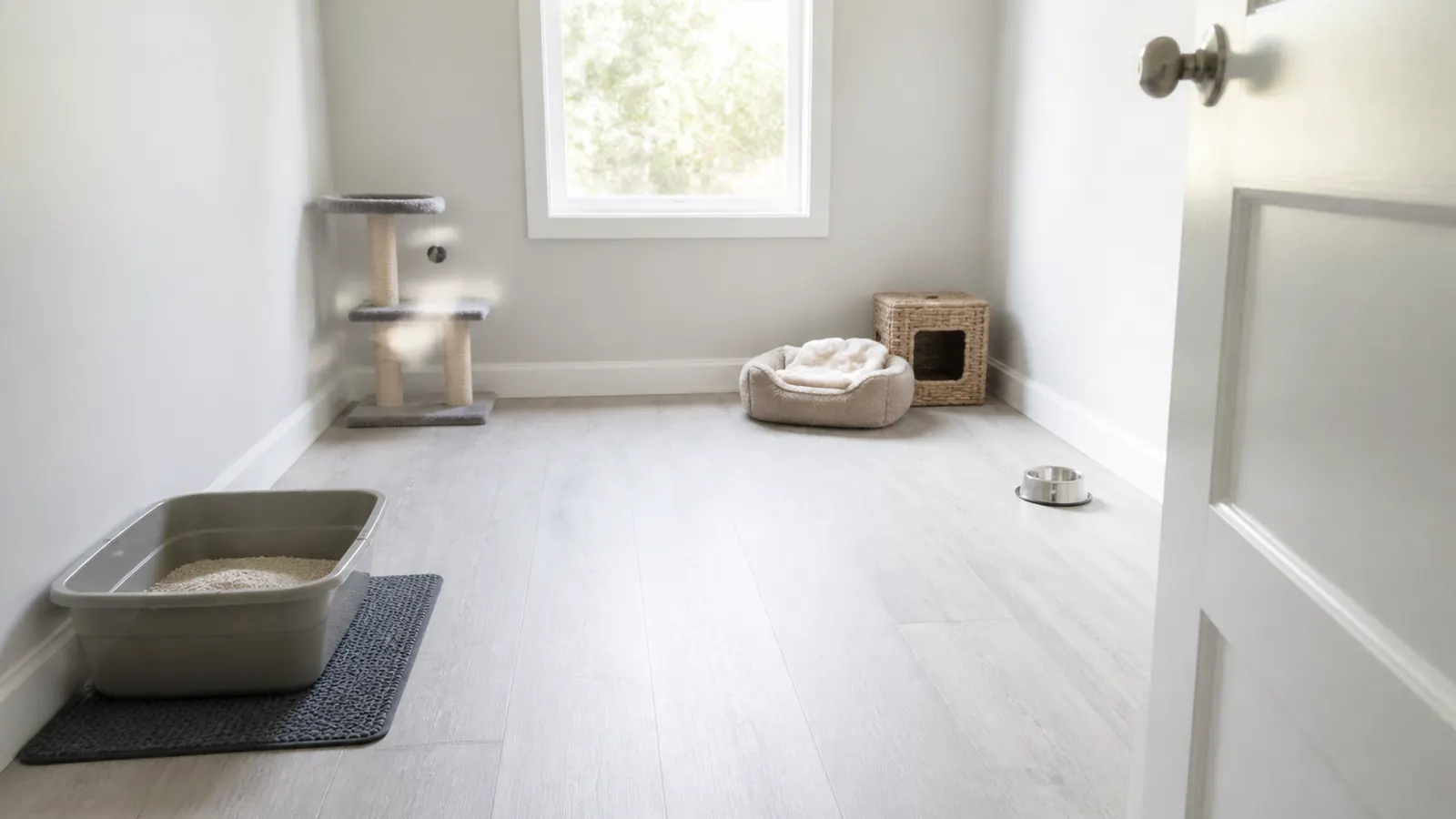
Use a tray with low sides, no hood, and no liner. Liners catch small claws and put kittens off immediately.
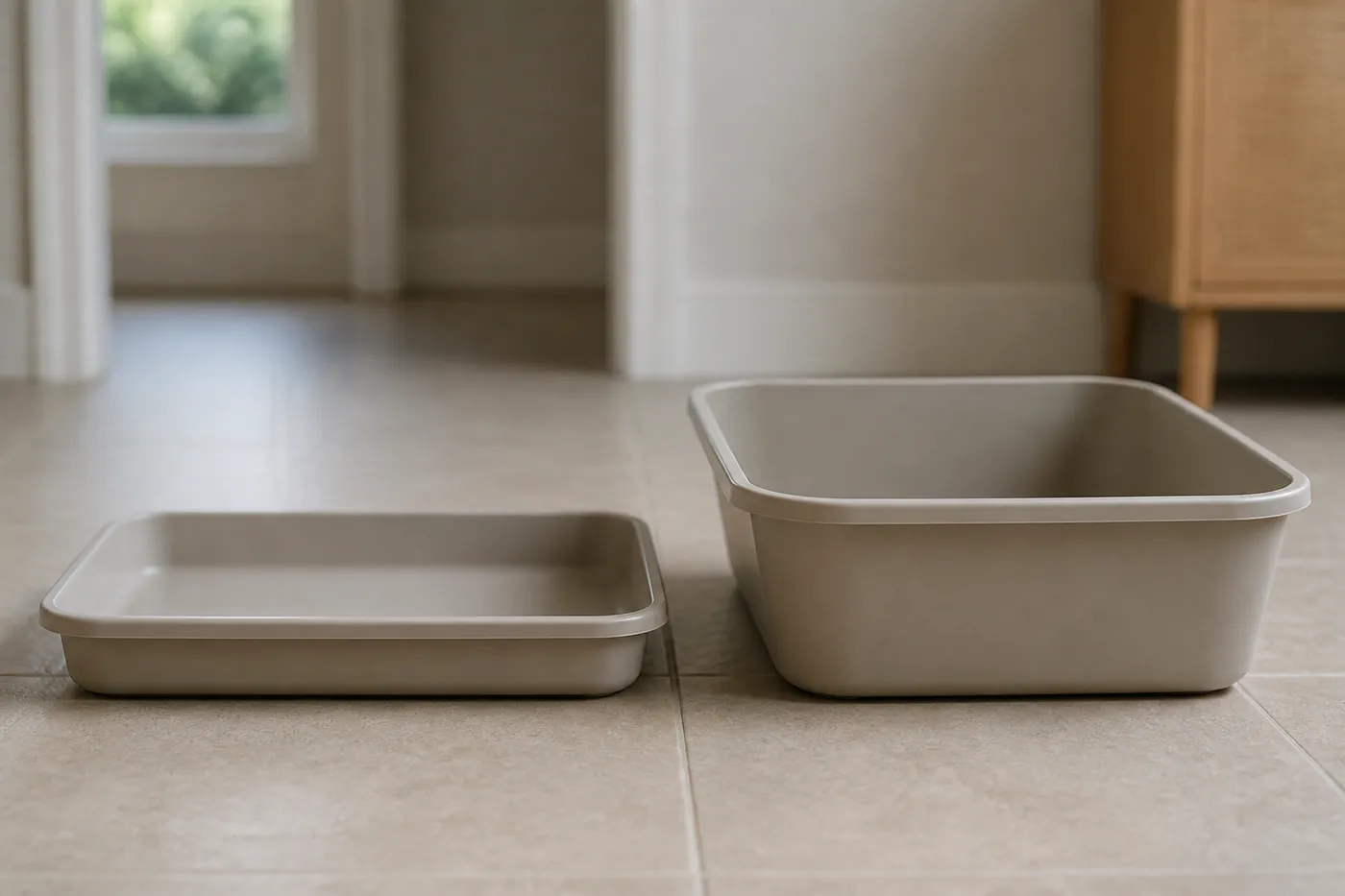
Start with a familiar, unscented non-clumping litter for a young kitten, following the product's depth instructions. The litter comparison explains why swallowing clumping material is a concern.
Scented litter is made for human noses and frequently deters cats.
Ask the breeder or the rescue which litter the kitten has been using and start with the same one. Changing the surface underfoot at the same moment as the house, the people, and the smells is one variable too many.
Covered trays, and why not yet
Hooded trays look tidier and solve a problem the owner has rather than one the kitten has.
A hood traps smell inside, which is pleasant for the room and unpleasant for the animal standing in it. Cats have a far better sense of smell than people, and a covered tray concentrates exactly what a cat is trying to get away from.
A hood also removes the line of sight. Cats are vulnerable while toileting and want to see what is coming, which is why an open tray in a corner beats a covered one in the middle of a room.
For a kitten there is a third problem. A flap is a barrier to learn as well as a tray, and the two lessons together are more than most kittens need at once.
Location decides whether it gets used
A kitten will not cross the house under pressure, and it will not toilet where it eats.
The warning a kitten gets is very short. Bladder control develops over the first months, so the gap between deciding to go and needing to is measured in seconds rather than in the minute an adult has.
That is the whole reason placement beats training at this age. A kitten that has to travel is not being disobedient when it does not make it, and no amount of teaching shortens the distance.
The dead-end rule matters more for a kitten than for an adult. A small animal that cannot see an exit is more easily startled into abandoning the spot, and one bad experience at that age can rule a location out for months.
Noise is the version of that people underestimate. A washing machine reaching its spin while a kitten is mid-use is a single event that can end the tray's usefulness permanently.
Quiet but findable is the balance to aim for. A tray tucked out of sight is a tray a kitten has to remember the way to, which is precisely what it cannot yet do reliably.
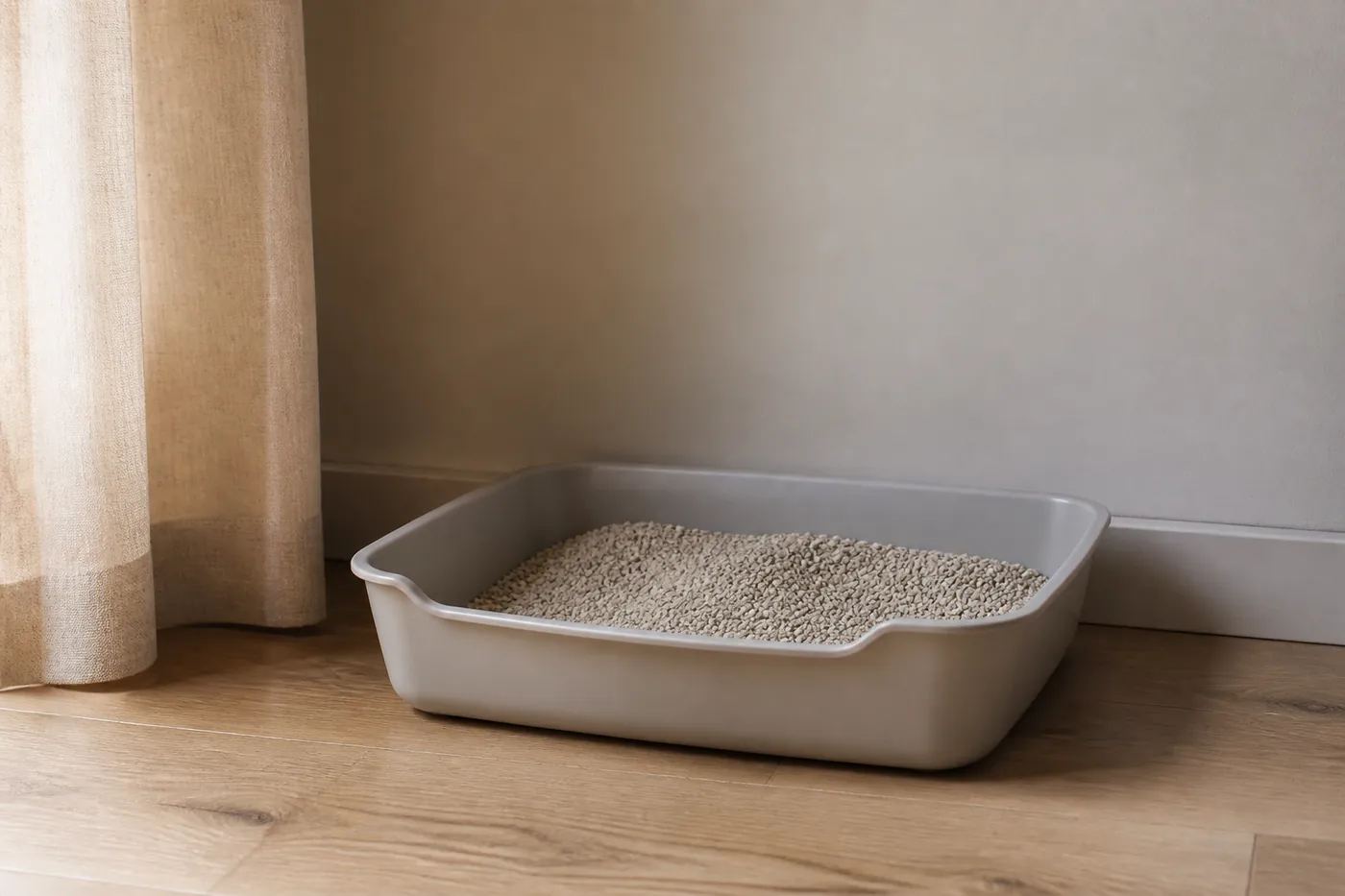
- One tray per floor the kitten can reach, plus a spare
- Away from food and water bowls
- Out of a dead end, so the kitten can see a way out
- Away from the washing machine and other noisy appliances
- Somewhere quiet but not hidden, so the kitten can find it
Begin in a safe manageable area with an easy-to-find tray, then expand access as the kitten uses it reliably. The area and timing should fit the kitten's confidence, social needs and household layout.
Choosing the litter, and what to avoid
Ask which litter the kitten already uses. Familiarity helps during a move, but a young kitten that mouths litter is better offered a suitable non-clumping product.
Talk to the rescue or vet before an abrupt change.
Many cats like soft, sand-like material, but individual preference varies. Avoid strong fragrance and watch for discomfort, dust or eating the substrate.

A material label does not prove every crystal is sharp or every pellet unacceptable.
Use an accessible open tray initially so the kitten need not learn a flap at the same time. Keep it clean and let the kitten use it without being disturbed.
Kittens that eat or dig in the litter
Both are common, and only one of them matters.
Digging, scattering, and sitting in the tray are ordinary kitten play. A tray with higher sides at the back, or a mat outside it, deals with the mess and the behaviour fades as the kitten matures.
Eating litter is different. A little mouthing while exploring is normal in a very young kitten, and repeated deliberate eating is not.
Clumping litter is the concern, because it swells with moisture and a quantity swallowed can cause a blockage. That is the reason many rescues use paper pellets for kittens under about three months.
Persistent litter eating can have several causes and deserves a prompt veterinary call. Swallowing a quantity, vomiting, pain or reduced toileting needs immediate advice.
The routine
- Offer access after waking, eating or play, and let the kitten step out if it chooses.
- Let it scratch and sniff. Do not hold its paws or dig for it.
- Praise quietly when it uses the tray, and otherwise leave it alone.
- Check and scoop often enough that waste does not accumulate.
- Expand access to more of the house as use becomes reliable, adding another accessible tray when distance increases.
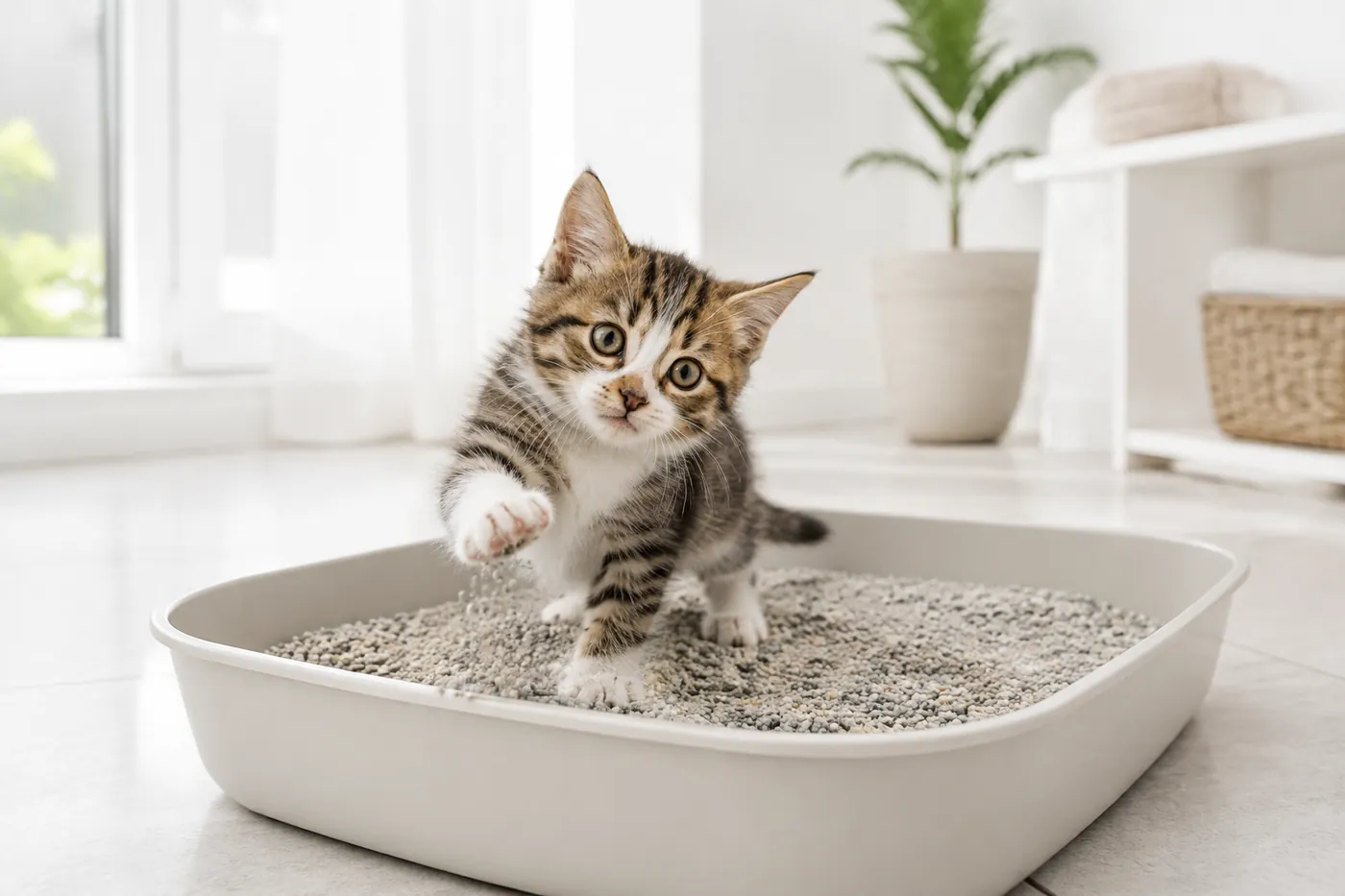
Never punish an accident. Punishment teaches a kitten to hide from you and to toilet out of sight, which is the opposite of what you want.
Some kittens use the tray immediately and others need more time. Daily accidents, a sudden setback or signs of discomfort justify checking the setup and discussing health with a veterinarian rather than waiting for a deadline.
An adult cat arriving in a new home works to a different timetable and may bring established surface or location preferences.
Training more than one kitten
Littermates may copy one another, but sharing does not guarantee faster learning. Each kitten still needs an accessible option it can use without being blocked.
The problem is capacity. Two kittens fill a tray far faster than one, and a soiled tray is the commonest reason a kitten that was reliable starts missing.
- Possible advantage
- A kitten may investigate after seeing another use a tray
- The problem
- Two kittens fill a tray far faster than one
- Starting provision
- One tray per cat plus an extra is a common starting point, adjusted for access and use
- Two kittens
- Begin with separate accessible choices and add capacity if either waits, guards or avoids
- The catch
- Trays side by side count as one location, so they have to be split up
One tray per cat plus an extra is a common starting guideline, but access and distribution matter more than arithmetic. Tray number and placement should prevent one kitten or doorway from controlling every option.
Trays side by side count as one location to a cat. Splitting them across the room, or across two rooms once the kittens have access, is what makes the count meaningful.
Kittens too young to use a tray
Very young orphaned kittens may be unable to toilet without stimulation; age and development vary.
That age sits before weaning, so the tray is not yet part of the picture. In a normal litter the mother stimulates them by licking, and a hand-reared kitten needs a person to take that role.
Hand-rearing needs rescue or veterinary instruction on safe stimulation, feeding and monitoring. Follow that individual plan rather than a generic after-every-feed rule.
An orphaned litter also needs feeding every few hours with a proper kitten milk replacer, never cow's milk, as the milk answer explains.
Offer a very low tray with a shallow layer of litter once they are steady on their feet, and expect it to be walked through before it is used properly.
When the kitten outgrows the tray
The tray that suited an eight week old kitten will be wrong within a few months, and the change is easy to miss.
A tray around one and a half times the cat's nose-to-tail-base length is a useful starting point. The real test is whether the kitten can enter, turn, dig and posture without being cramped.
A kitten grows quickly to around six months and then more slowly, so check the fit as it grows rather than replacing it on a fixed schedule.
Watch for the signs rather than the calendar. A cat that hangs over the edge, perches on the rim, or starts leaving waste just outside the tray has outgrown it.
- Recheck tray fit during growth and whenever posture or use changes
- Replace when the cat can no longer turn around comfortably inside it
- Keep the sides low enough to step into, not climb into, at every stage
- Introduce a larger tray beside the old one rather than swapping it overnight
- A plain plastic storage box is a cheap answer for a large adult cat
- Follow the litter's depth guidance while keeping entry easy
Diarrhoea, and why it undoes training
A kitten with loose stools will miss the tray however well trained it is, and the training is not the thing to fix.
A kitten with diarrhoea often has no warning and no time, so it goes wherever it is standing. Punishing or retraining through that achieves nothing.
Parasites, infection, food changes and stress are possible causes. The vet decides whether tests or treatment are needed; do not assume the move is the explanation.
Call your vet promptly about diarrhoea in a kitten. Weakness, reduced eating, repeated vomiting, blood or dehydration needs urgent assessment; do not wait until later in the week.
Accidents
Clean the spot with a surface-compatible pet-urine product according to its label, and avoid ammonia-based cleaner on the soiled area.
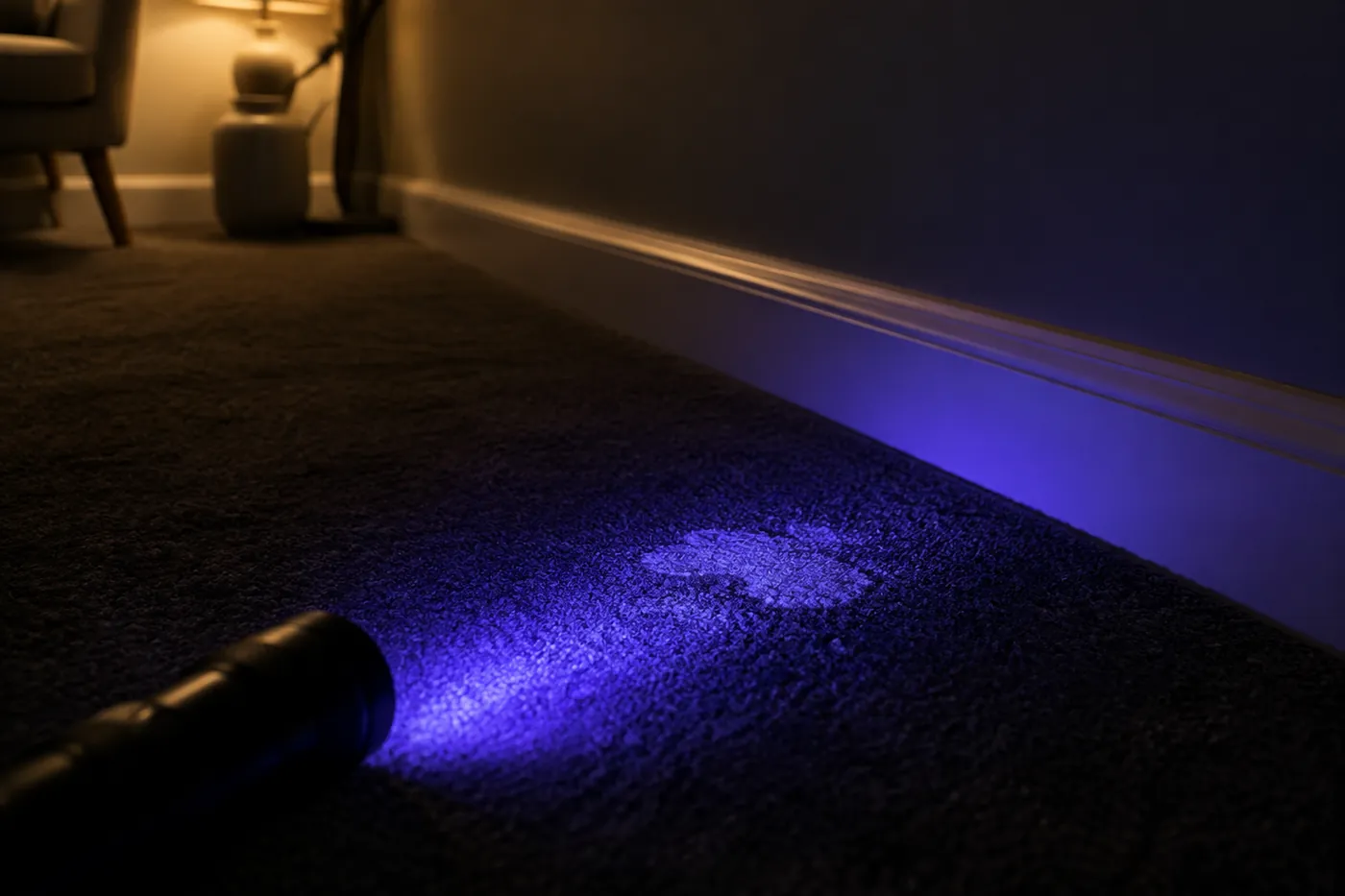
If accidents keep happening in one safe location, placing a tray there can test whether location is the issue. Move it only after reliable use and only as gradually as the kitten continues to accept.
Working with the choice rather than against it is not indulgence. A kitten returning to one spot has already decided that spot has the qualities it wants, and those are usually distance from the food, a clear view, and quiet.
A tray at the frequently used spot may help, provided the location is safe and accessible. Continue cleaning and check whether another tray, litter preference or health problem explains the accidents.
Gradual movement can preserve the familiar route, but there is no universal daily distance. If use deteriorates, return to the last accepted location and reassess access, litter and health.
Punishment fails for a reason worth stating plainly. A kitten does not connect a telling-off with something it did minutes ago, so what it learns is to avoid toileting where it can be seen, which produces hidden accidents rather than fewer ones.
Common Questions
At what age can a kitten use a litter tray?
Kittens commonly begin using a shallow tray around three to four weeks. An older adopted kitten may already be familiar with one, but needs an accessible tray and a calm introduction in its new home.
What litter is best for a kitten?
Use a familiar, unscented non-clumping litter for a young kitten, with an accessible tray and enough depth to dig. Ask the rescue or vet about changes, particularly if the kitten eats litter.
My kitten keeps going on the same rug. What should I do?
Clean it with a surface-compatible pet-urine product and consider placing a tray there if the spot is safe. Once use is reliable, move it gradually only while the kitten continues to accept it.
Checked Against
Published 21 August 2026. Last updated .