How Do You Clean Cat Urine So It Does Not Come Back?
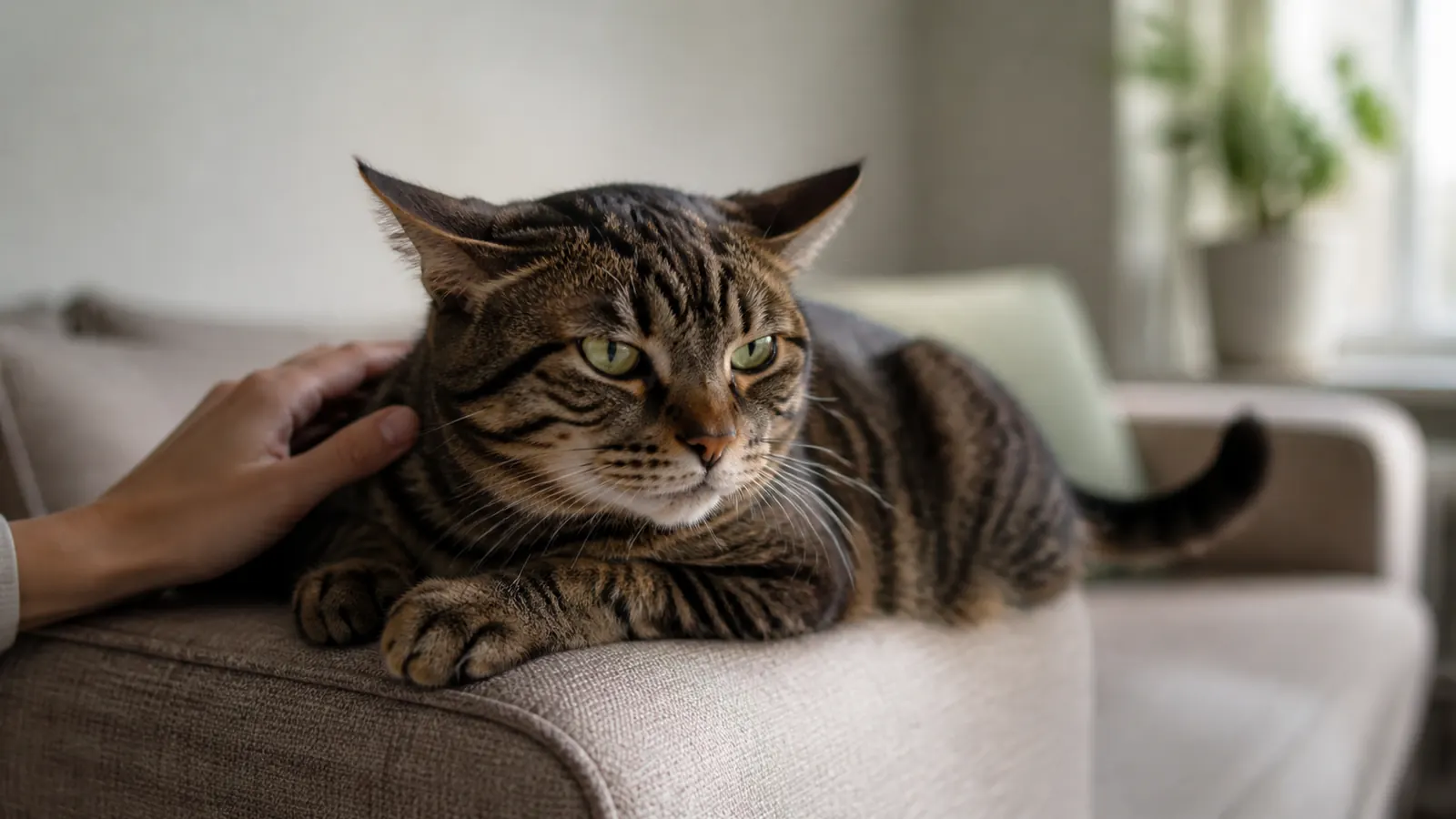
A spot that smells clean to a person can still carry enough urine residue for a cat to read it as a toilet and use it again.
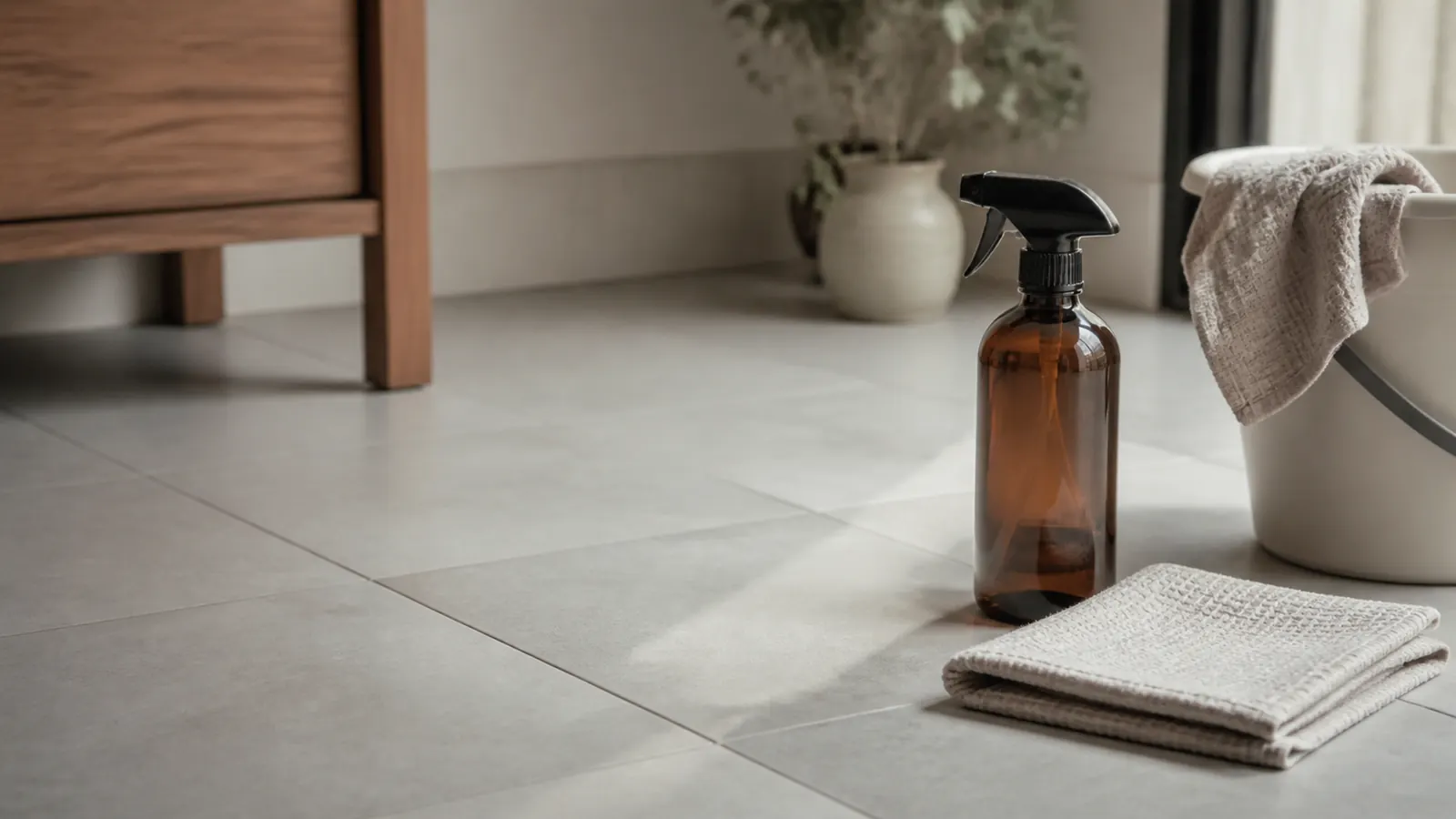
Fresh urine comes up best when it is blotted first and then treated with a pet-urine cleaner made for that surface, used as its label directs. The cleaner must reach the contaminated material; a surface spray may miss urine in carpet backing or underlay.
A new or repeated toileting problem also needs its cause addressed. A cat producing more urine needs assessment, and straining without urine requires emergency care.
Why keep ammonia and bleach away from a urine spot?
Ammonia-based cleaners leave an odour that can encourage the cat to mark the same spot again. Do not use bleach on urine or combine it with ammonia: the mixture can release dangerous gases. Keep cats away during cleaning, ventilate the room and follow the product's directions about rinsing and re-entry. A stronger smell is not evidence of better cleaning.
What do enzyme and other pet-urine cleaners actually do?
Pet-urine cleaners may use enzymes, bacteria, other odour-neutralising ingredients or combinations, and their formulas and instructions differ. It is inaccurate to say that every enzyme cleaner contains live cultures or that every other deodoriser merely masks smell.
Whatever the formula, the job is removing urine residue, which fragrance only covers, and a product does that only at its stated contact time and dilution. Do not add detergent, peroxide or disinfectant to it: mixing products may interfere with cleaning or create a hazard.
Which pet-urine cleaner suits the surface?
A suitable product is labelled both for pet urine and for the exact material being cleaned, is within its expiry and storage directions, and has been patch-tested on an inconspicuous area before it goes on a visible stain.
Wool, silk, leather, unsealed wood and delicate dyes may need specialist advice, because a cleaner safe for synthetic carpet may be unsuitable for them. A surface that cannot tolerate moisture should not be soaked, even when the label calls for a generous amount.
The order to work in
The surface-care instructions and the cleaner's label together set the method, so a universal ten-minute soak can be wrong for a product that requires something different.
- Keep the cat away and blot fresh urine with absorbent towels without scrubbing it deeper.
- Check the material's cleaning instructions and patch-test the chosen product.
- Apply the recommended amount to the affected area, including reachable backing if the product and material permit it.
- Leave it for the stated contact time; rinse or blot only if directed.
- Let the area dry fully and keep the cat away until the label says it is safe.
- Reassess the smell when dry and repeat only according to the product's directions.
Steam and other strong heat can set stains or odours if they reach the spot before the residue is removed. Heat does not make every mark permanently untreatable, but it can complicate cleaning.
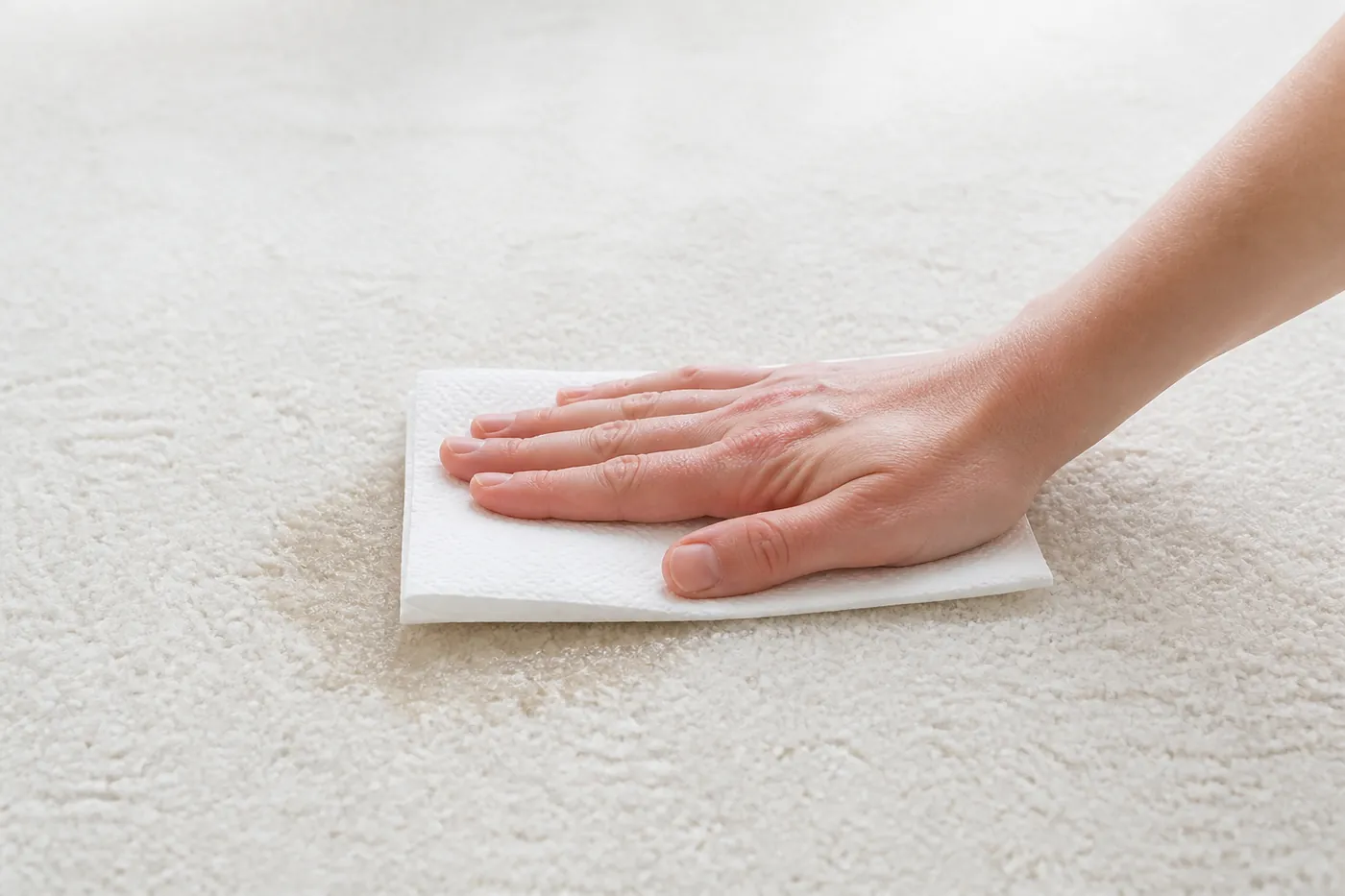
Surfaces need different handling
Carpet is the hardest case, because urine travels through the pile into the backing and often into the underlay beneath. Applying enough cleaner to reach that depth matters more than scrubbing the surface.
On sealed hard floors the liquid sits on top and comes away easily, but grout lines and the gaps between boards absorb it. Those seams are where a lingering smell usually lives. Unsealed wood absorbs urine into the grain, and a badly affected board sometimes has to be sanded and resealed rather than cleaned.
Bedding and removable covers can go through the wash only as their care labels allow, with a compatible pet-urine laundry product where one suits the fabric. Machine heat is best left until the stain and odour are gone, because heat may make remaining residue harder to remove.
Mattresses and thick underlay hold far more liquid than they appear to, and they are the two things most often worth handing to a professional rather than repeating at home.
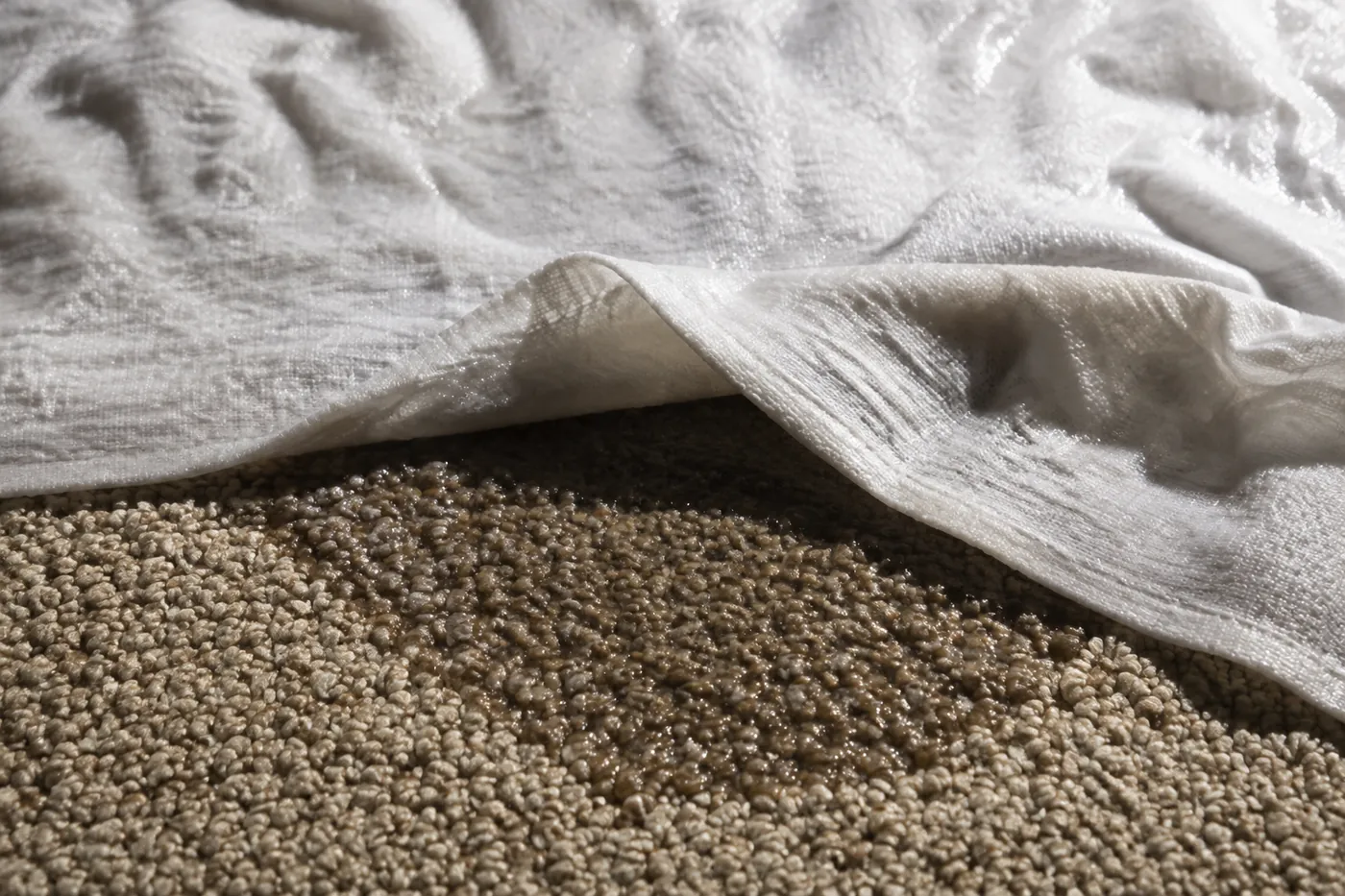
Old stains, and how far to go
An old smell may come from carpet backing, underlay, seams or a repeatedly used spot, so its source often lies beyond the visible patch. More liquid does not always reach it, especially on wood or a mattress that cannot dry adequately, and no fixed number of soakings proves where the residue is.
Many cleaners give separate directions for old stains, including whether a repeat treatment is allowed. When odour persists after that, a professional cleaner can assess the underlying material before any carpet is cut out or boards are sanded.
Spray on walls and vertical surfaces
Spraying leaves a different pattern from soiling, and the cleaning is easier if you know where to look. It is also the pattern that most often means another cat: spraying indoors usually follows a territory the cats have not settled, and the spot will keep being marked until the conflict between them is resolved.
A sprayed patch is usually a narrow vertical streak at around cat height, with a small pool at the base of the wall or the skirting board. The streak on the wall is what people notice, while the floor at the bottom is where most of the liquid ends up.
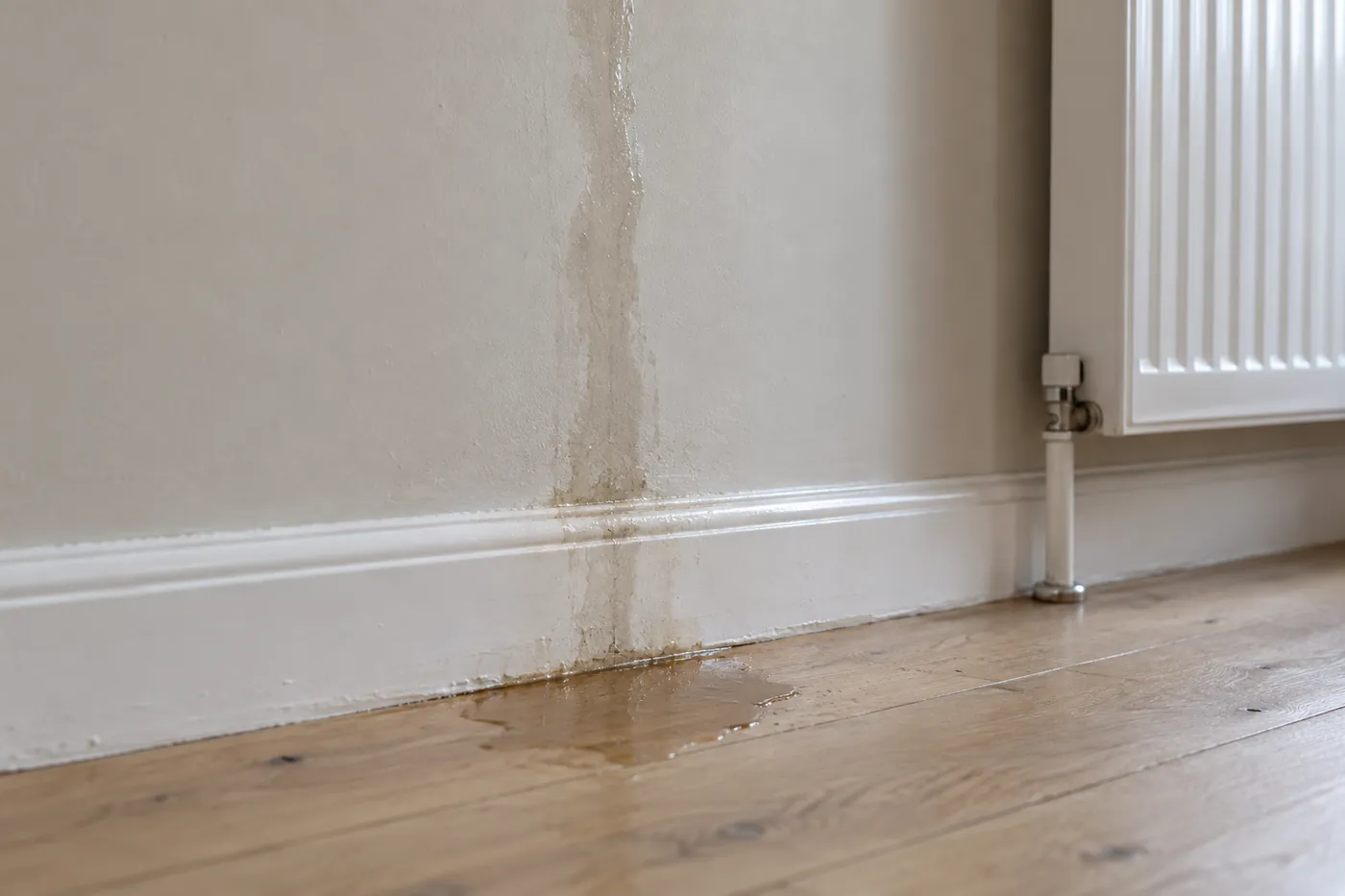
Painted walls and gloss skirting clean easily. The smell tends to survive in the places below and behind the streak, which are easy to miss.
- The narrow vertical streak on the wall at about cat height
- The floor and skirting directly below it, where most of the liquid landed
- The seam where the skirting meets the floor, which needs treating separately
- The gap behind a radiator, a favoured target that is rarely cleaned
- The back of any furniture standing against that wall
Wallpaper is the difficult case. Urine soaks through into the plaster beneath, and a badly affected patch may need stripping and sealing before redecorating.
Outside, the product and amount have to suit the doorstep or door-frame material and local runoff guidance. If another cat keeps spraying the site, cleaning may need to be combined with humane access or sightline management.
Do vinegar and baking soda work?
Household remedies may alter some odour, but they are not a predictable substitute for a surface-compatible pet-urine product. Vinegar can damage some materials, and loose powders should not be left where the cat will walk or groom them off.
Do not mix vinegar, bleach, peroxide or other cleaners. If another product has already been used, tell the cleaner manufacturer or professional before adding anything else.
Finding the spots you missed
A cat will return to a spot you have not found, and a UV torch in a dark room can help locate residue. Other substances also fluoresce, and not every urine patch will show, so the location, the smell and a close look confirm what the torch suggests.
Skirting boards, the sides of furniture and the underside of curtains are worth searching, because spraying goes onto vertical surfaces.
- Blot with
- Paper towel, pressing not rubbing
- Rinse with
- The method and temperature allowed by the surface and cleaner labels
- Clean with
- A surface-compatible pet-urine product used for its stated contact time
- Avoid
- Ammonia-based cleaner on the spot, bleach on urine, mixed cleaners and strong heat before residue is removed
- Find missed spots
- UV torch in a dark room
- Mattress or carpet underlay
- Often needs professional treatment
Protecting the area while the cause is being fixed
A closed door or a smooth washable cover can keep the cat off the cleaned spot for now, as long as food, water, rest and trays stay reachable. Avoid spikes, punishment or startling deterrents.
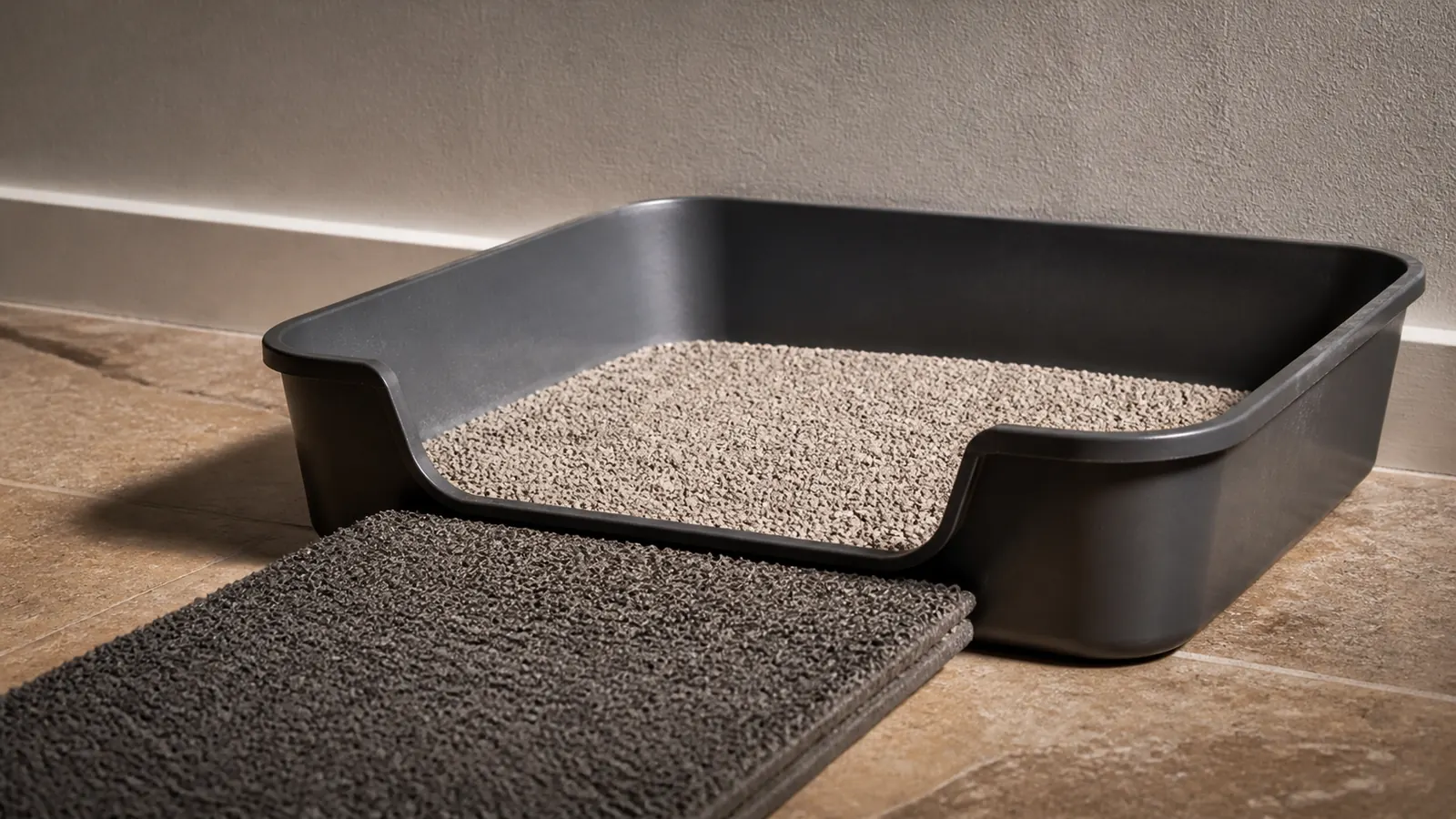
If the cat repeatedly chooses one suitable location, putting a tray there can help while you investigate, and it can be moved gradually once it is being used reliably. Feeding on a cleaned spot is not a guaranteed solution and may simply move the toileting elsewhere.
The lasting fix lies in tray size and access, the number and placement of trays and the medical or environmental causes of tray refusal, because cleaning removes residue but cannot treat pain or make a guarded tray safe to approach.
Common Questions
Does vinegar work on cat urine?
It may change some odour, but it is not a predictable substitute for a pet-urine cleaner suitable for the surface. Never mix it with bleach or other cleaners.
Why does the smell come back on a warm day?
Residue may remain in absorbent material or the cat may have used the spot again. Check backing, seams and nearby surfaces, and follow the cleaner's directions rather than only treating the visible mark.
Can I use a carpet steam cleaner?
Avoid steam or strong heat before urine residue is removed because it can set stains and odours. Follow the carpet and cleaner instructions, or ask a professional for a persistent stain.
Checked Against
Published 7 August 2026. Last updated .