Clumping or Non-Clumping Litter: Which Should You Use?
One lets you remove urine every day. The other holds it in the bed until the whole tray is emptied. That single difference decides the smell, the cost, and the cleaning routine.
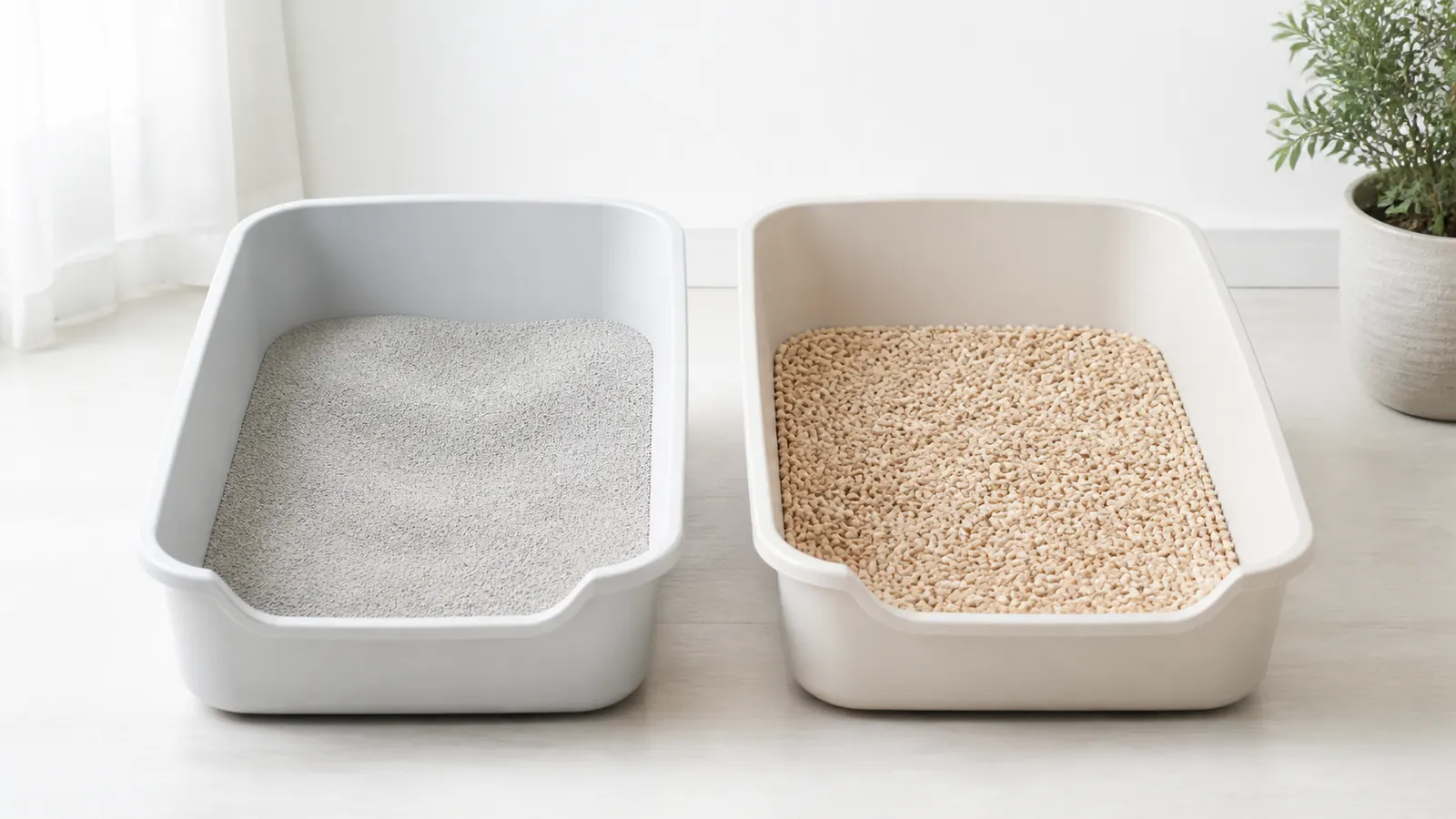
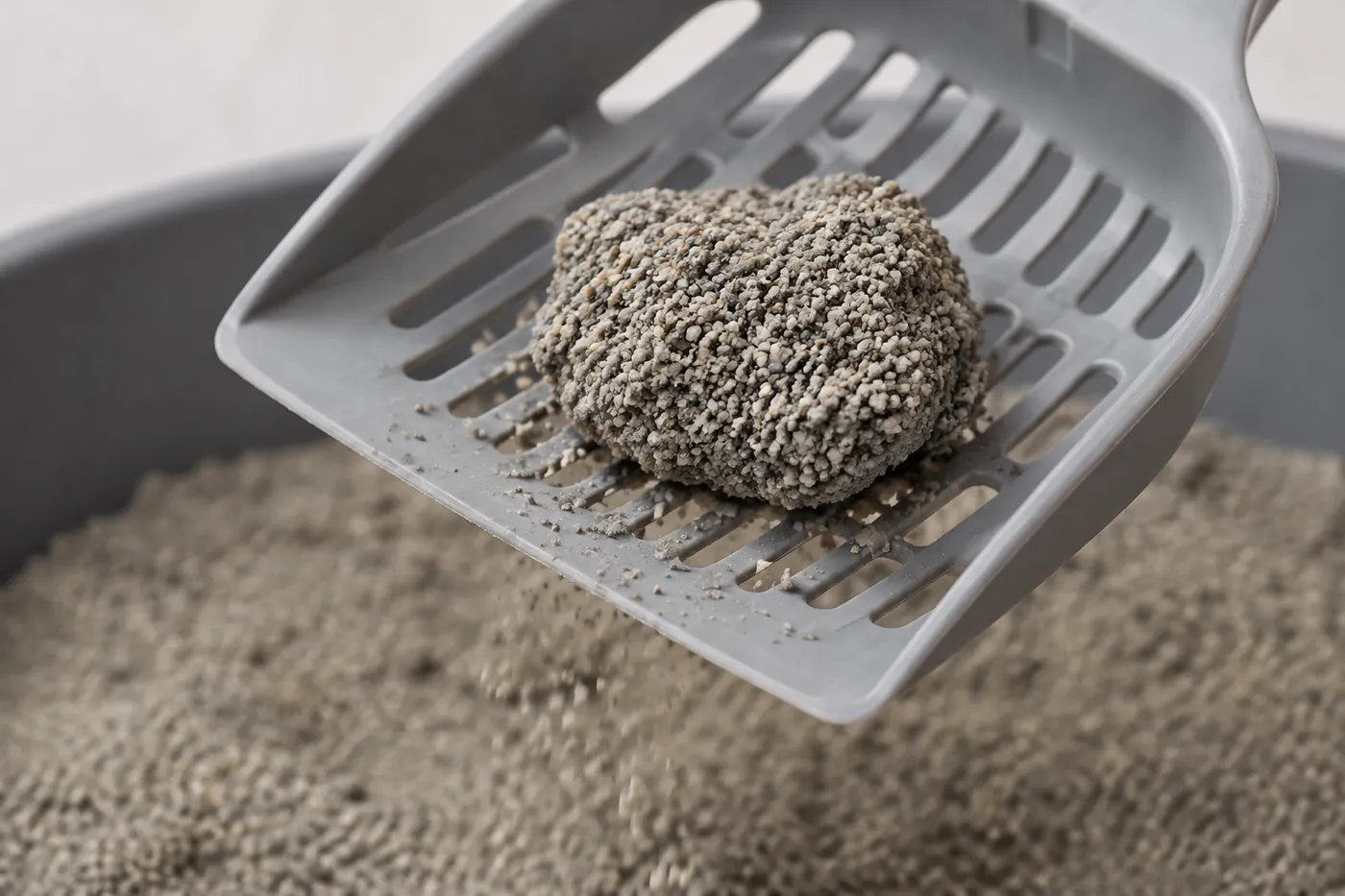
Clumping litter forms a solid lump around urine that can be lifted out whole. Non-clumping absorbs it and holds it in the bed until the whole tray is changed. That single difference decides how the tray is cleaned, how much litter gets used, and which cats will accept it.
How each one handles urine
Clumping litter is usually sodium bentonite clay, which swells and sticks to itself the moment it meets liquid. The lump seals the urine inside and holds together well enough to lift.
Non-clumping litter absorbs instead. Traditional clay, paper pellets, wood pellets, and silica crystals all soak the liquid up and spread it through the surrounding bed.
The consequence is the daily routine. With clumping litter you remove urine as well as faeces, so what stays behind is clean. With many non-clumping litters, absorbed urine remains until the tray is changed, although some wood-pellet systems let you sift out the damp sawdust by the method that product describes.
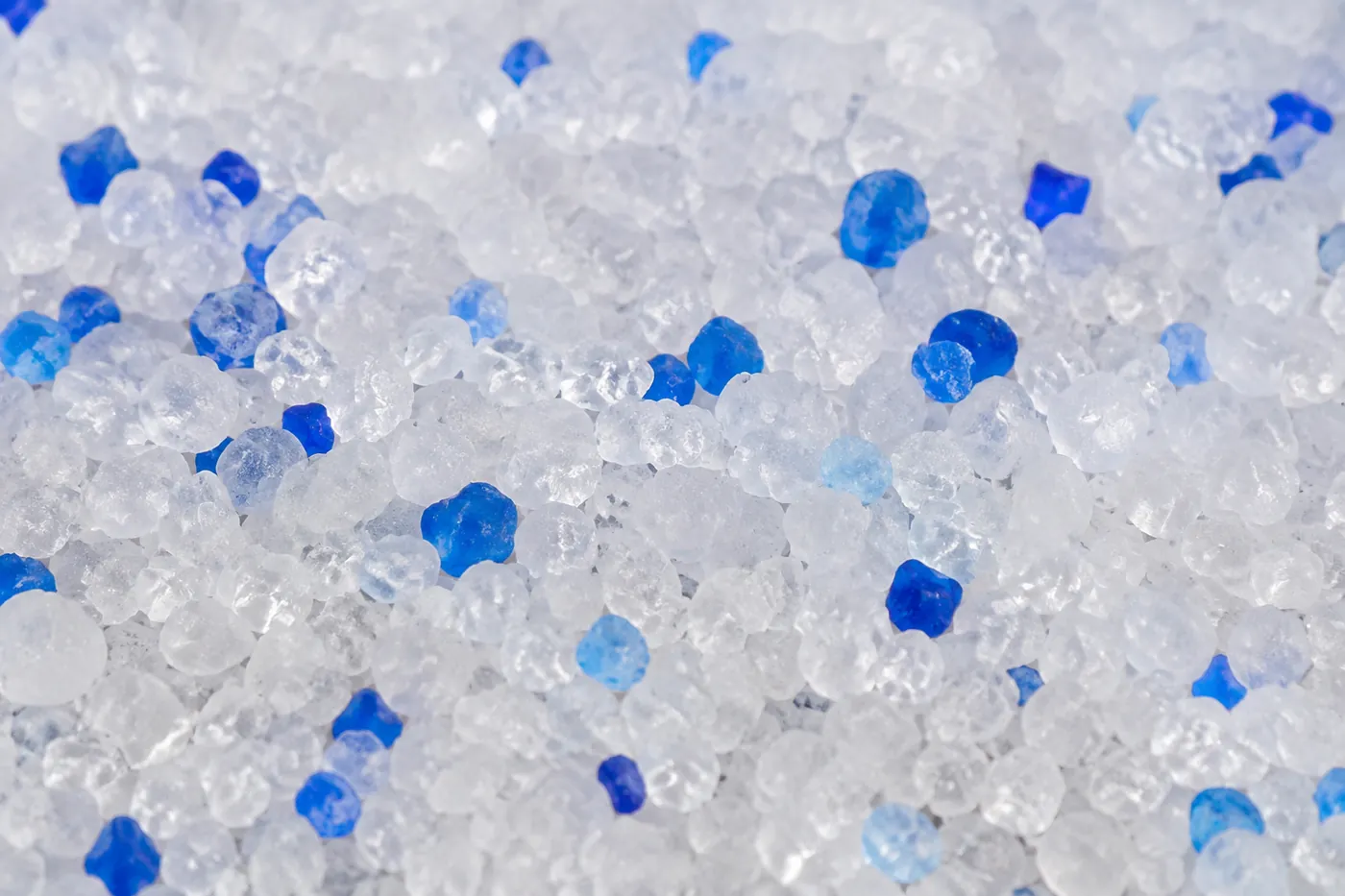
Silica crystals work on a third principle
Silica gel is a non-clumping material that holds moisture within a porous structure. Some moisture evaporates, but waste residues remain: the litter still needs replacing.
Stirring, depth and full changes follow the product's instructions, and odour, pooling or saturation mean the bed needs attention even if the advertised replacement interval has not arrived.
What that means for smell
The odour a household notices is mostly ammonia from urine breaking down, not from faeces. That is why clumping litter usually smells less in practice despite no scent being added. Lifting the clump removes the source before it has time to break down.
Non-clumping litter can perform well for a few days and then turns quickly, because the urine has been sitting in the bed the whole time.
Scented versions of either exist and are a poor answer. A cat's nose is far better than yours, and perfume is a common reason a tray stops being used.
What cats actually prefer
This is the part where the two are not equal, and the preference has been tested rather than guessed. Given a free choice, most cats select a fine, soft, sand-like clumping litter over coarse or pelleted alternatives. It is closest to the loose substrate a cat would dig in outdoors.
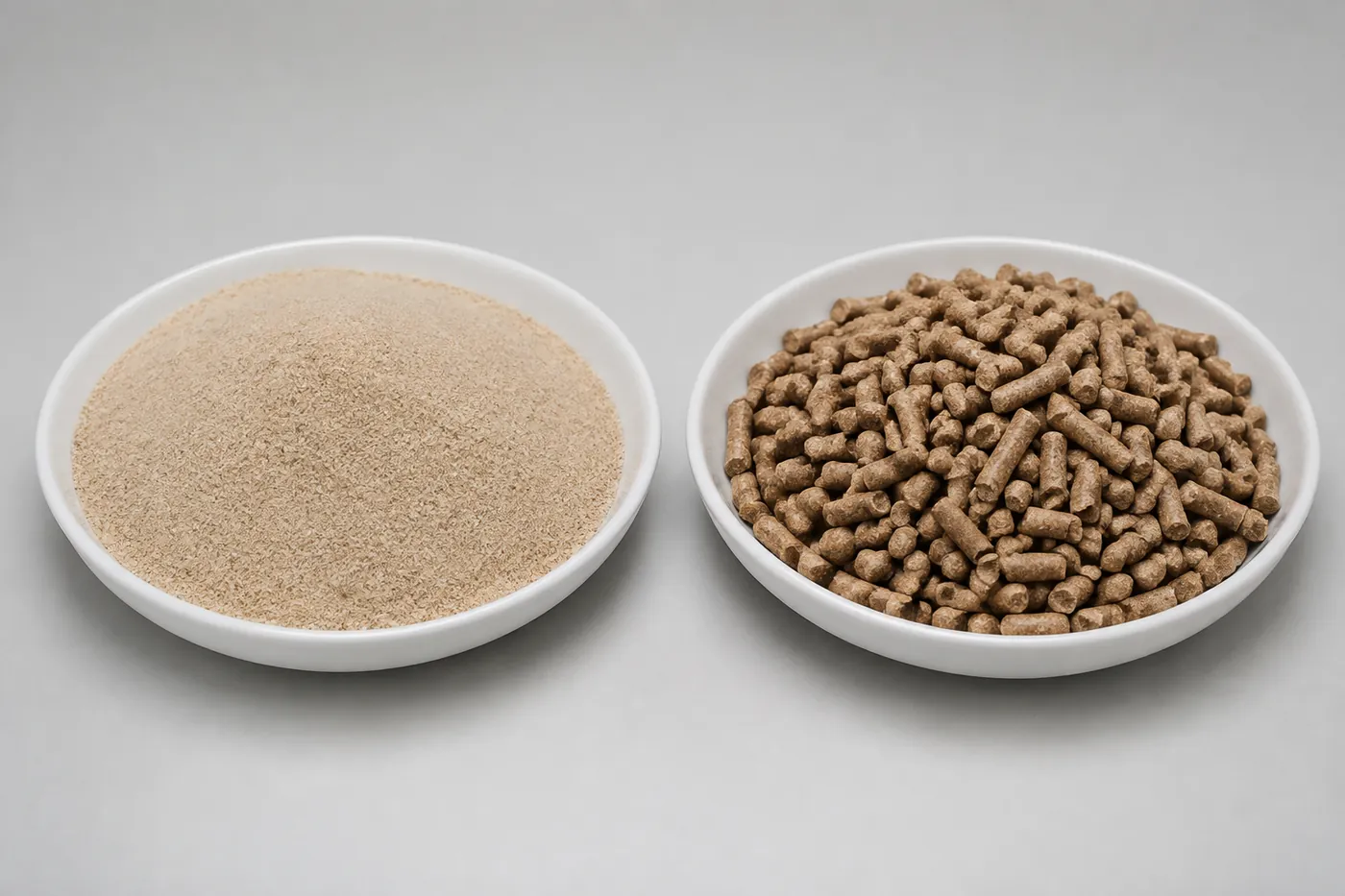
Texture is doing the work rather than the clumping. A cat is choosing what its paws prefer to stand and dig in, and fine clay happens to be both.
That is a majority rather than a rule. Individual cats raised on paper or wood often stay loyal to it, and a cat that is already using its tray reliably has settled the question for you.
Cost, over a year rather than a bag
What a litter costs depends on consumption and disposal more than on the price of a bag. Clumping litter lets you remove urine-soaked clumps, while many non-clumping products need more frequent full replacement, and weight, packing density and the number of trays make a per-bag comparison misleading.
The useful household comparison is how long the same size bag lasts, how often the tray needs a full clean and whether the cat uses it comfortably. Clumping does not remove the need to wash the tray, and no type is always the cheapest.
Dust, tracking, and the practical annoyances
The two produce different mess, and which one bothers a household is a matter of taste rather than performance.
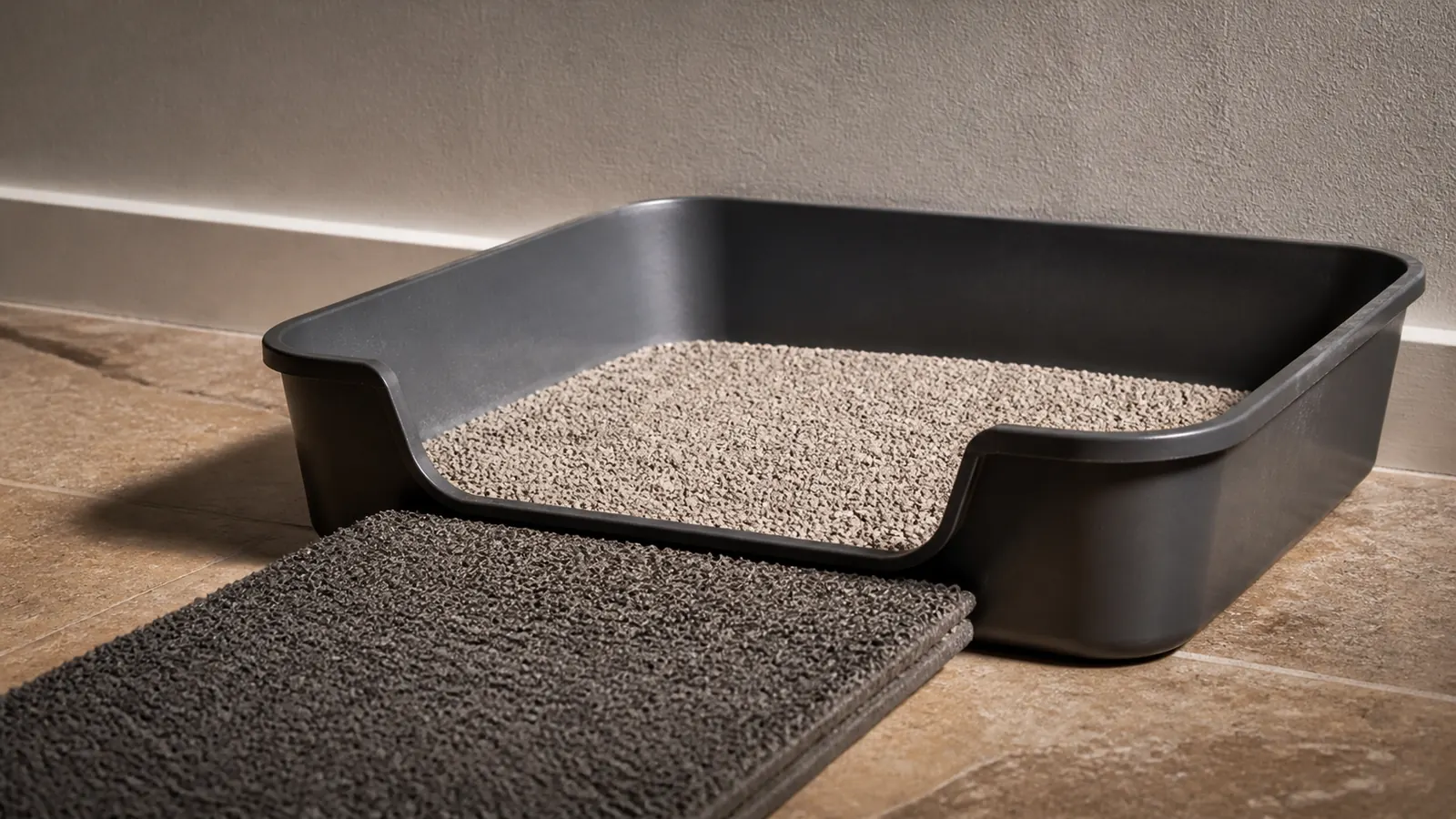
Fine clumping clay tracks. Grains stick to paws and end up several rooms away, which a deep-ribbed mat at the tray entry solves most of. It also produces dust when poured, and low-dust versions of clumping clay are widely available. That matters most for a cat with asthma or any respiratory condition, where paper pellets are often recommended instead.
Wood and paper pellets barely track and barely dust. They are also the two most often refused, which is the trade.
- Put a deep-ribbed or honeycomb mat at the tray entry
- Pour litter slowly and close to the tray to limit dust
- Choose a low-dust or paper litter for a cat with any airway problem
- Follow the product's depth instructions and keep the bed evenly spread
- Sweep or vacuum near the tray daily rather than weekly
- Accept some tracking as the price of the texture cats prefer
Choosing the litter depth
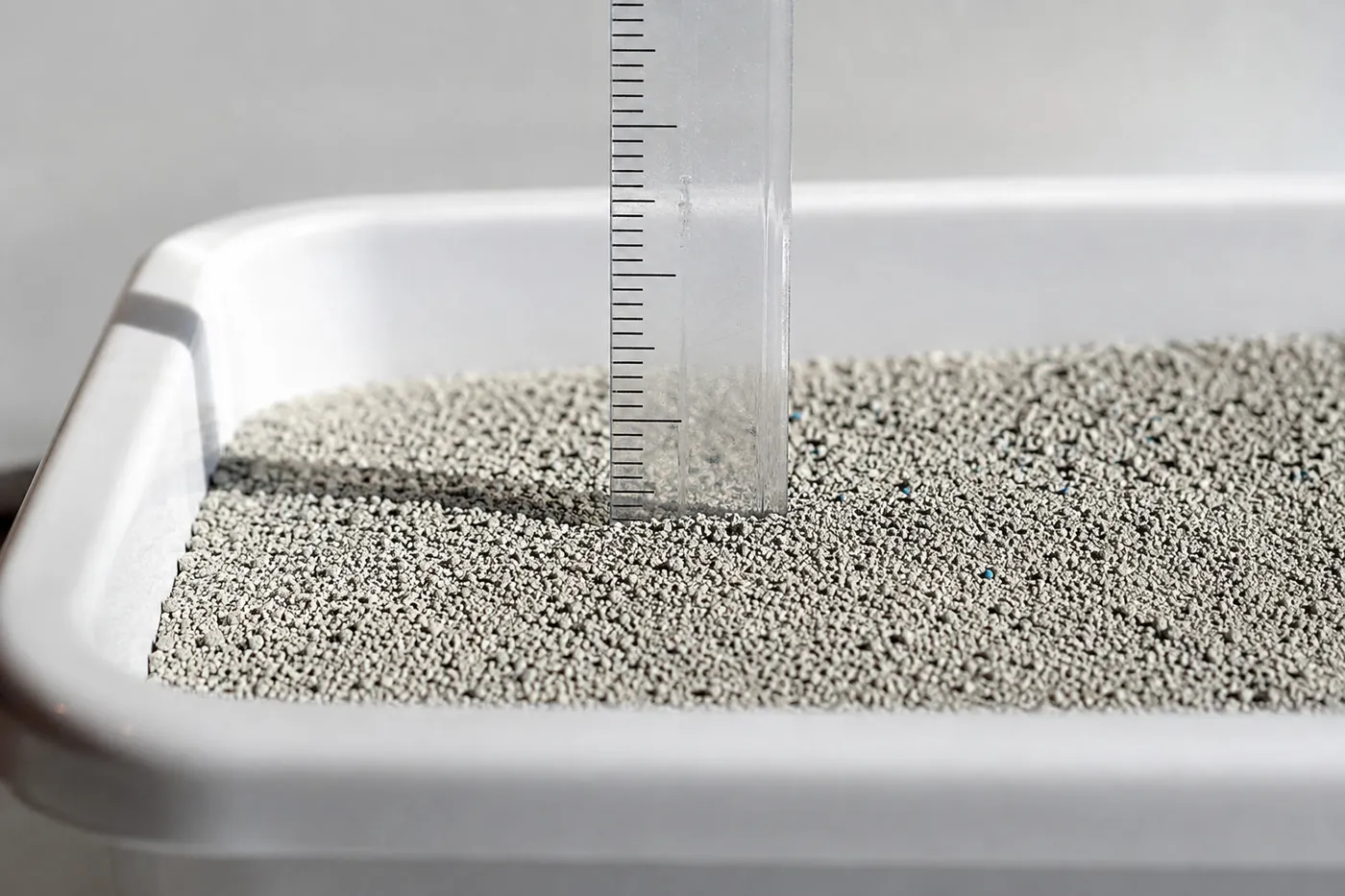
A bed deep enough for comfortable digging, set by the maker's depth guidance, is the starting point. Around three centimetres is common general advice, but a particular clumping product may need a deeper bed to form removable clumps.
If urine sticks to the base or clumps break, the depth, the wait before scooping and the scoop design are all worth checking, since depth is only one of the three. An even layer helps, and what the cat accepts is the final test.
Kittens, and why clumping needs care
A young kitten is safer on a familiar unscented non-clumping litter, with any change discussed with the rescue or vet. Young kittens explore with their mouths, and swallowed clumping litter can potentially cause a gastrointestinal blockage.
Repeated litter eating deserves a prompt veterinary call, whichever material is used. If the kitten has swallowed a quantity or becomes sick, painful, lethargic or stops passing stools, seek advice immediately rather than waiting for the next routine visit.
Litter training a kitten also depends on an accessible tray and short distances to reach it.
Cats that need a specific litter
An older cat or one with sore paws may need a softer substrate and a low-entry tray. A respiratory condition may make dust especially important, but material labels alone do not establish how dusty a product is.
After surgery the practice's instructions apply, because recommendations depend on the wound and procedure. For a urine sample, the vet may supply non-absorbent granules and collection instructions. Neither temporary arrangement is something to improvise from a generic litter comparison.
Changing from one to the other
Keep a familiar tray available while you offer the alternative. An extra tray with the new litter lets the cat investigate without losing its established toilet. Watch use, digging, tracking and signs of discomfort over several days. Move at the cat's pace.
Mixing products may be an option during a gradual change, but can impair clumping or absorption, so follow the product instructions.
Avoid changing the litter alongside another major household disruption if you can. New straining, blood or frequent unsuccessful visits needs veterinary care rather than another litter experiment.
Where the used litter actually goes
Disposal is part of the weekly routine.
Do not flush used litter unless both the product directions and the local wastewater authority explicitly allow it. Clay, swelling materials and cat waste can block plumbing or conflict with local treatment rules.
Composting is the other tempting mistake. Wood and paper pellets are compostable materials on their own, and cat faeces can carry Toxoplasma gondii, which survives ordinary garden composting.
The product label and the local waste service decide whether used litter goes into household waste or an approved collection route. What differs between litter types is the volume discarded, which depends on the product, cat and cleaning routine, and whether clean unused material has a separate disposal option.
Which to choose
For a healthy adult already comfortable with it, unscented fine clumping litter is a reasonable starting choice, and the cat's acceptance and your cleaning routine decide whether it stays.
Non-clumping may suit young kittens, individual preferences or a specific veterinary plan. Every type still needs daily removal of faeces and other soiling.
Neither is a solution to a cat that has stopped using its tray. That is a longer diagnosis, and working through the causes in order starts with a veterinary check rather than a different bag.
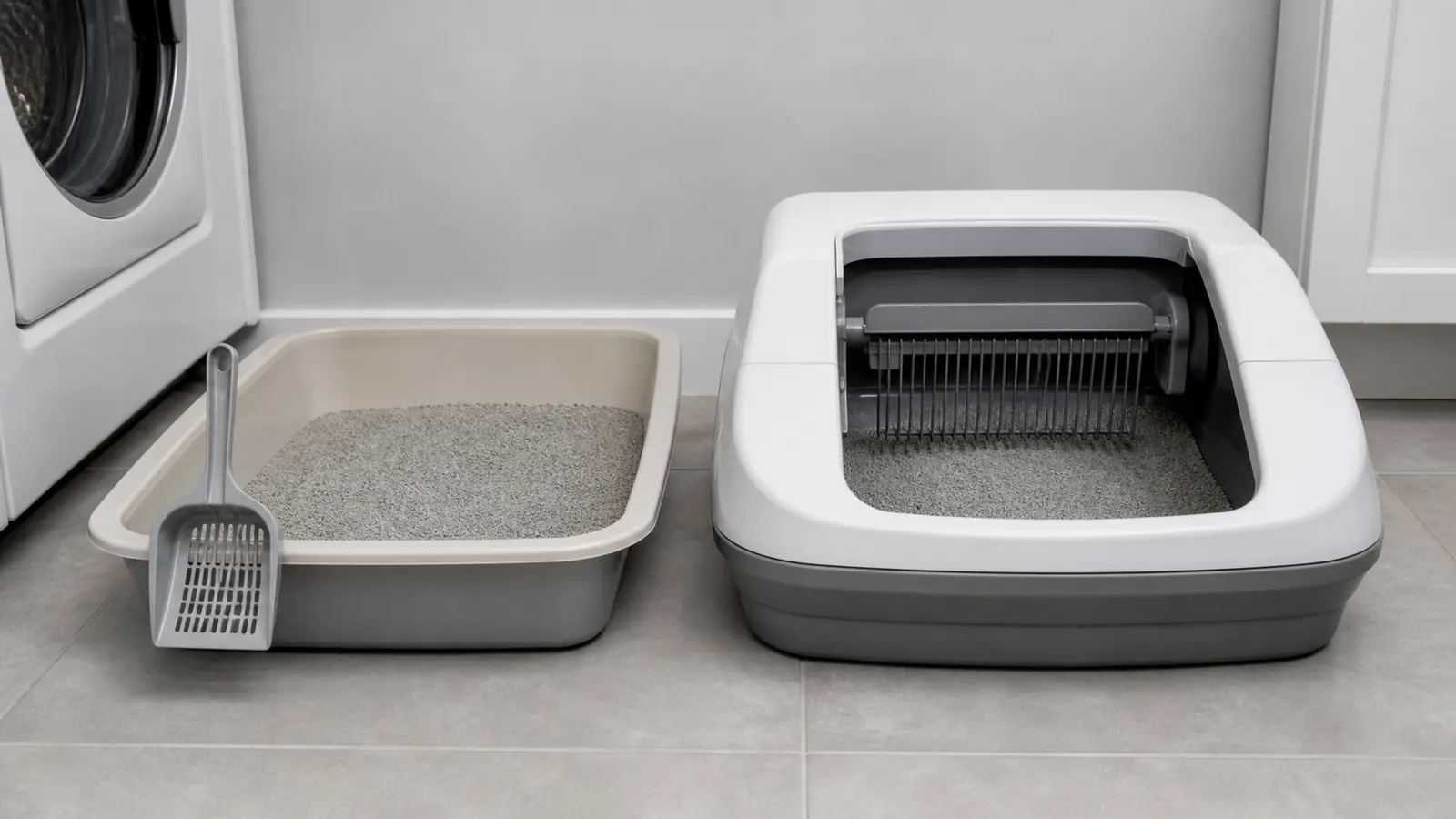
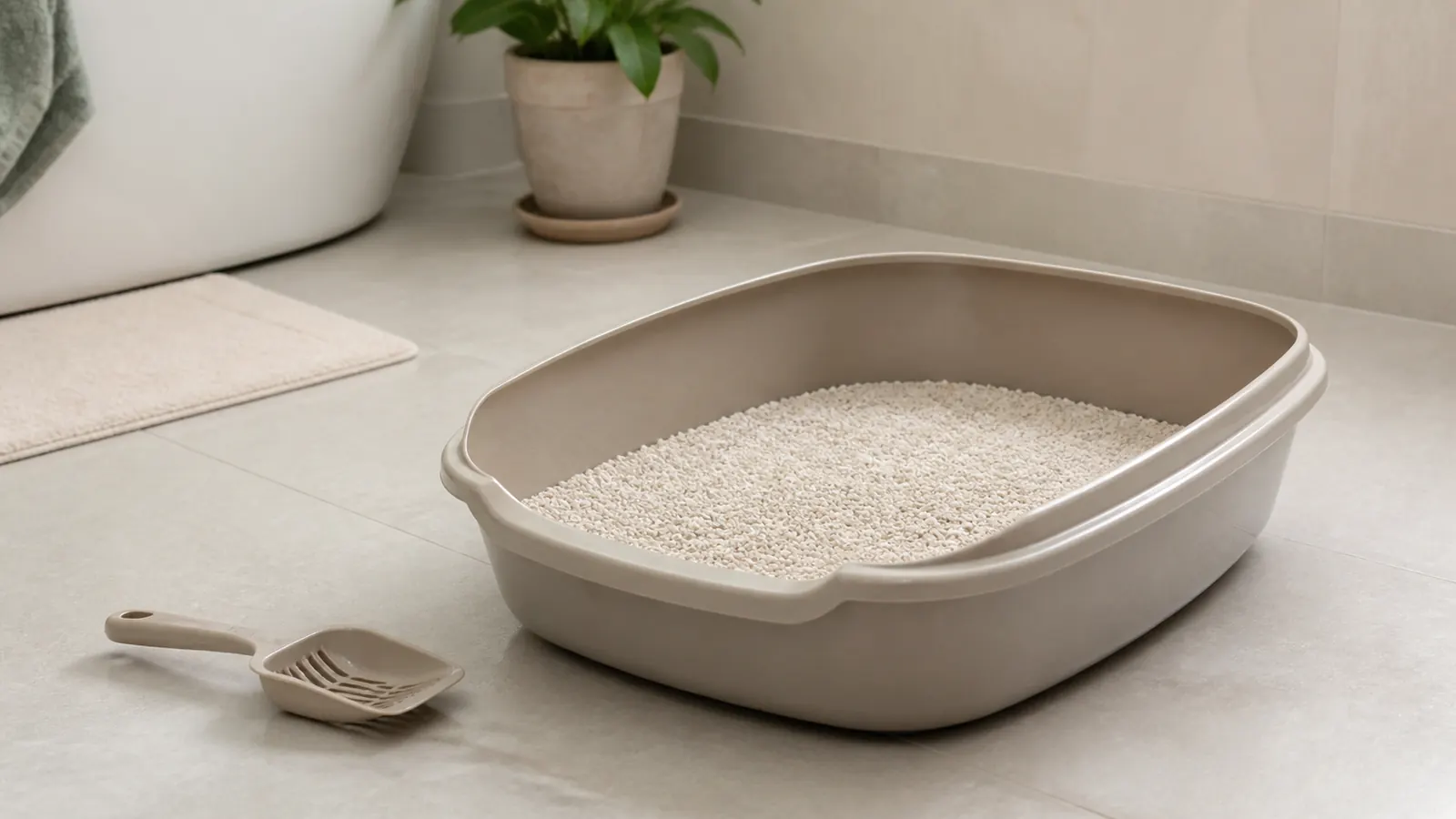
The tray itself matters as much as what is in it, and most litter trays sold are smaller than a cat needs.
- Starting option
- A fine, unscented litter that the cat accepts; clumping clay is one common choice
- Depth
- Follow the product instructions and the cat's comfort
- Scooping
- Check at least daily and increase frequency when waste accumulates or several cats share access
- Full change
- Follow product guidance and actual soiling; all trays also need washing
- Young kittens
- Familiar unscented non-clumping litter
- After surgery
- The litter your veterinary team recommends
- Fragrance
- Prefer unscented when choosing or investigating tray avoidance; do not remove a reliably accepted product without a reason
Common Questions
Do cats prefer clumping or non-clumping litter?
Given a free choice most cats pick a fine, soft, sand-like litter, and the common clumping clays happen to be exactly that. The preference is about texture underfoot rather than about clumping, so a fine non-clumping clay is accepted nearly as readily.
Is clumping litter safe for kittens?
A familiar unscented non-clumping litter suits young kittens. They may investigate litter with their mouths, and swallowing clumping material can potentially cause a blockage. Repeated eating needs a prompt call to a vet.
Which litter smells less?
Clumping litter lets you remove urine-soiled material daily, which can help with odour. Results depend on the product, tray use and cleaning; neither type stays fresh without maintenance.
How do I switch litter without upsetting my cat?
Offer the new litter in an additional tray while keeping the familiar option. Change gradually according to your cat's response and avoid several household changes at once. Mixing materials can affect performance, so check the product instructions.
Checked Against
Published 3 September 2026. Last updated .