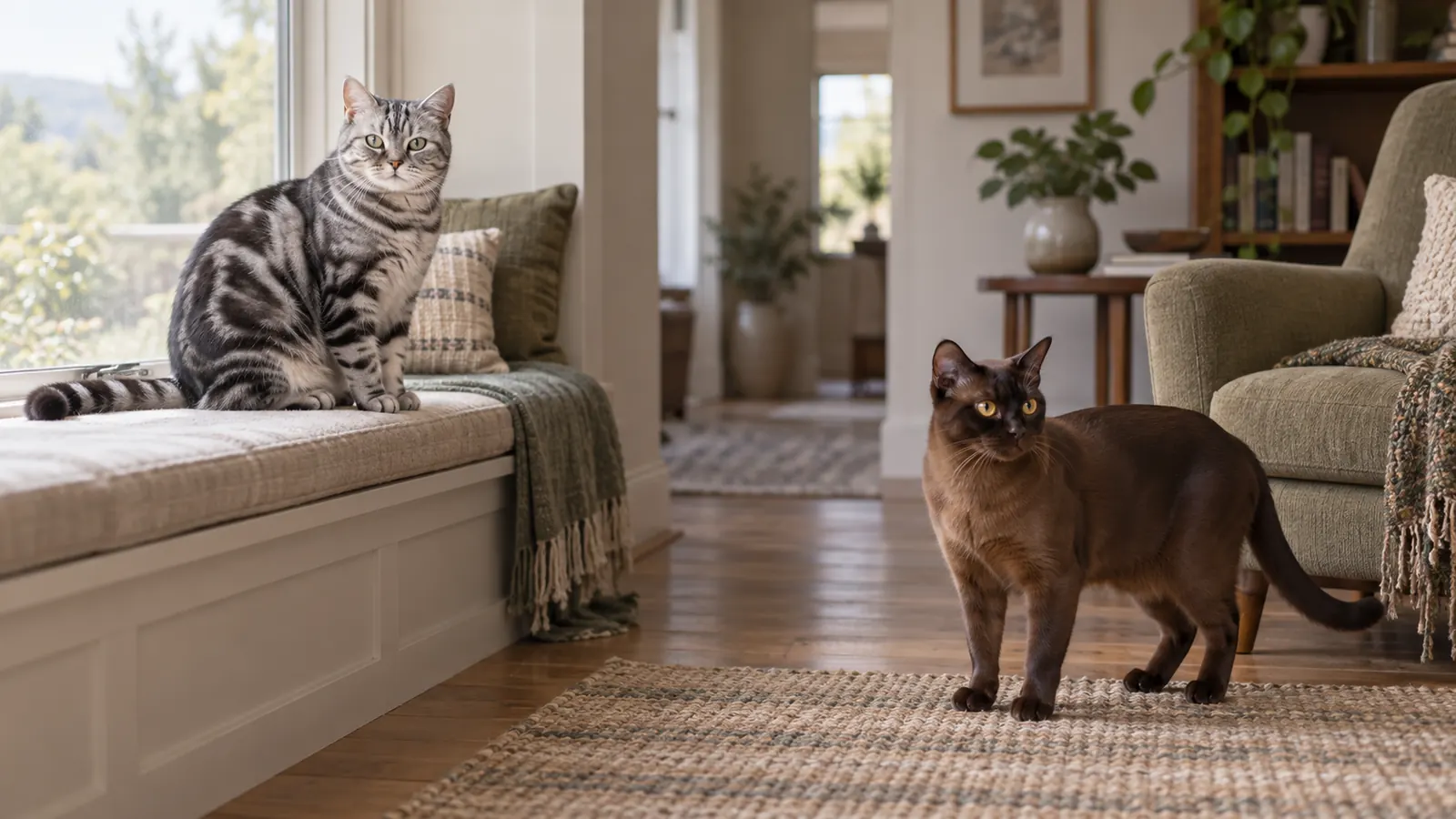
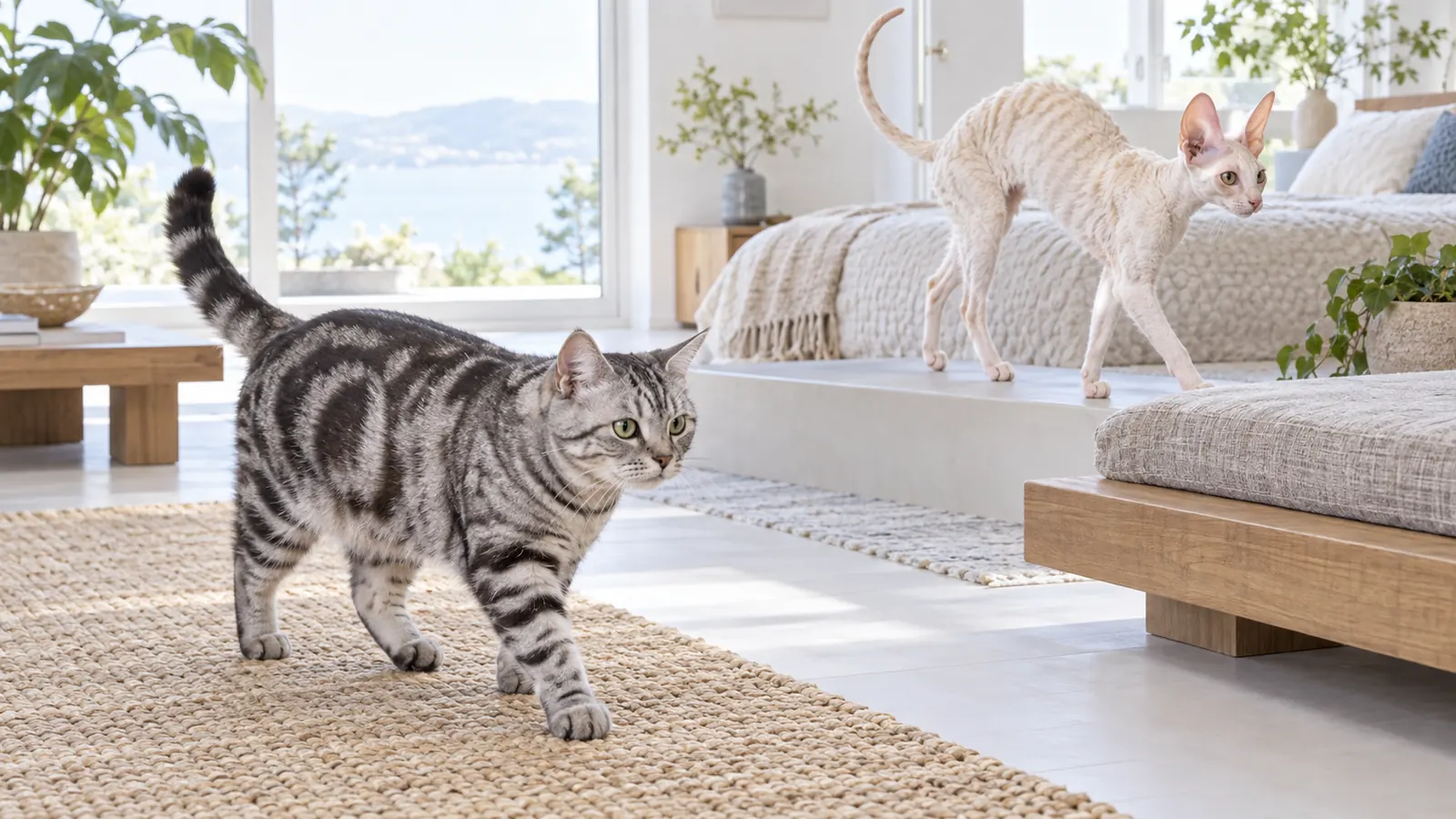
Balinese vs Oriental Shorthair: Which One Fits Your Home?
Coat, colour and the individual cat separate a Balinese from an Oriental Shorthair more reliably than any promise of a different personality. They share the same lean body type and much of the same active, vocal, people-focused temperament, while the Balinese adds a silky pointed coat that needs a little more hands-on care.
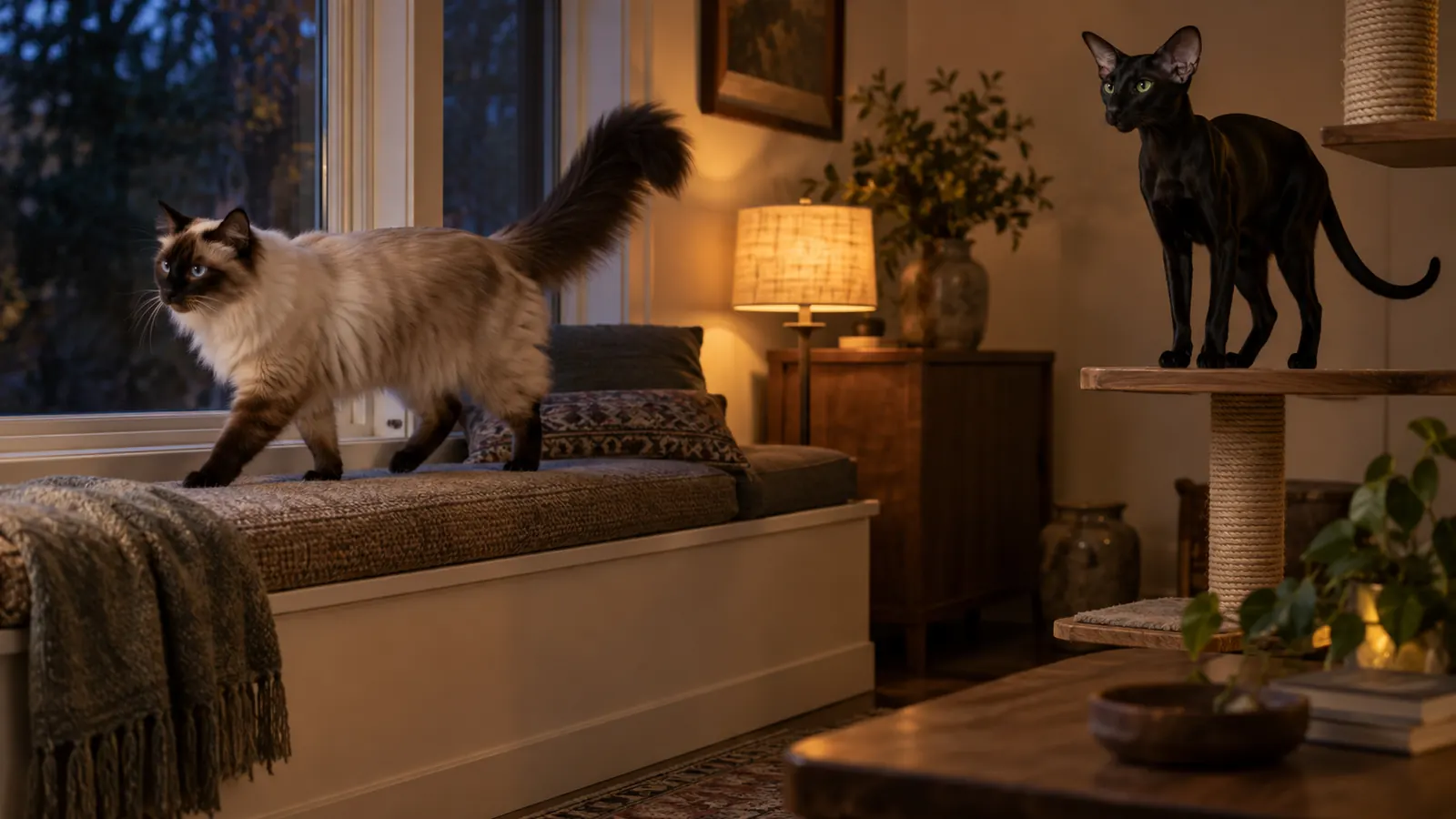
This is a close comparison. The two breeds share an active, vocal, people-focused temperament, so the Oriental Shorthair offers no quieter or more independent option, and the Balinese coat covers a cat just as lively as its shorthaired relative.
Both belong to the Siamese breed group in TICA and share the same structural standard.
The practical split is visible in coat length and colour, while temperament, social need and daily activity overlap enough that meeting the individual matters more than choosing between two breed labels.
Which breed is the easier fit for most homes?
Neither breed is a low-involvement default. Both suit people who welcome conversation, daily play, close company and a cat that notices what the household is doing.
The Oriental Shorthair has the simpler coat routine, so it is the slightly easier fit when every other preference is equal. Its short, close coat needs little detangling, while a Balinese benefits from regular combing through the plume, trousers and other longer furnishings even though its single coat is much less prone to mats than a dense double coat.
That difference is smaller than the shared social workload. If your home is empty for long, predictable stretches or you want a quiet cat that mostly entertains itself, neither breed is the best-practice choice.
| Profile | Coat | Voice and company | Best fit |
|---|---|---|---|
| Balinese | Semi-long single coat; light but regular combing | Vocal and strongly people-focused | Someone who wants the Siamese-group character in a longer coat |
| Oriental Shorthair | Very short close coat; light surface grooming | Vocal and strongly people-focused | Someone who wants the lowest coat workload and more choice of colour or pattern |
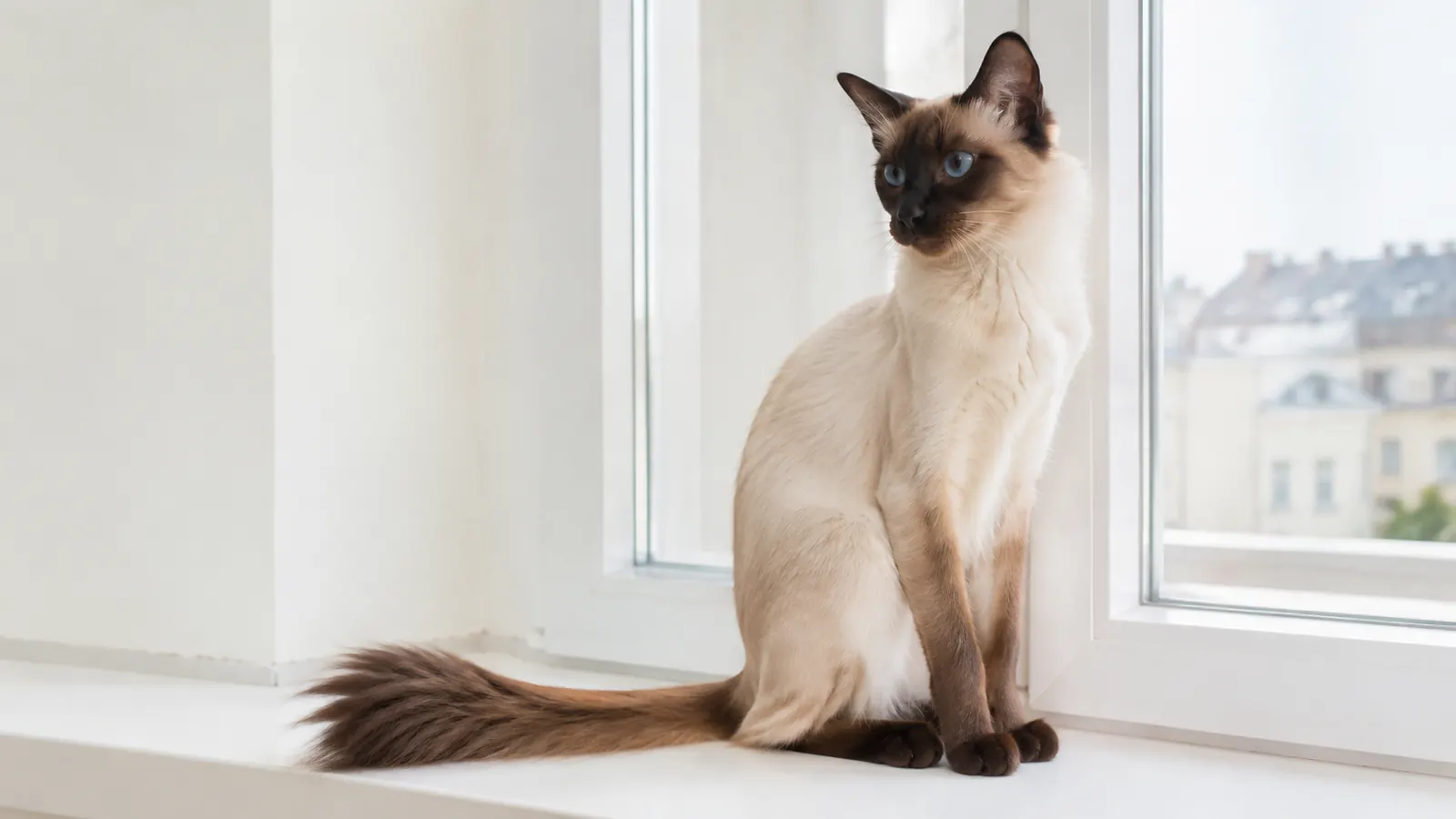
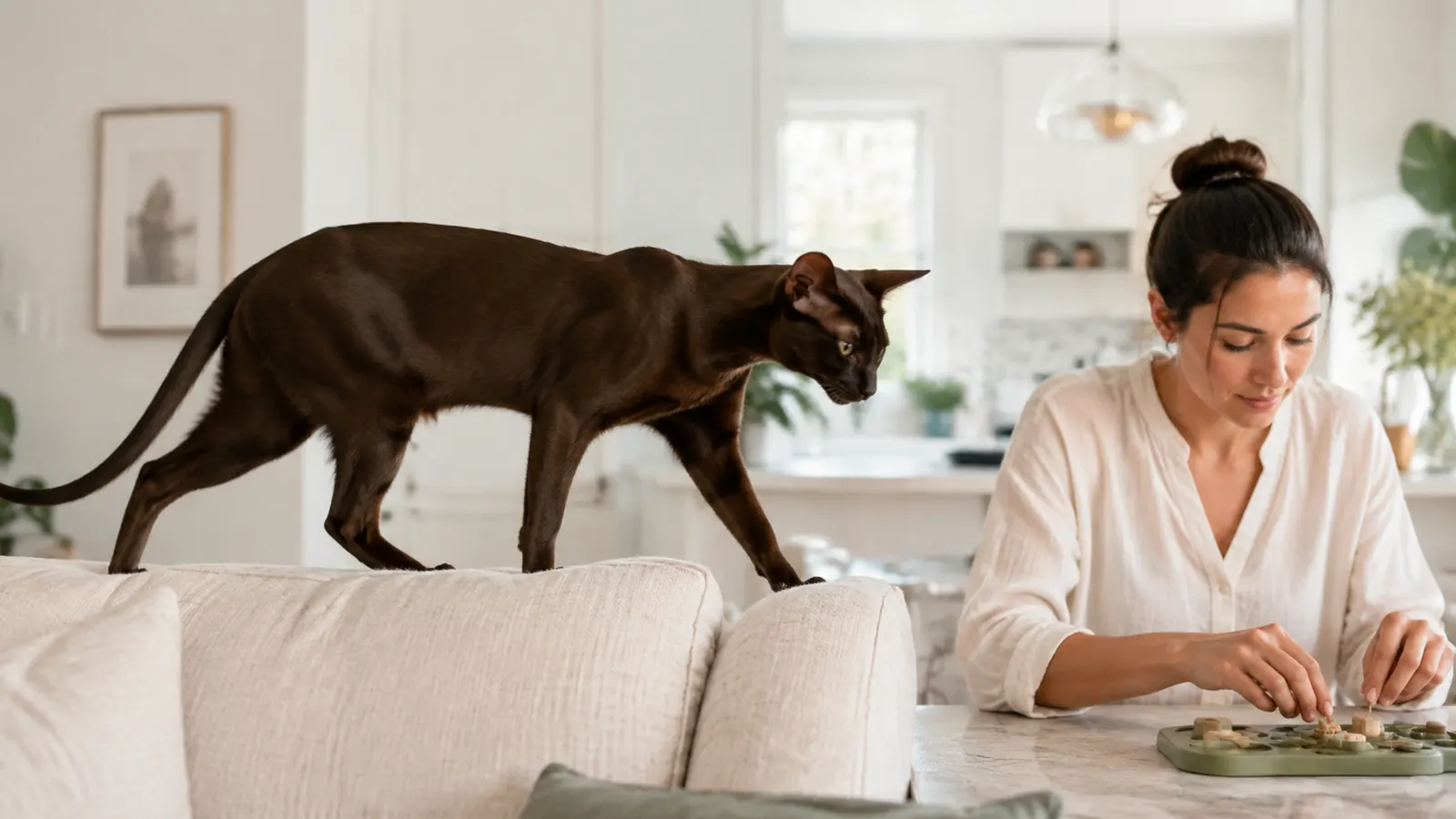
Those columns describe breed tendencies, and an individual cat can differ from them.
A confident adult whose handling, play and recovery you have observed provides better household-fit evidence than a prediction made from coat length.
Are Balinese and Oriental Shorthairs closely related?
Yes. TICA places the Balinese, Oriental Shorthair, Oriental Longhair and Siamese in one breed group, and its shared standard says their main structural type is the same.
The Balinese is the semi-longhaired pointed member of that group. The Oriental Shorthair is the shorthaired non-pointed member, so the names separate coat expression and registry classification inside a closely related family rather than two radically different kinds of cat.
Their common outline includes a long tapering wedge, very large ears, almond-shaped eyes, a long tubular body, fine legs and a long tail. Healthy adults should still feel firm and muscular rather than fragile, despite the narrow frame.
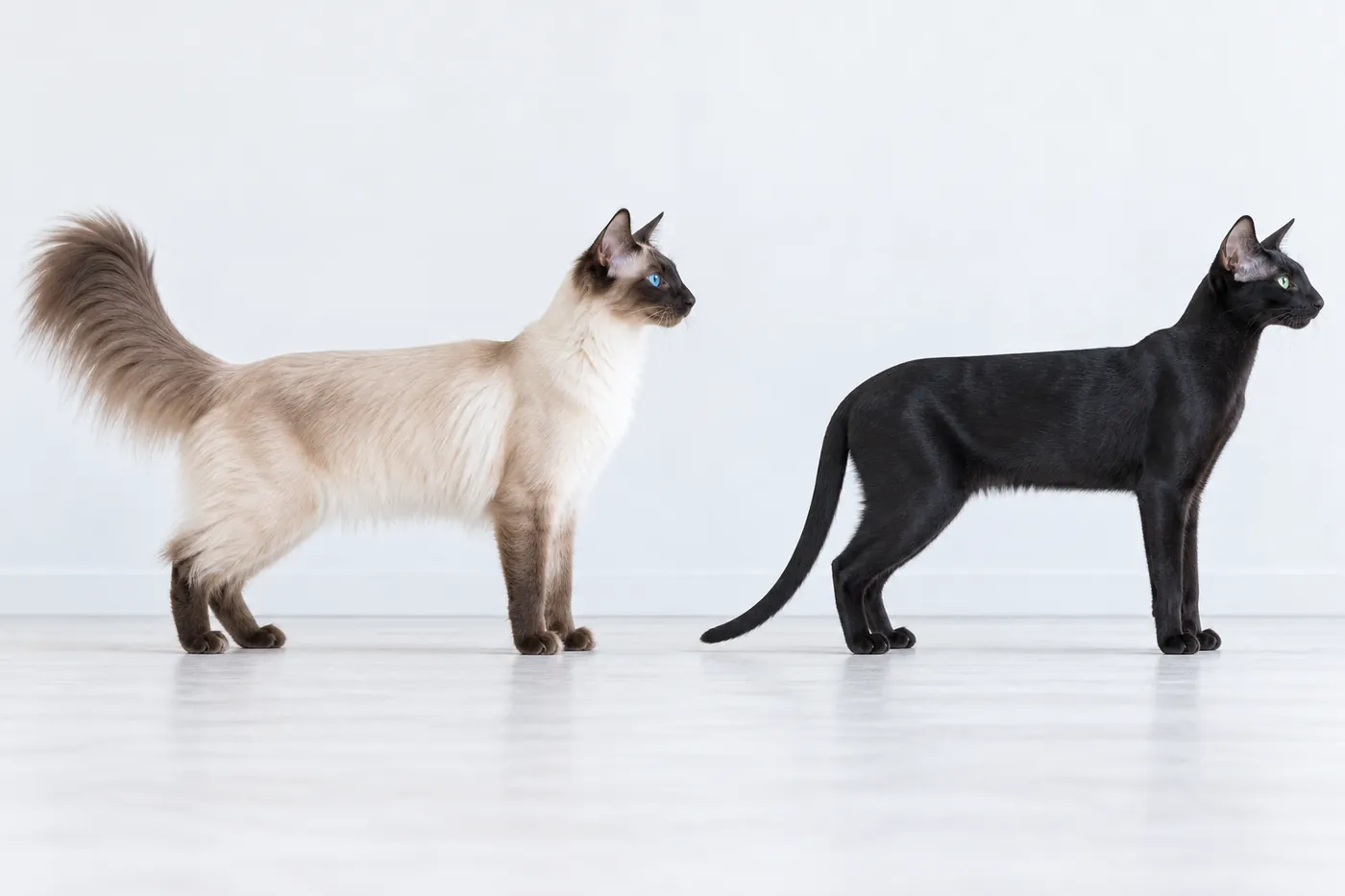
A longer coat softens the Balinese outline visually.
CFA notes that the coat can make its type appear less extreme than a shorthaired relative even when the structure beneath follows the same long lines.
That is why a photograph can help with appearance but cannot authenticate ancestry. Breed identity comes from pedigree and registration records; a wedge head, large ears or a pointed coat cannot establish it on their own.
Do size and body shape separate the two breeds?
Size is unlikely to decide this comparison.
TICA gives the same approximate adult ranges for both breeds: females around 5 to 8 pounds and males around 8 to 12 pounds, with development continuing to roughly 18 to 24 months.
Those ranges overlap completely, and a long torso can look larger than its weight suggests. Sex, lineage and body condition can create more variation within either breed than the label creates between them.
| Feature | Balinese | Oriental Shorthair | What changes your decision |
|---|---|---|---|
| Underlying build | Long, fine-boned and muscular | Long, fine-boned and muscular | Little useful separation; assess the actual adult or parents |
| Apparent outline | Softer because longer hair follows the body and fills the tail | Sharper because the short coat exposes every line | Visual preference, not a different furniture category |
| Adult weight | Females about 5 to 8 lb; males about 8 to 12 lb | Females about 5 to 8 lb; males about 8 to 12 lb | Measure the individual for equipment |
| Maturity | Often continues to 18 to 24 months | Often continues to 18 to 24 months | A lanky adolescent may gain muscle without becoming broad |
A carrier is best sized from the cat's measured body length, standing height and current weight rather than the published range. The cat should be able to stand, turn and settle without being compressed by the long frame.
The same principle applies to shelves and trees. A narrow cat still needs a landing deep enough for all four paws and a structure that remains stable when a muscular adult launches onto it.
Are their temperament and voices meaningfully different?
The honest answer is that the overlap is greater than the difference.
TICA describes both as lively, intelligent, talkative and strongly attached to people, so coat choice cannot turn this breed group into a quiet background companion.
CFA describes the Balinese as somewhat softer and less insistent in voice than the Siamese. That does not establish a reliable Balinese-versus-Oriental volume ranking, and individual voices can range from frequent soft commentary to calls that carry through the home.
An ordinary period shows more than a visit that excites the cat. How often it calls, what happens after a response, whether it settles after play and how it reacts when a person closes a door or moves to another room are the useful observations.
- Shared tendency
- Interactive, observant and likely to follow household activity
- Voice
- Expect regular communication from either breed rather than selecting on a promise of quiet
- Contact style
- Many seek proximity, laps, beds or a nearby high perch, but the individual decides the balance
- Frustration risk
- Repeated calling, searching or disruptive behaviour can increase when social and activity needs are unmet
- Best evidence
- Observe play, handling, a brief pause in attention and recovery after novelty
Punishing vocal behaviour that is normal for the cat adds fear without reducing the need behind it. A sudden change in frequency, tone or context deserves attention because pain, illness, fear and sensory change can also alter how a cat communicates.
How much play, company and time alone do they need?
Several useful contacts across the day suit both breeds better than one exhausting evening session.
Both breeds are athletic and quick to learn, and TICA describes them as cats that need stimulation and involvement.
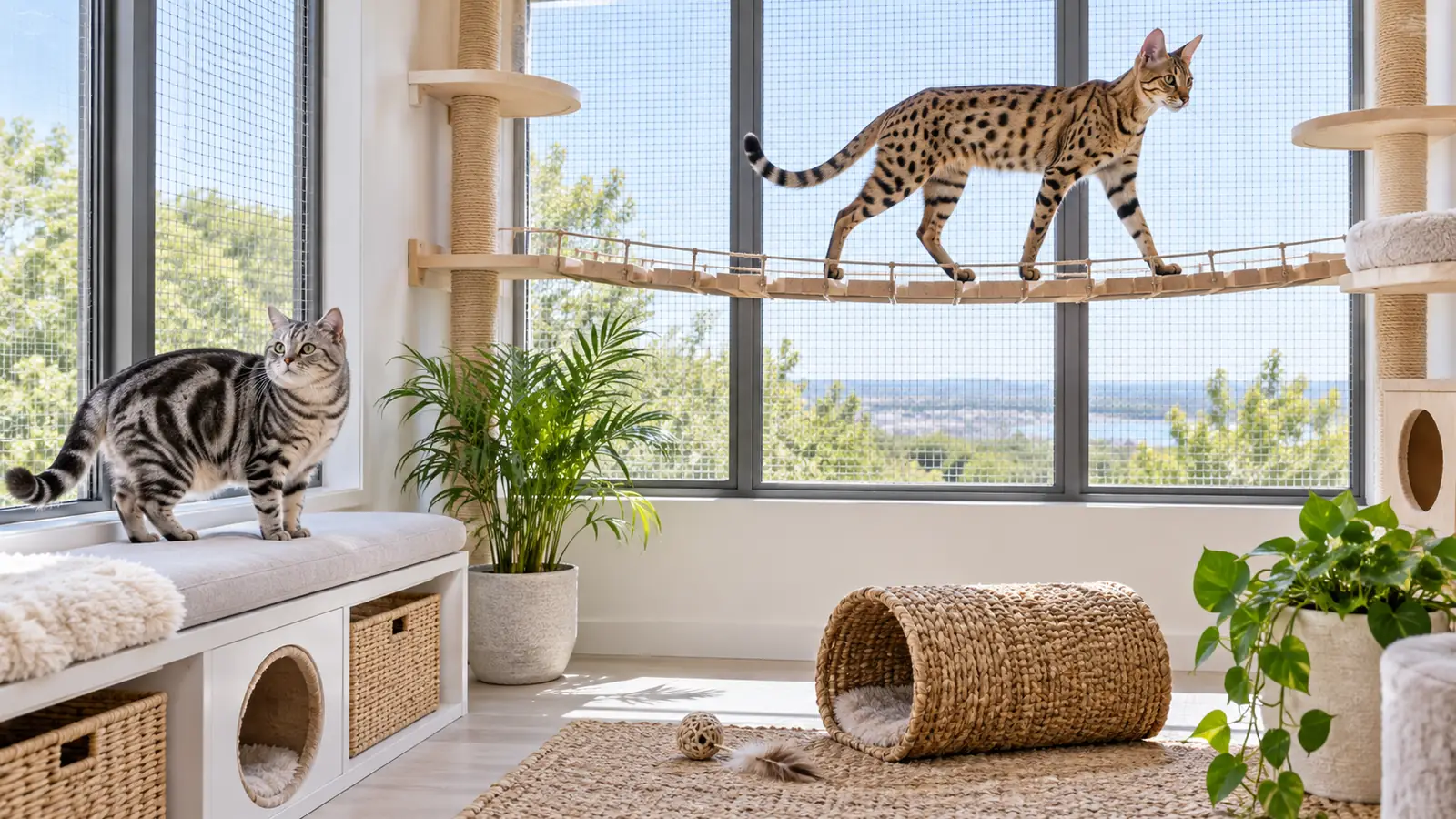
A good room offers connected height, a stable window position, scratching surfaces, hiding choices and a clear floor route for chase play. Puzzle feeding and short training sessions add decisions, but they do not replace social contact when the cat is seeking a person.
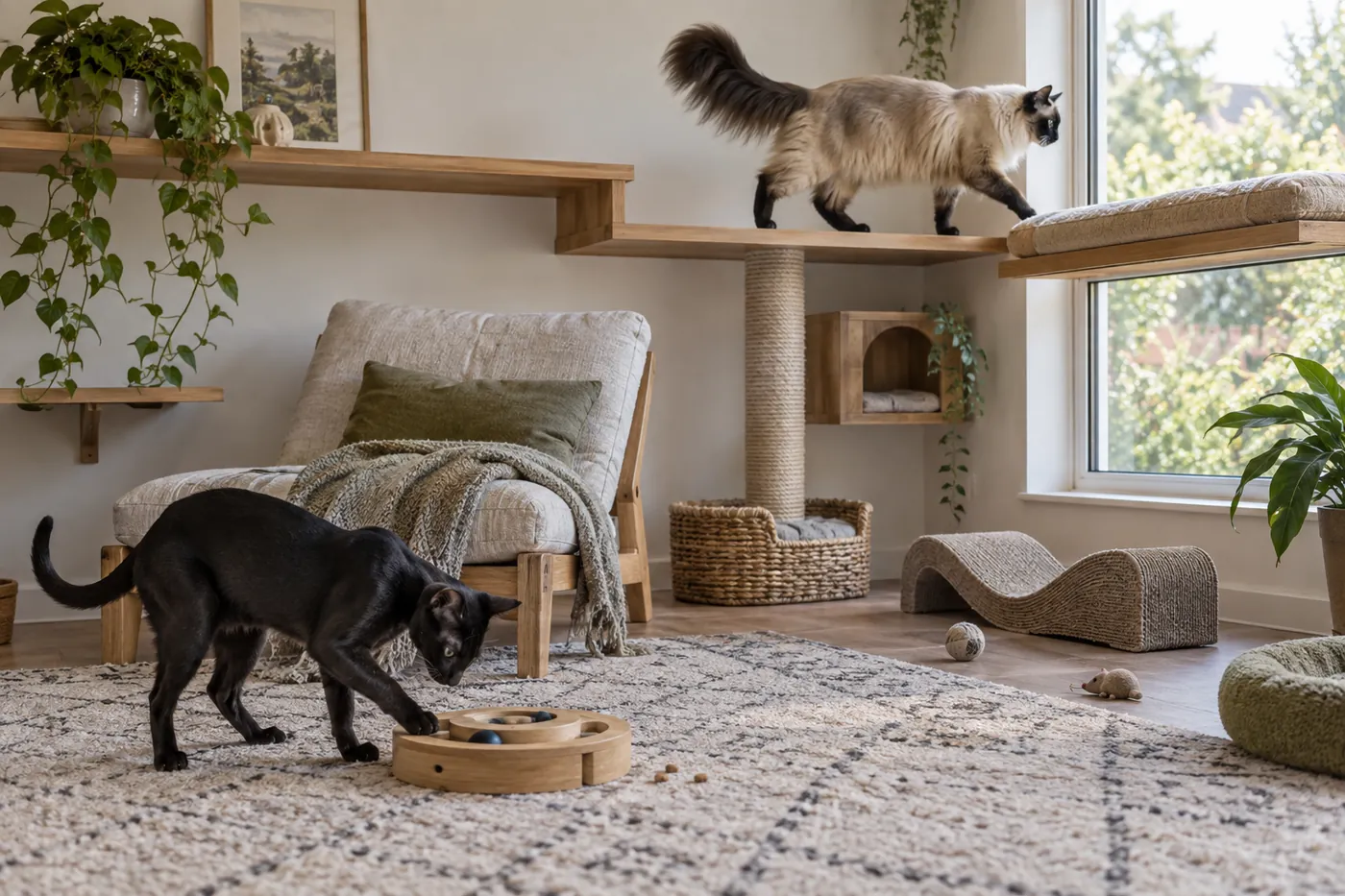
There is no responsible breed-wide number of hours that either cat can be left alone. TICA specifically warns against leaving a Balinese alone for long periods and says an Oriental needs companionship, but a sitter or second cat does not create a universal safe timetable.
| Routine | Likely fit | What to plan |
|---|---|---|
| Home occupied much of the day | Either breed | Several short interactions, independent rest and permission to leave contact |
| Regular full workday away | Cautious fit for either | Observe the individual, provide a reliable care routine and do not assume another animal solves isolation |
| Frequent overnight travel | Poor fit without dependable daily care | Food, water, litter, play, social contact and health observation every day |
| Active evenings and weekends | Either breed | Keep weekday provision realistic rather than concentrating all activity on days off |
| Quiet household | Possible only if talk and movement are welcome | Retreats for people and cat, predictable play and no punishment for normal vocalising |
Age changes exercise needs, but it does not remove the need for play or company. Shorter leaps, better traction and adjusted session length help when recovery changes, because a mature cat still needs play and company.
Which is better with children, dogs or another cat?
Either can live successfully with respectful children and compatible animals.
TICA describes both as social family cats, but a breed reputation cannot tell you whether one individual enjoys grabbing hands, fast dogs, noisy visitors or another cat near its food.
The shared speed and curiosity may suit older children who want to use wand toys, teach a target or prepare food puzzles. Very young children need active adult supervision because large ears, a long plume and a cat that follows people can invite reaching and restraint.
- Children use toys rather than hands and let the cat end contact
- The cat has an elevated or gated retreat that children and dogs cannot enter
- Food, water, litter, scratching and resting places are separated in a multi-cat home
- A dog remains controlled until quick feline movement no longer triggers pursuit
- Introductions advance only while both animals can eat, rest and disengage
- A known adult temperament is preferred when the home contains a vulnerable resident animal
Another Siamese-group cat is not automatically a compatible companion. The AAFP and ISFM environmental guidelines recommend multiple separated resources because even social cats can compete, block access or belong to different social groups in one home.
Reciprocity matters more than mere proximity. Healthy play includes pauses, role changes and the ability to leave without immediate pursuit.
How different are grooming, shedding and allergy concerns?
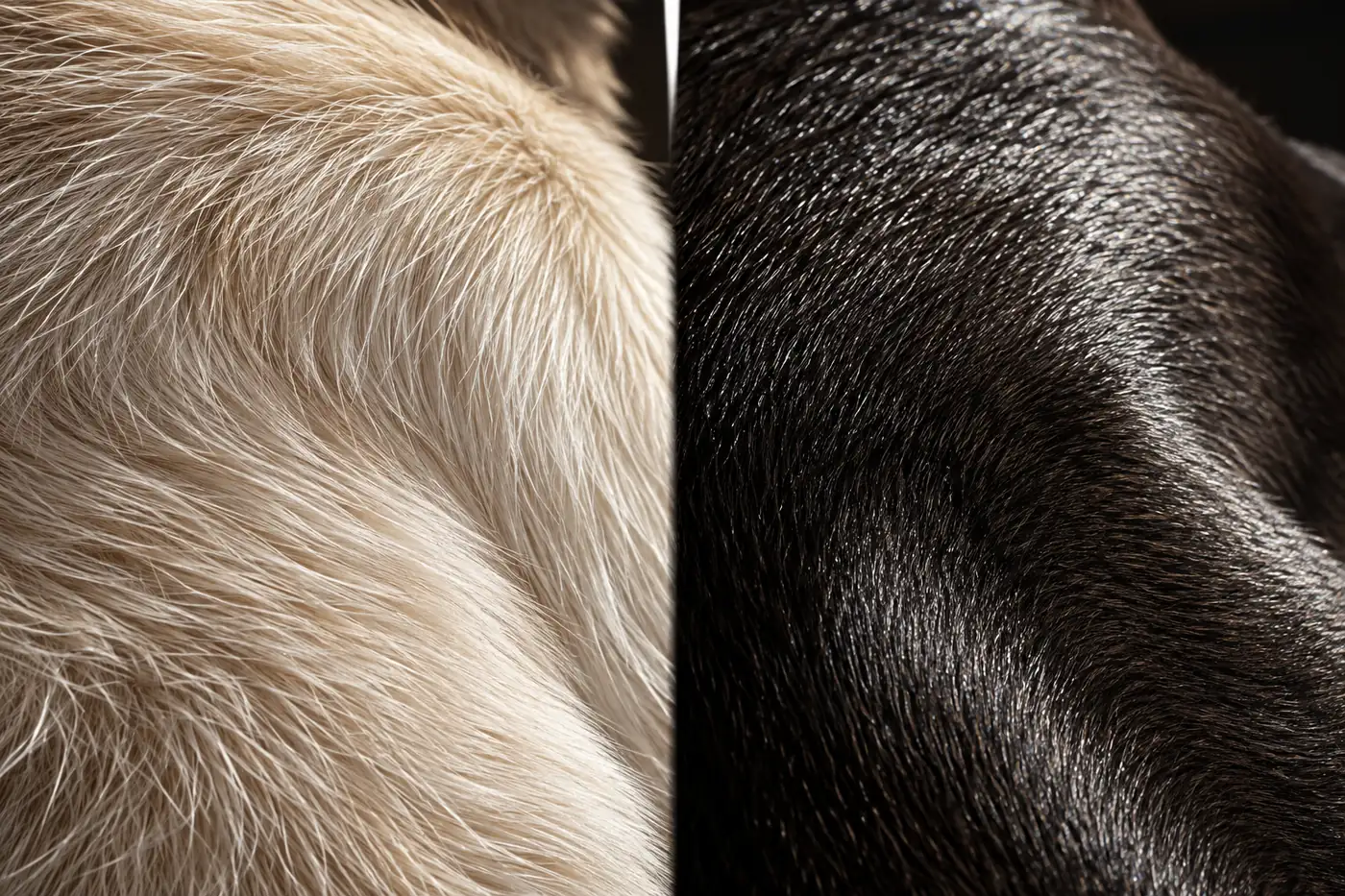
The coat is the clearest day-to-day difference, but the Balinese is easier to maintain than its length suggests.
Its fine single coat lies close to the body without a downy undercoat, reducing the dense layer that commonly drives matting in heavier long coats.
CFA recommends combing or brushing a Balinese several times a month, while TICA suggests weekly brushing. That is a flexible starting range, and the tail plume, backs of the legs, armpits and collar area need checking more often during shedding or friction.
An Oriental Shorthair usually needs only a gentle weekly pass with a soft cloth, grooming glove or soft brush.
The pass lifts loose hair and shows the skin, and a harsh tool raked through a very short coat does neither well.
| Coat task | Balinese | Oriental Shorthair |
|---|---|---|
| Routine | Comb lightly through the body and longer furnishings | Wipe or brush the short surface gently |
| Tangle risk | Low for a longhaired cat, but not zero around plume, legs and friction points | Very low because there is little length to knot |
| Loose hair | Present despite the single coat | Present despite the close coat |
| Bathing | Need-based for contamination or a greasy coat | Need-based rather than scheduled by breed |
| Stop signs | Pain, a tight tangle, redness, scale or sudden coat change | Pain, redness, bald areas, scale or sudden coat change |
Tool choice changes pressure and coat reach, which is where the right grooming tools matter. Grooming should stop when it hurts or the skin looks inflamed, because more passes do not solve a medical cause.
Neither breed is hypoallergenic. Coat length does not remove the proteins carried in saliva and skin secretions, so a person with cat allergy should discuss risk with a medical professional and spend meaningful time around the actual cat before committing.
Which health evidence should a breeder provide?
The health conversation is also more shared than separate.
Both breeds come from the Siamese group, and UC Davis lists Balinese and Oriental Shorthair among the breeds appropriate for the CEP290 PRA rdAc DNA test.
PRA rdAc is inherited recessively. A clear cat has no copies of the tested variant, a carrier has one copy without being affected by this form, and two carriers are predicted to produce affected kittens in one quarter of offspring on average.
| Evidence | Ask to see | What it establishes | What remains unknown |
|---|---|---|---|
| PRA rdAc | Original laboratory reports for both parents, matched to registered identity | Clear, carrier or affected status for the named CEP290 variant | Other causes of eye disease and future health |
| Family health history | Ages, diagnoses and causes of death in close relatives | Whether illness and longevity are tracked over time | A healthy family cannot guarantee an individual outcome |
| Veterinary records | Dated examinations, vaccination records and any claimed specialist findings | What was checked in a named cat on a named date | Conditions outside that examination or test |
| Pedigree and registration | Original record that connects the kitten to its stated parents | Documented ancestry and breed identity | Temperament, socialisation and lifetime health |
TICA notes amyloidosis as a concern in Balinese and says there is no available test that clears a cat of amyloid disease. Oriental and Siamese family research also makes health history relevant, so neither side of this comparison earns a clean-breed shortcut.
What the breeder has actually seen in related cats, and how that changed a mating decision, is the most revealing question. A vague fully tested claim is weaker than a short list of original reports whose names, variants, dates and limits can be explained.
- Match each report to the registered names or permanent identification of the parents
- Read the exact result and the single variant or examination it covers
- Ask why that test was selected for this family rather than counting panel items
- Review illness, longevity and cause of death where no DNA test answers the concern
- Arrange an independent veterinary examination and lifelong preventive-care plan
A clear report is narrow evidence about one variant and certifies nothing about the rest of the cat's health.
The 2021 AAHA and AAFP life-stage guidelines recommend discussing breed predispositions and the limits of genetic tests while building an individual lifelong care plan.
Should you choose a Balinese or an Oriental Shorthair?
A Balinese fits when the pointed blue-eyed appearance and silky plume are central to what you want, and a light but real combing routine is welcome. Its coat gives you a visible difference without buying a quieter, less active or less social temperament.
An Oriental Shorthair fits when you want the same lean breed-group character with the simplest coat care or a non-pointed colour and pattern. It offers no escape from conversation, athletic movement or close involvement with people.
- Expect a vocal, interactive and athletic cat whichever label you choose
- Decide whether pointed semi-longhair or non-pointed shorthair is the appearance you want to maintain
- Plan daily company and activity around an ordinary workday rather than a day off
- Meet the individual during play, rest, handling and a brief interruption in attention
- Read original health and ancestry records instead of accepting verbal assurances
- Protect separate resources and retreat space for children, dogs and other cats
- Walk away from guarantees about silence, allergy safety, temperament or lifetime health
The best-practice recommendation is to let the individual break a tie between these breeds.
Once coat preference is settled, confidence, recovery, contact style and the evidence behind the cat matter more than forcing a personality distinction that the shared lineage does not support.
Checked Against
- TICA: Balinese tica.org
- TICA: Oriental Shorthair tica.org
- TICA: Siamese breed group standard tica.org
- CFA: Balinese cfa.org
- CFA: Oriental cfa.org
- UC Davis Veterinary Genetics Laboratory: PRA rdAc vgl.vetmed.ucdavis.edu
- AAFP and ISFM feline environmental needs guidelines pmc.ncbi.nlm.nih.gov
- 2021 AAHA and AAFP feline life-stage guidelines pmc.ncbi.nlm.nih.gov
- Generalized AA-amyloidosis in Siamese and Oriental cats pubmed.ncbi.nlm.nih.gov
Published 12 September 2026. Last updated .