What Is a Serengeti Cat, and Does It Carry Any Wild Ancestry?
A Serengeti is a tall, spotted domestic cat developed by crossing Bengal and Oriental Shorthair lines to produce a serval-like appearance from entirely domestic genetics. It has no serval in its pedigree, and its only wild ancestor is the Asian leopard cat far back in its Bengal parent, which puts it in a different category from wildcat hybrids such as the Savannah, Chausie and Safari Cat.
- Origin
- United States, developed from Bengal and Oriental Shorthair lines
- Coat
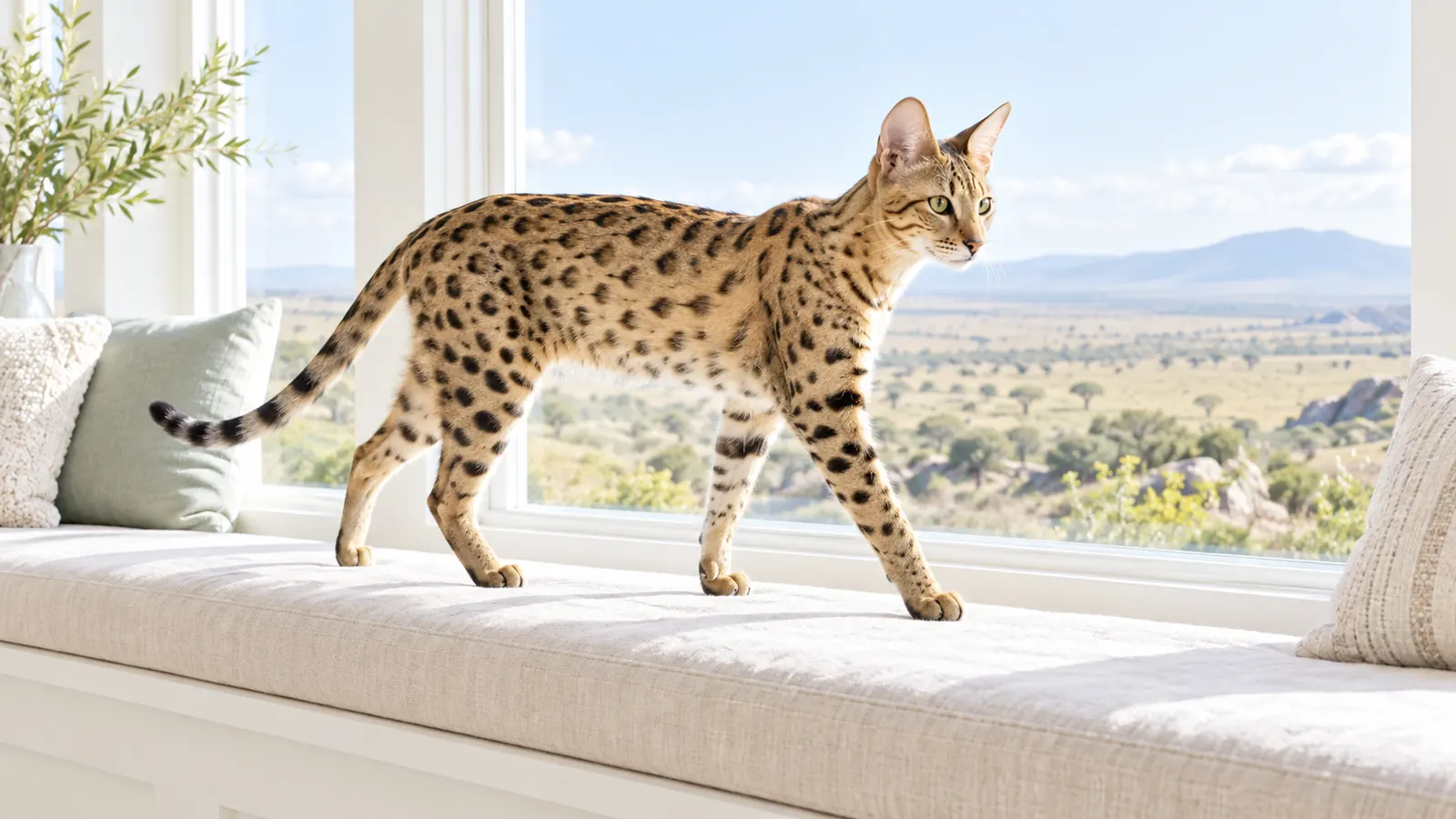
- Short, dense, close-lying with a spotted tabby pattern in gold to yellow tones
- Size
- Medium to large, long-legged and upright with a muscular but lean build
- Typical weight
- Secondary sources commonly cite 8 to 15 pounds
- Life expectancy
- Secondary sources cite 12 to 15 years; no Serengeti-specific population study was found
- Activity level
- High; athletic, climbing-oriented and strongly interactive
- Grooming
- Low; the short close coat needs minimal maintenance
- Suits
- Active households with climbing space, interactive play and enough engagement for a vocal, social cat
A Serengeti is a tall, spotted domestic cat designed to look like a serval.
It gets the long legs, large ears and spotted coat from Bengal and Oriental Shorthair parents rather than from a wildcat cross. There is no serval anywhere in its pedigree. Its only wild ancestor is the Asian leopard cat behind the Bengal, many generations back in the lines used to make it.
Is a Serengeti a Wildcat Hybrid?
Not in the usual sense of the word. The Savannah crosses a domestic cat with a serval, the Chausie with a jungle cat and the Safari Cat with a Geoffroy's cat. In all three, early generations sit close to the wild parent, which brings generational legal restrictions, behavioural differences and welfare questions.
A Serengeti is bred from domestic Bengals and Oriental Shorthairs, so there is no early generation and no behaviour gradient to manage, and in most places the law treats it as an ordinary domestic cat. The exception is the small number of rules that name Bengals by breed rather than by generation. Hawaii's plant quarantine rules, for example, list Bengal cats among prohibited animals. Whether a Bengal cross falls under one of those depends on its wording, so where Bengals are restricted the local rule is worth reading before buying.
FIFe does not list the Serengeti, and it is not among CFA's recognised breeds.
- CFA
- Not listed
- FIFe
- Not listed
- Parent breeds
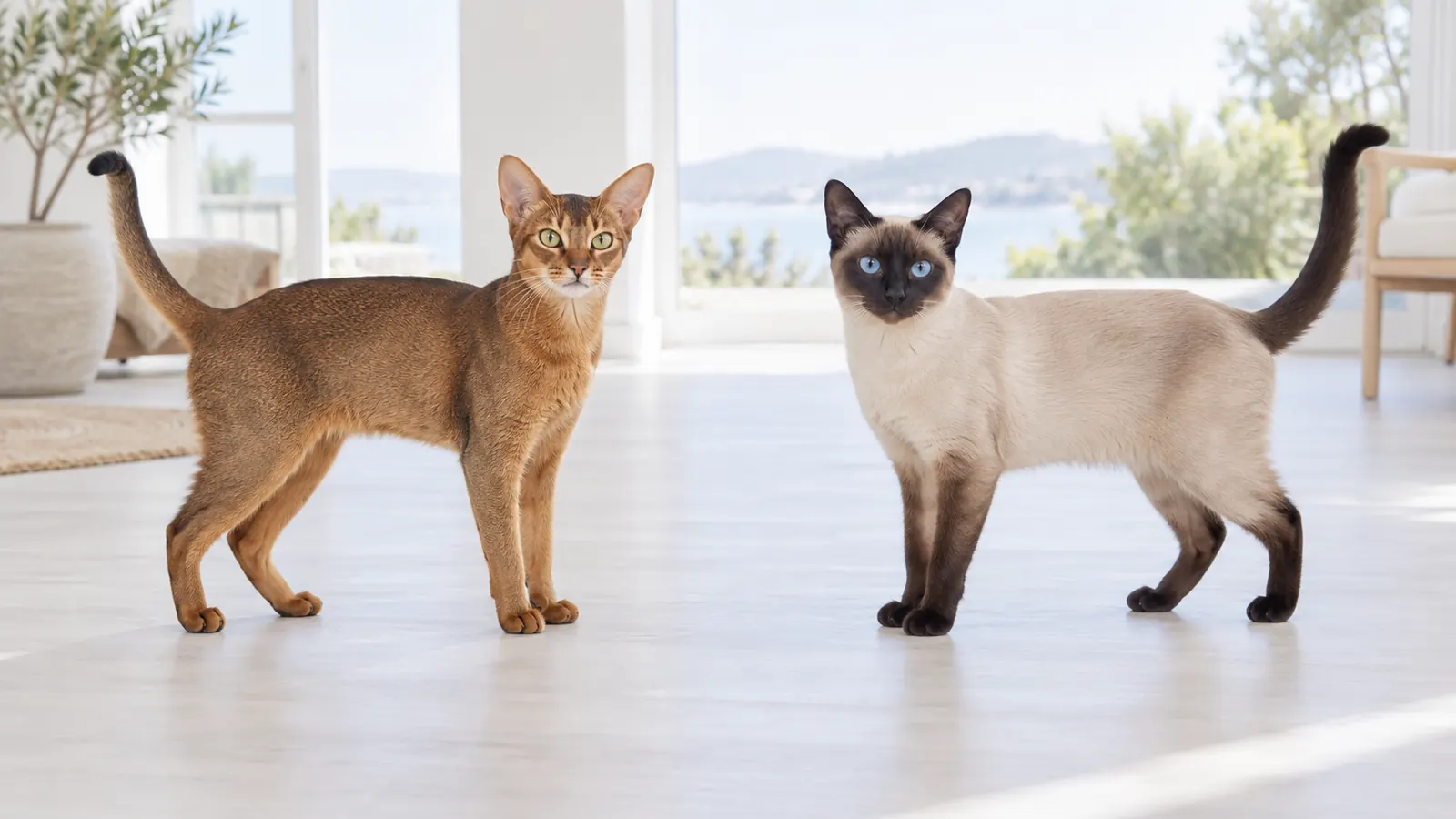
- Bengal and Oriental Shorthair
- Wild ancestry
- No serval, distant Asian leopard cat through the Bengal parent
- Legal status
- Domestic cat in most places, except where rules name Bengals by breed
- Key distinction
- Serval appearance from domestic genetics only
What Does a Serengeti Look and Move Like?
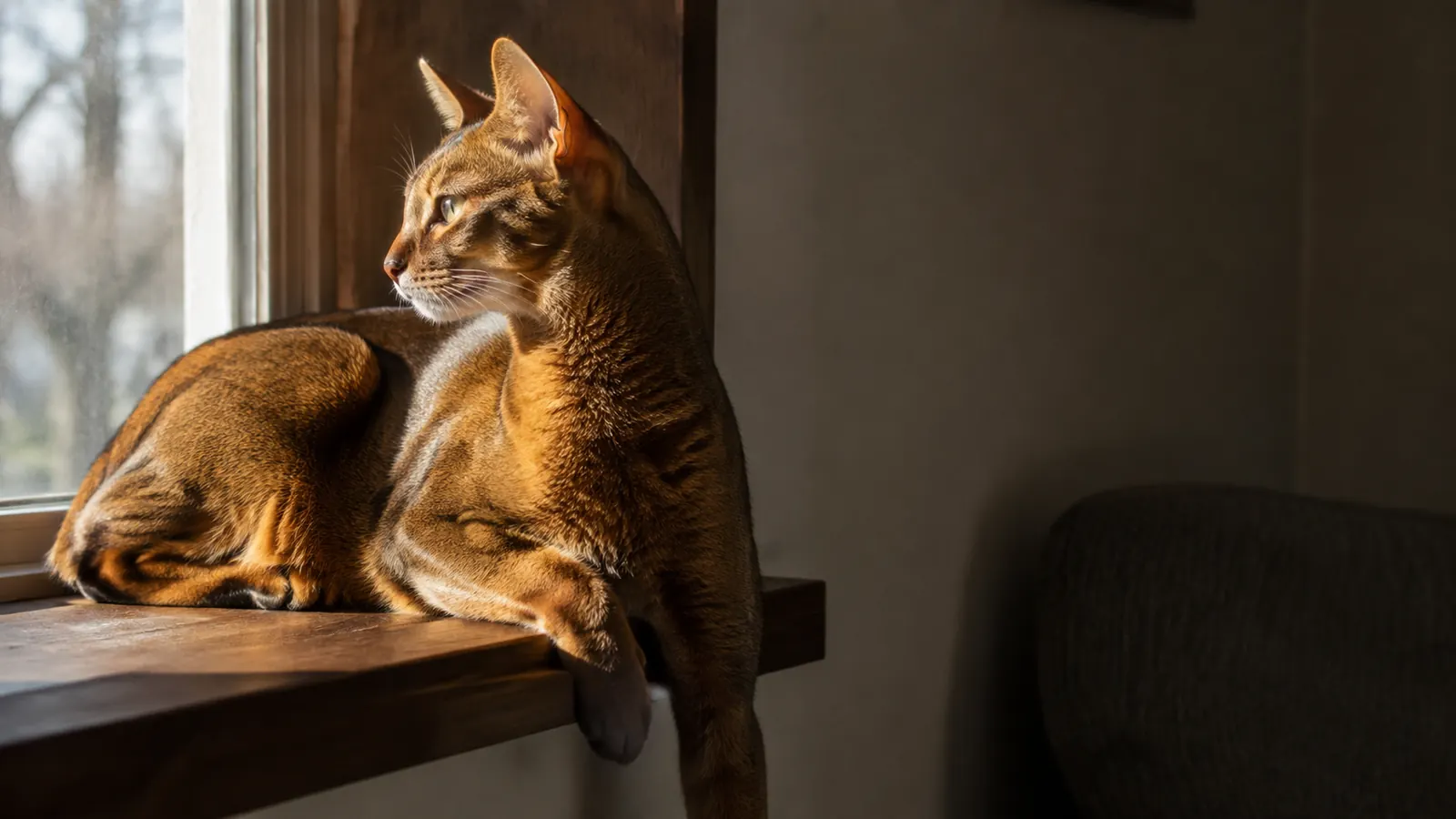
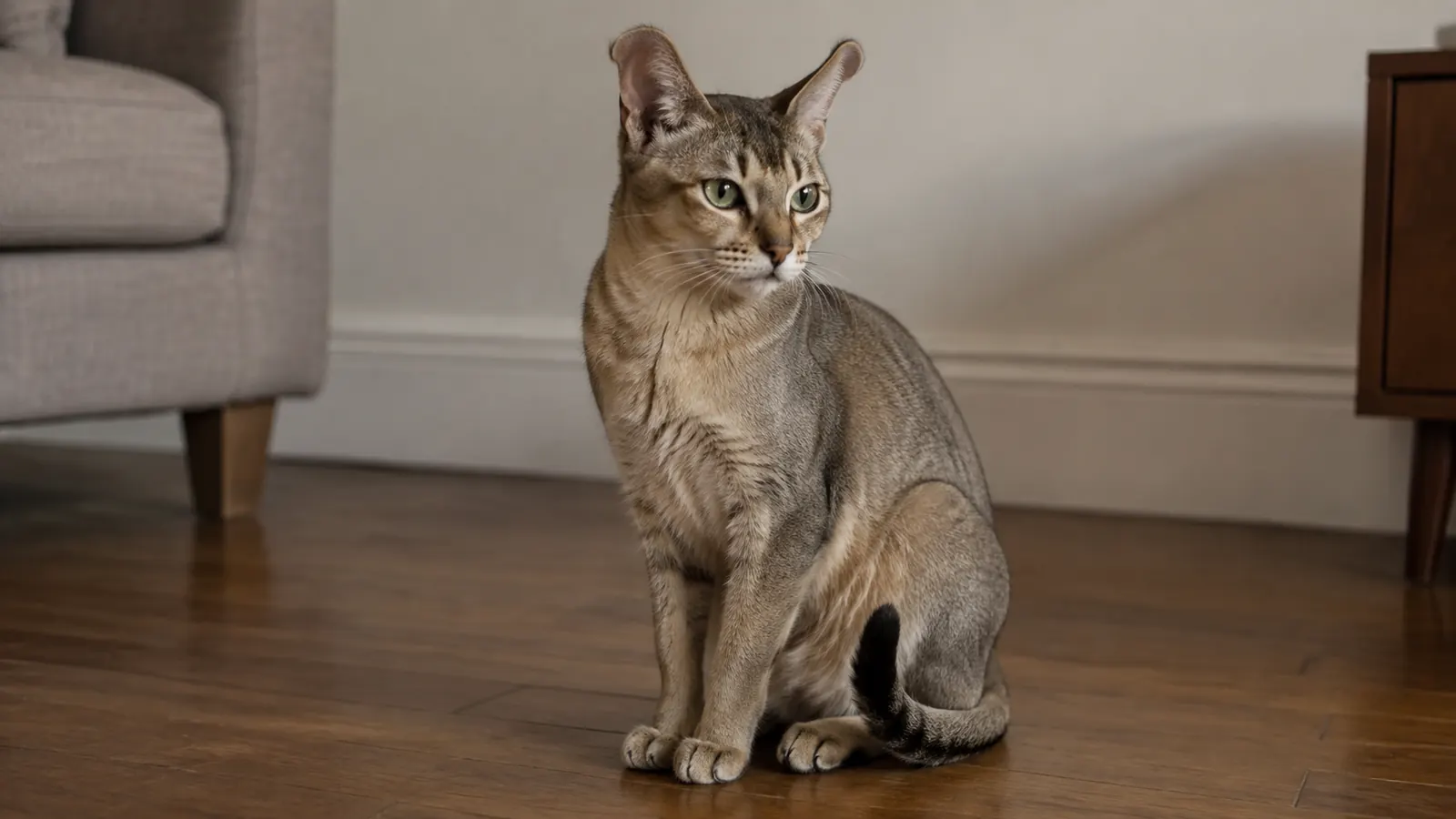
The Serengeti is built to look tall. Long legs, an upright posture and large rounded ears on a medium wedge head produce a silhouette that echoes the serval's proportions.
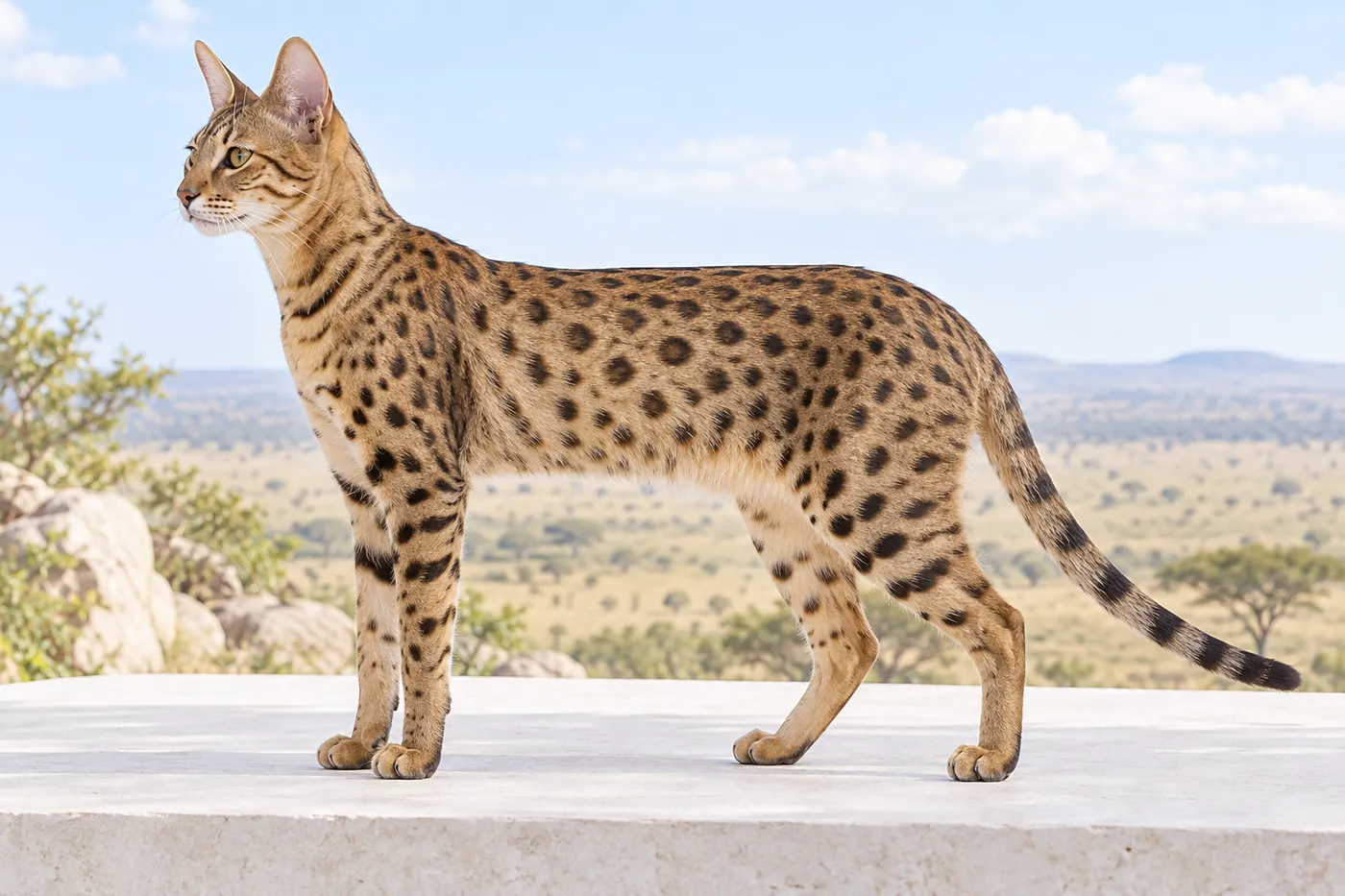
The body is muscular but lean rather than heavy. The legs are long for a domestic cat, proportional to the body and carried straight.
The coat is short, dense and close-lying with a bold spotted tabby pattern. The base colour is typically warm gold to yellow, and the spots are round and well-separated rather than rosetted.
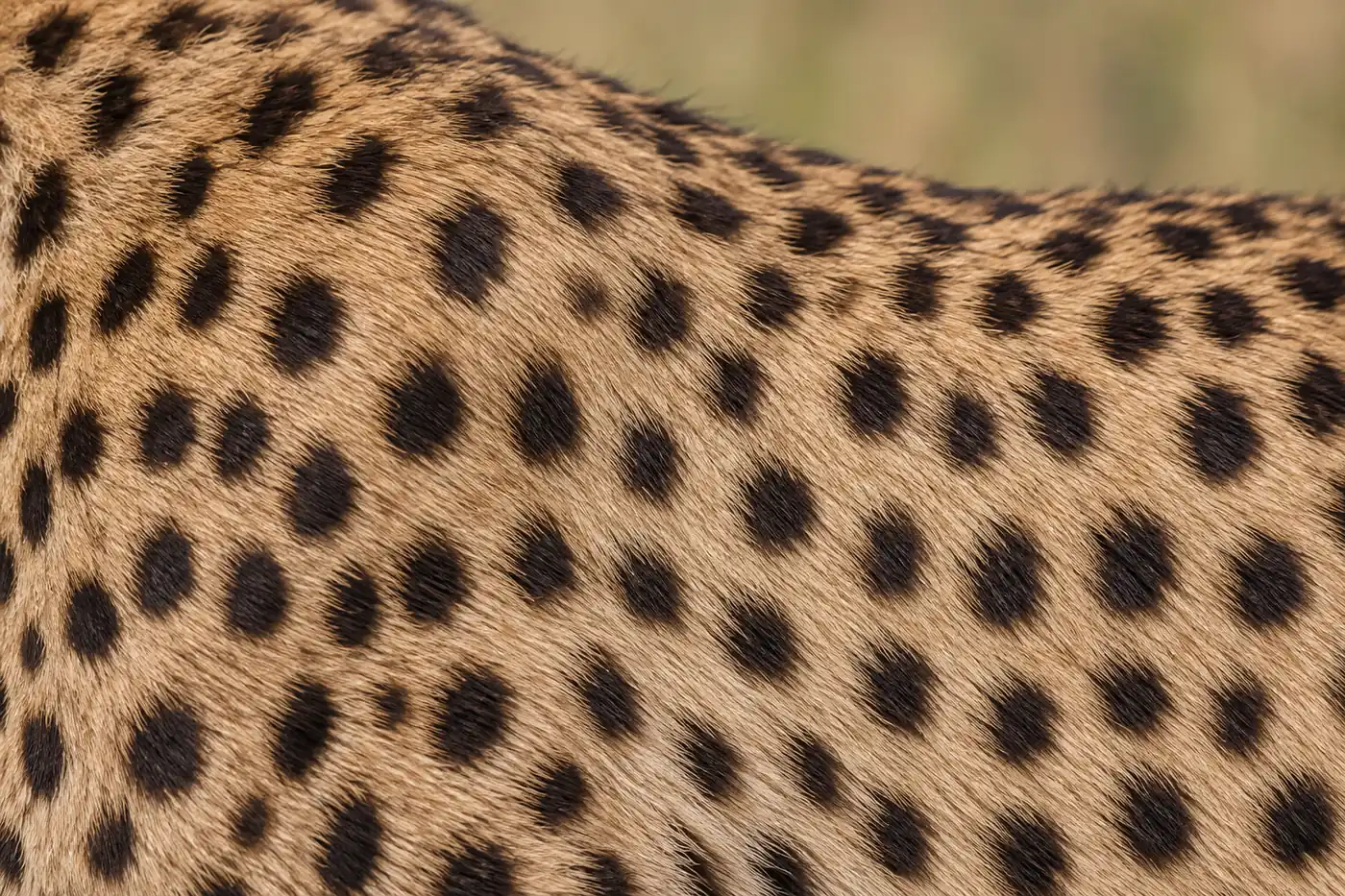
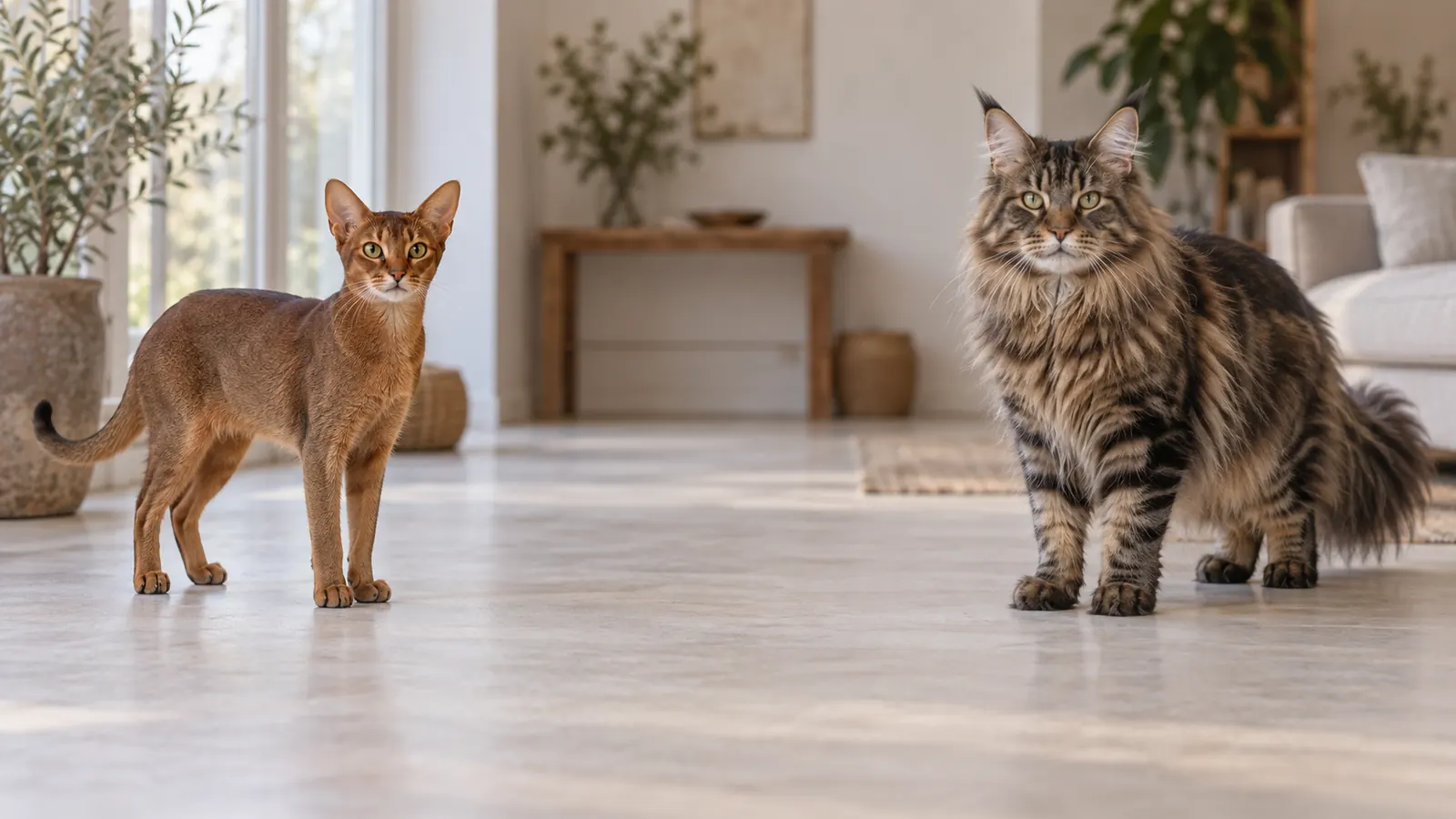
Secondary sources commonly cite 8 to 15 pounds (about 3.5 to 7 kilograms), with males larger. Because that weight sits on a lean frame and long legs, the height rather than the weight is what makes the breed visually striking.
What Temperament Comes From Bengal and Oriental Lines?
Both parent breeds are known for high energy and strong social drive, and the Serengeti inherits that combination.
The Bengal contribution brings athletic ability, prey drive and confidence. The Oriental Shorthair contribution brings vocal persistence, human attachment and a demand for interactive company.
The result is a cat that climbs, jumps and plays with energy, follows people between rooms, and communicates audibly when attention is delayed. A quiet, low-maintenance household is a poor match.
Isolation tolerance is low. A Serengeti left alone for a full workday without a companion or enrichment may become destructive or vocally distressed.
Trainability follows the food-motivated, reward-based pattern that works well for active social breeds. Agility-style exercises, puzzle feeders and fetch games suit the breed better than passive toys.
What Does the Short Coat Need?
The close, dense coat needs very little: it does not mat, and occasional hand grooming removes loose hair. Shedding is light to moderate because there is no dense undercoat to release in heavy seasonal moults.
What Health Considerations Come From the Parent Breeds?
No Serengeti-specific health study was found.
The Bengal side brings one well-documented concern: hypertrophic cardiomyopathy (HCM) has been reported in Bengal lines. No DNA test covers the form seen in Bengals, so echocardiography of the breeding cats is the screening that exists.
From the Oriental Shorthair side, the Siamese-family concerns apply: amyloidosis, asthma and dental disease have been reported in these lines.
| Source | Condition | What to ask |
|---|---|---|
| Bengal lines | Hypertrophic cardiomyopathy (HCM) | Whether parents have been screened by echocardiography |
| Oriental Shorthair lines | Amyloidosis, asthma, dental disease | Whether the breeding line has a history of liver or respiratory problems |
| Both | No Serengeti-specific population data | Individual veterinary assessment as the primary evidence |
Secondary sources cite a lifespan of 12 to 15 years, a range in line with its parent breeds, but no Serengeti population has been followed to measure it.
How Much Space and Activity Does a Serengeti Need?
The Bengal and Oriental heritage produces a cat that needs to move, climb and interact for a good part of every day.
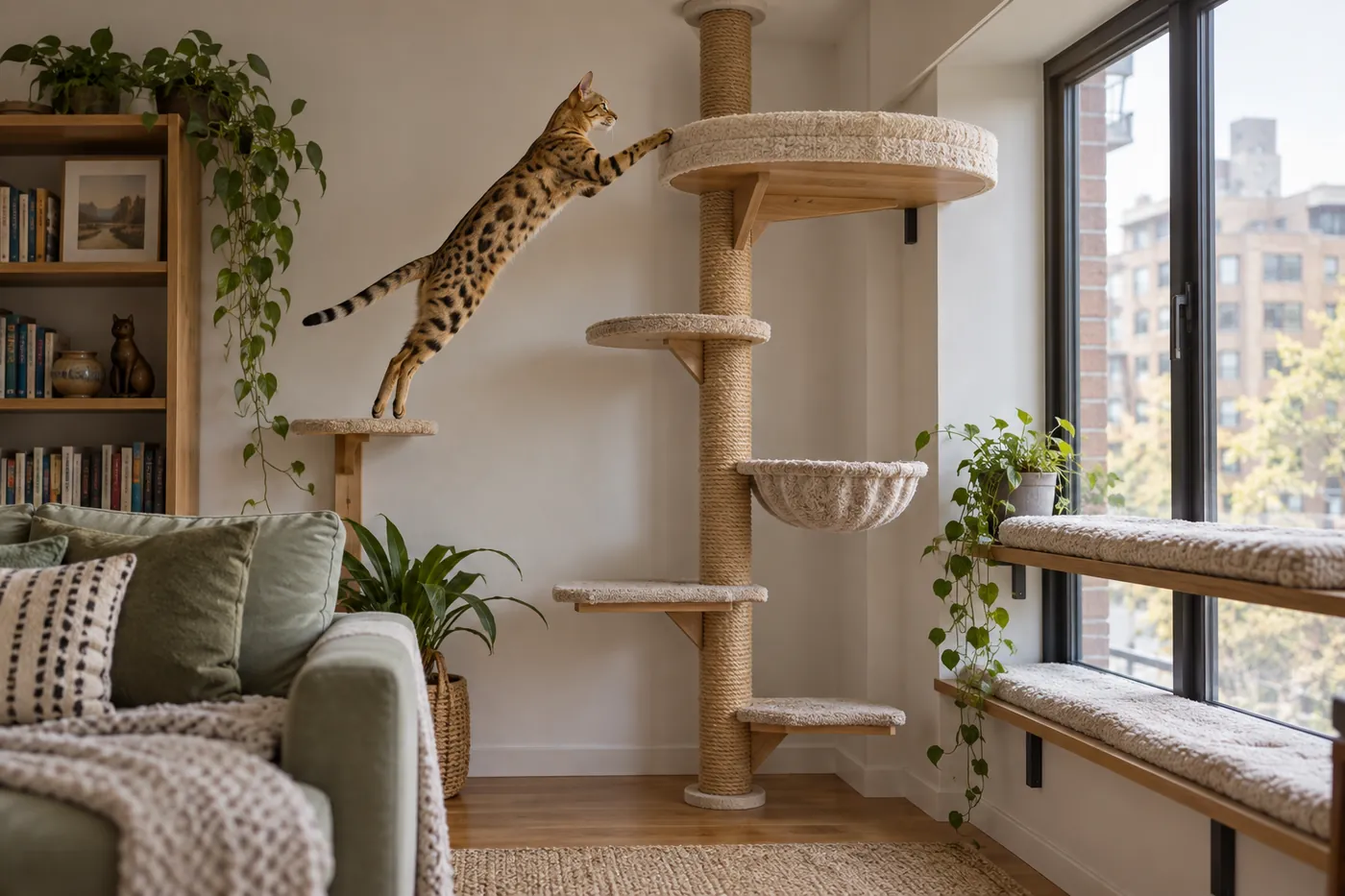
Tall, sturdy climbing structures are important because the long legs generate strong vertical leaps. The Oriental side adds a social persistence that makes interactive play a daily requirement rather than an occasional treat.
A Serengeti that does not receive enough stimulation may redirect its energy into counter-surfing, door-opening or dismantling objects that were not designed to be explored.
An apartment can work when the vertical enrichment is supplied. A house with outdoor access through a secure catio suits the breed's climbing ability and environmental curiosity.
How Does a Serengeti Fit a Family or Multi-Pet Home?
The breed's social drive and moderate-to-confident temperament often suit households with older children who can match the cat's interactive energy.
A Serengeti introduced to another social, active cat may form a compatible pair. A timid, solitary cat may find the Serengeti's persistence overwhelming.
Small animals need secure physical barriers, because the prey drive that comes with Bengal ancestry is not trained away by socialisation.
Who Does a Serengeti Suit, and How Do You Find One?
A Serengeti suits an active household that wants an athletic, vocal domestic cat with a serval look and has the time to keep it occupied.
Breeders are uncommon, so a waiting list is likely, and registration papers are the record that shows a kitten's parents were Serengetis rather than a look-alike cross.
- Registration papers naming both parents and the issuing organisation
- HCM screening results from the Bengal-derived parent line
- A pedigree with no early-generation Bengal in it, since those cats sit close to the Asian leopard cat
- The breed's vocal and social demands are described honestly before purchase
- The individual cat's activity level and social behaviour observed in person
If you want the serval-look aesthetic but find a Serengeti breeder unavailable, the Ocicat produces a spotted domestic cat from a different background with full TICA and CFA championship status.
Common Questions
Is a Serengeti cat a wildcat hybrid?
No. The Serengeti is bred from domestic Bengal and Oriental Shorthair lines and has no serval in its pedigree. Its only wild ancestor is the Asian leopard cat many generations back in the Bengal, so it is treated as a domestic cat in most places, unlike the Savannah, Chausie and Safari Cat.
How big does a Serengeti get?
Secondary sources cite 8 to 15 pounds. The breed looks larger than its weight because of its long legs and upright posture.
Are Serengeti cats vocal?
Yes. The Oriental Shorthair heritage produces a socially demanding, vocally communicative cat that expects interactive company and announces when attention is delayed.
What health problems do Serengeti cats have?
No breed-specific study exists. HCM from Bengal lines and Siamese-family conditions from Oriental Shorthair lines are the primary concerns. The cardiac screening that exists is echocardiography of the breeding cats.
Is the Serengeti a recognised breed?
FIFe does not list it, and it is not among CFA's recognised breeds.
Checked Against
- CFA: Recognised breeds, page 3 (runs Lykoi to Selkirk Rex, no Serengeti) cfa.org
- Screening for hypertrophic cardiomyopathy in cats pubmed.ncbi.nlm.nih.gov
- Generalized AA-amyloidosis in Siamese and Oriental cats pubmed.ncbi.nlm.nih.gov
- Hawaii Film Office: Performing animals (Bengal cats prohibited under HDOA plant quarantine rules) filmoffice.hawaii.gov
- FIFe: Recognised breeds (Serengeti not listed) fifeweb.org
- CFA: Recognised breeds, page 4 (starts at Siamese, no Serengeti) cfa.org
Published 17 September 2026. Last updated .