
What Is a Safari Cat, and What Does Owning a Wildcat Hybrid Actually Involve?
A Safari Cat is a hybrid between a Geoffroy's Cat (Leopardus geoffroyi), a South American wildcat, and a domestic cat. It is a very rare hybrid with no championship recognition from any major registry. Early-generation Safaris retain substantial wild behaviour, face legal ownership barriers in many jurisdictions, and need housing and veterinary arrangements that most domestic-cat households cannot provide.
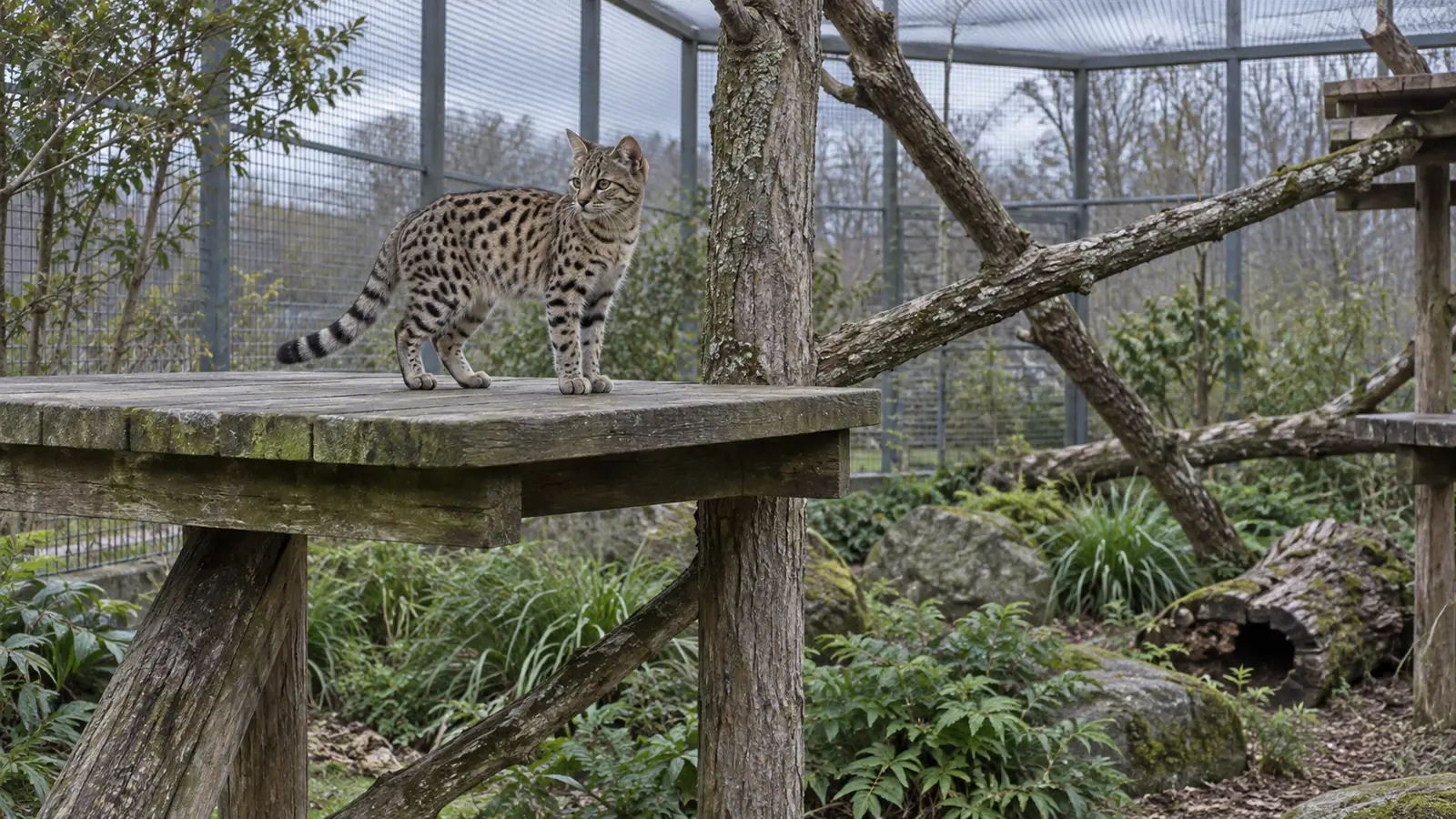
- Origin
- United States, from the mid-1970s, with research breeding at Washington State University for leukaemia studies
- Coat
- Short, dense coat with spotted or rosetted pattern reflecting Geoffroy's Cat markings
- Size
- Variable by generation; early generations can be substantially larger than a domestic cat, later generations closer to domestic size
- Typical weight
- Highly variable; F1 Safaris may reach 15 to 25 pounds, later generations closer to domestic ranges
- Life expectancy
- No Safari-specific population data exists; limited information from a very small population
- Activity level
- High in early generations, with strong hunting drive, climbing ability and nocturnal activity patterns retained from the wild parent
- Grooming
- Low; the short dense coat needs minimal maintenance
- Suits
- Experienced exotic-hybrid owners with legal clearance, secure enclosures, exotic-capable veterinary care and realistic expectations about wild behaviour
A Safari Cat is a hybrid between a domestic cat and a Geoffroy's Cat, a small South American wildcat.
In early generations one parent or grandparent is a wild animal, and that ancestry shapes every ownership question: the legal status, the behaviour you can expect, the veterinary care, the housing and the ethics of keeping one.
Where Did the Safari Cat Come From?
Safari cats have existed only since the mid-1970s. A 1990 newspaper report described Washington State University as the only university in the United States raising them, bred for about a decade for the National Cancer Institute and University of Washington researchers studying bone-marrow transplants in cats with leukaemia.
Some of the resulting hybrids entered private hands, and a small breeding community developed. The Safari has never achieved mainstream breed status.
The Safari holds no championship status with TICA, and CFA, FIFe and WCF do not list it. The breed population is extremely small, so active breeders are rare.
- TICA
- No championship status
- CFA
- Not listed
- FIFe
- Not listed
- WCF
- Not listed
- Wild parent
- Geoffroy's Cat (Leopardus geoffroyi)
- Origin
- United States from the mid-1970s, including research breeding at Washington State University
- Breed population
- Extremely small
- Primary challenge
- Legal restrictions, wild behaviour retention, limited veterinary knowledge
What Do Generation Numbers Mean?
Generation matters more for a Safari than for almost any other breed decision. The distance from the wild parent determines how much wild behaviour, size and legal restriction the cat carries.
| Generation | What it means | Practical consequence |
|---|---|---|
| F1 | One parent is a Geoffroy's Cat | Largest size, strongest wild behaviour, most legally restricted |
| F2 | One grandparent is a Geoffroy's Cat | Still substantial wild traits and legal restrictions in many areas |
| F3 | One great-grandparent is a Geoffroy's Cat | Intermediate; some jurisdictions treat F3 as domestic |
| F4 and later | Four or more generations from the wild ancestor | Usually treated as domestic by law, though local rules vary |
The Savannah follows the same generational logic with serval ancestry. The Chausie follows it with jungle-cat ancestry.
In all three cases, the generation number is the single most important piece of information after the species name.
What Does Wild Behaviour Actually Look Like in a Home?
An F1 or F2 Safari retains substantial Geoffroy's Cat behaviour. Its instincts, activity patterns, social responses and stress triggers come partly from a wild species and differ from a domestic cat's.
Reported behaviours in early-generation Safaris include strong nocturnal activity, marking, prey drive that extends to animals much larger than mice, wariness of strangers, limited tolerance for handling, and stress responses to confinement, noise or change that a domestic cat would manage without difficulty.
Later generations (F4 and beyond) typically show more domestic behaviour, but the transition is not predictable on a fixed schedule. Individual cats vary.
A Safari that cannot express its activity drive in a secure space may redirect that energy into destruction, escape attempts or aggression. Training cannot fix that, because the cause is a mismatch between the animal's needs and the space it lives in.
What Does Ownership Actually Require?
The practical requirements for an early-generation Safari go well beyond what a domestic cat needs.
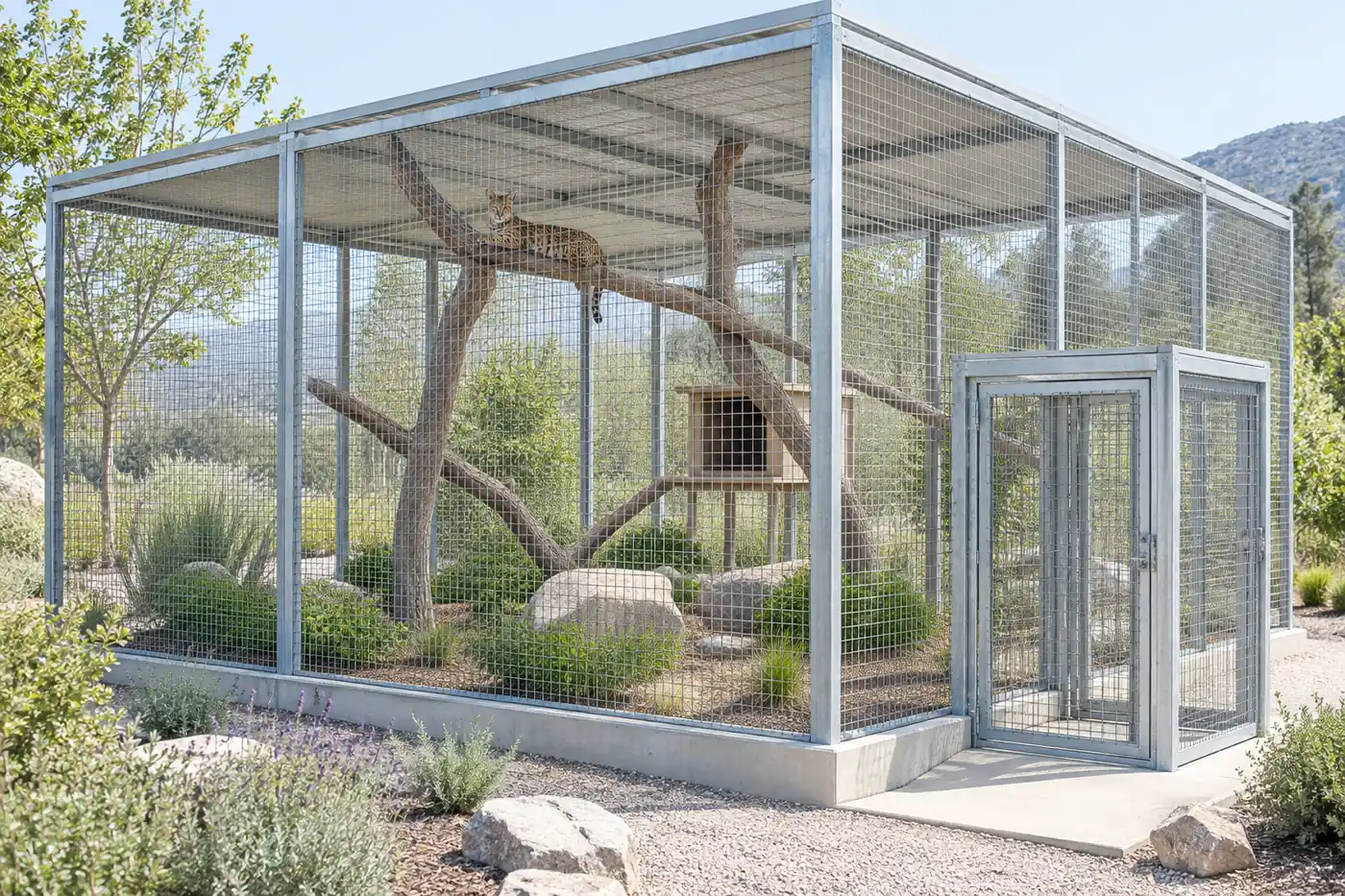
Housing. A secure, large outdoor enclosure with climbing structures, natural cover and weather protection. Indoor-only housing for an F1 or F2 is likely to produce chronic stress and behavioural problems.
Veterinary care. Not all veterinarians are equipped or willing to treat wildcat hybrids. A veterinarian with exotic-animal experience is essential, and vaccination protocols may differ from domestic schedules.
Diet. No study has established nutritional needs for Safari hybrids that differ from a domestic cat's, and no reliable evidence shows that Geoffroy's Cat ancestry makes a raw or whole-prey diet necessary. Cornell's feline health guidance does not recommend raw meat as food for cats, because raw diets can carry bacteria, viruses and parasites that infect both the cat and the people handling its food. A complete diet suited to the cat's life stage, planned with the exotic-experienced veterinarian, is the supported starting point.
Containment. A secure enclosure for an early-generation Safari typically means heavy-gauge welded mesh, a concrete or buried-wire floor barrier to prevent digging, a solid roof, double-door entry to prevent escape during feeding, and enough height and horizontal space for climbing, running and territorial patrol. This is closer to a zoo enclosure than to a domestic catio.
Liability. An escaped wildcat hybrid that injures a person or another animal creates legal liability that a domestic cat does not. Insurance, secure containment and local legal compliance are not optional.
Daily management. An F1 or F2 Safari's routine includes waste removal from a large enclosure, skin and coat inspection at a distance when the cat will not tolerate handling, and monitoring for stress behaviours such as pacing, over-grooming or nocturnal vocalisation. This is a daily time commitment closer to exotic animal husbandry than to pet care.
Why Is a Safari Cat Incompatible With Most Households?
An early-generation Safari should not live with young children. The wild parent's prey drive, startle responses and limited tolerance for handling create a genuine safety risk that no amount of socialisation fully eliminates.
Other pets face the same concern. An F1 or F2 Safari may treat a smaller cat, a dog or any caged animal as prey rather than a companion.
Physical separation with secure barriers is the only reliable protection.
Later generations (F4 and beyond) may coexist with other animals and older children, but each individual must be assessed on its own behaviour rather than assumed safe because of its generation number.
What Health Information Exists?
Almost none that is Safari-specific, because the breed population is too small and too recent for meaningful health data to exist.
Geoffroy's Cats in captivity are studied within the zoo community, and some of that knowledge transfers. Domestic-cat health screening applies to the domestic side of the genetics.
Hybrid vigour is sometimes claimed for wildcat crosses, but it describes a tendency across populations and promises nothing about an individual cat. An F1 Safari can still develop any condition that either parent species carries.
Who Is a Safari Cat Actually For?
A Safari Cat is for an experienced exotic-hybrid owner who has already confirmed legal permission, secured appropriate housing, identified an exotic-capable veterinarian and accepted a level of daily management that has nothing in common with domestic cat ownership.
A household drawn mainly by the spotted coat has an easier route in the Bengal, a spotted breed with full championship status whose pet cats are many generations removed from their wild ancestor.
A Safari is the least supported option among wildcat hybrids. Its rarity means fewer breeders, less health data, less veterinary familiarity and fewer people who can help when problems arise.
Common Questions
Is a Safari Cat legal to own?
It depends entirely on your jurisdiction. Many states and countries restrict or prohibit early-generation wildcat hybrids. Check local and state law before any commitment. Later generations (F4+) are usually treated as domestic, but rules vary.
Is a Safari Cat a domestic cat?
Early generations are not. An F1 Safari has one Geoffroy's Cat parent and retains substantial wild behaviour, size and instincts. Later generations (F4+) behave more like domestic cats, but the transition is gradual and individual.
How big does a Safari Cat get?
Highly variable by generation. F1 Safaris may reach 15 to 25 pounds. Later generations trend closer to domestic sizes.
What does a Safari Cat eat?
No study has shown that a Safari needs anything other than a complete diet suited to its life stage, and Geoffroy's Cat ancestry does not make raw or whole-prey feeding necessary. Cornell's feline health guidance does not recommend raw meat as cat food because it can carry bacteria, viruses and parasites that infect cats and people.
How rare is the Safari Cat?
Extremely rare. The breed population is very small, active breeders are few, and no major registry grants it championship status. Finding a Safari requires dedicated searching and legal preparation.
Checked Against
Published 17 September 2026. Last updated .





