
What Is a Pixie-Bob, and Is It Actually Part Bobcat?
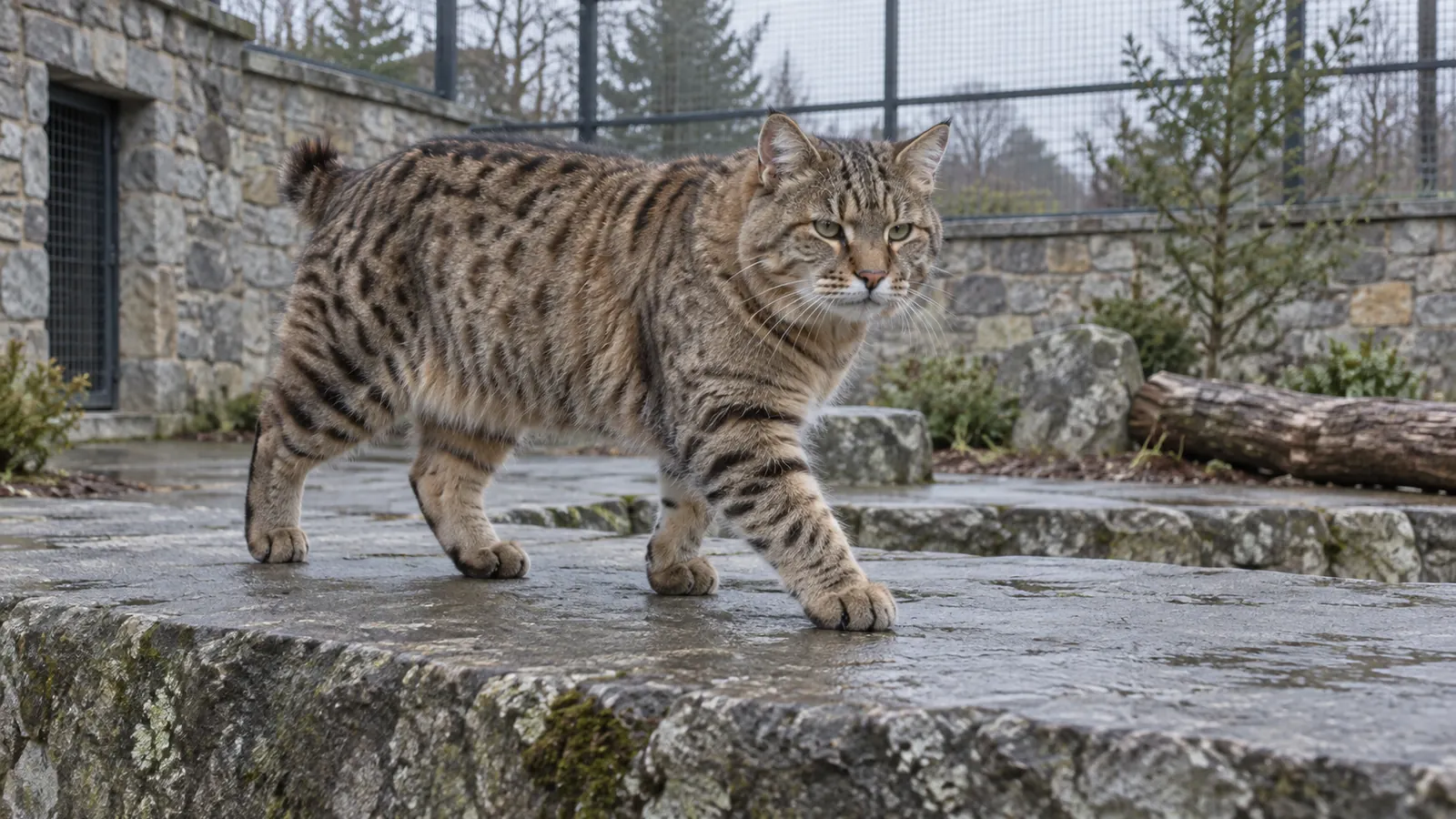
A Pixie-Bob is a large, muscular domestic cat bred to resemble a North American bobcat. TICA grants it championship status, and its standard accepts extra toes, which most show standards penalise. Despite the wild appearance and persistent origin stories, no published genetic evidence shows bobcat ancestry, and TICA registers it as a domestic breed.
- Origin
- North-western United States
- Coat
- Short or long, both with a thick double coat in brown spotted tabby pattern
- Size
- Large and muscular with heavy boning, slow maturation over several years, and a natural or shortened tail
- Typical weight
- TICA describes a large breed; secondary sources commonly cite 9 to 17 pounds, with males larger
- Life expectancy
- Secondary sources cite 13 to 16 years; no breed-specific population study was found
- Activity level
- Moderate; described as calm, confident and sociable rather than hyperactive
- Grooming
- Moderate; the thick double coat needs regular combing, heavier during seasonal shedding
- Suits
- Households with room for a large cat, sturdy furniture and a patient approach to slow maturation
A Pixie-Bob is a large domestic cat developed to look like a North American bobcat. The wild appearance is convincing: heavy boning, a shortened tail, a muscular body, a broad pear-shaped head, hooded eyes, prominent brow and a spotted tabby coat. All of it was produced by selectively breeding domestic cats, and that decides both the breed's legal status and what it is like to live with.
Does the Pixie-Bob Have Bobcat Ancestry?
The Pixie-Bob originated in the north-western United States. The founding story involves a large, short-tailed male of unknown origin and a domestic female, and the possibility of bobcat hybridisation has been repeated in breed marketing since.
No published genetic evidence shows bobcat ancestry in the Pixie-Bob. No peer-reviewed study of the breed's ancestry has been published, so the case rests on that absence of evidence and on the breed's registration as a domestic cat.
TICA accepts the Pixie-Bob for championship and describes it as a domestic breed. The standard rewards a wild appearance produced from domestic genetics, which is a different proposition from an actual wildcat hybrid.
This matters for two practical reasons. A genuine bobcat hybrid would be subject to exotic animal ownership laws in many jurisdictions, and a Pixie-Bob is not, because it is a domestic cat. A buyer expecting wild behaviour from a cat marketed with wild-origin stories is also setting up a mismatch between expectation and reality.
- TICA
- Championship
- CFA
- Not listed
- Origin
- North-western United States
- Claimed ancestry
- Bobcat (Lynx rufus) hybrid
- DNA evidence
- No published evidence of bobcat ancestry
- Defining features
- Large muscular body, shortened tail, heavy brow, spotted tabby coat
- Polydactyly
- Allowed by TICA standard, up to seven toes per paw
The Savannah and Chausie are genuine documented wildcat hybrids with confirmed serval and jungle-cat ancestry respectively. The Pixie-Bob's situation is different: the wild appearance was achieved through selective breeding of domestic cats.
Why Does TICA Allow Extra Toes?
Polydactyly is normally a fault in cat show standards, and the Pixie-Bob is one of very few breeds whose TICA standard accepts it. The trait is a dominant autosomal mutation that produces additional toes, most commonly on the front paws. TICA's Pixie-Bob standard allows up to seven toes per paw.
Not all Pixie-Bobs are polydactyl. The standard permits extra toes without requiring them, and a Pixie-Bob with the usual number of toes is equally registrable and showable.
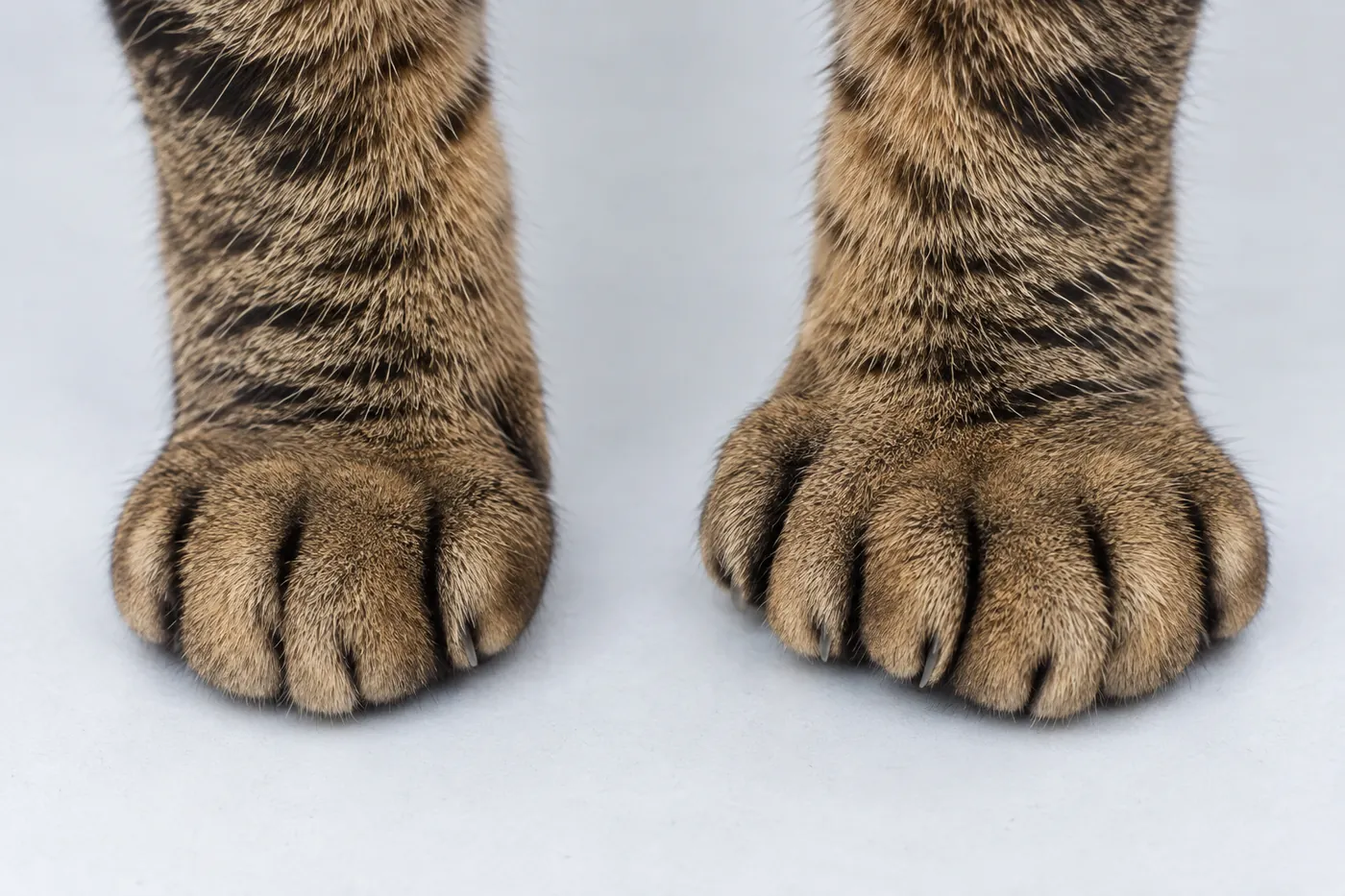
An extra toe that does not touch the ground does not wear its nail down, so on a polydactyl cat that nail can grow round into the pad without regular claw trimming.
What Does a Full-Grown Pixie-Bob Look Like?
The breed is large, muscular and slow to mature. Full physical development may take three to four years, and an immature Pixie-Bob can look considerably smaller than the adult it will become. Secondary sources commonly cite 9 to 17 pounds, with males significantly larger than females. The body should feel muscular and substantial, with a deep chest and well-developed hindquarters.
The tail ranges from a short bob to hock-length. Both are accepted, and the variety is normal within the breed.
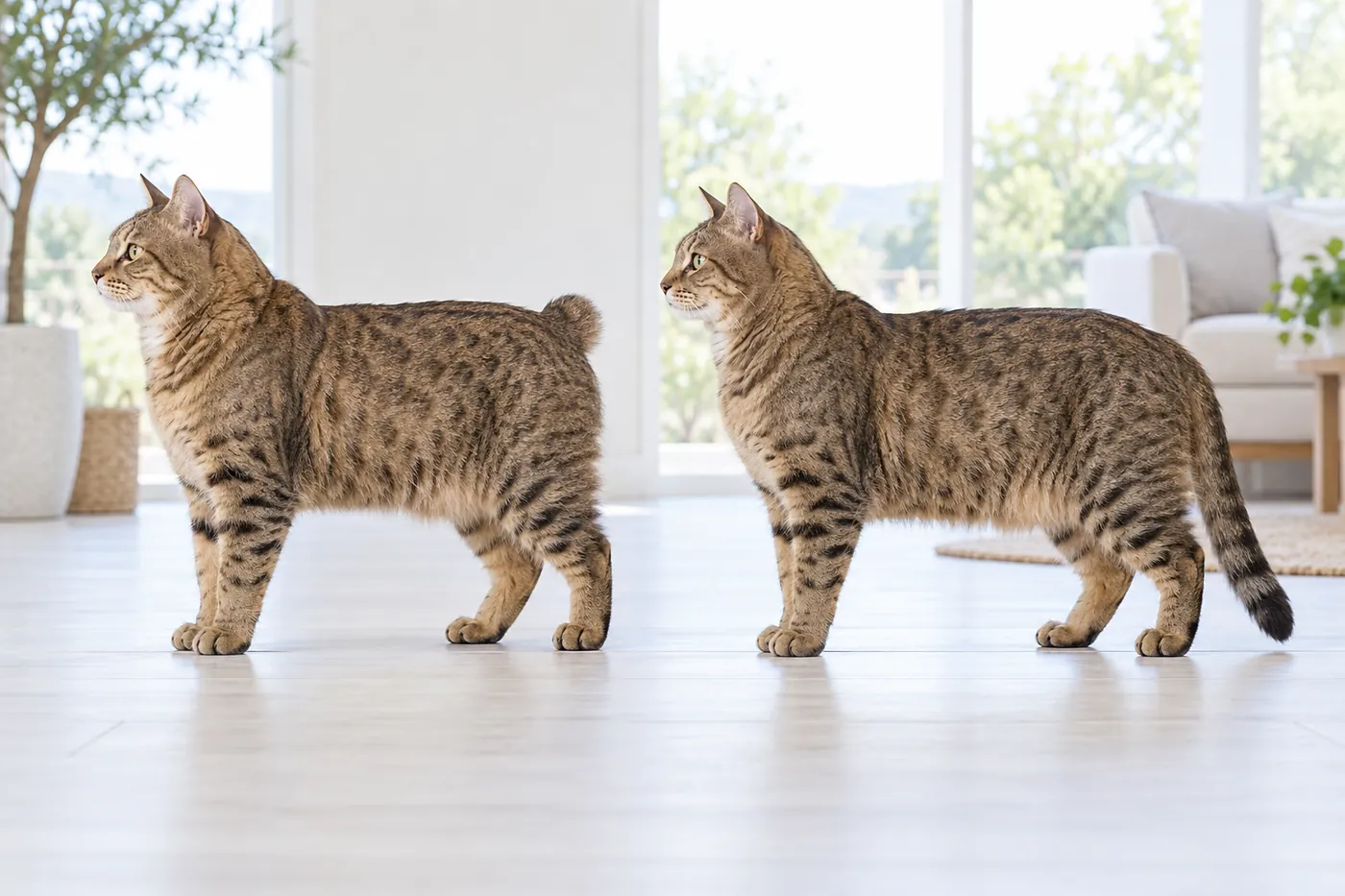
The coat comes in short and long varieties, both with a thick double layer. The colour is brown spotted tabby, and the pattern is meant to resemble the ticked-and-spotted appearance of a wild bobcat.
How Calm Is the Pixie-Bob Really?
Breed descriptions consistently call the Pixie-Bob calm, confident, sociable and quietly interactive. Owners and breed clubs often compare the Pixie-Bob's behaviour to a dog's. Following household members, greeting visitors and accepting handling calmly are commonly reported traits.
Calm here describes a moderate energy level. A Pixie-Bob still needs play, enrichment and social contact, but it tends to take part in household life without the vocal persistence of Siamese-family breeds or the relentless climbing of a Bengal.
Individual variation applies, because temperament depends on rearing as well as breeding: a kitten raised with limited socialisation may not develop the confident temperament the breed descriptions promise. Early, varied handling is what produces a confident adult.
Trainability is commonly reported as strong, with the breed responding well to food rewards and interactive routines.
What Does the Thick Coat Need?
The double coat is dense and requires regular combing to prevent matting, particularly during seasonal shedding.
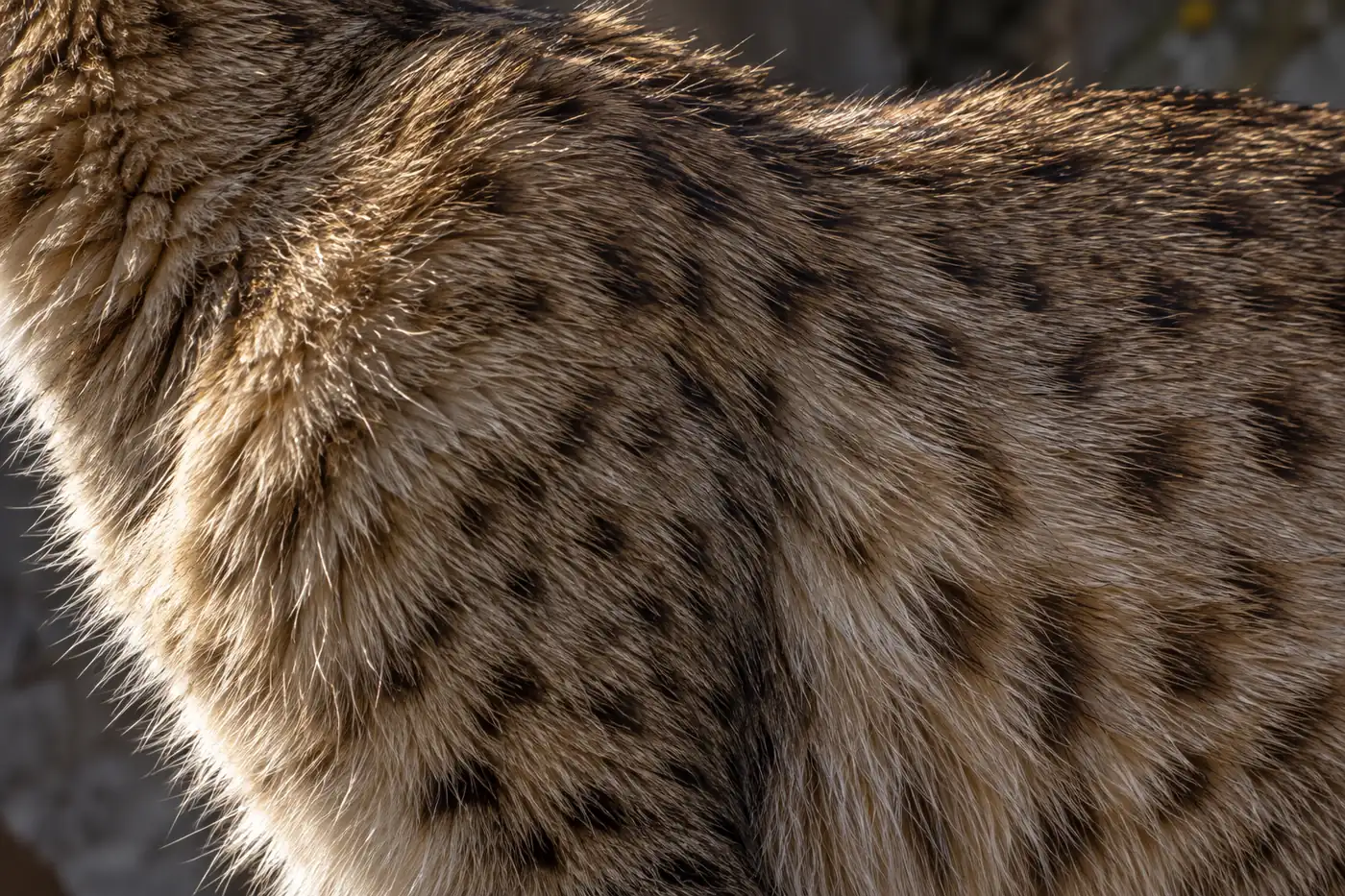
Short-coated Pixie-Bobs need less work than long-coated ones, but both carry enough undercoat that shedding is moderate to heavy when it loosens in spring and autumn. Outside those periods, weekly combing is usually sufficient.
A Pixie-Bob that resists grooming usually accepts short, predictable sessions better than long restraint. Starting grooming early and pairing it with a reward builds tolerance.
What Health Evidence Exists?
No population health study of the Pixie-Bob has been published, and no breed-specific inherited condition has been established at the population level. With no evidence of wild ancestry, the useful comparison is a large domestic cat rather than a hybrid, so the things worth monitoring follow from its size, its slow growth and its toes.
| Area | What to monitor | Why |
|---|---|---|
| Growth and maturation | Weight trend, body proportions, musculoskeletal development | Slow maturation over 3 to 4 years means changes continue longer |
| Polydactyl nails | Extra toenails that may not wear naturally | Curved nails can grow into the pad |
| Weight and body condition | Rib feel, waist view, weight trend | A large-framed cat can mask weight gain |
Secondary sources cite a lifespan of 13 to 16 years. That range is plausible for a healthy large domestic cat but is not confirmed by published research.
Who Does a Pixie-Bob Suit?
The Pixie-Bob suits a household that wants a large, calm, interactive cat with a striking appearance and no wild-animal complications. The breed's moderate energy, reported dog-like sociability and lack of extreme vocal behaviour make it more broadly accessible than many similarly sized breeds. The main commitments are space for a large body, sturdy equipment, regular coat care and patience through the slow maturation period.
Children and other pets are commonly reported to suit the breed well, given the calm, confident temperament. A large powerful cat still needs supervised introductions and the option to withdraw.
TICA registration naming both parents is the document that confirms a kitten's breeding. No breeder can supply a certificate of domestic-only ancestry, and one who claims verified bobcat ancestry is describing something no published evidence supports.
On a polydactyl kitten, each extra toe's nail and the pad beneath it show whether trimming has kept up. The parents' actual adult weights are the best guide to a kitten's eventual size, and because growth continues for three to four years, beds, carriers and litter trays bought for the kitten need to fit the larger end of that range.
Common Questions
Is a Pixie-Bob part bobcat?
No published genetic evidence shows bobcat ancestry. TICA registers the Pixie-Bob as a domestic breed whose wild look comes from selective breeding.
Do all Pixie-Bobs have extra toes?
No. Polydactyly is permitted by the TICA standard but not required. A Pixie-Bob with the usual number of toes is equally registrable.
How big does a Pixie-Bob get?
Secondary sources cite 9 to 17 pounds, with males larger. The breed matures slowly over three to four years, so an immature cat may look much smaller than the adult it will become.
Are Pixie-Bobs good with families?
The breed's calm, confident temperament is commonly reported to suit family households. Slow introductions and supervised interaction still apply, particularly with young children and other pets.
Is a Pixie-Bob a recognised breed?
TICA grants championship status. CFA does not list the breed. The Pixie-Bob is one of the few breeds for which TICA permits polydactyly in the show standard.
Checked Against
Published 17 September 2026. Last updated .





