What Is a Nebelung, and How Does It Differ From a Russian Blue?
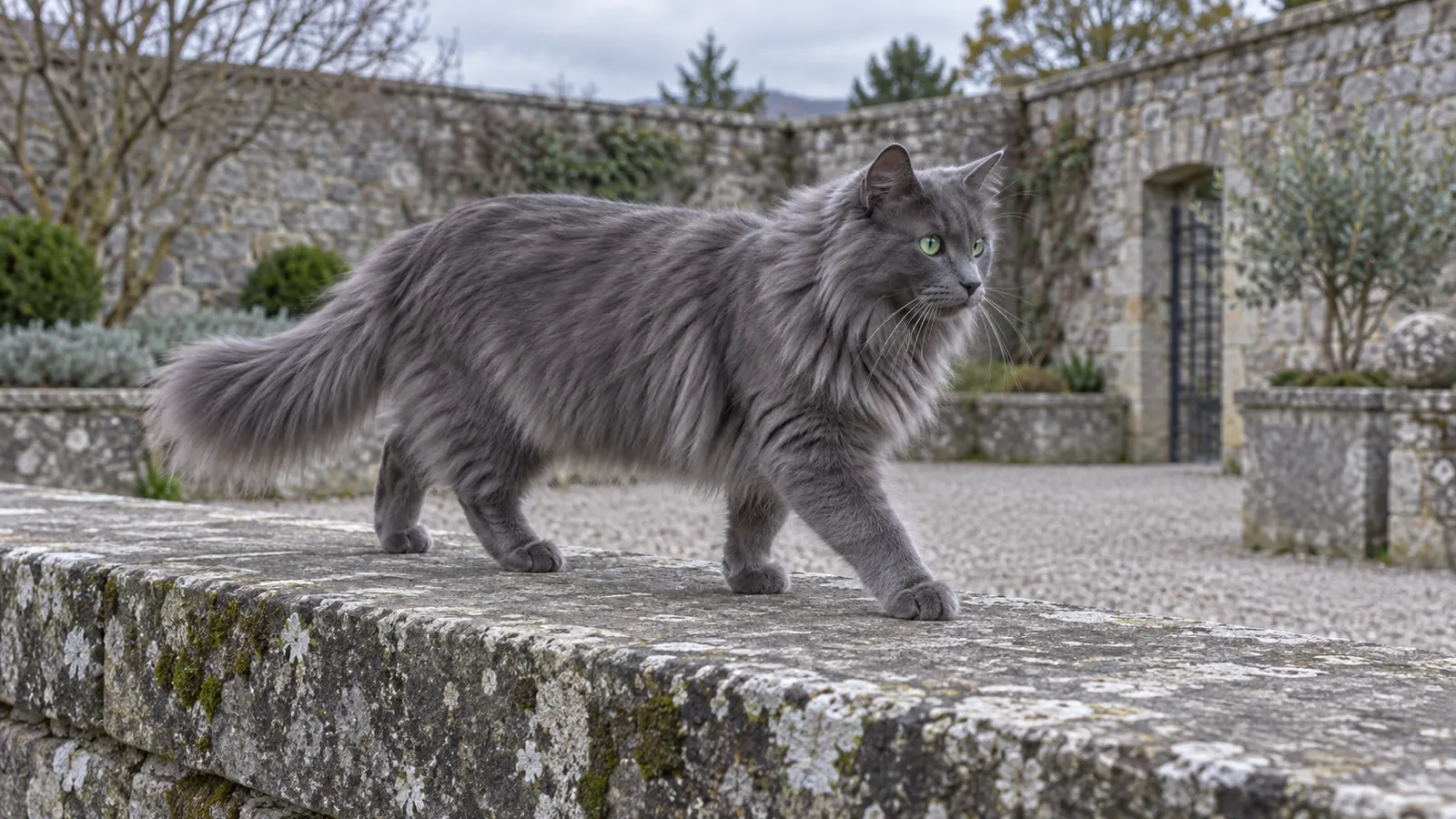
A Nebelung is a medium-sized, semi-long-haired cat with a blue coat tipped in silver. It is essentially the long-haired version of the Russian Blue, and TICA grants it championship status. The breed is known for a reserved temperament that bonds deeply with familiar people and may take time to accept strangers or changes in routine.
- Origin
- United States, developed by Cora Cobb in the 1980s from two long-haired blue cats born to a domestic shorthair mother and a Russian Blue-like father
- Coat
- Semi-long, dense, blue with silver tipping; a prominent neck ruff and bushy tail
- Size
- Medium, long-bodied and graceful with fine bones
- Typical weight
- Secondary sources commonly cite 7 to 11 pounds
- Life expectancy
- Secondary sources cite 15 to 18 years; no Nebelung-specific population study was found
- Activity level
- Moderate; playful in familiar settings, reserved with strangers
- Grooming
- Moderate; the semi-long coat needs regular combing, with more attention during seasonal shedding
- Suits
- Quiet, stable households that respect the cat's adjustment pace and provide consistent routines
A Nebelung is a medium-sized cat with a semi-long blue coat tipped in silver, developed from the same genetic background as the Russian Blue.
The name comes from the German word Nebel, meaning mist or fog, and describes the silvery sheen the coat produces. TICA grants the breed championship status and WCF recognises it, while CFA and FIFe do not list it.
The Nebelung is the long-haired version of the Russian Blue in practical terms. The body type, colour, eye colour and temperament draw from the same gene pool, with the addition of the semi-long coat gene.
What Is a Nebelung, and Who Recognises It?
Cora Cobb developed the Nebelung in the 1980s from two long-haired blue cats born in separate litters to the same parents: Elsa, a black domestic shorthair, and a male that resembled a Russian Blue. Siegfried was born in August 1984, the only long-haired kitten in a litter of seven, and Brunhilde came from the pair's next litter a few months later. Cobb mated the two in 1986.
Cobb worked with geneticist Solveig Pflueger to write a breed standard modelled on the Russian Blue but specifying a semi-long coat. The breeding programme used Russian Blue outcrosses to establish the body type, head shape and green eye colour the standard requires.
TICA recognises the Nebelung for championship competition. The breed has remained small in population, and finding a breeder may mean joining a waiting list.
WCF recognises it as well, and its breed list files it as Nebelung, Russian Blue longhair, which puts the relationship in the name. CFA and FIFe do not list it. Most registries that recognise the Nebelung allow Russian Blue outcrosses, so Russian Blue blood keeps entering Nebelung lines.
- Registry status
- TICA Championship
- WCF
- Recognised, listed as Russian Blue LH
- CFA
- Not listed
- FIFe
- Not listed
- Origin
- United States, 1980s
- Foundation
- Two long-haired blue cats from a domestic shorthair mother and a Russian Blue-like father, from 1984
- Genetic relationship
- Long-haired version of the Russian Blue
- Coat
- Semi-long, blue with silver tipping
- Defining difference from Russian Blue
- Coat length
The Chartreux is another blue-coated breed that is sometimes confused with the Russian Blue and Nebelung. The Chartreux has a different body type, a shorter dense woolly coat and a different breed history.
What Size and Shape Is a Nebelung?
The body is medium-sized, long, graceful and finely boned, following the Russian Blue type.
The coat is the primary visual distinction from the Russian Blue. It is semi-long with a dense undercoat, a prominent neck ruff and a full bushy tail.
The outer guard hairs carry silver tipping that gives the coat its characteristic luminous sheen.
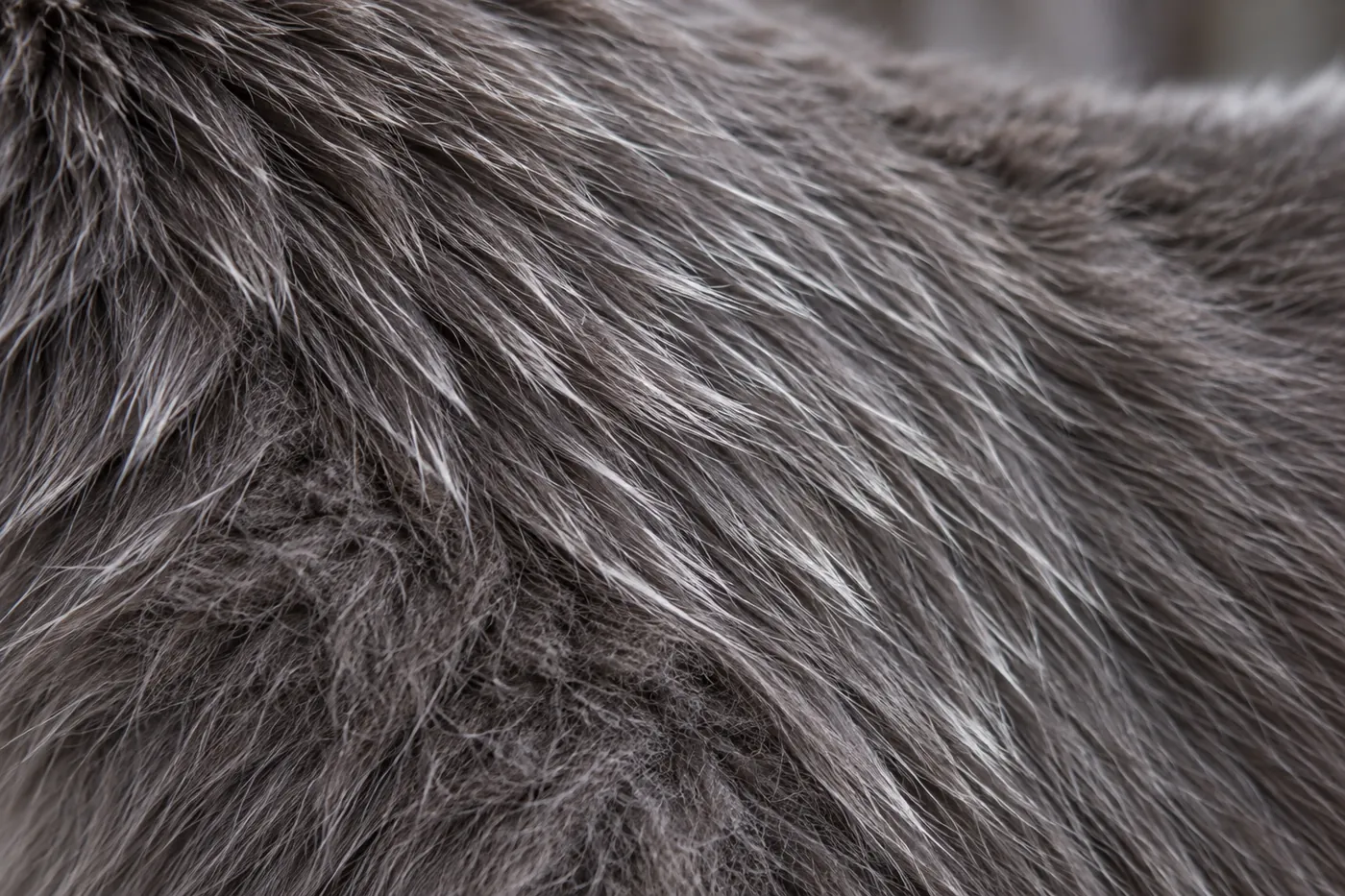
The colour is a uniform blue across the body. Eye colour is green, the same as the Russian Blue standard requires.
Secondary sources commonly cite 7 to 11 pounds, with males typically larger.
How Does the Nebelung Coat Differ From the Russian Blue?
The Russian Blue has a short, dense, plush coat that stands away from the body. Each hair carries silver tipping, producing the breed's distinctive shimmer.
The Nebelung carries the same colour and silver tipping on a semi-long coat. The longer hair changes the visual effect: the shimmer appears softer and more diffused, and the coat moves rather than standing still.
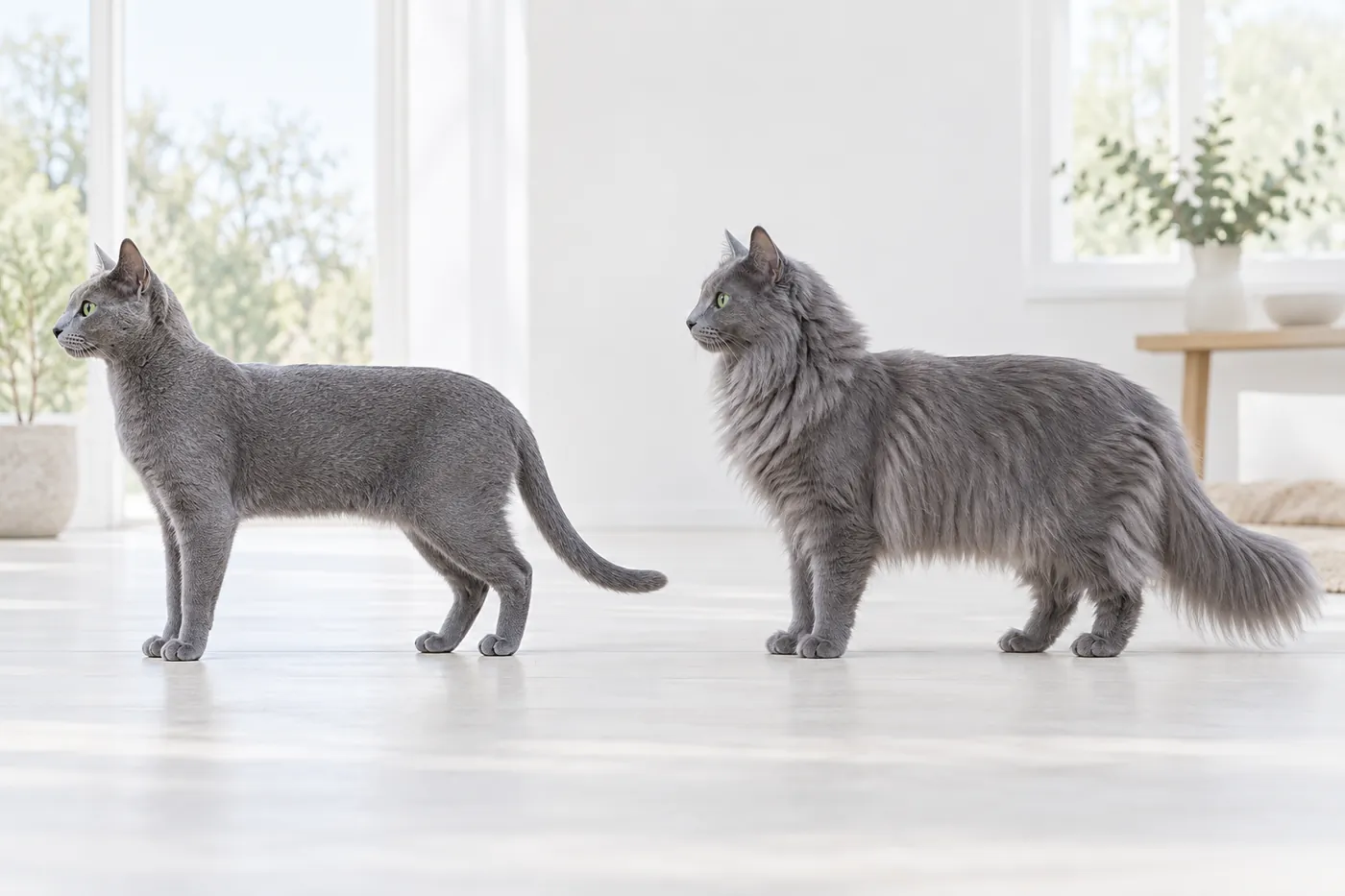
The undercoat is dense enough that seasonal shedding produces significant loose hair during spring and autumn, on top of the slower coat changes across life stages every cat goes through. A Russian Blue's short plush coat sheds differently and requires less active grooming.
The longhair gene is recessive. A short-haired cat can carry one hidden copy of the longhair allele and pass it on, and a kitten is long-haired only when it inherits a copy from each parent. That is how Siegfried and Brunhilde came from short-haired parents: Elsa and her Russian Blue-like mate both carried the allele without showing it, which is why only one kitten in Siegfried's litter of seven grew a long coat. It is also why two Russian Blues that both carry the allele can produce a long-haired kitten.
Why Is the Nebelung Considered a One-Person Cat?
The Nebelung is consistently described as reserved, sensitive and deeply bonded to its primary people.
A Nebelung usually meets strangers and change by withdrawing. A new home, a new person or a rearranged room may produce hiding, reduced eating or increased vigilance that can last days or weeks.
The Russian Blue is described in similar terms, which is unsurprising in cats drawn from the same gene pool, and no study has compared how strongly the two breeds react to change.
That sensitivity matters more in daily life than anything else about the breed. An owner who expects a confident, outgoing cat from day one will find the adjustment period frustrating, and pushing the cat to socialise faster typically extends it.
Once settled, a Nebelung is often described as affectionate, playful and quietly persistent in seeking the company of its chosen people. The bond can be strong, but it develops on the cat's timeline.
Training works the way it does with most cats, through short sessions with a clear reward, and a Nebelung is most likely to learn cooperative handling from a familiar person. Forced handling tends to set it back.
A swipe during handling can come from fear as easily as from petting-related aggression, and in a reserved cat fear is worth ruling out first.
How Should You Groom a Nebelung?
The semi-long coat needs more active management than a Russian Blue's short plush. Regular combing with a wide-tooth tool prevents matting, particularly around the ruff, the belly and the back of the legs. The dense undercoat benefits from thorough but gentle working to remove loose hair before it tangles.
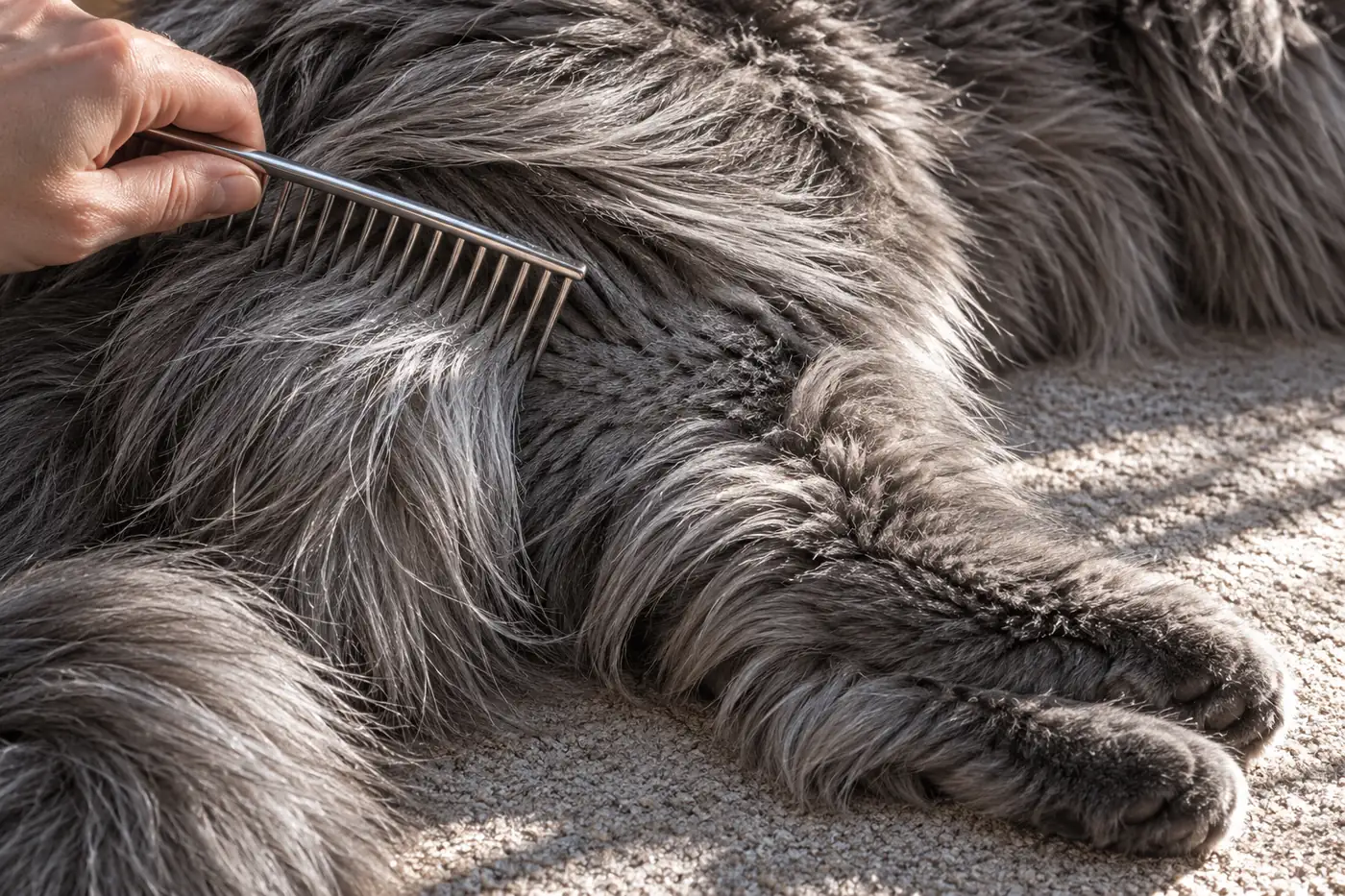
The technique is the same as for brushing a long coat on any semi-longhaired cat, and a Nebelung that pulls away from the comb needs the slower build-up used for brushing a reluctant cat.
Shedding peaks during spring and autumn when the undercoat releases. During these periods, daily combing may be necessary to prevent matting and reduce loose hair around the home. Outside the seasonal peaks, two to three sessions per week usually maintain the coat.
How Much Activity Does a Nebelung Need?
Activity level is moderate. A Nebelung enjoys play but is not demanding about it, and it tends to be most active with familiar people in a familiar setting.
- Interactive play sessions in a calm, familiar environment
- Stable climbing access that the cat can use without being watched by strangers
- A scratching post in a quiet location
- Consistent routine for feeding, play and rest
- A retreat the cat can access when visitors arrive or routines change
A Nebelung is unlikely to demand continuous active play, but it still benefits from daily interaction with its familiar people.
What Is Known About Nebelung Health?
No breed-specific population health study was found. The Nebelung draws from the Russian Blue gene pool, which has no widely documented breed-specific genetic disease at the population level. That is a relatively favourable starting position compared to breeds with known predispositions.
Secondary sources cite a lifespan of 15 to 18 years. That range is plausible for a breed without documented predispositions, but it is unverified by published research.
| Area | What to monitor | When |
|---|---|---|
| Weight and body condition | Rib feel, waist view, weight trend | Every routine visit |
| Dental | Gum colour, tartar, eating changes | Annual veterinary dental check |
| Coat and skin | Matting, excessive shedding, skin irritation | During grooming sessions |
| Behaviour | Prolonged hiding, reduced eating, changes in social behaviour | Ongoing; may signal stress or illness in a sensitive breed |
How Does a Reserved Cat Handle a Busy Household?
A Nebelung can live with respectful children and compatible animals, but the adjustment may take longer than with a more outgoing breed.
Calm, patient children suit a Nebelung best, because a reserved cat that is chased, cornered or picked up by an unfamiliar child may hide for days.
Multi-cat households can work well, particularly when the other cat is similarly calm. A boisterous, dominant cat may overwhelm a Nebelung.
A staged introduction, with separate rooms and scent swapping before the cats see each other, gives a Nebelung the time it needs, and it is the same approach used to settle conflict between cats.
What Should You Expect When Meeting a Nebelung?
TICA championship status provides a published standard and judging history.
- TICA registration papers naming both parents
- The characteristic blue coat with silver tipping in a semi-long length
- Green eye colour consistent with the Russian Blue gene pool
- Individual temperament assessed during calm, unpressured contact
- The source explains the breed's reserved temperament honestly
A Nebelung's reserved nature means a single brief visit may not reveal the cat's real personality, so a second visit, or a breeder's account of how the kitten behaves at home with its own people, tells you more than the first meeting.
A shelter cat with a long blue coat and a shy temperament may have Nebelung ancestry, but the same look and manner fit several blue-coated breeds and ordinary longhaired cats, so without a pedigree the breed cannot be confirmed.
Common Questions
Is a Nebelung the same as a Russian Blue?
A Nebelung is the long-haired version of the Russian Blue. They share the same blue colour, silver tipping, green eyes and general temperament. The coat length is the primary difference.
Is the Nebelung a recognised breed?
TICA grants championship status and WCF recognises it, listing it as the Russian Blue longhair. CFA and FIFe do not list it.
Are Nebelung cats shy?
Nebelungs are consistently described as reserved and sensitive. They bond deeply with familiar people but may take days or weeks to adjust to strangers, new environments or changes in routine. Pushing socialisation faster typically extends the adjustment.
How big does a Nebelung get?
Secondary sources cite 7 to 11 pounds. The body is medium, long and graceful with fine bones. Males are typically larger.
Do Nebelung cats need a lot of grooming?
Moderate grooming is needed. Regular combing prevents matting in the dense semi-long coat, and daily combing may be necessary during spring and autumn coat release. Outside those peaks, two to three sessions per week usually suffice.
Checked Against
- TICA: Nebelung breed tica.org
- CFA: Current breeds (Nebelung not listed) cfa.org
- TICA: Russian Blue tica.org
- AAHA and AAFP: Feline life stage guidelines catvets.com
- WCF: Semi-longhair breed standards (Nebelung, Russian Blue LH) wcf.de
- FIFe: Recognised breeds (Nebelung not listed) fifeweb.org
- Four independent mutations in the feline FGF5 gene determine the long-haired phenotype pmc.ncbi.nlm.nih.gov
- Seattle Times (1997): Seattle show features rare Nebelung cats (Cora Cobb on the foundation cats) archive.seattletimes.com
Published 17 September 2026. Last updated .