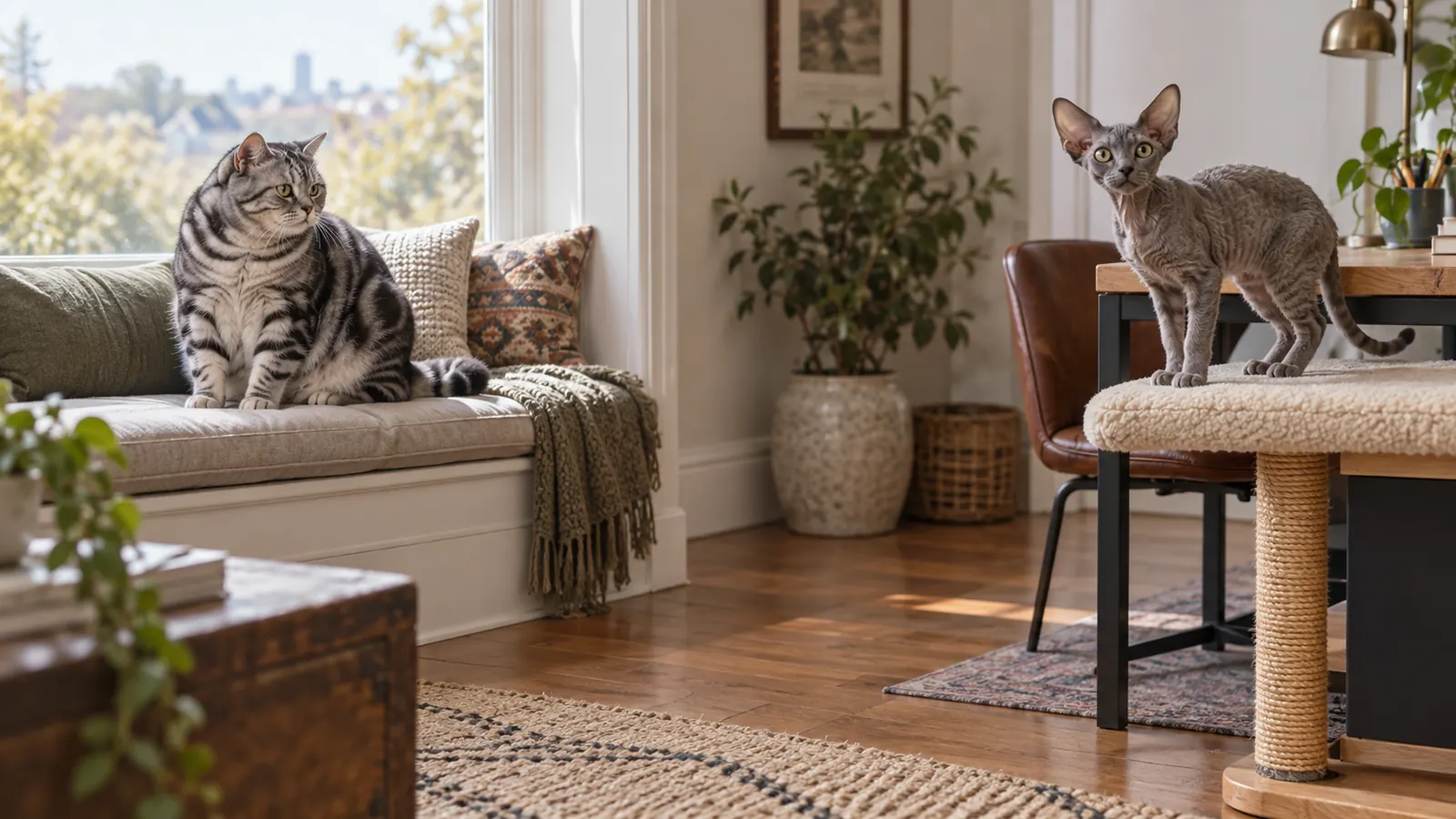
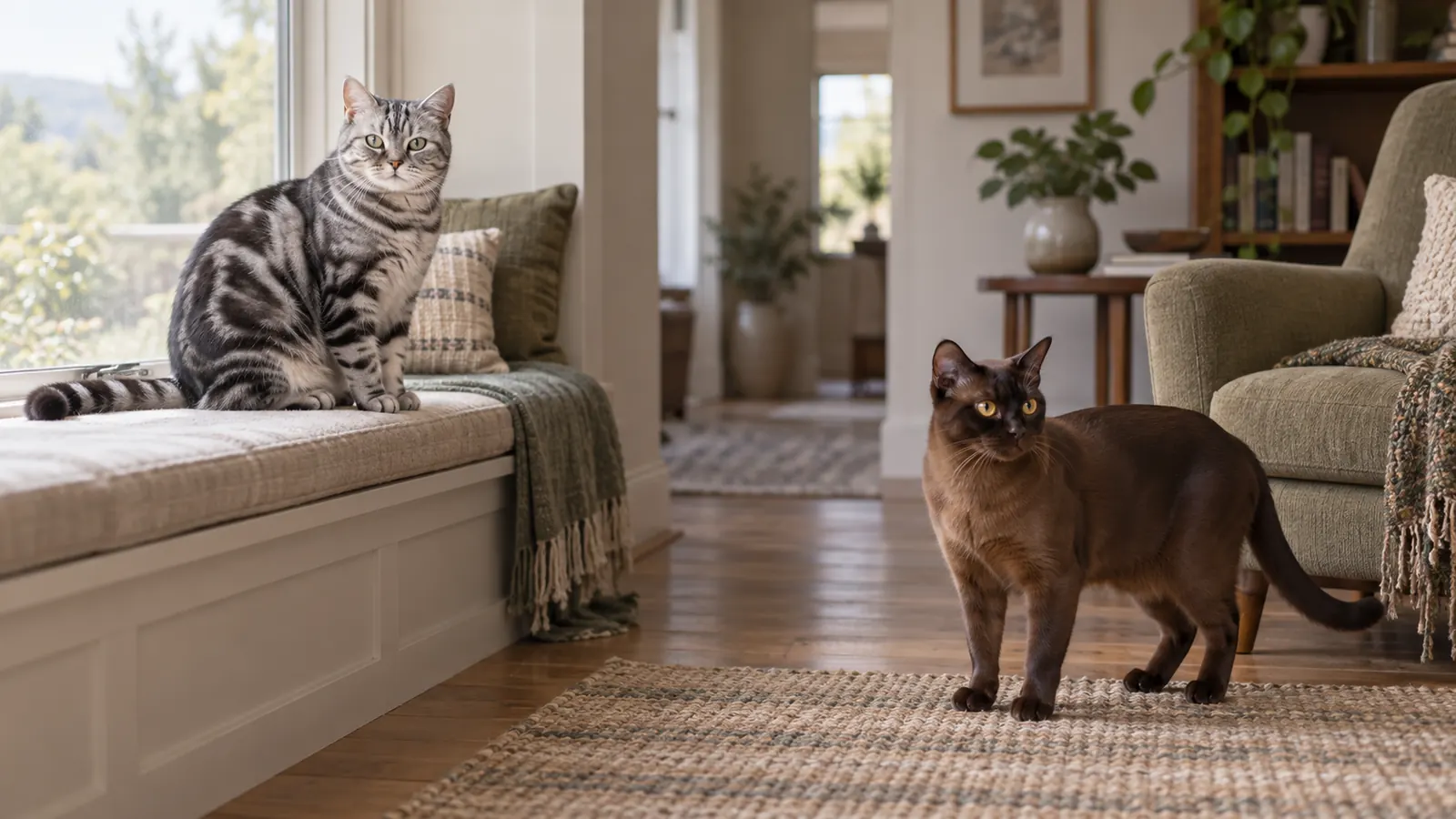
Abyssinian vs RagaMuffin: Movement or Close Company?
Choose an Abyssinian when you want a fast, exploratory cat that joins life through movement and height. Choose a RagaMuffin when you want a larger, softer-paced companion that seeks closer contact and you can manage a long coat without assuming docility makes the cat effortless.
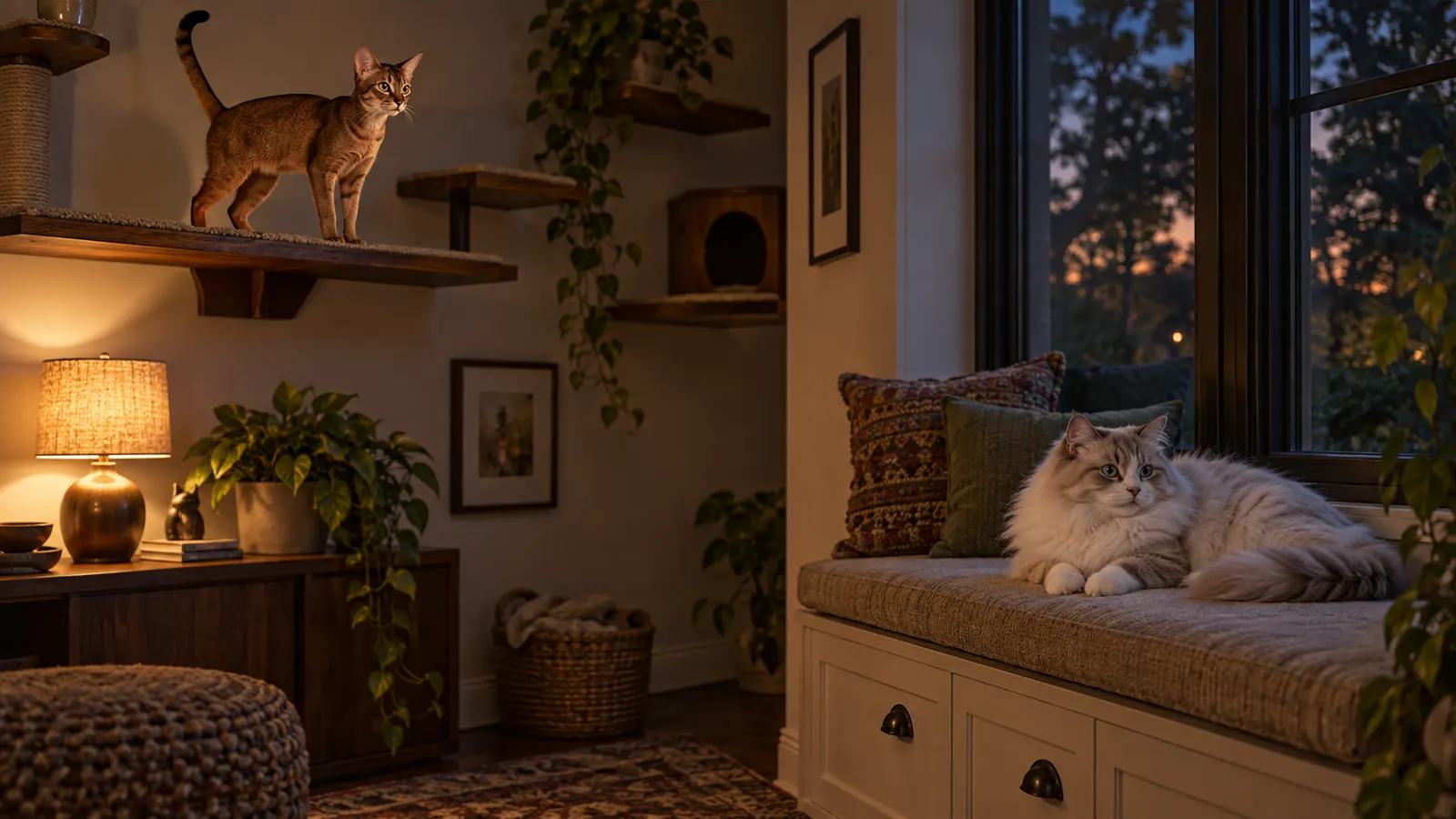
These breeds can both be affectionate and playful, but they place the owner in different relationships. The Abyssinian keeps contact mobile, while the RagaMuffin more often makes proximity, touch and shared rest central to the day.
The choice therefore starts with how you want company to feel, then expands to adult size, safe movement, grooming and breeder evidence. Neither cat should be selected from the labels active or gentle alone.
Which breed asks for the kind of company you want?
An Abyssinian often joins by inspecting whatever changed. It may cross a shelf above your desk, follow you into another room, investigate a bag and return for a brief exchange before moving again.
A RagaMuffin is commonly described as people-loving and docile, with a stronger tendency toward close physical presence. That can suit a household seeking a cat that settles beside or on a person, provided everyone respects the cat's right to leave.
| Profile | Contact style | Activity | Coat work | Best fit |
|---|---|---|---|---|
| Abyssinian | Frequent mobile participation, high observation and repeated brief contact | Very high, with a strong need for climbing and novelty | Light weekly grooming | A home that wants an agile cat involved in movement and changing activity |
| RagaMuffin | Close social presence, handling tolerance and longer periods of shared rest | Playful but usually softer-paced than an Abyssinian | Regular combing through a plush semi-long coat | A home that wants sustained company and can support a large slow-maturing cat |

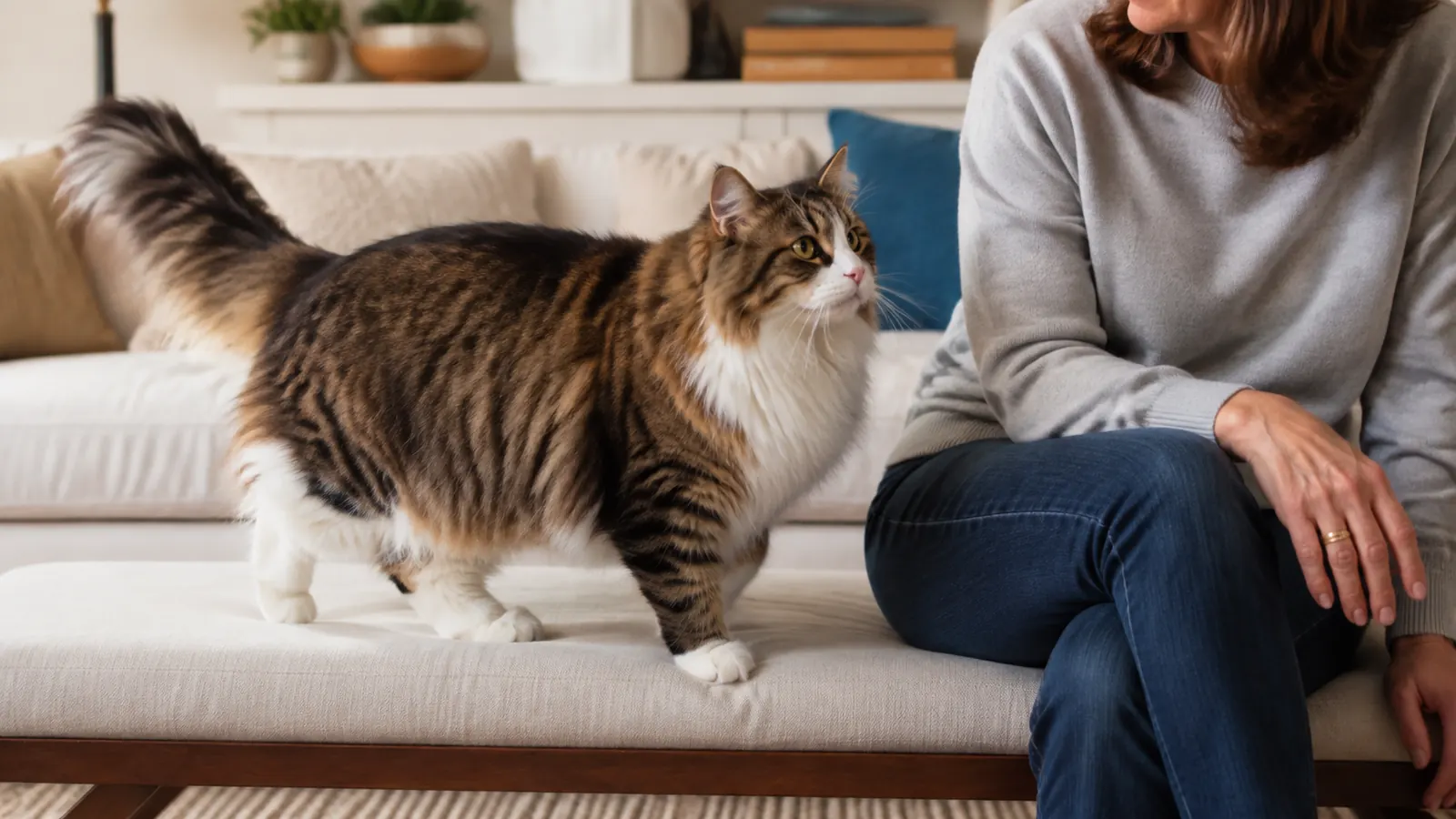
Docile does not mean passive, safe to carry indefinitely or unable to object. A RagaMuffin still needs play, choice, a protected retreat and handling that stops when the cat turns away.
How different are their size, coat and maturity?
The Abyssinian is a medium cat with fine bone, long legs, compact paws and a close ticked coat. TICA places females around 6 to 9 pounds and males around 7 to 12 pounds, with an athletic body that looks light without being fragile.
The RagaMuffin is much more substantial. CFA describes slow maturity over roughly four years, with females commonly around 10 to 15 pounds and males reaching about 20 pounds, although an individual should be kept lean rather than fed toward a breed number. Its head is broad and softly rounded, the body rectangular with a fatty pad expected on the lower abdomen, and the coat medium to medium-long. The texture should feel dense and silky rather than like a weatherproof Norwegian coat.
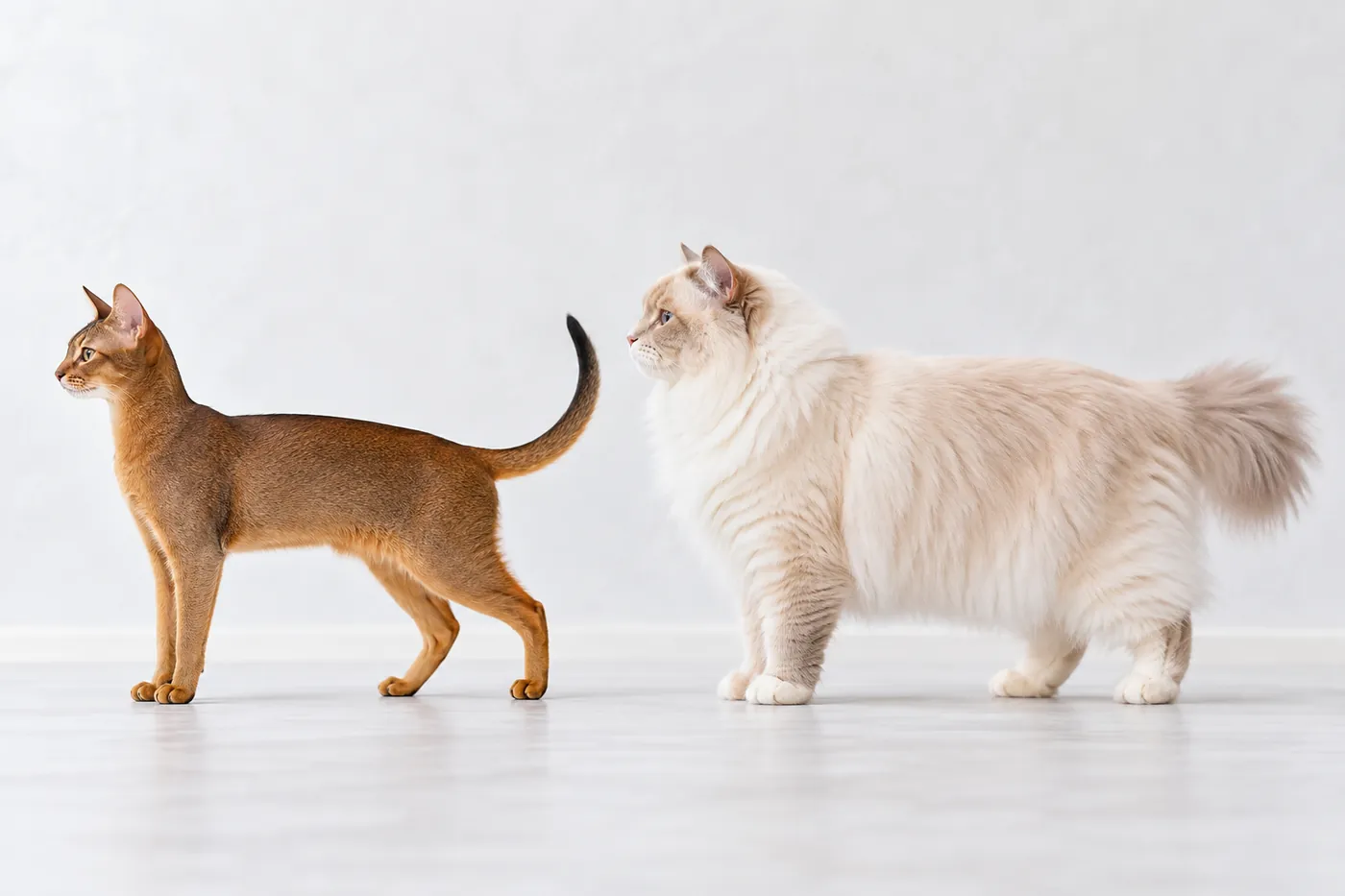
Slow maturity affects purchases: beds, litter trays, climbing surfaces and a carrier bought for the likely adult do not need replacing as the body fills out.
Appearance cannot authenticate either breed. Pedigree and registration records prove identity, while a photograph only helps you understand proportion and coat.
What happens on a workday and a quiet evening?
The Abyssinian is more likely to make environmental change part of its social life. A predictable day needs legal climbing routes, food-searching opportunities and planned interaction so cupboards, screens and unstable furniture do not become the available puzzle.
The RagaMuffin may stay close with less continuous motion, yet that does not make routine long absence automatically suitable. A highly social individual can still struggle when a once-occupied home becomes quiet for most of every day.
| Household moment | Abyssinian | RagaMuffin | Decision clue |
|---|---|---|---|
| Desk work | Moves between person, objects and a high observation point | More likely to settle beside, behind or on the person | Whether repeated movement or sustained touch is easier to welcome |
| Quiet evening | Often wants an active game before choosing rest | More readily makes shared rest part of the contact | Whether lap and sofa access will remain available |
| Closed bedroom | May investigate the barrier or redirect to another route | May object because access to the person changed | Whether sleep boundaries can be taught consistently |
| Workday away | Higher mismatch risk without meaningful activity and care | Social contact still matters despite the calmer pace | Eating, litter use, searching, vocalising and recovery after return |
There is no responsible breed-wide hours-alone formula. A sitter, compatible animal or rich room can support a routine, but none makes daily observation and human contact optional.
Which cat needs more exercise and different furniture?
The Abyssinian carries the larger activity obligation. It benefits from several short interactive sessions, opportunities to search and climb, and small learned tasks that change before they become automatic.
The RagaMuffin still needs daily play and the ability to climb, but body support matters as much as height. Wide steps, grippy surfaces and broad platforms reduce awkward turns and make the route usable as the cat reaches adult size.
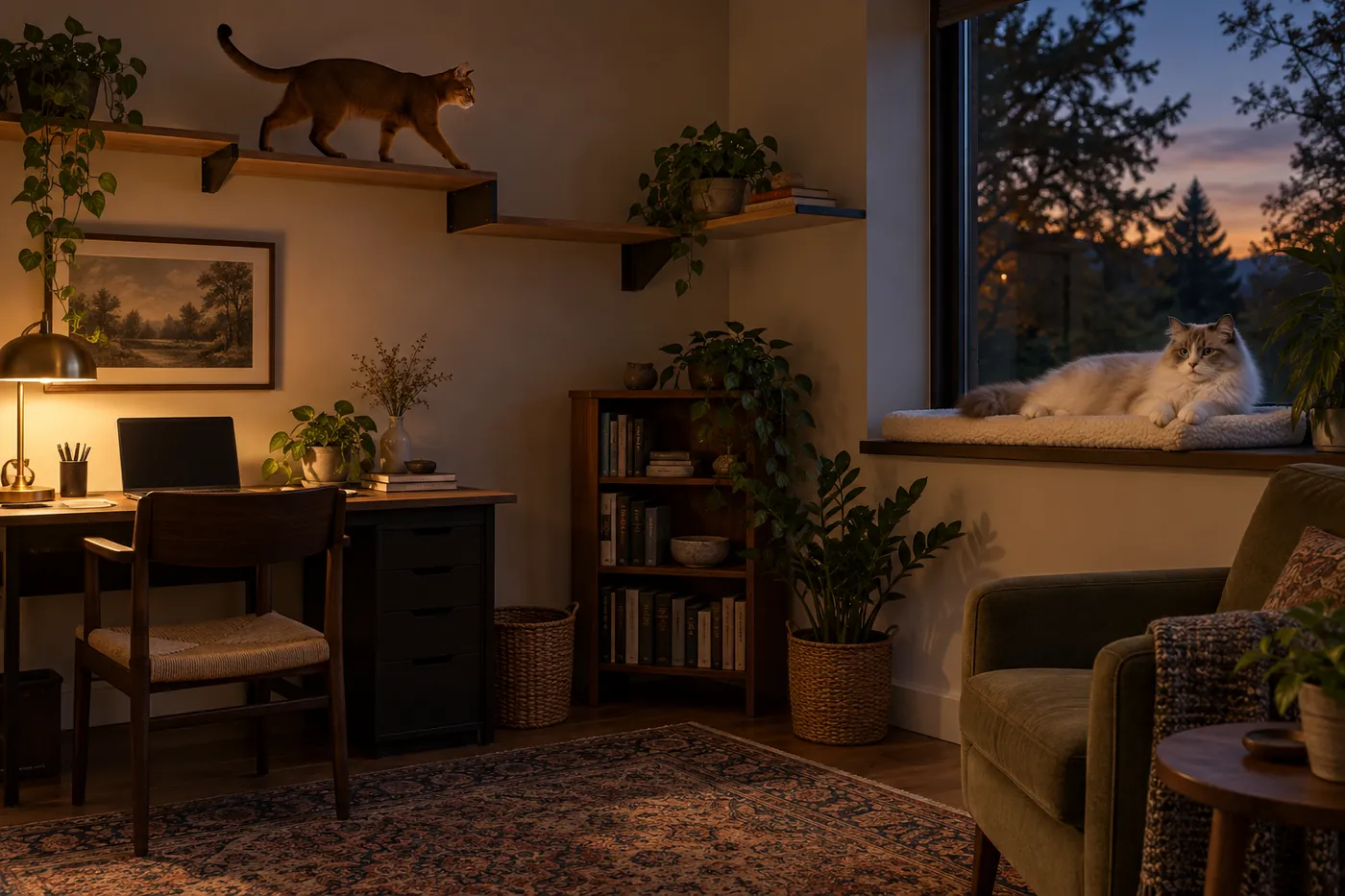
- Abyssinian route
- Connect several observation points with stable landings and more than one way down
- RagaMuffin support
- Use broad platforms, deep beds and a tree that does not twist under a heavy jump
- Shared play
- Move a wand toy away like prey, allow capture and end before the cat loses interest
- Food puzzles
- Count rewards inside the measured daily ration
- Recovery
- Watch whether breathing, movement and interest return normally after play
Training can reduce friction for either breed. Targeting, mat work and voluntary carrier entry give the Abyssinian a useful problem and help a large RagaMuffin participate in care without being lifted. Each of those skills is built one rewarded action at a time in short sessions, the method the clicker training guide sets out.
Which is better with children, dogs or another cat?
The RagaMuffin may be the easier starting fit for a calm family that wants close contact, while an Abyssinian may suit older children who enjoy structured play. The household must still supervise the interaction rather than turning a breed reputation into permission to handle.
RagaMuffins can be heavy enough that a child cannot support the body safely. The cat is safer kept on the floor or a stable surface, entering and leaving contact under its own power.
An Abyssinian's acceleration can become a dog's chase cue. The dog should remain controlled until quick feline movement no longer triggers pursuit, and the cat needs an elevated exit that the dog cannot block.
- Children use toys rather than hands and let the cat leave every interaction
- Nobody lifts a large RagaMuffin without supporting chest and hindquarters
- The Abyssinian keeps a connected high route beyond a dog's reach
- Each animal receives separate food, water, litter, scratching and resting resources
- Introductions progress only while both animals can eat, rest and disengage
- An adult with known behaviour is preferred when a vulnerable resident animal already lives there
A sociable breed can still dislike a particular child, dog or cat. Reciprocity, recovery and voluntary return provide better evidence than whether one animal tolerated the first meeting.
How different are grooming and shedding?
An Abyssinian usually needs a light weekly grooming pass. A soft brush, cloth or hand lifts loose hair and creates a quick opportunity to inspect the skin, ears and claws.
The RagaMuffin coat is longer and fuller, but CFA describes it as comparatively easy to maintain with combing once or twice a week in many cats. That frequency is only a starting point, because friction, season and the individual's coat density can create extra work.
| Care task | Abyssinian | RagaMuffin |
|---|---|---|
| Surface | Short straight hairs with visible ticking | Plush medium to medium-long hair with fuller ruff and furnishings |
| Routine | Gentle weekly pass | Comb through the coat in sections, reaching armpits, chest, trousers and behind ears |
| Seasonal change | Loose hair usually remains lighter | More loose coat and small tangles may appear during shedding periods |
| Technique | Avoid harsh brushing across the close coat | Support skin, work from the end of a tangle and never pull a mat tight |
| Bathing | Usually only for contamination or a specific need | Also need-based, not an automatic calendar task |
| Stop signs | Pain, redness, bald areas or sudden coat change need assessment | Pain, mats against the skin, odour or sudden coat change need assessment |
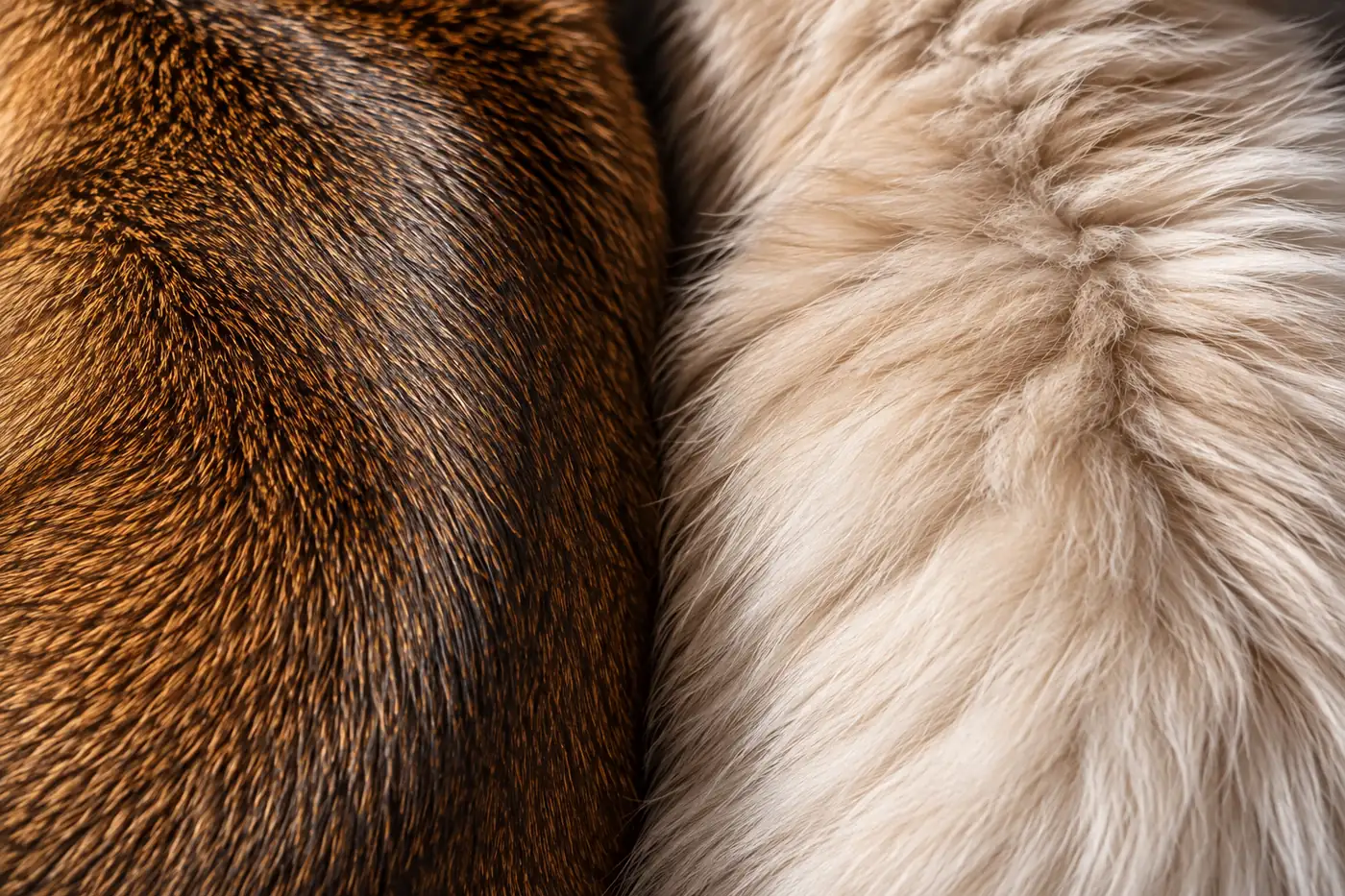
The gentlest tool that completes the job is the right one, and the grooming tools guide explains where a comb, brush or grooming glove helps and where it can damage skin or coat. Pain, redness, bald areas, odour or a sudden change in coat quality needs investigation rather than more forceful grooming.
Which health evidence belongs to each breed?
For an Abyssinian, the documents to see are both parents' original laboratory reports for the CEP290 rdAc variant linked to progressive retinal atrophy and the PKLR variant linked to pyruvate kinase deficiency. These answer specific recessive questions, so the clear, carrier or affected status and the identity on each report are what count. The GCCF Abyssinian policy also recognises renal amyloidosis and notes that no simple genetic test is available. Family history, ages and causes of death therefore carry information a DNA panel cannot provide.
CFA notes that hypertrophic cardiomyopathy and polycystic kidney disease can occur in RagaMuffins. That statement supports a focused conversation about cardiac and kidney history, but it does not establish one universal panel or prove that every cat is affected.
| Breed and concern | Ask to see | What it can establish | What remains open |
|---|---|---|---|
| Abyssinian PRA rdAc | Both parents' original CEP290 reports | Status for the named retinal variant | Other eye disease and future vision |
| Abyssinian PK deficiency | Both parents' original PKLR reports | Status for the named anaemia variant | Other causes of anaemia |
| Abyssinian renal amyloidosis | Health history across close relatives | Whether the breeder tracks the concern over time | No simple clearance or individual prediction |
| RagaMuffin cardiac history | Dated examinations used by the breeder plus findings and ages in relatives | Which cats were assessed and when | Future HCM and disease outside the examined cats |
| RagaMuffin kidney history | Parent veterinary history, family diagnoses and any specific test the breeder claims | Whether a claim is backed by a named document | A generic panel cannot clear every kidney condition |
How the breeder chose each test, and what action followed an abnormal result, shows whether the testing informed any decision. A longer list is not automatically stronger evidence if identities, dates and clinical meaning are missing. A clear report answers one named question. It does not guarantee lifetime health, temperament or final size.
Which breed fits your ordinary week?
The Abyssinian is the right choice when movement, novelty and repeated participation are part of the relationship you want, and the wrong one if connected height and dependable daily interaction will be treated as optional after the kitten stage.
The RagaMuffin fits when sustained company, a larger body and a plush coat suit the home, and it is the wrong choice if frequent close contact would be displaced, if adults cannot handle a large cat safely or if combing will be postponed until mats appear.
- Decide whether mobile observation or sustained physical closeness feels better every day
- Size carriers, beds, litter trays and platforms for the adult cat
- Plan activity for a busy weekday and grooming for a heavy shedding week
- Meet the individual during play, rest, handling and a brief interruption
- Read named reports and family records rather than accepting fully tested
- Protect retreat space and separate resources for children and other animals
- Reject guarantees about docility, allergies, final size or lifetime health
For many quieter homes, the RagaMuffin is the more intuitive fit, but its size, social need and coat remain real work. The Abyssinian is the stronger answer when an active cat using the whole room is exactly what the owner wants.
Checked Against
- TICA: Abyssinian tica.org
- CFA: Abyssinian cfa.org
- CFA: RagaMuffin cfa.org
- UC Davis Veterinary Genetics Laboratory: PRA rdAc vgl.ucdavis.edu
- UC Davis Veterinary Genetics Laboratory: pyruvate kinase deficiency vgl.vetmed.ucdavis.edu
- GCCF: Abyssinian breeding policy gccfcats.org
- CFA: finding a pedigreed kitten cfa.org
Published 12 September 2026. Last updated .