What Is a Lykoi Cat, and How Does Its Coat Actually Work?
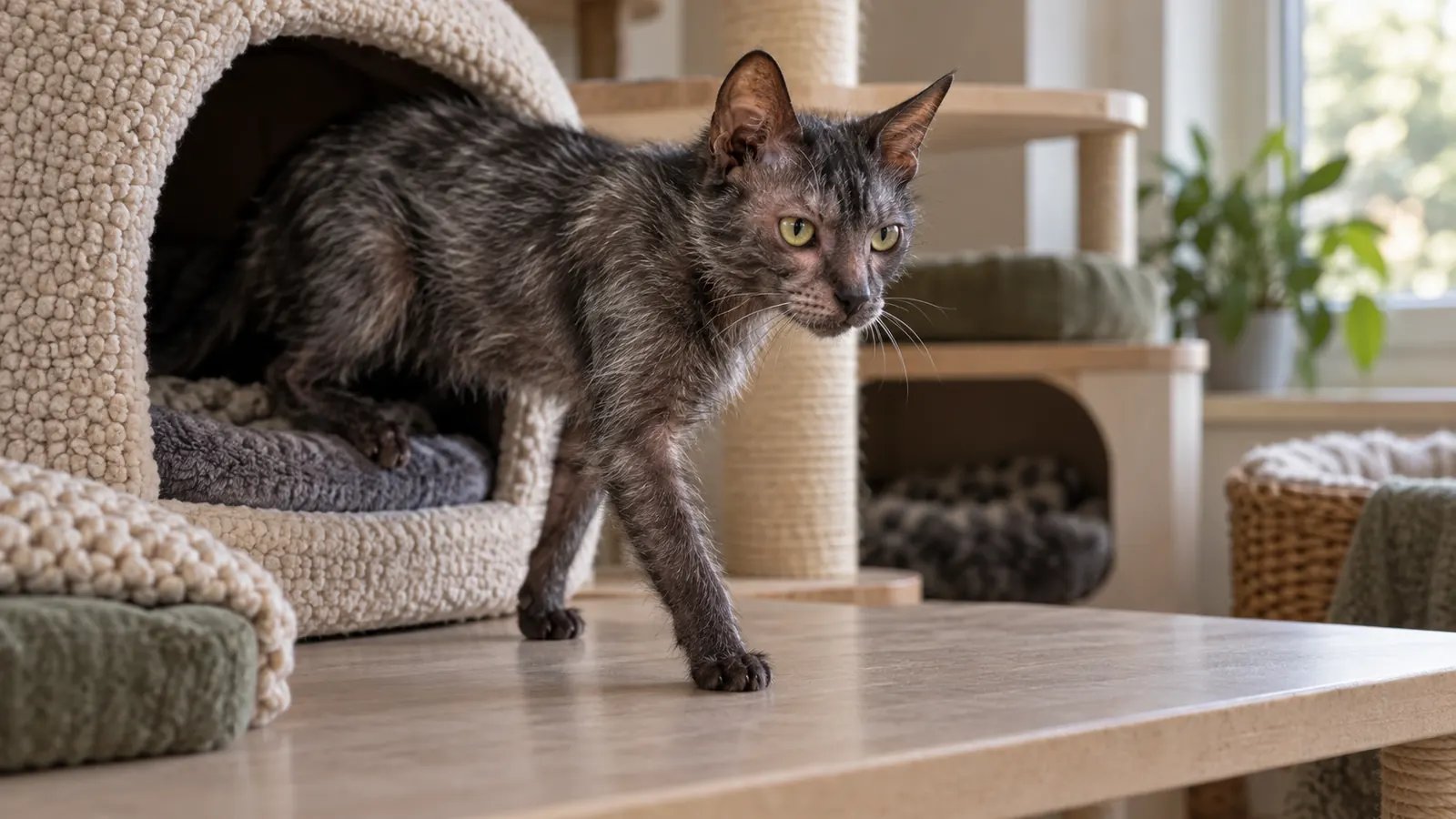
A Lykoi is a medium-sized cat with a sparse, patchy coat caused by a natural mutation in domestic shorthair stock. The mutation reduces and alters the hair follicles, producing the roan coat that gives the breed its werewolf nickname. TICA granted championship status in 2017 and CFA in 2023, and a 2020 genetic study found two different variants of the same gene in separate founding lines, so the trait arose more than once.
- Origin
- United States, from natural domestic shorthair mutations first found in Virginia in 2010 and Tennessee in 2011; later foundation cats also came from Canada and France
- Coat
- Sparse and patchy roan pattern with reduced hair around the eyes, nose and muzzle; most cats moult most of the coat at least once, sometimes to near baldness
- Size
- Lean, muscular and graceful, with medium boning (CFA)
- Typical weight
- No weight range in the CFA description, which allows males to be larger
- Life expectancy
- No Lykoi lifespan figure comes from a population study; the breed is too recent for one
- Activity level
- Active, curious and reported to be strongly prey-driven
- Grooming
- Low coat maintenance but regular skin care: bathing to remove oil buildup and sun protection for exposed skin
- Suits
- Indoor households that can manage skin care, temperature and sun exposure while providing active play
A Lykoi is a medium-sized cat with a sparse, patchy coat that gives it a distinctive appearance sometimes called the werewolf cat.
The coat comes from a natural mutation in ordinary domestic shorthair cats, and genetic testing has shown it sits in a different gene from the one behind the Sphynx coat.
The difference shows in the cat. A Lykoi grows a patchy coat of normal-length hairs that it can lose and regrow, where a Sphynx keeps a fine down all the time, so a Lykoi's care rises and falls with its coat cycle.
How Did the Lykoi Become a Championship Breed?
The first partially hairless kittens were found in a domestic shorthair litter in Virginia in 2010, with more in Tennessee the following year. Veterinarian Johnny Gobble, Brittney Gobble and breeder Patti Thomas began breeding them, and the first intentionally bred Lykoi kitten was born in September 2011.
A 2020 genetic study traced the coat to two different loss-of-function variants in the HR (Hairless) gene among the breed's foundation lines, which by then included cats found across the United States, Canada and France. The trait therefore arose more than once rather than from a single founder.
TICA granted championship status in 2017. CFA accepted the breed for registration in 2018 and advanced it to championship in 2023.
WCF lists the breed among its shorthair standards.
- Registry status
- TICA Championship (2017), CFA Championship (2023)
- WCF
- Listed (shorthair)
- Origin
- Natural spontaneous mutation in domestic shorthairs, United States
- Breed type
- Natural mutation, bred from domestic shorthair stock
- Defining feature
- Partial hairlessness with roan-like coat pattern
- Key distinction
- HR gene variants, a different gene from the Sphynx KRT71 variant
- First found
- Virginia, 2010; Tennessee, 2011
Breeders keep the gene pool from narrowing by mating Lykoi to domestic shorthairs, which CFA lists as the breed's allowable outcross. Kittens from such a mating carry the coat without showing it, and later generations bring it back, so the breed widens its ancestry without losing the trait.
What Does a Lykoi Look Like, and Does It Go Bald?
CFA describes a lean, muscular, graceful cat with medium boning and a moderately sized, modified wedge head.
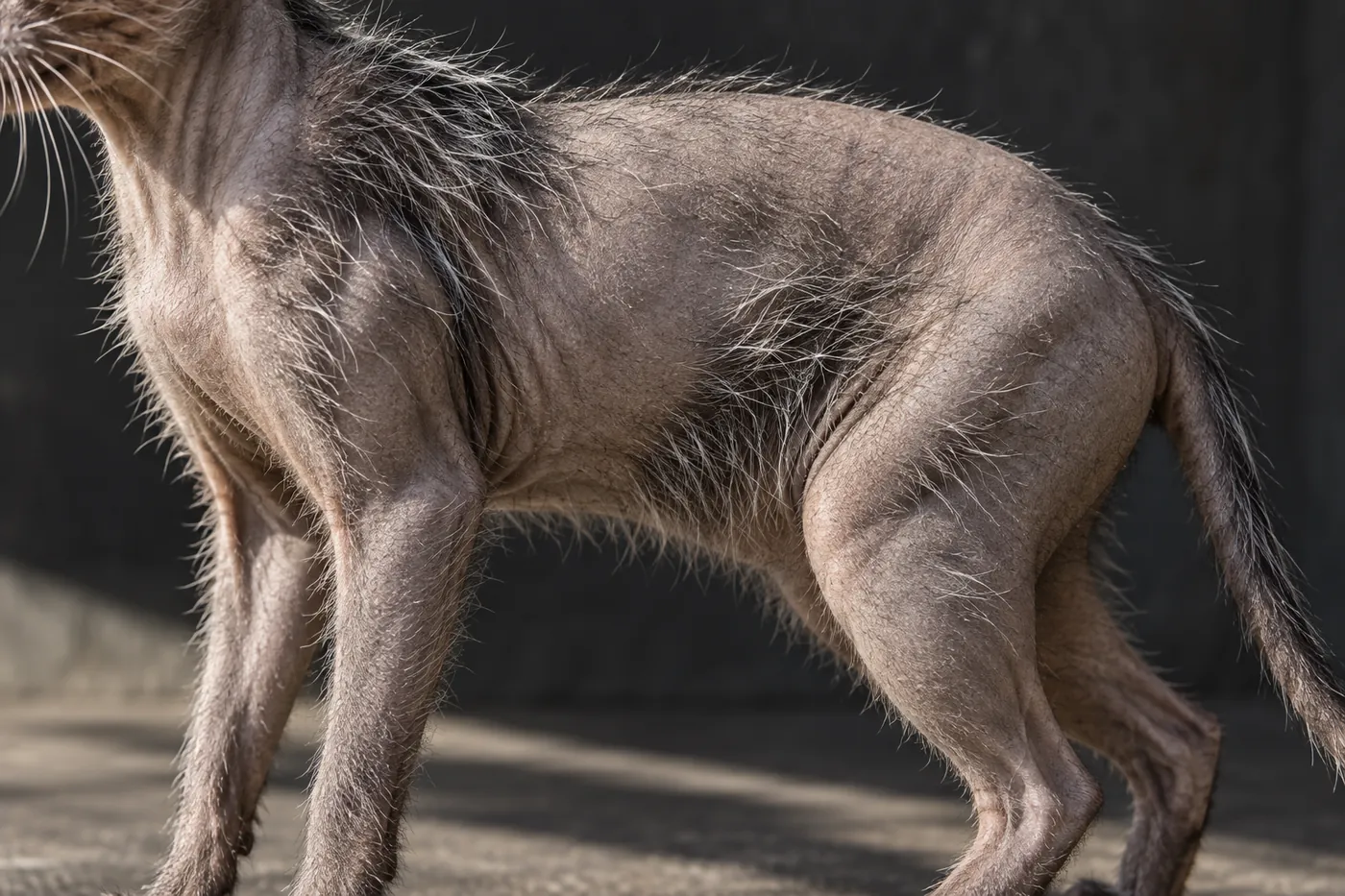
The coat is what makes the breed immediately recognisable. Hair coverage is sparse and uneven, with the thinnest areas typically around the eyes, nose, muzzle, chin, ears and the backs of the ears.
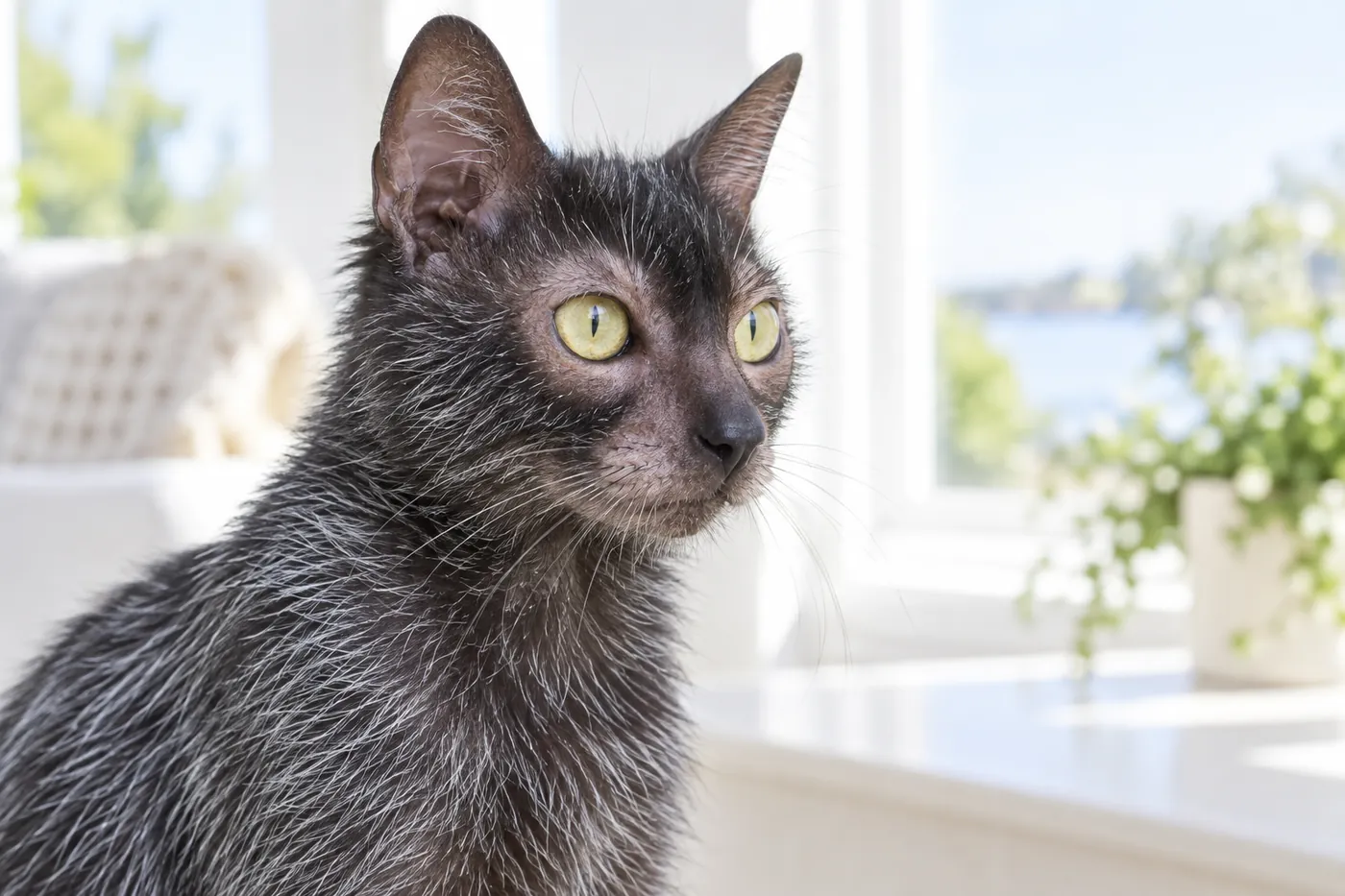
The remaining hair has a roan pattern: a mix of pigmented and non-pigmented (white) hairs scattered through the coat, similar to the roan pattern seen in some horse breeds.
The standard colour is black roan, where the coat appears silvery-grey due to the mix of black and white hairs. Other colours exist but black roan is the breed's signature appearance.
Most Lykoi moult heavily at least once. Each cat follows its own cycle, anywhere between almost hairless and almost fully coated, and in a heavy moult it can shed most of its coat and look nearly bald.
The coat grows back, so a nearly bald Lykoi in the middle of a moult is following the breed's normal cycle rather than showing a sign of illness.
How Does the Lykoi Mutation Differ From the Sphynx?
The Lykoi and the Sphynx both have reduced coat coverage, but they carry different genetic mutations that work through different mechanisms.
The Sphynx carries a variant of KRT71, a keratin gene, which disrupts the normal formation of the hair shaft. Sphynx cats have hair follicles, but the hair produced is extremely fine, short and often barely visible.
The Lykoi's HR variants act on the hair follicle itself. Skin samples show fewer follicles than normal, and many of those present are small, dilated or malformed, so some produce normal-looking hairs while others produce none.
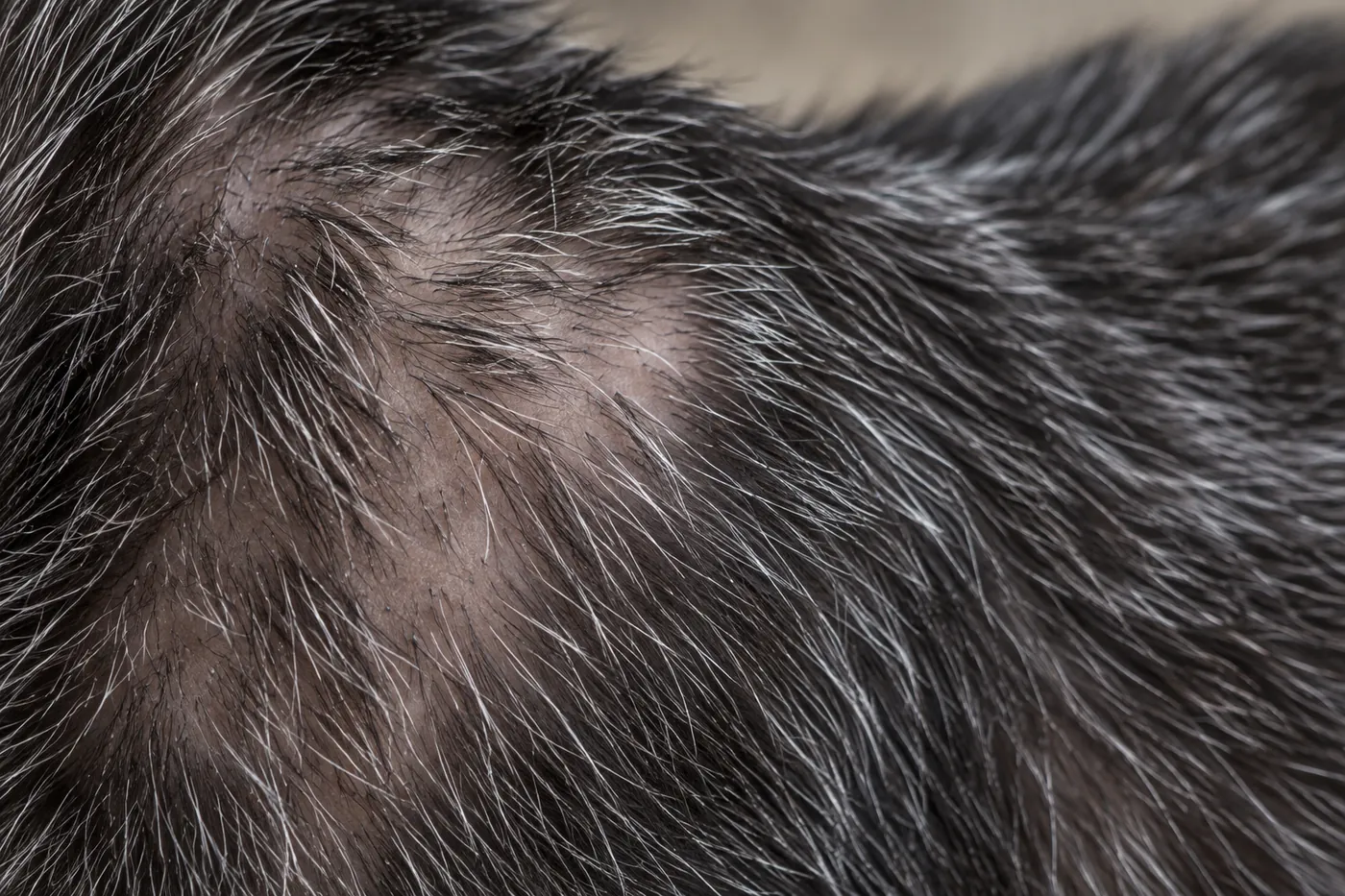
The result is the patchy, roan-like pattern rather than uniform hairlessness.
Both variants are recessive, so a Lykoi kitten needs an affected copy of the gene from each parent, and a cat with a single copy has an ordinary coat. The Donskoy is hairless through a third, separate mutation.
What Skin Care Does a Lykoi Need?
The sparse coat creates practical care requirements that a fully coated cat does not have.
Oil buildup on exposed skin. Where hair is thin or absent, the skin's natural oils accumulate on the surface rather than being wicked away by coat hair. Occasional gentle bathing with a mild, unscented cleanser removes the buildup without stripping the skin.
Sun exposure. Thinly haired skin burns, and CFA notes that too much sun can also bring on a moult, which leaves still more skin exposed. Shade in the strongest hours of sun matters more for a Lykoi than for a coated cat, and a sunny window seat exposes the skin as surely as a garden does.
Temperature sensitivity. During heavy moult periods, a Lykoi's insulation drops significantly. A warm bed, stable indoor temperature and protection from draughts become more important when the coat is at its thinnest.
Nails and ears. Nails need the same trimming as any cat's. The ears are among the most thinly haired parts of a Lykoi, so wax or oil build-up is easy to see and can be wiped away gently when the cat is bathed.
What Behaviour Comes From a Domestic Shorthair Foundation?
CFA describes the Lykoi as very active and curious, a cat that thrives on human attention and is not excessively vocal unless it feels neglected.
Because the breed was founded from domestic shorthairs and still takes them in as outcrosses, individual Lykoi vary more in temperament than cats from a long-closed breed, and a breed description is a guide to likely behaviour rather than a promise.
Breed descriptions also stress a strong interest in hunting-style play, which fits cats drawn from ordinary domestic stock that was never bred away from hunting.
A kitten raised with calm handling and varied experiences is more likely to develop into a confident adult than one whose early environment was limited.
Persistent hiding, aggression or a sudden change in behaviour is worth a veterinary check, because pain, overstimulation and fear can all look like the same petting-related aggression from the outside.
How Much Activity Does a Lykoi Need?
The Lykoi is reported to be an active, prey-driven cat that benefits from interactive play.
- Interactive hunting-type play with feather wands and moving targets
- Puzzle feeders that engage problem-solving behaviour
- Stable climbing access for observation and exercise
- A scratching post tall enough for a full stretch
- Secure barriers around birds, rodents, reptiles and fish
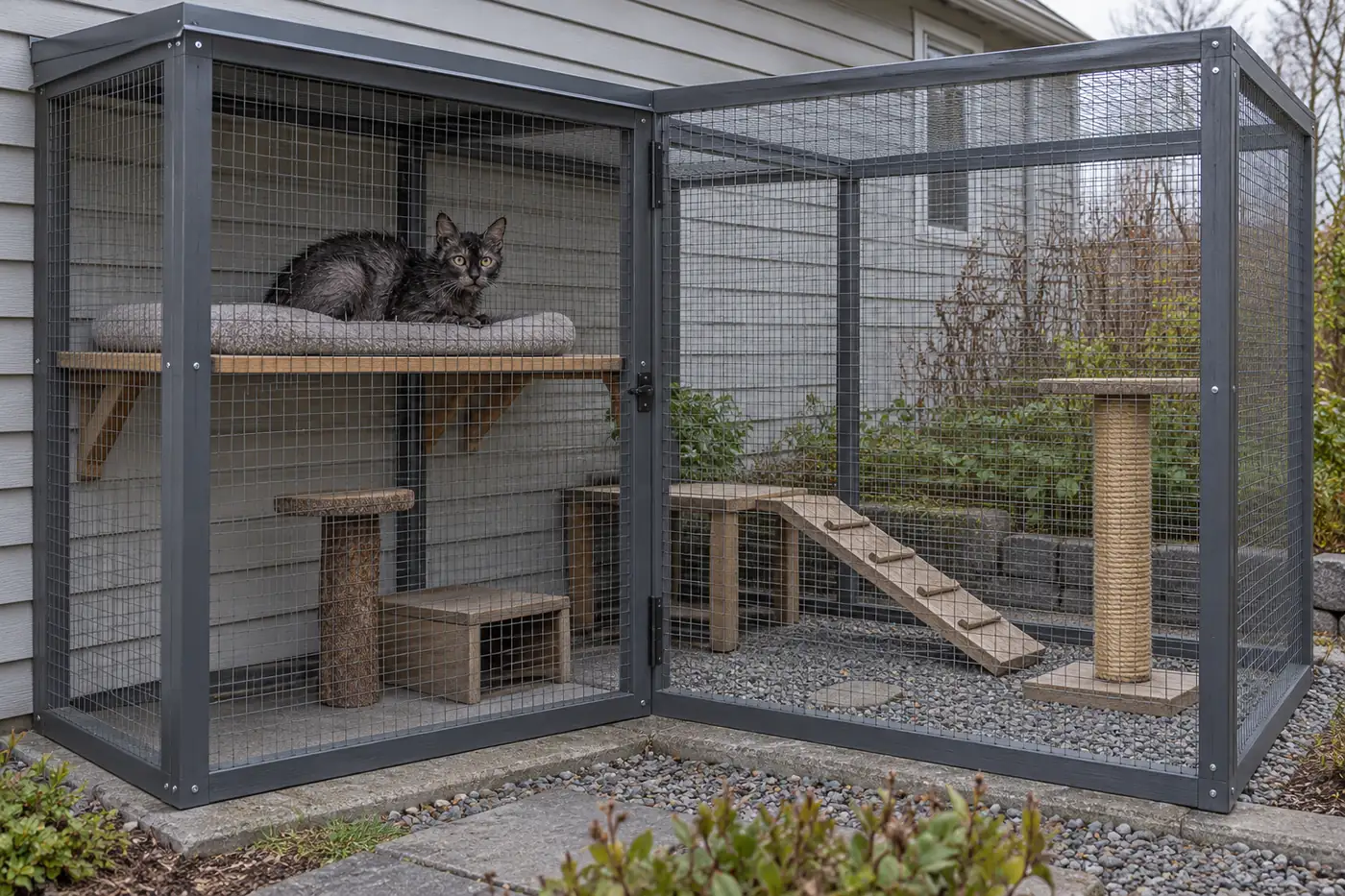
- An indoor environment or secure outdoor enclosure to protect exposed skin
An outdoor enclosure or catio can work if it provides shade and protection from direct sun. Unsupervised outdoor access is a higher risk for a Lykoi than for a fully coated cat because of sun exposure and temperature vulnerability.
What Is Known About Lykoi Health?
The breed is recent enough that long-term population health data is limited.
The 2020 genetic study found mild to severe inflammation around the hair follicles, with lymphocytes gathered at roughly three in four of the follicle groups examined, and its authors report no other health concern identified in the breed.
The founding population was small, and breeders widen it with domestic shorthair outcrosses rather than relying on close relatives. No inherited heart disease has been linked to the Lykoi. Hypertrophic cardiomyopathy (HCM) occurs in cats of every background, so a cardiac screening record for the parents is useful context rather than a breed requirement.
| Concern | Source | What it means for a Lykoi |
|---|---|---|
| Skin oil buildup | Reduced coat coverage | Occasional gentle bathing |
| Sun sensitivity | Exposed skin areas | Indoor living or managed shade access |
| Temperature sensitivity | Variable coat coverage, heavy moult periods | Stable indoor temperature, warm bedding |
| Follicle inflammation | Found in skin samples in the 2020 study | The one breed health finding so far; sore, scabbed or itchy skin is outside the normal coat cycle |
| Small founding population | Recent breed development | Domestic shorthair outcrosses; no breed-specific screening test |
No lifespan figure for the Lykoi comes from a population study, because the breed is too recent for one to exist.
No Lykoi-specific diet exists, and weight is judged by the same portion and body-condition assessment as any other cat's. A normal moult leaves clean, even skin. Hair loss with redness, scabs or scratching is a different matter from both the breed's cycle and the ordinary coat changes across life stages, and is worth a veterinary look.
Does the Sparse Coat Change How a Lykoi Fits a Household?
A Lykoi can live with respectful children and compatible animals when the individual cat is comfortable and the household manages its specific care needs.
Exposed skin is more sensitive than a coated cat's body, so a child who strokes gently at floor level suits a Lykoi better than one who picks it up and carries it around.
The breed's reported prey drive means that birds, rodents and other small animals need secure physical barriers.
Multi-cat introductions follow the same staged process as any breed, with separate resources and gradual increases in shared time.
What Should You Verify Before Acquiring a Lykoi?
With championship status in both TICA and CFA, the Lykoi has published standards that a breeder's cats can be measured against.
- Registration papers from TICA or CFA naming the cat and its parentage
- The characteristic roan coat pattern with reduced facial hair
- A pedigree that shows any domestic shorthair outcrosses openly
- Veterinary records for the parents, including any cardiac screening
- The source explains the breed's care requirements, including skin, sun and temperature
- The cat's behaviour is observed during contact, play and handling
A breeder who explains the moulting cycle, skin care routine and sun exposure limits is providing practical information that a buyer will need from the first week.
The coat alone does not make an unpapered adult a registered Lykoi, so such a cat is judged on its own health and behaviour, and it can still make a good pet.
Common Questions
Is a Lykoi the same as a Sphynx?
No. The Lykoi and the Sphynx carry different genetic mutations. The Sphynx coat comes from a KRT71 keratin gene variant that disrupts the hair shaft. The Lykoi coat comes from variants in the HR gene that act on the hair follicle, producing a sparse roan pattern rather than near-complete hairlessness. Their care differs mainly because a Lykoi's coat comes and goes.
Do Lykoi cats go completely bald?
They can. Most Lykoi moult most of their coat at least once, and some look nearly bald before it grows back. This cycle is normal for the breed and is not a sign of illness.
Are Lykoi cats recognised?
TICA granted championship status in 2017, and CFA, which accepted the breed for registration in 2018, advanced it to championship in 2023. WCF also lists it. Domestic shorthairs remain an allowed outcross.
Do Lykoi cats need special care?
Yes. The sparse coat means exposed skin needs occasional gentle bathing to remove oil buildup. Sun protection is important because the skin lacks full coat coverage. Temperature management matters during heavy moult periods when insulation drops significantly.
How big does a Lykoi cat get?
The Lykoi is a lean, muscular cat of medium build, and CFA's standard allows males to be larger. CFA gives no weight range.
Checked Against
Published 17 September 2026. Last updated .