Wet Food or Dry Food: Which Is Better for a Cat?
Both wet and dry food can keep a cat healthy when the food is complete and balanced. The choice is usually decided by water, cost, and how a particular cat eats.
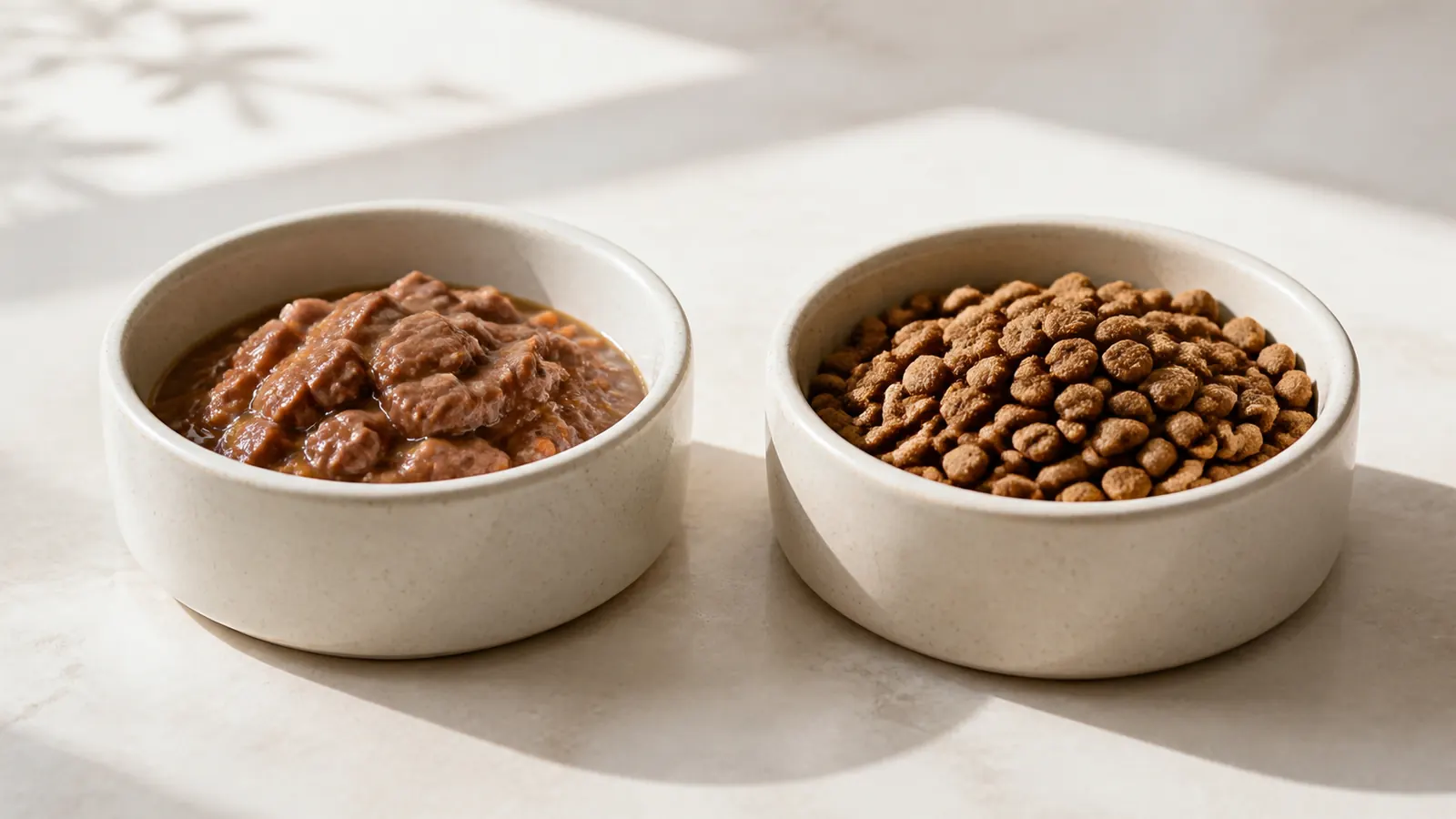
The first thing to check on any food, wet or dry, is that it says complete rather than complementary.
A complete food is formulated to supply everything a cat needs. A complementary one is a topper and cannot be the whole diet.
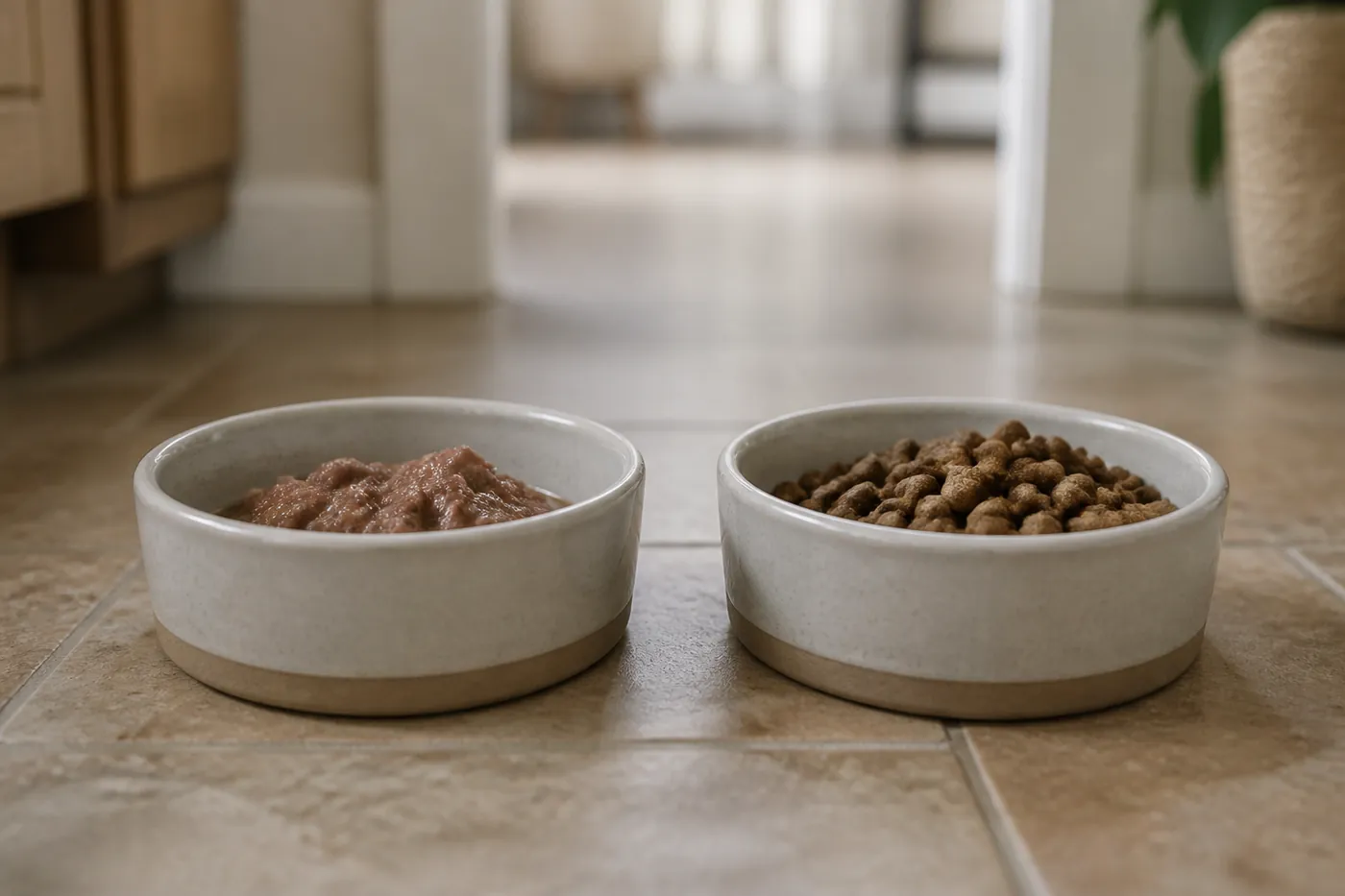
What wet food does well
Wet food is roughly seventy to eighty percent water, so it supplies water with each meal. A cat eating wet food may drink less at the bowl while still taking in more water overall.
That can be useful when a veterinarian wants to raise water intake, including for some urinary or kidney conditions. Food format alone does not prevent disease, and a therapeutic diet may need a particular nutrient profile as well as moisture.
Wet food is often less calorie-dense by weight because of its water content. The actual calories still come from the product label, and a very palatable food can be overfed in either format.
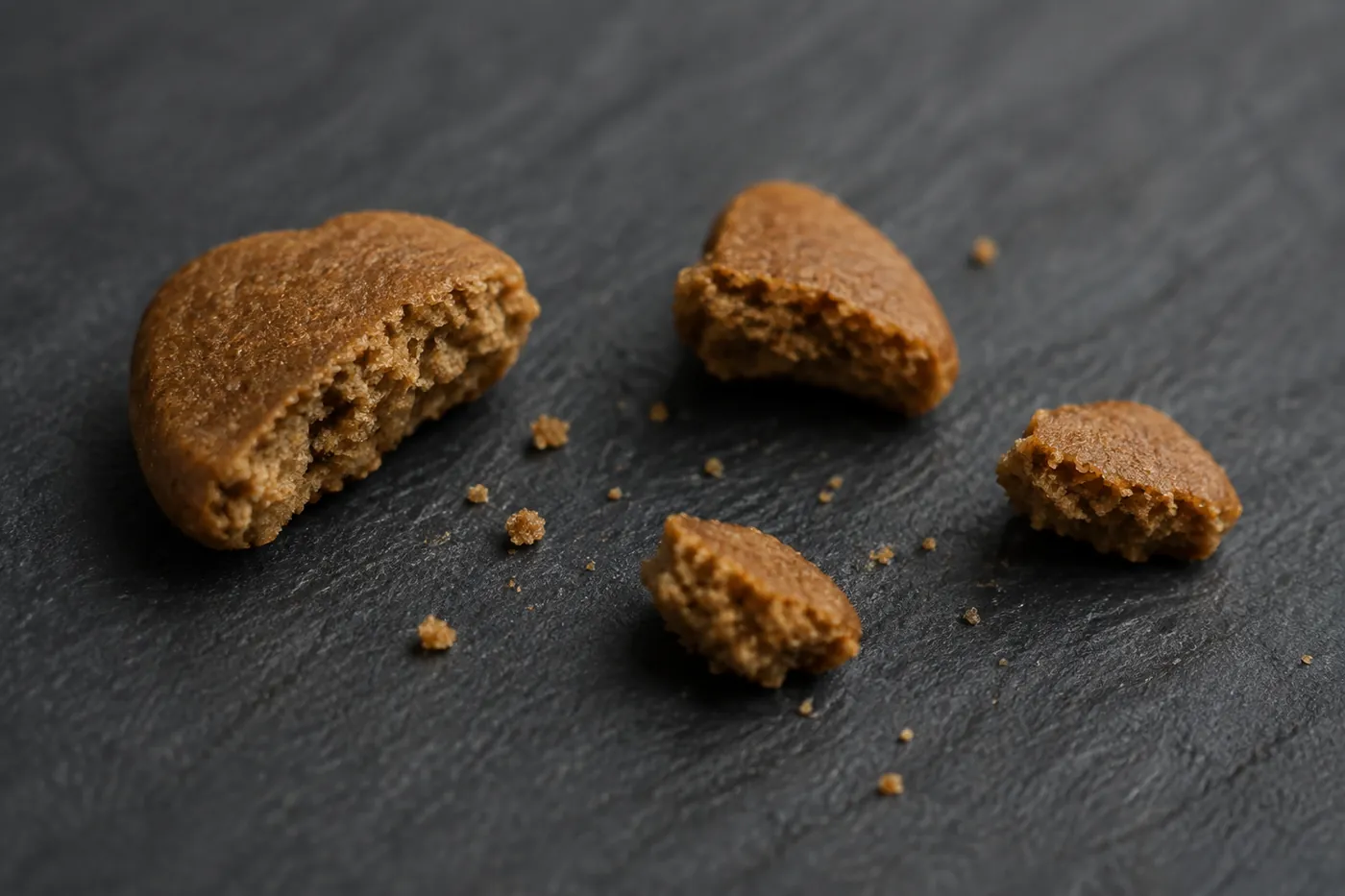
What dry food does well
Dry food is convenient, keeps well once opened, and is usually cheaper per calorie.
It suits puzzle feeders and slow feeders, which are the easiest way to give an indoor cat something to do at mealtimes. For a cat that never hunts, working for food is closer to how a cat is built to eat than finding a full bowl twice a day.
It does not clean teeth in any meaningful way. That claim is widespread and largely unsupported, except for specific dental diets designed with a particular kibble structure.
| Wet food | Dry food | |
|---|---|---|
| Water content | 70 to 80 percent | Around 10 percent |
| Calories per gram | Low | High |
| Cost per calorie | Higher | Lower |
| Once served | Remove uneaten food according to the label and room temperature | Follow the label, keep dry and replace uneaten food regularly |
| Puzzle feeding | Difficult | Easy |
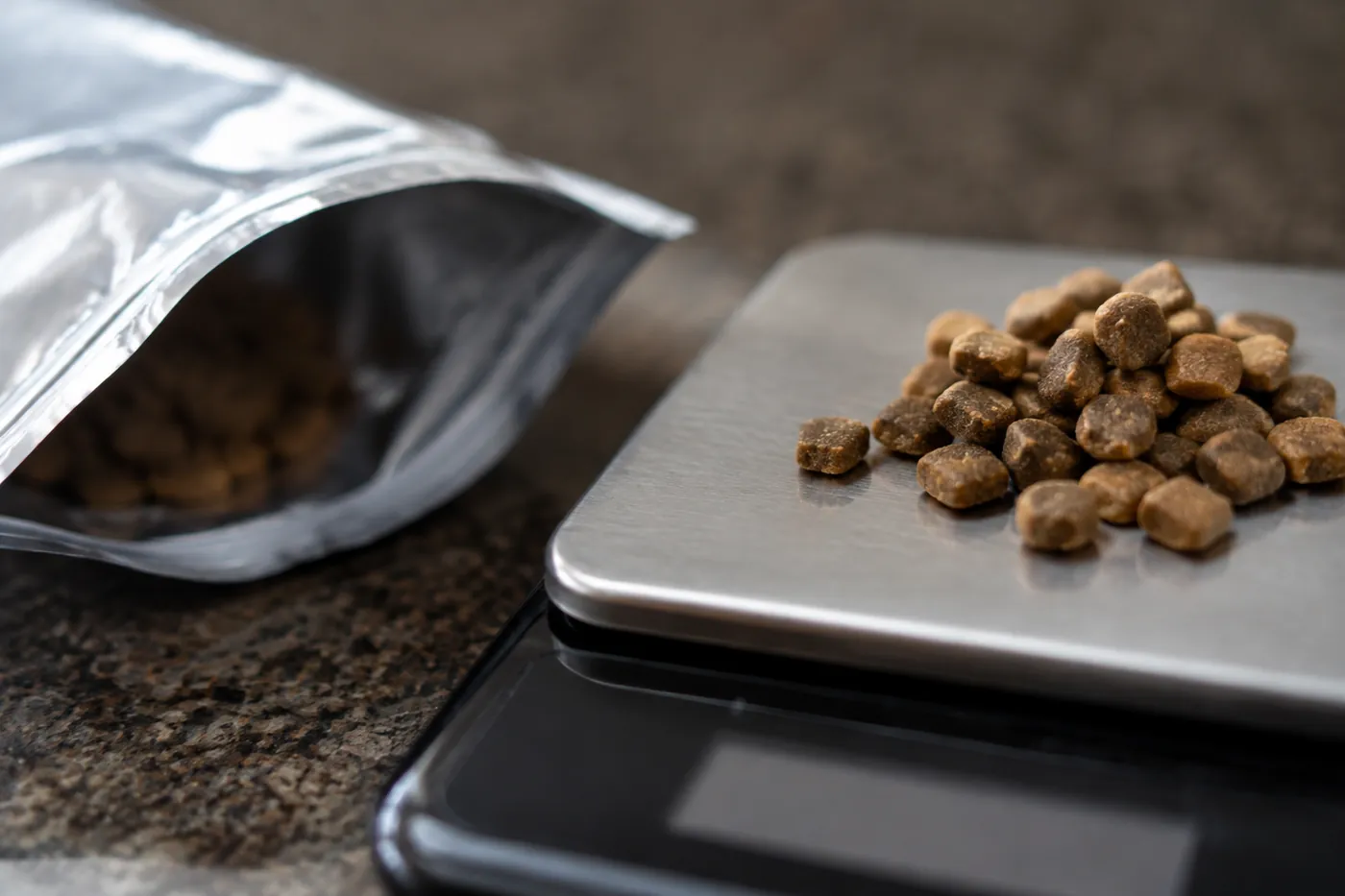
| Portion accuracy | Easy, by pouch or tin | Needs weighing |
Teeth, urinary health, and the claims worth checking
Two health claims attach themselves to this choice, and they do not carry equal weight.
Wet food adds water to the diet. A cat drinking more than it used to still needs assessment; changing food alone does not explain the thirst.
The dental claim for ordinary dry food does not hold. Most kibble shatters rather than scrapes, and a cat that swallows pieces whole gets no abrasion at all. The exceptions are specific dental diets with a larger, fibre-aligned kibble designed to be bitten through, and those are tested products rather than a property of dryness; acceptance by a veterinary dental body is a better guide than a claim on the front of a bag.
Higher water intake can produce more dilute urine, which is one reason wet diets are often preferred for cats with urinary tract problems. The cat's diagnosis and the diet's mineral composition still matter, so moisture is one part of a treatment plan rather than a guarantee against crystals or stones.
A cat with previous urinary disease should follow the diet prescribed for that condition; if it refuses the food, discuss alternatives instead of letting it go without eating. Straining without urine is an emergency requiring immediate veterinary care.
Reading the label properly
The sentence that matters is the nutritional adequacy statement, which says the food is complete for a stated life stage and names the standard it was formulated against. Those standards come from bodies such as AAFCO in North America and FEDIAF in Europe, and a food that meets one of them has been designed to a published profile rather than to a marketing brief.
Life stage is part of the claim. A food complete for growth suits a kitten, a food for adult maintenance does not, and "for all life stages" means it meets the more demanding growth profile.
Front-of-bag marketing terms such as grain-free do not show whether a food is complete. Ingredient lists are ordered by weight before cooking, which flatters wet ingredients such as fresh meat against dry ones such as meal, and that makes the list a poor way to compare two foods and the adequacy statement a good one.
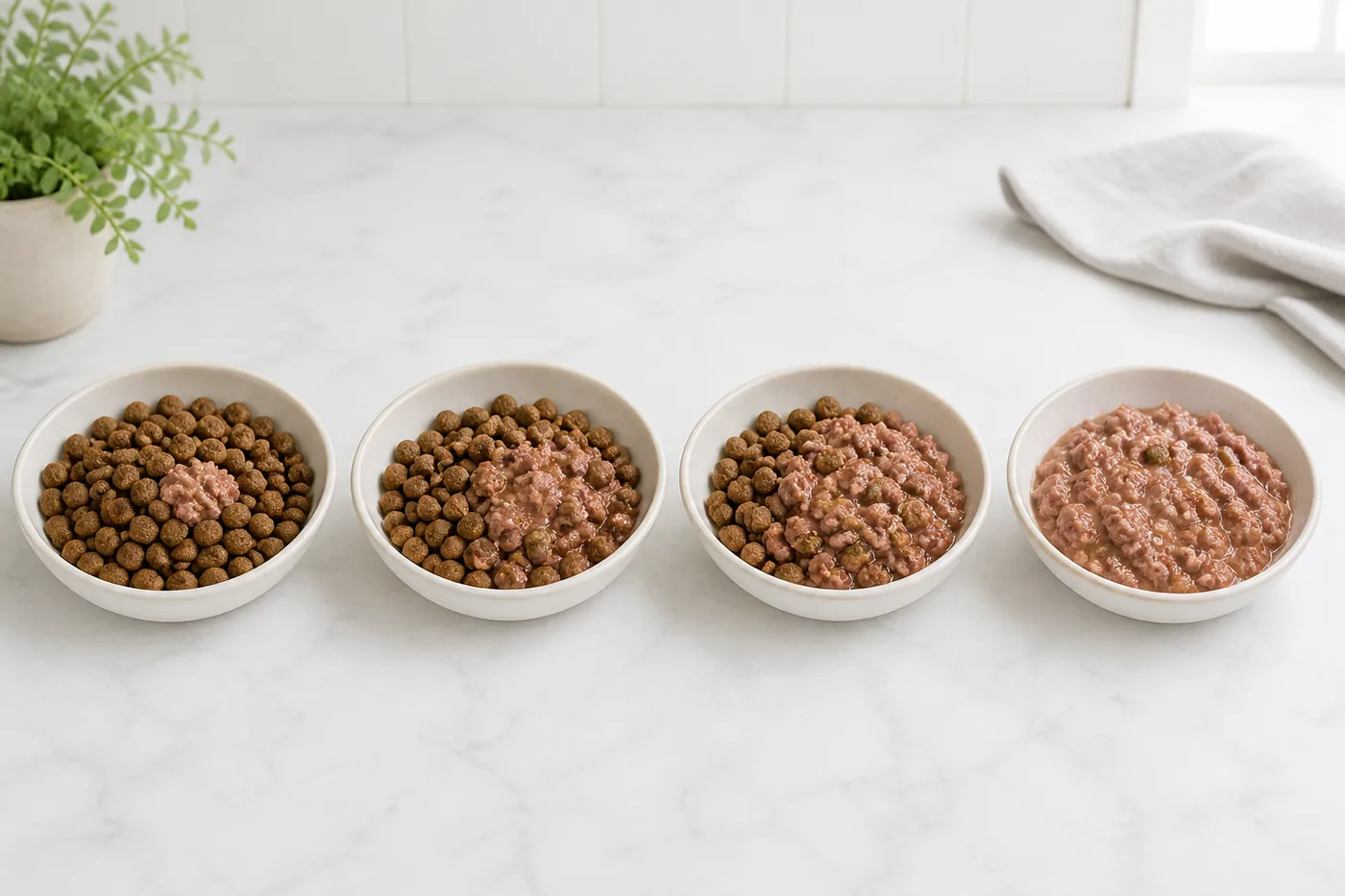
What each actually costs
Cost is the reason many households choose, and comparing it fairly needs the calories rather than the weight.
Dry food is denser, so a kilogram of it feeds a cat for far longer than a kilogram of wet. Comparing price per kilogram makes wet food look worse than it is, and comparing price per hundred calories is the honest measure.
The comparison uses the current price and calorie density of the actual products, because no fixed wet-to-dry price multiplier applies to every food or market.
Cost cannot be separated from health needs. A therapeutic urinary or kidney diet should be chosen for the diagnosed condition, while a healthy cat can be fed an appropriate complete wet, dry or mixed diet that the household can sustain.
Mixed feeding can fit the household budget and provide some dietary water. How much it changes total water intake depends on the proportions and the cat.
Which one is right for your household
There is no answer that fits every cat, and the decision usually comes down to four practical questions.
Is anyone at home to take up uneaten wet food, or will it sit out all day? Is the cat prone to putting on weight, which favours the lower calorie density of wet? Has it ever had a urinary problem, which favours wet more strongly still? And can the household afford the option it prefers consistently, because a diet changed back and forth for cost reasons is worse than either choice made steadily.
| Situation | Leans towards |
|---|---|
| History of urinary problems or blockage | Wet, strongly |
| Older cat, or any kidney concern | Wet |
| Overweight cat needing volume for fewer calories | Wet |
| Nobody home during the day | Dry, or timed wet feeder |
| Indoor cat needing mental stimulation | Some dry in a puzzle feeder |
| Tight budget | Mostly dry with some wet |
Kittens, seniors, and cats that will only eat one
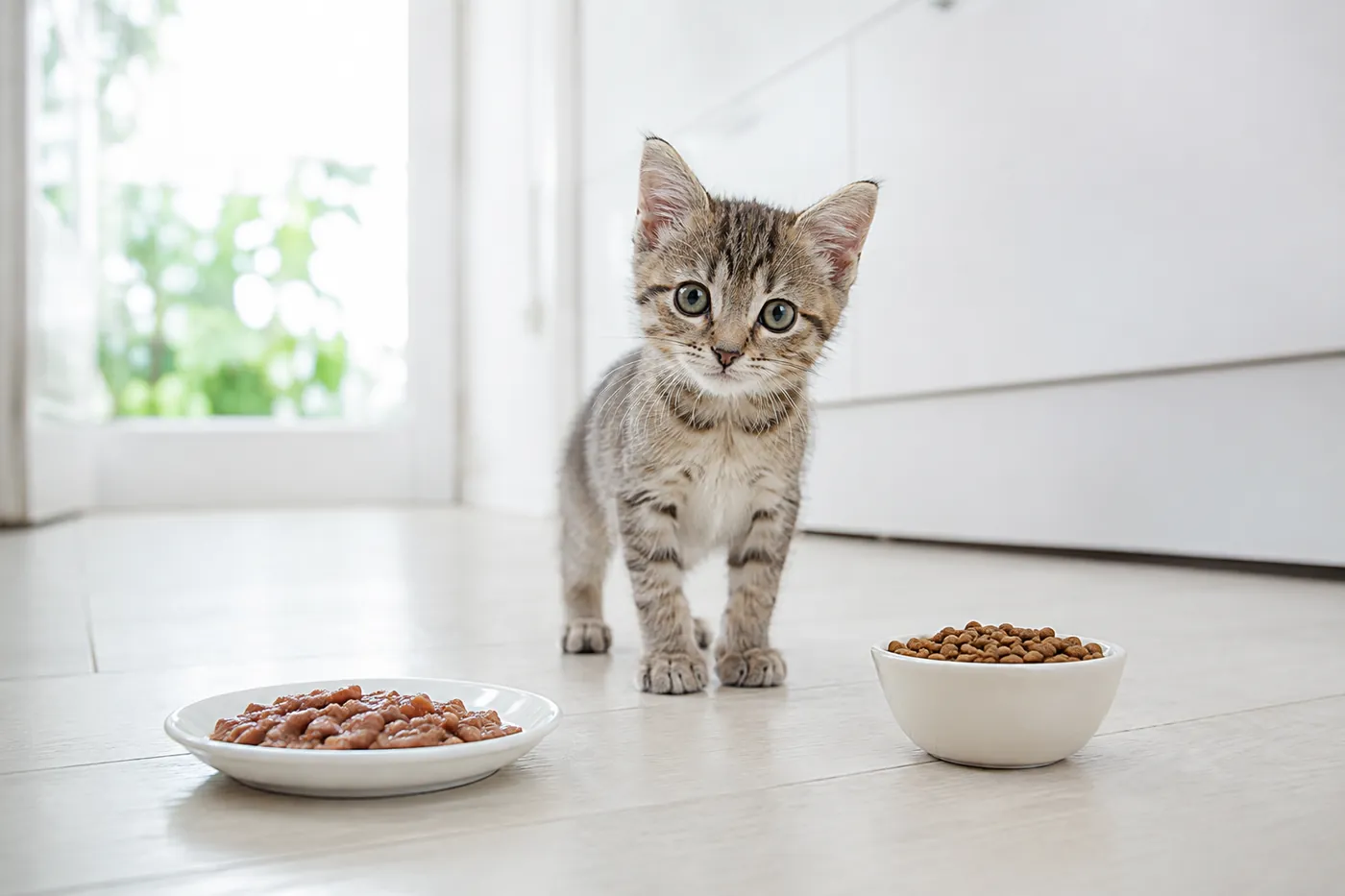
The general answer bends at both ends of a cat's life. Offering a kitten more than one suitable texture can reduce the chance that one format becomes unfamiliar. Nothing requires doing it weekly, and every food offered still has to be complete for growth or used within the treat allowance.
Some adult cats still reject a new texture despite early variety, while others change readily. Presenting the choice as preference training is more honest than promising it will keep every future diet option open.
Older cats usually do better with more wet food, because hydration matters more as kidneys age and because softer food is easier for a cat with dental disease or a sore mouth. Chewing gets harder with age and dental pain is common, both part of the picture set out under signs of ageing.
| Life stage | What changes | What to do about it |
|---|---|---|
| Kitten | Food preferences are developing | Offer suitable variety if the kitten eats enough of its complete growth diet |
| Adult | A familiar texture may be strongly preferred | Introduce a new format beside familiar food and watch intake |
| Older cat | Health, teeth and water intake may have changed | Use the suitable texture the cat can eat comfortably and ask about new difficulty chewing |
| Any age, refusing a texture | Adjustment time varies | Offer alongside rather than instead, and never withhold familiar food to force a change |
A cat that has refused one texture for years may still accept it after a gradual introduction, but the pace varies. Warming wet food slightly and offering it alongside familiar food can help without turning the change into a contest.
Never withhold familiar food to force a texture change. A cat that stops eating or eats markedly less needs prompt veterinary advice, because cats can develop serious complications when inadequate intake continues.
Splitting the day between the two
Most households end up feeding both, and the arrangement matters as much as the ratio.
One workable pattern is wet food at set meals and a measured portion of dry in puzzle feeders. It adds dietary water and feeding activity, but the proportions still depend on the cat's calorie target, health and willingness to eat each format.
Ratios are a preference rather than a rule. Two thirds wet to one third dry by calories is a common starting point, and a cat with any urinary history is usually pushed further towards wet.
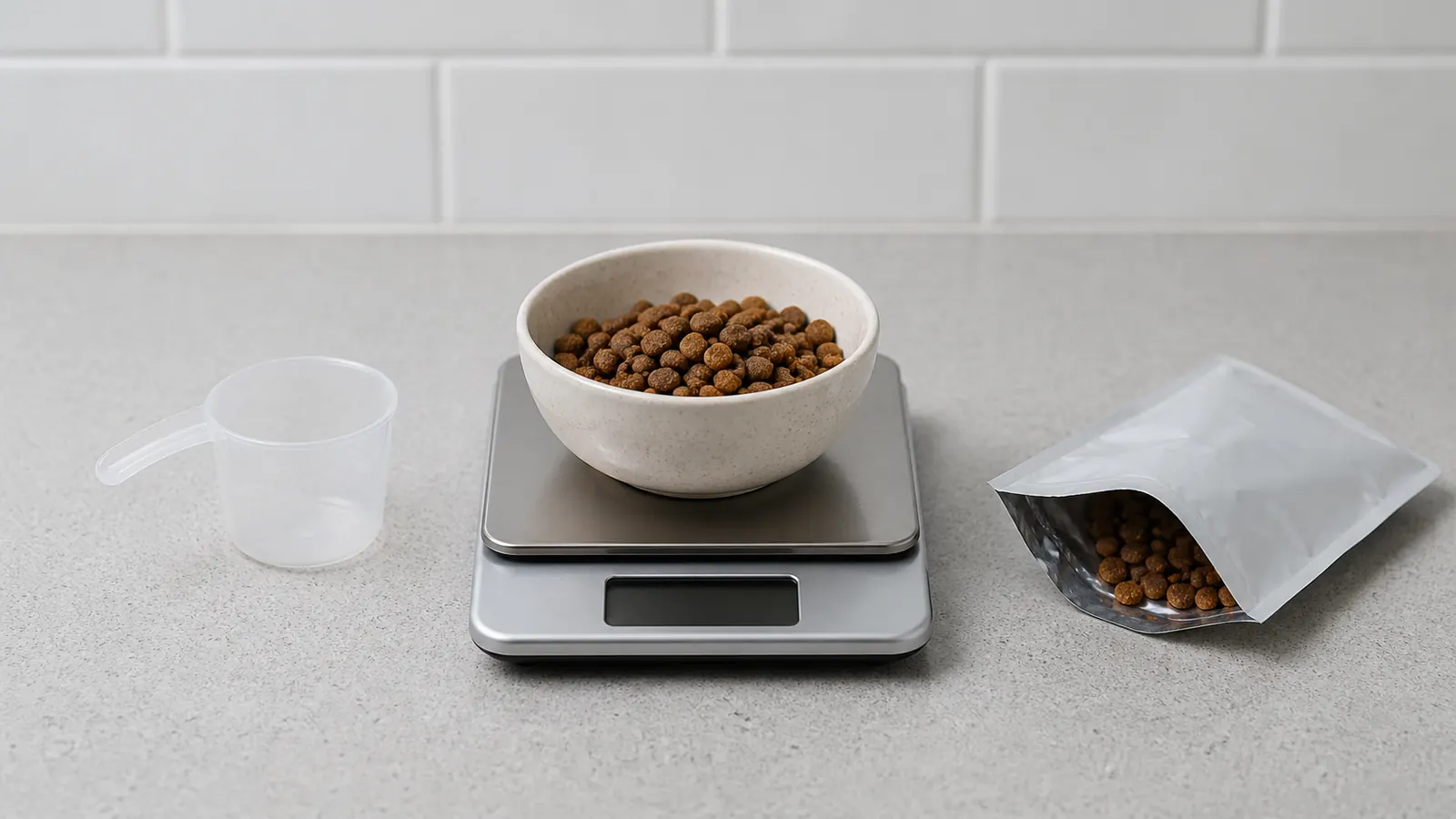
The arithmetic is where this goes wrong. Both halves have to come out of one daily total, set as the portion guide describes, so a portion of dry is subtracted from the wet rather than added on top. Eyeballing kibble is the single commonest reason a carefully planned mix produces a heavier cat, which is why the dry portion is worth weighing once and marking in the bowl.
- Work out the day's calorie total for the cat.
- Decide a split, for example two thirds of the calories from wet food.
- Convert each share into grams using the energy figure on each product.
- Weigh the dry portion once, and note the level it reaches in its container.
- Serve wet food at meals and put the dry into puzzle feeders.
- Reassess body condition after a fortnight and adjust both halves together.
Changing from one to the other
Cats handle abrupt food changes badly, and the usual result is diarrhoea or a cat that refuses the new food outright.
The product label and any veterinary instructions set the starting pace, and the change slows if the cat develops digestive upset or stops eating enough. A cat that has eaten one texture for years may need a longer introduction than a cat already familiar with both.
Warming wet food slightly to body temperature raises its smell and helps a reluctant cat, because cats assess food by scent far more than by taste.
Never starve a cat into accepting a new food. If intake falls sharply or stops, return to a familiar suitable food and contact the veterinary team rather than continuing the transition.
Where hydration is the reason for the change, chronic kidney disease explains why water intake carries so much weight in older cats.
Storage, spoilage, and hygiene
The two textures fail in different ways, and both failures are avoidable.
Wet food spoils once opened, and safe holding time changes with the product and room temperature. The label gives how long a served portion may remain out and how long a covered opened pack may be refrigerated, and warm conditions shorten both.
Dry food does not spoil visibly, and it does go stale. The fats oxidise once the bag is opened, which is why a cat sometimes goes off a food halfway down a large sack.
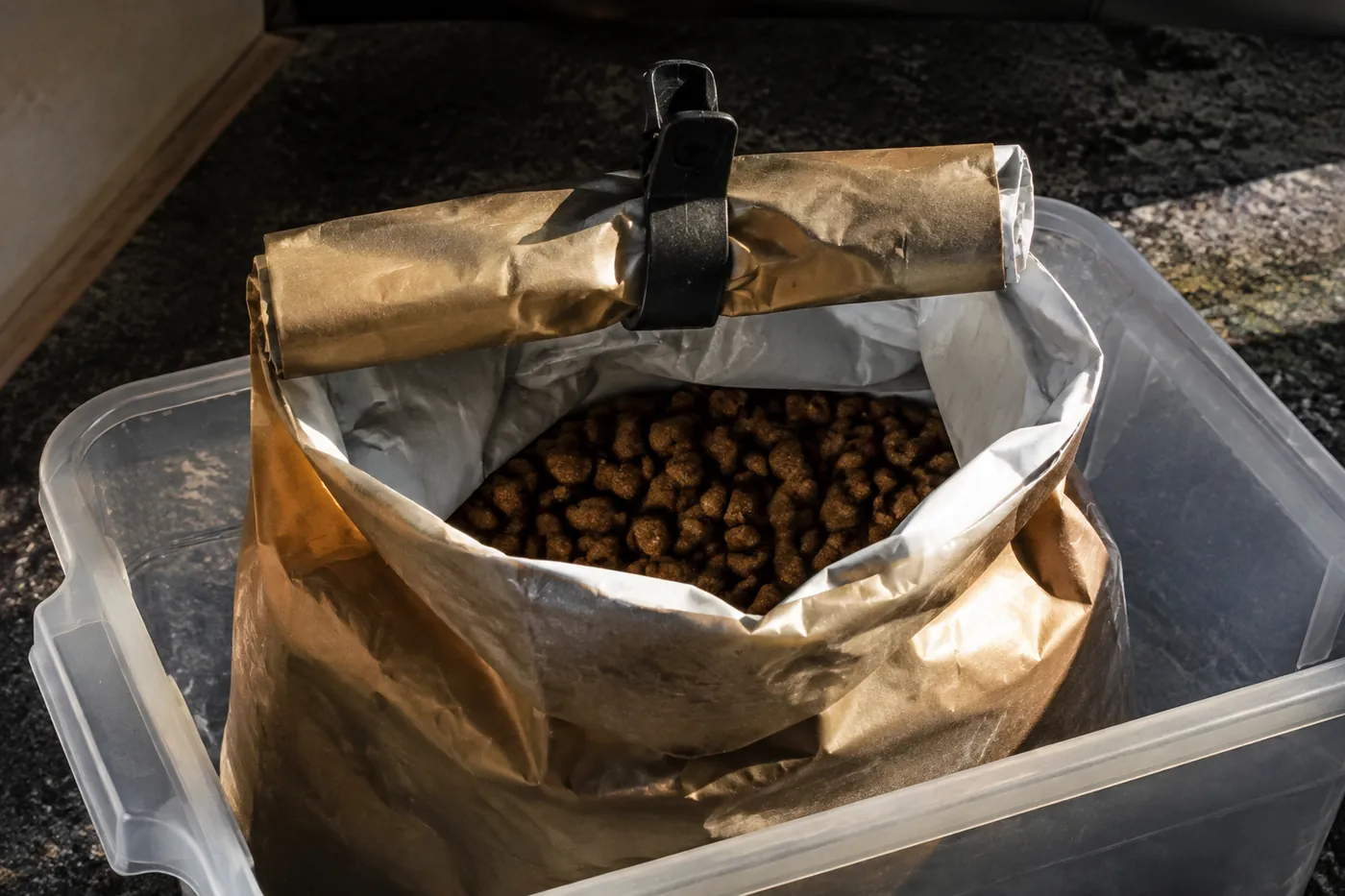
Dry food keeps best in its own bag inside a container rather than tipped loose into one. The bag carries the barrier that keeps the fat stable, and the batch code that matters if there is ever a problem.
Bowls need washing often enough that no old food film or odour remains, and a damaged bowl that can no longer be cleaned properly is due for replacement. Ceramic, glass and stainless steel are durable options, but the condition and cleaning of the surface matter more than a blanket material rule.
- Follow the label's time limit for served wet food, and shorten it in warm conditions
- Cover and refrigerate opened wet food for no longer than its label allows
- Buy a dry-food bag size that can be used within the maker's after-opening guidance
- Keep the original bag inside the storage container rather than tipping it loose
- Bowls washed daily and replaced once scratched or cracked
- Store all food out of direct sunlight and away from heat
Raw, fresh, and gently cooked options
Commercial raw diets vary in nutritional adequacy and may be frozen or sold in other forms. Raw feeding has no established health advantage over an appropriate cooked diet, and the hygiene argument against them is real: raw meat carries salmonella and campylobacter, cats can shed those organisms without appearing ill, and the risk falls on the household as much as the cat.
That matters more in homes with infants, elderly people, pregnant women, or anyone on immunosuppressive treatment. It is a decision to make with a veterinarian rather than from a forum.
Gently cooked fresh food, delivered chilled or frozen, can reduce risks associated with uncooked ingredients, but still needs hygienic handling and verified nutritional adequacy. Price per calorie gives the fair comparison with wet and dry food.
| Format | The argument for | The argument against |
|---|---|---|
| Commercial raw, frozen | Some are complete; verify the label | Salmonella and campylobacter, shed by a cat that looks well |
| Gently cooked fresh | Often high moisture | Verify adequacy, safe storage and actual cost |
| Home prepared, formulated | Full control, complete on paper | Only as good as the recipe and the discipline behind it |
| Home prepared, no recipe | None | Deficiencies take months to appear and are hard to reverse |
Home prepared food without a formulated recipe is the one genuinely poor choice here, because the deficiencies take months to appear and are hard to reverse, as the risks of a home cooked diet set out.
Common Questions
Does dry food clean a cat's teeth?
Ordinary dry food does not meaningfully clean teeth. Specific dental diets are designed with a kibble structure that has some effect, but they are not a replacement for veterinary dental care.
Can I leave wet food out all day?
No. Follow the food label for serving and storage, remove uneaten wet food promptly and shorten the time in warm conditions. Measure dry food too, keep it dry and replace leftovers regularly rather than continually topping up a bowl.
Is wet food better for preventing urinary problems?
Wet food can raise water intake and is often preferred in plans for cats with urinary disease, but the diagnosis and nutrient profile also matter. It is one part of a veterinary plan, not a guarantee against crystals, stones or obstruction.
Checked Against
Published 18 August 2026. Last updated .