Why Does My Cat Bury Food, and Should I Stop It?
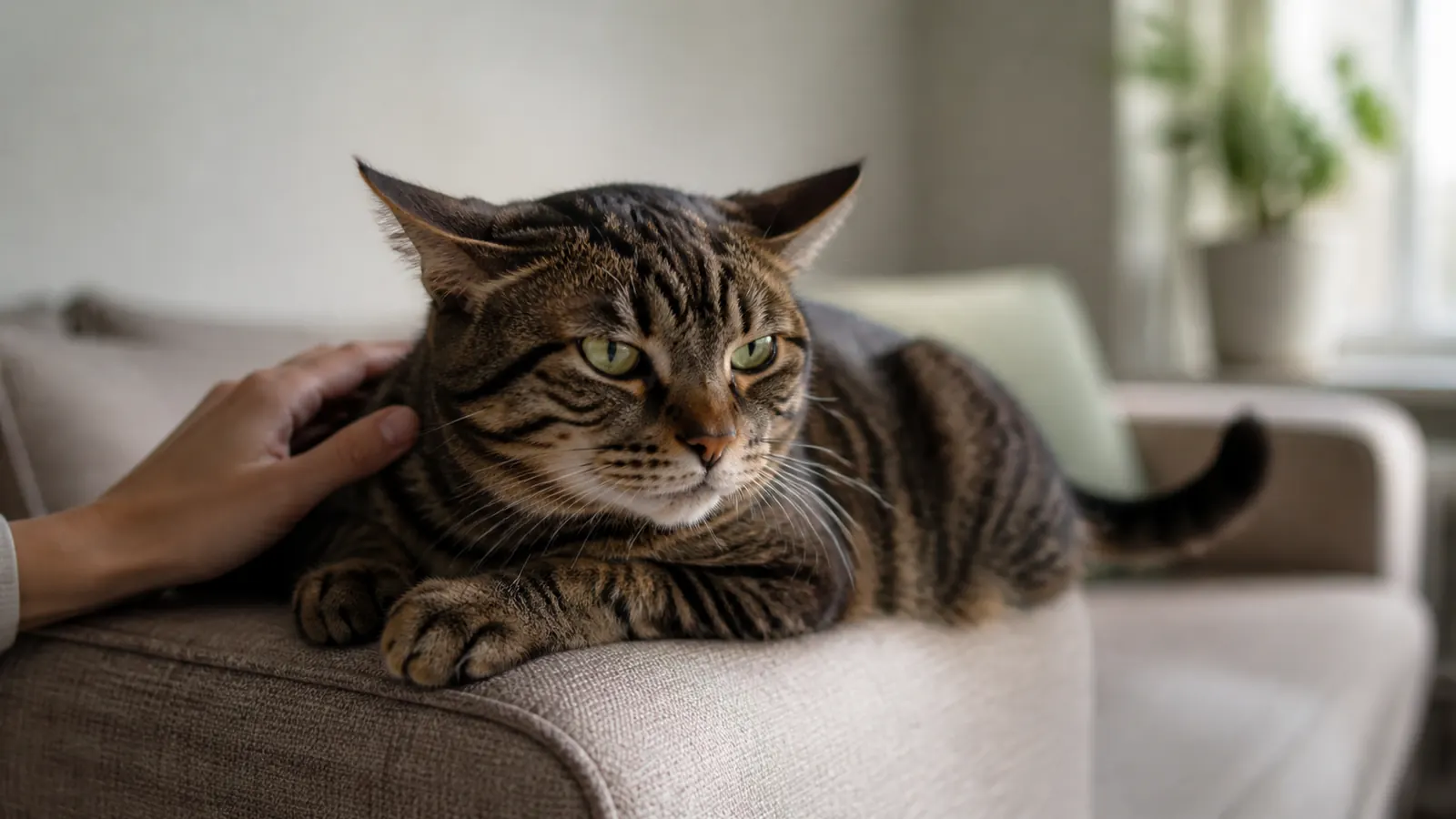
Scraping around a food bowl can be ordinary food-covering behaviour. The movement alone cannot tell you whether a cat is saving food, rejecting it or feeling unwell, so what it eats and how it behaves carry the answer.
What the scratching is actually for
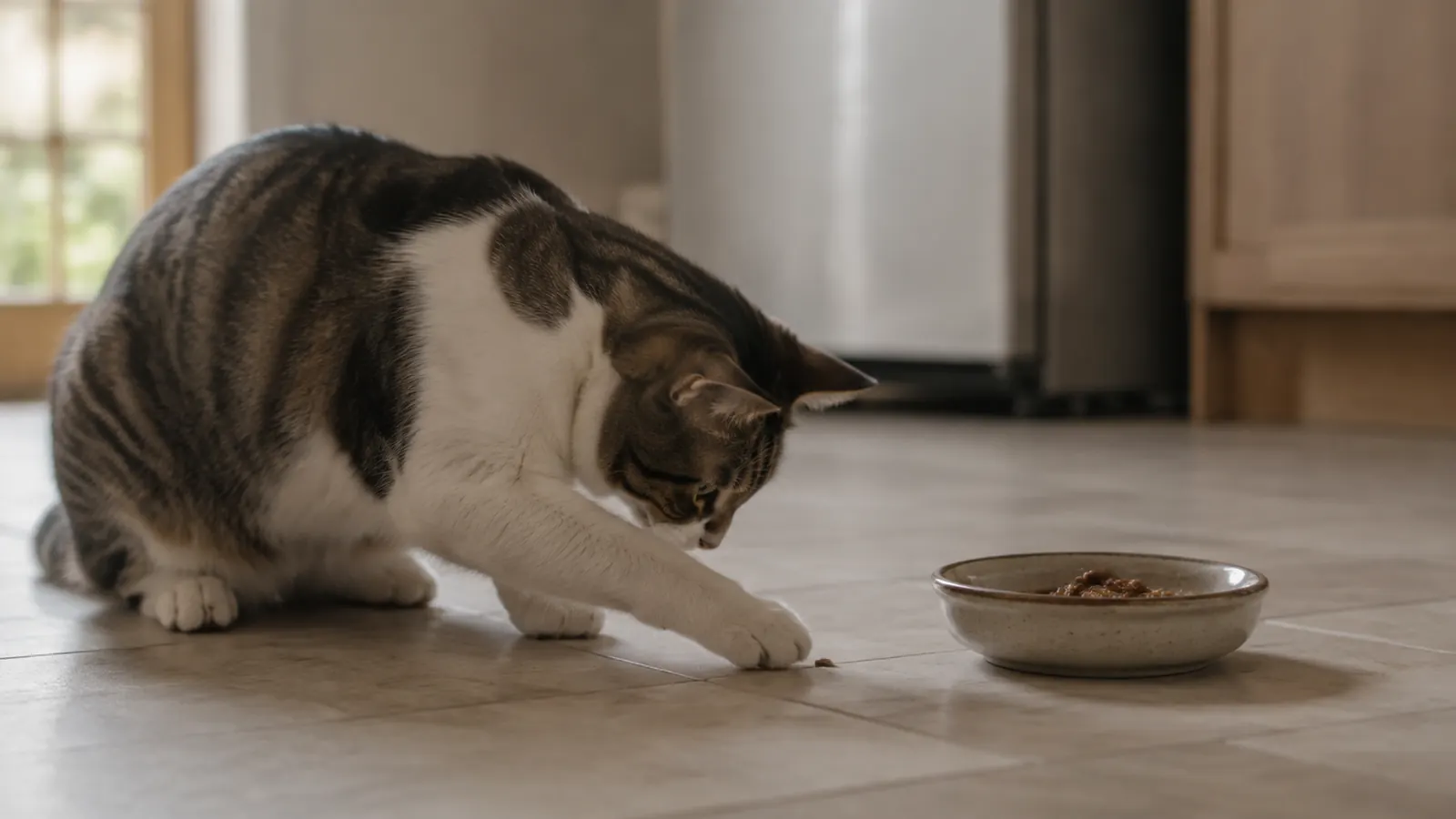
This behaviour is often called food covering or caching. Cats Protection describes possible functions inherited from wild cats: concealing food from other animals, hiding its scent and keeping leftovers for later.
A household cat may scrape a hard floor even when it cannot actually bury anything. Some drag nearby paper or fabric towards the bowl. That familiar movement does not tell us exactly what an individual cat intends.
When it means the food is unwanted
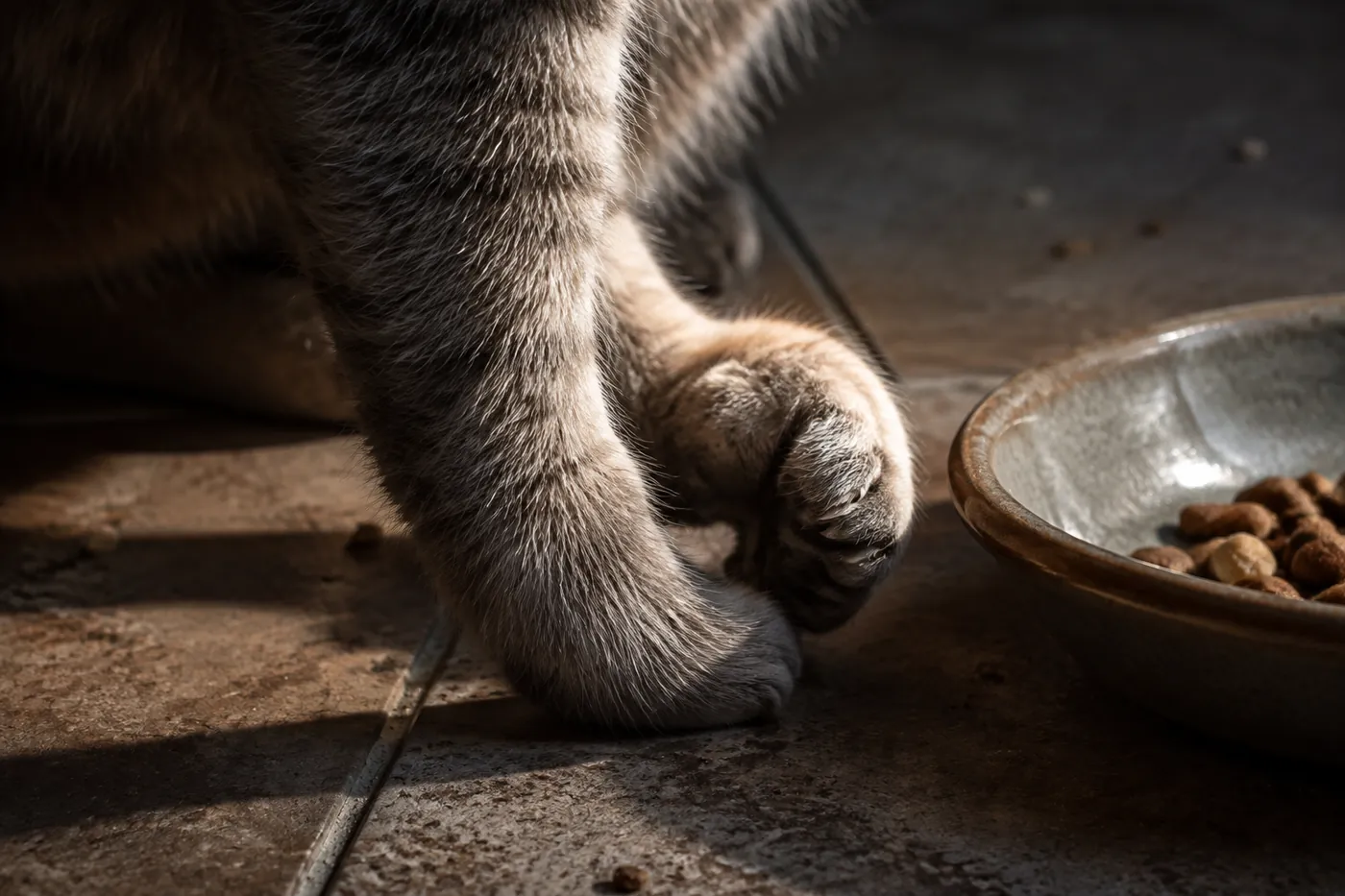
Covering leftovers after eating normally is usually less concerning than repeatedly approaching a full bowl without eating. But the distinction is not a diagnostic test: dislike, stress, nausea and oral pain can look similar.
Measuring the food offered and the food left behind shows whether intake has really dropped, and watching a meal from a distance can reveal slow chewing, dropped food or vomiting. Thirst changes and weight loss belong in the same picture, and a new pattern matters even if the cat has always scraped around its bowl.
The things that make rejection more likely
Where a cat is genuinely covering food it does not want, the usual reasons are freshness, the dish, the location and the amount offered.
Food that has been out too long oxidises and smells stale to an animal with a far better nose than yours. Wet food left more than an hour in a warm room is past its useful life.
A bowl that is too deep or too narrow presses on the whiskers, and a proportion of cats find that uncomfortable enough to leave food rather than lean in.
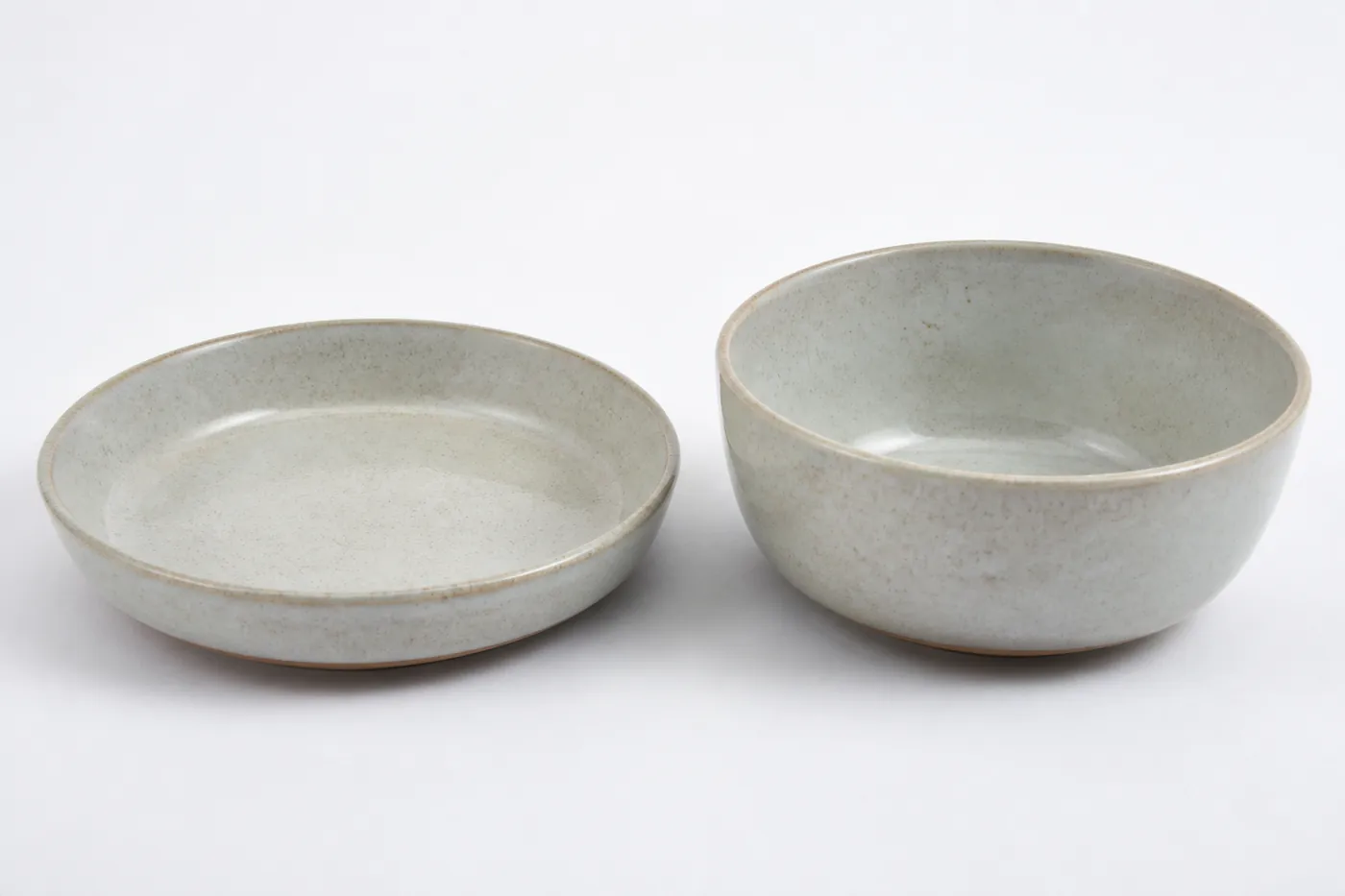
The location matters as much as it does for a litter tray. A bowl beside a washing machine, in a corridor, or next to the tray gets abandoned.
A large serving may leave more food beside the cat when scraping starts, and smaller portions from the same daily ration show quickly whether that is the cause.
- Take wet food up after about an hour in a warm room
- Use a wide shallow dish so whiskers stay clear of the sides
- Move the bowl away from appliances, doorways, and the litter tray
- Offer smaller portions more often rather than one large serving
- Wash the bowl daily, since a greasy film taints the next meal
- Avoid repeated abrupt food changes; speak to a vet if eating is reduced
When it is worth a veterinary opinion
Most food covering is normal and needs nothing. A small number of cases are the first visible sign of something else.
A cat that starts covering food it previously ate, and is also losing weight, eating more slowly, or dropping food from its mouth, needs assessment for oral pain or other illness, rather than repeated menu changes. Dental problems can change chewing or reduce eating, but some cats continue eating despite pain. A change in how food is handled deserves a veterinary mouth examination.
Nausea from kidney disease, an overactive thyroid, or an upset stomach also shows as approaching the bowl and turning away. If the covering arrives alongside increased thirst or repeated vomiting, illness is a likelier cause than the food.
What to do about the mess
The behaviour is harmless, although the mess around it is not always. Dragged towels, scattered litter, and scratched flooring are the usual complaints. The simplest fix is to remove what the cat is reaching for. A feeding mat that is too heavy to drag, and a clear space around the bowl, removes most of it.
Interrupting or scolding achieves nothing useful. The sequence completes on its own within seconds, and interrupting it teaches a cat that the person approaching the bowl is worth avoiding.
- Put the bowl on a wide, heavy, wipeable mat that a paw cannot lift.
- Clear tea towels, rugs, and paper from the area around the feeding station.
- Serve smaller portions so there is less left to cover.
- Take uneaten wet food up after about an hour rather than leaving it down.
- Let the sequence finish rather than interrupting it.
- Wash the mat daily along with the bowl.
Covering food in a multi-cat house
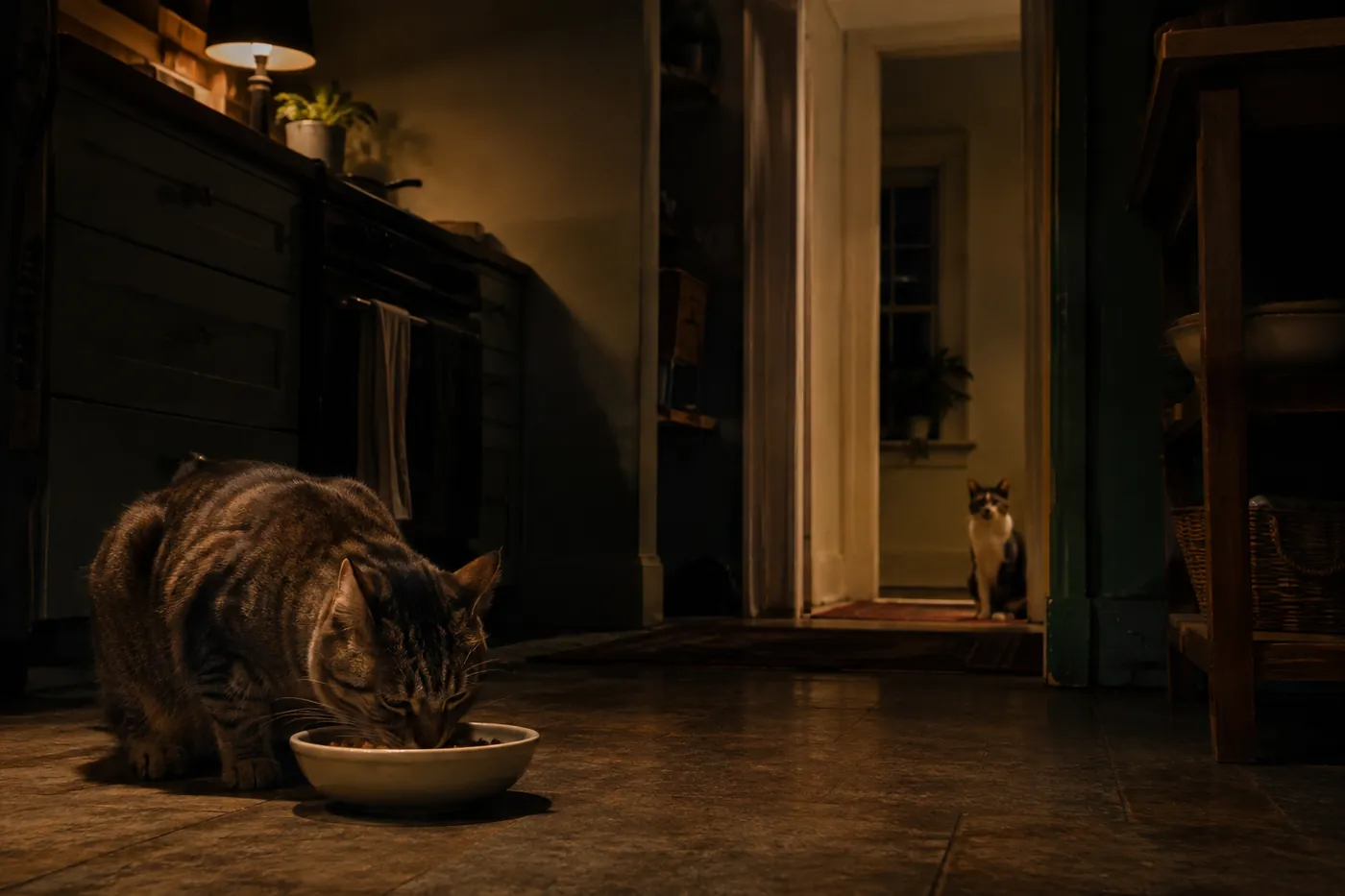
The signs worth noticing are one cat waiting to eat, getting displaced, or leaving when another approaches. Those suggest the feeding arrangement deserves attention; scraping alone does not prove guarding.
Each cat does best with a quiet feeding place separated from the others, preferably out of sight, where its own intake can be seen. A microchip feeder may help prevent stealing, but it does not solve a housemate blocking access to the room.
What the behaviour tells you about portion size
Covering is also a useful signal about portion size. If leftovers are common but total intake and weight are appropriate, the same daily ration divided into smaller meals is the usual answer, and covering alone is no reason to cut the total. Cats naturally eat many small meals rather than two large ones, so three or four servings from the same daily total usually stops the covering without changing anything else, while the total itself comes from how much the cat needs each day.
If the covering started when the food changed, energy density is a likelier cause than volume. A richer food fills a cat at a smaller portion, and the old serving size is now too much.
Common Questions
Why does my cat scratch the floor next to the food bowl?
It may be food-covering behaviour, sometimes called caching. Proposed functions include hiding leftovers or their scent. The movement alone does not reveal the cat's exact motive.
Does burying food mean my cat does not like it?
Not necessarily. How much it eats and whether its health or behaviour has changed tell you more. Repeatedly leaving a full bowl needs attention, especially with weight loss or other signs.
Should I stop my cat burying food?
There is no need to stop it, and punishment only makes the bowl somewhere to avoid. Clearing movable fabric, protecting the floor, offering smaller portions from the same daily ration and removing leftovers once the cat has finished all reduce the mess.
When is covering food a reason to see a vet?
When the behaviour is new or excessive, eating is reduced, or it comes with weight loss, changed chewing, thirst or vomiting. Those signs point beyond fussiness.
Checked Against
Published 3 September 2026. Last updated .