When Do Kittens Start Eating Solid Food, and How?
Weaning usually starts around four weeks and finishes around eight to ten. Offer solids gradually while checking each kitten’s intake and growth.
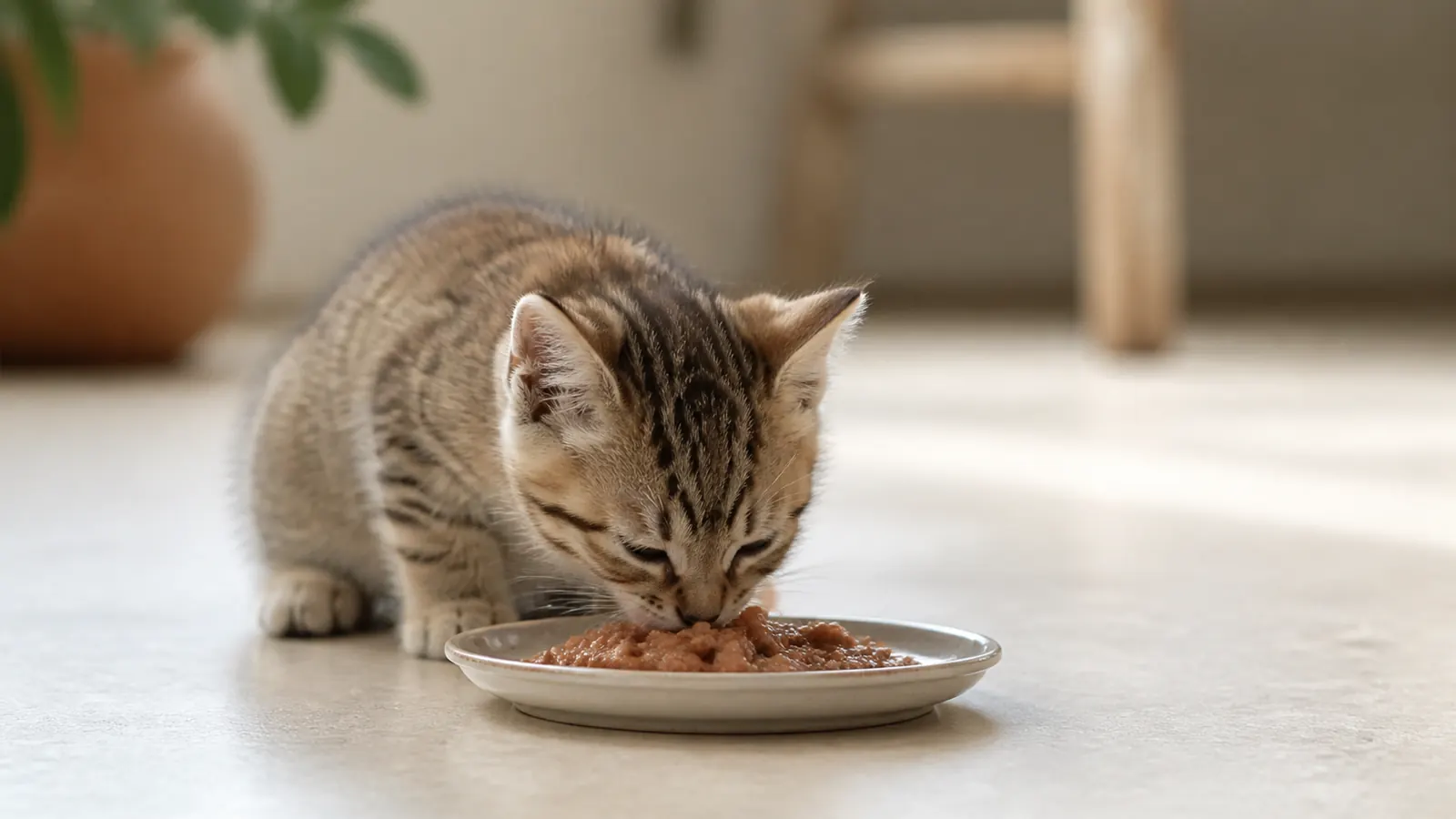
Kittens usually begin the move to solid food at around four weeks, with weaning commonly completed around eight to ten weeks. Offer an appropriate kitten food alongside continued nursing or milk replacer, and let eating ability and growth guide the pace.
Weaning is not an instruction to separate a kitten from its mother abruptly.
What the gradual handover looks like
A kitten initially tastes and explores food before it can obtain enough nutrition from a dish. Milk remains important during that learning period.
As solid intake rises, the food can become less diluted and dependence on milk falls.
| Stage | What to offer and observe |
|---|---|
| Before readiness for solids | Mother's milk or a properly prepared kitten milk replacer |
| Around four weeks | A shallow dish of soft complete kitten food mixed to a gruel |
| Progressing through weaning | Gradually thicker food while checking intake and daily growth |
| Eating independently | Complete kitten food and fresh water, with milk support reduced only as appropriate |
The timetable varies. A kitten that is unsteady, weak, not gaining or unable to feed needs advice rather than a push to meet a calendar date.
An orphaned or ill kitten may require a tailored plan.
Introducing the first dish
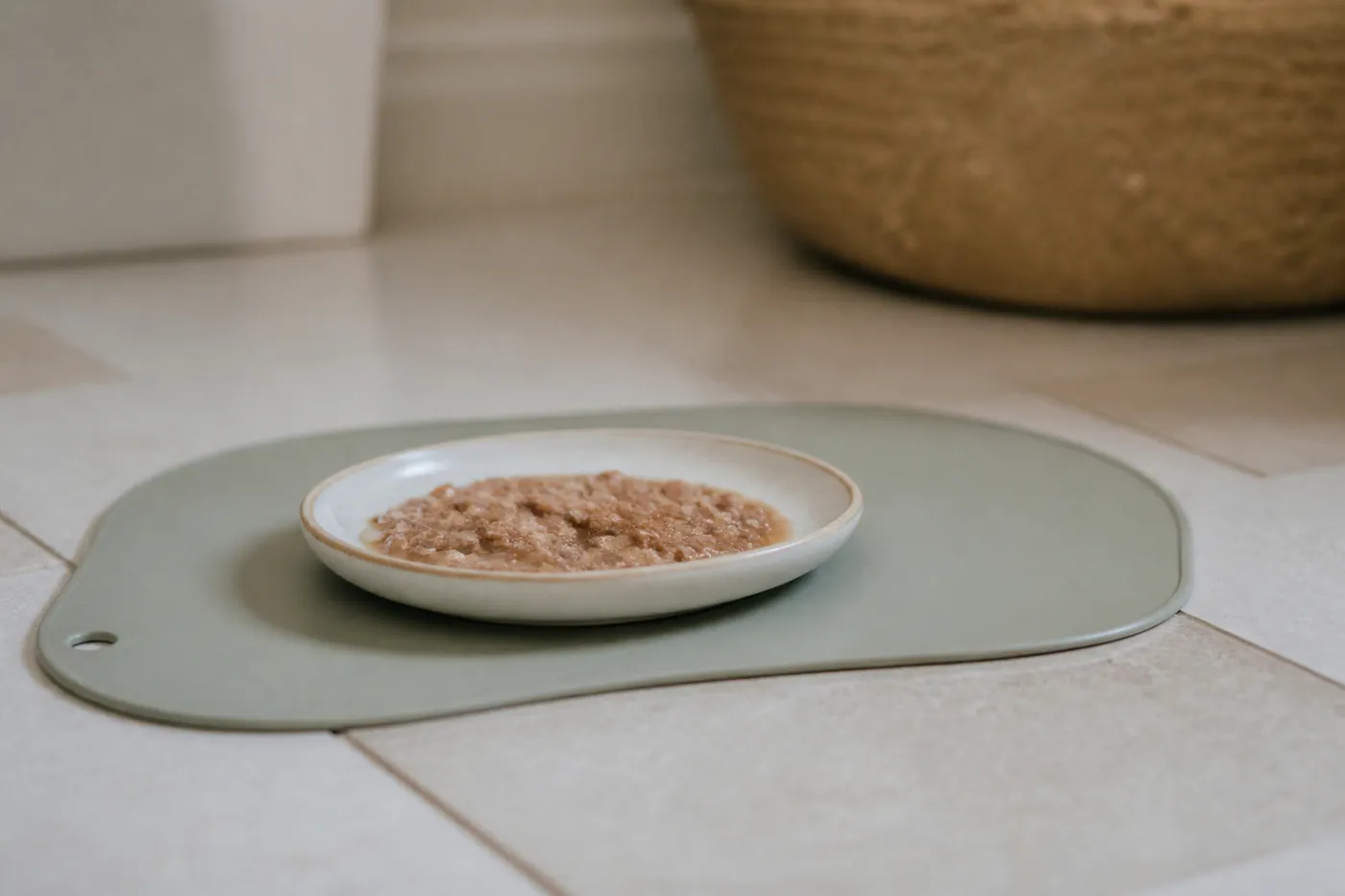
Use a complete food labelled for kitten growth. Mix wet kitten food with warm water or suitable kitten milk replacer to make a soft gruel.
Put a small amount on a shallow stable dish where the kitten can reach it without climbing over a high rim.
Let the kitten investigate. Do not push its nose into the food or squirt food into its mouth: inhaling food or liquid is dangerous.
Offer small fresh meals frequently, and keep nursing or bottle support appropriate to actual intake rather than withdrawing it because solids have been offered once.
Thicken the mixture gradually as the kitten eats it reliably. Wipe food gently from the face and coat and keep the feeding area clean.
Food walked through is not necessarily food eaten, so watching the dish and the kitten both matters.
Check each kitten, not just the shared plate
Several dishes or separate supervised feeding opportunities can help prevent a larger kitten displacing a smaller one. Keep food away from the litter tray and use a wipeable surface.
Fresh water belongs in a shallow stable dish once solids are introduced.
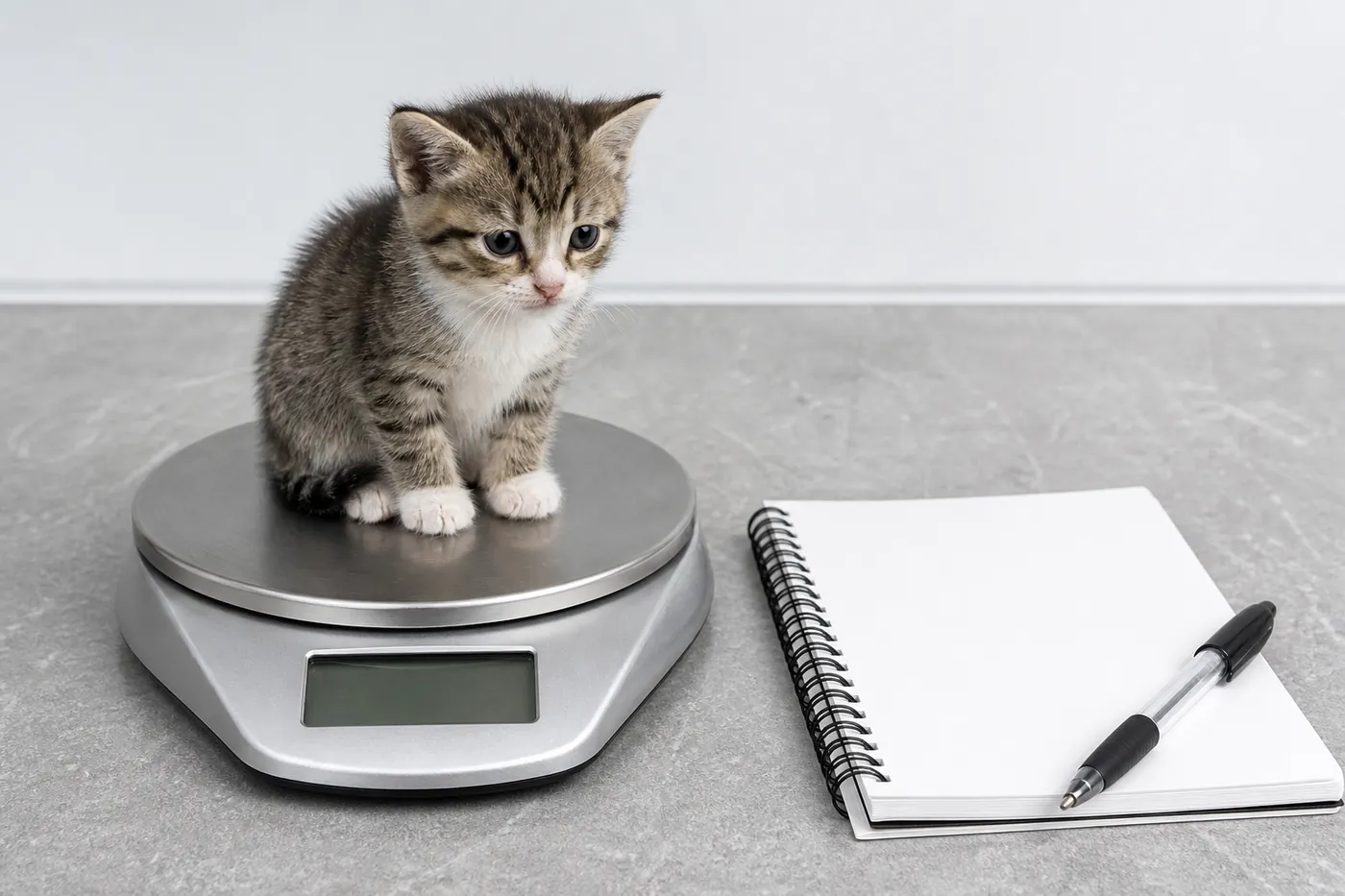
Weigh young kittens regularly, commonly daily during hand-rearing and weaning, using a suitable scale and consistent conditions. Record the trend and actual intake.
A kitten that stops gaining, loses weight or becomes less active needs prompt advice even if littermates are doing well.
Refusal, diarrhoea and other problems
Texture, temperature and access can affect acceptance, but refusal should not automatically be called fussiness. Check whether the kitten can reach the dish, is being displaced and is still taking enough milk.
Warm food gently and try a softer texture without forcing it.
Diarrhoea can have dietary, infectious or parasitic causes. Reducing the speed of a food change may help one cause but cannot diagnose the others.
Tell the practice about the whole litter and the mother, including any illness, milk-supply concerns or painful mammary glands.
Hand-rearing an orphaned kitten
Use a proper kitten milk replacer, mixed to its instructions, and obtain a feeding schedule for the kitten's age, weight and condition. Cow's milk and pet-shop treat milks are not interchangeable with it.
Formula that is too concentrated or diluted can cause problems.
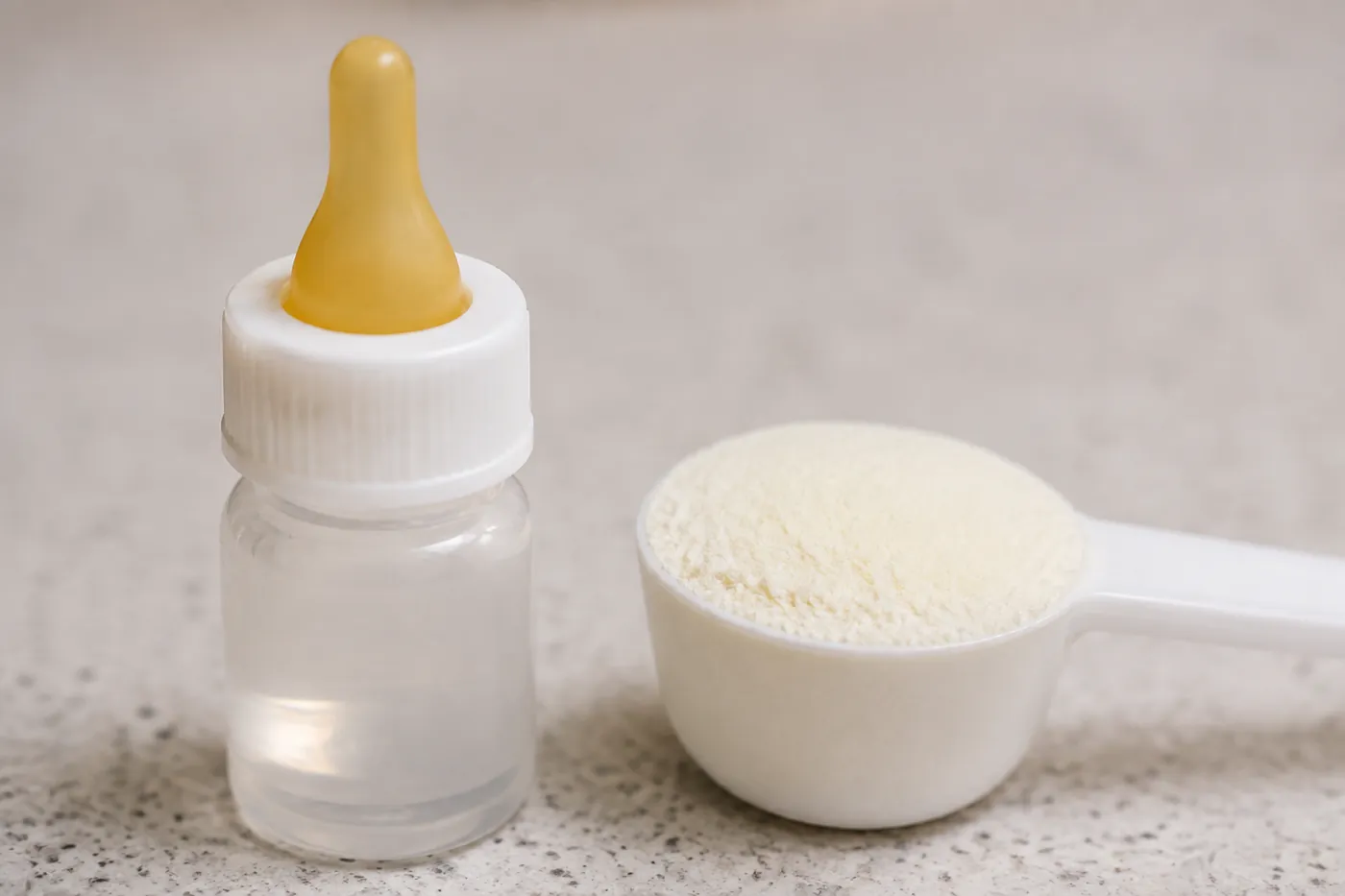
Bottle feeding is done with the kitten belly-down, not on its back, and without squeezing milk into the mouth. A cold or weak kitten needs prompt professional advice before feeding is attempted.
Very young kittens also need safe external warmth and help toileting until they can do it themselves.
Begin the dish transition gradually when ready, while checking that the kitten continues to obtain enough total nutrition. A fixed every-two-hour schedule for all kittens under three weeks is less useful than the age-specific plan and the measured response.
After the kitten is eating independently
Continue a complete kitten diet through growth and review portions as body size and condition change. Adult maintenance food is not a substitute for growth food.
Portion planning explains why meal frequency and the total daily allowance are different decisions.
Weaning completion is also different from readiness to leave the mother and litter. Social development continues around the feeding transition, and rescue or veterinary advice should guide rehoming.
Discuss vaccinations and parasite control with the practice rather than assuming a short two-dose schedule covers every kitten.
Food changes should remain gradual. Neutering and maturity prompt a review of intake, not an automatic overnight ration cut or a fixed extra year of kitten food based only on breed.
Common Questions
When do kittens start solid food?
Usually around four weeks, alongside nursing or appropriate milk replacer. Readiness, intake and growth guide the transition.
What if a kitten refuses solids?
Check texture, access and total milk intake. Seek prompt veterinary advice if it is not feeding adequately, loses weight or seems unwell rather than waiting several days.
Is weaning the same as rehoming readiness?
No. Independent eating is only one part of development; the kitten also benefits from appropriate time with its mother and litter.
Checked Against
Published 8 May 2026. Last updated .