Litter Training an Adult Cat: A Comfortable Start
Give an adult cat a comfortable tray, familiar substrate and safe access. Let it explore voluntarily and check for medical causes when toileting is difficult.
An adult cat can learn to use a litter tray when the tray, substrate and location feel usable and safe. Start with an accessible tray and a calm setup, and never punish an accident.
A cat that previously used a tray and has stopped also needs a medical assessment.
Establish what the cat already knows
Ask the previous carer or rescue which tray and litter the cat used, where it preferred to toilet and whether there were health concerns. Adult age, outdoor history or rescue status does not prove that the cat has never learned to use a tray.
A new home can change access, smells and perceived safety even for an experienced cat. If a previously reliable cat is having accidents, use the tray-refusal guide alongside a veterinary check.
Pain, urgency and difficulty entering a tray can look like a training problem.
Set up a tray the cat can use
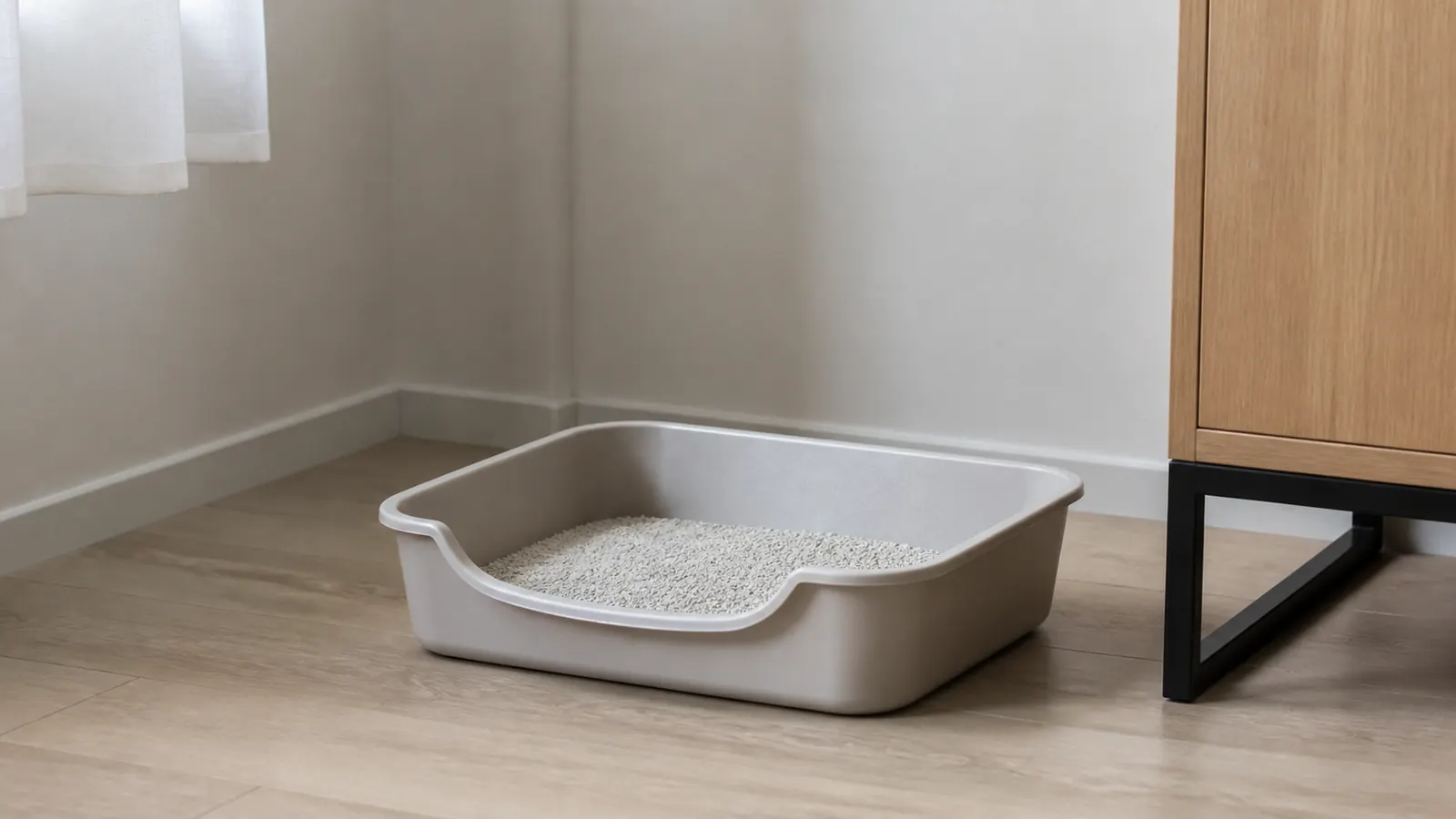
Choose a roomy tray that allows comfortable turning and digging, with an entrance suited to the cat's mobility. A large open tray is a useful starting point, but use a known successful setup when possible.
Offer unscented litter with a comfortable texture and keep the tray clean.
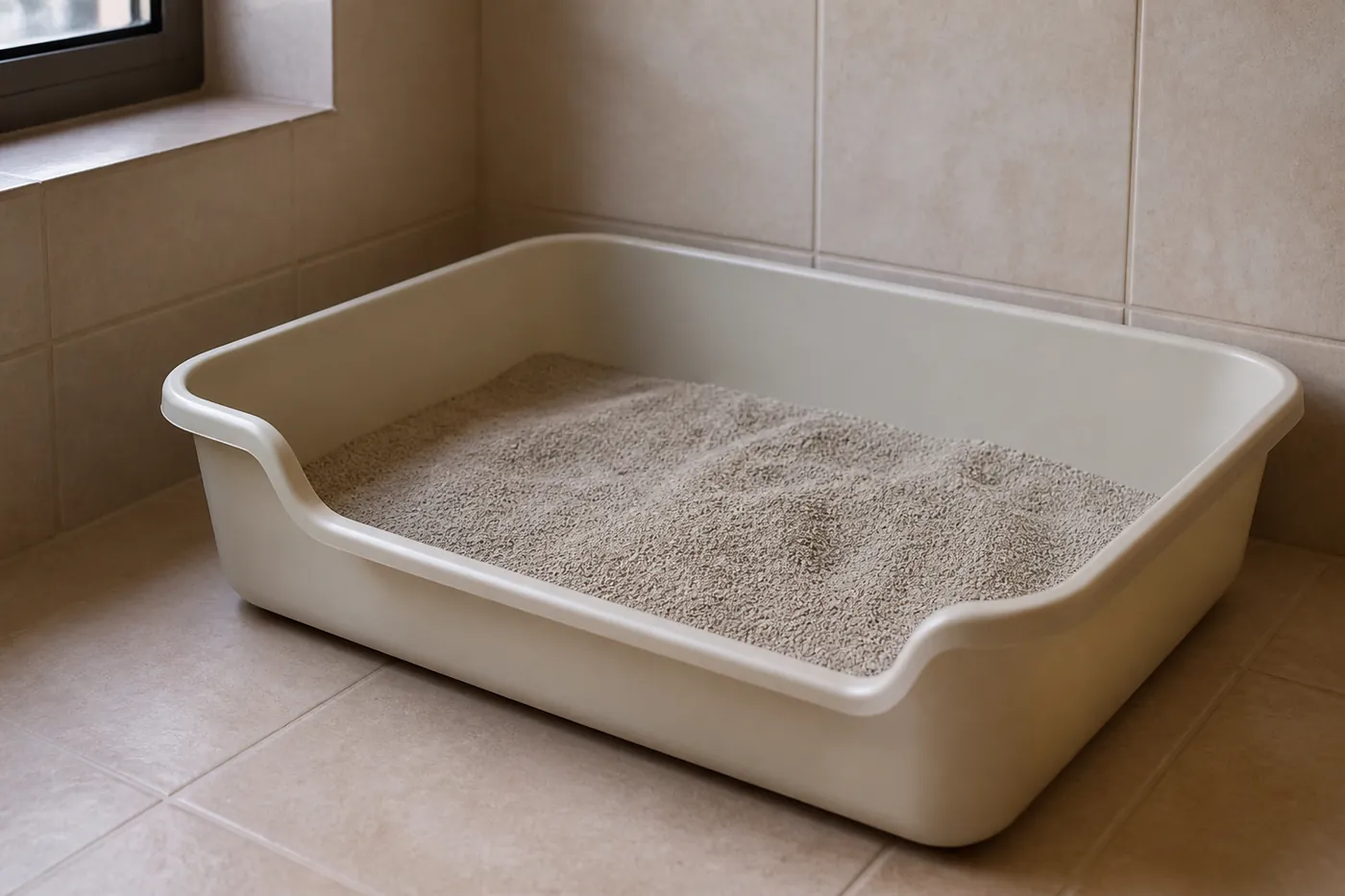
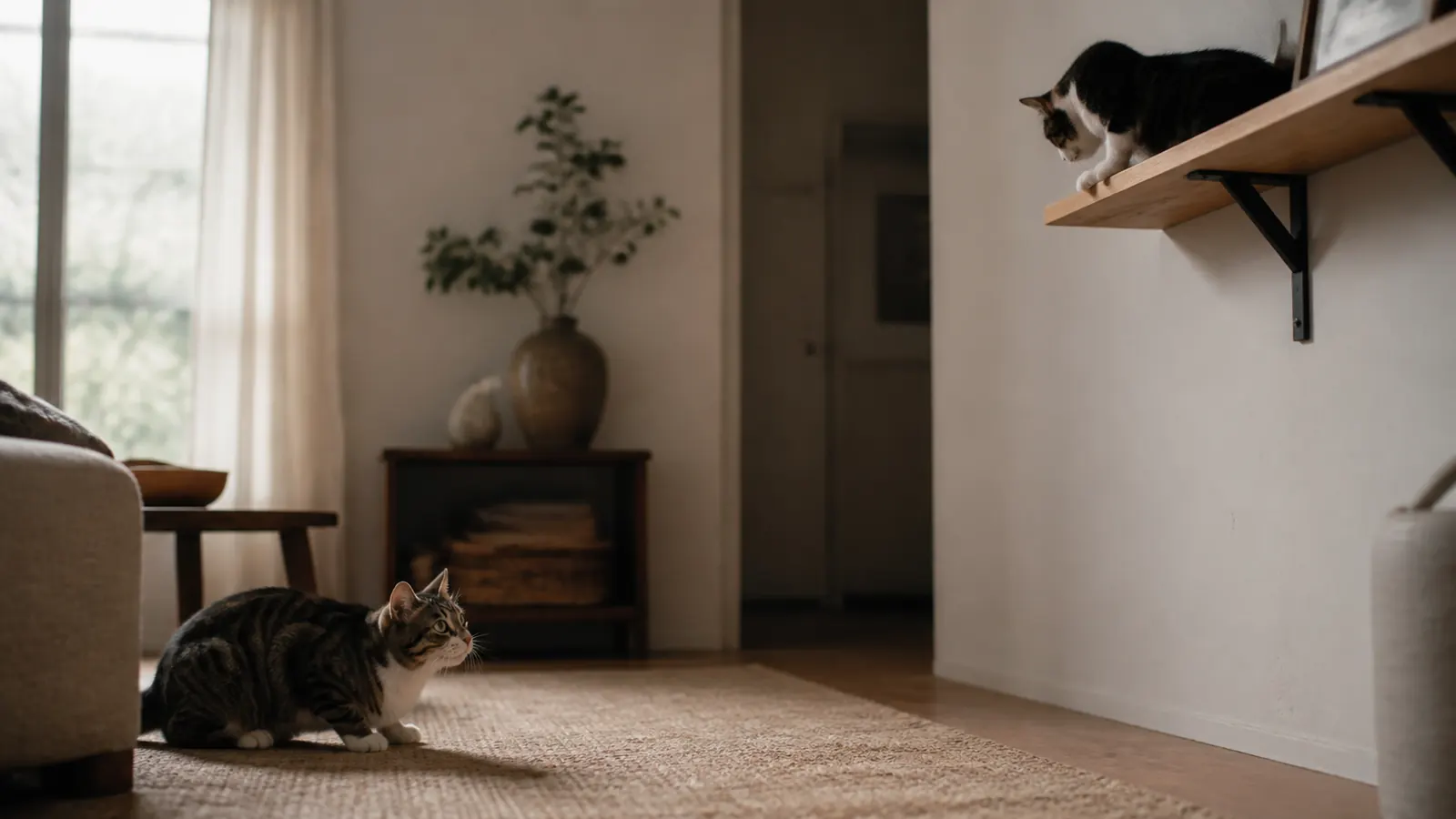
Place it somewhere quiet and reachable, away from food and water and without a noisy appliance starting beside it. Avoid a location where another cat can trap the user.
More than one convenient option may be necessary; tray number and placement matters more than putting all boxes together.
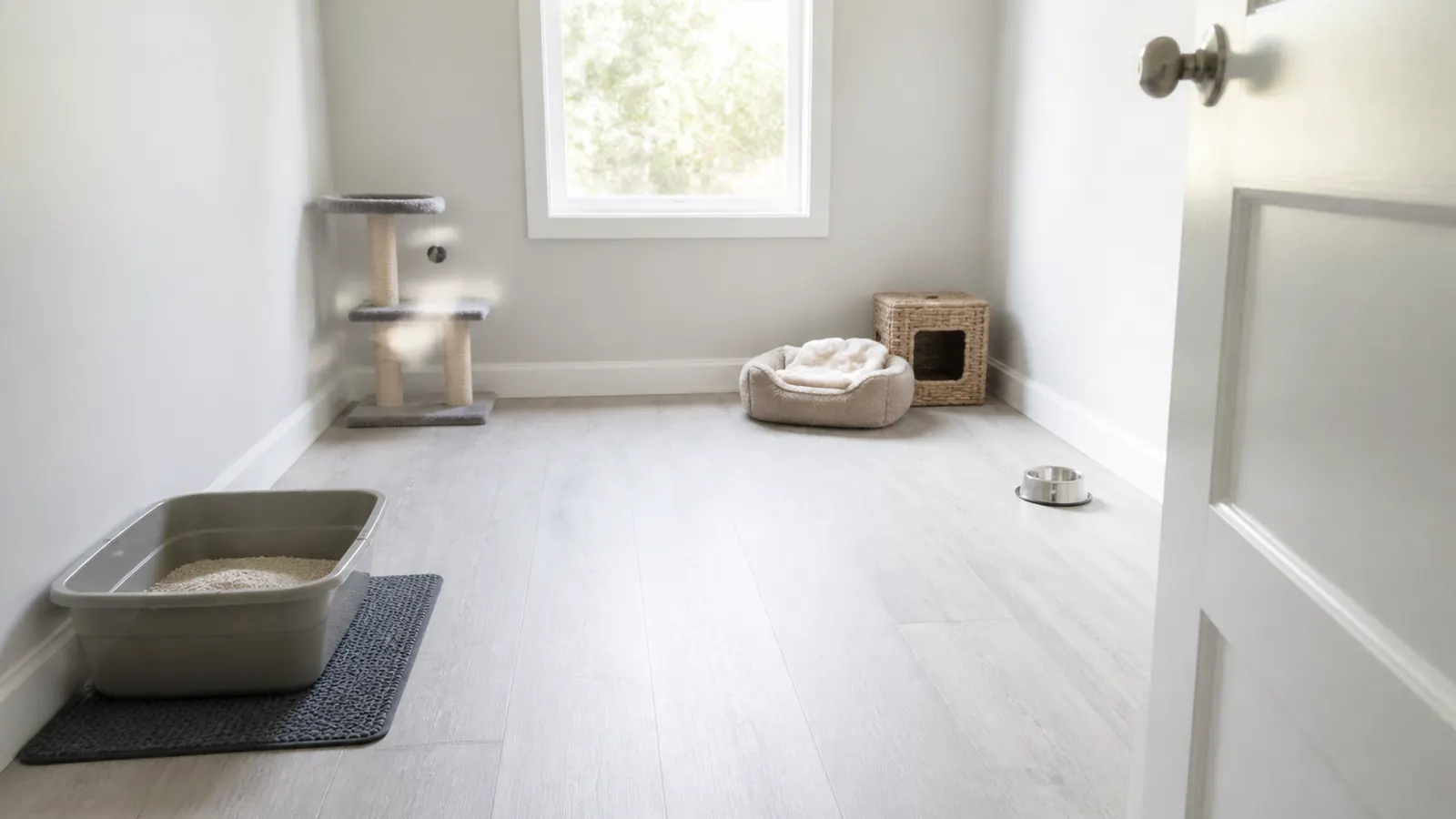
For a newly arrived cat, a quiet base room with separate food, water, rest, hiding and toileting areas can simplify orientation. It should meet the cat's needs and help it settle, not function as punishment.
Watch the individual's comfort rather than making every cat remain confined for a fixed number of days.
Let the cat discover it without force
Show the location calmly and allow exploration. You can lead the cat nearby when it is awake and relaxed, but do not hold it inside, move its paws through the litter or repeatedly interrupt it to demonstrate digging.
Many cats investigate and use an appropriate substrate without a taught sequence.
Keep access predictable, including overnight. If the cat chooses the tray, allow privacy; a quiet reward after it has finished and moved away may suit some cats, while an intrusive celebration can startle them.
Expand access to the home as the cat settles, retaining convenient trays in the areas it uses. Avoid suddenly moving the only successful tray far away.
If a new area leads to accidents, reassess its access and setup rather than treating exploration as a privilege the cat has failed to earn.
Offer a preference choice when needed
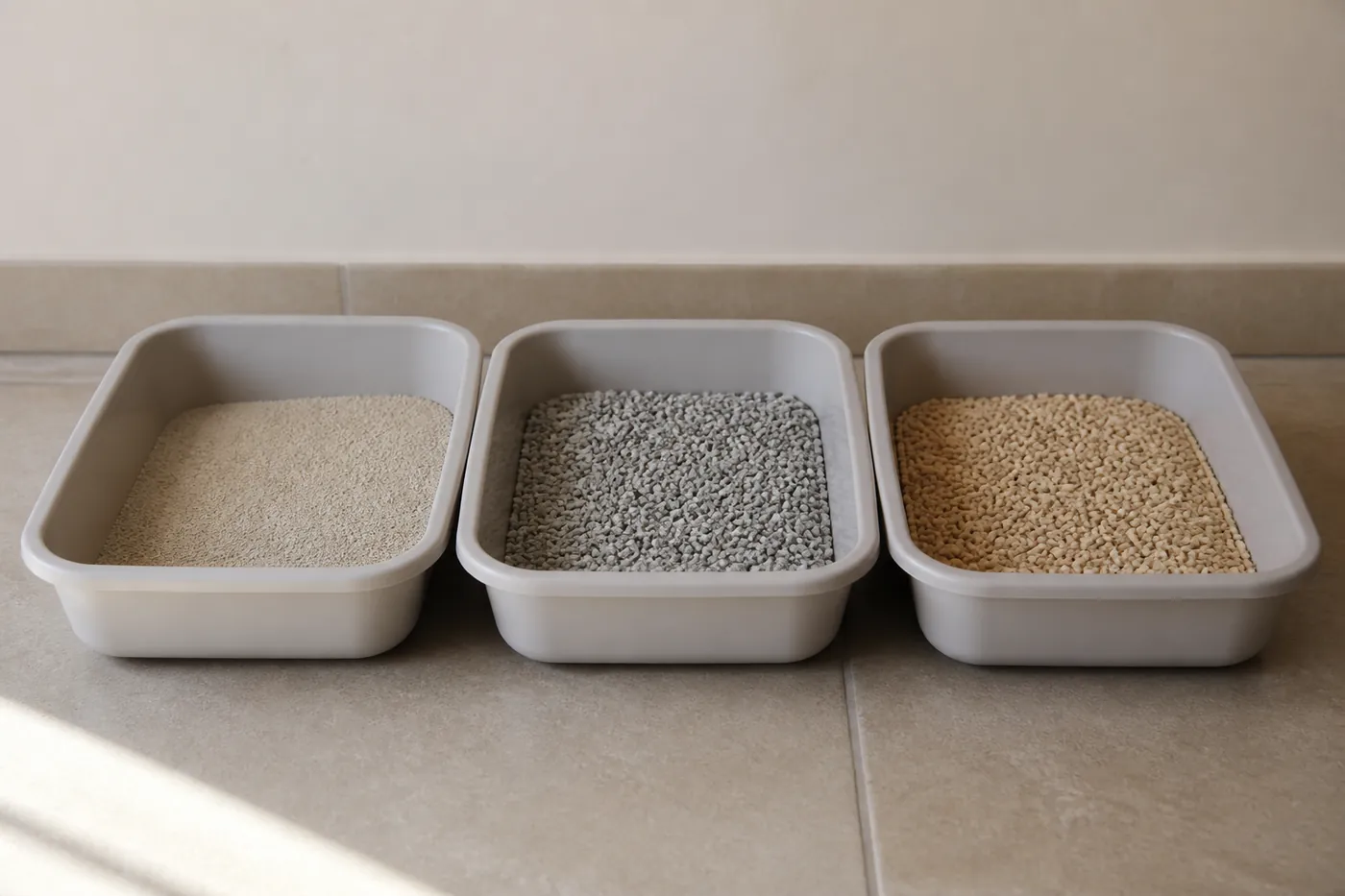
A cat accustomed to a different substrate may reject a new texture. Offer a small choice of clean trays with different cat-safe unscented litters while keeping placement otherwise comparable.
Record which is used. Do not replace every familiar option at once.
Garden soil can bring pesticides, parasites or other contaminants indoors, so do not use an unknown patch of soil as the default teaching material. Ask the rescue or veterinary team for a suitable transition if the cat has a strong outdoor-surface preference.
Perching on the edge, leaving quickly or toileting beside the box can help identify what to investigate, but none proves a specific cause. Tray dimensions, texture, cleanliness and pain all deserve consideration.
Handle accidents and stalled progress
Clean accidents thoroughly with a surface-compatible product intended for pet urine, following its instructions. The urine-cleaning guide covers odour removal.
Do not rub the cat's nose in it, shout or use deterrents that make the whole toilet area frightening.
Track urine and stool output, locations and timing. Small sprays on vertical surfaces may suggest marking, but posture and location are not a diagnosis, and marking can coexist with toileting problems.
Assess household stress and health rather than assuming an extra tray alone will solve every case.
Seek veterinary advice when the cat is not producing normal urine or stool, seems uncomfortable, eats poorly or continues to struggle with the setup. There is no two-week deadline that separates training from illness.
A cat hiding and withholding toileting needs help, not an indefinite wait for instinct to take over.
Common Questions
Can an older cat learn to use a tray?
Yes. Start with a comfortable accessible tray and a substrate it accepts, while checking for health or mobility problems.
Should I put its paws in the litter?
No. Let the cat explore and dig voluntarily; forced handling can make the tray unpleasant.
How long should I wait if it is not urinating?
Do not wait for training to work. Repeated attempts with little or no urine need immediate veterinary help, and uncertain output or discomfort warrants prompt advice.
Checked Against
Published 2 September 2026. Last updated .