Can Cats Eat Eggs, and Is Raw Egg Safe for Them?
Egg is the clearest example of a food whose verdict turns entirely on how it is prepared. Cooked, it is a reasonable occasional treat. Raw, it carries two distinct risks.
The same food can be fine or unsafe depending on how it is prepared and served.
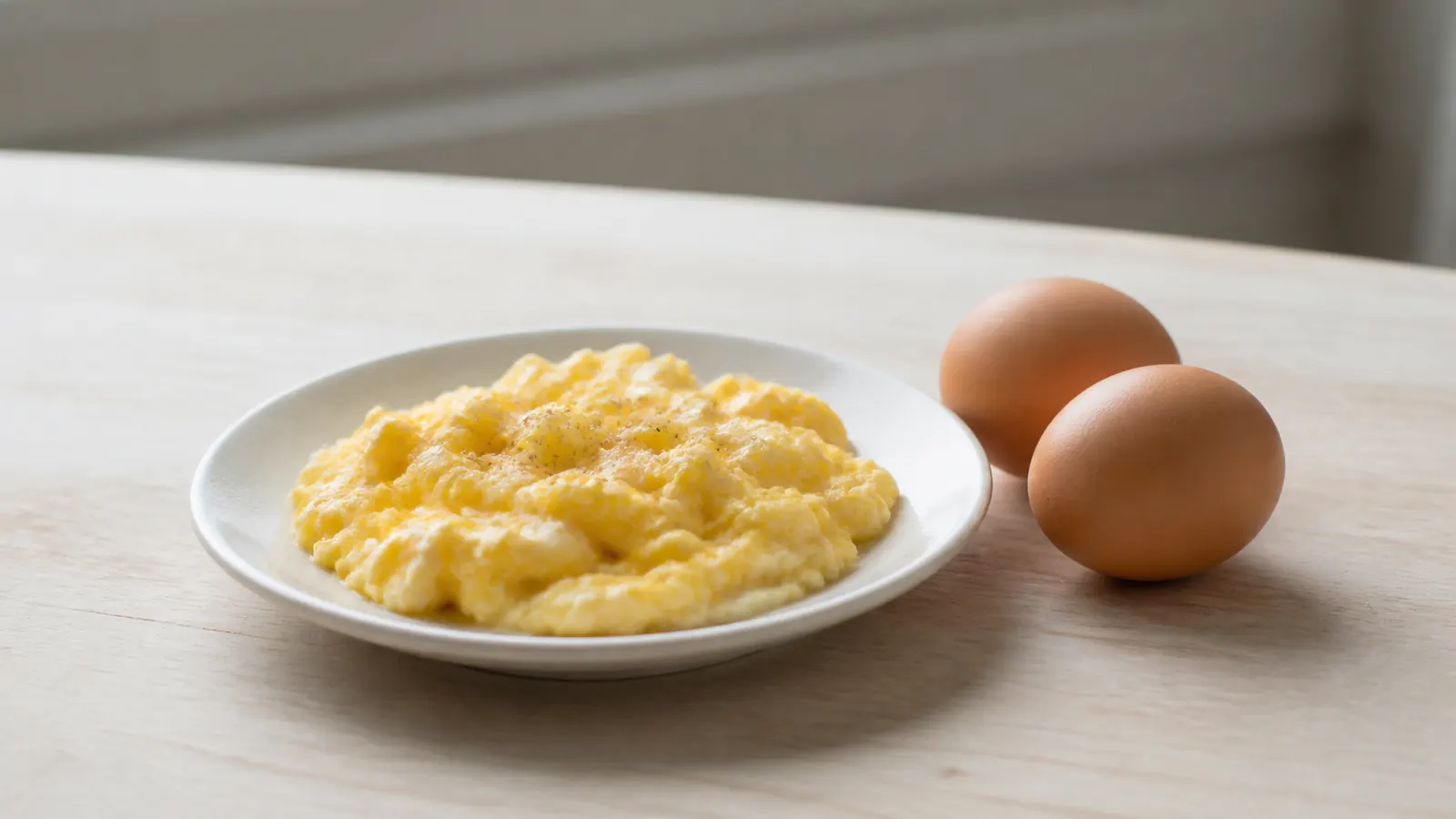
A small amount of plain, fully cooked egg can be an occasional treat for a healthy cat. Egg alone is not a complete feline diet.
The reason this sits at preparation-dependent rather than generally safe is that raw egg is a different food from a risk point of view.
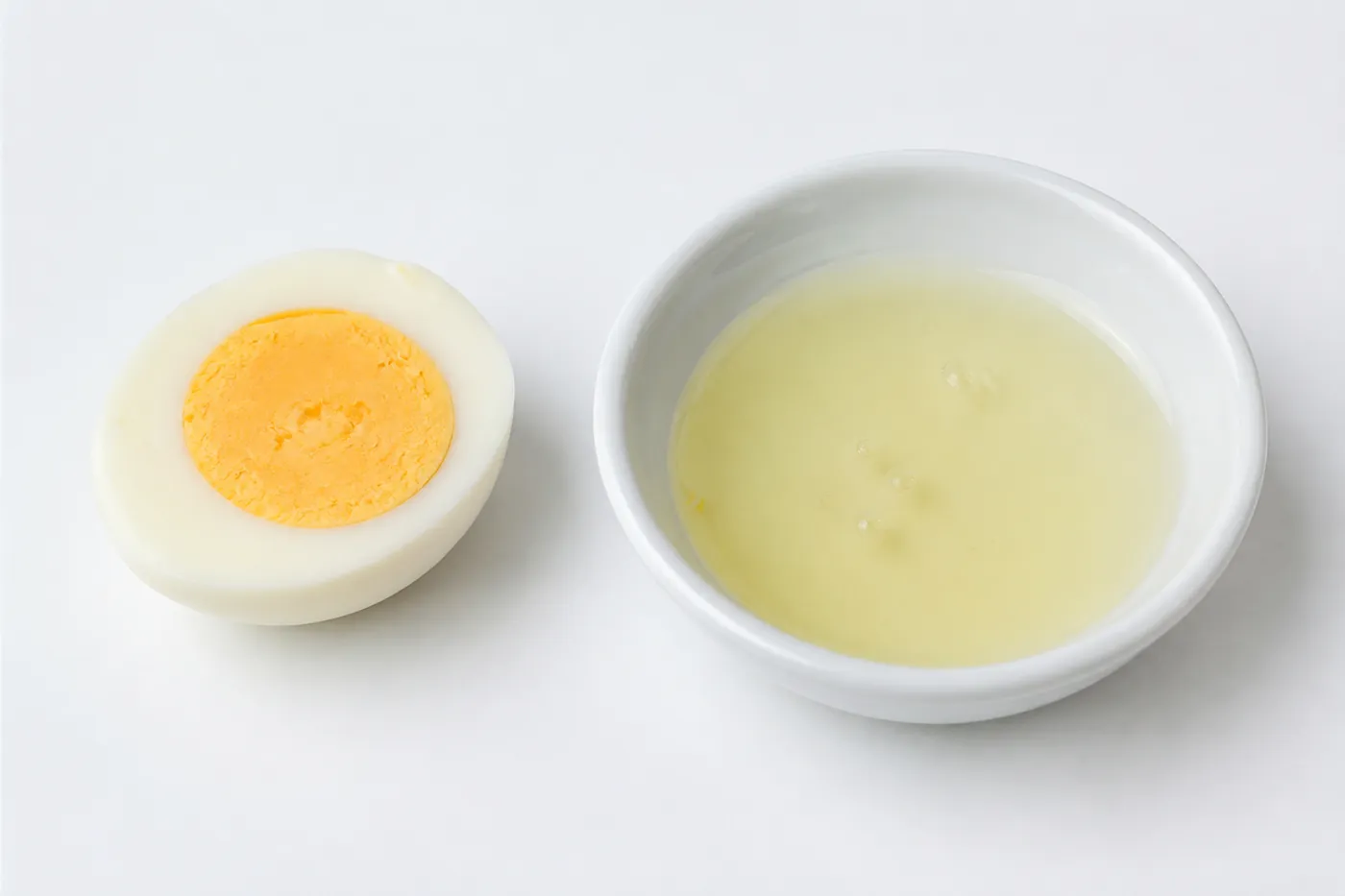
Cooked egg is the safe form
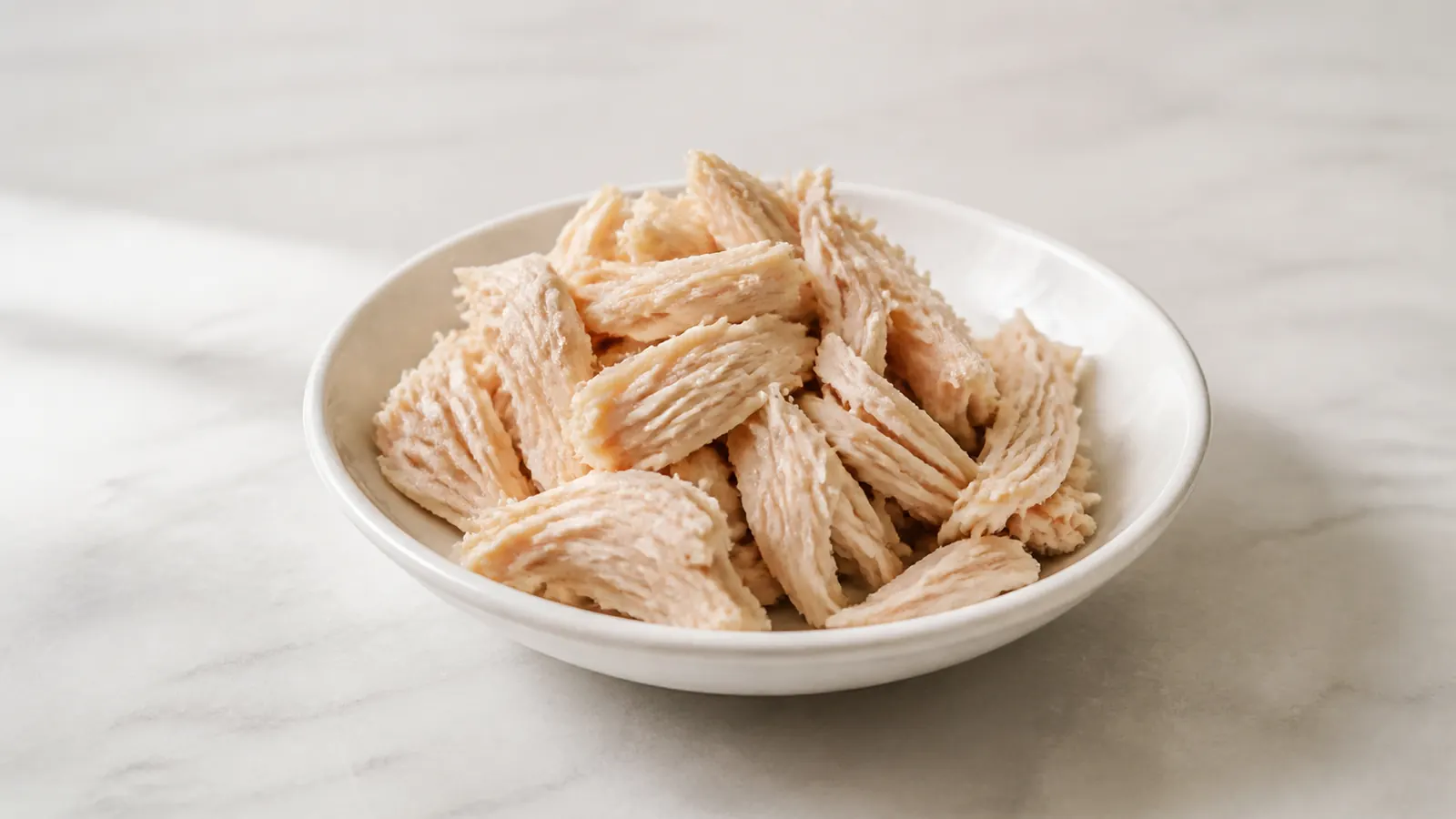
The safe form is white and yolk both cooked until firm, with no salt, seasoning, butter or milk, cooled and offered as a small chopped or mashed amount.
Cooking reduces bacterial risk and denatures avidin in the white. A soft yolk still matters, because raw yolk can carry bacteria even though avidin is mainly in the white.
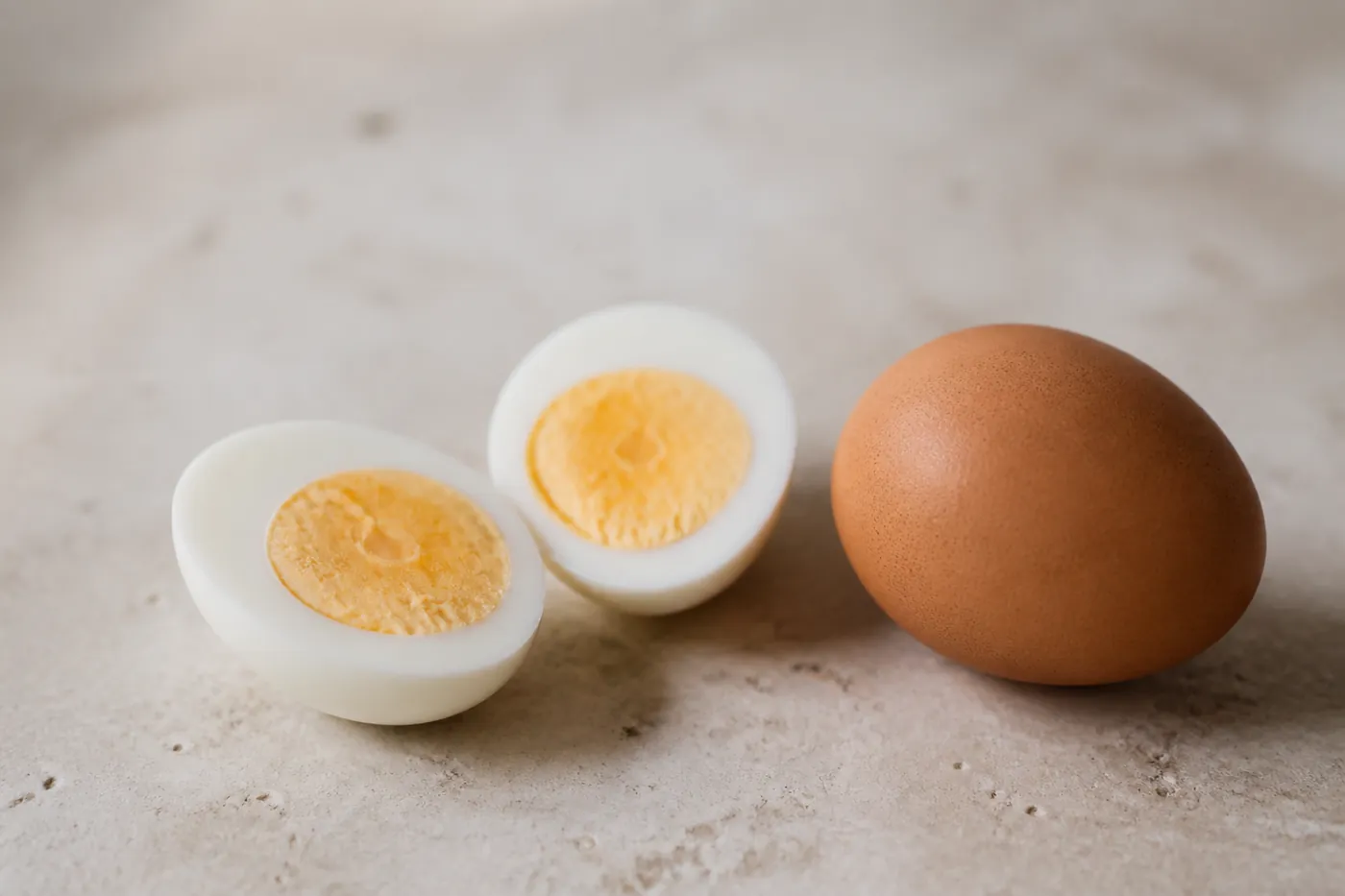
Raw egg white blocks a vitamin
Raw egg white contains avidin, which binds the vitamin biotin. Repeated feeding of raw whites can interfere with biotin availability; a single lick does not establish that a deficiency has occurred.
Cooking denatures avidin. There is no need to balance raw white against yolk at home, since cooking also addresses a separate bacterial hazard.
Changes in skin or coat have many possible causes and need assessment rather than a home diagnosis of biotin deficiency.
Raw egg also carries bacteria
Raw eggs can carry salmonella, which can make a cat unwell and can spread to people handling the bowl or the litter tray. That risk is higher in kittens, older cats, and any cat whose immune system is suppressed.
An infected cat may show vomiting, diarrhoea, fever, and a loss of appetite, and some cats carry and shed the organism without looking ill at all. A healthy-looking cat shedding salmonella is the version that matters most to a household, because nobody knows to take precautions.
Transmission to people happens through the litter tray, the food bowl, and the cat's coat rather than through the air. Anyone emptying a tray without washing their hands afterwards is the realistic route.
That is why the recommendation is stronger in some households than others. Homes with infants, adults over about sixty-five, pregnant women, or anyone on immunosuppressive treatment carry a materially higher consequence from the same exposure.
Freezing suspends bacterial growth and kills some organisms, but it is not a reliable kill step, and a thawed raw egg is still a raw one.
| Form | Verdict | Why |
|---|---|---|
| Hard boiled, plain | Suitable as a small treat | Cooked through and handled hygienically |
| Scrambled, no additions | Fine in small amounts | Same, provided nothing is added |
| Fried in butter or oil | Not recommended | Unnecessary fat load |
| With milk, salt, or seasoning | Not recommended | Milk and salt are the problem, not the egg |
| Soft boiled or runny | Not recommended | Cook both white and yolk firm |
| Raw white or whole raw egg | Avoid | Avidin plus bacterial risk |
| Egg shell, ground | Ask a vet first | A calcium source only inside a planned diet |
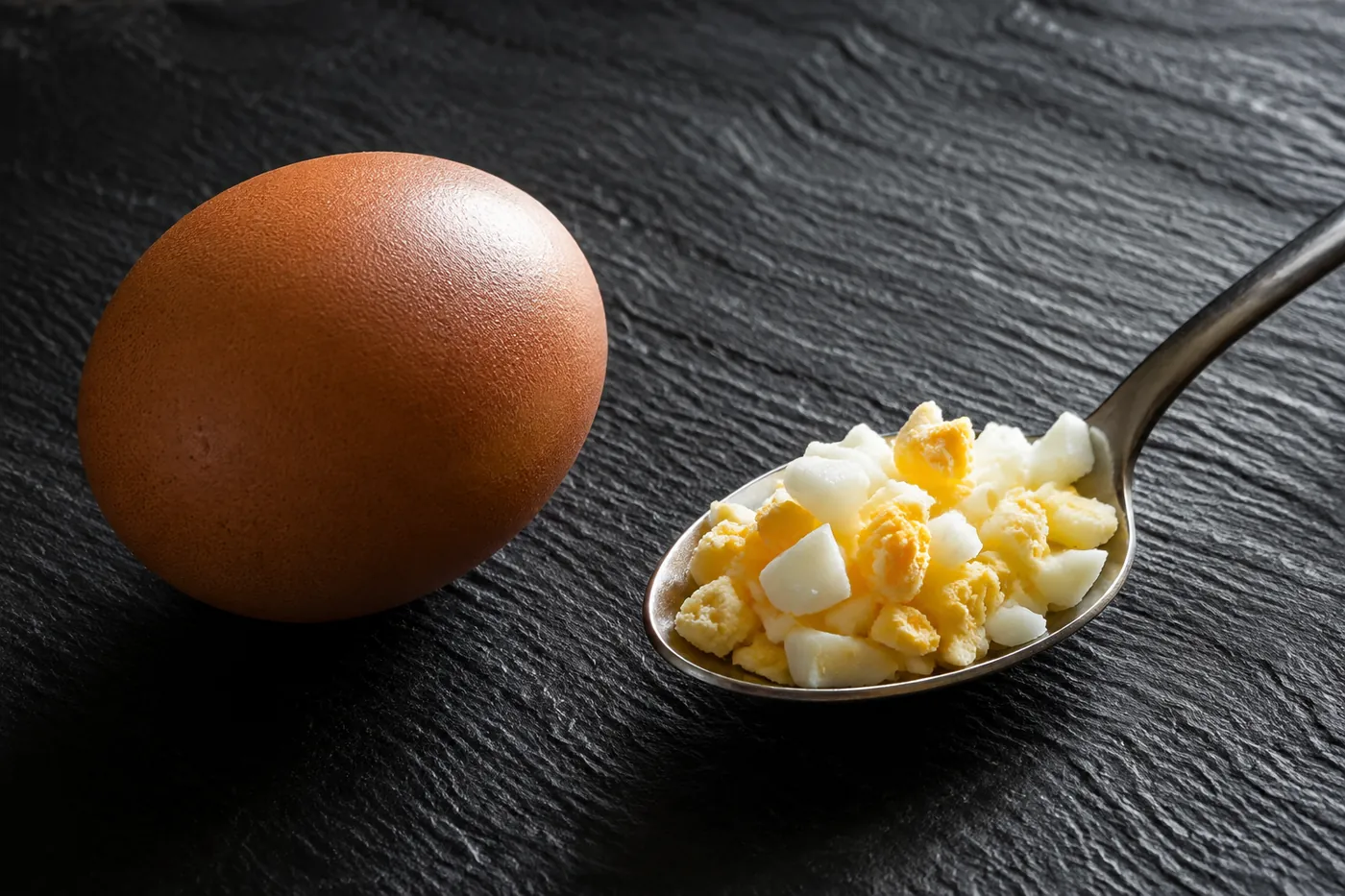
What egg does and does not provide
Cooked egg supplies protein and calories, but it is not a complete feline diet. A cat needs nutrients in particular amounts and proportions, which a complete food is formulated to supply.
A small amount of egg is an optional extra within the day's food allowance, and an already complete diet does not need it.
A cat eating poorly needs veterinary assessment and a feeding plan. Do not rely on egg as a recovery diet or delay care while trying different human foods.
How much, in calories rather than eggs
All treats together belong within 10% of daily calories, or the smaller allowance your vet recommends. Egg shares that allowance with chicken, treats used for training and food used to give tablets.
A whole hen's egg contains roughly 70 calories, depending on size and preparation, which is a substantial amount for a cat. A first serving is therefore a small taste, and its calories come off the daily portion.
The allowance depends on the cat's needs, so there is no universal teaspoon or twice-weekly ceiling. Cats on calorie-controlled feeding or a prescribed diet may need a different treat altogether.
Preparing it properly
The preparation matters more than the choice of egg, and most of the mistakes are things added rather than the egg itself.
Cooking the white through does two jobs at once: it kills salmonella, and it denatures the avidin that would otherwise bind biotin, which is why a raw white is worse than a raw yolk.
Temperature matters for a mechanical reason. Cats will not eat food much above body heat and can burn the tongue on it, and a mouth that has been burned once makes the next offer harder.
Piece size is about how cats eat rather than how they chew. A cat swallows lumps largely whole, so cooked egg is cut down to reduce the gulping rather than to help digestion.
- Cook both the white and yolk until firm.
- Add nothing at all: no butter, oil, salt, pepper, milk, or cheese.
- Let it cool to room temperature before offering it, because cats refuse hot food and can burn a tongue on it.
- Cut or mash it into pieces small enough to swallow without gulping.
- Offer a teaspoon on its own or mixed through the usual meal, rather than leaving it down for grazing, and take the calories off that meal.
- Refrigerate leftovers promptly and use them within two days as a conservative household limit, discarding any portion left out more than two hours, or one hour above 32°C (90°F).
Onion and garlic deserve a specific mention because they turn up in omelettes, in shop-bought egg sandwiches, and in seasoning blends. Both damage feline red blood cells, and powdered forms are the most concentrated of all.
Egg allergy, and how it is actually diagnosed
A small number of cats react to egg, and it is worth knowing what that looks like rather than assuming any upset is an allergy.
- Itching, particularly around the head, neck, and ears
- Overgrooming, or bald patches the cat has created itself
- Small crusting sores on the skin
- Vomiting or loose stools that recur with the same food
- Signs that persist year round rather than seasonally
Food allergy is the minority explanation for an itchy cat. Fleas and environmental allergies together account for far more, and a cat can have more than one at once.
A genuine diagnosis comes from an elimination diet: a hydrolysed or novel-protein food fed exclusively for several weeks, with nothing else at all, then the suspect food reintroduced to see whether the signs return. Blood tests marketed for food allergy do not answer this reliably.
That is why an improvement after switching foods is weak evidence. Several ingredients may have changed at once, so the improvement does not identify the cause.
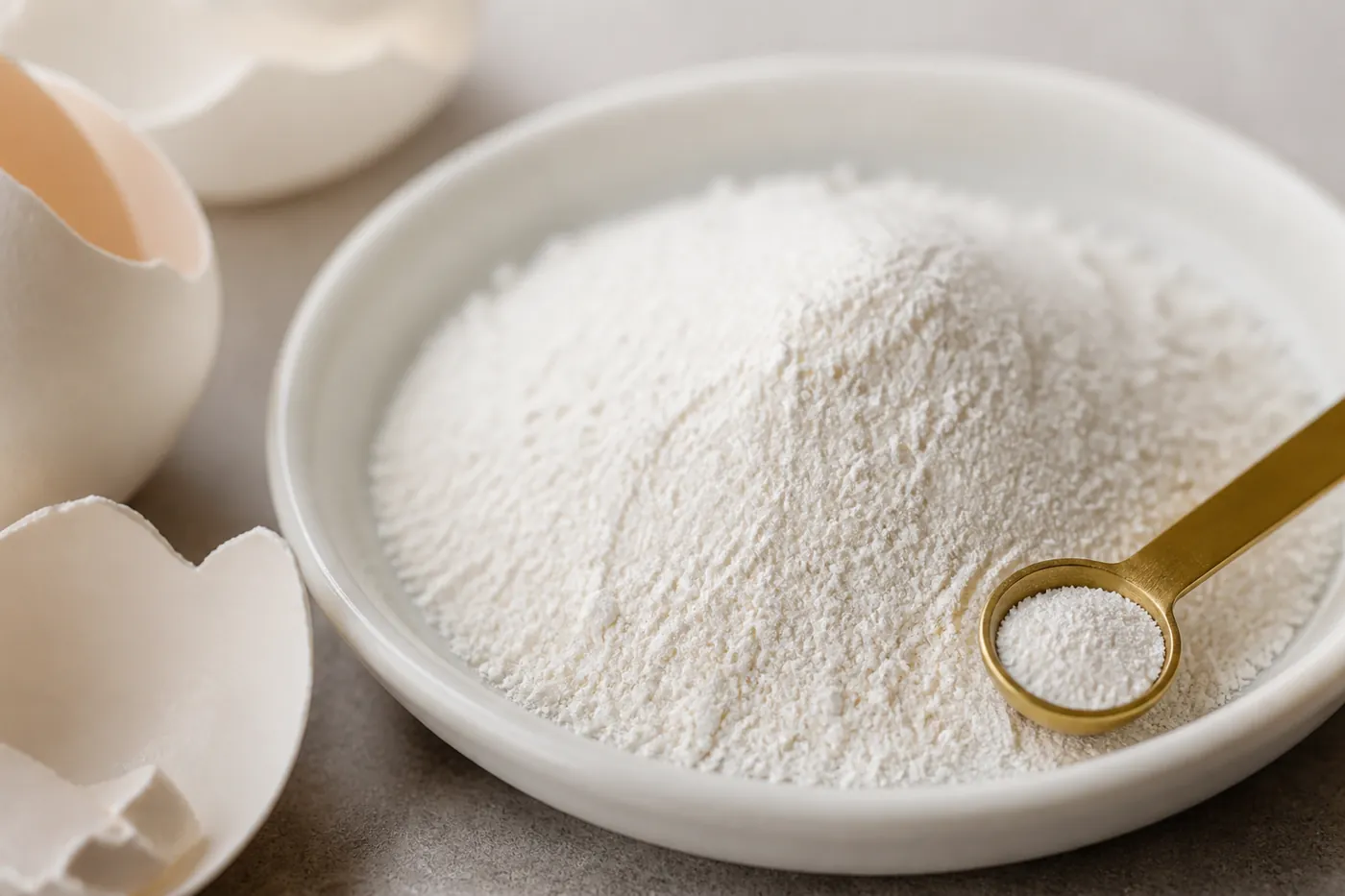
Eggshell as a calcium source
Ground eggshell is often suggested as a calcium supplement for home-fed cats, and it is the part of this subject where confident advice does the most harm.
Shell is largely calcium carbonate and it does supply calcium. The difficulty is that a home diet needs calcium in a specific ratio to phosphorus, and muscle meat is very high in phosphorus, so the amount of shell required is a calculation rather than a spoonful.
Too little leaves the ratio skewed, which in a growing kitten produces weak bone, and too much interferes with the absorption of other minerals. Neither error announces itself for months.
Shell also has to be sterilised and ground to a fine powder, because fragments are sharp and a coarse grind is not absorbed usefully.
Cats where the answer changes
Kittens are growing, and their calcium and phosphorus balance matters more than an adult's. A treat that displaces a portion of a growth diet is a bigger intervention in a kitten than in an adult cat.
Cats with kidney disease are usually on a diet formulated to a specific phosphorus level, and egg is not low in phosphorus, so adding it undoes part of what the therapeutic food is doing.
Overweight cats have the least room in the calorie budget, and a third of a day's intake in one treat is the clearest possible example of why.
Diabetic cats are on a controlled feeding routine, and unscheduled additions make the insulin dose harder to match to the food.
Common Questions
Can cats eat raw eggs?
No. Raw egg white contains avidin, which blocks biotin absorption, and raw eggs can carry salmonella that also puts the household at risk. Cooking removes both problems.
Is egg yolk safe on its own?
Cooked yolk is safe in small amounts. Raw yolk avoids the avidin problem but still carries the bacterial risk, so cooked remains the sensible form.
Can eggshell be given as a calcium supplement?
Ground eggshell is sometimes used as a calcium source, but only inside a diet a veterinarian has formulated. Adding calcium to an already complete food unbalances it.
Checked Against
Published 14 August 2026. Last updated .