Can Cats Eat Chocolate? What to Do After an Exposure
Chocolate can poison cats. Call a veterinarian after a possible exposure; the product, amount, body weight and timing determine the advice.
Known to poison cats. Treat any exposure as a veterinary matter.
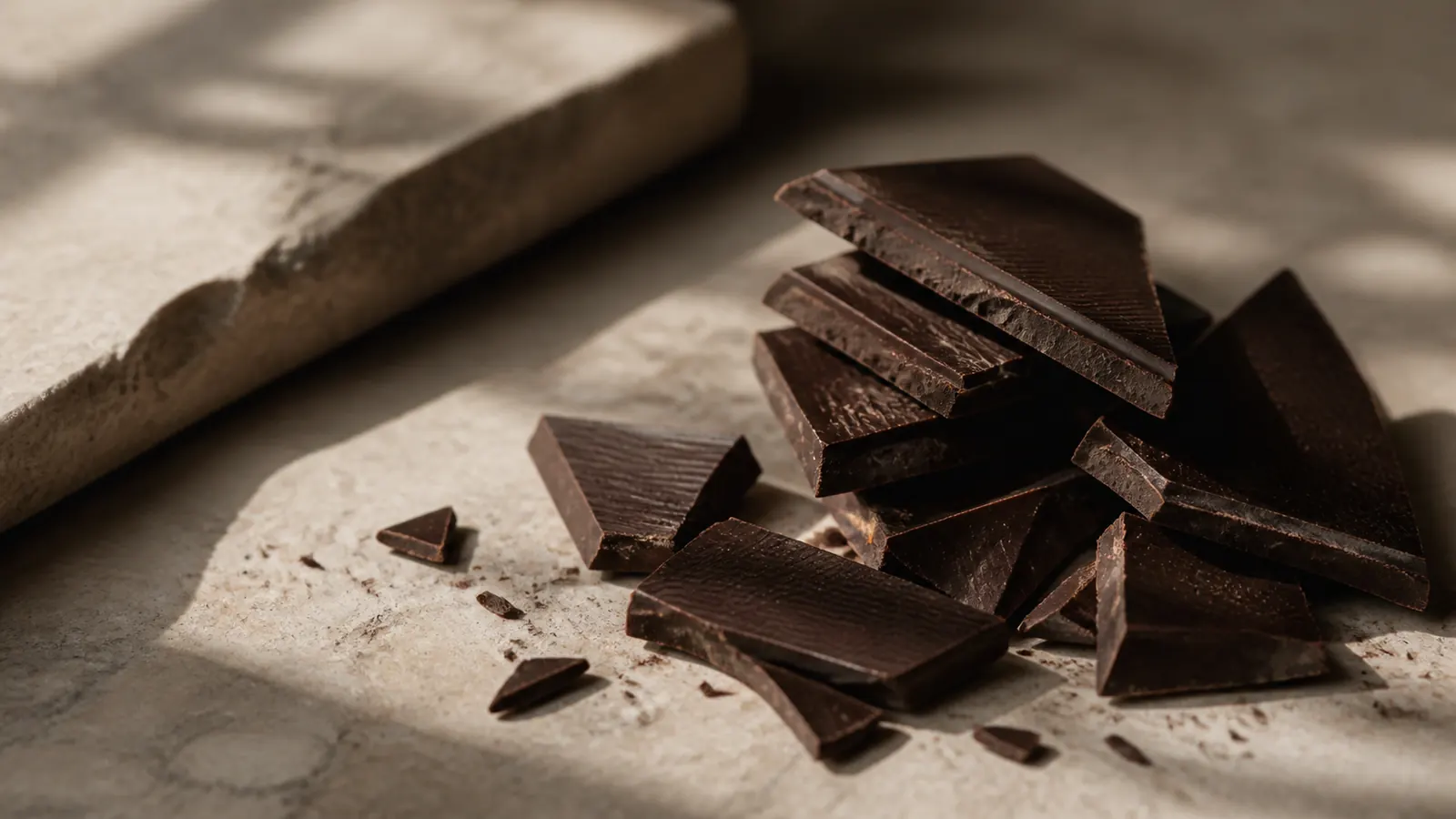
Cats should not eat chocolate. Its theobromine and caffeine can poison them, and the risk depends on the chocolate, the amount swallowed and the cat's weight.
If your cat may have eaten some, call a veterinarian or animal poison service now with the wrapper; do not wait for symptoms.
What to do after an exposure
Move the remaining chocolate out of reach and keep your cat where you can observe it. Call while you collect the product details, rather than delaying the call until you have calculated a dose.
A missing piece gives an upper estimate of exposure, not proof that the whole piece was swallowed.
- Tell the practice the product name, cocoa percentage if shown, and the greatest amount that could be missing.
- Give the time of exposure or the last time the chocolate was intact, plus your cat's approximate weight.
- Mention wrappers, ribbon and other ingredients that may have been swallowed.
- Follow the practice's advice about immediate travel and take the packaging with you.

Do not give hydrogen peroxide, salt, charcoal or other home remedies, and do not try to make your cat vomit. A veterinarian decides whether reducing absorption is appropriate; an unsteady or drowsy cat can inhale vomit into its lungs.
Why chocolate can poison a cat
Theobromine and caffeine are stimulants called methylxanthines. They affect the nervous system and the heart, so poisoning can involve both abnormal behaviour and a dangerous heart rhythm.
A cat's small body means that a modest amount of concentrated cocoa can deliver a substantial dose.
The amount of cocoa changes the exposure dramatically. Cocoa powder and unsweetened baking chocolate are generally more concentrated than ordinary milk chocolate.
White chocolate contains very little methylxanthine, but that does not make a dessert containing it suitable cat food or rule out a problem from other ingredients.
| Product | What matters for the call |
|---|---|
| Cocoa powder or baking chocolate | Highly concentrated; give the product and amount without waiting for signs |
| Dark chocolate | Cocoa content varies; photograph the label rather than describing it only as dark |
| Milk chocolate | Less concentrated than many dark products, but a large amount can still matter |
| White chocolate | Very little methylxanthine; report the whole product and any swallowed packaging |
| Cake, mousse or drinking chocolate | Recipes and serving sizes vary; the chocolate content cannot be judged from colour alone |

Is one square enough to cause poisoning?
There is no reliable rule based on squares, teaspoons or a percentage printed on the front of a bar. Squares vary in weight, cocoa products vary in stimulant concentration, and individual cats differ.
The familiar 20 mg/kg mild-sign figure in veterinary chocolate references describes dogs; it should not be presented as a proven feline safety threshold.
A veterinarian combines the product information with body weight and timing to decide whether observation, examination or treatment is needed. This is also why a tiny lick and a missing bar should not receive identical reassurance from a web page.
A call can establish that an exposure is low risk without requiring you to guess at home.
Signs that need immediate care
Vomiting, diarrhoea, restlessness, increased drinking and a faster heartbeat can occur after chocolate exposure. More severe poisoning can cause tremors, poor coordination or seizures.
Signs may take hours to appear, and their order and duration are not a dependable timetable for an individual cat.
Other ingredients and packaging
Tell the vet about alcohol, coffee, raisins or any unfamiliar filling, because the assessment concerns the whole product. Xylitol's severe low-blood-sugar toxicity is established in dogs and should not be transferred to cats; ASPCA toxicology guidance describes gastrointestinal upset as the concern in cats.
A sugar-free label still does not tell you whether a chocolate product is safe.
Foil, plastic and ribbon create a separate foreign-body risk. Report anything missing even if the chocolate exposure seems small.
Never pull string from a cat's mouth or anus; attached material can injure the intestine. The amount and type of packaging determine the concern, rather than every lick of an empty wrapper being an obstruction.
What treatment and recovery involve
There is no single antidote for chocolate poisoning. Depending on timing and the cat's condition, a practice may reduce absorption and provide fluids, heart monitoring and medication for tremors or seizures.
These decisions require clinical supervision, especially when the cat is already showing neurological signs.
Early assessment gives the practice more options. Many treated animals recover, but a fixed overnight stay or a guarantee of no lasting harm would be misleading: the dose, complications and response to treatment determine monitoring and prognosis.
Continue any discharge plan and contact the practice if signs return.
Preventing another exposure
Keep bars, baking ingredients and chocolate gifts in a closed cupboard that your cat cannot open. Clear spills promptly, including powder on a worktop or floor, because a cat can groom material from its paws.
Put visitors' bags away and check food left beside sofas or beds.

Cats lack a working sweet-taste receptor, but that does not prevent them from investigating food or licking a creamy dessert. Their interest is not a useful safety test.
Cow's milk also has its own digestive risks, so a milk-based chocolate drink is not an appropriate treat.
Common Questions
My cat licked a chocolate wrapper. What should I do?
Remove it and call your vet with the product and likely amount. A lick can be a much smaller exposure than a missing piece, but the wrapper and its contents need assessing before deciding to monitor at home.
Is white chocolate toxic to cats?
It contains very little theobromine or caffeine. It is still not an appropriate treat, and other ingredients or swallowed packaging can change the advice.
Checked Against
Published 14 July 2026. Last updated .