Can Cats Eat Canned Tuna, and How Much Is Too Much?
Plain canned tuna can be an occasional treat for a healthy adult cat. Check ingredients and completeness; human tuna cannot replace a balanced feline diet.
Tolerated in small, occasional portions, but a problem in quantity.

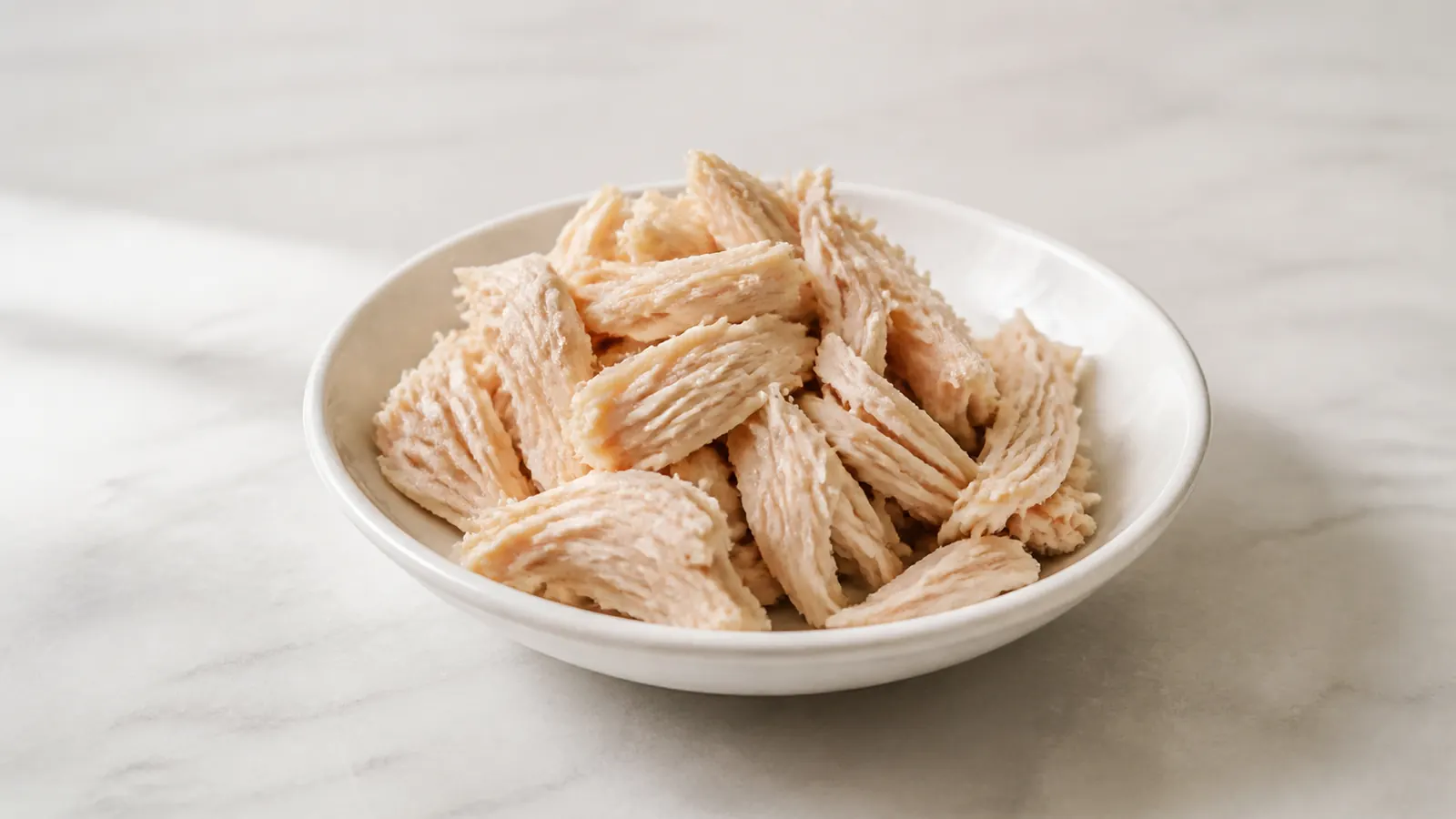
A healthy adult cat can usually have a small taste of plain canned tuna as an occasional treat. Human tuna is not a complete feline diet.
Check both the ingredients and the nutritional-adequacy statement: a tin sold for cats may also be complementary food rather than a complete meal.
What counts as suitable tuna?
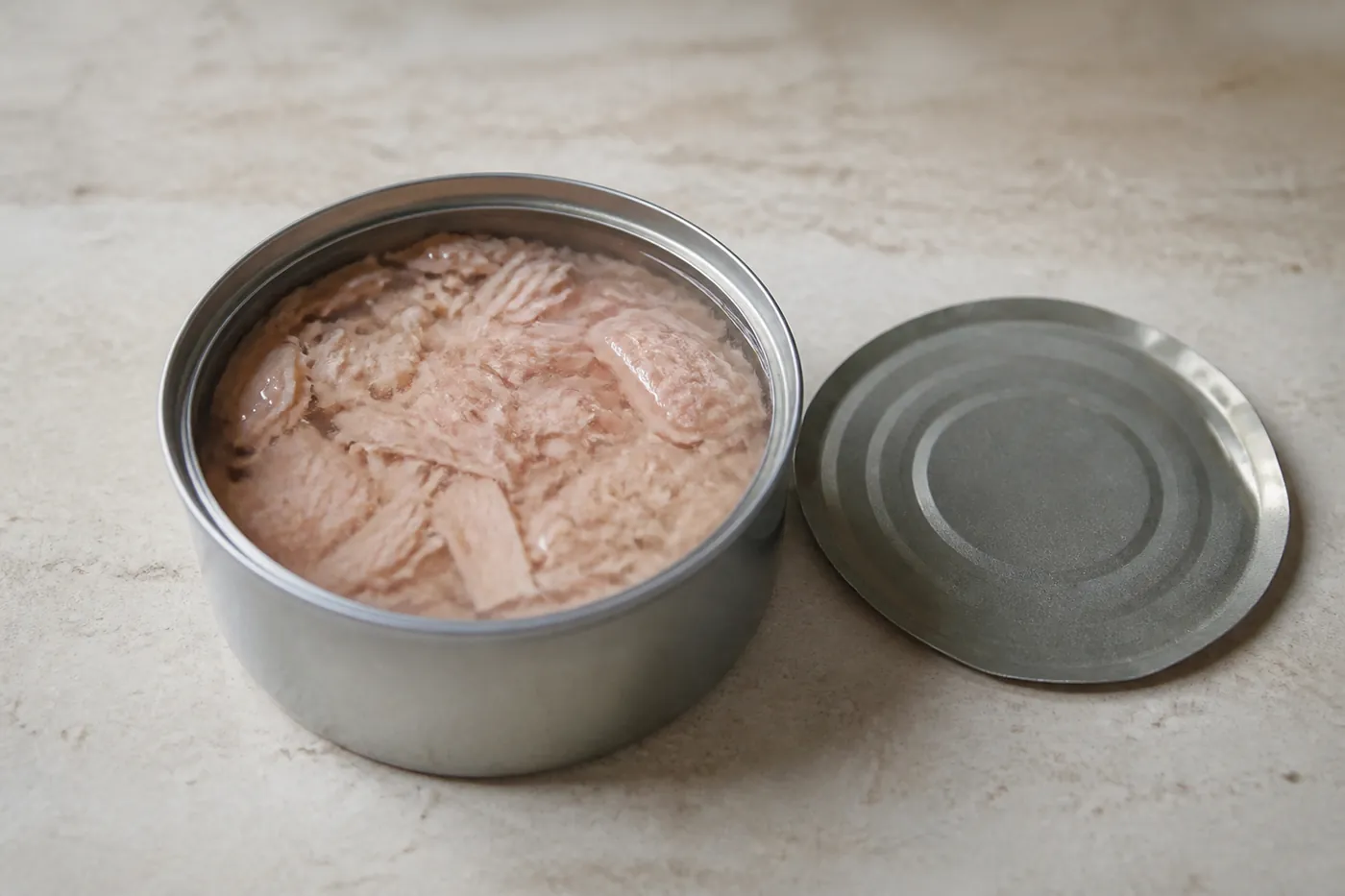
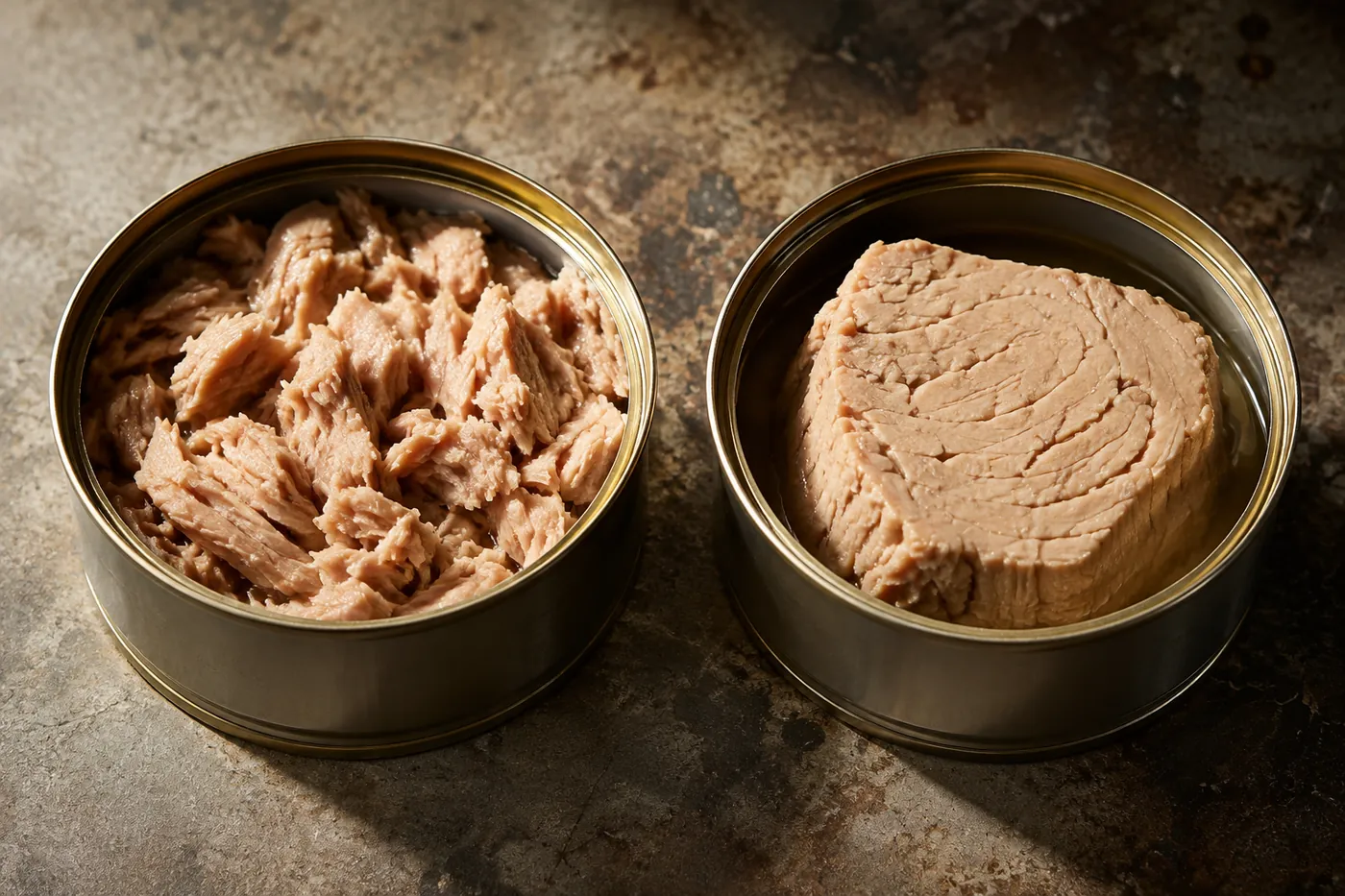
Choose plain tuna in water without added salt, flavourings or sauces. Onion and garlic ingredients make a product unsuitable, and oil adds calories without making the fish more nutritionally complete.
Tuna in brine is an unnecessary salty choice when an unseasoned alternative is available.
Drain the fish and offer a little separately or as a topping on food your cat already accepts. A tuna salad, sandwich filling or seasoned pouch is a different product: the word tuna does not cover everything mixed with it.
Why it cannot replace cat food
Muscle meat does not provide the balance of calcium, vitamins and other nutrients a cat needs from its daily diet. A fish-heavy unbalanced diet can create deficiencies even when the cat enjoys eating and appears well.
The concern is repeated displacement of complete food, not an isolated flake.
Commercial foods labelled complete for the cat's life stage are formulated to provide that balance. Complementary tuna products and human canned fish need to stay outside the staple-food role.
Adding a random supplement does not turn a tin into a balanced recipe; a home-prepared diet requires a formulated plan.
How much can you offer?
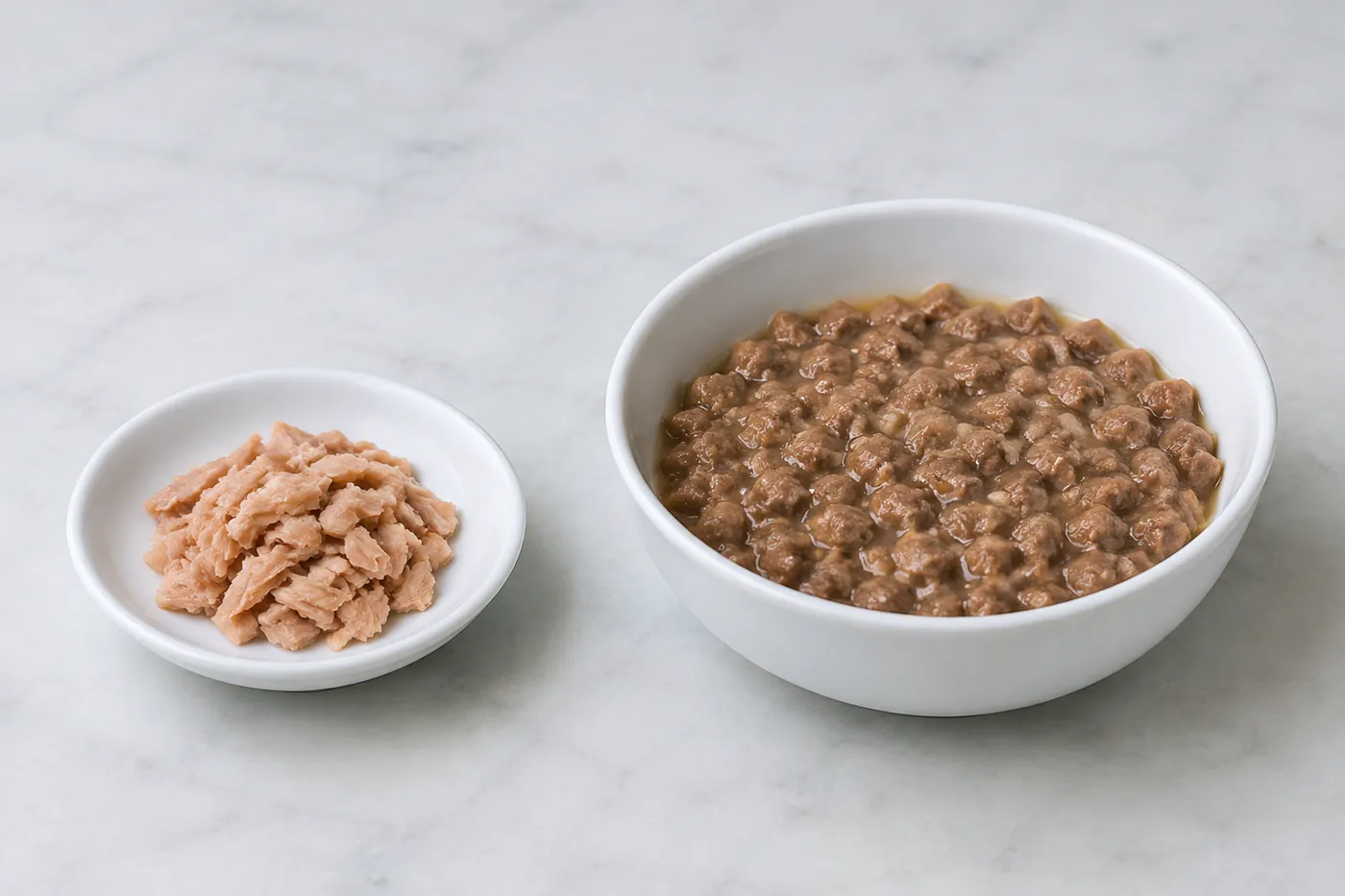
Keep all treats together below about ten percent of the daily calorie allowance, as WSAVA advises, with the remaining food supplying complete nutrition. That is a ceiling for all extras, not a tuna portion target.
Some cats on a therapeutic diet should have no unapproved extras at all.
A small teaspoon can be a practical occasional taste for a healthy adult, but the right amount depends on the label's calories and everything else eaten that day. A fixed rule of two servings per week cannot guarantee safety or suitability for every cat.
Start small, stop if digestive upset follows, and count the food within the day's allowance.
Mercury and the type of fish
Mercury varies by species and individual fish. FDA fish data place canned light tuna below albacore in mercury on average; that comparison helps explain why frequent fish feeding deserves care, but the FDA's human meal-frequency advice is not a feline feeding schedule.
Avoid assuming every fish called mackerel is low in mercury: king mackerel differs substantially from Atlantic mackerel. Nor does cooking remove mercury.
The useful household decision is to keep human fish an occasional extra, rather than build the cat's diet around whichever species appears lowest on a chart.
Tuna water, raw fish and kittens
A little liquid from plain no-added-salt tuna in water may interest a cat, but brine and seasoned sauces are not substitutes for drinking water. Keep fresh water available.
A cat that is drinking or eating differently needs attention to the change rather than a succession of stronger flavours.
Raw tuna and sushi add foodborne-organism risks. Canning cooks the fish, but it does not correct nutritional imbalance.
Raw fish can also expose cats and household members to harmful bacteria; cooking does not make a fish-only diet complete.
Kittens need a complete growth diet and have little room for nutritionally incomplete extras. Cats with kidney disease, food allergies or a prescribed diet need advice from the vet managing that diet before tuna is added.
A treat can disrupt an elimination trial or a phosphorus-controlled diet even if a healthy cat would tolerate it.
If your cat now refuses anything else
Do not try to starve your cat into accepting a different food. Reduced intake can be medically important, and a cat refusing its normal food may be nauseated or painful rather than stubborn.
Contact your practice promptly if meals are being missed, particularly with lethargy, vomiting or weight loss.
For a cat that is eating adequately but has a strong preference, offer a familiar complete texture and change gradually. A tiny tuna topping may help acceptance, but increasing tuna whenever a meal is refused can keep the preference going.
Your vet can help plan a transition if the diet has been mostly tuna or your cat stops eating when the mixture changes.
The endpoint is a complete food the cat reliably eats, with optional small treats. A complete fish-based cat food can fulfil that job; its nutritional adequacy matters more than whether fish appears in its name.
Common Questions
Can cats eat tuna every day?
Human canned tuna should be an occasional extra, not a daily staple. A tuna-based food labelled complete for your cat’s life stage is a different product and can be fed according to its instructions.
Is tuna in brine a good choice?
Choose plain tuna in water without added salt instead. Cats on a prescribed diet need their vet’s agreement before any tuna treat.
Can kittens have tuna?
Their main food must be a complete kitten diet. Human tuna adds no necessary benefit and should not displace that food.
Checked Against
Published 30 June 2026. Last updated .