Automatic or Manual Litter Tray: Which Should You Choose?
Automatic boxes can reduce scooping, but fit, model-specific safety and ongoing maintenance decide whether they suit your household.
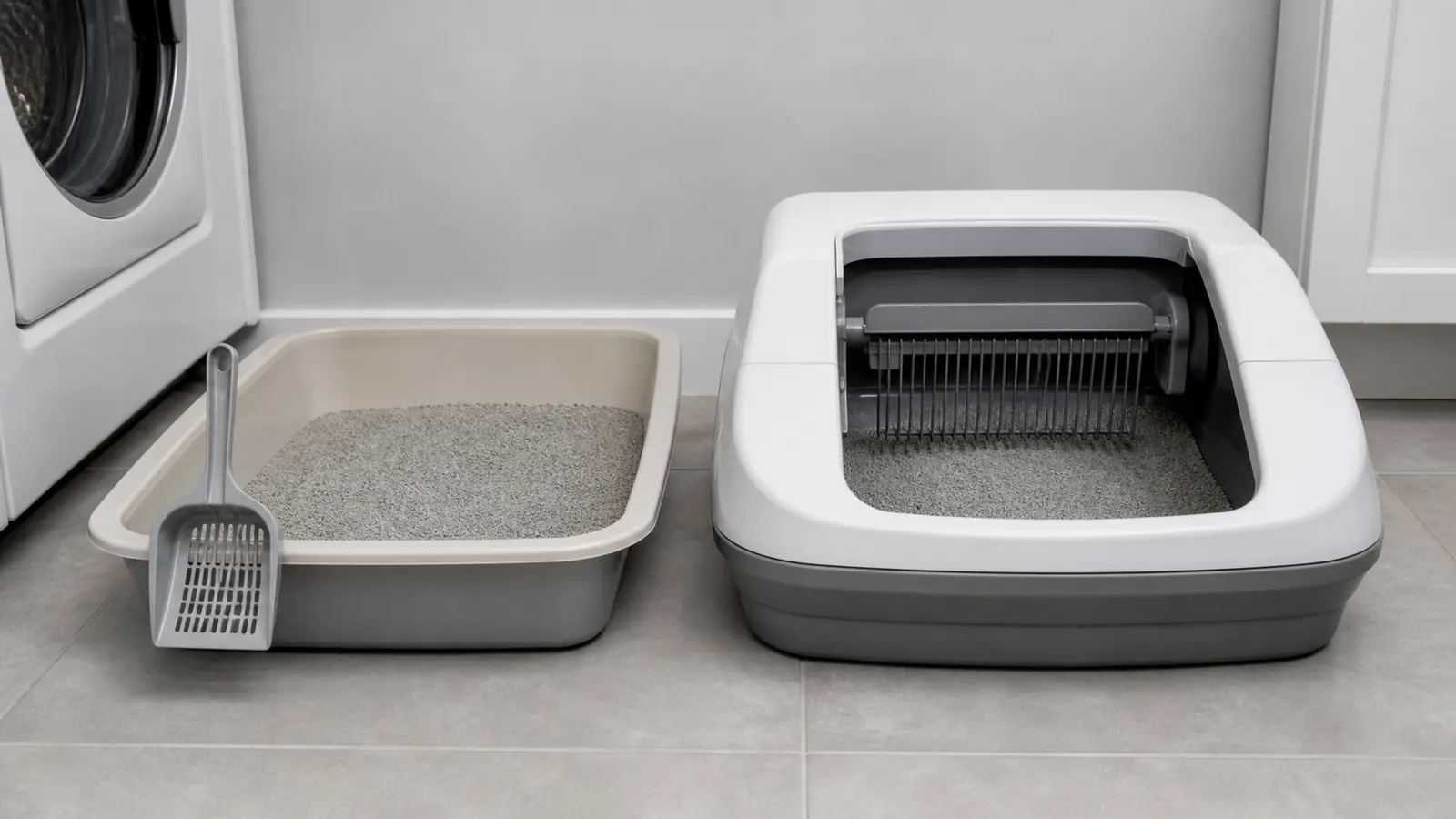
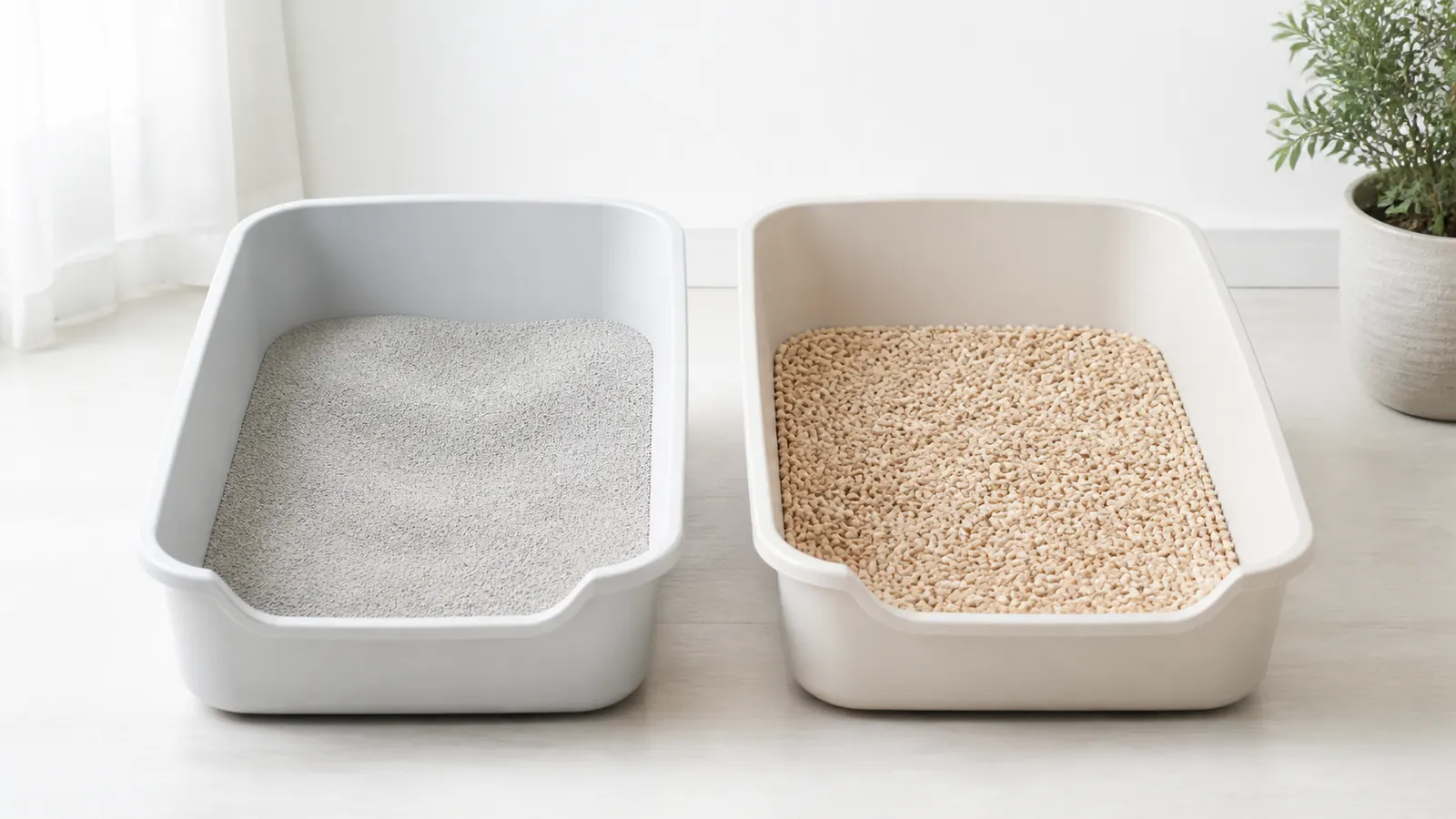
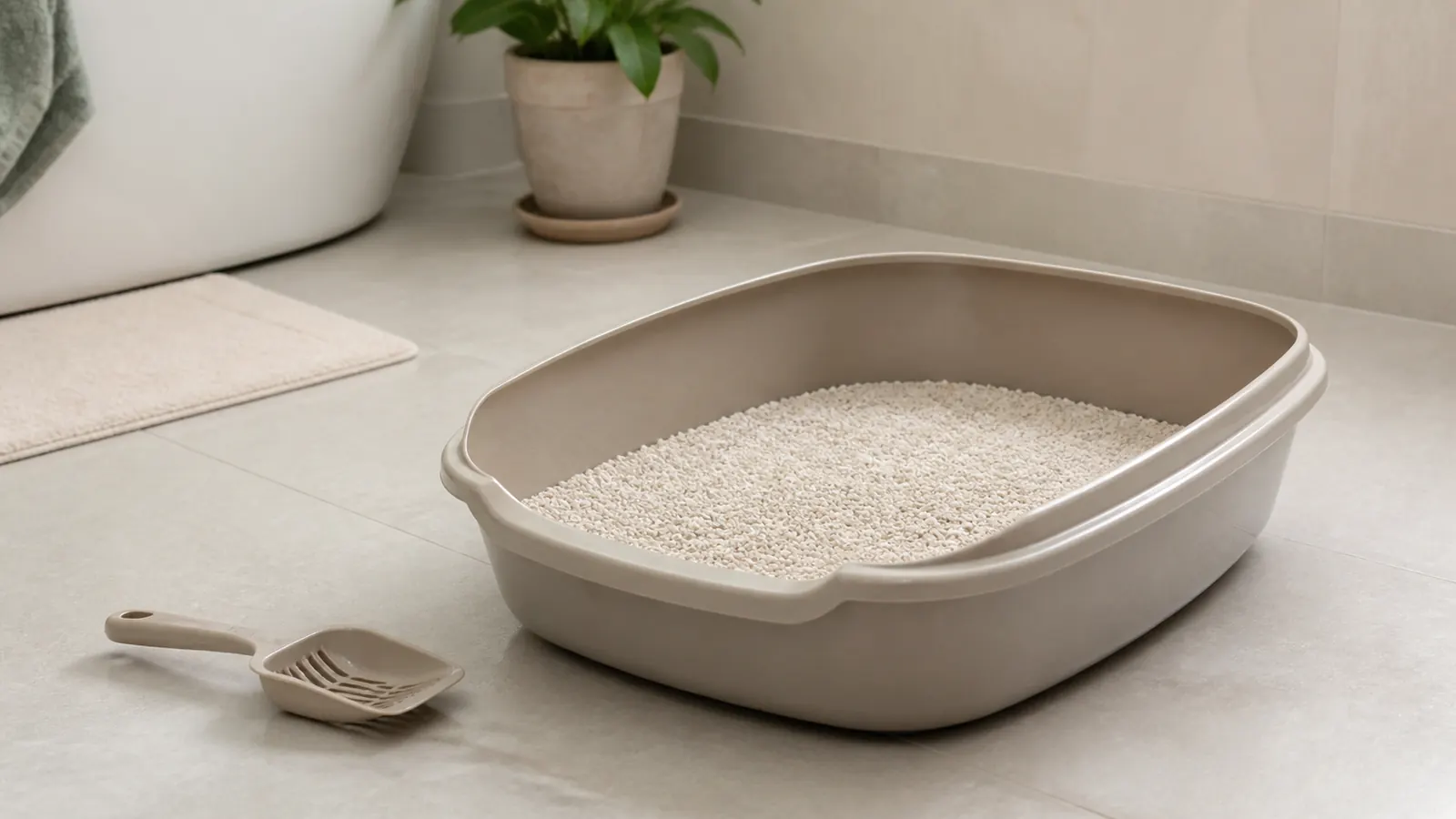
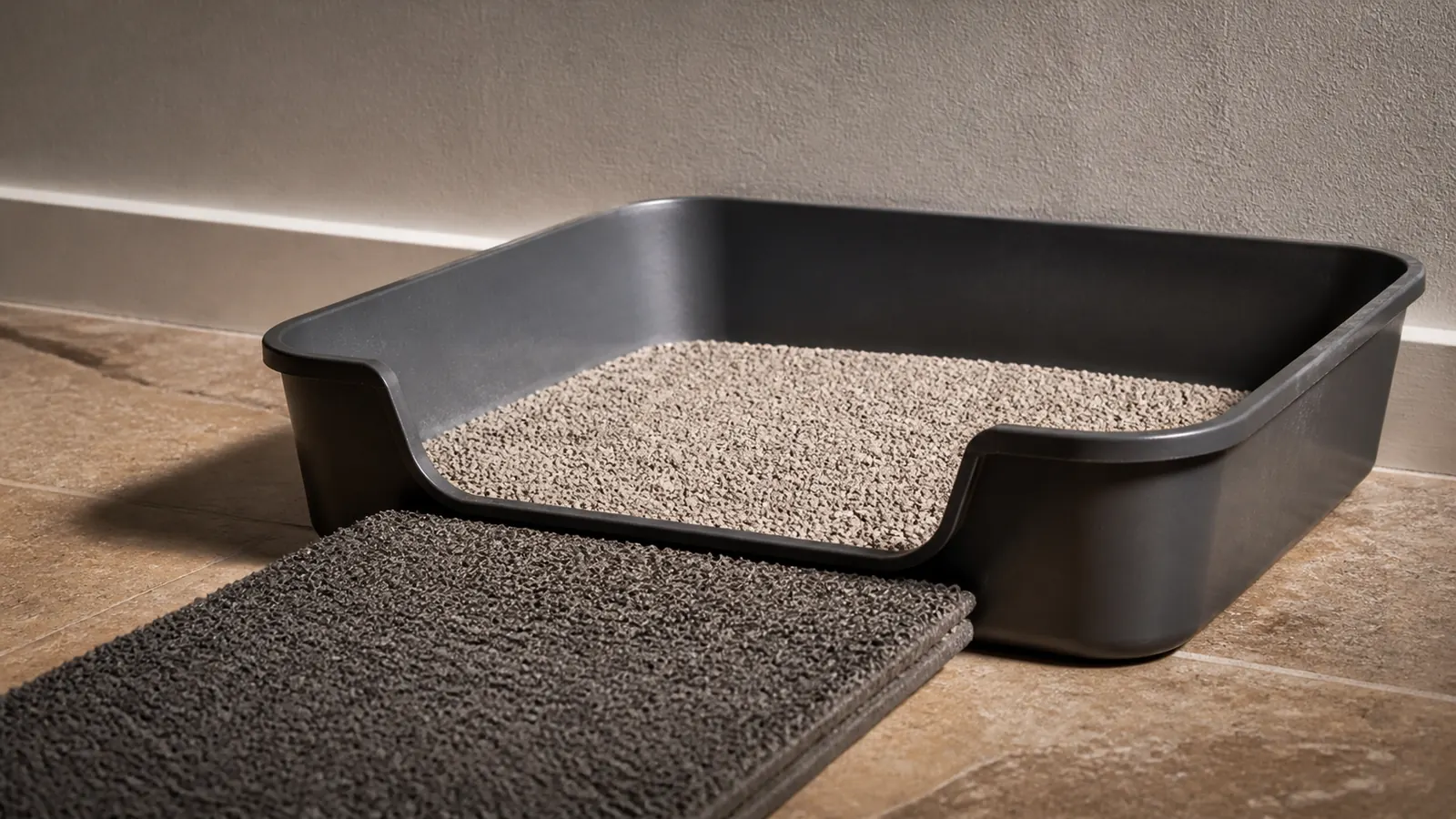
For many households, a large manual tray remains the simpler choice: it offers flexible size and litter options, makes waste easy to inspect and has no moving mechanism. An automatic box may help with scooping, especially when physical access is difficult, but it still needs maintenance and a cat that can use the particular model safely.
What work remains with an automatic box?
Automatic cleaning moves waste into a drawer or another container. Someone still empties it, checks for unusual urine or stool, adds litter and cleans the chamber and sensors.
The schedule depends on the model, substrate and number of users; there is no category-wide promise of no daily work.
| Question | Manual tray | Automatic box |
|---|---|---|
| Waste observation | Easy during regular scooping | Requires an intentional check; logs vary by model |
| Usable space | Can choose a wide open tray | Mechanism may reduce the space inside a large shell |
| Maintenance | Scooping and washing | Drawer, chamber, sensors and other specified parts |
| Litter choice | Usually broad, subject to cat preference | Must match the manufacturer's requirements |
| Failure planning | Keep clean and accessible | Keep a suitable manual alternative available |
An app may record visits or weight, but a recorded visit does not prove that urine was passed normally. Nor does a manual scoop identify every health problem. The log and direct observation of the cat answer different questions, and both matter most when drinking or urine volume changes.

Fit and access come before automation
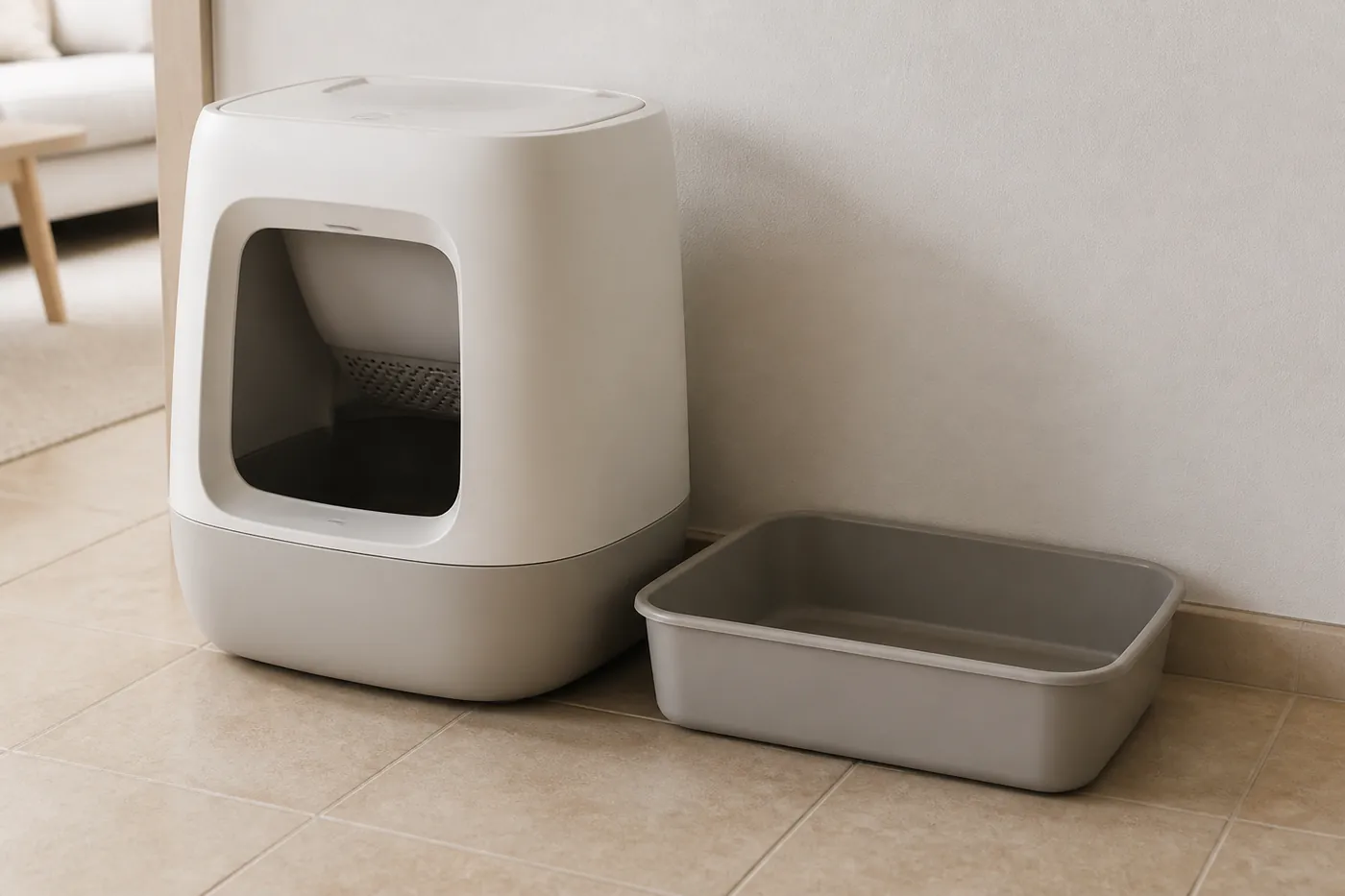
Usable litter area, entrance height, turning space and an easy way out matter more than the unit's outside dimensions, because a large exterior can hide a cramped chamber.
A cat with pain or reduced mobility may need a lower, more open tray regardless of how well a machine cleans.
Noise and movement may unsettle some cats, so an automatic box is a poor answer to unresolved tray refusal. Until health, litter, access or household tension has been checked as the cause, a new box only adds another change.
Safety belongs to the exact model
The current manual, read before purchase, sets the minimum weight and age, setup, detection, stopping behaviour and what to do after a fault. Designs use different combinations of sensors and mechanical safeguards.
Information for one brand or generation cannot certify another.
A longer delay is not a substitute for functioning safety detection. A cat can return during a countdown or cleaning cycle.
If the unit fails to detect a cat, moves unexpectedly or reports a safety fault, stop using the automatic function and follow the manufacturer's support instructions; provide a manual tray immediately.
- Confirm that every cat with access meets the model's age and weight requirements.
- Install the unit on the surface and with the clearance specified in the manual.
- Keep detection areas clean using the prescribed method.
- Never bypass sensors or modify the mechanism to clear an error.
- Keep cats away during any instructed maintenance or manual cleaning cycle.
The Litter-Robot 4 manual is one example of model-specific instructions, not evidence that all automatic boxes share its safeguards. A kitten below a model's limits must not be left with access to unsafe automatic operation.
Asking whether a cat is confident does not answer that engineering question.
How do you introduce one while keeping a working tray?
The familiar tray stays available while the new one is added, without forcing use. Where the manual permits it, begin with automatic cycling disabled so the cat can explore a stationary box.
Any manual cycle has to run under the prescribed conditions with the cat clear of it.
Once the cat uses the box comfortably, automation can be enabled as the instructions describe, and the cat's response to the first cycles shows whether it will keep using the box. A cat that avoids the location after a cycle still needs an acceptable toilet elsewhere.
The pace depends on comfortable use, and no fixed switch-on date applies.
Multiple cats and monitoring
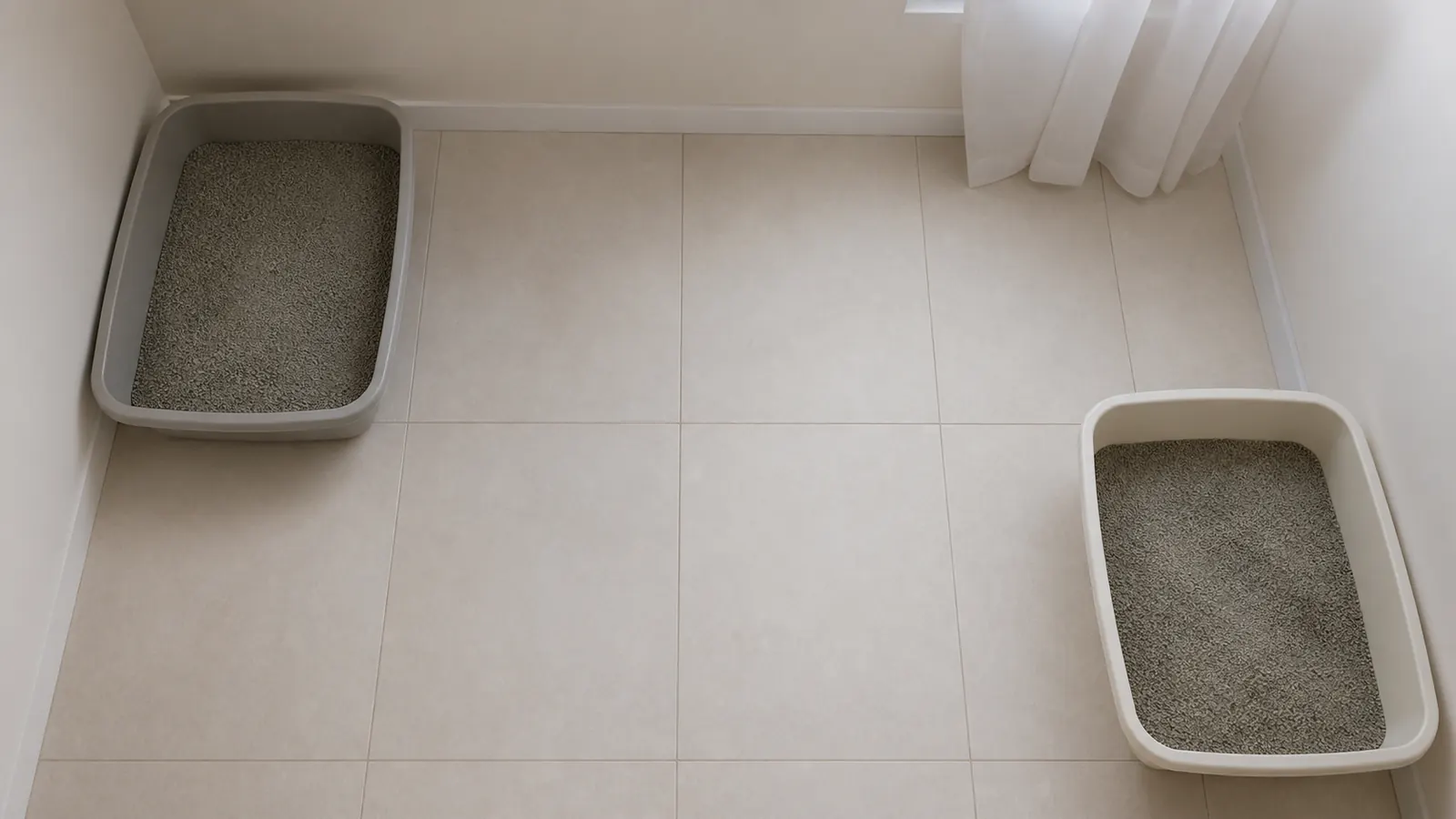
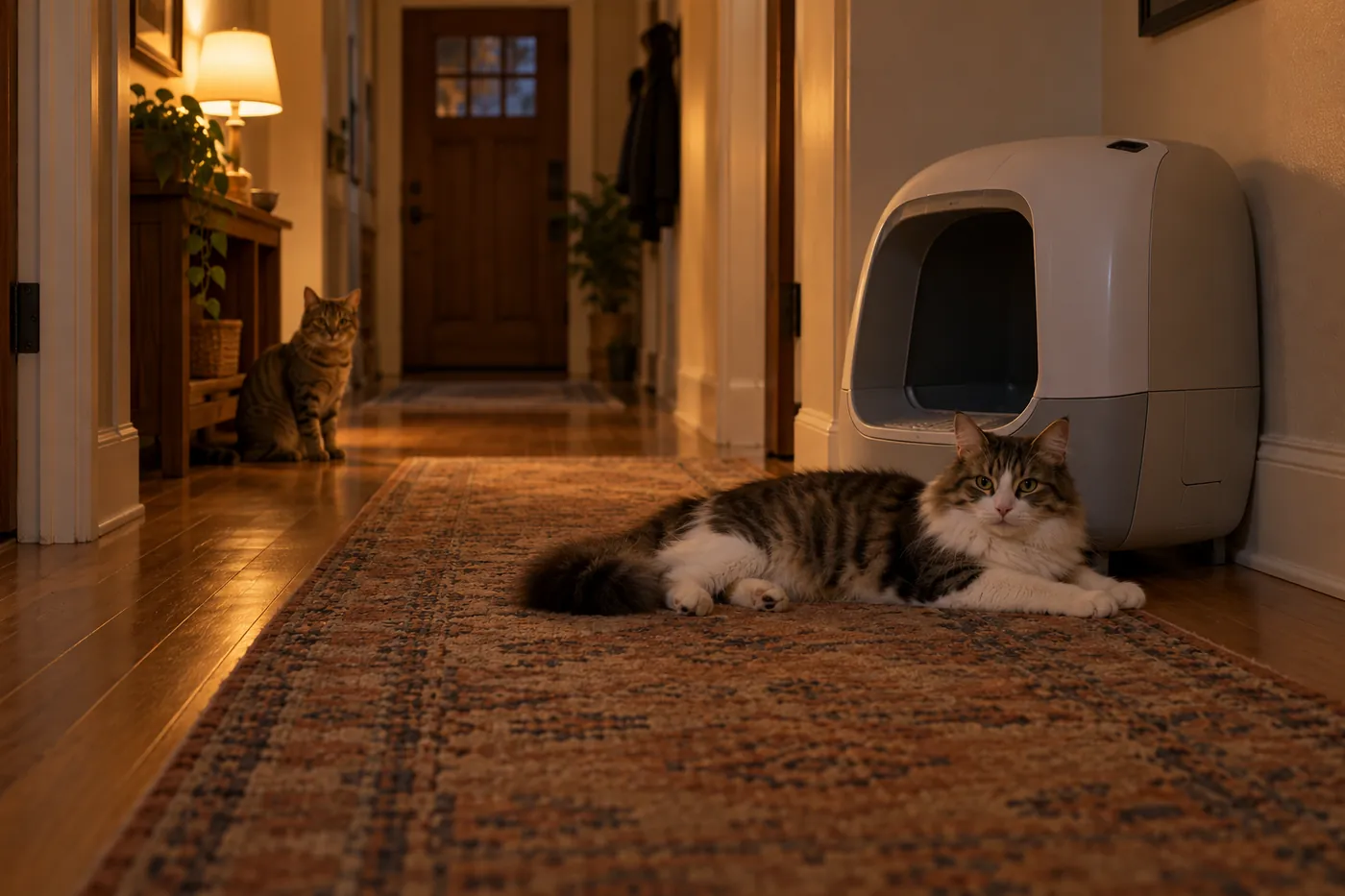
A fast-cleaning unit remains one location. It does not replace independent trays in different places, and another cat can still block its doorway. Each cat needs an acceptable tray it can reach without waiting or detouring.
If the system identifies users, its records can be misattributed, so how identification works matters. Logs can support an observation, but a presumed normal visit should not override visible straining, repeated attempts or illness.
Little or no urine with straining is an emergency even when an app records many visits.
What do the cost and maintenance actually involve?
The real cost covers the specific unit, compatible litter, liners if required, replacement parts and likely service options, set against a manual tray and any help needed for scooping.
There is no reliable rule that consumables always exceed purchase cost or that every mechanism is noisier than another.
The unit needs maintenance according to its manual, and emptying the drawer is the moment to inspect the waste. Automation does not remove hygiene precautions, including precautions advised during pregnancy.
If the machine adds unreliable access, difficult cleaning or distress, a suitable manual arrangement is the better fit for that cat and household.
Common Questions
Are automatic boxes safe for every adult cat?
No category-wide answer can establish that. Check the exact model’s current manual, fit, safety detection and the cat’s health and behaviour.
Does a long cycle delay prevent accidents?
No. A cat can return during the countdown or cycle. Working detection and mechanical safeguards remain essential.
Can one replace several trays?
No. It remains one location and does not provide independent access for cats elsewhere in the home.
Checked Against
Published 2 September 2026. Last updated .