What Is a Thai Cat, and How Does It Differ From a Modern Siamese?
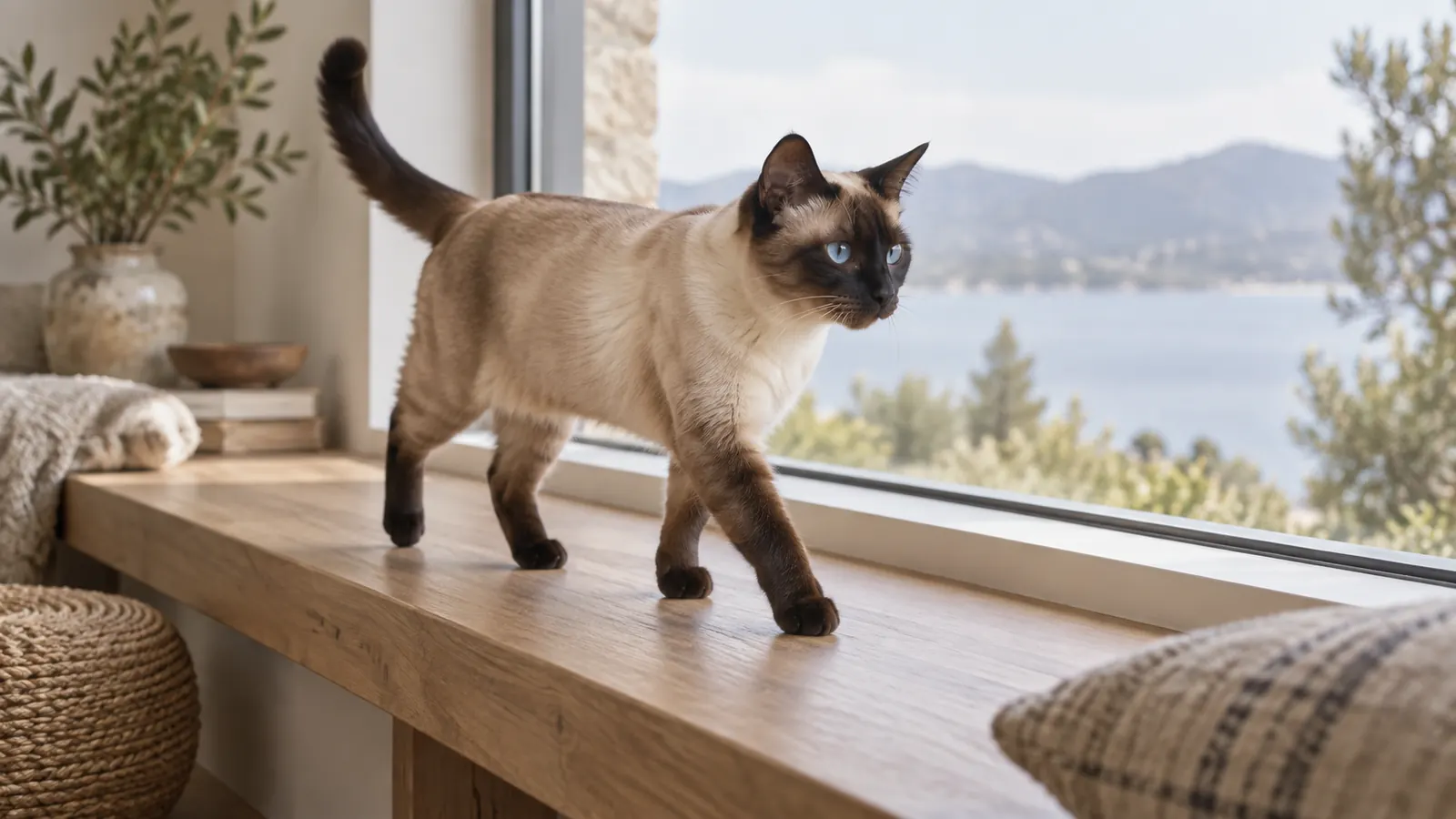
A Thai Cat, also called a Wichianmat, is a pointed cat with the moderate, rounded body type that Siamese cats carried before Western show breeding selected for the extreme wedge head and tubular body. TICA, WCF and FIFe recognise it. It shares the Siamese gene pool and differs in the shape breeders selected for, which is now preserved under its own standard.
- Origin
- Thailand, a natural pointed breed documented in the Tamra Maew; the modern breeding programme preserves the traditional moderate conformation
- Coat
- Short, close-lying, smooth, in all standard pointed colours
- Size
- Medium, moderately muscular with a rounded head and proportional body, not extreme in any direction
- Typical weight
- Secondary sources commonly cite 8 to 15 pounds
- Life expectancy
- Consistent with Siamese-family data; secondary sources cite 12 to 16 years
- Activity level
- High; vocal, social and interactive, sharing the Siamese temperament
- Grooming
- Low; the short smooth coat needs minimal care
- Suits
- Households that want the Siamese social intensity in a more moderate body, with realistic expectations about the vocal temperament
A Thai Cat is what the Siamese looked like before decades of Western show breeding reshaped the breed into the extreme wedge-headed form.
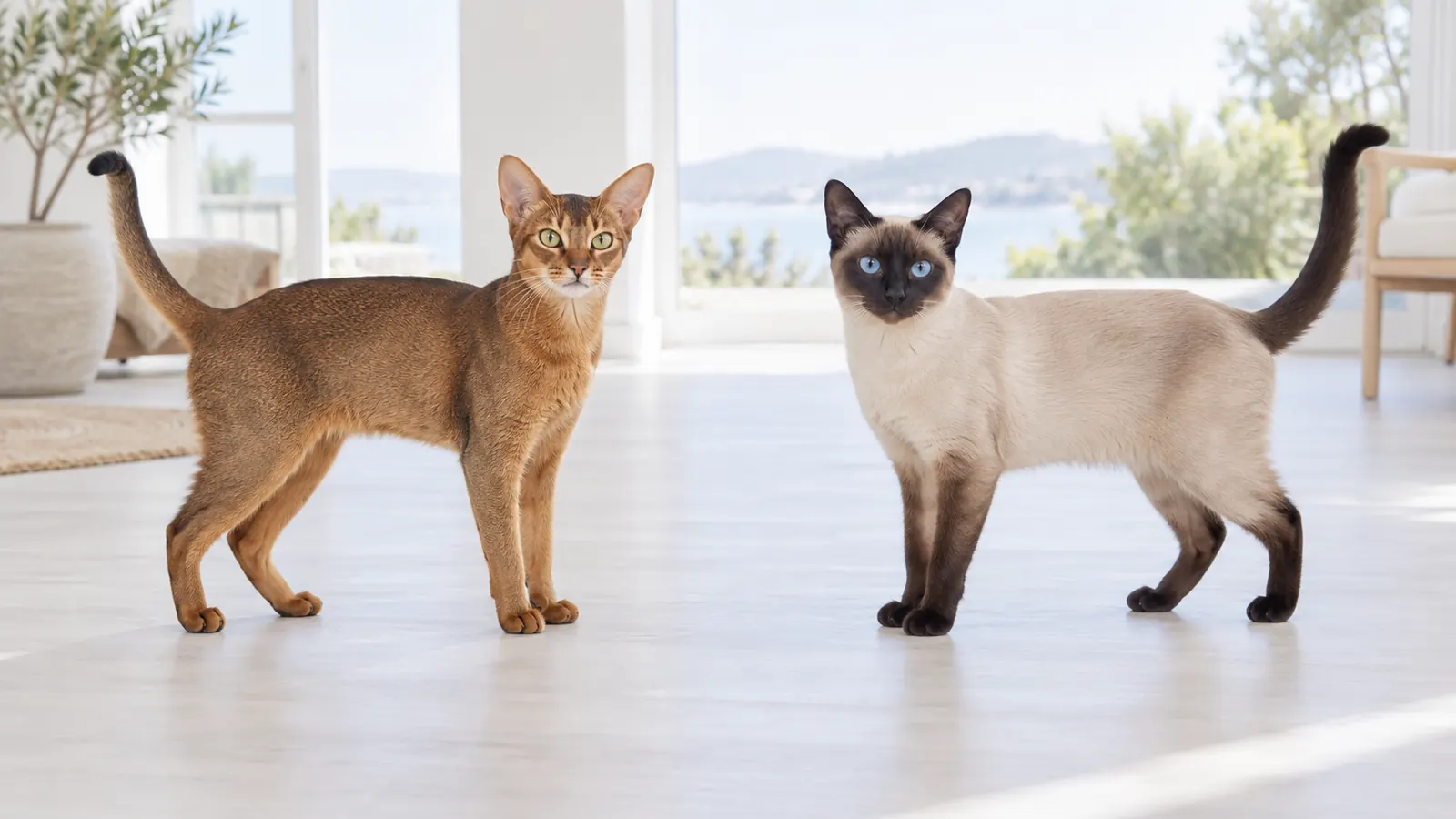
The Thai preserves the older, more moderate conformation: a rounded head, proportional body and balanced features. The pointed colour pattern, the blue eyes and the vocal social temperament are the same.
How Do the Thai and the Modern Siamese Actually Differ?
What separates them is body and head shape. Both carry the same colorpoint gene (cs), the same blue eyes and the same Siamese-family temperament.
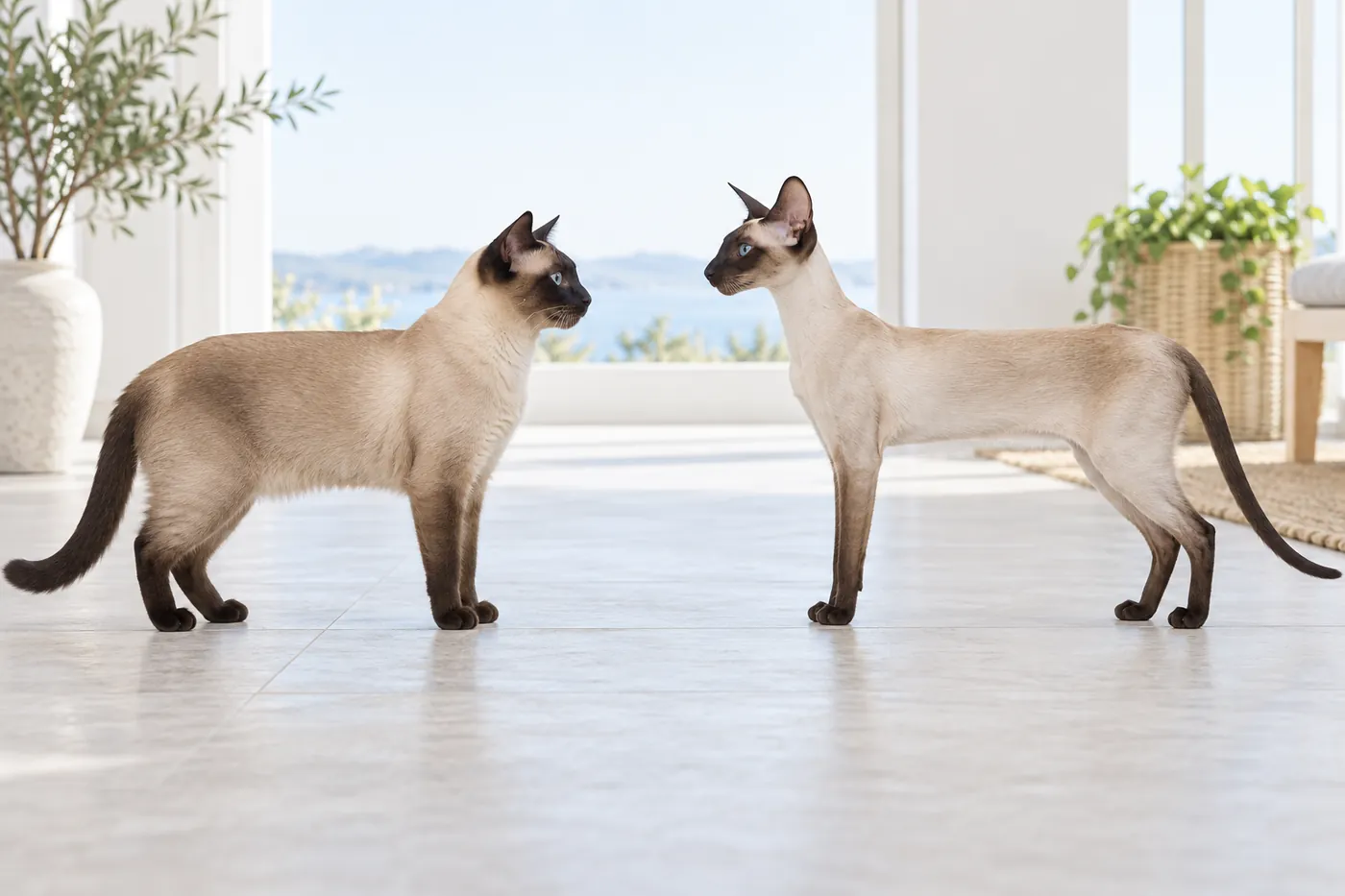
What changed over time was the show standard. Western breeders selected for a longer, more angular head, a more tubular body, larger ears and a thinner profile, so a modern show Siamese now looks quite different from the cats first brought from Thailand even though colour and temperament did not change.
| Feature | Thai Cat | Modern Siamese |
|---|---|---|
| Head shape | Rounded, moderate wedge, flat forehead | Extreme wedge, long and angular |
| Ears | Medium, proportional | Very large, wide-set |
| Body | Moderately muscular, balanced | Long, tubular, fine-boned |
| Coat pattern | Pointed (same cs gene) | Pointed (same cs gene) |
| Eyes | Blue (same genetics) | Blue (same genetics) |
| Temperament | Vocal and social (same) | Vocal and social (same) |
The Thai is sometimes called the "applehead" or "old-style" Siamese in informal usage. Its own breed standard formalises the moderate conformation under the name Thai rather than treating it as a variant within the Siamese standard.
Where Does the Suphalak Fit?
The Thai Cat and the Suphalak both originate in Thailand and both appear in the Tamra Maew manuscripts, but they are different breeds.
The Thai Cat is pointed: lighter body with darker face, ears, legs and tail. The Suphalak is solid-coloured: a uniform warm brown-to-copper with no points.
The Thai comes from the Siamese gene pool, while the Suphalak's solid copper colour comes from different colour genetics, so calling both Thai cats says where they come from and nothing about what they are.
Does the Siamese Temperament Come Through?
The moderate body comes with the full Siamese temperament: these cats are vocal, social, interactive and persistent about human company. They follow people, comment on household activities and do not tolerate isolation well.
The one practical temperament difference some owners report is that the Thai may be slightly less hyperactive than the most extreme modern Siamese lines, though this is anecdotal and could reflect individual or line variation rather than a consistent breed distinction.
Siamese-family cats are usually food-motivated and quick to learn, so reward-based training works well.
What Does a Thai Need Day to Day?
The coat is short, flat-lying and single, with no longhair gene in the breed and no thick undercoat, so a weekly going-over with a rubber brush or a damp hand keeps it tidy and shedding stays light. The time goes into company and play instead. Daily interactive play, climbing space and food puzzles keep a clever, active cat occupied, and a bored Thai tends to invent its own entertainment.
That appetite for company is the main household question. A home where someone is around for much of the day, or a second sociable cat, suits a Thai better than long hours alone, and a household that wants a quiet background cat will find the running commentary hard to live with. Its confidence usually makes it easy company for respectful children and other sociable pets, although, as with any cat, early socialisation decides more than the breed does.
What Health Concerns Come From the Siamese Gene Pool?
The Thai draws from the Siamese gene pool, so the conditions documented in Siamese populations are the ones to know about.
Amyloidosis, asthma, progressive retinal atrophy (PRA), convergent strabismus (crossed eyes) and dental disease have all been reported in Siamese-family breeds.
Whether the moderate head changes any of these risks has not been studied. The conditions travel with the gene pool rather than the head shape, so a Thai is screened and watched the way a Siamese is, including a DNA test for the rdAc form of PRA, which has been found in Siamese-family lines.
Secondary sources cite a lifespan of 12 to 16 years, taken from Siamese-family figures rather than from a study of Thais.
Who Recognises the Thai, and How Do You Find One?
TICA grants the Thai championship status, WCF recognises it, and FIFe lists it among its recognised breeds.
CFA does not list a separate Thai breed, so under CFA's system a Thai-type cat is judged against the Siamese standard.
- TICA
- Championship
- WCF
- Recognised
- FIFe
- Recognised
- CFA
- Not listed as a separate breed
- Origin
- Thailand, traditional Siamese conformation preserved
- Alternative names
- Wichianmat, applehead Siamese, old-style Siamese
- Pattern
- Pointed, all standard Siamese colours
- Key distinction
- Moderate rounded body vs modern extreme Siamese
- TICA, WCF or FIFe registration as Thai, naming both parents
- The moderate rounded head and proportional body confirmed visually
- Pointed pattern with blue eyes consistent with the standard
- rdAc PRA DNA test results for both parents
- The breeder explains the Thai vs modern Siamese distinction honestly
- The individual cat's vocal temperament experienced during contact
A household that loves the Siamese personality but finds the modern extreme conformation unappealing may find the Thai a better visual match for the same ownership experience.
Common Questions
Is a Thai Cat the same as a Siamese?
Genetically very similar. Both carry the same colorpoint gene, blue eyes and vocal temperament. The difference is conformation: the Thai preserves the older moderate body type, while the modern Siamese was selected toward an extreme wedge head and tubular body.
Is the Thai Cat recognised?
TICA, WCF and FIFe recognise it. CFA does not list it as a separate breed.
Are Thai Cats vocal?
Yes. The Siamese temperament comes through in full: vocal, social, interactive and persistent about human company.
Is a Thai Cat the same as a Suphalak?
No. Both are Thai breeds from the Tamra Maew, but the Thai is pointed (Siamese colouring) while the Suphalak is solid brown-to-copper with no points.
How big does a Thai Cat get?
Medium-sized and moderately muscular. Secondary sources cite 8 to 15 pounds. The body is balanced and proportional.
Checked Against
- TICA: Thai breed tica.org
- WCF: Siamese and Oriental breed standards (Thai) wcf.de
- CFA: Siamese (Thai not listed separately) cfa.org
- Martin Clutterbuck: Auspicious Cats (Cabinet, issue 30, 2008) cabinetmagazine.org
- FIFe: Recognised breeds (Thai) fifeweb.org
- Generalized AA-amyloidosis in Siamese and Oriental cats pubmed.ncbi.nlm.nih.gov
- Widespread retinal degenerative disease mutation (rdAc) across popular cat breeds pubmed.ncbi.nlm.nih.gov
Published 17 September 2026. Last updated .