What Is a Bengal Siamese Mix, and What Happens When Spotted Meets Pointed?
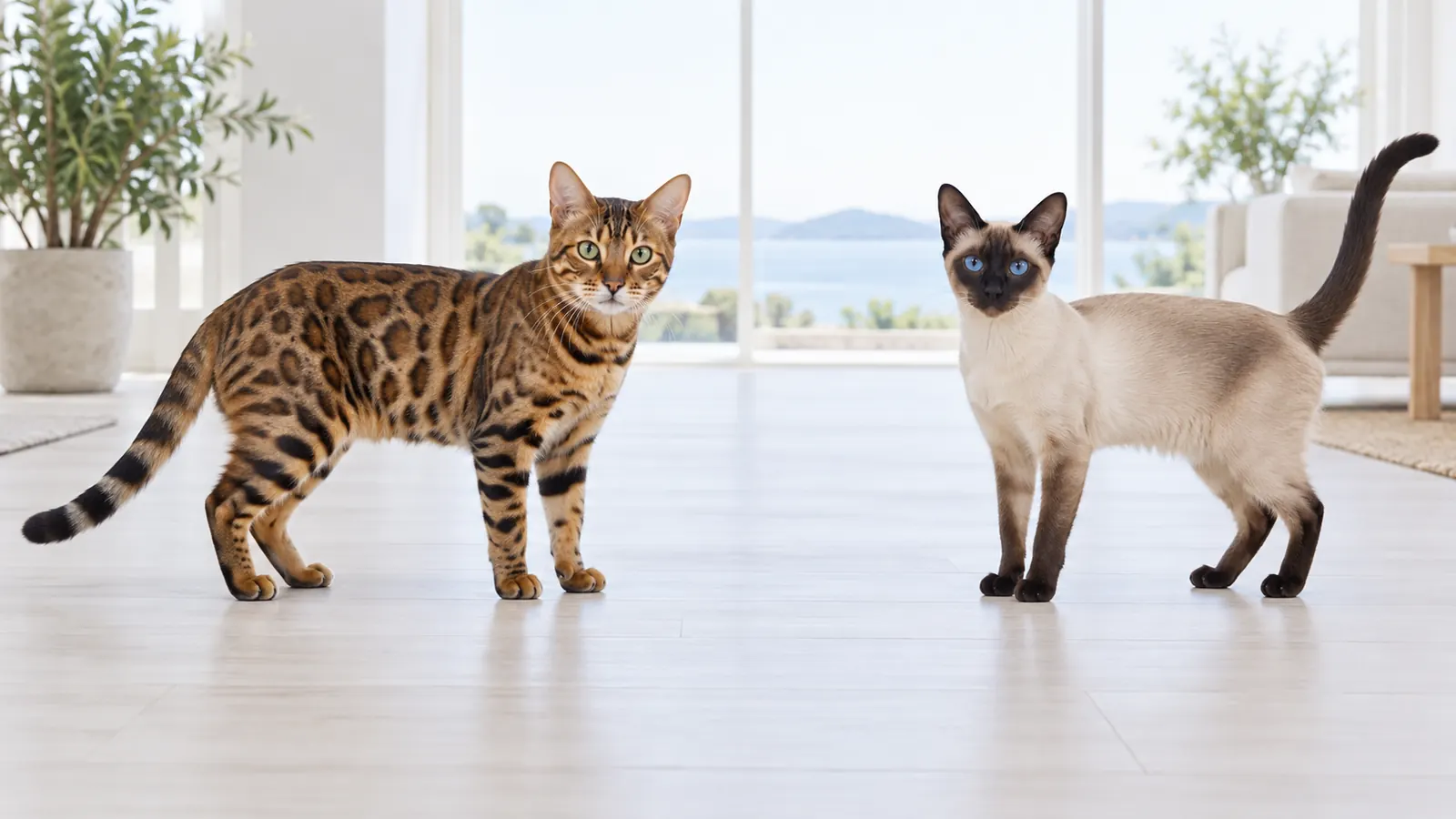
A Bengal Siamese mix is an informal name for a cat with Bengal and Siamese ancestry, and no registry recognises it as a breed. Its coat is hard to predict because the two breeds' patterns come from different genes, and the Siamese pointed pattern only shows when a kitten inherits it from both parents. Both parent breeds are active and social, so a very demanding cat is the likely result.
- Origin
- Not applicable; an informal mixed-breed designation
- Coat
- Short; the Bengal's spotted or rosetted pattern and the Siamese pointed pattern come from different genes, and points appear only with the colourpoint gene from both parents
- Size
- Likely medium; both parent breeds are medium-sized, though Bengals are more muscular
- Typical weight
- No mix-specific data; both parent breeds are medium-sized
- Life expectancy
- No mix-specific data
- Activity level
- Very likely high; both parent breeds are intensely active and interactive
- Grooming
- Likely low; both parent breeds have short coats
- Suits
- Active households prepared for very high energy and social demand from both parent lines
A Bengal Siamese mix is a cat with Bengal ancestry on one side and Siamese ancestry on the other. The name is informal: no registry recognises this combination, so nothing fixes how the cat should look or behave.
Without a registry, a kitten sold under this name has a pedigree only if its parents were registered as Bengal and Siamese, and a label on a shelter listing may rest on the cat's looks alone.
What Makes This Cross Genetically Interesting?
The Bengal's spotted or rosetted pattern and the Siamese's pointed pattern are controlled by different genes.
The spotted pattern comes from the tabby genes. The Siamese pointed pattern comes from a colourpoint variant of the tyrosinase gene, written cs, which is recessive: a kitten shows points only when it inherits cs from both parents.
That makes the first cross less surprising than its reputation. A Siamese bred to a Bengal that carries no cs produces kittens with one copy, and they look fully coloured, often spotted or tabby. Pointed kittens appear when the Bengal parent is a lynx point or mink snow Bengal, both of which carry cs, or when two mixes are bred together.
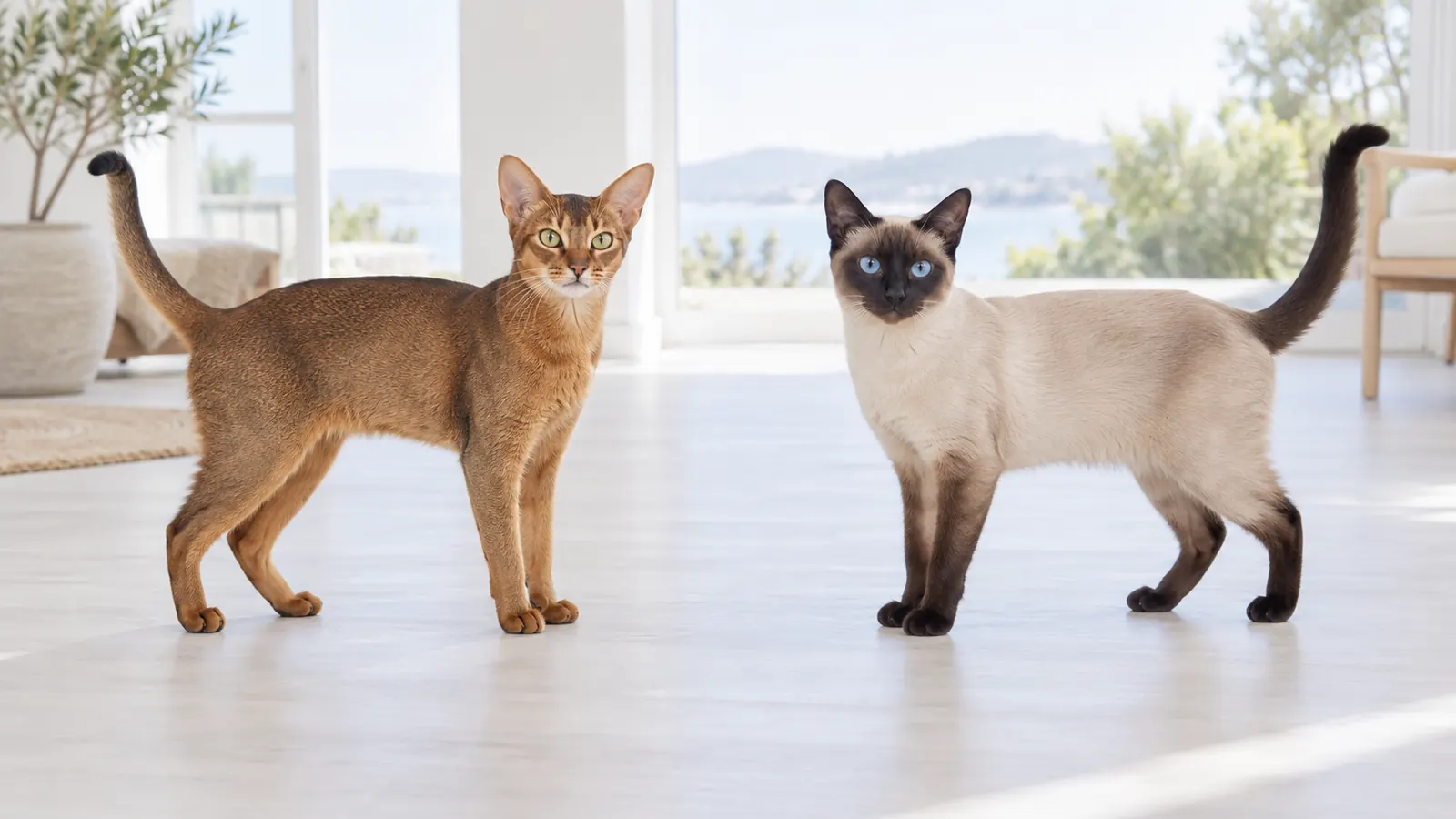
A kitten with two copies and the Bengal pattern genes may express a pointed tabby: a lighter body with spotted or tabby markings concentrated on the darker points. Snow Bengals can look much the same, so a pointed cat sold as a Bengal Siamese mix may be hard to tell from a pointed Bengal by eye.
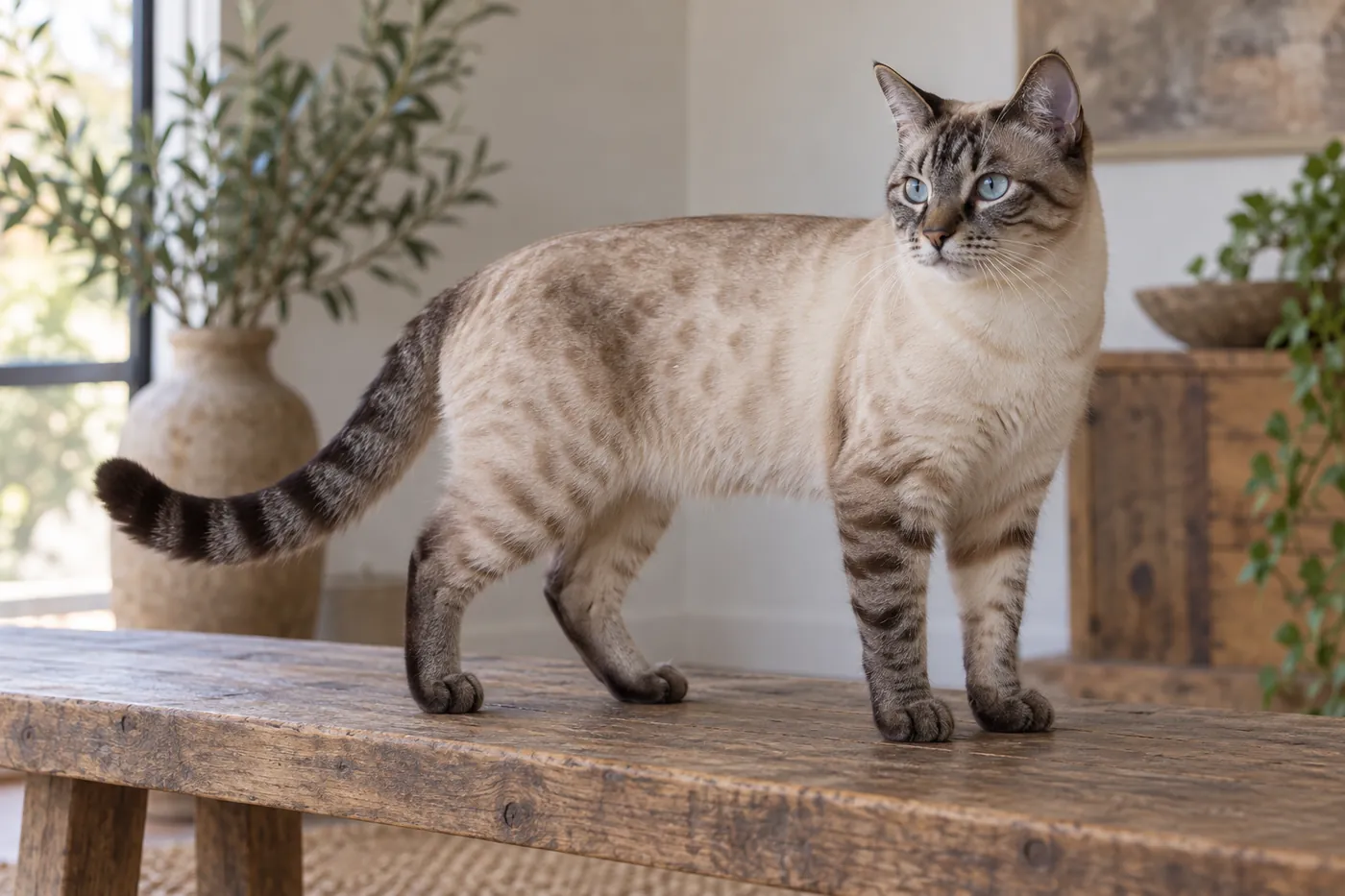
The visual outcome depends on which alleles the kitten inherits. Some will look more Bengal, some more Siamese, some will blend in ways that match neither parent's standard.
What Temperament Can You Expect From Two High-Energy Breeds?
Registry descriptions of both parent breeds stress activity, interaction and a need for company. A calm, independent cat can come out of the cross, but a household should not count on one.
The Bengal side is described as athletic, confident and keen to climb and hunt toys. The Siamese side is described as vocal, strongly attached to its people and keen to join in whatever they are doing.
Behaviour and coat pattern are inherited separately, so a cat's looks give no clue to which of these traits it has. A mix can take the more demanding trait from each side, which means a household that could only cope with the average of the two parents may struggle: the cat may need daily climbing space and hunting-style play for the Bengal side, and company for much of the day for the Siamese side.
Both parents are described as clever. CFA calls the Bengal extremely intelligent and quite trainable, often learning tricks, and says the Siamese is often considered the most intelligent of cats. A mix from them should be able to learn with rewards, although no one has measured trainability in the cross, and an individual cat can take after either parent.
With other pets the two descriptions also agree: CFA says Bengals get along with other pets when properly introduced, and that many Siamese form close friendships with other pets. The Cat Group, in a position statement published by International Cat Care, warns that hybrid cats close to their wild ancestor can be more aggressive and territorial with their owners, other pets and wildlife, and notes that most UK Bengals are now more than five generations removed from the original outcross. That warning applies chiefly when the Bengal parent is an early-generation cat, so the Bengal parent's generation is the first thing to establish before a mix joins a home that already has cats or small animals.
The CFA descriptions of both breeds say nothing about children, so how a Bengal Siamese mix gets on with children is unknown and rests on the individual cat.
What Health Concerns Come From Each Side?
No study has looked at the mix itself, so the useful evidence is what each parent breed is known to carry.
| Condition | Parent line | How it is checked |
|---|---|---|
| Hypertrophic cardiomyopathy (HCM) | Bengal | Heart ultrasound (echocardiography); no DNA test covers the Bengal form |
| Progressive retinal atrophy, PRA-b | Bengal | DNA test for the Bengal variant |
| Pyruvate kinase deficiency (PKDef) | Bengal | DNA test |
| Retinal degeneration, rdAc | Siamese | DNA test for the CEP290 variant |
| AA amyloidosis | Siamese | No DNA test; recognised from illness in the individual cat |
Retinal degeneration appears on both sides through different variants, PRA-b in Bengals and rdAc in Siamese, and each has its own DNA test, so a clear result for one says nothing about the other.
The three conditions with DNA tests are recessive, so a kitten is affected only when both parents pass on the same variant. A Bengal-side variant cannot pair with a Siamese-side one, which makes a first cross less exposed than either parent breed bred to its own kind. Parent test results are the evidence that settles each risk. HCM has no such shortcut and is screened by echocardiography in the parent cats.
How Do You Evaluate the Individual Cat?
- Coat pattern: spotted, pointed, blended or snow-Bengal-type
- Energy and social demand over an extended visit rather than a brief one
- Voice: occasional chirps and calls, or persistent Siamese-style calling
- Confidence and tolerance when the cat is handled
- Vaccination and parasite records for the kitten, and DNA or heart-screening results for the parents
- Space and time in the household for a very active, social cat whichever traits it shows
Grooming and size are easier to predict than behaviour. Both parents are short-coated, so a weekly brush covers most of the coat care. CFA notes that regular grooming controls shedding in the Siamese, but the Bengal descriptions do not mention shedding, so how much an individual mix sheds is unknown. Adults usually fall within the medium range both parent breeds share, with Bengal-heavy cats tending to be the more muscular.
A household that already manages a Bengal or a Siamese knows what high-energy social demand looks like. A Bengal Siamese mix is likely to deliver both at once.
Common Questions
Is a Bengal Siamese mix a breed?
No registry recognises it. The name is an informal label for a cat with Bengal and Siamese ancestry.
What does a Bengal Siamese mix look like?
It varies. A first cross between a Siamese and a Bengal without the colourpoint gene looks fully coloured, often spotted or tabby, because pointing needs that gene from both parents. Pointed and pointed-tabby kittens appear when the Bengal parent is a snow Bengal carrying that gene or when two mixes are bred together.
Are Bengal Siamese mixes high energy?
Very likely. Both parent breeds are described as highly active and socially demanding, so a mix usually needs daily climbing space, interactive play and company for much of the day.
What health problems does this mix have?
The documented concerns come from the parent breeds: HCM, PRA-b and pyruvate kinase deficiency on the Bengal side, and rdAc retinal degeneration and AA amyloidosis on the Siamese side. No study has looked at the mix itself.
Checked Against
- TICA: Bengal breed tica.org
- TICA: Siamese breed tica.org
- OMIA: Progressive retinal atrophy, KIF3B-related (PRA-b) in the domestic cat omia.org
- Tyrosinase mutations associated with Siamese and Burmese patterns in the domestic cat pubmed.ncbi.nlm.nih.gov
- Widespread retinal degenerative disease mutation (rdAc) across popular cat breeds pubmed.ncbi.nlm.nih.gov
- Generalized AA-amyloidosis in Siamese and Oriental cats pubmed.ncbi.nlm.nih.gov
- Screening for hypertrophic cardiomyopathy in cats pubmed.ncbi.nlm.nih.gov
- OMIA: Pyruvate kinase deficiency of erythrocyte in the domestic cat (PKLR) omia.org
- NC State College of Veterinary Medicine: Bengal cat hypertrophic cardiomyopathy study hospital.cvm.ncsu.edu
- The Cat Group: position statement on hybrid cats (International Cat Care, updated 2025) icatcare.org
- The Cat Fanciers' Association: the Bengal cfa.org
- The Cat Fanciers' Association: the Siamese cfa.org
Published 17 September 2026. Last updated .