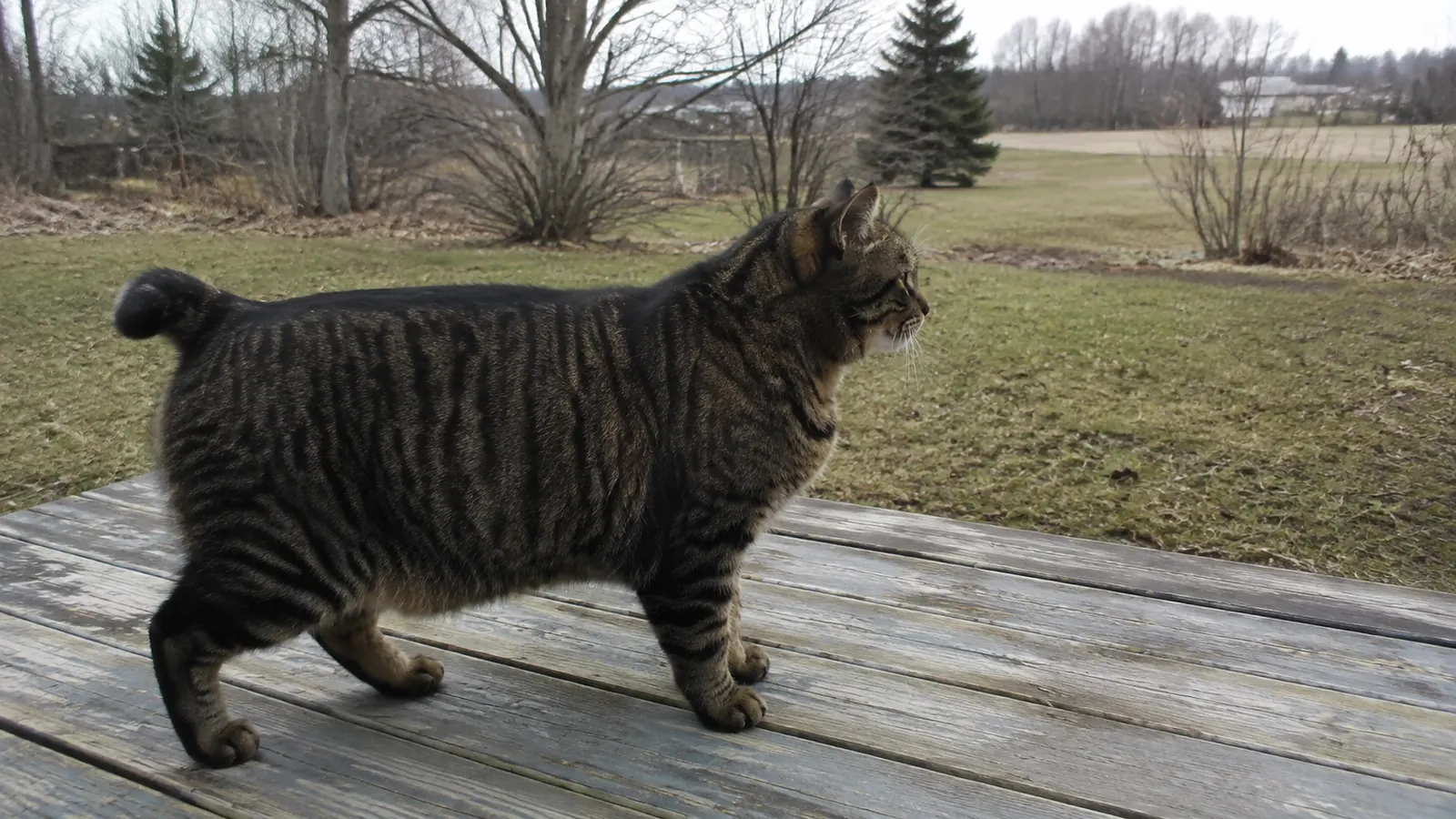
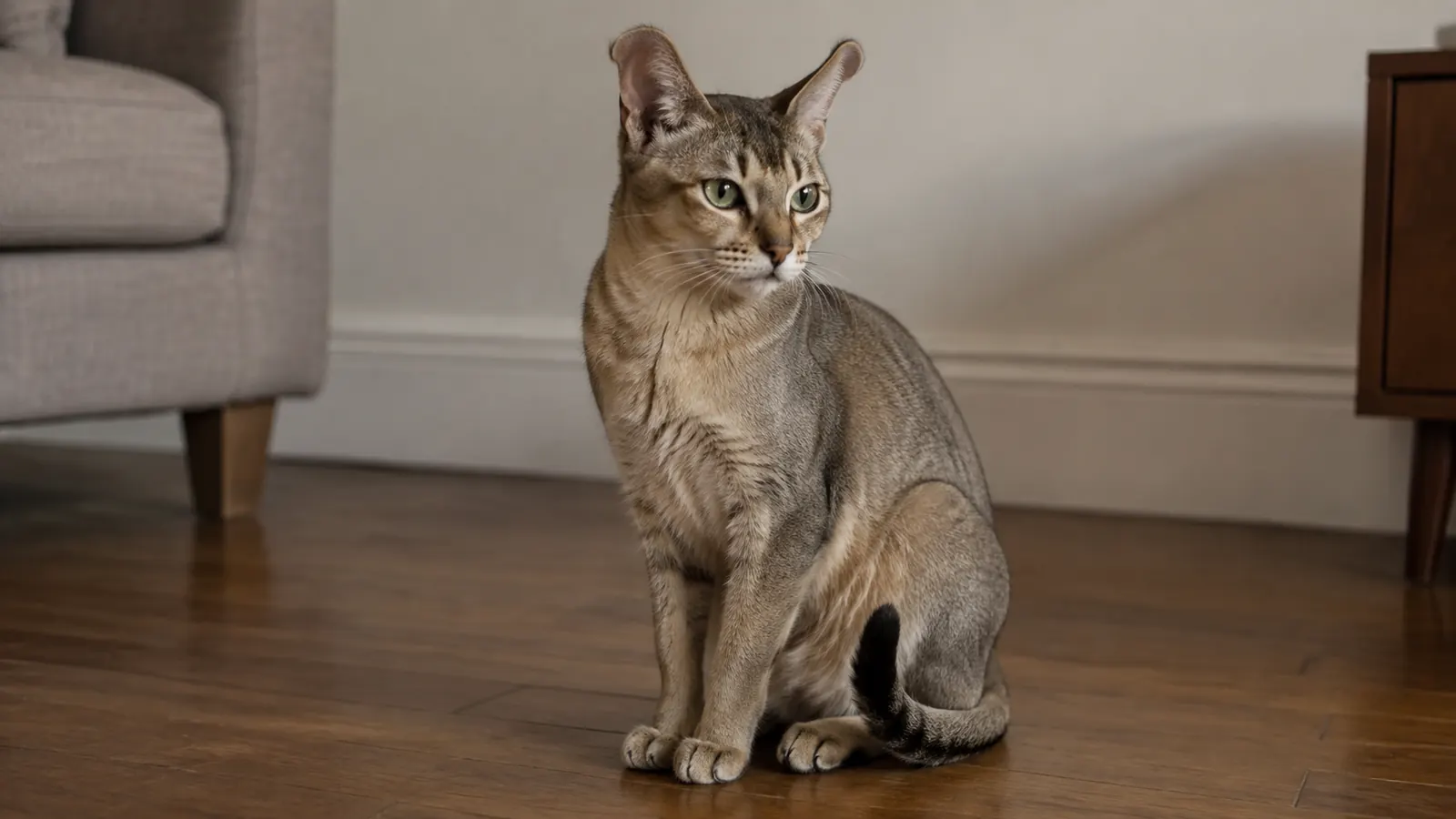
What Is a Bengal Maine Coon Mix, and What Can You Actually Predict?
A Bengal Maine Coon mix is an informal name for a cross between two large, active breeds, and no registry or breeding programme sets a standard for it. Expect an energetic cat that could end up anywhere from Bengal size with a short coat to Maine Coon size with a long one, and plan its health checks around heart disease, which occurs in both parent breeds.
- Origin
- Not applicable; an informal mixed-breed designation
- Coat
- Short in a first cross; long coats appear only when both parents pass on long hair
- Size
- Likely medium to very large; both parent breeds are above average in size
- Typical weight
- Variable; Bengals weigh about 8 to 15 pounds, and mature Maine Coon males can exceed 20 pounds
- Life expectancy
- No study of this cross; UK records put the average cat at 11.74 years at birth
- Activity level
- Very likely high; both parent breeds are athletic and interactive
- Grooming
- Depends on coat inheritance; could range from minimal to intensive
- Suits
- Active households with room to climb; Maine Coons get along with children and other animals, and Bengals with properly introduced pets
A Bengal Maine Coon mix is a cat with ancestry from a Bengal and a Maine Coon, and the name describes that pairing rather than a breed.
No registry recognises this combination, and no breeding programme works toward a standard for it, so the parents themselves, and any papers they have, are the only guide to what went into a kitten.
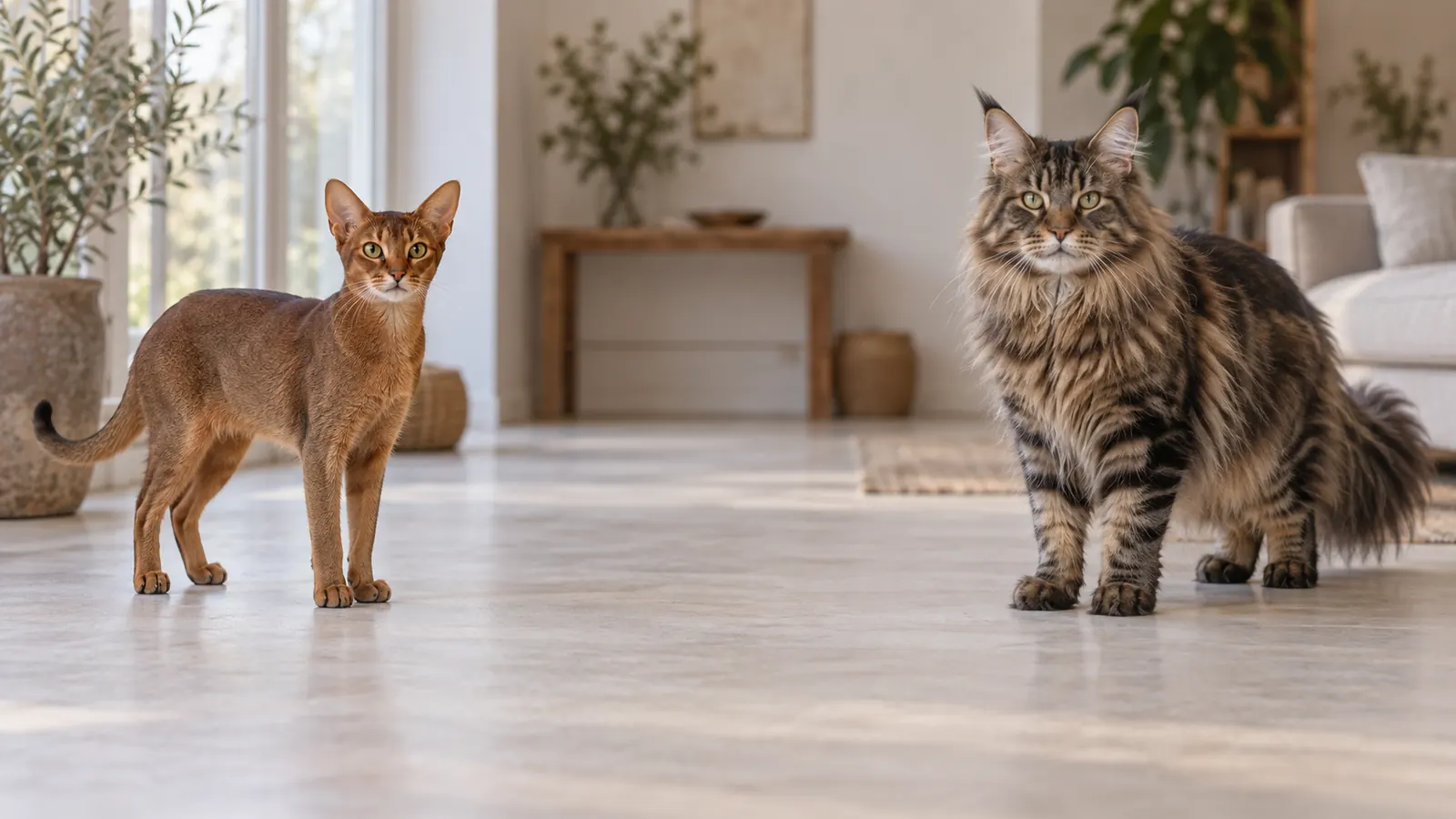
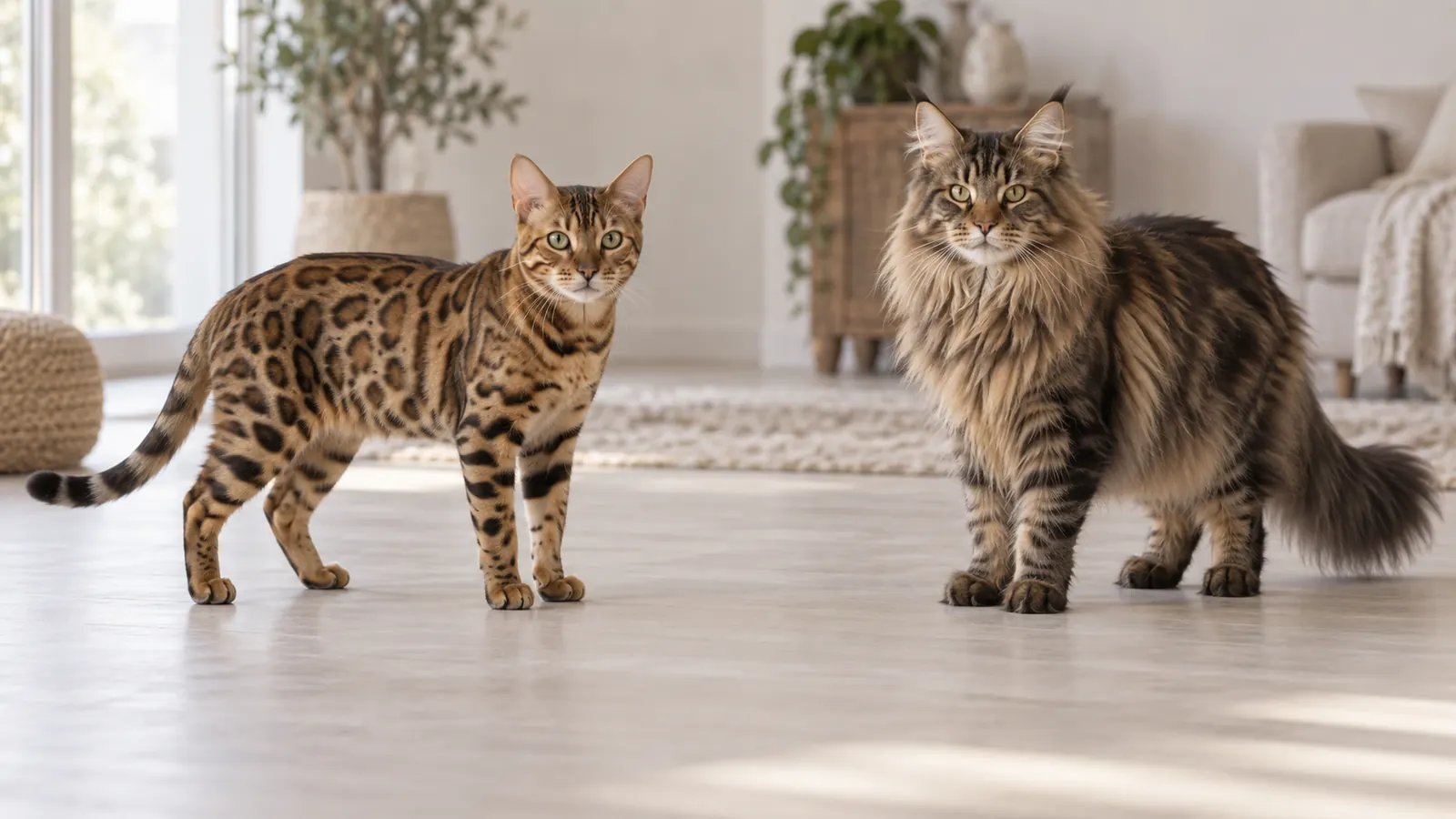
The cross brings together two breeds that are both large and both active, but in different ways.
The Bengal is lean, athletic and energetic, and breed descriptions stress its confidence and curiosity. The Maine Coon is powerful, heavy-boned and slow to mature, with a calmer social style beneath the physical size.
Why Does This Mix Produce Such Variable Outcomes?
The two parent breeds differ substantially in coat, body structure and maturation speed.
| Trait | Bengal parent | Maine Coon parent | What the mix might get |
|---|---|---|---|
| Size | 8 to 15 pounds, muscular and lean | Medium to large; mature males can exceed 20 pounds | Medium to very large; frame unpredictable |
| Coat | Short, dense, spotted or marbled with glitter sheen | Heavy and shaggy, longer on the stomach and britches | Short in a first cross; long only when both parents pass on long hair |
| Maturation | Standard adult timing | Slow; can take up to three years to reach full growth | Growth timeline unpredictable |
| Energy | High; confident, active and athletic | Moderate-high, playful but calmer | Likely high; the specific drive unpredictable |
| Wild ancestry | Asian Leopard Cat (registered Bengals are fourth generation or later) | None | The wild ancestry is several generations back on the Bengal side |
Coat length is the one trait genetics predicts well. Long hair is recessive, so a kitten grows a long coat only when it inherits a long-hair copy from each parent. A first cross between a Bengal and a Maine Coon therefore produces short-coated kittens unless the Bengal happens to carry long hair, and long coats return in later generations, when cross-bred cats are mated to each other or back to a Maine Coon.
Size, build and drive are shaped by many genes at once, so they blend less predictably. An adult from a later-generation cross may be a 20-pound long-haired cat with a calm disposition or a 12-pound short-haired cat with an intense urge to climb, and the breed labels narrow that range without fixing the outcome.
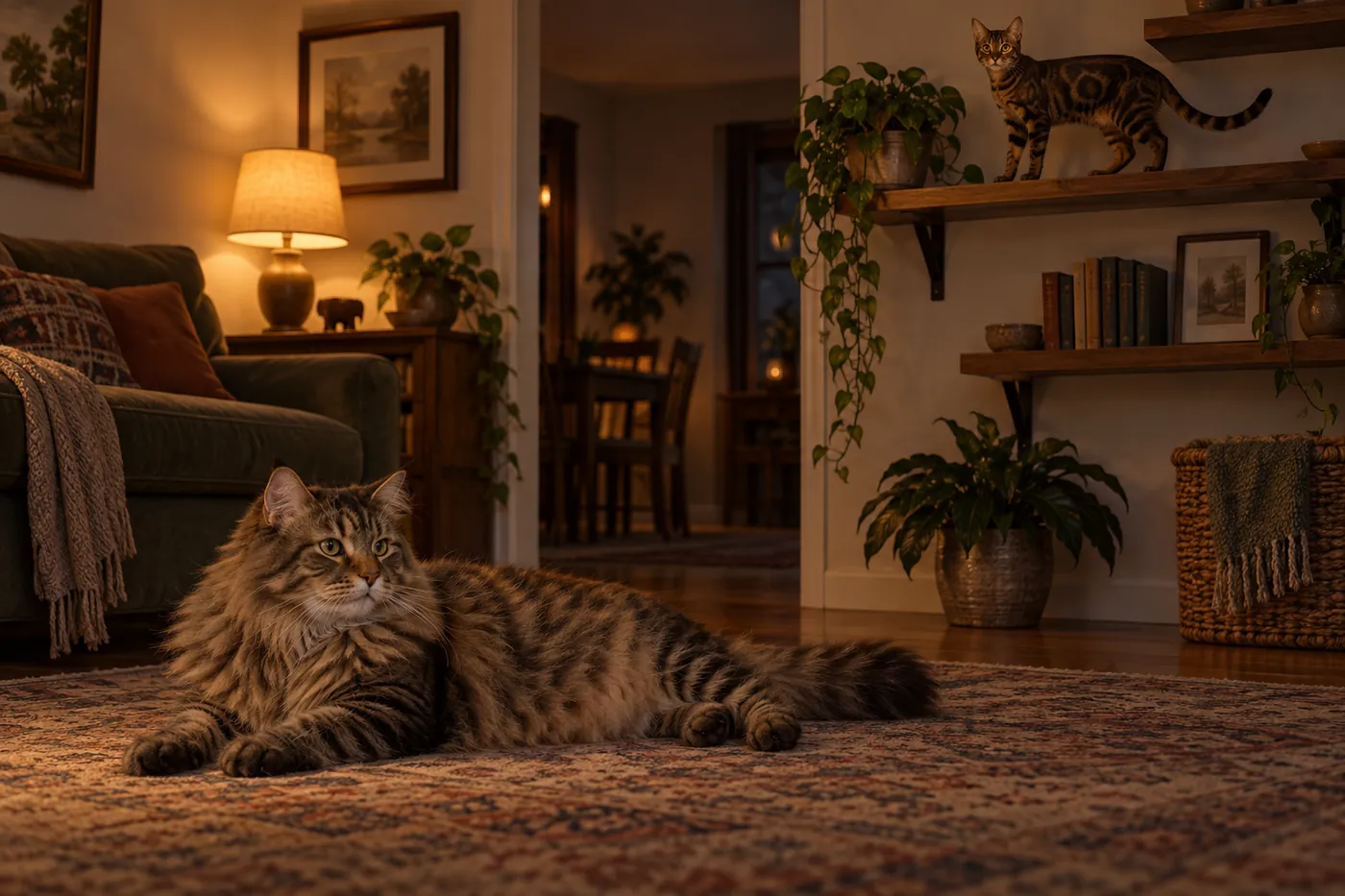
Shedding and grooming follow the coat. A short Bengal-type coat needs little attention, while a long Maine Coon-type coat needs combing two or three times a week, which CFA recommends to control shedding and prevent mats and hairballs. A first-cross kitten will usually have the short coat, but a later-generation cat can have either.
What Health Concerns Come From Each Side?
Both breeds carry documented conditions worth screening for.
| From the Bengal | From the Maine Coon |
|---|---|
| Hypertrophic cardiomyopathy (HCM) | Hypertrophic cardiomyopathy (HCM) |
| Progressive retinal atrophy (PRA-b) | Hip dysplasia |
| Pyruvate kinase deficiency (PKDef) | Spinal muscular atrophy (SMA) |
HCM appears on both sides, which makes cardiac screening particularly relevant for this cross.
DNA tests exist for PRA-b, PKDef and SMA, and PK deficiency testing is recommended for Maine Coons as well as Bengals. For HCM, a DNA test exists only for the Maine Coon's MYBPC3 variant, and it covers one cause among several: cats of other breeds with HCM have tested negative for the known variants, and no variant has been identified for the Bengal. A Maine Coon parent with one copy passes it to about half its kittens, and one copy carries far less risk than two, with one analysis putting the chance of disease at 8 percent against 58 percent. An echocardiogram of each parent, with its date, remains the check that shows the heart itself.
No study has measured how long this cross lives. UK primary-care records put the average companion cat's life expectancy at birth at 11.74 years, which is a population figure rather than a forecast for any one cat.
How Do You Evaluate the Individual Cat?
Both parents are described as getting along with other animals. CFA says Maine Coons get along well with children and other animals and are easy to train, although their size can intimidate both at first. It describes Bengals as confident, extremely intelligent and quite trainable, often learning tricks, and good with other pets when properly introduced. A cross from these two is likely to be quick to learn, and introductions to resident pets deserve the same care. With a large, energetic cat, the practical question is whether young children can be taught to handle a heavy animal gently.
- Observe the actual coat length and texture to understand the grooming commitment
- Estimate adult size from the current frame and growth trajectory; ask about the parents' actual weights
- Watch the energy level: does it climb relentlessly (Bengal-like) or play in calmer bursts (Maine Coon-like)
- Handle the cat to assess tolerance
- The parents' heart scan dates and the Maine Coon parent's MYBPC3 result, with any other health records
- If the seller claims specific breed parentage, ask what documentation supports it
A healthy, well-tempered cat whose size, coat and energy suit your household is a good match regardless of the breed names attached.
Common Questions
Is a Bengal Maine Coon mix a breed?
No registry recognises it and no standard defines it. The name describes a cat with Bengal and Maine Coon ancestry.
How big does a Bengal Maine Coon mix get?
Unpredictable but potentially very large. Both parent breeds are above-average size, and a Maine Coon parent can contribute a 20-plus-pound frame.
What health problems does this mix have?
HCM occurs in both parent breeds. A DNA test covers only the Maine Coon's MYBPC3 variant, so the parents' heart scans matter more than a clear DNA result. PRA-b and PKDef come from the Bengal side, and hip dysplasia and SMA from the Maine Coon side.
Checked Against
- GCCF: Bengal gccfcats.org
- CFA: Maine Coon cfa.org
- OMIA: Hypertrophic cardiomyopathy variants in cats omia.org
- OMIA: Long hair and FGF5 in cats omia.org
- Ofri et al.: Early-onset retinal degeneration in Bengal cats (2015) pubmed.ncbi.nlm.nih.gov
- Grahn et al.: Pyruvate kinase deficiency across cat breeds (2012) pubmed.ncbi.nlm.nih.gov
- Loder and Todhunter: Hip dysplasia in the Maine Coon (2018) pubmed.ncbi.nlm.nih.gov
- Kopke et al.: Maine Coon case tested for spinal muscular atrophy (LIX1), 2022 pubmed.ncbi.nlm.nih.gov
- Teng et al.: Life tables of annual life expectancy for cats in the UK (2024) pubmed.ncbi.nlm.nih.gov
- CFA: Bengal cfa.org
Published 17 September 2026. Last updated .