Is Antifreeze Toxic to Cats, and What Should You Do After Exposure?
Ethylene-glycol antifreeze can poison a cat after a small exposure. Call an emergency practice immediately, even if the cat seems well.
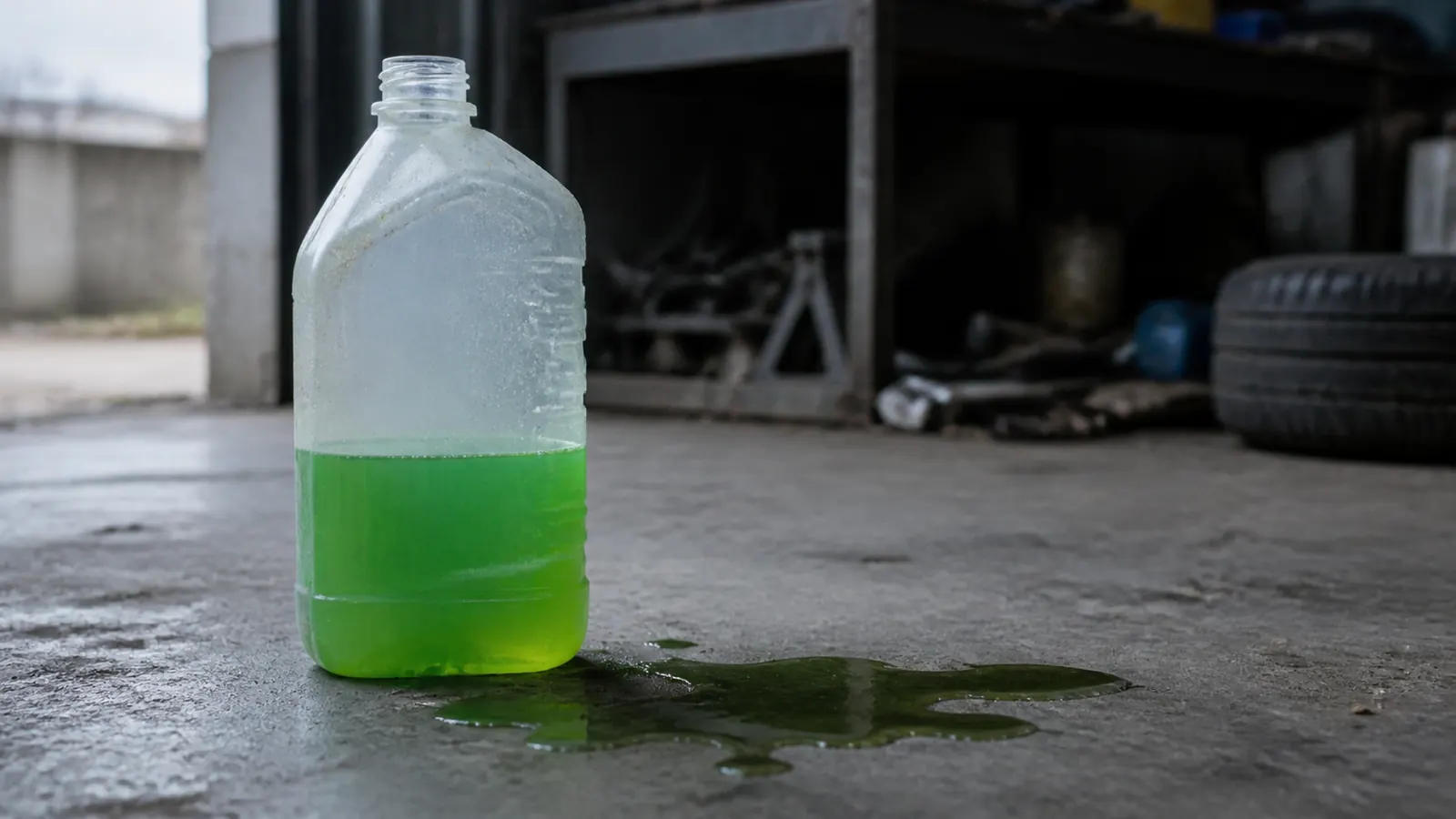
Antifreeze containing ethylene glycol can cause severe poisoning and acute kidney injury in cats. The amount that matters can be small, and a cat can swallow it while cleaning contaminated fur as well as drinking a spill.
What to do first
Tell the practice you suspect antifreeze, give the possible time of contact and identify the product if you can. Photograph the label or take the safely closed container. If the timing or amount is unknown, say so; do not delay travel to reconstruct it.
- Keep the cat and other animals away from the spill.
- Call an emergency practice and follow its travel and contamination advice.
- Prevent further licking of contaminated fur as safely as possible without delaying care.
- Take the product details, exposure time and cat's approximate weight.
- Tell the team about any vomiting, unsteadiness, unusual drinking or reduced urine.
Do not induce vomiting or give alcohol, charcoal, food or another home remedy. Veterinary use of an antidote is monitored treatment, not permission to give a household substitute.
Keep the cat contained during transport; trying to wash or wipe an unsecured cat in a moving car risks injury and escape.
Why the kidneys are at risk
The body converts ethylene glycol into toxic metabolites. These disturb acid balance and can contribute to calcium oxalate crystal formation and severe kidney damage. Early treatment aims to prevent that conversion and manage the developing effects.
Merck's veterinary reference reports a minimum lethal dose of undiluted ethylene glycol around 1.4 ml/kg in cats. This is a toxicology reference, not a safe-amount boundary: commercial concentrations, swallowed amounts and individual susceptibility vary. A small spill should be assessed without converting teaspoons into a home verdict.
Symptoms and timing
Early signs can include vomiting, marked thirst, urination and drunken-looking unsteadiness. A cat may later seem less unsteady even while internal injury progresses. Kidney failure can develop within 12 to 24 hours in cats, earlier than the commonly repeated dog timeline.
| What you may observe | What to do |
|---|---|
| Known or possible contact, with no signs | Call and travel urgently as directed; early treatment offers more options |
| Vomiting or unsteady movement | Emergency assessment; prevent falls and do not give anything by mouth |
| An apparent improvement | Continue urgent care; outward improvement does not exclude ongoing injury |
| Little urine, profound weakness or collapse | Emergency care at once, regardless of when exposure happened |
There is no dependable hour-by-hour sequence for every cat. An early treatment window measured in hours explains urgency, but it should not be used to write off a cat once a particular clock time has passed. The treating team must assess what treatment and support remain appropriate.
How the practice assesses it
The history, examination, blood and urine tests are considered together. Tests may look for ethylene glycol, acid-base disturbances, kidney changes and crystals. Test usefulness changes with time; the absence of one finding does not automatically rule out poisoning.
Treatment may include an antidote to limit metabolism, intravenous fluids and close monitoring. A cat with established kidney injury may need specialist support, including consideration of dialysis. Prognosis depends on timing, injury and response, so neither guaranteed full recovery nor automatic futility belongs in a home assessment.
Colour, sweetness and other products
Green, pink, orange or blue dye does not reliably identify the chemistry. Read the ingredient label and tell the vet if the liquid cannot be identified. Do not taste it or assume a clear spill is water.
Cats do not have a functioning sweet-taste receptor, so sweetness is not a reliable explanation for feline exposure. Grooming contaminated paws is enough to make access important.
Other garage and household fluids may have different toxic ingredients; their container details matter too. Propylene-glycol coolant is generally less toxic than ethylene-glycol coolant, but it is not harmless to cats. Do not substitute or mix coolants without checking the vehicle's requirements. Safe storage and spill control are needed whichever product is used.
Prevent further exposure
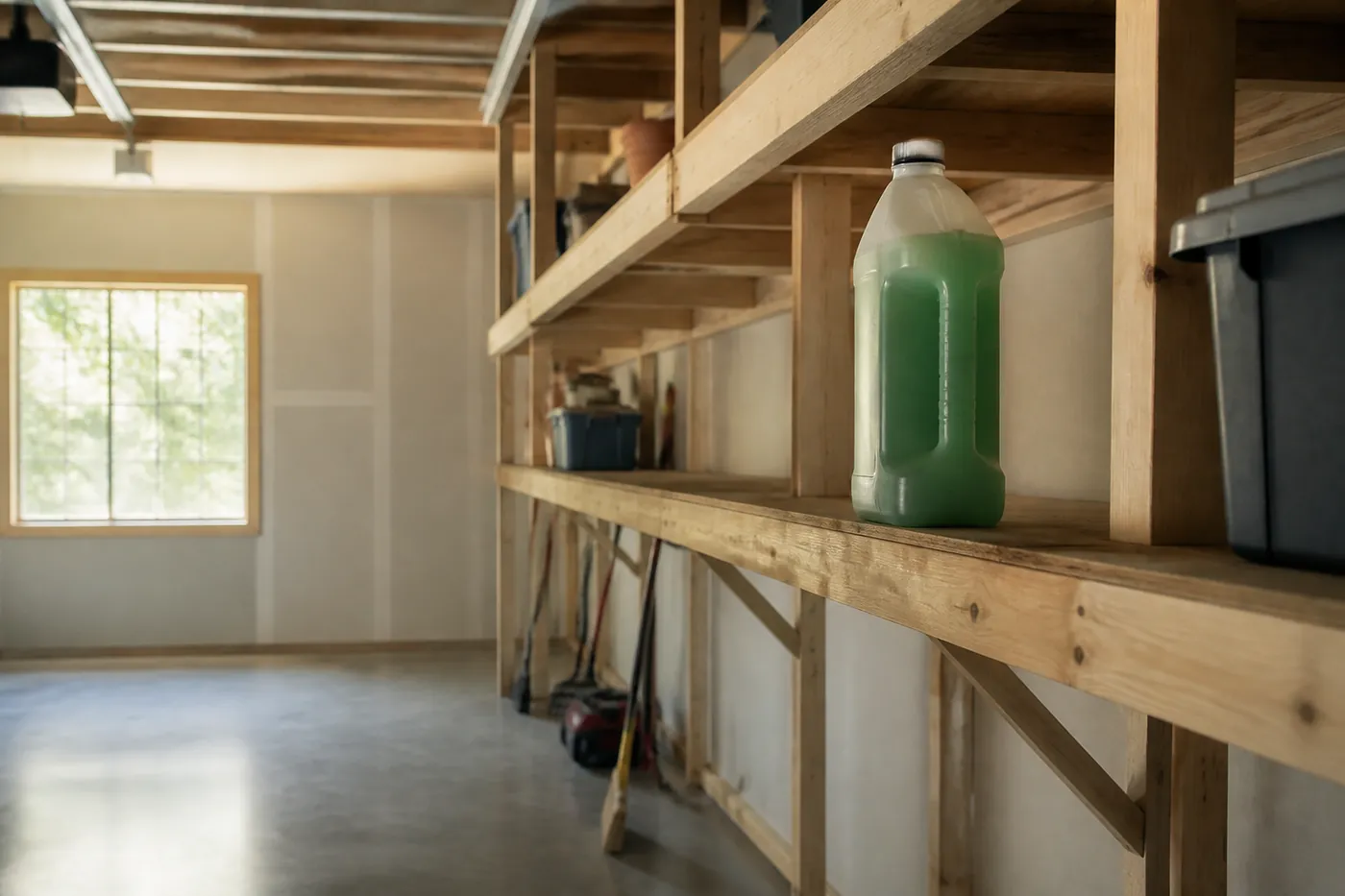
Exclude animals while a spill is contained and cleaned according to the product instructions. Collect contaminated materials safely and follow local disposal requirements. Do not flush coolant into a drain, garden or wider driveway, where it could expose more animals.
Repair leaks, keep containers closed and avoid decanting into drink bottles. Check garages and other sheltering places before shutting doors or starting work.
If several animals may have had access, tell the practice about all of them; do not prioritise dogs over cats on the assumption that sweetness determines exposure.
If deliberate contamination is suspected, keep people and animals away, record what can be observed safely and contact the appropriate local authority. Veterinary treatment comes first; do not leave a suspected poison accessible simply to preserve a photograph.
Common Questions
How much antifreeze is dangerous?
Very small amounts of ethylene glycol can matter. Concentration, amount and body weight affect risk, so call immediately after possible contact rather than using a teaspoon estimate.
Is it too late after three hours?
Do not make that decision at home. Earlier treatment is much more effective, but every suspected exposure needs emergency assessment whatever the elapsed time.
Is pink coolant safe?
Colour does not identify the active ingredient. Read the label and report any possible exposure to the vet.
Checked Against
Published 2 September 2026. Last updated .