
What Is a Toybob, and Is Its Small Size Related to the Munchkin Gene?
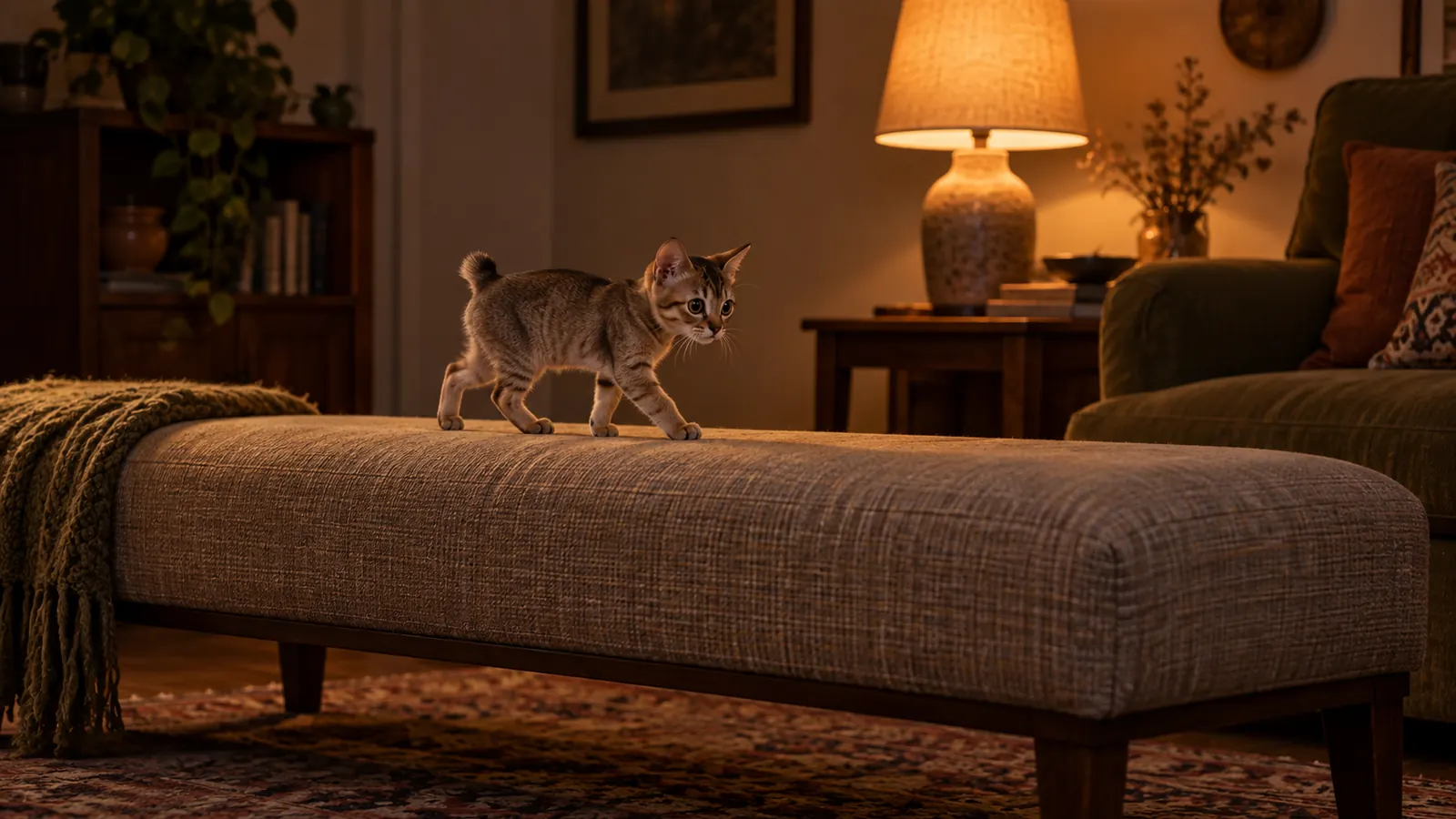
A Toybob is a naturally small cat with a short bobbed tail that CFA describes as one of the smallest known breeds. Its small stature is proportional rather than the short-legged dwarfism of the Munchkin, and no skeletal deformity of the kind documented in short-legged breeds has been reported in it. CFA advanced the Toybob to championship in 2025.
- Origin
- Russia, from a cat Elena Krasnichenko adopted in the Rostov region in 1983
- Coat
- Shorthair or longhair, in every genetically possible colour and pattern (CFA)
- Size
- Very small, compact and proportional; fully mature at about 18 months (CFA)
- Typical weight
- No weight figure in the CFA description, which calls the Toybob one of the smallest known breeds
- Life expectancy
- Not measured by any population study
- Activity level
- Moderate; described as playful and affectionate without extreme energy
- Grooming
- Low for the shorthair, moderate for the semi-long; standard coat care
- Suits
- Households that can protect a very small body from injury and provide gentle, size-appropriate handling
A Toybob is, in CFA's words, one of the smallest known cat breeds, and it reaches full maturity at about 18 months. The breed takes its name from a full-grown male that was mistaken for a kitten at a 1989 cat show.
The small size is the breed's defining trait, and it comes from a body scaled down evenly rather than from the short-legged dwarfism of the Munchkin, which is caused by a variant of the UGDH gene.
Why Is the Munchkin Distinction Important?
The Munchkin and the breeds built on it, such as the Kinkalow, Lambkin, Bambino, Minskin, Minuet and Skookum, take their short legs from Munchkin ancestry, and in the Munchkin the cause is that UGDH variant. The body is normal-sized but carried on short limbs, and in the 2020 study that identified the variant, radiographs of standard Munchkins showed an inward-rotated upper foreleg bone with a poorly fitting elbow and a forearm bone bent by about 43 degrees.
The Toybob is proportionally small. Its legs, body, head and tail are all scaled down together, the same way a small-breed dog is smaller overall rather than having a normal body on short legs.
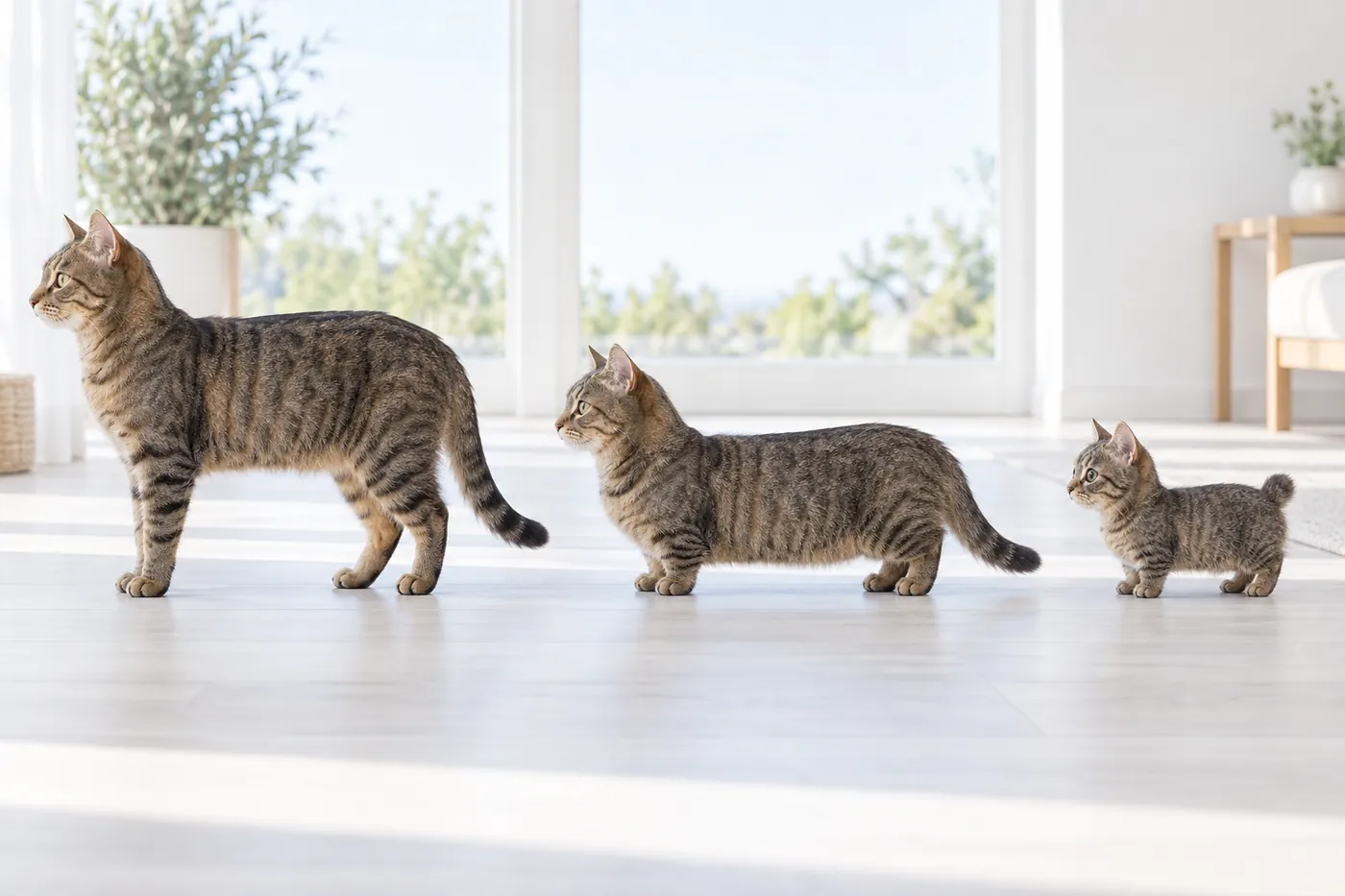
The variant is dominant, so a single copy shortens the legs, and no Munchkin with two copies has been found, which with smaller litters points to kittens with two copies dying before birth. Because one copy always shows, a cat with legs in proportion to its body is not carrying it, and the limb changes and litter losses that come with the variant have no route into a Toybob.
No published study has identified the genes behind the Toybob's own small size, so its inheritance has not been measured the way the Munchkin's has.
What Does a Toybob Look Like?
The body is compact, muscular and well-proportioned. Despite the small size, the breed should not look fragile or delicate.
The tail is bobbed, with kinks and curves in any combination, and can look almost straight; CFA sets its length between two vertebrae and the hock.
The line began in 1983, when Elena Krasnichenko adopted a stray in the Rostov region of Russia. The cats were known there as the Skif-Thai-Don before the name Toybob was adopted in the 1990s.
CFA accepts both shorthair and longhair coats in every genetically possible colour and pattern.
The head is rounded with large eyes relative to the face and medium ears. The overall impression is of a healthy, proportional cat that happens to be very small.
What Does Living With a Very Small Cat Actually Require?
The most practical consequence of the Toybob's size is vulnerability.
An adult this small can be injured by a fall, a closing door, being stepped on or being picked up carelessly in ways that a 10-pound cat would not be. Knowing where the cat is before closing a door or sitting down becomes a household habit.
Children must be supervised closely. The breed's reported affectionate temperament means it may approach rather than flee, which increases the risk of accidental handling injury.
Other pets in the household need to be assessed for size compatibility. A large, boisterous dog or a much larger cat playing too roughly with a Toybob can cause real harm without intending to.
Standard equipment is sized for a much heavier cat. A high-sided tray can be hard to climb into, and a cat tree with widely spaced platforms asks for bigger jumps than a cat this small makes comfortably.
What Temperament Does a Toybob Have?
CFA describes the Toybob as affectionate, active, playful and agile, interactive without being overly active, and not particularly vocal.
Nothing about the small body makes the cat timid, and breed descriptions portray a confident cat that seeks people out rather than hiding from them.
Activity level is moderate. The breed is playful without the sustained intensity of Siamese-family breeds or the climbing drive of a Bengal.
Because most are food-motivated, short reward-based sessions can teach a Toybob to walk into its carrier or come when called, which helps in a home where the cat needs to be found before a door closes.
What Health Evidence Exists?
No population health study has looked at the Toybob, and its recent recognition and small numbers mean the data does not yet exist.
No breed-specific condition has been documented, and the Munchkin's limb findings do not carry over to a cat that lacks its variant.
No population study has measured how long Toybobs live.
A small body has small reserves. A day or two off food, or a bout of vomiting, takes a larger share of a Toybob's weight than it would from a 10-pound cat, so a loss of a few ounces is worth noticing.
- CFA
- Championship (2025)
- WCF
- Championship (2017), per the breed club
- TICA
- Advanced New Breed (2025), per the breed club
- Origin
- Russia, Rostov region, from 1983
- Size
- One of the smallest known breeds; mature at about 18 months
- Tail
- Bobbed and kinked, two vertebrae to the hock
- Size mechanism
- Proportionally small body; legs not shortened by the Munchkin UGDH variant
- Skeletal concerns
- None documented; the UGDH-associated deformities do not apply
How Do You Find and Assess a Toybob?
The breed is rare. CFA championship since 2025 means a published standard exists to judge a cat against, but breeders are still uncommon.
- Registration papers from CFA, TICA or WCF naming both parents
- Adult size confirmed as proportionally small, not short-legged
- The naturally short tail is present
- Health records from a veterinarian
- The individual cat's temperament assessed during calm contact
- Equipment and the home layout reviewed for a very small body
A shelter cat that is unusually small may have Toybob heritage, but small size alone does not confirm breed identity. Many cats are small for reasons unrelated to breed genetics, including early malnutrition, illness or mixed ancestry.
Common Questions
Is a Toybob related to the Munchkin?
No. The Toybob's small size is proportional, affecting the whole body equally. The Munchkin's short legs come from the UGDH dwarfism gene, which shortens only the limbs. That variant is dominant, so any cat carrying it has short legs, and a Toybob's legs are in proportion to its body.
How small is a Toybob?
Very small: CFA describes it as one of the smallest known breeds, reaching full maturity at about 18 months, and the breed name came from a full-grown male mistaken for a kitten at a 1989 cat show.
Is the Toybob a recognised breed?
Yes. CFA advanced it to championship in 2025, and WCF granted championship status in 2017. In TICA the breed is an Advanced New Breed, one step below championship, according to the International Toybob Cat Club.
Are Toybob cats fragile?
The temperament is not fragile, but the small body is more vulnerable to physical injury from falls, doors, rough handling and larger animals. The household needs to accommodate the size.
What health problems do Toybob cats have?
No breed-specific condition has been documented. The UGDH skeletal concerns that affect Munchkin-derived breeds do not apply. The small body size means any illness or caloric deficit affects the cat faster than a larger breed.
Checked Against
Published 17 September 2026. Last updated .





