
What Is a Sokoke, and Where Does This Kenyan Forest Cat Come From?
A Sokoke is a lean, athletic domestic cat from the Arabuko-Sokoke Forest on Kenya's coast. Its blotched tabby pattern has hollow-looking centres, often called the African tabby, and a 2008 genetic study found the breed closely related to the random-bred cats of Kenya. FIFe has recognised it since 1994.
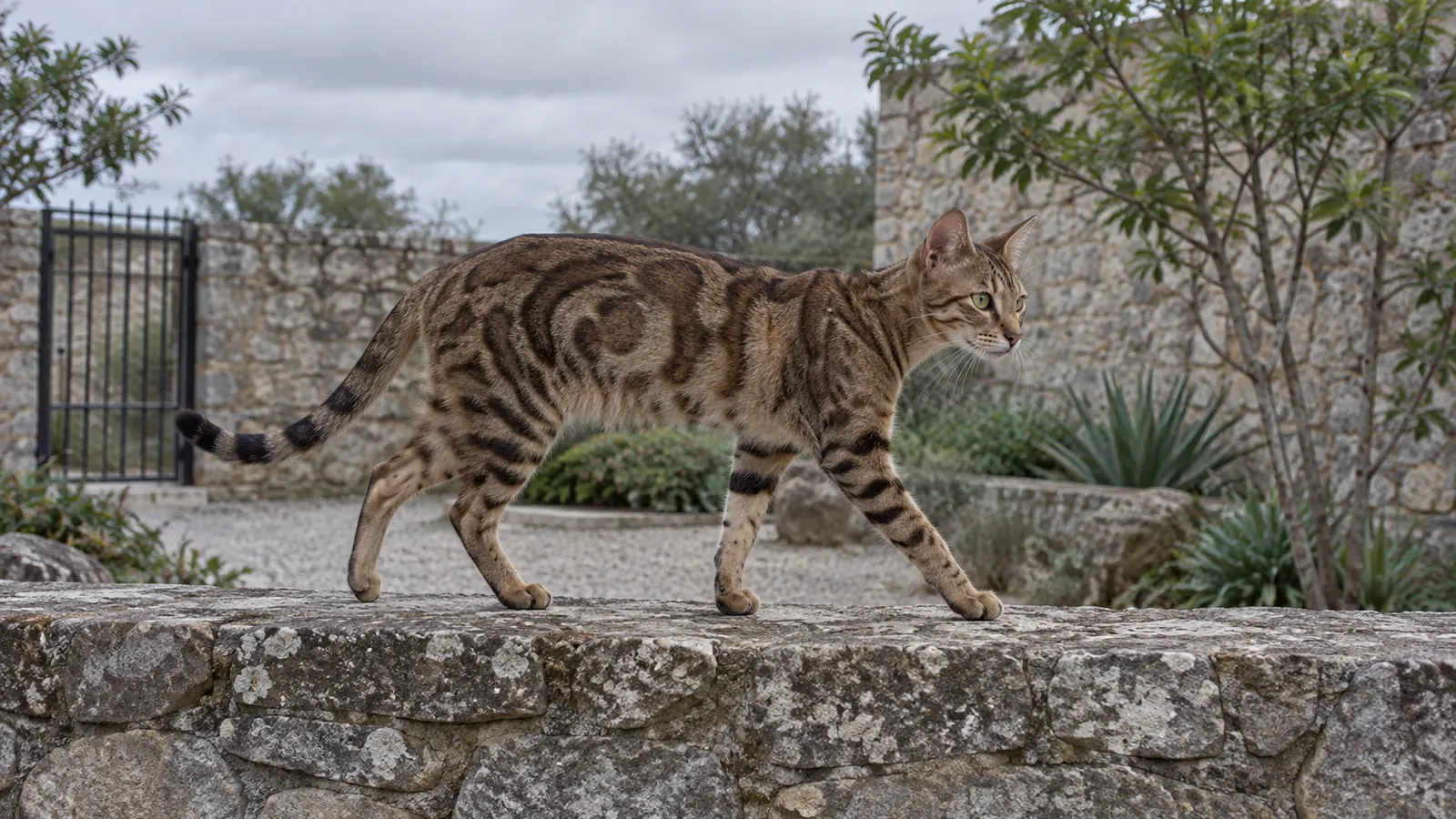
- Origin
- Kenya, from cats around Watamu and the Arabuko-Sokoke Forest, bred from 1978
- Coat
- Short, close-lying, hard-textured with a distinctive modified classic tabby (African tabby) pattern
- Size
- Medium, lean and muscular with a long body, long legs and a notably small head relative to the body
- Typical weight
- Secondary sources commonly cite 5 to 10 pounds
- Life expectancy
- Secondary sources cite 9 to 15 years; no breed-specific population study was found
- Activity level
- High; athletic, climbing-oriented, vocal and strongly social
- Grooming
- Low; the short hard-textured coat needs minimal care
- Suits
- Active households that provide climbing access, interactive play and consistent company
A Sokoke is a domestic cat that originated as a feral population in the Arabuko-Sokoke Forest on the coast of Kenya.
The Sokoke is a natural landrace: a population of domestic cats that took its appearance from the place it lived rather than from a breeding plan. A 2008 genetic study found the breed closely related to the random-bred cats of Kenya, which fits a local domestic population and not the wildcat cross its wild look sometimes suggests.
How Did the Sokoke Reach the Cat Fancy?
In 1978 Jeni Slater began breeding from distinctive tabby cats found in and around Watamu, near the Arabuko-Sokoke Forest on the Kenyan coast, and at first called them the African Shorthair.
In 1983 Gloria Moeldrup took cats from Slater to Denmark, and the breed was first shown in Copenhagen in 1984. Europe has been the centre of breeding since.
FIFe has recognised the Sokoke since 1994. CFA does not list it.
- FIFe
- Recognised since 1994
- CFA
- Not listed
- Origin
- Arabuko-Sokoke Forest, Kenya
- Breed type
- Natural landrace from a local domestic population
- Genetic evidence
- Closely related to random-bred cats from Kenya (2008 study)
- Founding population
- Small, from cats around Watamu and the Arabuko-Sokoke Forest
The genetic evidence comes from a 2008 study of 22 breeds and 17 random-bred populations, using 38 DNA markers, which found the Sokoke closely related to random-bred cats from Kenya. That is the result expected of a breed drawn from a local domestic population, so it groups the Sokoke with African cats rather than with breeds founded on European or American stock.
What Makes the Sokoke's Tabby Pattern Unique?
The Sokoke carries a blotched (classic) tabby pattern sometimes called the African tabby. The agouti gene leaves the centres of the blotches looking hollow, so the markings read as tighter, more broken shapes than the broad solid swirls of a Western classic tabby.
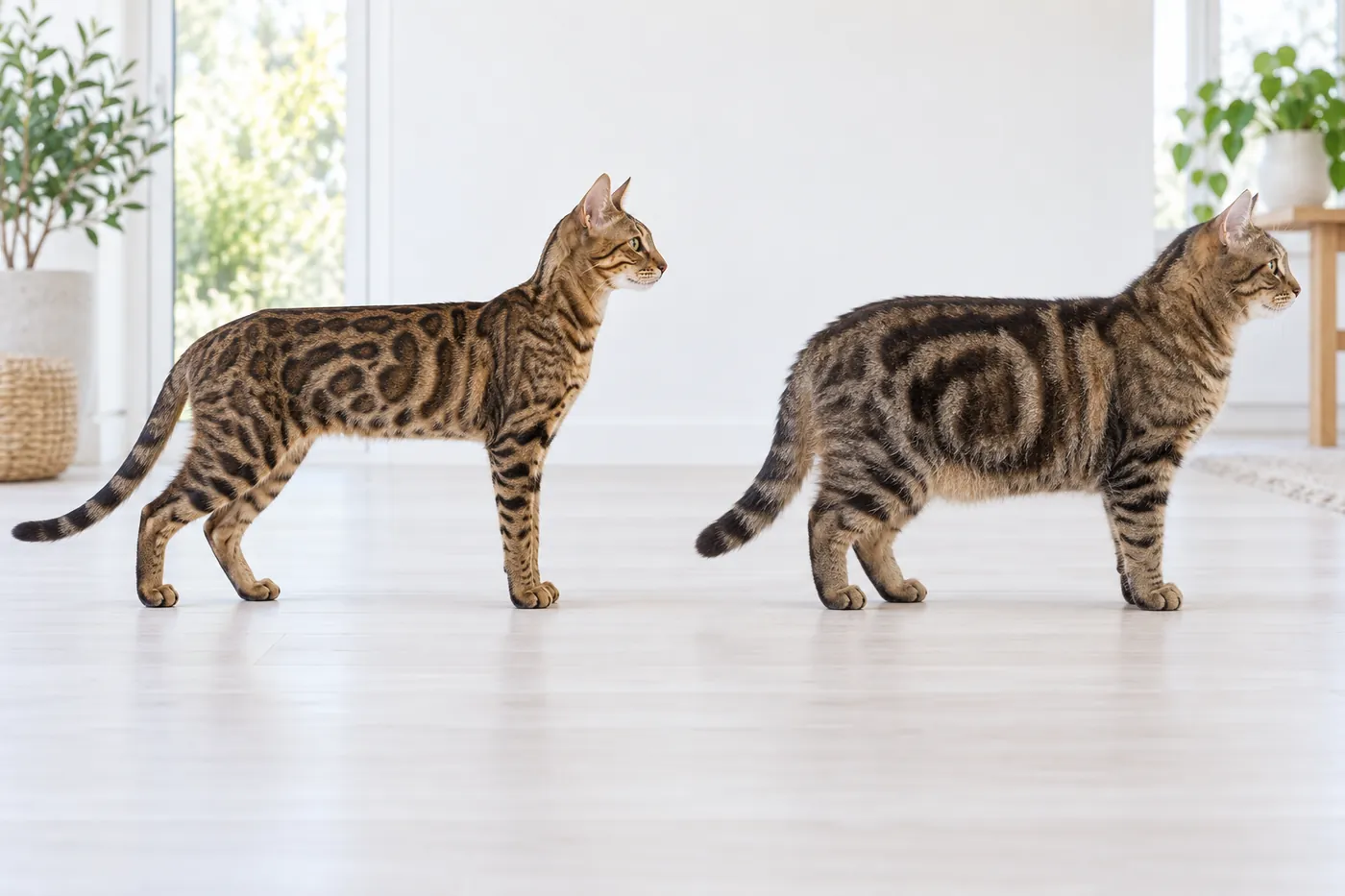
The background colour is warm brown, and the tabby markings are dark brown to black. The overall impression is of a sleek, wild-looking pattern on a lean frame.
The coat is short, hard-textured and lies close to the body. It lacks the soft plush feel of breeds with dense undercoats.
The texture is practical for a warm-climate origin: minimal insulation, easy drying and low maintenance.
What Is the Sokoke's Temperament Actually Like?
FIFe describes the Sokoke as very active, fond of climbing and vocal toward its keepers, and notes that Sokokes bond deeply to each other and to their owners. Because that bond runs deep, an adult Sokoke that is rehomed needs a longer adjustment period than most cats.
Owners report a cat that follows people, chatters and chirps rather than meowing in the conventional sense, and establishes strong attachment to specific individuals. The social drive is high, and isolation tolerance is low.
The activity level is also high. Sokokes are athletic climbers with strong jumping ability and a keen interest in their environment.
An understimulated Sokoke may redirect that energy into exploration of places you did not intend it to go.
This is a cat from a warm equatorial forest. Some Sokoke owners report sensitivity to cold temperatures, though controlled studies on this have not been published.
Providing warm resting spots and avoiding cold draughts is a reasonable precaution for a breed with minimal body fat and no dense undercoat.
What Is Known About Sokoke Health?
Very little health information is specific to the Sokoke, because the breed's small population limits what can be studied.
No breed-specific genetic condition has been documented at the population level. A small founding population limits genetic diversity, which raises the chance that related parents share and pass on the same recessive variants. That is why the number of unrelated lines behind a kitten matters more for a Sokoke than for a common breed.
Secondary sources cite a lifespan of 9 to 15 years. That range is wide and unverified, and nobody has recorded how long bred Sokokes actually live, so it gives no firm basis for planning.
The breed is medium-sized, lean and athletic. Secondary sources cite 5 to 10 pounds.
What Does the Sokoke's Coat Need?
The short, hard-textured coat needs no more than a weekly hand pass to remove loose hair and check the skin.
Shedding is light. There is no dense undercoat to produce seasonal surges.
The hard coat texture means the breed does not develop the mats that longer or softer coats are prone to. Grooming is one of the easiest aspects of Sokoke ownership.
How Does a Sokoke Fit a Family or Multi-Pet Home?
The Sokoke's strong social bond and active temperament can suit a family household when the cat has been socialised with children from a young age.
Older children who engage with the cat through play tend to match the breed's energy.
A second social cat can provide company and a play outlet during the day, and Sokokes are described as bonding closely with each other. A reserved or timid companion may find the Sokoke's energy level overwhelming.
How Rare Is the Sokoke, and What Does Finding One Involve?
The Sokoke is one of the rarest recognised breeds in the world. Active breeders are few, concentrated in Europe, and the waiting list may be substantial.
The rarity reflects a small founding population from one stretch of the Kenyan coast, a limited number of cats taken abroad and a breeding community that is small by necessity.
If you want a lean, athletic, active cat with a distinctive wild-looking tabby pattern and do not find a Sokoke breeder, the Ocicat offers a spotted domestic cat with wider availability and full TICA and CFA championship status, though the body type and pattern are different.
- FIFe or other registry papers naming both parents
- The programme's pedigree diversity: how many unrelated lines it draws from
- Whether Kenyan imports have been used to broaden the gene pool
- The individual cat's temperament observed during calm, unpressured contact
- Warm resting options available in the home for a breed adapted to equatorial temperatures
Common Questions
Is a Sokoke a wildcat hybrid?
No. A 2008 genetic study found the Sokoke closely related to the random-bred domestic cats of Kenya, and it is treated as a natural landrace from the Kenyan coast.
Is the Sokoke a recognised breed?
FIFe has recognised it since 1994. CFA does not list the breed.
How rare is the Sokoke?
It is one of the rarest recognised breeds in the world, with a small number of active breeders concentrated in Europe.
What does a Sokoke look like?
A lean, athletic, medium-sized cat with a distinctive tightly defined modified classic tabby pattern on a warm brown background. The body is long-legged with a proportionally small head.
Are Sokoke cats vocal?
Yes. They are described as chattering and chirping rather than meowing conventionally, and they bond strongly to specific people with a high social drive.
Checked Against
Published 17 September 2026. Last updated .





