
What Is a Black Sphynx, and How Does Colour Work on Hairless Skin?
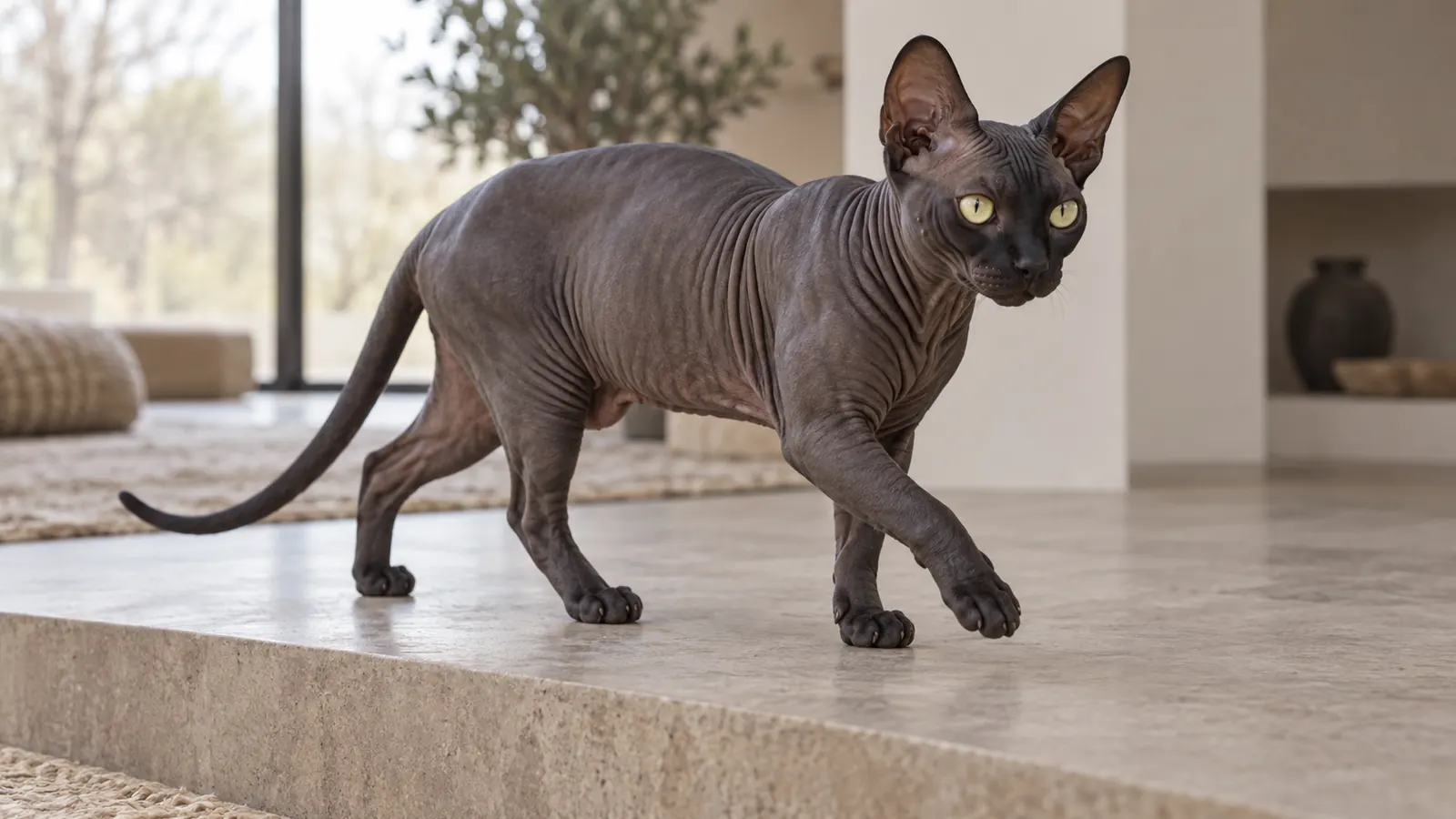
A black Sphynx expresses its colour as skin pigmentation rather than fur colour. The same genetics that produce a dense black coat in a furred breed produce dark grey-to-black skin in a hairless one. CFA and TICA both accept the colour, and it changes one practical detail: pigment gives dark skin more protection from the sun than pink skin has, but it hides the redness that shows early sun damage on a paler Sphynx.
- Origin
- Same as the Sphynx; solid black is one of the accepted colours
- Coat
- Hairless or near-hairless; colour expressed as skin pigmentation in dark grey to black
- Size
- Same as the Sphynx: medium, muscular, barrel-chested
- Typical weight
- Same as the Sphynx; secondary sources cite 6 to 12 pounds
- Life expectancy
- Same as the Sphynx; TICA gives a broad estimate of about 7 to 15 years
- Activity level
- Same as the Sphynx: high, social, demanding
- Grooming
- Same as the Sphynx: skin cleaning when oil builds up, with closer checks for sun damage that dark skin hides
- Suits
- Same as the Sphynx: households that provide warmth, company and regular skin care
A black Sphynx carries its colour in its skin, because it has almost no coat to hold it.
The same B-locus and non-agouti genetics that produce a jet-black fur coat in a furred breed produce dark pigmentation in the skin of a hairless one.
How Does Colour Work on a Hairless Cat?
On a furred cat, melanin is deposited in the hair shaft and the visible colour is the hair.
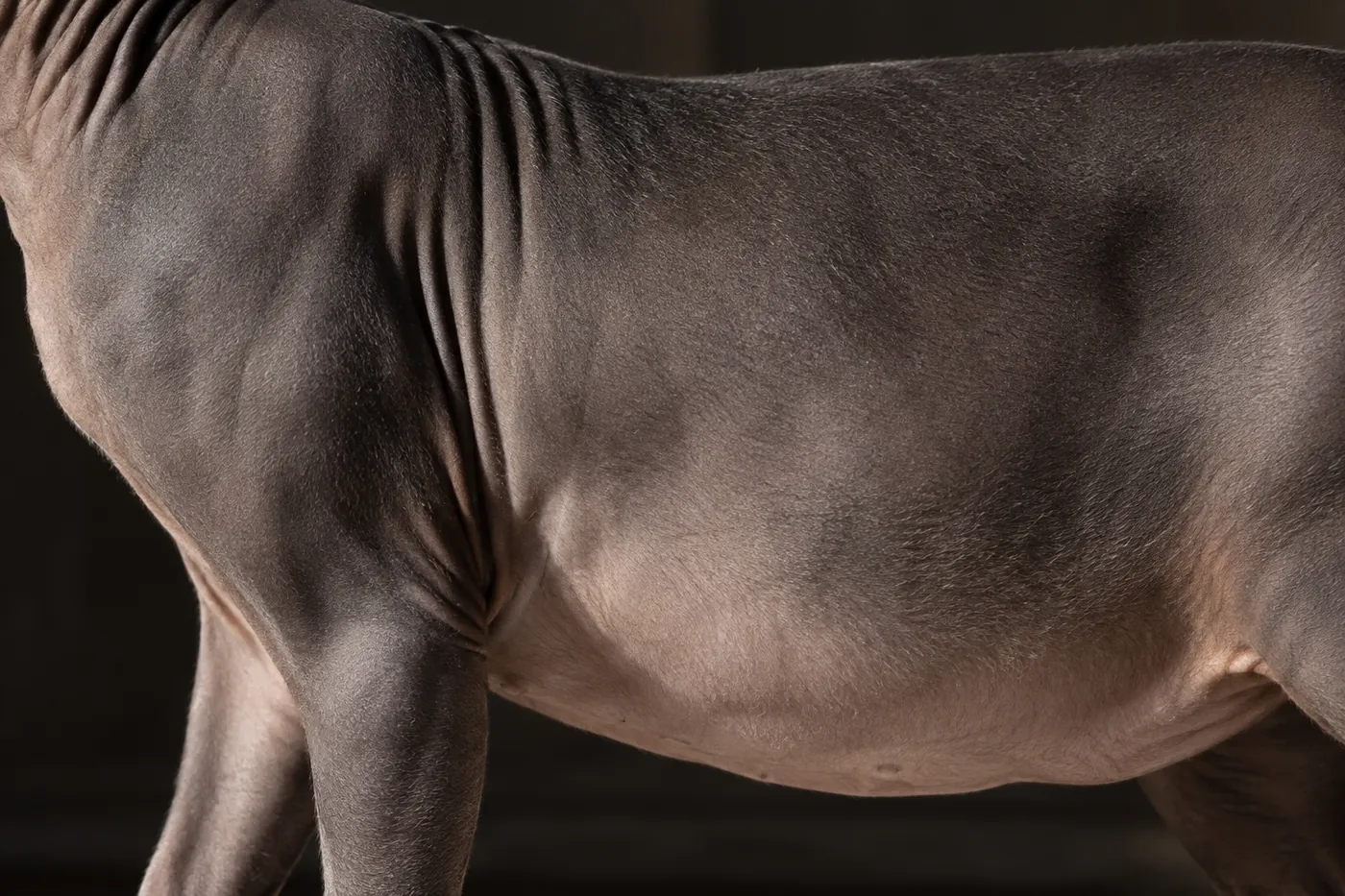
On a Sphynx, the hair shaft is absent or nearly so. The melanin is deposited in the skin, and the visible colour is the skin.
A black Sphynx appears dark grey to brownish-black rather than the glossy jet of a black-coated cat. The shade is often uneven, usually darker along the back and paler on the belly.
The very fine residual fuzz that most Sphynx cats carry may show a hint of colour, but the dominant visual impression is the skin tone.
How Does Dark Skin Change Sun Risk for a Black Sphynx?
All Sphynx cats need sun protection, because skin with almost no hair over it can burn and sustain ultraviolet damage.
Pigment changes that risk in two directions. Melanin absorbs ultraviolet light before it reaches deeper skin cells, and the Merck Veterinary Manual names cats that are all or partly white as the ones commonly affected by sun-induced skin cancer, on white-skinned ears, eyelids, nose and lips. Dark skin is therefore better protected than pink skin. Pigment lowers the risk without removing it, and the same pigment makes redness far harder to see.
Sun management is the same as for any Sphynx: an indoor life, shaded warm spots, and beds moved out of direct midday sun at a bright window. What changes is how damage shows. Redness, the first sign on a pale cat, may barely register on dark skin, so a scaly or crusted patch that persists, or a sore that does not heal, is the sign that needs a veterinary examination.
- Colour class
- Solid black, recognised by CFA and TICA within the Sphynx standard
- What "black" means
- Dark skin pigmentation, not fur colour
- Genetics
- Same B-locus + non-agouti as in furred breeds
- Sun consideration
- Pigment protects better than pink skin, but hides the redness of early damage
- What does not change
- Temperament, body type, bathing routine, health screening
- Bathing
- Set by oil buildup, which does not depend on colour
Does the Colour Change the Bathing Routine?
No. Oil buildup on Sphynx skin is driven by the absence of fur to absorb it, not by the skin's pigmentation.
A black Sphynx is washed on the same basis as any other Sphynx: when residue, odour or visible buildup shows a need, since washing too often can dry and irritate the skin.
Dark skin shows pale cleanser residue more clearly than lighter skin does, so an incomplete rinse is visible as a dull film once the skin dries.
Everything else about keeping a black Sphynx is the breed's ordinary workload: warmth, skin and ear cleaning, heart screening for hypertrophic cardiomyopathy (HCM), and a cat that wants company for most of the day.
What Should a Buyer Check on a Black Sphynx?
The colour is a registration detail, so the checks that matter are the ones for any Sphynx, with one addition for the skin.
- Registration papers naming the cat as a Sphynx in a solid black colour class with CFA or TICA
- Parent heart screening by echocardiography, since HCM is the breed's main documented health concern
- A skin check in good light for scaly, crusted or sore patches, which dark skin hides more easily than pink skin
- A price set by the breeder's care and screening rather than a premium for the colour, which changes neither health nor temperament
Common Questions
Does a black Sphynx have black fur?
No. The colour is expressed as dark skin pigmentation rather than fur. A black Sphynx appears dark grey to brownish-black because the melanin sits in the skin itself.
Is solid black recognised for the Sphynx?
Yes. CFA and TICA accept it within the Sphynx breed standard.
Does a black Sphynx need different sun protection?
The same indoor-and-shade approach applies as for any Sphynx. Pigment gives dark skin more protection than pink skin, but it also hides the redness of early sun damage, so a persistent scaly or crusted patch is the sign to watch for.
Does the dark colour affect bathing?
The bathing frequency is the same. The only cosmetic note is that cleanser residue shows more visibly on dark skin, so thorough rinsing matters.
Checked Against
Published 17 September 2026. Last updated .





