
What Is an American Keuda, and Is It a Breed or a Selection Programme?
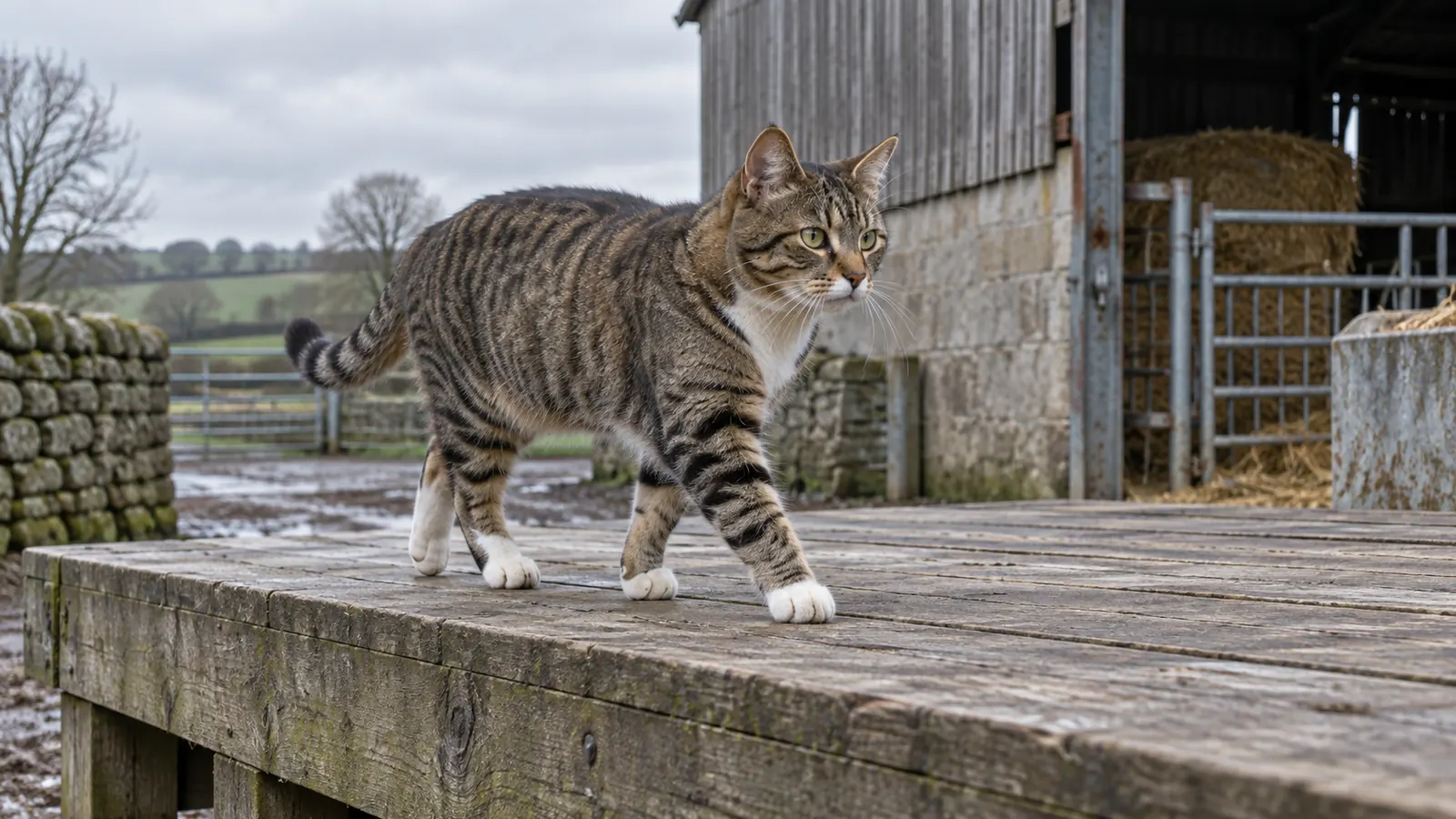
The American Keuda is a line of working barn cats from the southwestern United States that no major registry recognises as a breed. Its name is given as an initialism for Kitten Evaluation Under Direct Assessment, a 1980s barn-cat assessment programme in Texas, Oklahoma and New Mexico, and its cats were chosen for health, hardiness and working ability rather than for a fixed appearance.
- Origin
- Southwestern United States, from a 1980s barn-cat assessment programme in Texas, Oklahoma and New Mexico; bred as a line from about 2002
- Coat
- Variable; all colours, patterns and lengths accepted because appearance is not the selection criterion
- Size
- Moderate and balanced, with nothing extreme; variable because no body standard exists
- Typical weight
- No breed-specific data; standard domestic cat range
- Life expectancy
- No published data for Keuda cats
- Activity level
- Probably active, since the cats were chosen for barn work; no behaviour data exists
- Grooming
- Depends on the individual's coat; variable because coat type is not fixed
- Suits
- Rural or working households that value health and temperament over pedigree appearance
The American Keuda is a line of barn cats that no major registry recognises as a breed. Its cats were picked for how well they worked, meaning health, hardiness and skill at keeping a barn clear of rodents, and not for how they looked.
The name is usually given as an initialism for Kitten Evaluation Under Direct Assessment, a programme that is said to have run in Texas, Oklahoma and New Mexico in the 1980s to describe the ideal barn cat. Breeders began developing cats from that idea around 2002, working only with domestic barn stock.
What Does the Programme Select For?
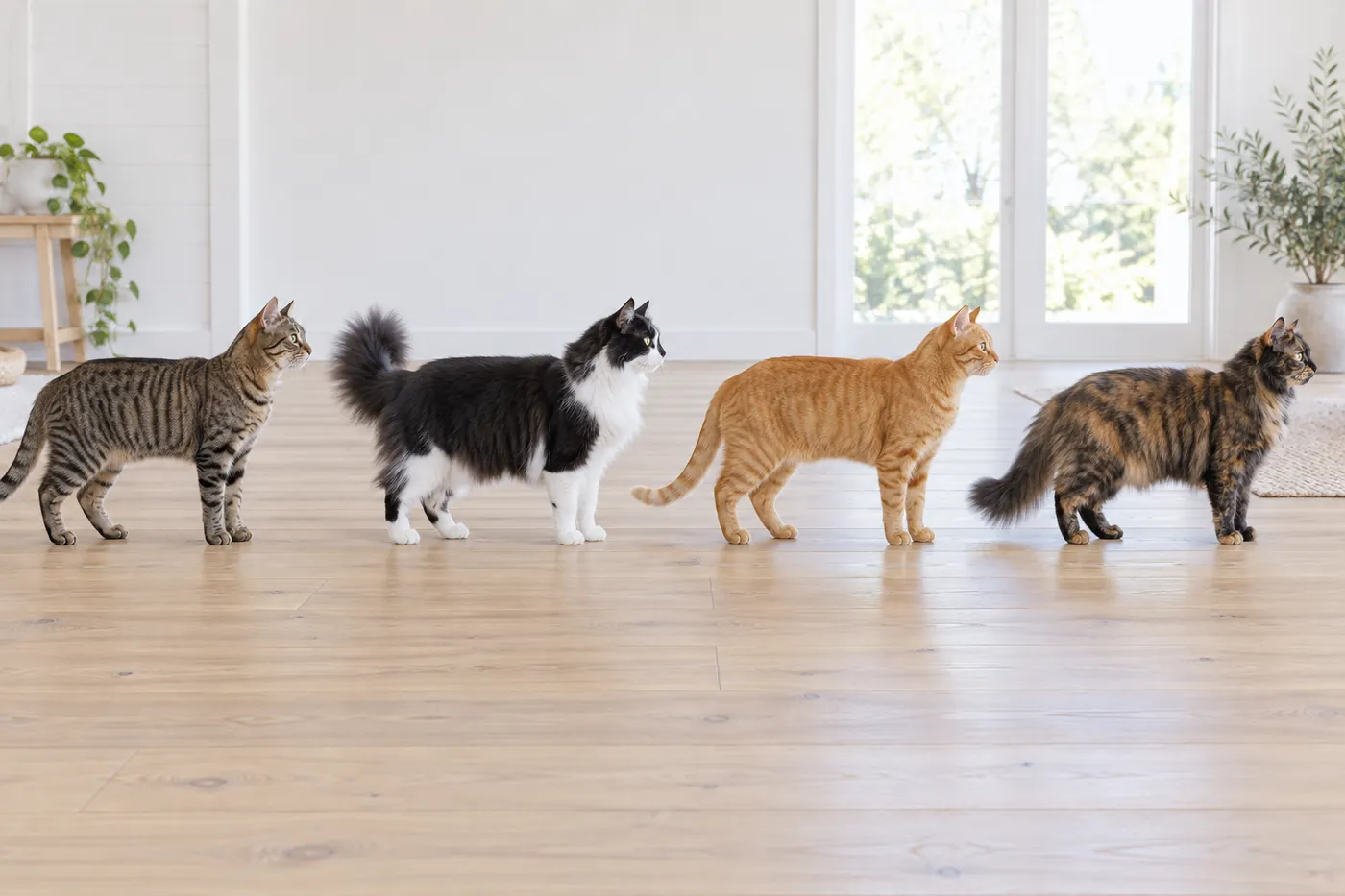
A conventional breed standard describes appearance: head shape, body proportions, coat colour, eye shape. The Keuda programme reverses that priority. The cats were chosen for utility: health, hardiness and working ability. Colour and pattern were left open because nobody was trying to fix an appearance, and a 2008 account of the breed lists tabby, tabby and white, solid and white, and tuxedo cats among them. The same account describes them as balanced cats with nothing extreme about their build, and notes that the breed association valued loose skin, which it linked to athletic movement.
Barn work favours a moderate, athletic body, because a cat that hunts for its keep has to run, climb and jump. No published standard fixes that build, so it is a tendency of working stock and an individual Keuda may be lighter or heavier than its littermates.
- TICA
- Not listed
- CFA
- Not listed
- Type
- Working barn-cat line with no written breed standard
- Name
- Initialism for Kitten Evaluation Under Direct Assessment
- Selection criteria
- Health, hardiness and working ability
- Appearance
- Not fixed; tabby, bicolour, solid and tuxedo coats all occur
- Origin
- 1980s barn-cat assessment in Texas, Oklahoma and New Mexico; bred as a line from about 2002
How Does This Differ From a Breed?
A breed carries a registry-published standard, a judging history, a controlled breeding programme and a pedigree system that tracks ancestry. The Keuda programme does not have these. What it had instead was a way of choosing cats by how they performed and how healthy they stayed. That is also the likely reason registries have not taken it up: a registry judges a cat against a written description of how it should look, and a breed defined by work gives judges nothing to measure.
This makes the Keuda closer to a working-dog line than to a show breed. The Sokoke shows the other route, a natural population that later gained registry recognition once its appearance was written into a standard. The Keuda has no such standard, so it has not taken that step.
What Can You Expect From a Keuda Cat?
A Keuda is an ordinary-sized domestic cat whose looks cannot be predicted from its name. With no weight or size data published, the reasonable expectation is the usual adult domestic range, and grooming depends on the coat the individual cat happens to have. Appearance varies between individuals because it was never the selection target. Coats run from tabby to solid, with or without white, and two kittens from one litter need not resemble each other.
No temperament study or detailed behaviour description has been published. A cat chosen as a good barn cat was chosen for hunting and hardiness, which says little about how it will take to being picked up, living with children or other pets, or staying indoors, so the only reliable guide is the individual cat's behaviour when you meet it.
No health or lifespan data has been published for Keuda cats either. Breeding from cats that stayed healthy while working is a sensible aim, but nobody has measured whether it produced healthier or longer-lived cats, so a Keuda needs the same routine care as any domestic cat: vaccination, parasite control, neutering and a yearly veterinary check.
Should You Seek Out a Keuda?
A Keuda suits a household that wants a hardy, probably active domestic cat and cares little about pedigree or a predictable look. The selection behind the line adds something a random barn-cat adoption does not, but only if the cat really descends from it.
That is the practical difficulty. No registry records Keuda pedigrees, so a cat sold under the name comes with only the records its seller kept, and the name on its own says nothing verifiable about ancestry or health. A buyer who wants registry recognition, a show pathway, a published standard or a documented pedigree will not find them in a Keuda, because the line was built around work rather than looks.
- Written records naming the parents and where they lived and worked
- Veterinary records for the kitten: vaccinations, parasite treatment and any tests
- The individual cat's coat, size and temperament, seen in person
- A description that presents the cat as an unregistered working line rather than a rare pedigree
Genetically a Keuda is a domestic barn cat, so its care costs and its unknowns are those of any domestic cat of mixed background.
Common Questions
Is the American Keuda a recognised breed?
No major registry recognises it. TICA and CFA do not list it, and it was developed as a line of barn cats chosen for working ability rather than bred to a written standard.
What does Keuda stand for?
It is given as an initialism for Kitten Evaluation Under Direct Assessment, the name of a 1980s barn-cat assessment programme said to have run in Texas, Oklahoma and New Mexico.
What does a Keuda cat look like?
Appearance varies. The cats were chosen for working ability, so coat colour and pattern are unrestricted, and descriptions call them balanced cats with nothing extreme about their build.
How is a Keuda different from a barn cat?
A Keuda descends from barn cats chosen and bred for health, hardiness and working ability, while an ordinary barn cat has had no such selection. Without registry records, the difference in any one cat cannot be checked.
Checked Against
Published 17 September 2026. Last updated .





